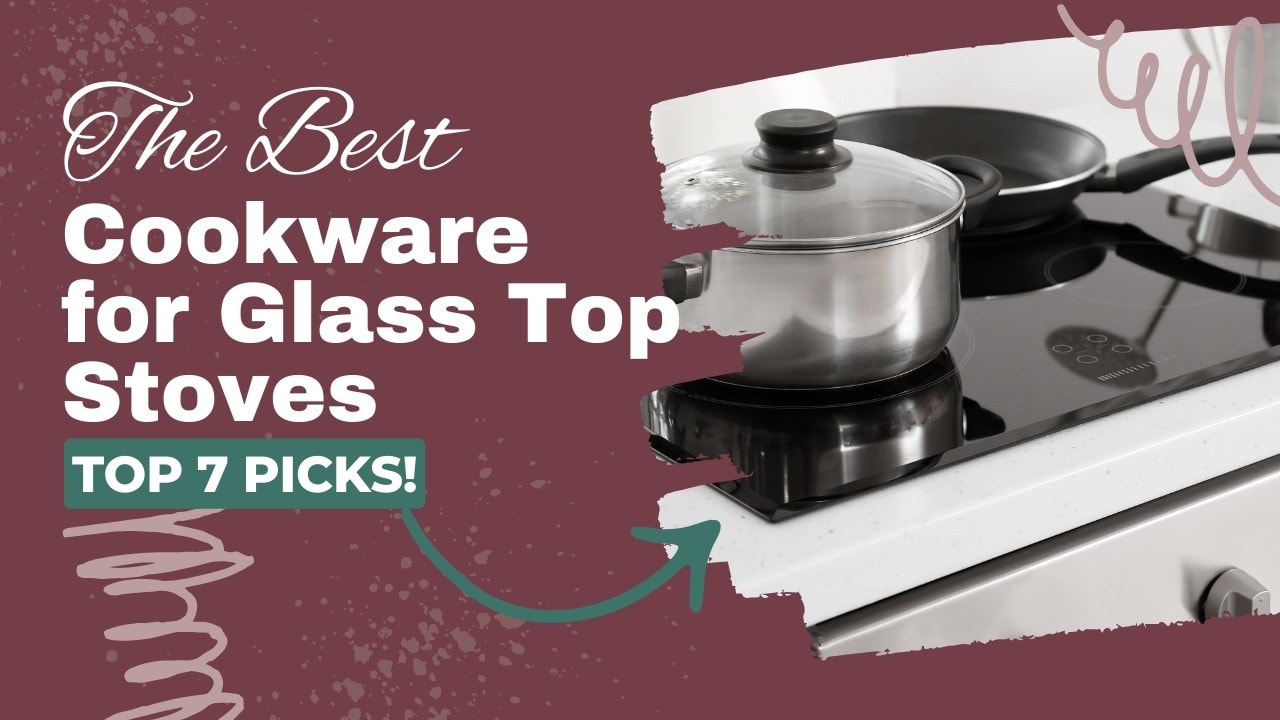
Use flat-bottomed stainless steel, smooth aluminum, or compatible enameled cookware on a glass top stove. Choose pans that sit evenly, match the cooking zone, and have clean, smooth bottoms to help prevent scratches and heat unevenness.
In American kitchens, glass top stoves are common in apartments, family homes, and remodeled kitchens. Their smooth surfaces look neat and are easy to wipe clean after cooking dinner, frying eggs, or making a pot of soup. Yet the wrong pan can scratch the glass, heat unevenly, or leave marks that take time to remove. Choosing the right cookware helps protect your stove while making daily cooking easier.
The best cookware for a glass top stove is not always the most expensive set. What matters most is the material, the shape of the base, the weight of the pan, and whether the cookware matches your stove type. A smooth, flat pan is often a better choice than an expensive pan with a rough or warped bottom. This guide explains which materials work well, what to avoid, how to check your existing pots and pans, and how to care for your cooktop.
Stainless steel, smooth aluminum, and suitable enameled cookware are practical choices for most glass top stoves. The key is a flat, stable base that makes good contact with the cooking area without scratching the surface. A pan can be made from a suitable material and still perform poorly if its bottom is rough, warped, or too small for the burner.
Glass top stoves usually have a smooth glass-ceramic cooking surface. Some use radiant electric heating elements beneath the glass, while others use induction technology. These systems heat cookware in different ways, so you must identify your stove type before buying a new set. A pan suitable for radiant electric cooking may not work on induction unless its base is magnetic.
For most households, a few well-made pans are more useful than a large set with pieces you rarely use. A medium skillet, a small saucepan, and a larger pot can cover many everyday meals. Choose each piece based on its shape, weight, and compatibility rather than relying on the material name alone.
Source: redhillkitchen.com
Best all-around choice
Stainless steel with a smooth, flat base suits many everyday tasks, including boiling, sautéing, and simmering.
Best for quick heating
Aluminum cookware distributes heat well when its base is thick and stable. Anodized aluminum may offer a durable exterior, but its base must still suit the cooktop.
Best for gentle cooking
A compatible pan with a thick, even base can help maintain steady heat for sauces, eggs, and low-temperature cooking.
Best for long, slow meals
Suitable enameled cast iron can retain heat well, but its weight calls for careful lifting and placement.
Why a Flat Bottom Matters
A flat pan base helps spread heat across the cooking area and keeps the cookware stable. When the base is warped, only part of it may touch the surface, which can lead to uneven cooking. A pan that rocks on a level counter may also be unstable on the stove.
Check the bottom before use. Look for dents, raised seams, rough metal, baked-on food, and loose particles. If a pan is warped or has sharp edges, replace it or stop using it on the glass surface.
Check stability
Place the cool pan on a level counter and see whether it rocks. This is a useful first check, though it does not replace the manufacturer’s cookware guidance.
Check cleanliness
Wipe the base with a soft cloth before cooking so dried food or grit does not get trapped between the pan and glass.
Choose the Right Pan Size
The pan base should be close to the size of the cooking zone. A very small pan may not use the heating area efficiently, while a very large pan may heat unevenly or extend beyond the intended cooking area. Check the stove manual for any size limits, especially for large griddles or oversized pots.
Small saucepan
Use a stable base that fits the small cooking zone without rocking.
Everyday skillet
Choose a flat base that fits the designated burner and leaves the handle safely positioned.
Large stockpot
Confirm the cooktop permits the pot’s diameter and filled weight before using it.
Best Cookware Materials for Glass Cooktops
Cookware material affects heat transfer, weight, upkeep, and durability. However, no material automatically guarantees safe use on every glass top stove. The condition of the base and the instructions for your particular appliance matter just as much.
The table below compares common cookware materials for American home kitchens. These are general material characteristics, not a ranking based on hands-on testing. Individual pans can differ because of their construction, coatings, and base design.
Source: housekeepingmaster.com
Stainless steel
A versatile, durable option. Look for a smooth base and a layered construction that helps spread heat. Some stainless steel pans contain magnetic layers, making them suitable for induction.
Aluminum
Lightweight and responsive to temperature changes. A thicker base is generally more stable than a thin base that may warp under high heat.
Hard-anodized aluminum
Often durable and resistant to surface wear. Check the manufacturer’s compatibility statement and inspect the bottom for rough edges or damage.
Enameled cast iron
Retains heat well and can be suitable when the bottom is smooth and intact. Its weight and potential for chipped enamel require careful handling.
Traditional cast iron
Can work on some glass cooktops, but it is heavy and may have a rough or textured base. Use it only if the stove manual permits it, and never drag it across the glass.
Copper
Transfers heat quickly, but exposed copper bottoms may react with or leave marks on some cooktop surfaces. Use only cookware the appliance manufacturer permits, with a suitable base.
Glass cookware
Only use cookware specifically approved for the type of stovetop in question. Oven-safe glass is not automatically safe for direct stovetop use.
Is Stainless Steel the Safest Choice?
Stainless steel is often a sensible first choice because it resists rust, handles frequent use, and comes in many shapes and sizes. A smooth, flat stainless steel pan is generally easy to move carefully and clean after use. Multi-layer bases that combine stainless steel with aluminum or another heat-spreading layer can help improve temperature distribution.
Still, stainless steel is not scratch-proof. A rough base, a grain of sand, or a hard piece of dried food can damage the cooktop if the pan is dragged. A stainless steel pan with a warped base may also heat less evenly than a well-made pan with a stable base.
Look for a smooth base
Run your fingers carefully over the cool, clean underside and check for burrs, rough welds, or damaged edges.
Choose stable construction
A pan that sits flat and feels balanced is usually more practical than one that rocks or has a thin, distorted base.
Can You Use Aluminum Cookware?
Yes, aluminum cookware is commonly used on radiant electric glass cooktops. Aluminum transfers heat efficiently, which can help food cook quickly. The main concerns are base stability, manufacturer guidance, and the possibility that some aluminum cookware may leave marks on the glass.
Anodized aluminum has a treated surface that differs from untreated aluminum, but the treatment does not automatically make the pan compatible with every cooktop. Check the full product specifications, especially when shopping for a new set.
Avoid warped pans
Thin aluminum bases may distort when exposed to high heat or sudden temperature changes.
Clean the base
Remove food residue and grease before each use to reduce the chance of marks and trapped debris.
What About Ceramic and Nonstick Cookware?
Ceramic-coated and conventional nonstick pans can work on glass top stoves when their bases are smooth, flat, and approved by the cookware maker. These labels describe different things: ceramic-coated cookware often has a nonstick coating, while ceramic cookware may also refer to solid ceramic vessels. Do not assume they have the same stovetop limits.
Many nonstick pans are lighter than cast iron and are easy to handle. Use the heat limits in the pan’s manual, avoid overheating an empty coated pan, and use utensils that will not damage its cooking surface. A nonstick coating does not determine whether the bottom is suitable for a glass cooktop.
Check the product label
Confirm that the cookware is approved for your exact stove type, not just for ovens or gas burners.
Protect the coating
Follow the maker’s guidance for heat, cleaning, and utensils so the pan remains useful for longer.
Cookware to Avoid or Handle With Extra Care
The main risks to a glass cooktop come from rough surfaces, dragging, impacts, unsuitable cookware, and excessive weight. Some pans can be used with care, while others should be avoided because their design or intended use does not suit the appliance.
Your cooktop manual takes priority over general advice. If it specifically warns against a material, pan style, or weight limit, follow that instruction even if the cookware is advertised for use on electric stoves.
Source: desiredcuisine.com
Rough-bottomed pans
Unfinished, textured, or damaged bases can scratch the surface. Do not use a pan with sharp edges or loose metal parts.
Heavy cookware that may be dropped
Cast iron and other heavy pans can crack the glass if dropped. Lift them with both hands when needed and set them down gently.
Warped cookware
A distorted bottom can rock, make poor contact, and heat unevenly. Replace or retire pans that no longer sit flat.
Oversized pans
Very large pots or griddles may extend beyond the approved cooking zone and create uneven heating. Check the appliance manual before use.
Unapproved glass or ceramic vessels
A vessel made for an oven, microwave, or serving table is not necessarily designed for direct stovetop heat.
Can Cast Iron Scratch a Glass Top Stove?
Cast iron can scratch or damage a glass cooktop, particularly when the pan has a rough bottom or is dragged across the surface. It can also crack the glass if dropped or set down with force. Some manufacturers allow cast iron when users handle it carefully, while others place stricter limits on its use.
If your manual permits cast iron, inspect the bottom for rough spots and make sure it is clean. Lift the pan rather than sliding it, and avoid placing a heavy, filled pot on the cooktop with a sudden impact. If the pan feels too heavy to control safely, choose a lighter alternative.
Use controlled movement
Keep the pan level and lift it clear of the glass before repositioning it.
Inspect enamel
Do not use enameled cookware with chipped or flaking areas that could leave debris on the cooktop.
Are Copper-Bottomed Pans a Problem?
Copper can leave marks on some glass-ceramic surfaces, especially when the pan overheats or the bottom is not suitable for the appliance. Some marks may be removable with a cooktop cleaner, while other damage can be permanent. This does not mean every pan containing copper is unsuitable; a bonded copper layer may be enclosed beneath another metal.
Check the construction of the base rather than judging the pan by its name alone. If the underside is exposed copper, consult the stove manual before using it. Never attempt to scrape marks off with a knife or another sharp metal tool.
Check the underside
Determine whether copper is exposed or enclosed within a layered base.
Follow cleaning guidance
Use only a cleaner and scraper approved for the particular glass-ceramic surface.
How to Choose Cookware for Your Specific Glass Stove
Before buying cookware, identify whether your stove uses radiant electric heat or induction. Both can have a smooth glass surface, but their heating methods are different. This one check can prevent the frustration of buying a beautiful pan that does not heat on your appliance.
Look for the model number in the stove manual or on the appliance label. If you cannot find the manual, use the manufacturer’s support page for your exact model rather than relying only on the appearance of the cooktop.
Source: essentialhomeandgarden.com
For radiant electric glass cooktops
Choose cookware approved for electric glass-ceramic surfaces, with a flat, smooth bottom that remains stable when heated.
For induction glass cooktops
Choose cookware with a magnetic base and an explicit induction-compatibility statement. A magnet sticking to the bottom is a useful preliminary check, but the pan must still be suitable for the cooktop.
For mixed cookware sets
Check every piece. Lids, handles, and pan bodies may be shared across a set even when individual bases differ.
How to Test a Pan for Induction Compatibility
Place a small magnet against the center of the pan’s underside. If it sticks firmly, the base is likely magnetic and may work on an induction cooktop. If it does not stick, the pan generally will not work unless the manufacturer specifies another compatible design.
A magnet test is not a complete performance test. Some pans have only a small magnetic area, and compatibility also depends on the induction zone and the cookware’s construction. Check the product label and appliance manual before relying on the pan for everyday cooking.
Confirm the label
Look for the induction symbol or written confirmation from the cookware manufacturer.
Test the actual fit
Use a pan whose base size matches the induction zone’s stated limits.
What to Check Before Buying a Cookware Set
A cookware set should fit both your cooking habits and your stove. Do not pay for a dozen pieces if you mainly use one skillet and two saucepans. A smaller set with stable bases, useful sizes, and clear compatibility information may be the more practical purchase.
Base design
Choose flat, smooth bases without sharp seams or rough exposed edges.
Weight and balance
Make sure you can lift and move the pans safely, especially when they contain hot food or water.
Heat distribution
Look for a stable, well-constructed base designed to spread heat across the cooking surface.
Care instructions
Check cleaning limits, oven-use restrictions, coating care, and any special stovetop warnings.
Replacement parts
For long-term use, consider whether lids and handles are available separately if a part becomes damaged.
Comparison Table: Which Cookware Should You Use?
Use this comparison to narrow your choices before shopping. The ratings below describe general suitability when the cookware has a smooth, flat base and the stove manufacturer permits it. They are not laboratory results or guarantees for every model.
Source: www.pinterest.com
Stainless steel
General suitability: Very good. Main benefit: durability and versatility. Main caution: choose a stable base and confirm induction compatibility when needed.
Aluminum
General suitability: Good. Main benefit: fast heat transfer and low weight. Main caution: avoid thin or warped bases and check for possible surface marking.
Hard-anodized aluminum
General suitability: Good when approved. Main benefit: durable construction and practical handling. Main caution: verify the base design and cooktop compatibility.
Enameled cast iron
General suitability: Good with careful handling. Main benefit: heat retention. Main caution: heavy weight and possible damage from chipped enamel or impact.
Traditional cast iron
General suitability: Conditional. Main benefit: heat retention and versatility. Main caution: weight, rough bottoms, and the risk of scratching or cracking the glass.
Copper-bottom cookware
General suitability: Conditional. Main benefit: rapid heat transfer. Main caution: exposed copper may mark some surfaces; check the appliance manual.
Glass cookware
General suitability: Only when specifically approved. Main benefit: visibility in suitable designs. Main caution: oven-safe glass is not automatically safe for stovetop use.
Best Everyday Setup for a Typical Household
For a typical American household with a radiant glass cooktop, a smooth stainless steel skillet, a medium saucepan, and a larger stockpot can cover most daily meals. Add a nonstick skillet if you often cook eggs or delicate foods, provided the pan is approved for the stove.
For an induction model, keep the same practical approach but verify that every piece has a compatible magnetic base. You do not need to replace an entire kitchen at once if some existing pans already meet the requirements.
For eggs and pancakes
Use a compatible nonstick pan with a flat base and follow its heat limits.
For pasta and soup
Choose a stable stainless steel stockpot sized for the cooking zone.
For sauces and oatmeal
A small or medium saucepan with an even base helps support steady heating.
For searing and browning
A suitable stainless steel skillet with a stable base can handle a wide range of cooking tasks.
How to Protect a Glass Top Stove While Cooking
Good cookware care begins before the burner turns on. Small particles trapped beneath a pan can act like grit under a sliding chair, scratching the glass when the pan moves. Clean bases and careful handling are simple ways to reduce that risk.
Glass-ceramic cooktops can also be damaged by sudden impacts, unsuitable cookware, and spills that burn onto the surface. Keep the cooking area clear, use cookware according to the manual, and never assume that the surface is cool just because the heating element is no longer glowing.
Source: artofit.org
Lift, do not drag
Raise a pan before moving it to another cooking zone. This is especially important for heavy cast iron and cookware with rough bases.
Keep the base clean
Wipe away crumbs, dried sauce, and grease from the bottom of each pan before placing it on the cooktop.
Avoid dropping cookware
Set pots down gently. A concentrated impact can crack the glass even if the pan itself remains intact.
Use suitable heat settings
Start with an appropriate setting and adjust as needed. Follow the cookware instructions to avoid overheating, especially with coated pans.
Keep spills under control
Clean spills promptly when the surface is safe to touch and the appliance instructions permit it. Sugar and sugary mixtures can damage some glass-ceramic surfaces if allowed to burn on.
How to Clean the Cooktop After Cooking
Let the cooktop cool as directed by the manufacturer before routine cleaning. Use a cleaner made for glass-ceramic cooktops and a soft cloth or nonabrasive pad. Avoid household scouring powders, steel wool, and abrasive scrubbers unless the appliance manual specifically approves a method.
If burnt residue remains, follow the manufacturer’s directions for an approved cooktop scraper. Keep the scraper at the specified angle and use it only as directed. Never use a knife, screwdriver, or improvised metal edge to remove stuck food.
Some sugary spills require prompt attention because heat can bond them to the surface. Follow the exact instructions for your model, including any procedure for removing such spills while the surface is still warm. Do not touch a hot surface or improvise a cleaning method that could cause burns.
Routine cleaning
Use a soft cloth and a suitable cooktop cleaner after the surface has cooled.
Burnt residue
Use only the scraper type and technique permitted by the manufacturer.
Cracks or chips
Stop using the affected cooking area and contact the appliance manufacturer or a qualified service professional. Do not continue cooking on cracked glass.
How to Tell Whether a Mark Is a Scratch
A gray or metallic streak may be a deposit transferred from cookware rather than a scratch in the glass. Some deposits can be removed with an approved cooktop cleaner, but a true scratch or crack may remain. Do not use a sharp object to test the mark.
Turn off the appliance and let it cool according to the manual. Clean the area with the recommended product and inspect it in good light. If the mark remains and you cannot tell whether the surface is damaged, ask the manufacturer or a qualified technician for guidance.
If the mark cleans away
It may have been surface residue, but continue using cookware with clean, smooth bases.
If the surface is chipped or cracked
Do not use the damaged area until the appliance has been assessed and repaired as needed.
Common Cookware Mistakes and How to Fix Them
Most cookware problems are easier to prevent than to fix. Before replacing a pan or blaming the stove, check the base, the cooking zone, and the appliance instructions. Change one thing at a time so you can identify the likely cause without creating another problem.
Source: storage.googleapis.com
Food cooks unevenly
Possible causes include a warped base, a pan that is too small or too large for the zone, or a setting that is too high. Try a stable, flat pan of a suitable size and adjust the heat.
The pan rocks on the stove
The base may be warped or uneven. Stop using it on the glass surface until you confirm it is stable or replace it.
Metallic marks appear
Cookware may have transferred metal to the surface. Let the area cool as directed and use an approved cleaner rather than an abrasive tool.
The induction stove does not heat the pan
The base may not be magnetic, may be too small for the zone, or may not be positioned correctly. Check the induction symbol, magnet response, and appliance instructions.
The glass surface cracks
Stop using the damaged area. Do not attempt a household repair or continue cooking while waiting for service.
The pan sticks or scorches food
The cause may be heat that is too high, an unsuitable pan, or a cooking technique issue rather than the glass surface itself. Lower the setting and follow the cookware instructions.
A Simple Check Before Replacing Cookware
Start with a cool pan and inspect its underside. Remove loose food residue, check for rough edges, and place it on a level counter to see whether it rocks. Then confirm that the pan is approved for your stove type and fits the intended cooking zone.
If the pan passes those checks but still performs poorly, review the appliance manual for heat-setting guidance and cookware limits. If several suitable pans behave the same way, the stove may need inspection. Contact a qualified service professional if you suspect an appliance fault.
Step 1
Identify the cooktop type and read the relevant cookware instructions.
Step 2
Inspect and clean the pan’s base while it is cool.
Step 3
Check the base for stability and confirm the pan fits the cooking zone.
Step 4
Try a suitable heat setting and monitor cooking performance.
Step 5
Stop using damaged cookware or a cracked cooktop, and seek professional help when needed.
How Much Should You Spend on Cookware for a Glass Top Stove?
You do not need a premium cookware set to protect a glass cooktop. A lower-cost pan with a smooth, stable base may work better than a costly pan that is warped, damaged, or incompatible with induction. Focus on construction and fit first, then compare price, warranty, and care requirements.
Prices change by brand, size, material, and retailer, so a fixed budget cannot guarantee a particular level of performance. Compare current product specifications and the cost of replacing individual pans before choosing a large set. Avoid buying cookware solely because its packaging claims it is scratch-proof; safe handling still matters.
Source: diningtokitchen.com
For a limited budget
Start with one reliable skillet and one saucepan. Confirm cooktop compatibility and base quality before adding more pieces.
For frequent home cooking
Consider durable stainless steel cookware with a stable base and useful sizes that match your normal meals.
For easy egg cooking
Add a suitable nonstick pan and follow the manufacturer’s temperature and cleaning limits.
For induction owners
Check every item for induction compatibility before paying for a set. Material names alone are not enough.
Should You Replace All Your Old Pots and Pans?
Not necessarily. If your current cookware has a clean, smooth, stable base and the stove manufacturer permits it, you may be able to keep using it. Replace only the pieces that are damaged, unstable, incompatible, or unsuitable for your cooking needs.
A gradual replacement plan can also reduce waste. Begin with the pan you use most often, then add pieces as needed. This approach lets you compare how different base designs perform on your cooktop without paying for an entire set upfront.
Keep suitable cookware
Retain pans that are compatible, stable, and in good condition.
Replace damaged cookware
Retire pans with sharp edges, badly warped bases, or damaged coatings that affect safe use.
Verify before purchasing
Read the exact model’s product information and return policy so you can address a compatibility problem promptly.
Frequently Asked Questions
Q
What is the best cookware material for a glass top stove?
Stainless steel with a smooth, flat base is a dependable choice for many glass top stoves. It is durable and versatile, and some designs also work with induction. Smooth aluminum and suitable enameled cookware can work well too, provided the appliance manufacturer permits them.
Q
Can I use cast iron on a glass top stove?
You may be able to use cast iron if your stove manual allows it. Cast iron is heavy and can have a rough base, so dragging it may scratch the glass and dropping it can crack the surface. Lift it carefully, keep the bottom clean, and choose a lighter pan if you cannot handle it safely.
Q
Are nonstick pans safe for glass cooktops?
Many nonstick pans work on glass cooktops when their bases are smooth, flat, and approved for the stove type. Check the manufacturer’s instructions for stovetop compatibility and heat limits. Avoid overheating an empty coated pan, and use suitable utensils to protect the cooking surface.
Q
Can I use stainless steel cookware on an induction glass stove?
Yes, if the stainless steel cookware has an induction-compatible magnetic base. Not every stainless steel pan works with induction. Look for the induction symbol or test the base with a magnet, then confirm compatibility with the cookware maker and the stove manual.
Q
Why does my glass stove have scratches or gray marks?
Gray marks may come from metal transferred by cookware, while actual scratches can result from rough bases, trapped grit, or dragging a pan. Let the surface cool as directed, then use a cleaner approved for glass-ceramic cooktops. Do not scrape with a knife or use an abrasive cleaner, and stop using the affected area if the glass is cracked.
Q
Are round-bottomed woks suitable for glass top stoves?
A traditional round-bottomed wok is generally a poor fit for a flat glass cooktop because it may not sit securely or make suitable contact with the cooking area. Choose a flat-bottomed wok specifically approved for your stove type, and check the manual for any size or weight limits.
Q
Can I use glass baking dishes directly on a glass top stove?
No, unless the cookware manufacturer explicitly states that the particular vessel is designed for direct use on that type of stovetop. Oven-safe glass is not automatically suitable for direct burner heat and may break if used incorrectly. Use an approved metal pan or another cookware type specified for your cooktop instead.
Q
How do I know when to replace a pan used on a glass cooktop?
Consider replacing a pan when its base is badly warped, rocks on a flat surface, has sharp or damaged edges, or is no longer compatible with your stove. Damaged coatings may also make replacement sensible, depending on the cookware manufacturer’s guidance. A pan that leaves repeated marks or performs poorly should be inspected before you continue using it.
✦ Wrapping Up
Conclusion
The best cookware for a glass top stove has a smooth, flat, stable base and suits the way your appliance heats food. Stainless steel is a reliable all-purpose option, while aluminum, nonstick, and enameled cookware can also work when their design and condition meet the stove’s requirements. Cast iron and copper-bottomed pans call for extra care because weight, rough surfaces, or metal transfer may cause problems.
Before buying anything, identify whether your stove uses radiant electric heat or induction. Inspect the bottoms of your existing pans, choose sizes that fit the cooking zones, and follow the manufacturer’s care instructions. These simple steps can help you cook evenly, reduce the risk of scratches, and keep your glass cooktop in good condition.
💡 Key Takeaway
Check your stove manual, inspect each pan’s underside, and start with a smooth, flat stainless steel skillet that is approved for your cooktop. Lift cookware instead of sliding it, and never use a cracked glass cooking surface.