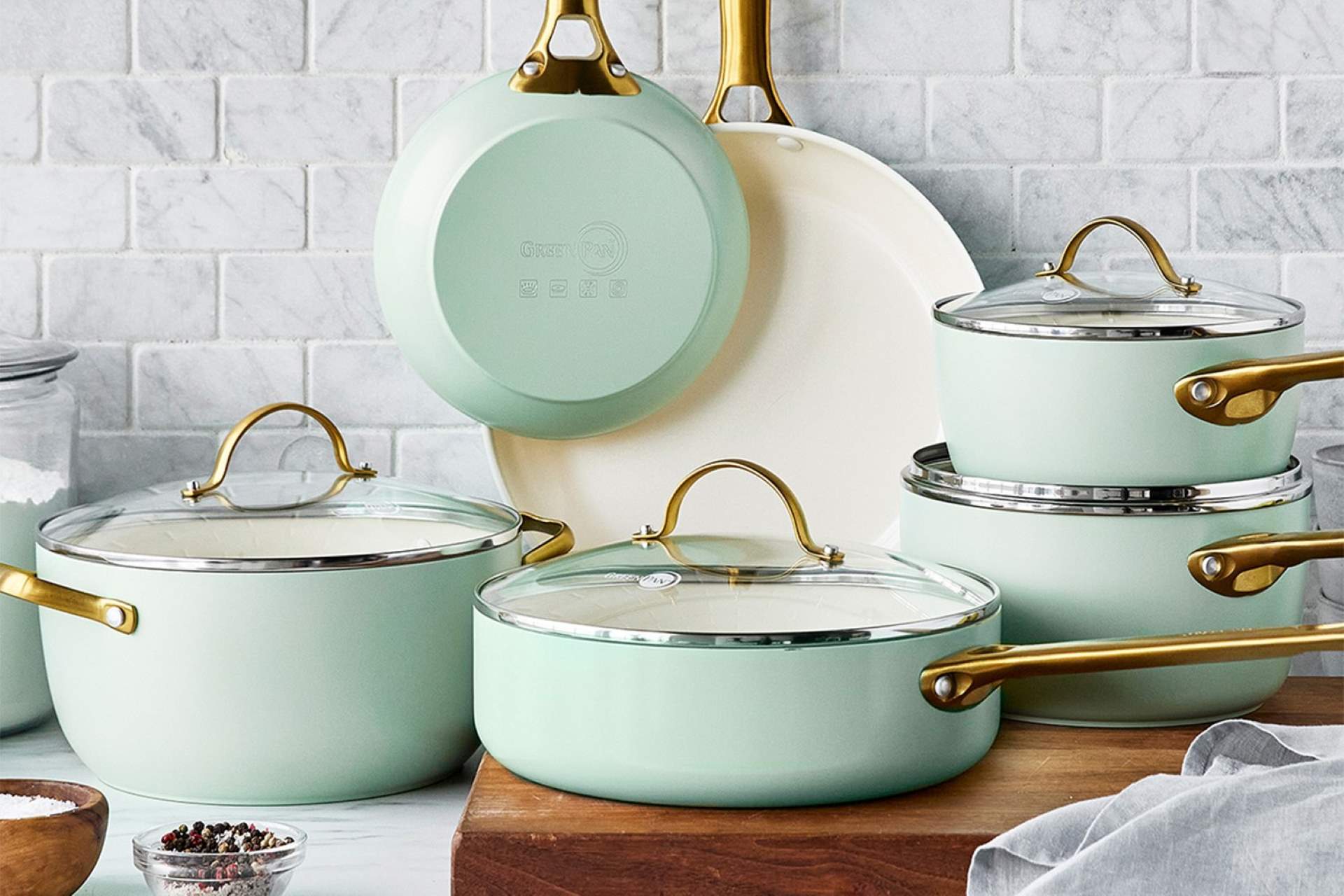
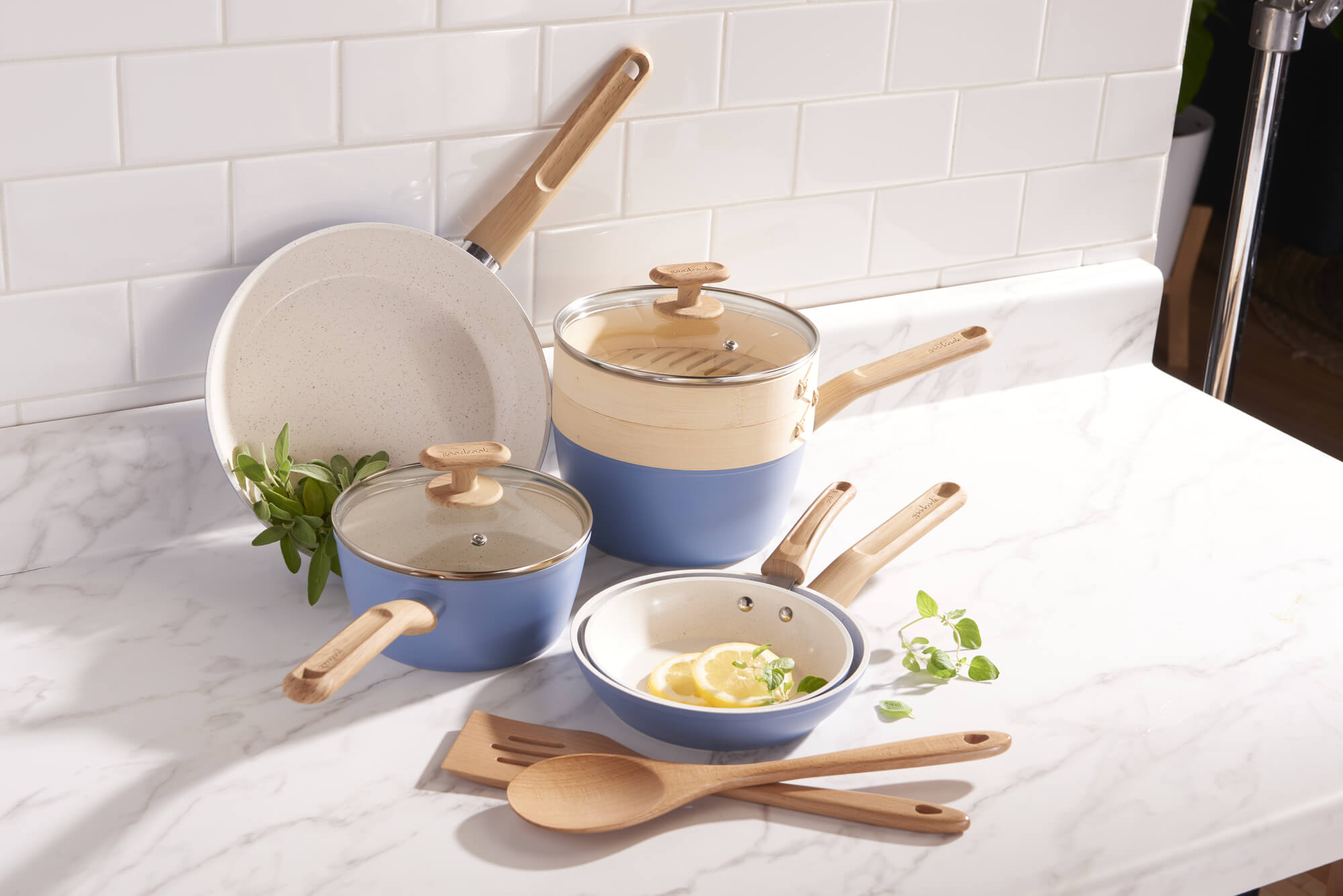
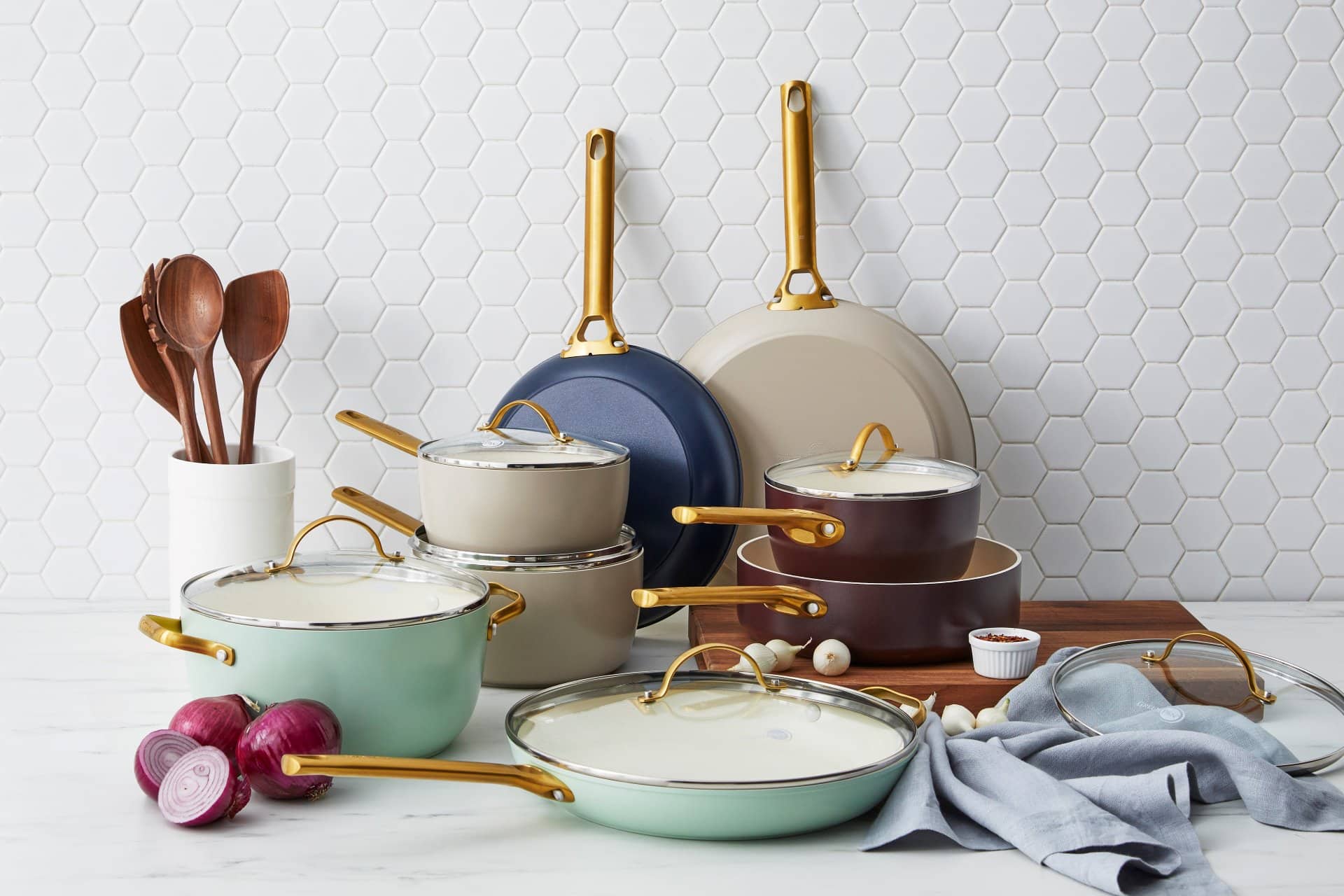
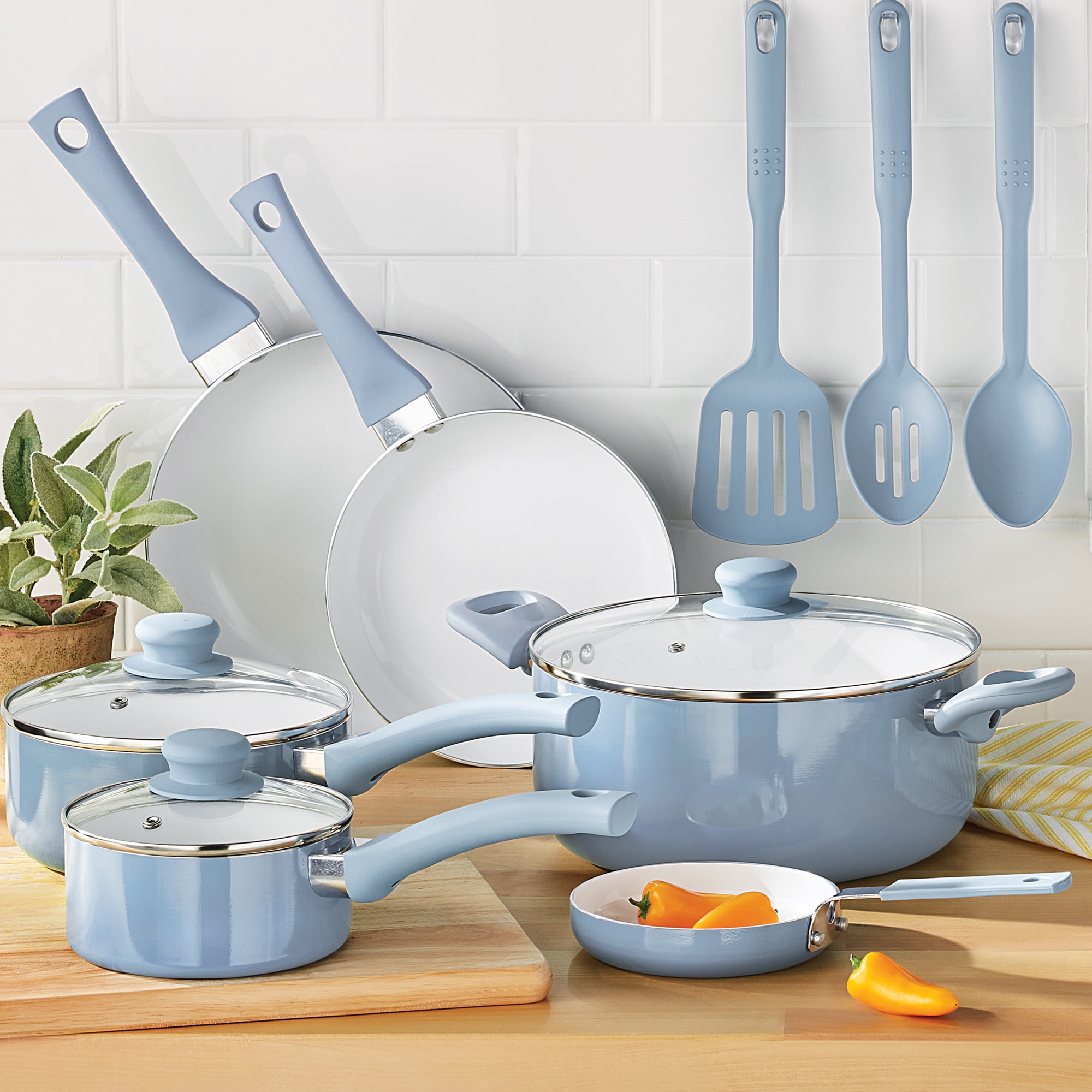
Ceramic cookware is cookware made from ceramic material or, more often, metal coated with a smooth ceramic-based nonstick layer.
In American kitchens, ceramic cookware is a common option for making eggs, pancakes, vegetables, fish, and other everyday meals. It comes in many forms, from colorful frying pans to complete pots and pans sets. The name sounds simple, but it can describe two different products: cookware made from ceramic and metal cookware finished with a ceramic-based coating.
Most ceramic nonstick pans sold in the United States have an aluminum body and a thin coating made from a silica-based material. The coating helps food release with less oil and makes cleanup easier. Many of these coatings are made without intentionally added PTFE, but the exact ingredients depend on the product and manufacturer.
Ceramic cookware can be useful, but it has limits. Its nonstick performance can decline with repeated use, especially when the pan gets too hot, faces sudden temperature changes, or is cleaned with abrasive tools. Knowing what the pan is made of, how the coating works, and what care it needs can help you decide whether it suits your kitchen.
Ceramic cookware is a broad term for pots, pans, and baking dishes that use ceramic material either as the main body or as a surface coating. The word ceramic refers to materials made from inorganic compounds that are shaped and hardened by heat. Traditional ceramics often contain clay, while modern ceramic coatings may use silica-based compounds.
The key difference is whether ceramic forms the whole cooking vessel or only its cooking surface. A solid ceramic casserole has a ceramic body. A ceramic-coated frying pan usually has a metal body with a thin ceramic-based layer on top.
This distinction matters because the two types do not heat, weigh, or respond to temperature changes in the same way. A metal pan with a ceramic coating often heats quickly, while a thick ceramic dish may heat more slowly and hold heat longer.
Source: cookwareguider.com
Solid ceramic cookware
The vessel itself is made from ceramic material. It may be glazed or unglazed and is often used for baking, roasting, serving, or slow cooking when the product is rated for that purpose.
Ceramic-coated metal cookware
A metal base, often aluminum, carries a thin ceramic-based cooking surface. This is the common type marketed as ceramic nonstick cookware.
Ceramic-coated bakeware
Metal baking pans may have a ceramic-based finish intended to help food release. Oven limits and care instructions depend on the specific product.
Why the Name Can Be Confusing
A pan labeled ceramic is not always made entirely from ceramic. Product listings may use phrases such as ceramic nonstick, ceramic-coated, or ceramic cookware set to describe a metal pan with a surface treatment.
Before buying, check the material description and construction details. If the pan has an aluminum body and a ceramic-based coating, treat it as coated metal cookware rather than as a solid ceramic pot.
Check the base material
Look for aluminum, stainless steel, cast iron, or ceramic in the product specifications.
Check the cooking surface
Confirm whether the surface is ceramic-coated, glazed ceramic, or another type of nonstick finish.
What Is Ceramic Cookware Made Of?
Most ceramic-coated frying pans combine a metal body with a ceramic-based surface layer. The metal provides structure and helps spread heat, while the coating creates a smooth cooking surface that can release food with less sticking.
Aluminum is common because it conducts heat well and is relatively light. Some products use stainless steel or other metals, and some have a layered base designed to improve heat distribution or work with induction cooktops.
The coating often uses silica, a compound found in materials such as sand and quartz, as part of its formulation. Manufacturers may use additional minerals, binders, pigments, and processing ingredients. The exact recipe varies, so it is not accurate to assume that every ceramic pan has the same composition.
Source: flyingmachinearena.org
Metal body
The body gives the pan its shape, strength, and much of its heat response. Aluminum is common in lightweight ceramic nonstick pans.
Ceramic-based coating
The surface is designed to reduce sticking and make routine cleaning easier. It is usually much thinner than the metal body.
Induction-compatible base
Some ceramic-coated pans include a magnetic metal base for induction cooking. A ceramic coating alone does not make a pan induction-compatible.
Handles and lids
These may use stainless steel, aluminum, glass, silicone, or heat-resistant plastics. Their materials affect oven limits and handling.
What Is a Sol-Gel Ceramic Coating?
Many modern ceramic nonstick coatings are made using a sol-gel process. In simple terms, liquid ingredients form a network that hardens into a thin, glass-like surface during manufacturing. Silica-based chemistry often plays an important role in this process.
The finished layer is intended to create a smooth cooking surface. However, sol-gel coatings vary in formulation and performance. The term describes a manufacturing approach, not a guarantee that every product has identical ingredients or durability.
Smooth finish
A smooth surface helps food release when the pan is used at suitable temperatures and with appropriate cooking methods.
Thin surface layer
The coating does not provide the same structural strength as the metal beneath it. Scratches, wear, and surface damage can affect performance.
Is Ceramic Cookware Made From Natural Materials?
Ceramic materials can contain naturally occurring minerals, but a finished ceramic coating is still a manufactured product. Its ingredients are processed, blended, and cured to create the desired surface.
Words such as natural, mineral-based, and stone-derived do not provide a complete chemical description. If material composition matters to you, look for specific manufacturer disclosures rather than relying on the product name or packaging color.
Read the material statement
Look for a clear description of the coating and the metal body instead of assuming that ceramic means an all-natural product.
How Does Ceramic Nonstick Cookware Work?
Ceramic nonstick cookware works by using a smooth surface that reduces the tendency of food to stick. When the pan is clean and in good condition, eggs, pancakes, and delicate fish may release with less effort than they would from an uncoated metal surface.
A small amount of cooking oil or butter can still help. The coating does not remove the need for sensible heat control, and it does not make every food slide freely from the pan. Sugary sauces, melted cheese, and foods cooked at excessive temperatures can still stick or leave residue.
Heat moves through the metal body and then into the food. Because aluminum conducts heat well, many ceramic-coated aluminum pans respond quickly to changes in burner settings. However, the thickness and shape of the base influence how evenly the pan heats.
Source: buzzlyo.com
Why Food Can Start Sticking Over Time
Ceramic nonstick performance can decline as the surface wears or accumulates a thin film of cooked oil. Excessive heat, rough utensils, abrasive cleaners, and repeated dishwasher cycles may contribute to reduced performance, depending on the product.
When eggs begin to stick, the cause is not always a damaged coating. Residue, inadequate preheating, unsuitable cooking temperatures, or a lack of cooking fat may also play a role. Clean the pan gently and try moderate heat before assuming the coating has failed.
Check for residue
Wash the pan with warm water, mild dish soap, and a soft sponge. Rinse it well and dry it before cooking again.
Lower the heat
Use low or medium heat for most routine cooking unless the manufacturer gives different instructions for a specific task.
Use suitable utensils
Wood, silicone, and other manufacturer-approved utensils can help limit surface wear.
Is Ceramic Cookware Safe to Use?
Ceramic cookware can be suitable for everyday cooking when it is made for food contact, used as directed, and kept in good condition. However, the word ceramic alone does not prove that a product is free from every chemical of concern or safe under every cooking condition.
For ceramic-coated metal pans, one common selling point is the absence of intentionally added PTFE, a fluoropolymer used in many traditional nonstick coatings. Some manufacturers also market their products as PFAS-free. These terms are not interchangeable, and the scope of a claim depends on the manufacturer’s definition, product formulation, and supporting information.
For solid ceramic cookware, the glaze and its quality matter. Food-contact surfaces should be intended for cooking or serving food. Decorative ceramics, antique pottery, and items of uncertain origin may have glazes that are unsuitable for food use, including some that can release lead or cadmium.
The practical approach is to choose cookware with clear food-contact information, follow the stated temperature limits, and stop using a pan when its surface is badly damaged. If the manufacturer cannot explain the product’s composition or intended use, choose a better-documented alternative.
Source: thatsmykitchen.com
Does Ceramic Cookware Contain PFAS?
Many ceramic-based nonstick coatings are made without intentionally added PFAS, including PTFE. PFAS is a broad group of substances, so a claim about one chemical or one formulation should not automatically be treated as proof that every substance in the group is absent.
If avoiding PFAS is a priority, look for a clear statement from the manufacturer that applies to the exact pan or cookware line. Ask what the claim covers, whether it refers to intentionally added substances or a broader test, and whether the information applies to the finished product.
A ceramic label by itself is not enough to establish the full chemical composition. Independent testing may offer more information when it identifies the exact product, substances tested, and detection limits.
PTFE-free
This means the product is represented as not containing PTFE. It does not automatically establish that every PFAS is absent.
PFAS-free
Check how the manufacturer defines the term and whether the claim covers the finished coating and other components.
Ceramic-based
This describes the type of coating or material. It does not independently verify a broad chemical-free claim.
Can Ceramic Cookware Release Harmful Substances?
The answer depends on the product, its materials, its condition, and how it is used. A properly manufactured food-contact coating is designed for its intended use, but that does not mean all products sold under the ceramic label have identical properties.
Avoid heating a coated pan beyond its stated limit or leaving it empty over a hot burner. Excessive heat can damage some coatings and may create other cooking hazards, including smoke from burning oil or food.
For solid ceramic pots and dishes, use only items rated for the intended cooking method. A decorative bowl may not be designed for an oven, stovetop, broiler, or direct flame.
Use food-contact cookware
Choose products clearly intended for cooking, baking, or food storage rather than decorative use.
Follow temperature limits
Check the maximum oven temperature and any restrictions on stovetop, broiler, or open-flame use.
Replace severely damaged cookware
If the coating peels, flakes, or exposes substantial areas of the underlying metal, stop using the pan and follow the manufacturer’s replacement guidance.
What About Lead and Cadmium?
Lead and cadmium concerns are more relevant to certain ceramic glazes and decorative or imported pottery than to the mere presence of a ceramic label. Some glazes can release these metals into food, especially when the product is poorly made or not intended for food use.
Choose solid ceramic cookware from a manufacturer that identifies it as food-safe and suitable for the intended cooking conditions. Be cautious with antique pottery, handmade items without clear safety information, and decorative pieces used as cooking vessels.
Do not assume that every glazed ceramic item is unsafe. The relevant question is whether the exact product is designed and verified for food contact and the intended use.
Look for intended use
Confirm that the item is suitable for food preparation and the cooking method you plan to use.
Avoid uncertain decorative pieces
Do not use decorative pottery for food preparation unless its food-contact suitability is established.
Pros and Cons of Ceramic Cookware
Ceramic-coated cookware is most useful when easy food release and quick cleanup matter more than long-term coating life. It can make weekday cooking less frustrating, especially for foods that tend to cling to bare metal.
Its main trade-off is that the nonstick surface can lose performance with use. Unlike an uncoated stainless steel pan, a ceramic-coated pan relies on an intact surface layer for much of its food-release benefit.
Solid ceramic cookware has a different set of strengths. It can be useful for baking, serving, and retaining heat, but it may be heavy or vulnerable to thermal shock if it is moved rapidly between extreme temperatures.
Source: prudentreviews.com
Pros: Easy food release
A new or well-maintained ceramic-coated pan can help eggs, pancakes, and other delicate foods release with less effort.
Pros: Simple cleanup
Many food residues wash away with warm water, mild soap, and a soft sponge.
Pros: Often sold without intentionally added PTFE
Many ceramic nonstick lines offer this formulation, although buyers should verify the claim for the exact product.
Pros: Low-fat cooking can be easier
The smooth surface may reduce the amount of butter or oil needed for certain foods, though a little fat can still improve results.
Cons: Nonstick performance can decline
The surface may become less effective with repeated heating, wear, and residue buildup.
Cons: High heat is often unnecessary
Many ceramic-coated pans work well at low or medium heat and may be damaged by excessive temperatures.
Cons: Care can be restrictive
Some products require handwashing and nonmetal utensils, even when the cookware looks sturdy.
Cons: Not ideal for every cooking task
Ceramic-coated pans are generally less suited to repeated high-heat searing or long-term use with metal utensils than many uncoated metal pans.
Who May Benefit Most From Ceramic Cookware?
Ceramic-coated cookware can suit home cooks who make eggs, grilled cheese, pancakes, vegetables, and other foods that benefit from easy release. It can also help people who prefer quick cleanup after a busy workday.
It may be less suitable for cooks who frequently sear steaks at very high temperatures, use metal utensils, or want a pan that can tolerate years of heavy use without a coating. In those cases, stainless steel or cast iron may be more practical.
Good fit
Everyday low-to-medium-heat cooking, delicate foods, and simple cleanup.
Less suitable
Frequent high-heat searing, rough handling, and cooking methods that require a durable uncoated surface.
Ceramic Cookware Compared With Other Materials
Ceramic cookware is not a single material category with one set of performance traits. A ceramic-coated aluminum frying pan behaves differently from a solid ceramic baking dish, so comparisons are most useful when they match similar products and cooking tasks.
For everyday frying, the main alternatives include traditional PTFE-coated nonstick cookware, stainless steel, and cast iron. Each has different strengths in food release, heat response, care, and expected service life.
The table below compares common cookware choices at a general level. Specific products can differ because of their construction, thickness, coating formulation, and manufacturer instructions.
Source: cookwareguider.com
Ceramic-coated metal
Offers easy food release when the coating is in good condition. It usually needs gentle care and moderate heat.
Traditional PTFE nonstick
Often provides very good food release. It also requires sensible temperature control and care that protects the coating.
Stainless steel
Has no nonstick coating to wear away and works well for browning and pan sauces. Food can stick if the pan is not used properly.
Cast iron
Can retain heat well and last for many years with proper care. It is heavy and may need seasoning if it is not enameled.
Solid ceramic
Useful for baking, roasting, and serving when rated for those tasks. It can be heavy and may crack from impact or sudden temperature changes.
Ceramic vs. Traditional Nonstick
Ceramic-coated pans are often chosen by people who want a nonstick surface without intentionally added PTFE. Traditional PTFE-coated pans are often valued for strong food release, but both types need correct use and can lose performance as their coatings wear.
Neither label guarantees that a pan will last longer. Construction, coating quality, heat exposure, cleaning, and cooking habits all affect service life. If chemical composition is your main concern, compare the exact manufacturer’s disclosures rather than relying on the words ceramic or nonstick alone.
Choose ceramic-coated cookware
Consider it when avoiding intentionally added PTFE is a priority and you are willing to use moderate heat and gentle cleaning.
Choose traditional nonstick
Consider it when easy food release is the main goal and the product’s stated materials and care requirements meet your needs.
Ceramic vs. Stainless Steel
Ceramic-coated cookware generally makes delicate foods easier to release, while stainless steel is often better for browning meat and building flavorful pan sauces. Stainless steel has no nonstick coating to wear away, though it can develop discoloration and surface marks.
Stainless steel also rewards technique. Preheating the pan appropriately, using enough cooking fat, and allowing food to form a crust before turning it can reduce sticking. Ceramic-coated pans may be easier for beginners who want a simpler route to cooking eggs or pancakes.
For eggs and pancakes
A ceramic-coated pan can be convenient when the surface is in good condition.
For searing and pan sauces
Stainless steel often offers more flexibility because it can tolerate a wider range of browning techniques.
Ceramic vs. Cast Iron
Cast iron is heavy and holds heat well, which can help with searing and browning. A seasoned cast-iron surface can also release food well, although it requires different care from a ceramic coating.
Ceramic-coated aluminum is often lighter and easier to clean after routine meals. Cast iron may be the better long-term choice for cooks who want durable cookware without a thin nonstick coating, while ceramic-coated pans may suit those who value convenience.
For easy everyday handling
A lightweight ceramic-coated pan may be more convenient.
For long-term high-heat use
Cast iron can be a strong option when the cook is comfortable with its weight and care.
How to Use Ceramic Cookware Correctly
The best way to use ceramic-coated cookware is to keep heat moderate, avoid unnecessary empty preheating, and protect the surface from rough tools. These simple habits can help maintain food release and reduce avoidable wear.
Start by reading the manual for your exact pan. Instructions differ by coating, handle material, base construction, and oven rating, so a rule that applies to one ceramic pan may not apply to another.
Source: extrawellness.net
1. Wash the Pan Before First Use
Wash a new pan with warm water and mild dish soap, using a soft sponge. Rinse and dry it fully before cooking. Follow the manufacturer’s directions if the product calls for a specific first-use step.
Do not assume that every ceramic pan needs seasoning. Some manufacturers may recommend a light coating of oil, while others do not. Use only the care method specified for your model.
What success looks like
The cooking surface is clean, dry, and free from packaging residue.
2. Use Low or Medium Heat for Most Tasks
Ceramic-coated cookware often performs well at low or medium heat. Start with a lower burner setting and raise it only when the recipe and pan require it. A high setting is not automatically better and can shorten the life of some coatings.
Avoid leaving an empty coated pan on a hot burner. If you need to warm the pan before adding food, follow the manufacturer’s instructions and keep the heating period short.
For eggs
Use low to medium-low heat and add a small amount of suitable cooking fat if needed.
For vegetables
Use moderate heat and stir with a suitable utensil to avoid unnecessary abrasion.
For browning
Check the product’s temperature guidance rather than assuming that the pan can handle prolonged high heat.
3. Choose Utensils That Protect the Surface
Wooden and silicone utensils are practical choices for many ceramic-coated pans. They can help limit scratches compared with sharp metal tools, although the manufacturer’s instructions should take priority.
Do not cut food inside the pan or scrape stuck residue with a knife. A smooth cooking surface can lose its food-release qualities when it is scratched or worn.
Recommended approach
Use smooth, nonabrasive utensils and avoid forceful scraping.
4. Let the Pan Cool Before Washing
A hot pan placed under cold water can experience rapid temperature change. This may stress the coating, distort some metal pans, or damage solid ceramic cookware. Let the pan cool to a safe temperature before washing unless its manual says otherwise.
Clean it with warm water, mild dish soap, and a soft sponge. For food that has dried onto the surface, soak the pan briefly rather than attacking the residue with steel wool or a harsh scouring pad.
Avoid thermal shock
Do not move a hot pan straight into cold water or onto a very cold surface.
Avoid abrasive cleaning
Do not use metal scouring pads or harsh cleaners unless the manufacturer specifically approves them.
How Long Does Ceramic Cookware Last?
The lifespan of ceramic-coated cookware varies with the product and the way it is used. Some pans lose their easy-release performance relatively early, while others remain useful for longer when treated gently. There is no single lifespan that applies to every ceramic coating.
The coating may lose its nonstick properties before the metal body becomes unusable. This means a pan can still look structurally sound but no longer release eggs or pancakes as easily as it did when new.
Solid ceramic cookware has a different life pattern. A well-made baking dish may remain useful for many years if it is not chipped, cracked, or exposed to sudden temperature changes that exceed its design limits.
Source: housekeepingmaster.com
Signs Your Ceramic-Coated Pan Needs Replacing
Replace a ceramic-coated pan when its surface is badly damaged, the coating peels or flakes, or the pan becomes unsafe to handle. Persistent sticking alone does not always mean the pan is dangerous, but it may show that the coating no longer performs as intended.
Small cosmetic marks on the outside are not the same as extensive damage to the cooking surface. Assess the area where food contacts the pan, and follow the manufacturer’s replacement advice if the coating is visibly deteriorating.
Peeling or flaking
Stop using the pan if the cooking coating is coming away from the surface.
Deep damage
Replace the pan if the cooking surface is deeply scratched or extensively worn.
Warping or loose handles
Stop using cookware that sits unstably on the burner or has a handle that cannot be secured safely.
Can You Restore a Ceramic Nonstick Surface?
Cleaning away residue may improve food release if buildup is the cause of sticking. Wash the pan gently, rinse it well, and try cooking at a lower temperature with a small amount of oil.
A worn ceramic coating cannot generally be restored to its original condition with home remedies. Avoid abrasive polishing, aggressive scrubbing, or unapproved chemical treatments that may damage the surface further.
Try gentle cleaning first
Remove residue without scratching the cooking surface.
Replace when worn
If the coating is peeling or food continues to stick despite proper care, replacement may be the most practical option.
How to Choose Ceramic Cookware
Choose ceramic cookware by matching the construction, cooking surface, and care requirements to the meals you make most often. A large cookware set may look like good value, but a few useful pieces can be a better choice if you rarely use every pot and pan.
For many households, a ceramic-coated frying pan is the most useful starting point. It can handle eggs, pancakes, reheated leftovers, and other everyday tasks. Add saucepans or a larger skillet only if your cooking routine calls for them.
Source: homecapella.com
Check the Base and Stovetop Compatibility
The pan’s base determines whether it works with your stove. Gas and standard electric cooktops can use many types of metal cookware, but induction cooktops require a compatible magnetic base.
If you cook on induction, look for explicit induction compatibility in the product specifications. A ceramic coating does not itself provide the magnetic properties needed for induction heating.
Gas
Check the pan’s heat limits and keep the flame within the base area rather than allowing it to climb the sides.
Electric or glass-ceramic
Use a flat-bottomed pan that fits the cooking zone and avoid dragging it across a glass surface.
Induction
Confirm that the pan has a magnetic base and is approved for induction cooking.
Review Oven Limits and Dishwasher Instructions
An oven-safe pan is not automatically safe at every oven temperature. The coating, handle, lid, and other components may have different limits, so the lowest applicable limit controls the safe use of the assembled pan.
Dishwasher-safe claims also vary. A manufacturer may allow dishwasher cleaning but still recommend handwashing to preserve the surface. When durability matters, gentle handwashing is a sensible choice if the instructions permit it.
Oven use
Check the maximum temperature and whether the lid and handle can remain attached.
Dishwasher use
Follow the exact product instructions rather than relying on a general rule for all ceramic cookware.
Compare Warranty and Replacement Options
A warranty can help explain what the manufacturer covers, but it does not guarantee that the coating will retain its original nonstick performance for a particular number of years. Read exclusions for normal wear, misuse, overheating, and cosmetic damage.
Consider the cost of replacing a single frying pan rather than automatically buying a large set. If the nonstick surface wears out, replacing one frequently used pan may be more practical than replacing an entire collection.
Check warranty terms
Look for clear coverage details, exclusions, and the process for making a claim.
Buy only what you use
Choose pan sizes and shapes that fit your normal meals, storage space, and household size.
Common Ceramic Cookware Mistakes to Avoid
Many problems with ceramic-coated cookware come from habits that seem harmless. High heat, sudden cooling, rough cleaning, and storing pans in a way that scratches their surfaces can reduce their useful life.
Changing a few habits is often easier than replacing a pan early. The goal is to protect the coating while still using the cookware for the tasks it was designed to handle.
Source: flyingmachinearena.org
Heating an empty pan for too long
Avoid prolonged empty preheating, especially over high heat. Follow the manufacturer’s heating guidance.
Using maximum heat for every recipe
Start with low or medium heat for most routine tasks and raise it only when needed and permitted.
Using cooking spray that leaves residue
Some sprays can leave buildup that becomes difficult to remove. Use a small amount of suitable oil when needed and follow the manufacturer’s advice.
Scrubbing with steel wool
Abrasive pads can scratch or wear the coating. Soak residue and use a soft sponge instead.
Putting a hot pan under cold water
Allow the cookware to cool before washing to reduce the risk of thermal stress or warping.
Stacking pans without protection
Place a soft pan protector or suitable cloth between stacked pans when storage instructions allow it.
Assuming every ceramic pan is induction-ready
Check the base construction and the product’s stated compatibility before using an induction cooktop.
Assuming ceramic means chemical-free
Read the exact material and chemical disclosures. A product name is not a full ingredient statement.
What Should You Do If Food Starts Sticking?
First, wash the pan gently to remove oil residue and dried food. Dry it fully, then try a simple food such as an egg using low heat and a little oil if appropriate.
If food still sticks, check whether the pan is overheated, warped, or visibly damaged. If the coating is peeling or badly worn, stop using it and consider replacing it rather than trying to repair the surface with abrasive products.
Step one
Clean the pan with mild soap and a soft sponge.
Step two
Use a lower temperature and a small amount of suitable cooking fat.
Step three
Inspect the cooking surface and replace the pan if the coating is peeling or extensively damaged.
Frequently Asked Questions
Q
Is ceramic cookware the same as ceramic-coated cookware?
No. Solid ceramic cookware has a ceramic body, while ceramic-coated cookware usually has a metal body with a thin ceramic-based cooking surface. The difference affects heat response, weight, care, and suitable cooking methods.
Q
Is ceramic cookware better than stainless steel?
Neither is better for every task. Ceramic-coated pans often make eggs and delicate foods easier to release, while stainless steel is well suited to browning, searing, and making pan sauces. Stainless steel also does not rely on a nonstick coating that can wear away.
Q
Can ceramic cookware go in the oven?
Some ceramic cookware can go in the oven, but the safe temperature depends on the product. Check the pan, handle, lid, and manufacturer’s instructions before placing it in the oven. Do not assume that every ceramic-coated frying pan is oven-safe.
Q
Does ceramic cookware need seasoning?
Most ceramic-coated pans do not require seasoning unless the manufacturer specifically recommends it. Solid ceramic cookware also does not generally use the same seasoning process as bare cast iron. Follow the instructions for your exact product.
Q
Can I use metal utensils on ceramic cookware?
It is best to use wooden, silicone, or other manufacturer-approved utensils on ceramic-coated cookware. Metal tools can scratch or wear the coating, which may reduce food release. Solid ceramic vessels have different concerns, including chips and cracks, so use tools appropriate for their design.
Q
Is ceramic cookware completely chemical-free?
No cookware should be assumed to be completely chemical-free. Ceramic-coated pans contain formulated materials, and the exact ingredients vary. Some are made without intentionally added PTFE or marketed as PFAS-free, but those claims should be checked against the manufacturer’s information for the specific product.
Q
Why does my ceramic pan stick even when it looks clean?
The coating may have lost some of its food-release performance, or the pan may be too hot. A thin film of cooked oil can also remain after washing. Clean the pan gently, try lower heat, and use a small amount of suitable cooking fat. Replace the pan if the coating is peeling or badly worn.
✦ Wrapping Up
Conclusion
Ceramic cookware is a useful option for home cooks who want easy food release and simple cleanup. The term can describe solid ceramic vessels or, more commonly in frying pans, metal cookware with a ceramic-based nonstick coating. Understanding that difference helps you choose the right pan for your cooking style.
Ceramic-coated pans can be convenient for eggs, pancakes, vegetables, and other everyday meals. Their main limitation is that the nonstick surface may wear with time, especially when exposed to excessive heat, rough utensils, or abrasive cleaning. Stainless steel and cast iron remain useful alternatives for cooks who need a durable surface for repeated browning or high-heat cooking.
Safety depends on the exact product, its materials, and how it is used. Look for clear food-contact information, verify claims about PTFE and PFAS when those details matter to you, and follow the manufacturer’s care and temperature limits. No single cookware material is the best choice for every kitchen.
💡 Key Takeaway
Before buying ceramic cookware, confirm whether it is solid ceramic or ceramic-coated metal, check stovetop and oven compatibility, read the material and PFAS disclosures, and choose a pan that matches your usual cooking tasks. To help it last, use moderate heat, suitable utensils, gentle cleaning, and careful storage.