
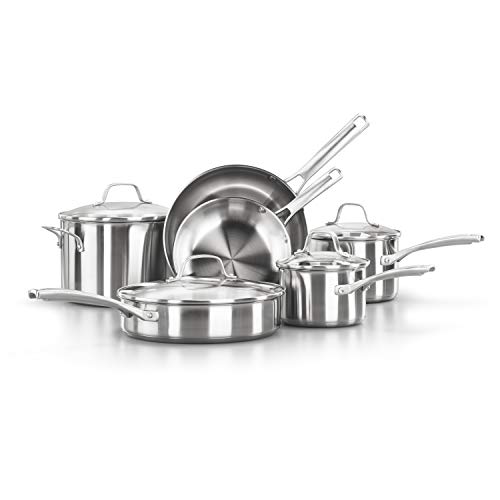
Is Calphalon Classic Stainless Steel Cookware Good?
Yes, if you want cookware that can stay in your kitchen for years. The Calphalon Classic Stainless Steel 10-Piece Cookware Set uses stainless steel with an impact-bonded aluminum base. That base helps spread heat across the cooking surface. The set also works on induction, gas, electric, and glass cooktops. It is oven safe to 450°F and dishwasher safe. These are useful traits for a busy U.S. kitchen.
When I compare stainless vs nonstick cookware, stainless steel wins when I want strong browning or a pan that can take daily use. I also like the freedom to use metal utensils with stainless steel. The trade-off is simple: food can stick if I rush the heat or use too little fat. Eggs are a good example. With stainless steel, patience matters. Heat the pan, add a little oil, and let the food release on its own. Once that habit clicks, stainless steel feels much less scary.
What Makes It Stand Out / Key Features
- Stainless Steel BodyThe cooking surface is built for repeated use and does not rely on a nonstick coating.
- Impact-Bonded Aluminum BaseAn aluminum base helps spread heat for browning, sautéing, and everyday cooking.
- 10-Piece SetThe set includes fry pans, saucepans, a sauté pan, a stock pot, and matching lids.
- Induction CompatibleIt works with induction as well as gas, electric, and glass cooktops.
- Oven SafeThe cookware is rated for oven use up to 450°F.
- Dishwasher SafeThe pieces can go in the dishwasher, which makes routine cleanup easier.
- Stay-Cool HandlesLong stainless steel handles are designed to stay cooler during stovetop cooking.
My Recommendation
Consider it if you cook often, like strong browning, use high heat, or want cookware that can serve you for many years. It is a strong foundation for a U.S. home kitchen.
| Best For | Why |
|---|---|
| Frequent home cooks | The durable build handles regular use well. |
| Steak and chicken fans | The cooking surface is well suited to browning and searing. |
| Induction kitchens | The set supports induction, gas, electric, and glass cooktops. |
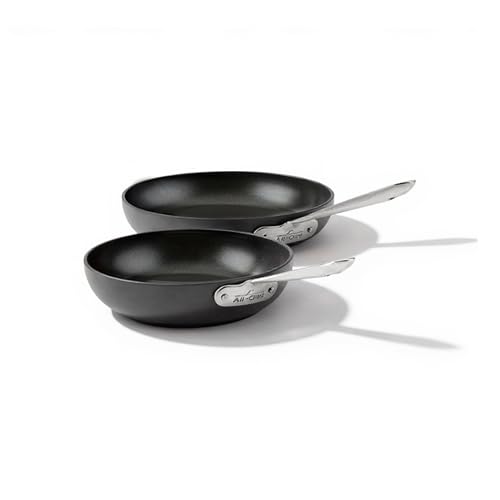
Is All-Clad HA1 Nonstick Cookware Good?
Yes, if easy cooking is your main goal. The All-Clad HA1 2-Piece Nonstick Fry Pan Set includes 8-inch and 10-inch pans. The set is designed for low-stick cooking and works with induction cooktops. It is also dishwasher safe and oven safe up to 500°F without the lids. For quick meals, eggs, pancakes, fish, and reheating food, the nonstick surface removes much of the daily friction.
In a stainless vs nonstick cookware comparison, nonstick feels like having a shortcut built into the pan. I notice the difference most on rushed mornings. Eggs slide out with little effort, and cleanup can take only a minute. But that convenience comes with a care rule: treat the coating gently. I avoid sharp metal tools and very high heat. A nonstick pan is not the pan I reach for when I want a hard sear or years of rough use.
What Makes It Stand Out / Key Features
- Nonstick Cooking SurfaceThe coated surface helps food release with less sticking and less oil.
- Two Pan SizesThe set includes 8-inch and 10-inch fry pans for small and medium meals.
- Induction ReadyThe pans are designed to work with induction cooktops.
- Oven SafeThe pans are rated for oven use up to 500°F without the lids.
- Dishwasher SafeDishwasher use can make cleanup fast, although gentle hand washing may help preserve the coating.
- Easy Food ReleaseThe coated surface is especially useful for eggs, pancakes, fish, and other delicate foods.
- Scratch-Resistant ExteriorThe exterior is designed to resist normal wear, though the cooking surface still needs careful handling.
My Recommendation
Choose it if you value easy food release, quick cleanup, and simple weekday meals. It makes the most sense as a focused pan set rather than a complete cookware collection.
| Best For | Why |
|---|---|
| Breakfast cooks | Eggs, pancakes, and similar foods release with less effort. |
| Busy households | The surface makes cooking and cleanup faster. |
| New cooks | It is more forgiving when cooking delicate foods. |
stainless vs nonstick cookware: Side-by-Side Test
The stainless vs nonstick cookware debate gets easier when you stop asking which pan is perfect. Neither is perfect. They simply shine in different jobs.
I look at heat, food release, cleanup, durability, care, and cooking range. That gives a clearer picture than price alone. Stainless steel is the long-game choice. Nonstick is the convenience choice.
Cooking Functions: Which Does More?
Stainless steel can move from stovetop work to oven cooking and strong searing with few limits.
| Feature | Product 1 | Product 2 |
|---|---|---|
| Searing | Excellent | Good |
| Delicate foods | Needs technique | Excellent |
| Sauces and pan fond | Excellent | Limited |
| General versatility | Excellent | Good |
⭐ Product A – 9/10 | Product B – 8/10
Stainless steel has the edge when you want one style that handles more cooking tasks.
Food Release: Which Is Easier?
This is where nonstick earns its place. It makes sticky foods much less stressful.
| Feature | Product 1 | Product 2 |
|---|---|---|
| Eggs | Good with proper heat | Excellent |
| Pancakes | Good with oil and skill | Excellent |
| Fish | Good with technique | Excellent |
| Low-oil cooking | Moderate | Excellent |
⭐ Product A – 7/10 | Product B – 10/10
Nonstick has the edge for foods that love to cling to the pan.
Heat Control: Which Handles Heat Better?
Stainless steel is the better match for cooks who like high heat and strong browning.
| Feature | Product 1 | Product 2 |
|---|---|---|
| High-heat cooking | Excellent | Good |
| Browning | Excellent | Good |
| Heat tolerance | High | More limited by coating care |
| Heat learning curve | Moderate | Low |
⭐ Product A – 9/10 | Product B – 7/10
Stainless steel has the edge for high-heat cooking and deep browning.
Cleanup: Which Saves More Time?
After a long workday, nobody wants to scrub a pan for twenty minutes.
| Feature | Product 1 | Product 2 |
|---|---|---|
| Food release | Moderate | Excellent |
| Dishwasher safe | Yes | Yes |
| Burnt residue | Needs more work | Usually easier |
| Daily cleanup | Good | Excellent |
⭐ Product A – 7/10 | Product B – 9/10
Nonstick has the edge when fast cleanup matters most.
Durability: Which Lasts Longer?
This is the clearest long-term difference in stainless vs nonstick cookware.
| Feature | Product 1 | Product 2 |
|---|---|---|
| Scratch concern | Low | Higher |
| Metal utensil use | Generally suitable | Avoid sharp metal tools |
| Long-term surface life | Excellent | Depends on coating care |
| Rough daily use | Excellent | Moderate |
⭐ Product A – 10/10 | Product B – 7/10
Stainless steel has the edge for long-term durability.
Care: Which Is More Forgiving?
Both need care, but the type of care is different.
| Feature | Product 1 | Product 2 |
|---|---|---|
| Metal utensils | Generally fine | Best avoided |
| High heat | Very capable | Use with care |
| Scrubbing | More forgiving | Use gentle methods |
| Learning curve | Moderate | Low |
⭐ Product A – 9/10 | Product B – 8/10
Stainless steel is more forgiving when cookware gets rough treatment.
Value: Which Gives More?
Value is about more than the checkout price. It also includes lifespan and how often you use the pan.
| Feature | Product 1 | Product 2 |
|---|---|---|
| Initial usefulness | Very high | High |
| Expected long-term value | Excellent | Good |
| Everyday convenience | Good | Excellent |
| Replacement concern | Low | Higher |
⭐ Product A – 9/10 | Product B – 8/10
Stainless steel has the edge for long-term value, while nonstick offers strong short-term convenience.
Final Verdict: Which Should You Buy?
The stainless vs nonstick cookware choice comes down to your cooking style. Stainless steel is the better fit for durability, high heat, browning, sauces, and long-term use. Nonstick is the easier choice for eggs, pancakes, fish, low-oil meals, and quick cleanup.
If I were building a kitchen from scratch, I would make stainless steel the main cookware base and keep a good nonstick fry pan for delicate foods. That gives you the best of both worlds. Stainless steel is the workhorse. Nonstick is the shortcut. You do not have to choose only one.