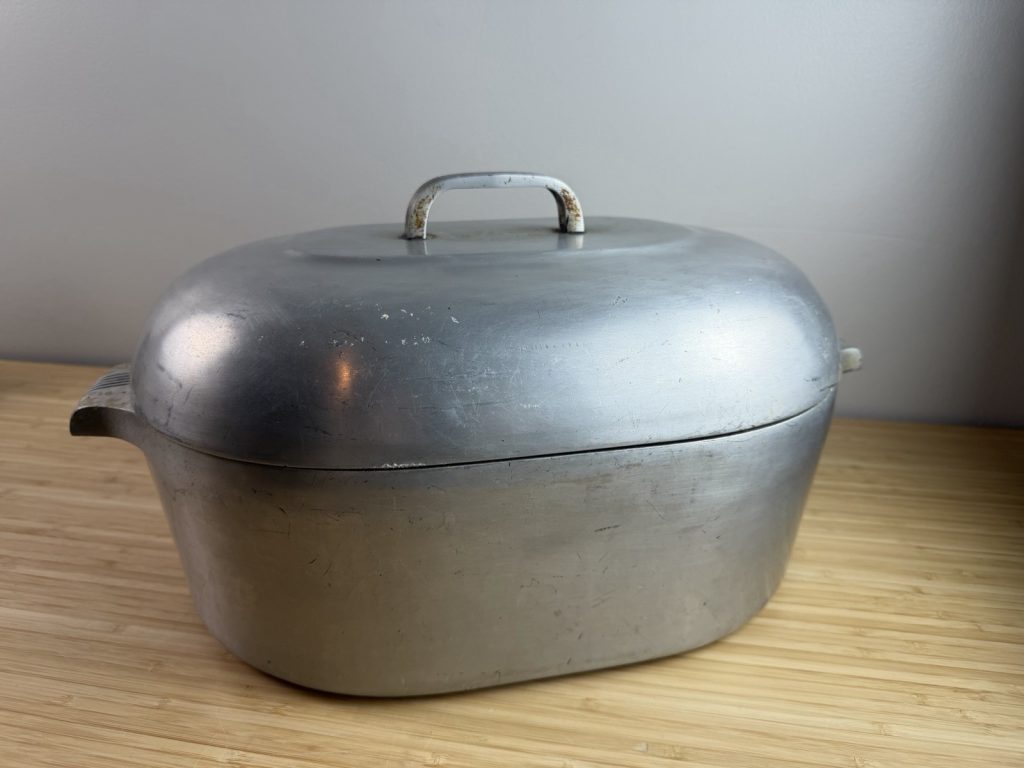
magnalite cookware is primarily made of cast aluminum, with magnesium added to form a special metal alloy. Some versions, including Magnalite Professional, have different surface treatments, so the exact construction depends on the model and age.
In American kitchens, especially across Louisiana and the southern United States, Magnalite pots have long been used to cook gumbo, jambalaya, soups, roasts, and family-size meals. Their smooth silver finish and sturdy shape make them easy to recognize. Many families also keep vintage Wagner Ware Magnalite pots because these pieces have been passed down through generations.
The main material behind traditional Magnalite cookware is an aluminum-based alloy that contains magnesium. Aluminum helps heat move through the pot, while magnesium changes the alloy’s mechanical properties. The metal is cast into the shape of a pot, pan, or roaster rather than simply stamped from a thin sheet. This construction helps explain why Magnalite cookware feels substantial without the weight of many cast-iron pots.
There is one important detail for shoppers and collectors: Magnalite is a brand name, not the name of one universal metal recipe. Product lines and production periods may differ. The safest way to identify the materials in a particular piece is to check its markings, model information, and original care instructions rather than assume every pot has the same alloy or finish.
Traditional Magnalite cookware is made primarily of cast aluminum combined with magnesium. Wagner Manufacturing Company developed the Magnalite line in the United States in the 1930s. Its special aluminum-based alloy became a defining feature of the cookware and helped set it apart from ordinary aluminum pots.
Aluminum is the main metal in this construction. It is relatively light and conducts heat well, which helps a pot warm up without the heavy feel of cast iron. Magnesium is added to aluminum alloys to change properties such as strength and hardness. The result is a metal designed for practical use in cookware.
The name Magnalite should not be treated as a precise chemical formula. It is a trade name associated with a particular cookware line. Public descriptions consistently identify aluminum and magnesium as the key materials, but they do not provide a verified, complete recipe for every Magnalite model made over the decades.
Some online descriptions list other metals, such as copper, zinc, manganese, or nickel, as possible parts of Magnalite’s composition. Those claims should not automatically be applied to every pot. Without a manufacturer specification or reliable analysis for the exact model, the amounts and presence of such elements remain unconfirmed.
Source: reviewho.com
Aluminum
The primary metal in traditional Magnalite cookware. It conducts heat well and keeps the cookware lighter than many cast-iron alternatives.
Magnesium
An alloying element that changes the strength and other physical properties of aluminum. The exact amount in each Magnalite model is not established by a universal public specification.
Cast construction
The metal is shaped in a mold to create the body of the cookware. This differs from cookware made by pressing a thin sheet into shape.
Model-specific finishes and parts
Handles, knobs, lids, and surface treatments may vary by product line and production period. These details can affect care and oven-use limits.
Is Magnalite pure aluminum?
No. Traditional Magnalite is described as an aluminum-based alloy rather than pure aluminum. An alloy is a mixture of a main metal and one or more other elements. Manufacturers use alloys because the added elements can change how the metal behaves during production and use.
This distinction matters when comparing Magnalite with inexpensive aluminum cookware. Both may contain mostly aluminum, but their alloy formulas, thicknesses, shapes, and finishes can differ. A product’s cooking behavior depends on all these features, not simply on the word aluminum.
Do not assume one exact percentage
A claim that every Magnalite pot contains a specific percentage of aluminum or magnesium needs a reliable specification for that exact model.
What does the name Magnalite mean?
Magnalite is a cookware brand and trade name associated with Wagner’s aluminum-magnesium alloy. It is not a standard alloy designation that, by itself, tells a buyer the exact chemical composition.
For this reason, a pot marked Magnalite should be identified by its model and production details when material composition is important. Brand history provides useful context, but it cannot replace product-specific documentation.
How Magnalite’s Aluminum Alloy Affects Cooking
Magnalite’s material helps explain why the cookware is popular for slow cooking and large meals. Aluminum conducts heat well, so heat can move from the burner into the base and body of the pot. The cast shape and the thickness of the metal also influence how evenly the cookware heats.
A pot’s cooking performance does not come from its alloy alone. Its base thickness, sidewall shape, burner size, food volume, and cooking temperature all play a role. A heavy pot full of gumbo, for example, may take time to warm through, even when the metal itself conducts heat well.
For a home cook, the practical benefit is control. When the burner is set to a suitable level, a well-made aluminum pot can support simmering, braising, and preparing sauces. Still, aluminum cookware can heat quickly, so a strong burner setting may cause food to scorch before the cook notices the change.
Magnalite should not be described as having the same heat retention as cast iron in every situation. Cast iron is generally heavier and can hold a large amount of heat. Aluminum usually transfers heat more readily and weighs less. Which material works best depends on the meal, the stove, and the cook’s preferred handling style.
Source: magnalitepans.com
Useful for simmering
The aluminum-based body transfers heat effectively. Use moderate heat and stir thick foods to reduce the risk of sticking or scorching.
Helpful for large batches
The cast construction and pot shapes suit soups, stews, braises, and family-size dishes, provided the pot is not overfilled.
Watch the burner setting
Good heat conduction does not make food burn-proof. Lower the heat when a dish reaches a steady simmer.
Consider the complete design
Metal thickness, pot size, lid fit, and the cooking surface matter alongside alloy composition.
Why is Magnalite cast instead of stamped?
Casting means molten metal is poured into a mold and allowed to solidify into the desired shape. This method allows a manufacturer to create a formed pot with a defined base, sides, handles, and other design features.
Stamped aluminum cookware is usually made by pressing or forming a sheet of metal. It can be light and convenient, but a thin body may respond differently to heat and physical force. Cast construction can provide a more substantial shape, although durability still depends on the alloy, design, manufacturing quality, and condition of the piece.
Cast cookware
Shaped in a mold, often with a more substantial body than thin sheet-metal cookware.
Stamped cookware
Formed from sheet metal, often making it lighter but potentially more prone to dents or distortion when the material is thin.
What Is the Difference Between Magnalite Classic and Professional?
Magnalite cookware is not limited to one design or surface treatment. Traditional Magnalite pieces are commonly recognized by their silver-colored cast-aluminum bodies. Magnalite Professional is associated with a different finish, including hard-anodized cookware in certain versions.
Hard anodizing is an electrochemical process that changes the surface of aluminum to form a harder aluminum oxide layer. It is a surface treatment, not the same thing as adding magnesium to the metal. The underlying body and the finished surface are two separate parts of the material story.
This distinction is useful when buying secondhand cookware. A dark finish does not necessarily mean a pot is made from a different base metal, and a silver finish does not prove that every part is untreated aluminum. Check the model name and product markings before choosing a cleaning method or deciding whether the piece is suitable for a particular cooking task.
The term Professional can also be used loosely in resale listings. A seller’s description is not enough to confirm the exact product line. Compare logos, design details, and any available manufacturer documentation, especially if the cookware will be used on a modern stove or placed in an oven.
Source: magnalitepots.com
Traditional or Classic styles
Often feature a polished, silver-colored cast-aluminum body. Confirm the individual piece’s age and finish before cleaning it.
Professional styles
Some versions use hard-anodized aluminum surfaces. Their care needs may differ from those of traditional polished cookware.
Handles and knobs
Materials can vary by model and era. Plastic, resin, wood, or other components may have lower heat limits than the metal body.
Does hard-anodized mean nonstick?
Not necessarily. Hard anodizing creates a harder aluminum oxide surface, but it does not automatically mean the cookware has a conventional nonstick coating. Some cookware may combine anodized aluminum with another surface treatment, while other pieces may not.
Do not assume that an older Magnalite Professional pot has a nonstick coating, or that it can tolerate metal utensils, based only on its dark color. Use the product’s documentation when available and avoid utensils that could damage an unknown or deteriorating surface.
Is Magnalite Cookware Safe to Cook With?
Magnalite cookware is made from an aluminum-based alloy, so its safe use depends in part on the condition of the pot and the foods cooked in it. Aluminum can move into food in small amounts during cooking, and the amount can rise under some conditions, including prolonged contact with acidic foods. This is a material property, not proof that every aluminum pot is dangerous.
For a sound piece of cookware with an intact cooking surface, normal use is different from cooking for hours in a badly damaged pot. A severely pitted, flaking, deeply corroded, or otherwise deteriorating interior deserves caution. If you cannot identify a suspicious coating or determine whether the cooking surface has been damaged, do not use the piece for food until its condition is assessed.
Acidic ingredients include tomatoes, vinegar, lemon juice, and other citrus fruits. Long cooking times with these foods can increase interaction with exposed aluminum. Very salty foods may also affect aluminum under some conditions. If a recipe calls for a long tomato-based simmer, an intact stainless–steel or suitable enamel-lined pot may be a more practical option.
A change in color is not, by itself, proof of toxic contamination. Aluminum can darken, stain, or develop a dull appearance with use. However, visible pitting, rough corrosion, peeling material, or an unknown coating in poor condition is a reason to stop and investigate rather than polish the pot and assume it is safe.
People with a medical condition that requires limiting aluminum exposure should ask a qualified health professional about suitable cookware. General material information cannot determine a person’s individual exposure or medical risk.
Source: homeartic.com
Inspect the cooking surface
Look for deep pits, loose material, flaking, unusual corrosion, and damage that exposes an unknown underlying layer.
Limit prolonged acidic cooking
Avoid leaving tomato, citrus, or vinegar-based foods in contact with exposed aluminum for long periods.
Do not use a damaged pot blindly
If the surface is deteriorating or its identity is uncertain, set the pot aside until you can confirm its condition.
Do not confuse staining with proof of danger
Surface discoloration can occur during normal use. Assess the texture, condition, and type of finish before deciding what to do.
Can aluminum from Magnalite get into food?
Yes. Aluminum can transfer into food from aluminum cookware. The amount depends on factors such as the food’s acidity, cooking time, temperature, and the condition of the surface. A universal amount cannot be assigned to every Magnalite pot or recipe.
The key practical step is to avoid prolonged storage or cooking of highly acidic foods in cookware with exposed aluminum when a more suitable vessel is available. For storage, transfer leftovers to a container made for food storage instead of leaving them in the pot for an extended period.
Is vintage Magnalite safe if it looks old?
Age alone does not establish that a pot is unsafe, and a shiny appearance does not prove that it is safe. Check the inside, outside, handles, lid, and any coating for signs of damage. Pay close attention to deep pits, rough patches, cracks, and loose surface material.
If the cookware has an unidentified interior coating, evidence of a repair, or damage you cannot assess, do not rely on its appearance alone. Seek model-specific information or choose a pot whose food-contact surface and condition are known.
How to Clean and Maintain Magnalite Cookware
The best care method depends on the exact Magnalite model and its finish. For traditional polished cast-aluminum cookware, gentle hand-washing is a sensible starting point. Harsh cleaners and aggressive scrubbing can dull the surface or cause damage that is difficult to reverse.
After cooking, allow the pot to cool before washing it. A sudden temperature change can stress cookware, and a very hot pot can also cause burns or damage a sink surface. Use warm water, mild dish soap, and a soft sponge to remove food and grease.
If food is stuck, soak the pot in warm, soapy water and let the residue soften. A soft nylon brush can help with stubborn spots. Avoid steel wool, harsh scouring pads, strong oven cleaners, and abrasive powders unless the manufacturer specifically approves a product for that finish.
Dry the cookware after washing to limit water spots and keep it ready for the next meal. Do not assume that every Magnalite piece is dishwasher-safe. Dishwasher detergents, heat, and contact with other items can affect aluminum finishes, so hand-washing is the more cautious choice when the model’s instructions are unavailable.
Source: magnalitestore.com
Use mild soap
Clean the pot with warm water and a gentle dish detergent after it has cooled.
Soften stuck-on food
Soak the cookware rather than scraping the residue with a knife or metal tool.
Avoid harsh chemicals
Strong alkaline cleaners and oven cleaners can damage aluminum and some surface treatments.
Dry after washing
Wipe the pot with a soft towel to remove remaining water and reduce spots.
Check before polishing
Do not use metal polish or aggressive restoration methods on the cooking surface unless they are suitable for that specific cookware.
Should you use baking soda on Magnalite?
Baking soda is mildly abrasive, so it should not be treated as a universal cleaning solution for every Magnalite finish. A gentle baking-soda paste may help with some residue on suitable surfaces, but rubbing it hard can alter a polished finish. Test any approved cleaning method on a small, inconspicuous area first.
For everyday grease and food residue, mild soap and a soft sponge are usually the better first choice. If the pot has a dark anodized surface or an unknown coating, follow instructions for that finish rather than applying a remedy intended for bare aluminum.
Can you restore a badly stained Magnalite pot?
Some surface stains can be reduced, but restoration is not the same as making a damaged pot safe. A dull finish or ordinary discoloration may be cosmetic, while deep pitting, corrosion, and flaking material require a different response.
Before trying a restoration product, identify the cookware and the material on the surface. If the cooking area is severely pitted or the finish is peeling, do not use polishing to hide the damage. Replace the pot or seek advice from a qualified cookware restoration specialist when the condition cannot be judged with confidence.
How to Identify Authentic Vintage Magnalite Cookware
When shopping for vintage Magnalite in the United States, begin with the markings rather than the seller’s claims. Original Wagner Ware Magnalite pieces are associated with Wagner Manufacturing Company in Sidney, Ohio, and many carry wording or logos that help identify the maker and product line. The design, handles, lid, and overall construction can offer more clues.
A listing that says cast aluminum does not automatically establish that an item is Magnalite. Other makers produced cast-aluminum cookware, and some modern products use similar shapes or names. Compare the piece with reliable photographs and model information, and ask the seller for clear pictures of the base, interior, lid, and handles.
The condition of the cooking surface matters as much as authenticity. A genuine vintage pot with serious corrosion may be a poorer choice for daily cooking than a less collectible pot in sound condition. If the purpose is collecting, originality and condition may affect value. If the purpose is cooking, focus first on the food-contact surface, handle security, lid fit, and suitability for your stove.
Do not assume that every old Magnalite pot can be used on an induction cooktop. Induction systems need a compatible magnetic base, and traditional aluminum cookware is generally not directly induction-compatible. Check the specific product instructions or test the base with a magnet as an initial clue; a magnet test is not a complete substitute for manufacturer confirmation.
Source: image.invaluable.com
Read the maker’s marks
Look for Wagner Ware, Magnalite, model numbers, or other marks that can help narrow down the product’s identity.
Inspect all sides
Ask for pictures of the base, interior, lid, handles, and any damaged areas before buying online.
Separate authenticity from condition
A genuine piece can still have damage that makes it unsuitable for cooking.
Check stove compatibility
Traditional aluminum cookware generally will not work directly on induction without a compatible magnetic base or an appropriate adapter.
Is Magnalite still made?
Original Wagner Ware Magnalite production is generally regarded as a discontinued vintage cookware line. Original pieces are commonly found through estate sales, antique shops, auctions, and secondhand marketplaces. The exact availability of later products or Magnalite-branded offerings can depend on the product and seller.
A modern pot advertised as Magnalite-style or as an alternative to vintage Magnalite should not be assumed to use the original alloy. Ask for the manufacturer’s material specifications and care instructions. Similar appearance does not establish identical composition, manufacturing history, or performance.
Magnalite Compared With Other Common Cookware Materials
Magnalite is one of several cookware options available to American home cooks. Aluminum, stainless steel, cast iron, and enamel-coated cookware each have different strengths. Choosing between them is easier when you compare how they handle heat, weight, maintenance, and acidic foods.
The table below gives a general material-level comparison, not a laboratory ranking of specific brands. Individual pots can behave differently because of their thickness, shape, base construction, and surface treatment. Use the comparison as a starting point, then check the instructions for the cookware you own.
Source: themagnalite.com
How does Magnalite compare with stainless steel?
Stainless steel is often a practical choice for tomato sauces, vinegar-based dishes, and long-term everyday use because a sound stainless-steel cooking surface is generally less reactive with these foods than exposed aluminum. Many stainless-steel pans use an aluminum or copper layer inside the base to improve heat transfer.
Magnalite’s aluminum-based construction transfers heat well, but its exposed cooking surface needs more care around prolonged acidic cooking. For cooks who often make long-simmered tomato sauces, stainless steel may be easier to maintain. For large batches of soups, stews, and braises, a sound Magnalite pot may still suit the job.
How does Magnalite compare with cast iron?
Cast iron is heavier and generally retains heat well once hot. It can be useful for searing and for dishes that benefit from a stable, hot cooking surface. Its weight may make large pots harder to lift, especially when full.
Magnalite offers a different balance. Its aluminum-rich body can move heat efficiently without the weight of a similarly sized cast-iron pot. Neither material is best for every recipe, and both can scorch food when used at unsuitable heat levels.
Quick material comparison
Use this table to match a material to the cooking task. The descriptions refer to common construction types and may not fit every product.
Magnalite cast aluminum alloy
Good heat transfer and a substantial cast shape. Requires care with prolonged acidic cooking and an unknown or damaged surface.
Stainless steel
A versatile option for acidic dishes and general cooking. Heat performance depends on the base and whether the pan has a conductive core.
Cast iron
Heavy and useful for heat retention and searing. Needs proper care to prevent rust when the surface is uncoated.
Enamel-coated cookware
A glass-like coating covers the underlying metal. Avoid using pieces with chipped or badly damaged food-contact enamel.
Thin stamped aluminum
Often light and quick to heat. Thin designs may be more prone to dents or uneven cooking than heavier constructions.
Frequently Asked Questions
Q
Is Magnalite cookware made of aluminum or stainless steel?
Traditional Magnalite cookware is made primarily from a cast aluminum-magnesium alloy, not stainless steel. Some models have different surface treatments, so check the markings and documentation for the exact piece.
Q
Does Magnalite cookware contain magnesium?
Yes. Magnesium is a defining alloying element in traditional Magnalite cookware. The exact amount and any additional elements should not be assumed without a reliable specification for the particular model.
Q
Is Magnalite cookware nonstick?
Traditional polished Magnalite is not automatically nonstick. Some Professional models may have a different surface treatment, but hard-anodized aluminum is not the same thing as a conventional nonstick coating. Identify the model before choosing utensils or cleaning products.
Q
Can I cook tomatoes in a Magnalite pot?
Tomatoes are acidic and can interact with exposed aluminum, especially during long cooking periods. For a brief preparation in a sound pot, the situation differs from a long simmer or overnight storage. For prolonged tomato-based cooking, a suitable stainless-steel or intact enamel-coated pot is a more cautious option.
Q
Can Magnalite cookware go in the dishwasher?
Hand-washing is the cautious choice for traditional Magnalite when the original instructions are unavailable. Dishwasher detergents and heat may damage or dull aluminum finishes. Follow the specific manufacturer’s instructions for newer or differently finished models.
Q
Can I use Magnalite on an induction stove?
Traditional aluminum cookware generally does not work directly on an induction cooktop because induction needs a compatible magnetic base. Check the exact model’s instructions. An approved induction adapter may work in some situations, but it can affect heating performance and should be used according to the adapter and cooktop instructions.
Q
Why does my Magnalite pot look dark or stained?
Aluminum can darken or stain during normal use, and a change in appearance alone does not prove that the pot is unsafe. Inspect the surface for deep pitting, rough corrosion, peeling, or loose material. If the cooking surface is badly damaged or has an unidentified coating, stop using the pot until you can establish its condition.
Q
Is vintage Wagner Ware Magnalite worth keeping?
A vintage piece may be worth keeping for its cooking use, family history, or collector interest. Its value depends on factors such as model, originality, condition, and demand. If you plan to cook with it, inspect the food-contact surface, handles, lid, and overall structure before considering its collectible value.
✦ Wrapping Up
Conclusion
Magnalite cookware is best known for its cast aluminum body and magnesium-containing alloy. This material combination, along with the shape and thickness of the cast metal, helps explain the cookware’s heat transfer, sturdy feel, and long history in American kitchens. However, Magnalite is a brand name rather than one universal chemical formula, so details can vary by product line and age.
For everyday use, the most useful questions are not just what the pot is made of, but which model you have, what surface it uses, and whether that surface remains in good condition. Traditional Magnalite cookware can suit many soups, stews, braises, and large meals, but prolonged contact with acidic foods calls for extra care. Gentle hand-washing and a close inspection of older pieces can help you make a sound decision.
💡 Key Takeaway
Before cooking with or buying Magnalite cookware, check the model markings, confirm whether it is traditional cast aluminum or a differently finished version, inspect the food-contact surface for damage, and follow care instructions suited to that specific piece.