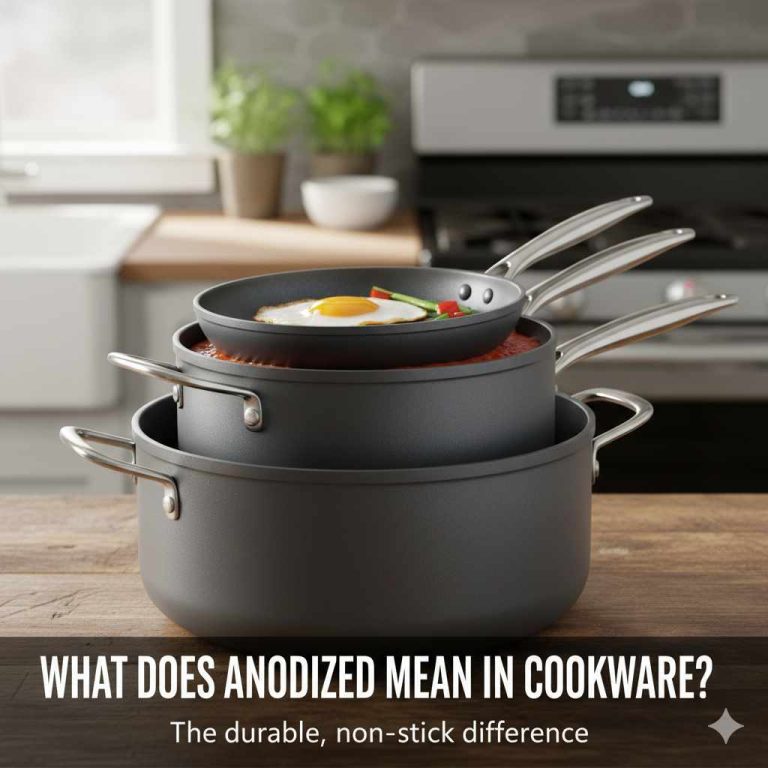
Hard anodized cookware is made from aluminum that has been treated with an electrochemical process to create a harder, more durable surface. It often heats evenly and may include a separate nonstick coating.
When you shop for pots and pans in the United States, you may see hard anodized cookware beside stainless steel, ceramic-coated, and traditional nonstick options. The name can sound technical, but the idea is simple. Manufacturers treat aluminum to make its outer surface harder and more resistant to wear than untreated aluminum.
This process can make a pan useful for daily meals, from scrambled eggs before work to chicken and vegetables for dinner. However, hard anodized does not automatically mean nonstick, scratchproof, dishwasher-safe, or suitable for every cooktop. Those features depend on the pan’s design and any extra coating it has.
The key is to understand what the treatment does, what it does not do, and how to care for the pan. Once you know those details, you can decide whether hard anodized cookware fits your kitchen, cooking habits, and budget.
Hard anodized means that aluminum has undergone a controlled electrochemical treatment that changes the structure of its outer surface. The treatment creates a thicker, harder aluminum oxide layer than the thin natural oxide that forms on untreated aluminum.
Aluminum is popular in cookware because it transfers heat efficiently and is relatively light. Its untreated surface, however, can scratch or react with some foods more readily than a suitably treated surface. Hard anodizing helps address those limitations without replacing aluminum as the main body of the pan.
Think of the treatment as changing the outer layer of a metal tool. The underlying aluminum still does much of the work of spreading heat, while the treated surface offers improved resistance to wear. The result is a combination of useful heat transfer and a tougher exterior surface.
The term describes a surface treatment, not a complete cookware recipe. Two pans can both be called hard anodized yet differ in thickness, shape, handle design, base construction, and interior coating. Those differences affect how each pan cooks and how long it may last.
Source: thehomereviews.com
Harder surface
The anodized layer is designed to resist everyday wear better than untreated aluminum.
Aluminum core
The pan usually retains aluminum’s useful heat-transfer properties and relatively low weight.
Possible nonstick interior
Some pans have an added nonstick coating. The anodized layer and the nonstick layer are not the same thing.
What Is the Difference Between Anodized and Hard Anodized?
Both terms describe aluminum treated through an electrochemical process. Hard anodizing generally creates a thicker, harder oxide layer than standard anodizing, often through carefully controlled processing conditions.
In cookware, hard anodizing is intended to provide a durable surface that can stand up to repeated use. Standard anodizing is also used for many aluminum products, but the exact surface properties depend on the process and product specifications.
There is no need to judge a pan by its label alone. If durability matters to you, look for a clear material description, care instructions, warranty terms, and information about the interior cooking surface.
Anodized aluminum
Aluminum with an electrochemically formed oxide surface. The layer’s properties depend on the treatment.
Hard anodized aluminum
Aluminum treated to produce a harder, more wear-resistant oxide layer, commonly used for cookware intended for frequent use.
Does Hard Anodized Mean Nonstick?
No. Hard anodized describes the treated aluminum surface, while nonstick describes how readily food releases from a cooking surface. These terms refer to different properties.
Many hard anodized frying pans have an added nonstick coating, often based on a fluoropolymer such as PTFE. Other hard anodized cookware has an uncoated interior. A treated metal surface should not be assumed to behave like a dedicated nonstick pan.
Check the product description for phrases such as nonstick interior, PTFE-free, ceramic-coated, or uncoated. Each phrase describes a different feature, and the exact wording matters when choosing a pan for eggs, pancakes, searing, or sauces.
Hard anodized alone
Identifies the aluminum surface treatment but does not promise effortless food release.
Hard anodized with nonstick
Combines the treated aluminum body with a separate coating designed to reduce sticking.
How Is Hard Anodized Cookware Made?
Manufacturers create a hard anodized surface by placing aluminum in an electrolyte bath and passing an electric current through a controlled process. The aluminum acts as an electrode, and the treatment grows an aluminum oxide layer from the metal surface.
This differs from simply painting a pan or attaching a thin decorative film. The oxide layer forms through a reaction involving the aluminum itself. The process changes the surface rather than adding a conventional layer of paint.
The exact manufacturing conditions affect the resulting surface. These can include the electrolyte, temperature, electrical settings, treatment time, and later finishing steps. Therefore, the phrase hard anodized does not establish that every pan has identical performance or durability.
After anodizing, a manufacturer may add a separate coating to the cooking surface. That coating can improve food release, but it also introduces its own care requirements and temperature limits. The final product may therefore have a durable anodized exterior and a more delicate nonstick interior.
Source: larrealasvegas.com
Step 1: Prepare the aluminum
The metal is cleaned and prepared so the surface can be treated consistently.
Step 2: Apply the electrochemical treatment
An electric current helps form the aluminum oxide layer under controlled conditions.
Step 3: Finish the surface
The manufacturer may seal or otherwise finish the treated surface, depending on the process.
Step 4: Add any extra coating
A separate nonstick layer may be applied if the product is designed for nonstick cooking.
Why Is Hard Anodized Cookware Usually Dark?
Hard anodized aluminum often has a charcoal, dark gray, or black appearance. This color can result from the anodizing process and the structure of the oxide layer, rather than from a simple coat of black paint.
Some products may also have colored exterior finishes or separate interior coatings. Color alone does not prove that a pan is hard anodized, nor does a darker finish guarantee better quality.
Benefits of Hard Anodized Cookware
Hard anodized cookware can be a practical choice for people who cook often and want aluminum’s heat-transfer benefits with a more durable surface. Its main strengths are surface hardness, relatively low weight, and the option to combine the metal body with a nonstick interior.
The benefits depend on the complete pan, not just its anodized surface. A well-made pan with a suitable base and sturdy handle may perform much better than a poorly designed pan carrying the same label.
For a typical American kitchen, hard anodized cookware can handle many daily tasks, such as cooking eggs, warming soup, sautéing vegetables, and preparing weeknight meals. Choosing the right interior finish is especially important if you often cook delicate foods or prefer a pan that releases food with little oil.
Source: wellfizz.com
Good heat transfer
Aluminum conducts heat well, helping the pan respond to changes in burner output. Pan thickness and burner fit still affect how evenly it heats.
Improved surface wear resistance
The anodized layer is harder than the surface of untreated aluminum, which can help it withstand normal handling.
Lower weight than many alternatives
Aluminum pans are often easier to lift than cast iron cookware of a similar size.
Useful for daily cooking
The range of available shapes and sizes makes hard anodized cookware suitable for frying pans, saucepans, sauté pans, and stockpots.
Optional nonstick performance
Models with a suitable nonstick coating can make eggs and other delicate foods easier to release and cleanup simpler.
Does Hard Anodized Cookware Heat Evenly?
Aluminum transfers heat efficiently, so it can help cookware spread heat across the cooking surface. However, even heating depends on the pan’s thickness, shape, base construction, and how well it matches the burner.
A thin pan on a large gas flame may develop hot spots even if its aluminum is hard anodized. On an electric cooktop, a flat base that matches the heating element can help improve contact. For induction cooking, the pan must also have a compatible magnetic base.
Is Hard Anodized Cookware Lightweight?
Many hard anodized aluminum pans are lighter than cast iron pans of comparable size. That can make a difference when lifting a full saucepan, moving a skillet from the stove, or washing a large pot in a small sink.
Weight still varies by design. Thick aluminum, stainless steel induction plates, glass lids, and heavy handles can add weight, so check the listed product weight if ease of lifting is a priority.
Is Hard Anodized Cookware Safe?
Hard anodized cookware is generally suitable for normal food preparation when the product is made for cooking and used according to its instructions. The anodized oxide layer is more stable than bare aluminum under many ordinary cooking conditions and helps reduce direct contact between food and the underlying metal.
Safety also depends on the condition of the pan and the type of interior finish. An uncoated hard anodized pan and a hard anodized pan with a nonstick coating are not identical products. If a pan has a nonstick layer, follow the care and temperature instructions for that coating as well as the guidance for the metal body.
No cookware material is automatically right for every use. Avoid using cookware that is badly damaged, has a loose handle, or shows substantial deterioration of its cooking surface. When the manufacturer gives specific warnings or replacement advice, follow those directions.
For ordinary home cooking, use moderate heat when possible, avoid heating an empty nonstick pan for an extended period, and keep the cooking area ventilated. These steps are especially relevant to pans with PTFE-based coatings, which can release hazardous fumes if severely overheated.
Source: cookwareguider.com
Use the pan as intended
Follow the manufacturer’s instructions for cooking temperatures, utensils, cleaning, and oven use.
Check the interior coating
Determine whether the pan is uncoated, PTFE-coated, ceramic-coated, or finished with another material.
Avoid severe overheating
Use appropriate heat settings and do not leave an empty nonstick pan on a hot burner.
Replace badly damaged cookware
If the coating is extensively peeling or the pan is structurally damaged, stop using it and follow the manufacturer’s replacement guidance.
Can Aluminum Leach Into Food?
Small amounts of aluminum can transfer from some cookware into food, and the amount can vary with the food, cooking time, temperature, and condition of the surface. Acidic or salty foods can increase aluminum transfer from untreated aluminum under some conditions.
Anodizing helps create a more resistant surface, which can reduce direct interaction between food and the aluminum beneath it. It does not mean every possible form of transfer is impossible, especially if the surface is damaged or the product has special use restrictions.
If you have a particular health concern, consult current guidance from a relevant public health authority or a qualified clinician. For routine use, follow the cookware maker’s instructions and avoid relying on broad claims that all aluminum cookware is either completely risk-free or inherently dangerous.
Is Hard Anodized Cookware Safe if It Has a Nonstick Coating?
A hard anodized pan with a nonstick interior must be assessed by considering both the anodized aluminum and the added coating. PTFE is one common nonstick material, while some products use ceramic-based coatings or other formulations.
When used within the maker’s temperature limits, PTFE-coated cookware is intended for normal cooking. Serious overheating can cause the coating to break down and release fumes that can make people ill and are highly dangerous to pet birds.
Do not assume that a pan is PTFE-free or ceramic-coated just because it is dark or labeled hard anodized. Check the product’s material details and care instructions before buying.
Hard Anodized vs. Stainless Steel, Ceramic, and Cast Iron
Hard anodized cookware is not automatically better than stainless steel, ceramic-coated cookware, or cast iron. Each material offers a different balance of heat response, food release, weight, maintenance, and cooking style.
The most useful comparison starts with how you cook. If you make eggs every morning, food release may matter more than high-heat searing. If you often brown steaks or build pan sauces, an uncoated stainless steel skillet may be a better fit.
The table below compares common cookware types in general terms. Specific models can differ, so treat it as a starting point rather than a guarantee about every pan on the market.
Source: prudentreviews.com
Cookware Material Comparison
Use this comparison to narrow your choices. The coating, pan thickness, construction, and manufacturer instructions can change how a particular product performs.
Hard anodized aluminum
Often lightweight, with good heat transfer and a wear-resistant treated surface. Food release depends on whether the pan has a separate nonstick coating.
Stainless steel
Often a strong choice for browning, searing, and pan sauces. Food can stick without suitable preheating and cooking technique, and heat distribution depends on the pan’s core and construction.
Ceramic-coated cookware
Usually refers to cookware with a ceramic-based nonstick coating, often over a metal body. Initial food release can be good, but the coating may lose performance with use.
Cast iron
Holds heat well and can work for searing. It is usually heavy and needs appropriate care to limit rust and maintain seasoning when used as bare or seasoned iron.
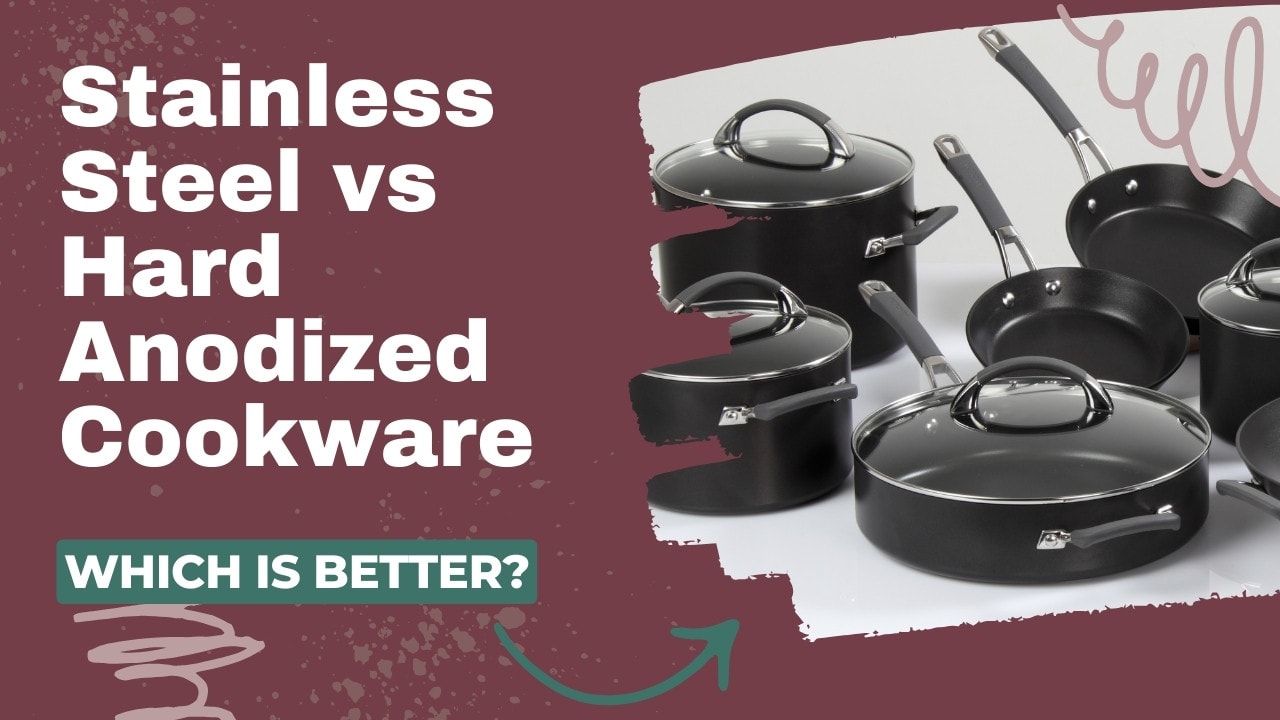
Hard Anodized vs. Stainless Steel
Hard anodized aluminum is often easier to lift and may heat up quickly because aluminum transfers heat well. If it has a nonstick interior, it can also be convenient for eggs, pancakes, and delicate fish.
Stainless steel is often better for cooks who want to build browned bits for a pan sauce or use a metal cooking surface without a traditional nonstick layer. Many stainless steel pans use aluminum or copper cores to improve heat distribution.
A hard anodized pan with a nonstick coating may require more careful utensil selection and eventual replacement as the coating wears. Stainless steel can often tolerate metal utensils better, depending on its construction, though scratches and discoloration can still occur.
Hard Anodized vs. Ceramic-Coated Cookware
Ceramic-coated cookware usually has a metal body covered with a ceramic-based nonstick layer. Hard anodized cookware describes a treatment to the aluminum surface, and it may or may not have an additional nonstick coating.
This distinction matters because ceramic-coated pans can also be made with aluminum bodies. A ceramic-coated pan may therefore use aluminum and a hard anodized pan may also have a nonstick finish, so the categories are not always mutually exclusive.
If you want to compare the coatings themselves, check the manufacturer’s description rather than comparing only the pan names. Both types can lose food-release performance over time, and neither should be assumed to last forever.
How to Choose Hard Anodized Cookware
Choose hard anodized cookware by checking the cooking surface, construction, cooktop compatibility, care requirements, and warranty. The label alone cannot tell you whether a particular set will suit your kitchen.
Start with the pieces you use most. A 10-inch or 12-inch skillet may offer more daily value than a large set filled with pots you rarely use. If you often prepare pasta, soup, or family-size meals, a saucepan or stockpot may be more useful.
Think about your stove before purchasing. Aluminum is not naturally magnetic, so a conventional hard anodized pan may not work on an induction cooktop unless it has a compatible magnetic base. A product’s induction claim should be verified for the exact model.
Finally, consider maintenance. If you prefer to use metal utensils, place pans in a dishwasher, or cook over very high heat, check whether the product supports those habits. A pan that fits your routine is more useful than one with a long feature list you cannot take advantage of.
Source: housekeepingmaster.com
Interior finish
Decide whether you want uncoated aluminum oxide, a traditional nonstick coating, or a ceramic-based coating.
Cooktop fit
Confirm compatibility with gas, electric, glass-ceramic, or induction before buying.
Construction
Check pan thickness, base design, handle attachment, lid fit, and overall weight.
Care instructions
Confirm the recommended utensils, washing method, and maximum oven temperature.
Warranty and replacement
Read the warranty terms, including any exclusions for coatings, normal wear, and improper use.
Is Hard Anodized Cookware Suitable for Induction?
Not all hard anodized aluminum cookware works on induction cooktops. Induction needs a magnetic material in the pan’s base to interact with the cooktop, and aluminum by itself is not magnetic enough for standard induction heating.
Some manufacturers add a magnetic stainless steel plate or another compatible base to an aluminum pan. Look for an explicit induction-compatible statement for the exact model, and check whether the base is flat and suitable for your cooktop.
Can Hard Anodized Cookware Go in the Oven?
Some hard anodized pans are oven-safe, but the maximum temperature varies by product. The handle, lid, grip material, and interior coating can set a lower limit than the metal body itself.
Before putting a pan in the oven, check the instructions for the complete product, including the lid. Do not assume that a metal pan is oven-safe at any temperature or that a stovetop-safe handle can withstand broiler heat.
How to Care for Hard Anodized Cookware
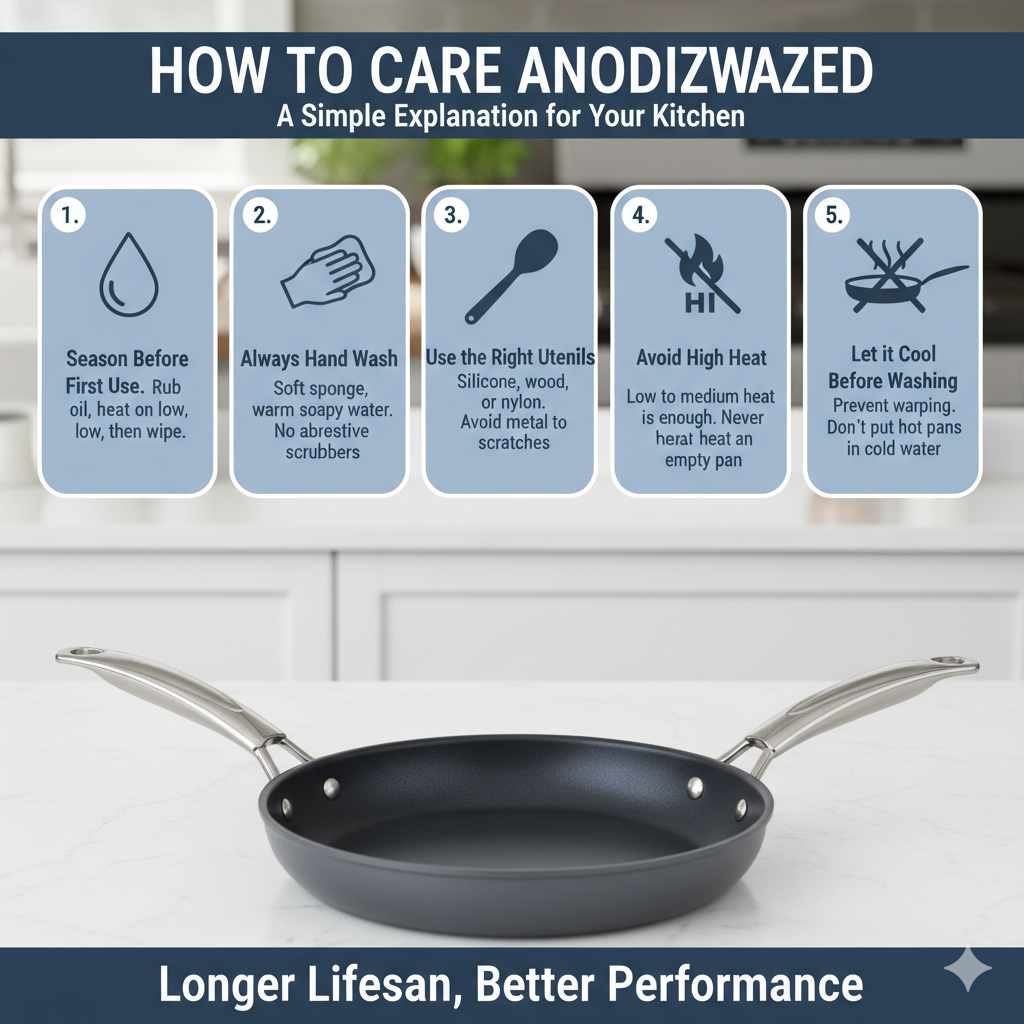
Good care helps hard anodized cookware retain its appearance and function. The best routine depends on whether the pan has an added nonstick coating, but gentle cleaning and sensible heat control are useful starting points.
Allow a hot pan to cool before washing it. Sudden temperature changes can stress cookware and may affect its shape over time. Use warm water, dish soap, and a soft sponge unless the maker gives different instructions.
If food sticks, soak the pan in warm, soapy water rather than scraping it aggressively. Avoid steel wool and harsh abrasive cleaners on a nonstick interior, since they can damage the coating even when the underlying metal is hard.
Do not assume that hard anodized cookware is dishwasher-safe. Some products allow dishwasher use, while others recommend hand-washing to preserve the finish or nonstick layer. Follow the care guide for your exact pan.
Source: kitchenseer.com
Use suitable utensils
Wood, silicone, and other manufacturer-approved utensils are sensible choices for pans with nonstick coatings.
Avoid unnecessary high heat
Medium or medium-low heat is often enough for routine cooking. Use higher settings only when suitable for the pan and recipe.
Clean with care
Use a soft sponge and ordinary dish soap. Do not use abrasive tools on a coated interior.
Store pans carefully
Avoid dragging cookware across other pans. Use a suitable pan protector when stacking pieces.
Inspect the cooking surface
Look for peeling coating, deep damage, loose handles, or warping that affects stable use.
What Should You Avoid When Cleaning Hard Anodized Cookware?
The safest cleaning method depends on the product’s finish. Strong abrasives, harsh cleaners, and rough scouring pads can dull or damage some surfaces, especially an added nonstick coating.
Do not use a sharp metal tool to remove burned food from a coated pan. Instead, let the pan soak and loosen the residue with a soft sponge or another method approved by the manufacturer.
If the pan has an uncoated hard anodized interior, its cleaning needs may differ from those of a nonstick version. Follow the specific instructions rather than assuming all dark aluminum cookware needs the same treatment.
When Should You Replace a Hard Anodized Pan?
A worn appearance does not always mean an uncoated hard anodized pan must be replaced. The decision depends on the extent of damage, the pan’s structure, and the manufacturer’s guidance.
For a pan with a nonstick interior, extensive peeling, flaking, or damage that affects normal cooking is a good reason to stop using it and check the maker’s replacement advice. A loose handle, serious warping, or an unstable base can also make a pan unsuitable for use.
Small surface marks can have different causes and meanings. If you cannot tell whether the anodized layer or an added coating is damaged, consult the manufacturer rather than trying to repair the surface with a home treatment.
Common Myths About Hard Anodized Cookware
Hard anodized cookware has useful features, but some claims about it go beyond what the name proves. Understanding these limits helps you avoid paying extra for a feature you may not need.
The most common mistake is treating hard anodized as a complete performance rating. It tells you about the aluminum surface treatment, not the quality of every part of the pan or the lifespan of an added coating.
Source: cookwareguider.com
Myth: Hard anodized cookware never scratches
Reality: The treated surface is designed to resist wear, but it is not immune to damage. An added nonstick layer may be more vulnerable to scratches than the underlying treated metal.
Myth: Every hard anodized pan is nonstick
Reality: Nonstick performance depends on the interior finish. Some pans have an added coating, while others do not.
Myth: All hard anodized pans work on induction
Reality: The pan needs a suitable magnetic base for induction heating. Many aluminum pans do not have one unless the manufacturer adds it.
Myth: Hard anodized means dishwasher-safe
Reality: Dishwasher compatibility varies by model. Check the product instructions before cleaning it in a dishwasher.
Myth: Hard anodized cookware lasts forever
Reality: The treated surface can be durable, but handles, lids, bases, and added nonstick coatings can wear or fail over time.
Myth: Dark cookware is always hard anodized
Reality: Dark finishes can come from different materials and coatings. Verify the manufacturer’s material description.
Is Hard Anodized Cookware Right for Your Kitchen?
Hard anodized cookware is worth considering if you want a relatively light pan with an aluminum body and a surface designed for better wear resistance. A nonstick version may be especially convenient for everyday meals that involve eggs, pancakes, or other foods that tend to stick.
It may be less suitable if you want a pan that is guaranteed to work on induction without checking the base, or if you need cookware that tolerates any utensil, cleaning method, and oven temperature. Those features must be confirmed for the individual product.
You also do not need to replace every pan in your kitchen to benefit from a different material. A hard anodized skillet can complement stainless steel saucepans or cast iron cookware. Many home cooks find that different materials serve different jobs better.
Before buying, compare the interior coating, pan dimensions, weight, cooktop compatibility, care instructions, and warranty. These practical details give you a clearer picture of value than the hard anodized label alone.
Source: decorguider.com
A useful fit
Home cooks who want lightweight aluminum cookware and may value the convenience of a nonstick interior.
Consider another option
Cooks who prioritize a specific feature such as induction compatibility, intense searing, dishwasher use, or a particular coating-free cooking surface should compare exact models carefully.
A practical approach
Start with one pan that suits your most common meals instead of buying a full set before you know how the material fits your routine.
Frequently Asked Questions
Q
What does hard anodized mean in cookware?
Hard anodized cookware is made from aluminum treated with an electrochemical process that creates a harder, more wear-resistant oxide surface. The pan retains aluminum’s heat-transfer properties, while its cooking surface may be bare treated metal or have an additional nonstick coating.
Q
Is hard anodized cookware better than regular aluminum?
Hard anodized aluminum has a treated surface designed to resist wear better than untreated aluminum. Both types can transfer heat well, but the pan’s construction and thickness affect cooking performance. The best choice depends on your needs, budget, and preferred cooking style.
Q
Is hard anodized cookware safe for everyday use?
Hard anodized cookware made for food preparation is generally suitable for everyday cooking when used as directed. If it has a nonstick coating, follow the coating’s heat limits and care instructions. Avoid prolonged empty-pan heating, and stop using cookware with extensive coating damage or serious structural problems.
Q
Does hard anodized cookware contain Teflon?
Not necessarily. Hard anodized refers to the treatment of the aluminum surface. Some products add a PTFE-based nonstick coating, which may be sold under a brand name such as Teflon, while other products use different coatings or have no added nonstick layer. Check the product specifications to confirm.
Q
Can you use metal utensils on hard anodized cookware?
It depends on the cooking surface. The anodized metal itself is designed to resist wear, but an added nonstick coating may be scratched or damaged by metal tools. For coated pans, wood, silicone, or other approved utensils are usually the more cautious choice.
Q
Can hard anodized cookware go in the dishwasher?
Some products are labeled dishwasher-safe, but others require hand-washing to protect the finish or nonstick coating. Check the instructions for your exact pan. When the guidance is unclear, gentle hand-washing with warm water, dish soap, and a soft sponge is a practical option.
Q
Can hard anodized cookware be used on an induction stove?
Only if the pan has a compatible magnetic base. Aluminum alone does not work with standard induction heating. Look for an explicit induction-compatible statement in the manufacturer’s specifications before buying.
Q
How long does hard anodized cookware last?
There is no single lifespan for all hard anodized cookware. Construction quality, frequency of use, heat levels, cleaning habits, and the type of interior coating all matter. The anodized surface may remain durable while a separate nonstick coating or other component wears sooner.
✦ Wrapping Up
Conclusion
Hard anodized cookware is aluminum cookware with an electrochemically treated surface designed to be harder and more resistant to wear than untreated aluminum. It combines aluminum’s useful heat transfer with a durable surface, and some models add a separate nonstick coating for easier food release.
The label does not guarantee that a pan is scratchproof, induction-ready, dishwasher-safe, or suitable for every cooking method. Those details depend on the exact product, its base, its interior finish, and the manufacturer’s instructions.
For many home kitchens, hard anodized cookware can be a useful everyday option. Compare its construction and care requirements with stainless steel, ceramic-coated cookware, and cast iron before deciding which pan fits your needs.
💡 Key Takeaway
Before buying hard anodized cookware, confirm whether the interior is coated, whether the pan works on your cooktop, its oven and dishwasher limits, and which utensils the manufacturer recommends. Choose the pan that fits your cooking habits rather than relying on the label alone.