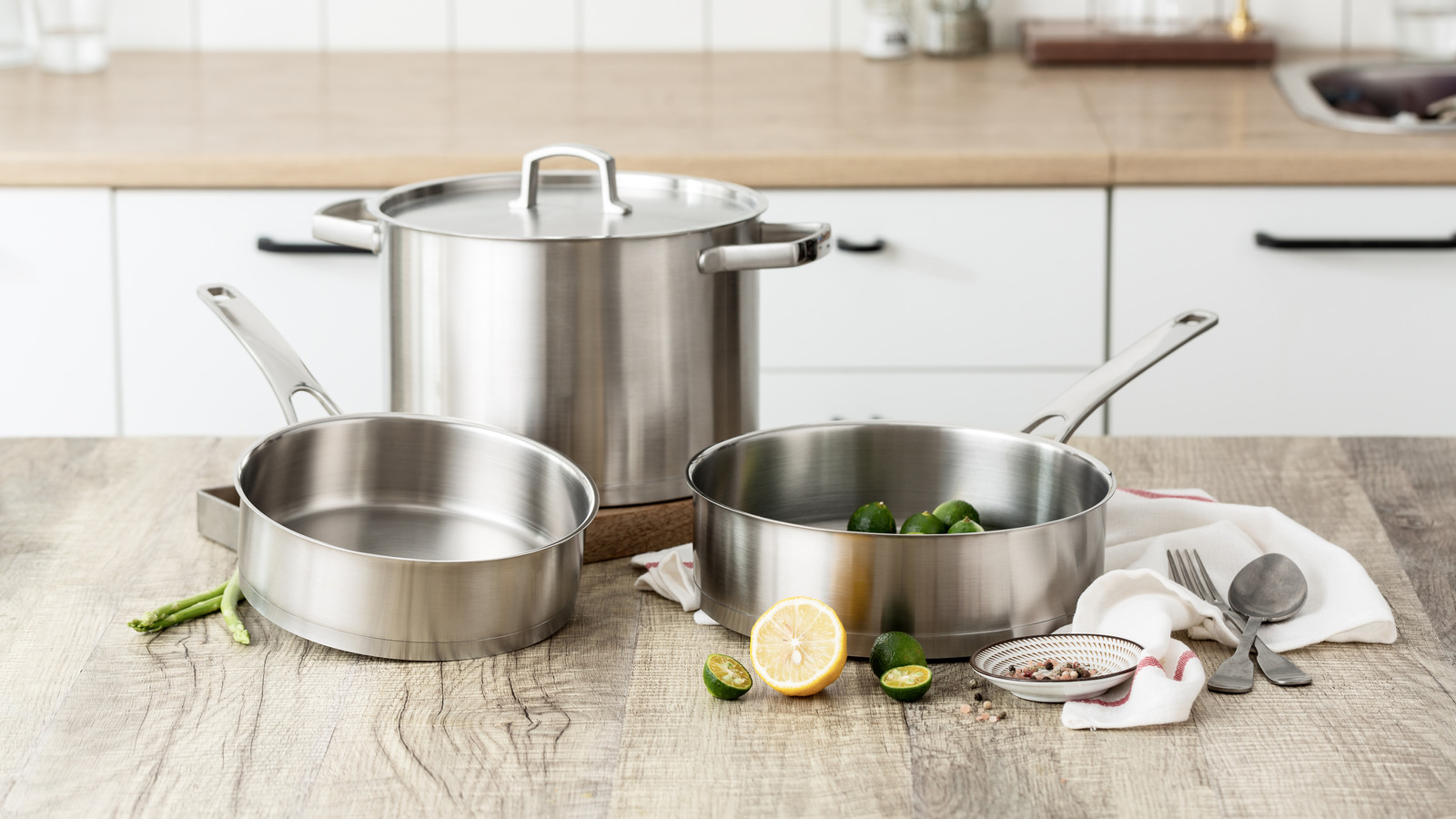
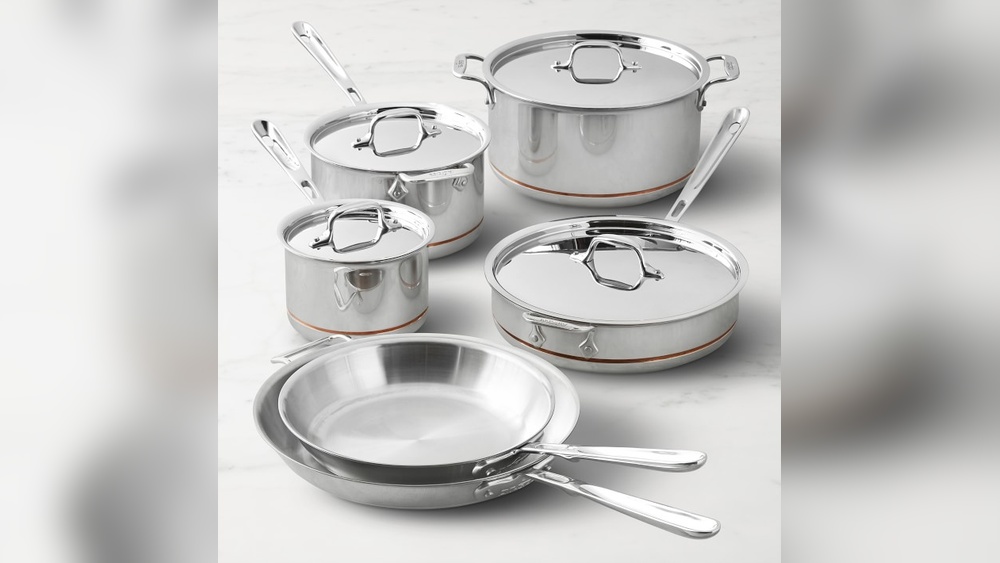
Clad cookware is made by bonding two or more layers of metal together to improve heat control, cooking performance, and durability.
When you cook eggs before work, sear a steak for dinner, or simmer chili on a cold winter evening, your pan can make a real difference. In American kitchens, clad cookware is a popular choice because it combines the useful traits of different metals in one pan. Most commonly, it pairs stainless steel with aluminum or copper to balance cooking performance with easy care.
The term can sound technical, but the idea is simple. Think of clad cookware as a team: one metal may spread heat, while another provides a durable cooking surface. The layers work together to give you a pan that can handle everyday meals, from grilled cheese to pan sauces. However, the number of layers alone does not tell you how well a pan will cook.
This guide explains what clad cookware is, how its layers work, how to tell fully clad pans from disc-bottom designs, and what to consider before buying. You will also learn how clad cookware compares with cast iron, nonstick pans, and ordinary stainless steel cookware, so you can choose a pan that fits your stove, cooking habits, and budget.
Clad cookware is cookware made by bonding layers of different metals into a single structure. Manufacturers use this method to combine properties that one metal may not provide on its own. A common design uses stainless steel on the cooking surface and aluminum inside the pan’s body.
The word clad means covered or layered. In cookware, it refers to metals joined together rather than simply placed loosely inside one another. The bonded layers form a working unit that transfers heat from the stove to the food while providing a suitable surface for cooking.
For example, a stainless steel pan may resist rust and tolerate regular kitchen use, while an aluminum core helps distribute heat. The result can be more even heating than a comparable pan made from a thin sheet of stainless steel alone.
Clad cookware is often associated with stainless steel, but the term describes a construction method rather than one specific finish. Manufacturers can use different metals, layer counts, and thicknesses. Some clad pans also have nonstick coatings, so the word clad does not always mean that food touches bare stainless steel.
Source: storage.googleapis.com
Bonded metal layers
The metals are joined so heat can move between them and the layers act as one pan during normal cooking.
A combined design
Each metal contributes different properties, such as heat conduction, surface durability, or resistance to corrosion.
Different constructions
Clad cookware may have three, five, or another number of layers, depending on the design.
Is Clad Cookware the Same as Stainless Steel Cookware?
No. Stainless steel describes a family of metal alloys, while clad describes how a pan is built. A stainless steel pan can be made from one main metal layer, a layered bonded structure, or stainless steel attached to a separate heat-spreading base.
A clad stainless steel pan usually has stainless steel on the cooking surface and one or more conductive metals within the body. This gives the pan different properties from a simple, thin stainless steel pan. When comparing products, check the construction details instead of relying on the words stainless steel alone.
Stainless steel pan
This broad category includes both clad pans and pans with simpler construction.
Clad stainless steel pan
This pan uses bonded layers, often combining stainless steel with aluminum or copper.
How Does Clad Cookware Work?
Clad cookware works by moving heat through bonded metal layers from the burner to the cooking surface. The quality of that heat transfer depends on the metals used, their thickness, the shape of the pan, and the way the stove delivers energy.
Aluminum and copper conduct heat more readily than stainless steel. A core made from either metal can help spread heat across the pan and reduce the hot spots that may occur when a thin stainless steel surface sits directly over a concentrated heat source.
Stainless steel brings different strengths. It can resist corrosion, hold up to normal kitchen use, and provide a durable surface for browning food. When these materials are bonded together, the pan can offer a practical balance of heat response and everyday durability.
The layers do not make a pan immune to uneven heating. A small pan over an oversized burner may still develop hot spots, and a thick pan can take time to warm up. Burner size, pan thickness, cooking temperature, and the amount of food all affect the final result.
Source: carawayhome.com
Heat enters the pan
The burner transfers energy into the pan’s base.
Conductive layers spread heat
Aluminum or copper can move heat across the pan more readily than stainless steel alone.
The cooking surface heats the food
The pan transfers heat to food through direct contact, helping with browning, frying, and simmering.
Why Heat Distribution Matters
Heat distribution affects how evenly food cooks. If one area of a pan becomes much hotter than another, a chicken breast may brown too quickly in one spot while remaining pale elsewhere. A well-designed clad pan can help reduce these differences.
Heat distribution and heat retention are not the same thing. Distribution describes how heat spreads across the pan, while retention describes how much heat the pan stores and how well it maintains its temperature when food is added. Pan thickness and total mass influence retention, so a conductive core alone does not tell the whole story.
For home cooks, this distinction matters when searing meat, making caramel, or preparing a delicate sauce. A pan that spreads heat well may make cooking more predictable, but you still need to match the burner, temperature, and pan size to the task.
For searing
Good heat distribution can help create more even browning across the food.
For sauces
Responsive cookware can make it easier to manage changes in heat, although technique remains important.
For simmering
A suitable pan can help reduce localized overheating, but low heat and occasional stirring may still be needed.
What Metals Are Used in Clad Cookware?
Most clad cookware uses a combination of stainless steel and a more conductive metal, such as aluminum or copper. The exact combination varies by manufacturer and product line, so the product specifications are the best way to identify the materials in a particular pan.
Each metal has strengths and trade-offs. Aluminum is widely used because it conducts heat well and weighs less than many other metals. Copper is highly conductive, but it can raise manufacturing costs. Stainless steel provides a durable exterior or cooking surface, depending on the design.
Some pans use magnetic stainless steel on the exterior so they can work with induction cooktops. Other pans may use a different exterior metal or add extra layers for particular performance goals. Do not assume every clad pan has the same material arrangement.
Source: cookwareguider.com
Stainless steel
Often used for the cooking surface and exterior. It can resist corrosion and tolerate everyday cooking, but it conducts heat less readily than aluminum or copper.
Aluminum
Commonly used as a core because it spreads heat well and is relatively lightweight. It is often enclosed by stainless steel in clad pans.
Copper
Used in some premium designs because of its high thermal conductivity. Its benefits depend on the amount, placement, and thickness of copper in the pan.
Magnetic stainless steel
Often used on induction-compatible pans so the cooktop can heat the pan through a magnetic field.
Does the Core Material Make a Difference?
Yes. Core material affects how quickly heat spreads and how the pan responds to changes in burner power. Aluminum cores are common because they offer useful heat conduction without the cost and weight that can come with some alternative designs.
Copper cores can also provide strong heat conduction, but a copper label alone does not guarantee a better pan. The amount of copper, its thickness, the other layers, and the overall construction all matter. A thin copper layer may contribute less to performance than the name suggests.
For most home cooks, the best approach is to compare construction details, pan weight, handle design, stove compatibility, and care instructions. A well-made aluminum-core pan may suit everyday cooking just as well as a more costly alternative.
Choose aluminum-core cookware
Consider it for versatile daily cooking when you want a balance of heat conduction, weight, and cost.
Consider copper-core cookware
Compare it when heat response is a key priority and the specific design justifies its price.
What Do Tri-Ply, Five-Ply, and Multi-Ply Mean?
Tri-ply cookware has three bonded layers, while five-ply cookware has five. Multi-ply is a broad term for cookware made with several bonded layers. These labels describe the layer count, not a universal quality grade.
A common tri-ply design uses a stainless steel cooking surface, an aluminum core, and a magnetic stainless steel exterior. The exact arrangement can vary. Some five-ply pans alternate stainless steel and conductive metals, while others use a different mix of materials or layer thicknesses.
More layers may affect heat distribution, stiffness, weight, heat retention, and cost. However, adding layers does not guarantee better performance. A carefully designed three-layer pan may cook more evenly than a poorly designed pan with five layers.
When comparing tri-ply and five-ply cookware, look beyond the label. Check the construction across the base and sides, the total thickness, the materials used, the weight, the handle, and the manufacturer’s care instructions.
Source: cookwareguider.com
Tri-ply
Three bonded layers. Often a practical choice for general home cooking.
Five-ply
Five bonded layers. May offer a different balance of stiffness, weight, heat response, and retention.
Multi-ply
A general term for construction using multiple bonded metal layers.
Is Five-Ply Better Than Tri-Ply?
Not automatically. Five-ply cookware may have useful design features, but the layer count by itself does not prove that the pan will heat more evenly or last longer. The materials and thickness of each layer matter at least as much as the number printed on the box.
For a home cook who makes eggs, pasta, vegetables, soups, and pan sauces, a well-built tri-ply pan may provide all the performance needed. Someone who prefers a heavier pan or values a specific heat response may prefer another design, but that decision should come from the full construction and intended use.
A simple comparison is more helpful than assuming a higher layer count is better. If possible, compare the same pan size, exterior material, core type, and cooking conditions before deciding which model offers the better fit.
Compare like with like
Look at similar pan sizes and shapes so differences are not caused by a larger base or different design.
Check the actual materials
A meaningful description identifies the core and exterior instead of relying only on a layer-count label.
Consider daily handling
A heavier pan may feel stable but can be harder to lift, pour from, and clean.
Fully Clad Cookware vs. Disc-Bottom Cookware
The main difference between fully clad cookware and disc-bottom cookware is where the bonded metal layers extend. Fully clad cookware carries its layered construction through the base and up the sides. Disc-bottom cookware has a separate layered or thickened base attached to the pan body, while the sides may be made from a simpler metal structure.
Both designs can be useful. A disc-bottom pan can spread heat across the base at a lower price, making it suitable for many everyday tasks. Fully clad construction can also help distribute heat along the sides, which may matter when cooking larger portions, reducing sauces, or working with foods that contact the pan walls.
Fully clad cookware often costs more because its construction uses bonded materials across more of the pan. That does not mean every disc-bottom pan is poor quality. The right choice depends on what you cook, how you use the pan, and how much you want to spend.
Source: citizenside.com
Fully clad construction
Layered metals extend from the base up the sides, supporting heat transfer across more of the pan.
Disc-bottom construction
A conductive base is attached to the pan body, while the sidewalls may use a different, simpler construction.
Practical trade-off
Disc-bottom cookware can offer good value, while fully clad cookware may offer more consistent heating across the base and sides.
Which Construction Should You Choose?
Choose fully clad cookware if you often sear food, prepare pan sauces, cook ingredients across the base and sides, or want one pan for many techniques. It can be especially useful for tasks where the sidewalls contribute to cooking and heat distribution.
Choose a disc-bottom pan if your cooking mainly involves boiling water, reheating food, making soup, or preparing meals where heat is concentrated at the base. A well-made disc-bottom pot can work very well for these tasks without the added cost of full sidewall cladding.
There is no need to replace sound cookware simply because it is not fully clad. If your current pot heats reliably, suits your stove, and meets your cooking needs, its construction may be perfectly adequate.
For frequent pan sauces
Fully clad construction may help when heat along the sidewalls affects the cooking process.
For boiling and large batches
A suitable disc-bottom stockpot may provide good value for water-based cooking.
For a mixed kitchen
Using fully clad skillets and disc-bottom stockpots can be a sensible way to balance performance and cost.
Benefits of Clad Cookware
Clad cookware offers several practical benefits, especially when it combines a durable cooking surface with a heat-conductive core. Its strengths include versatility, useful heat control, and the potential for long service life with proper care.
These benefits depend on the specific pan. A thin, poorly designed product will not become a great performer simply because it uses multiple metals. Construction quality, thickness, shape, and fit for the intended stove all influence the result.
Source: smartkitchenimprovement.com
More even heat distribution
A conductive core can help spread heat across the pan and reduce temperature differences caused by a concentrated burner.
Versatile cooking
Many clad stainless steel pans work for browning, sautéing, frying, simmering, and making sauces.
Durable cooking surface
Uncoated stainless steel can tolerate regular use and does not depend on a delicate nonstick coating.
Useful for fond and pan sauces
Food can leave browned bits on stainless steel after searing. These bits, known as fond, can add flavor when loosened with liquid.
Long service life is possible
Quality uncoated clad pans can last for many years if they are not badly warped, damaged, or abused.
Many options for different stoves
Depending on the exterior material, clad cookware may work with gas, electric, glass-ceramic, and induction cooktops.
Is Clad Cookware Worth the Cost?
Clad cookware can be worth the cost if you cook often and want one pan that handles several jobs. A good skillet may move from breakfast eggs to roasted vegetables, chicken, or a quick sauce without needing a different pan for every task.
The value is less clear if you cook only occasionally, mainly boil water, or already own cookware that meets your needs. You do not have to buy a full premium set to benefit from clad construction. Starting with one skillet or saucepan may be more useful than buying several pieces you rarely use.
Consider the total cost per year of use rather than the initial price alone. This is a practical comparison, not a guarantee of savings. A less expensive pan that meets your needs can be the better purchase, while a durable pan used daily may justify a higher upfront cost.
Buy for your cooking habits
Choose the pan size and shape you use most often instead of paying for a large set of rarely used pieces.
Compare the whole product
Review construction, handle comfort, lid fit, stove compatibility, warranty terms, and care needs.
Drawbacks and Limits of Clad Cookware
Clad cookware is versatile, but it is not the best fit for every cook or every task. It can cost more than simpler cookware, may be heavier than expected, and often needs a little practice to prevent food from sticking.
Uncoated stainless steel does not behave like a nonstick pan. Eggs, fish, and other delicate foods may stick if the pan is too cool, too hot, too dry, or used without enough fat. Learning how the pan responds to heat is part of using it well.
Clad construction also does not guarantee even heating under every condition. A burner that is too large, rapid temperature changes, or a thin pan body can still cause uneven results. The design helps manage heat, but it cannot replace sensible cooking technique.
Finally, some clad pans are not suitable for induction, and some handles, lids, or coatings have temperature limits. Check the manufacturer’s instructions for the exact model rather than assuming that all cookware in the category has the same features.
Source: storage.googleapis.com
Higher initial price
Fully clad pans often cost more than basic cookware or pans with a separate layered base.
Food can stick
Uncoated stainless steel requires suitable preheating, adequate cooking fat when appropriate, and good timing.
Weight can vary
Thicker construction may improve stability or heat retention but can make the pan harder to lift.
Compatibility is not universal
Induction support, oven limits, dishwasher guidance, and utensil recommendations depend on the specific product.
Can Clad Cookware Warp?
Yes. Clad cookware can warp, although well-made pans are designed to withstand normal cooking. Sudden temperature changes, such as placing a very hot pan under cold water, can increase thermal stress and may contribute to warping.
To reduce the risk, heat the pan gradually, avoid leaving an empty pan over high heat for long periods, and let it cool before washing. Use a burner that suits the pan’s base and follow the manufacturer’s instructions for high-heat cooking.
If a pan begins to wobble on a flat cooktop, check whether the base has changed shape. A badly warped pan may heat poorly or sit unsafely on a smooth cooking surface. Stop using it if the damage makes it unstable, and contact the manufacturer if the product may be covered by a warranty.
Avoid thermal shock
Let a hot pan cool before rinsing it with cold water.
Use sensible heat
Preheat as needed, but do not leave an empty pan on high heat for an extended time.
Check stability
A pan that rocks or spins on a flat surface may have a warped base.
Clad Cookware vs. Other Types of Cookware
Clad cookware is one option among several common cookware types. Stainless steel clad pans focus on a durable cooking surface and a conductive core, while cast iron, carbon steel, aluminum, and nonstick cookware offer different balances of heat retention, weight, maintenance, and food release.
No single material wins every task. The best choice depends on whether you value easy cleanup, high heat retention, low weight, fast heat response, or the ability to move a pan from stovetop to oven.
Source: cookwareguider.com
Clad stainless steel
A versatile choice for browning, sautéing, pan sauces, and general cooking. Food release depends on heat control and technique.
Cast iron
Holds heat well and suits searing, frying, and oven cooking, but it is heavy and usually needs seasoning unless it has an enamel coating.
Carbon steel
Can develop a useful seasoned cooking surface and is popular for high-heat cooking, but it needs care to limit rust.
Basic aluminum
Conducts heat well and can be lightweight, but bare aluminum may react with some foods and is less resistant to scratching than many stainless steel surfaces.
Nonstick cookware
Makes delicate foods and cleanup easier, but the coating requires appropriate utensils, heat limits, and replacement when damaged according to manufacturer guidance.
Is Clad Cookware Better Than Cast Iron?
Clad stainless steel and cast iron serve overlapping but different roles. Clad pans are often easier to lift and can respond more readily to changes in burner power, depending on their construction. Cast iron generally stores a great deal of heat and can be useful when you want a strong, steady sear.
For everyday cooking that includes pan sauces, vegetables, fish, and a range of stovetop tasks, clad stainless steel may offer greater versatility. For cornbread, thick steaks, or dishes that benefit from substantial retained heat, cast iron may be a better fit.
You do not need to choose only one. Many kitchens benefit from a clad stainless steel skillet for daily tasks and a cast iron skillet for foods that benefit from its weight and heat retention.
Choose clad stainless steel
When you want a versatile pan for browning, deglazing, and a wide range of meals.
Choose cast iron
When strong heat retention, a substantial pan, or a seasoned cooking surface matters more.
Is Clad Cookware Better Than Nonstick?
Clad stainless steel is often a better fit for browning and making pan sauces, while nonstick cookware makes it easier to cook eggs, pancakes, and other foods that tend to stick. These pans solve different problems rather than competing on every measure.
A stainless steel cooking surface can last for many years with suitable care, but it takes technique to achieve good food release. Nonstick pans offer easy release from the start, although their coating has care requirements and a limited service life that varies by product and use.
For many home cooks, a mixed setup works well. Use clad cookware for searing, sautéing, and sauces, then keep a nonstick skillet for delicate foods when easy release is the main goal.
For browning
Clad stainless steel is a strong option when you want browned food and flavorful pan drippings.
For delicate foods
Nonstick cookware can make eggs and other sticky foods easier to handle.
How to Choose Clad Cookware for Your Kitchen
The best way to choose clad cookware is to start with your stove, your most common meals, and the pan sizes you actually use. A well-matched skillet can be more useful than a large set filled with pieces that rarely leave the cabinet.
Look for clear construction details. The manufacturer should identify the materials, layer arrangement when relevant, compatible cooktops, and safe temperature limits. If the product page only says premium multi-ply without explaining the construction, you may not have enough information to compare it fairly.
Handle comfort matters more than it may seem. A pan that feels balanced when empty can feel very different when full of pasta or vegetables. If possible, consider the handle shape, helper handle on larger pans, lid design, and overall weight before buying.
Source: cookwareguider.com
Check your cooktop
Confirm that the pan works with gas, electric, glass-ceramic, or induction as appropriate.
Choose useful sizes
Match the pan diameter to your usual portions and burner size.
Review the layer construction
Look for the actual metals used rather than assuming more layers always mean better performance.
Consider handling
Check the weight, grip, balance, pouring edge, and helper handles where relevant.
Read care and warranty terms
Confirm oven limits, dishwasher guidance, cleaning methods, and the conditions of any warranty.
What Size Clad Pan Should You Buy First?
For many households, a medium or large skillet is a practical starting point because it can handle vegetables, eggs, chicken, and many one-pan meals. The best diameter depends on how many people you cook for and how much space your stovetop offers.
A smaller skillet can be easier to manage for a single serving, while a larger skillet offers more room to brown food without crowding. Crowding can cause food to release moisture and steam instead of browning, so usable cooking area matters more than the number printed on the label.
If you often prepare soups, pasta, or grains, a saucepan or stockpot may be a more useful first purchase than a skillet. Choose the piece that solves a real cooking need, then add other sizes as your routine requires.
Frequent sautéing and searing
Start with a skillet sized for your typical portions and burner.
Sauces, grains, and small batches
Consider a saucepan with a lid and a comfortable handle.
Pasta, soups, and large batches
Look at a stockpot or larger pot, including whether a disc-bottom design would meet your needs.
Does Clad Cookware Work on Induction?
Clad cookware works on induction only when its base includes a suitable magnetic material. Many stainless steel clad pans use magnetic stainless steel on the exterior, but not every stainless steel alloy responds to induction in the same way.
Check the manufacturer’s compatibility statement before buying. If you already own the pan, a simple magnet test on the bottom can provide a quick indication: if the magnet sticks firmly, the pan is more likely to work on an induction cooktop. The test is useful, but the manufacturer’s guidance remains the better source for confirmed compatibility.
The pan also needs a base that fits the cooktop’s size and shape requirements. A pan that is technically magnetic may still perform poorly if its base is too small or unsuitable for the induction zone.
Read the product specifications
Look for explicit induction compatibility rather than relying on the word stainless steel.
Try a magnet
A firm magnetic attraction at the base is a useful preliminary check for an existing pan.
How to Use Clad Stainless Steel Cookware
Clad stainless steel cookware performs best when you manage heat and give food time to release. You do not need to use the highest burner setting for most meals. In fact, medium or medium-low heat is often enough once the pan has warmed up.
The right method depends on what you are cooking. A steak may need a hotter surface than a delicate sauce, while vegetables may benefit from moderate heat and enough space to brown. Start with the manufacturer’s guidance, then adjust your technique based on the food and stove.
Source: cookwareguider.com
Preheat with care
Warm the pan over a suitable setting instead of leaving it empty over high heat.
Add cooking fat when appropriate
For foods that may stick, use a suitable amount of oil or other cooking fat.
Avoid overcrowding
Leave enough room for moisture to escape and for food to brown.
Adjust the heat
Reduce the burner when food browns too quickly or the pan becomes excessively hot.
How to Reduce Sticking
Food sticking is one of the most common frustrations with uncoated stainless steel. It usually comes down to temperature, moisture, surface contact, and timing rather than a flaw in clad construction.
Start by drying food where appropriate and preheating the pan at a moderate setting. Add cooking fat when the recipe calls for it, then place the food in the pan without crowding. Give proteins time to form a browned surface before trying to move them.
If food sticks firmly, avoid scraping it with excessive force. Lower the heat if needed and allow the food to cook a little longer. For many proteins, the browned surface releases more easily once it has formed, although delicate foods may need a different technique or a nonstick pan.
Dry the food
Removing excess surface moisture can help food brown rather than steam.
Use moderate heat
Very high heat can make food burn or stick before it cooks through.
Wait before turning
Food often releases more readily after a browned crust develops.
How to Make a Pan Sauce
Clad stainless steel cookware is useful for pan sauces because browned bits can remain on the cooking surface after searing. These bits add flavor when loosened with liquid, a process called deglazing.
After cooking the meat or vegetables, remove excess fat if needed while leaving the browned bits in place. With the pan at a suitable temperature, add a compatible liquid such as stock or water and gently scrape the base with a wooden or heat-safe utensil. Let the liquid reduce as directed by the recipe, then finish the sauce with suitable seasonings or other ingredients.
Avoid pouring liquid into a dangerously overheated pan or allowing hot fat to splatter. If the pan is smoking heavily, remove it from the heat and let the temperature settle before proceeding.
Keep the browned bits
They can provide depth of flavor for sauces and gravies.
Deglaze carefully
Add liquid in a controlled way and use a suitable utensil to loosen the fond.
How to Clean and Maintain Clad Cookware
Proper care helps clad cookware stay useful for years. For uncoated stainless steel pans, the basic routine is simple: allow the pan to cool, wash it with warm water and dish soap, remove stuck-on food with a suitable sponge, and dry it when needed.
For stubborn residue, soak the cooled pan in warm, soapy water before cleaning. A cleaner intended for stainless steel may help with discoloration or persistent marks when used according to its instructions. Avoid harsh tools that may scratch polished surfaces, and check the manufacturer’s advice before using abrasive cleaners.
Rainbow-like heat marks can appear on stainless steel after heating. They are often cosmetic and may be reduced with a cleaner designed for stainless steel. White mineral spots may result from water deposits, while burnt food usually needs soaking or gentle scrubbing.
Dishwasher safety varies by product. Some uncoated stainless steel pans are dishwasher-safe, but handles, lids, exterior finishes, and manufacturer recommendations can change the answer. Handwashing is a practical option when you want to preserve the finish and avoid uncertainty.
Source: storage.googleapis.com
Wash after use
Use warm water, dish soap, and a non-damaging cleaning tool suitable for the pan’s finish.
Soak stuck food
Allow the cooled pan to soak rather than attacking residue with a sharp metal tool.
Remove heat marks carefully
Use an appropriate stainless steel cleaner and follow the label directions.
Follow product guidance
Check dishwasher and oven limits for the exact pan, lid, and handle combination.
Can You Use Metal Utensils on Clad Cookware?
Metal utensils are generally suitable for many uncoated stainless steel cooking surfaces, but they can leave scratches or marks on polished finishes. Wooden, silicone, or other heat-safe utensils are useful alternatives if you want to keep the surface looking smoother.
The answer changes when the pan has a nonstick coating or another special finish. In that case, follow the manufacturer’s utensil guidance because metal tools may damage the coating.
Also consider the food and technique. A metal spatula can help lift browned food from an uncoated stainless steel pan, but aggressive scraping is rarely necessary and can damage some finishes or loosen food less effectively than patient cooking.
Uncoated stainless steel
Often compatible with metal utensils, subject to the manufacturer’s recommendations and desired finish.
Coated cooking surfaces
Use the utensil types approved by the manufacturer to avoid damaging the coating.
Common Clad Cookware Buying Mistakes
The most common buying mistake is treating the layer count as a complete measure of quality. Three layers can be enough for many kitchens, while five layers may be useful in another design. The materials, thickness, and overall build provide more context than the number alone.
Another mistake is assuming that every stainless steel pan works on induction or that every clad pan is oven-safe at the same temperature. Compatibility depends on the exterior, handle, lid, coatings, and model-specific instructions.
Buyers can also spend too much on a set before knowing which pieces they need. A few useful pans can cover most everyday cooking jobs without taking up extra storage space or tying up money in cookware that stays unused.
Source: storage.googleapis.com
Mistake: Choosing by layer count alone
Correction: Compare the core metal, thickness, construction, weight, and intended use.
Mistake: Assuming induction compatibility
Correction: Check the product specifications or perform a preliminary magnet test.
Mistake: Buying a large set too soon
Correction: Start with the pan or pot you use most often and add pieces as needed.
Mistake: Using maximum heat for every meal
Correction: Choose the lowest heat that achieves the desired result and adjust as you cook.
Mistake: Ignoring care instructions
Correction: Check temperature limits, cleaning guidance, and utensil recommendations for the exact product.
A Simple Clad Cookware Comparison Table
Use this table to compare common constructions at a glance. These are general design tendencies, not guarantees for every pan, since thickness, shape, materials, and manufacturing quality can change the result.
Tri-ply fully clad
Three bonded layers extending through the base and sides. Often a versatile choice for everyday cooking.
Five-ply fully clad
Five bonded layers through the base and sides. The extra layers may change weight, stiffness, heat response, and price.
Disc-bottom stainless steel
A separate layered base helps spread heat across the bottom. Often useful for boiling, soups, and general pot cooking.
Nonstick clad cookware
A layered metal body with a nonstick cooking surface. Food release and care depend on the coating and manufacturer instructions.
Who Should Use Clad Cookware?
Clad cookware is a strong option for people who cook often and want one set of pans for several techniques. It suits home cooks who brown meat, sauté vegetables, make pan sauces, prepare grains, or move between stovetop and oven cooking when the product allows it.
It may be less useful for someone who wants the easiest possible release for eggs and pancakes, prefers very lightweight pans, or mainly boils water. Those cooks may be happier with a combination of nonstick, disc-bottom, or other cookware that fits their routines.
Your cooking style matters more than a cookware label. If you enjoy learning how a pan responds to heat and want a durable uncoated surface, clad stainless steel is worth considering. If you value effortless food release above browning and pan sauces, a nonstick skillet may be the more practical choice for some meals.
Source: citizenside.com
Good fit for frequent cooks
Useful for people who prepare a variety of meals and want a versatile pan for browning, sautéing, and sauces.
Good fit for long-term use
Quality uncoated clad cookware can provide a durable cooking surface with ordinary care.
May not suit every task
Delicate foods, very lightweight cooking, or simple boiling may call for other cookware types.
A Practical Starter Setup
You can build a useful cookware collection without purchasing an entire set at once. Start with a clad skillet for browning and sautéing, then add a saucepan for grains, sauces, and small batches if those tasks are part of your routine.
A stockpot may be useful if you often cook pasta, soup, or large meals, but a disc-bottom model can be enough for many water-based tasks. A nonstick skillet can fill the gap for eggs and delicate foods that are easier to cook on a coated surface.
This mixed approach gives each pan a clear job. It also helps you spend money where construction makes the biggest difference instead of paying for matching pieces you may rarely use.
First purchase
Choose a clad skillet or saucepan that matches your most frequent cooking task.
Second purchase
Add a complementary size or shape once you know what your first pan cannot handle.
Optional addition
Keep a nonstick pan or a suitable stockpot for tasks where it offers a clear practical advantage.
What the Evidence Can and Cannot Tell You
The basic construction principles of clad cookware are well established: bonded metals can combine the properties of different materials, and aluminum and copper conduct heat more readily than stainless steel. These facts explain why manufacturers use conductive cores in many stainless steel pans.
However, construction labels do not establish that one pan will always outperform another. Without controlled testing of specific models under the same conditions, it would be misleading to claim that all five-ply pans heat more evenly than all tri-ply pans or that copper-core cookware always cooks faster.
Product descriptions can document the stated materials, layer count, and compatibility claims. They do not, by themselves, prove real-world superiority, service life, or value. Independent performance claims require comparable test methods and clear conditions.
For a practical purchase, use construction details as a starting point rather than the final verdict. Match the pan to your stove, cooking tasks, handling preferences, and care routine, then compare the specific products you are considering.
Source: carawayhome.com
Documented material properties
Metals differ in thermal conductivity, corrosion resistance, weight, and magnetic response.
Model-specific facts
Layer count, construction, compatible cooktops, and temperature limits should come from the exact product documentation.
Claims that need testing
Statements about superior cooking speed, evenness, longevity, or value require comparable evidence beyond a marketing label.
How to Compare Two Pans Fairly
Start by matching the pan size and shape. A wide skillet may heat or brown differently from a smaller pan, even if both use the same number of layers. The burner and cooking surface must also be comparable for a fair assessment.
Next, compare the stated materials and construction. Look at the core metal, the extent of cladding, and any differences in thickness or weight. Consider whether the handle, lid, and exterior meet your needs rather than treating the cooking body as the only important feature.
Finally, compare the conditions that matter in your kitchen. If induction compatibility, oven use, or dishwasher safety is essential, verify those details directly. This approach avoids paying more for a feature that does not improve your everyday cooking.
Match size and use
Compare similar pans intended for the same cooking tasks.
Review construction
Check materials, thickness, layer placement, and weight.
Confirm compatibility
Verify cooktop support, oven limits, and care instructions before buying.
Frequently Asked Questions
Q
What does clad mean on a cookware label?
Clad means the cookware uses two or more metal layers bonded together. Manufacturers often combine stainless steel with aluminum or copper to balance a durable cooking surface with better heat conduction.
Q
Is clad cookware safe to cook with?
Clad cookware made with a suitable, intact cooking surface is generally intended for normal food preparation when used according to the manufacturer’s instructions. For stainless steel clad pans, food usually contacts stainless steel rather than the enclosed aluminum or copper core. Follow the product’s temperature limits and care guidance, and stop using cookware with serious damage that affects its stability or cooking surface.
Q
Is tri-ply clad cookware good enough for everyday use?
Yes. A well-designed tri-ply pan can be suitable for everyday tasks such as searing, sautéing, frying, and making sauces. Performance depends on the materials, thickness, size, and overall construction, not just the number of layers.
Q
Does clad cookware need seasoning?
Uncoated stainless steel clad cookware does not need seasoning in the way traditional cast iron and carbon steel usually do. You can improve food release by preheating carefully, using suitable cooking fat when needed, and allowing food to brown before turning it. If the pan has a special coating, follow its specific care instructions.
Q
Can clad cookware go in the oven?
Many clad pans are oven-safe, but the safe temperature depends on the pan, handle, lid, and any coating. Check the manufacturer’s instructions for the exact model before putting it in the oven. Do not assume that a metal pan or handle makes every component oven-safe at every temperature.
Q
Can clad cookware be used on an induction stove?
Yes, if the pan has a suitable magnetic base. Many stainless steel clad pans are induction-compatible, but not all stainless steel alloys are magnetic. Check the product specifications or try a magnet on the bottom as a preliminary test.
Q
Is fully clad cookware better than disc-bottom cookware?
Fully clad cookware has bonded layers through the base and sides, while disc-bottom cookware concentrates its layered construction at the base. Fully clad designs may provide more useful heat distribution along the sides, but disc-bottom pans can work well for boiling, soups, and other tasks focused on the base. The better option depends on your cooking habits and budget.
Q
How long does clad cookware last?
Quality uncoated clad cookware can last for many years, sometimes decades, when cared for properly. Its lifespan depends on construction quality, frequency of use, heat exposure, cleaning methods, and whether the pan becomes warped or damaged. Coated versions may have a different service life because the cooking surface can wear over time.
✦ Wrapping Up
Conclusion
Clad cookware combines bonded metal layers to bring together useful properties such as heat conduction, surface durability, and everyday versatility. Stainless steel paired with an aluminum or copper core is a common design because it can provide a durable cooking surface while spreading heat more effectively than a comparable thin stainless steel body alone.
The most important distinction is between the material and the construction. Tri-ply and five-ply describe layer counts, while fully clad and disc-bottom describe where the layers extend. Neither a higher layer count nor a premium label guarantees better cooking performance in every kitchen.
For many American home cooks, a well-made fully clad stainless steel skillet or saucepan is a useful long-term tool. Still, disc-bottom pots, cast iron, carbon steel, and nonstick pans can each serve a purpose. The right collection depends on your meals, stove, budget, and comfort with cookware care.
💡 Key Takeaway
Before buying, choose the pan shape you use most, confirm stove compatibility, check the actual metal layers, and compare the manufacturer’s care and temperature instructions. Start with one useful piece instead of paying for a large set you may not need.