

Is Ceramic Cookware Good?
Yes, for many home cooks. Ceramic cookware is a strong choice when easy food release, simple cleanup, and a PFAS-free cooking surface matter most. In my ceramic vs hard anodized cookware comparison, the ceramic set felt especially nice for eggs, pancakes, vegetables, and other foods that can stick. I could use less oil and still get clean release. That small change made weekday breakfasts feel less like a chore.
I also liked how quickly the pans felt ready for normal cooking. After dinner, a soft sponge and mild soap were usually enough for routine cleanup. Still, ceramic is not magic. The coating can lose its slick feel with high heat, harsh cleaning, or rough utensils. I would treat a ceramic pan like a good pair of running shoes: use it often, but do not abuse it.
What Makes It Stand Out / Key Features
- Ceramic nonstick surfaceThe smooth ceramic-style coating helps food release with less oil during common cooking tasks.
- PFAS-free designThis type of ceramic cookware can be made without PFAS, PFOA, and PTFE, but buyers should check the exact product label.
- Fast food releaseEggs, pancakes, fish, and vegetables can release easily when the pan is used at moderate heat.
- Easy cleanupMost light food residue can be removed with warm water, mild soap, and a soft sponge.
- Light handlingMany ceramic sets use aluminum bodies, so they can feel easier to lift than heavier cookware.
- Low-oil cookingThe slick surface can reduce the amount of oil needed for many everyday recipes.
My Recommendation
Choose ceramic if you want easy release, simple cleanup, and a PFAS-free option. It suits people who cook moderate meals and are willing to use gentle heat and utensils.
| Best For | Why |
|---|---|
| Eggs and breakfast | The slick surface makes delicate foods easy to release. |
| Low-oil cooking | Food often releases well with little added fat. |
| New home cooks | Simple cleanup and easy handling reduce daily kitchen work. |
Is Hard Anodized Cookware Good?
Yes, especially if durability and steady heat matter more than having the slickest possible surface. In this ceramic vs hard anodized cookware comparison, hard anodized aluminum felt more solid in my hands. The metal body is made by treating aluminum with an electrochemical process that creates a hard surface. Many hard anodized sets then add a separate nonstick coating inside.
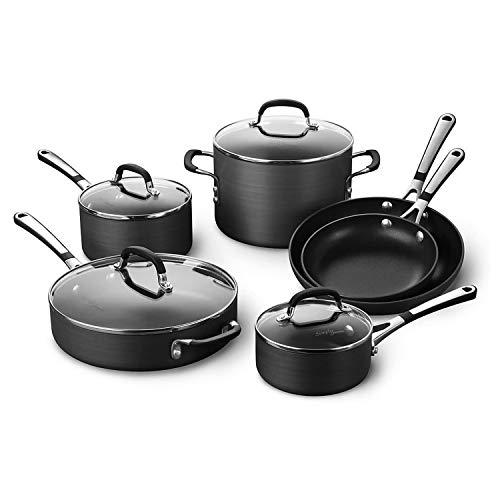
The Calphalon set linked here uses hard anodized aluminum, a two-layer nonstick interior, stay-cool handles, glass lids, and an oven rating of up to 400°F for the cookware. It is also hand-wash only and is not induction compatible. I found the set more reassuring for busy cooking days when several burners were working at once. It feels like a workhorse. You may give up some convenience, but you get a strong everyday cooking platform.
What Makes It Stand Out / Key Features
- Hard anodized aluminum bodyThe treated aluminum body is designed to resist wear, corrosion, and warping while providing even heat.
- Two-layer nonstick interiorThe interior helps food release and makes everyday cleanup easier.
- Even heatingAluminum transfers heat well, helping reduce uneven cooking across the pan.
- Stay-cool handlesThe included handles are designed to stay cooler during normal stovetop cooking.
- Glass lidsTempered glass lids let you check food without lifting the lid.
- Oven useThe referenced Calphalon set is oven safe to 400°F, while its glass lids have a higher stated limit.
- Complete setThe 10-piece set includes fry pans, saucepans, a saute pan, a stockpot, and matching lids.
My Recommendation
Choose hard anodized cookware if you cook often, want steady heat, and value a sturdy pan body. It is a strong fit for busy family kitchens and cooks who want a workhorse set.
| Best For | Why |
|---|---|
| Daily family meals | The durable aluminum body handles frequent stovetop cooking. |
| High-use kitchens | Hard anodized construction offers a sturdy base and good heat control. |
| Cooks who want many sizes | The 10-piece set covers frying, simmering, sauteing, and larger meals. |
ceramic vs hard anodized cookware: Side-by-Side Test
The ceramic vs hard anodized cookware debate gets easier when you stop asking which material is perfect. Neither is perfect. The better fit depends on how you cook, what stove you use, and how much care you want to give your pans.
I look at these two options like two tools in the same toolbox. Ceramic focuses on smooth cooking and easy release. Hard anodized cookware focuses on a tough body, even heat, and long-term everyday use.
Cooking Functions: Which One Does More?
Both options cover basic stovetop work, but the details change how useful each set feels.
| Feature | Ceramic | Hard Anodized |
|---|---|---|
| Frying eggs | Excellent food release | Very good food release |
| Sauteing vegetables | Very good | Excellent |
| Simmering sauces | Very good | Excellent |
| Large family meals | Depends on set size | Excellent with a full set |
⭐ Ceramic – 9/10 | Hard Anodized – 9/10
This category is close. Ceramic wins for delicate foods, while hard anodized cookware feels better for broad everyday use.
Nonstick Performance: Which Releases Food Better?
This is where ceramic cookware often feels special during the first months of use.
| Feature | Ceramic | Hard Anodized |
|---|---|---|
| Egg release | Excellent when new and well cared for | Very good |
| Pancakes | Excellent | Very good |
| Oil needed | Often very little | Usually low |
| Long-term slickness | Can decline with heavy use | Depends on coating care |
⭐ Ceramic – 9.5/10 | Hard Anodized – 8.5/10
Ceramic has the edge for the fresh, slick nonstick feel many cooks want.
Durability: Which Handles Daily Use Better?
A pan can look great on day one and still disappoint after a year. The body and coating both matter.
| Feature | Ceramic | Hard Anodized |
|---|---|---|
| Body strength | Good with aluminum bodies | Excellent |
| Resistance to warping | Good, varies by build | Very good |
| Coating care | Needs gentle treatment | Needs gentle treatment |
| Long-term heavy use | Moderate | Strong |
⭐ Ceramic – 8/10 | Hard Anodized – 9.5/10
Hard anodized cookware has the edge when toughness and frequent use are the main goals.
Heat Control: Which Cooks More Evenly?
Good heat control can mean the difference between golden food and a scorched mess.
| Feature | Ceramic | Hard Anodized |
|---|---|---|
| Heat transfer | Good with aluminum construction | Excellent with aluminum construction |
| Hot spot control | Very good | Excellent |
| Searing | Good at moderate heat | Very good |
| Low heat cooking | Excellent | Excellent |
⭐ Ceramic – 8.5/10 | Hard Anodized – 9.5/10
Hard anodized cookware gets the edge for steady heat and repeated everyday cooking.
Cleanup: Which Saves More Time?
After a long workday, nobody wants a second shift at the kitchen sink.
| Feature | Ceramic | Hard Anodized |
|---|---|---|
| Food release | Excellent | Very good |
| Soft sponge cleanup | Easy | Easy |
| Hand washing | Often preferred | Required for the referenced set |
| Dishwasher use | Check product instructions | Not recommended for the referenced set |
⭐ Ceramic – 9/10 | Hard Anodized – 8/10
Ceramic gets a small edge because its easy-release surface can make cleanup feel faster.
Oven Use: Which Gives More Flexibility?
Moving a pan from the burner to the oven can save time and one dirty dish.
| Feature | Ceramic | Hard Anodized |
|---|---|---|
| Oven compatibility | Varies by product | Referenced set rated to 400°F |
| High-heat finishing | Check exact model | Limited by 400°F rating |
| Lid rating | Varies by product | Glass lids have a separate rating |
| Best approach | Follow manufacturer limits | Follow manufacturer limits |
⭐ Ceramic – 8/10 | Hard Anodized – 8/10
Neither wins by material alone. The exact handle, lid, and coating design matter more.
Safety and Materials: What Should You Check?
The word ceramic does not tell the whole safety story. The same is true for hard anodized cookware.
| Feature | Ceramic | Hard Anodized |
|---|---|---|
| PFAS-free options | Common | Depends on the interior coating |
| PTFE-free options | Common | Depends on the product |
| Aluminum body | Common | Core material |
| What to verify | Exact coating claims | Exact coating and material claims |
⭐ Ceramic – 9/10 | Hard Anodized – 8/10
Ceramic offers more common PFAS-free choices, but shoppers should always verify the exact product specifications.
Final Verdict: Which Should You Buy?
The ceramic vs hard anodized cookware choice comes down to priorities. Choose ceramic if you want easy food release, low-oil cooking, simple cleanup, and a PFAS-free option. Choose hard anodized cookware if you want a tougher body, steady heat, and a workhorse for frequent meals.
For a cook who wants the easiest everyday nonstick experience, I would lean toward ceramic. For a busy household that cooks often and values durability, hard anodized cookware makes a strong case. Think of ceramic as the smooth road and hard anodized as the sturdy bridge. Both can get dinner on the table. Your cooking habits decide which path makes more sense.