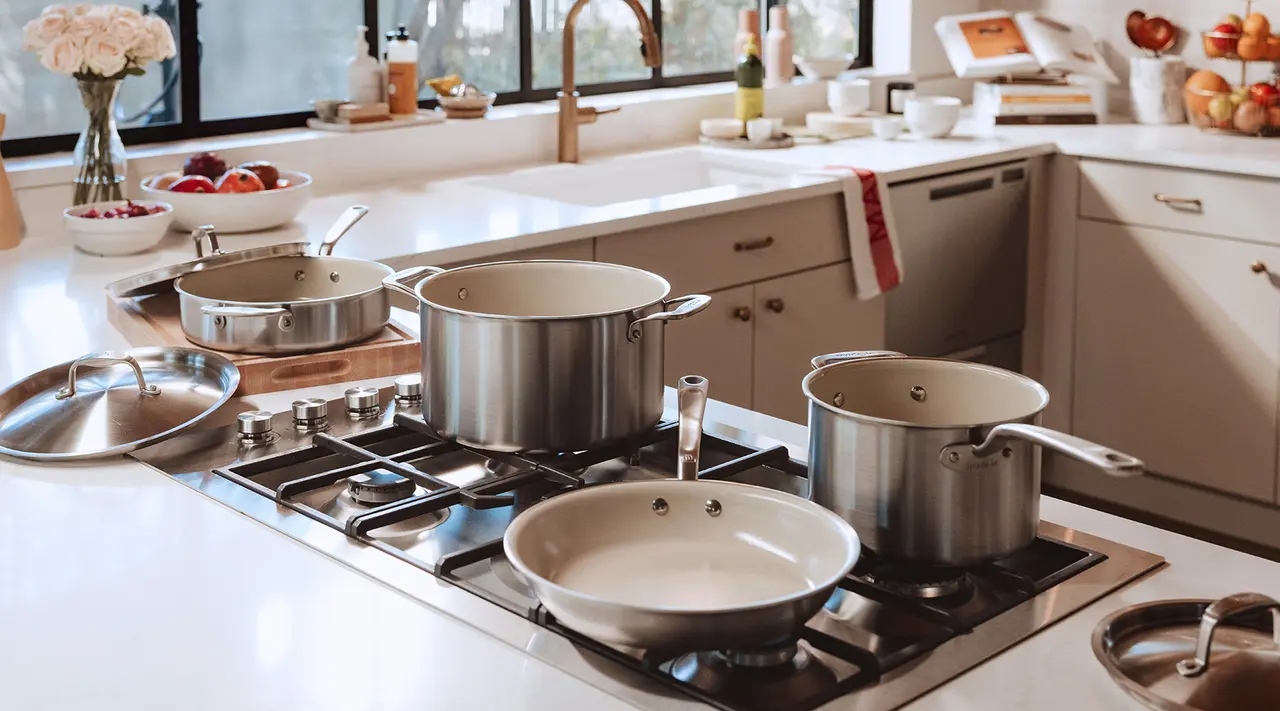
Stainless steel, cast iron, carbon steel, and magnetic-base nonstick pans work on induction cooktops.
If you are replacing a gas or electric range with an induction cooktop in your American kitchen, you may not need to replace every pot and pan. The key is to choose cookware with a magnetic base that works with your cooktop. Stainless steel, cast iron, and carbon steel are common options. Some nonstick and enameled pans also work when their bases contain magnetic material.
Induction cooking differs from cooking on a traditional electric coil or gas burner. Instead of heating a pan with a flame or a hot surface, an induction cooktop uses a changing magnetic field to heat compatible cookware directly. This can offer quick heat changes and help make cooking more controlled. However, a pan that looks suitable may not work if its base lacks the needed magnetic properties.
The easiest way to choose induction cookware is to check the manufacturer’s compatibility label and test the base with a magnet. Then consider the pan’s weight, shape, cooking surface, and care needs. These checks can help you choose practical cookware for everything from scrambled eggs and weeknight pasta to seared steaks and slow-simmered soups.
Induction cookware works by responding to a changing magnetic field beneath the cooking surface. When you turn on an induction burner, an electric current flows through a coil below the glass. This creates a magnetic field that can generate heat in a compatible pan.
The pan itself becomes the main source of cooking heat. The glass surface can still become hot from contact with the heated pan, but the cooktop does not need to heat a burner first in the same way a traditional electric range does.
This system makes cookware compatibility essential. A pan made from a material that does not respond properly to the magnetic field may not heat at all. Some induction cooktops may also display an error or fail to detect a pan that is too small or otherwise unsuitable.
Source: madeincookware.com
Magnetic base
The cookware must have a suitable magnetic layer or body. A magnetic stainless steel base is one common example.
Flat contact area
A flat, stable base helps the pan sit properly on the glass and supports consistent heating.
Suitable diameter
The base must meet the cooktop manufacturer’s minimum size requirements. A large pan body does not guarantee that its actual contact base is large enough.
Why Material Matters More Than Appearance
Two pans can look nearly identical yet behave differently on an induction burner. One stainless steel pan may contain a magnetic outer layer, while another may use a nonmagnetic alloy throughout its base. The first can work on induction, while the second may not.
The same rule applies to cookware advertised as ceramic, stone-coated, or nonstick. These labels usually describe the cooking surface or coating, not the magnetic properties of the base. Check the full product specifications instead of relying on the finish or color.
Look for an induction symbol
Many manufacturers use a coil-shaped symbol or wording such as induction compatible. Check the packaging or official product manual.
Check the exact model
A cookware brand may sell both compatible and incompatible pans. Verify each item or set rather than assuming all products from one brand will work.
What Types of Cookware Work Best for Induction?
Stainless steel, cast iron, and carbon steel are among the most useful cookware materials for induction cooking. Magnetic-base nonstick pans and many enameled cast iron pots are also suitable. Each material has different strengths, so the best choice depends on the food you cook and how much care you want to give your pans.
For most homes, a mix of materials works better than buying a full set made from just one type. A stainless steel saucepan, a nonstick skillet, and a cast iron skillet can cover many everyday meals. Before buying, confirm that each piece is approved for induction use.
Source: walmart.com
Best general-purpose choice
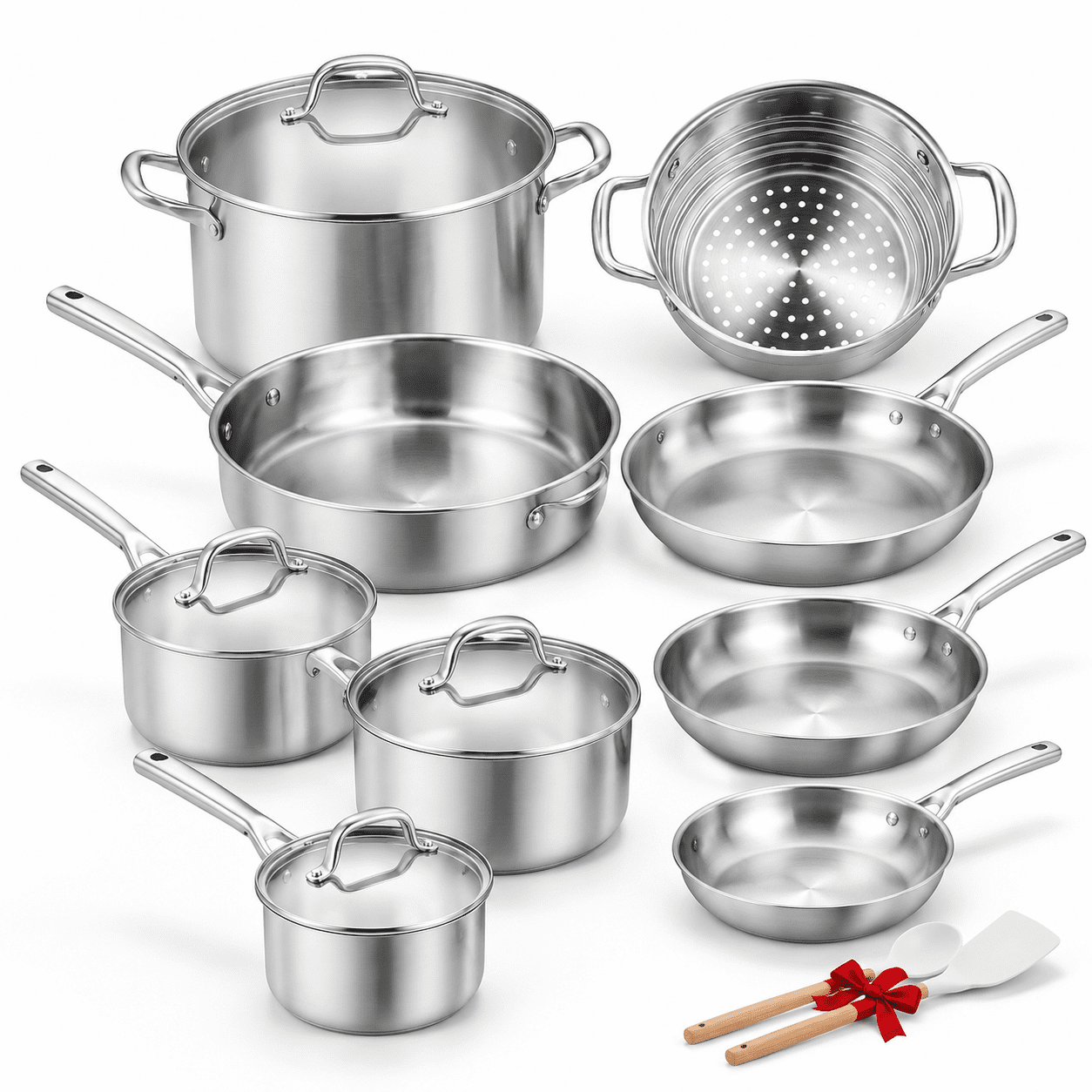
Induction-compatible stainless steel offers broad cooking uses and is available in many pan shapes and sizes.
Best for strong searing
Cast iron and carbon steel can retain substantial heat, making them useful for browning meat and cooking foods that benefit from a hot pan.
Best for easy egg cooking
A compatible nonstick skillet can reduce sticking and make cleanup easier when used within its care and temperature limits.
Best for soups and stews
A compatible stainless steel stockpot or enameled cast iron Dutch oven can handle liquid-heavy dishes and longer cooking tasks.
Stainless Steel Cookware
Stainless steel is a practical choice for people who want cookware that can handle many cooking methods. It works well for boiling pasta, making sauces, cooking vegetables, browning meat, and preparing soups. Many stainless steel pans use a magnetic outer base with an aluminum or copper layer inside to help spread heat.
Not every stainless steel pan works on induction. Some stainless steel alloys are weakly magnetic or nonmagnetic, and the pan’s construction can vary by model. Check the induction label or use a magnet before placing an older pan on the cooktop.
Stainless steel can take more practice than nonstick cookware. Eggs and delicate foods may stick when the pan is too cool, too hot, or not prepared properly. Preheating the pan according to its instructions and using a suitable amount of cooking fat can help.
Advantages
Versatile cooking, durable construction, and many options with layered bases for heat distribution.
Limitations
Food can stick, and the magnetic properties depend on the exact pan construction.
Good for
Everyday meals, sauces, pasta, vegetables, and browning meat.
Cast Iron Cookware
Cast iron is generally induction compatible because the material is magnetic. A traditional cast iron skillet can be useful for searing steaks, browning chicken, frying potatoes, and cooking dishes that benefit from steady heat. Its thick body can hold heat well once it becomes hot.
Cast iron also has drawbacks. It is heavy, takes time to heat, and can develop rust if moisture remains on an unprotected surface. Bare cast iron usually needs seasoning, which is a layer of baked-on oil that helps protect the surface and supports food release.
Protect a glass induction surface by lifting cast iron rather than sliding it. Check the pan’s base for rough spots or debris, and avoid dropping a heavy skillet onto the cooktop. Follow the appliance manual for any special restrictions on heavy cookware.
Advantages
Strong heat retention, good searing performance, and broad compatibility with induction.
Limitations
Heavy weight, slower heating, and care needs for bare iron.
Good for
Steaks, cornbread, fried foods, and other dishes that benefit from retained heat.
Carbon Steel Cookware
Carbon steel is another magnetic material that often works very well on induction. It is common in skillets and woks, and it combines a relatively light body with the ability to handle high cooking temperatures when used correctly.
A carbon steel pan can be useful for stir-frying vegetables, searing meat, and cooking foods that benefit from a responsive pan. Like bare cast iron, it usually needs seasoning and careful drying to limit rust.
Check the base before using a carbon steel wok. Some rounded woks do not sit securely on flat glass induction surfaces, and the burner may not detect their shape. A flat-bottomed induction-compatible wok is often the more practical choice for a standard home cooktop.
Advantages
Magnetic construction, useful heat response, and suitability for searing and stir-frying.
Limitations
Seasoning and drying are needed for many models, and rounded bases may not suit flat cooktops.
Good for
Stir-fries, fried rice, seared meat, and high-heat cooking.
Enameled Cast Iron
Enameled cast iron combines a cast iron body with a glass-like coating. Many models work on induction because the underlying iron responds to the magnetic field. The enamel reduces the need to season the cooking surface and can make the pot easier to care for than bare cast iron.
These pots are often used for soups, stews, braises, chili, and slow-cooked meals. Their weight and heat retention can be helpful for long cooking sessions, but they may take longer to heat than thinner pans.
Avoid sudden temperature changes unless the manufacturer says the cookware can handle them. A chipped or cracked enamel surface may worsen with continued use, so inspect the pot and follow the care instructions.
Advantages
Good heat retention, a coated cooking surface, and useful performance for simmering and braising.
Limitations
Heavy construction, slower heating, and the risk of enamel damage from impacts or thermal shock.
Good for
Soups, stews, braised meats, and one-pot meals.
Nonstick and Ceramic-Coated Cookware
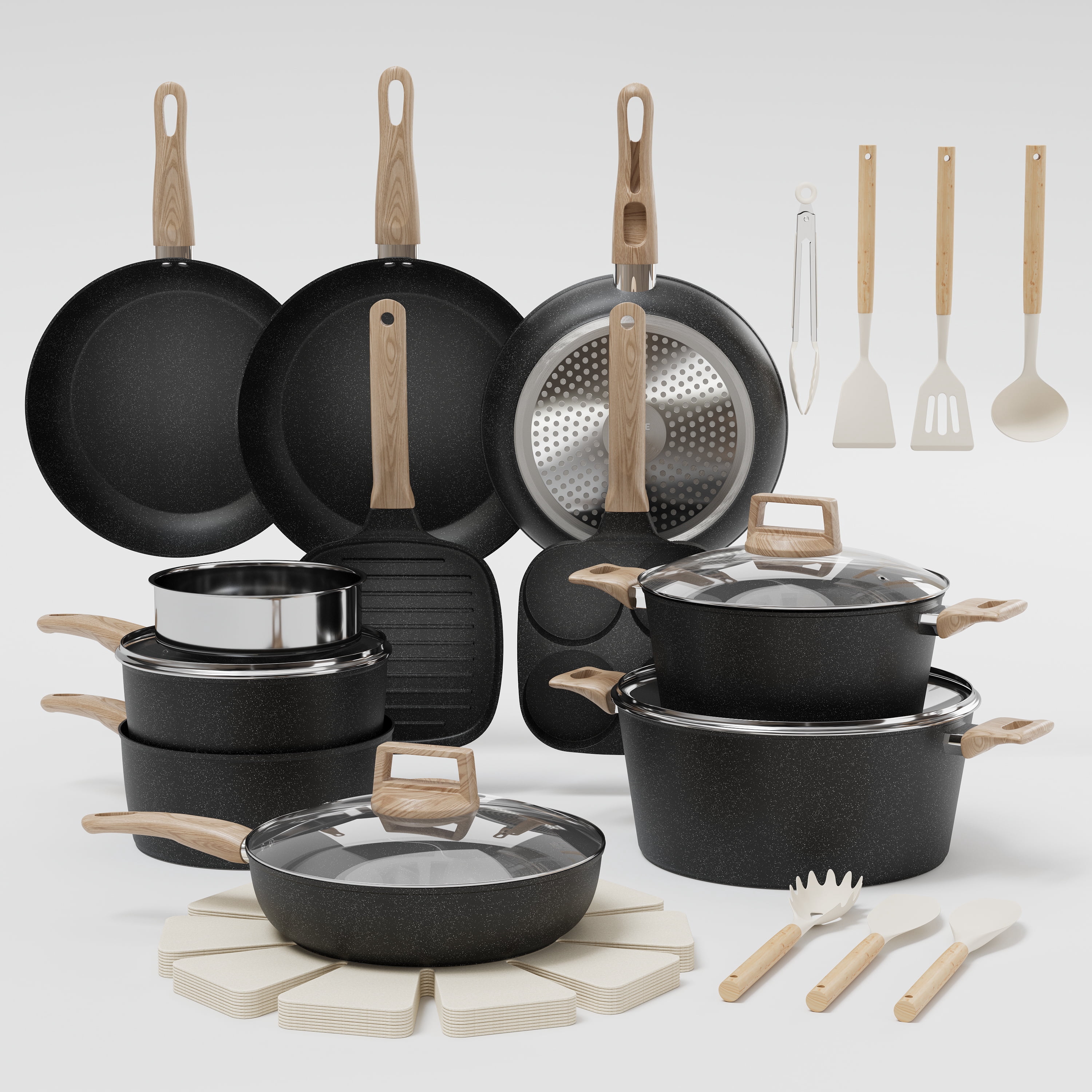
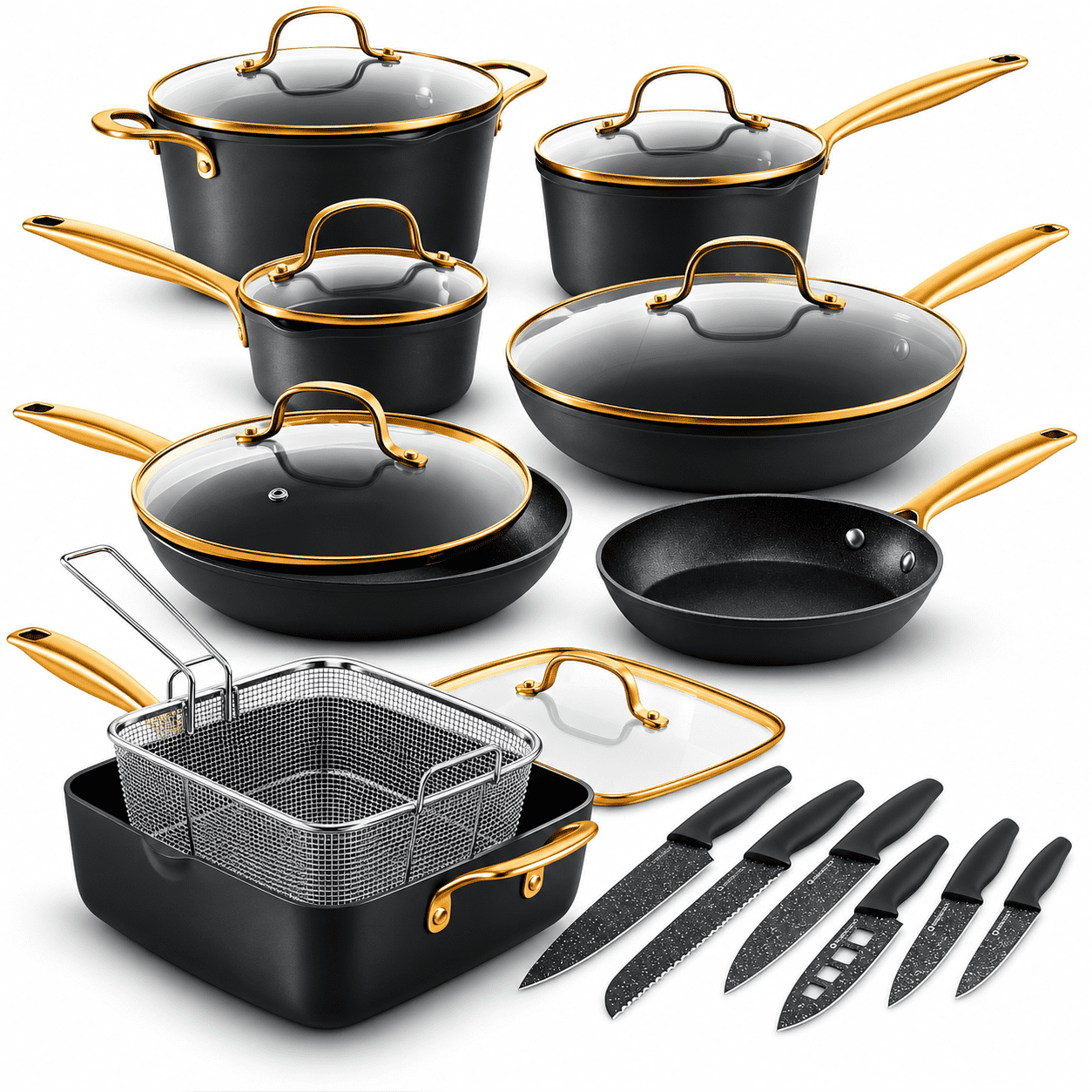
Nonstick cookware can work on induction when it has a compatible magnetic base. The nonstick layer itself does not make the pan induction ready. Many models combine an aluminum body with a magnetic steel plate or another compatible base.
Traditional PTFE-based nonstick pans can make eggs, pancakes, and delicate fish easier to release. Ceramic-coated cookware may offer a different nonstick surface, but the word ceramic does not tell you whether the pan can work on induction. Check the manufacturer’s material and compatibility details.
Use low to medium heat for most nonstick cooking unless the manufacturer gives different directions. Avoid overheating an empty pan, use utensils suited to its coating, and replace cookware when its surface is badly damaged according to the manufacturer’s guidance.
Advantages
Easy food release and simpler cleanup for delicate or sticky foods.
Limitations
The coating can wear over time, and not every nonstick pan has a magnetic base.
Good for
Eggs, pancakes, delicate fish, and quick weekday breakfasts.
What Cookware Materials Usually Do Not Work on Induction?
Pure aluminum, pure copper, glass, and ceramic cookware generally do not work directly on a standard induction cooktop. These materials do not provide the magnetic response needed by the appliance. However, a pan made mainly from one of these materials may still work if it includes a suitable magnetic base.
This distinction matters because many modern pans combine several materials. An aluminum pan with a bonded magnetic steel base may be induction ready, while an aluminum pan without that layer may not heat at all. Always judge the finished pan rather than just its main material.
Source: diningtokitchen.com
Pure aluminum
Usually does not work directly unless the cookware has a compatible magnetic base.
Pure copper
Usually needs a magnetic layer or another manufacturer-approved induction solution.
Glass cookware
Ordinary glass pots and pans do not respond to the induction field.
Ceramic cookware
Solid ceramic cookware generally does not work directly unless specifically designed with a compatible base.
Nonmagnetic stainless steel
Some stainless steel cookware does not work because its base lacks the required magnetic properties.
Can an Induction Interface Disc Make Other Pans Work?
An induction interface disc is a separate magnetic plate placed between a compatible induction burner and cookware that would not otherwise work. The cooktop heats the disc, and the disc transfers heat to the pan. This can allow some otherwise incompatible cookware to be used, subject to the appliance and disc instructions.
The trade-off is that the disc changes the way heat reaches the pan. Heating can become slower or less responsive, and the disc itself can remain hot after cooking. It may also reduce some of the practical advantages of direct induction heating.
Use an interface disc only if the cooktop manufacturer permits it. Do not assume every glass, ceramic, or copper pot will be safe or effective with a disc, and never place a disc on a cooktop that prohibits this accessory.
Check appliance guidance
Confirm that your induction cooktop permits an interface disc before buying or using one.
Allow for slower heating
The disc adds another layer between the burner and the food, which can affect heat response.
Handle with care
The disc and cookware may stay hot after the cooktop is switched off.
How to Test Whether Your Existing Cookware Works
You can check most cookware at home without buying a new set. A small refrigerator magnet or another ordinary magnet is often enough for an initial test. Still, the manufacturer’s compatibility label and your cooktop manual provide important details that the magnet alone cannot confirm.
Start with the cookware you already own. Testing a few pans can help you avoid replacing an entire kitchen set when only one or two pieces are incompatible.
Source: modernkitchenguru.com
Step 1: Check the label
Look for an induction symbol or explicit wording in the manual, on the packaging, or on the manufacturer’s product page.
Step 2: Test the base with a magnet
Place a magnet against the underside of the pan. If it attracts firmly, the base likely contains magnetic material.
Step 3: Inspect the bottom
Check whether the base is reasonably flat, stable, and free of rough debris that could scratch the glass.
Step 4: Check the size
Compare the pan’s base diameter with the minimum cookware size specified by the cooktop maker.
Step 5: Run a controlled test
If the pan meets the requirements, place it on the correct cooking zone and follow the appliance manual for a low-power test.
What If the Magnet Does Not Stick?
If the magnet does not stick to the base, the pan may not work on induction. Try another part of the base if the manufacturer describes a layered construction, but do not assume the pan is compatible just because the sidewall attracts a magnet.
A weak magnetic pull does not always mean the cookware will fail. Some compatible pans have a less strongly magnetic layer, so use the manufacturer’s specifications and a careful cooktop test to confirm. If the appliance does not detect the pan, stop and recheck the size, placement, and compatibility requirements.
The cooktop does not detect the pan
Check the pan’s position, base size, and induction rating. Try another confirmed compatible pan to help determine whether the issue is the cookware or the appliance.
The pan heats unevenly
Check for a warped base, use a cooking zone that fits the pan, and follow the recommended heat settings.
The pan makes a humming sound
Some cookware can make buzzing or humming sounds during induction cooking. Check the appliance manual if the sound is unusually loud, new, or accompanied by an error.
How to Choose the Right Induction Cookware for Your Kitchen
The best cookware set is the one that suits your meals, stove, and daily habits. A household that makes eggs and grilled cheese may need a good nonstick skillet, while someone who sears meat or cooks large family meals may value stainless steel and cast iron more.
Before buying a set, think about the pots and pans you use each week. A large collection may include pieces that stay in the cabinet, so a smaller mix of useful sizes can be a better fit for many households.
Source: walmart.com
Induction Cookware Comparison by Material
Use this comparison to narrow down your choices. It summarizes the common strengths and limitations of each material, but exact performance depends on the pan’s construction, thickness, shape, and the cooktop itself.
Source: diy.com
Stainless steel
Induction compatibility depends on the base. It is versatile and often suitable for everyday cooking, sauces, and boiling.
Cast iron
Usually magnetic and well suited to searing, but heavy and slower to heat.
Carbon steel
Usually magnetic and useful for stir-frying and searing, but often needs seasoning.
Enameled cast iron
Usually compatible because of its iron body. It is useful for braising and simmering but can be heavy.
Nonstick cookware
Works when the base is magnetic. It is useful for eggs and delicate foods but requires coating care.
Aluminum or copper
Generally incompatible as pure materials, but some pans work because they include a magnetic base.
Glass or ceramic
Generally incompatible without a specifically designed magnetic base or an approved interface solution.
A Practical Starter Set for Induction Cooking
If you are setting up a kitchen from scratch, you do not need to buy every cookware type. Start with a compatible stainless steel saucepan, a medium or large stainless steel skillet, a nonstick skillet for delicate foods, and a stockpot for pasta or soup.
Add a cast iron skillet if you often sear meat or want a pan that holds heat well. If you make stews or braises, an induction-compatible enameled Dutch oven may be more useful than a second skillet.
Choose sizes that fit your cooktop zones and storage space. A pan that is too large for the available cooking zone may heat less evenly, while a base that is too small may not be detected.
For a small apartment
Start with one saucepan, one versatile skillet, and one medium pot. Check the dimensions of your cooktop and storage space before purchasing.
For a family kitchen
Consider a larger stockpot, a medium saucepan, a large skillet, and a smaller nonstick pan for quick meals.
For frequent high-heat cooking
Consider stainless steel, cast iron, or carbon steel, provided each pan suits the cooktop and your preferred care routine.
Common Induction Cookware Mistakes to Avoid
Many induction cooking problems come from cookware that does not match the appliance. A pan can be expensive, well made, and useful on a gas stove yet still fail on induction if its base is not magnetic.
A few simple habits can also help protect your cooktop and cookware. Follow the appliance manual, avoid unnecessary sliding, and use heat settings that suit the pan and the food.
Source: www.lowes.com
Assuming every stainless steel pan works
Stainless steel is a broad material category. Check the exact base and induction compatibility instead of relying on the name alone.
Buying cookware based only on its coating
A ceramic or nonstick finish does not prove induction compatibility. Check the magnetic base.
Using a pan with a warped base
A badly warped pan may sit unstably and heat unevenly. Replace it or stop using it on the cooktop if it cannot sit safely.
Dragging heavy pans across glass
Lift cookware when moving it to reduce the risk of scratches, especially with cast iron.
Heating an empty nonstick pan at high power
Avoid overheating an empty coated pan. Follow the manufacturer’s heat limits and use suitable settings for the food.
Ignoring the cooktop’s minimum pan size
A small pan may not be detected even if it is magnetic. Check the instructions for each cooking zone.
Assuming all cookware sets contain compatible pieces
Verify that the specific set is labeled for induction and that each included pot and pan meets the appliance’s requirements.
Induction Cookware and Safety
Induction cooktops still involve high heat, hot cookware, and electrical equipment. Keep the glass surface and pan base clean, use cookware with stable handles, and keep children away from hot pans. The cooktop may not glow red like a traditional electric element, but the pan and nearby surface can still cause burns.
People with implanted medical devices should follow the guidance provided by their device manufacturer and the induction cooktop manufacturer. If the instructions advise a particular distance or precaution, follow it rather than assuming all devices and cooktops have the same requirements.
If the cooktop shows a persistent error, develops a crack, or behaves in a way that the manual identifies as unsafe, stop using it and contact the manufacturer or a qualified service professional. Do not attempt to repair internal electrical parts yourself.
Protect the glass surface
Keep cookware bases clean and lift heavy pans instead of sliding or dropping them.
Follow cookware temperature limits
Use the heat range and oven settings permitted by the cookware manufacturer, including limits for handles and lids.
Use the right cleaning method
Let the cooktop cool as directed and use cleaners approved for its glass surface.
How to Care for Induction-Compatible Pots and Pans
Proper care helps cookware last longer and keeps its base suitable for the cooktop. The right routine depends on the material, so avoid using one cleaning method for every pan.
For stainless steel, follow the manufacturer’s cleaning instructions and remove stuck food with a suitable soak or cleaner. For bare cast iron and carbon steel, dry the pan well after washing and maintain the seasoning as directed.
Source: walmart.com
Stainless steel
Clean according to the manufacturer’s directions. Remove food residue from the base before using the pan on glass.
Cast iron and carbon steel
Keep the surface dry, maintain seasoning where required, and inspect the base for rough debris.
Nonstick cookware
Use suitable utensils, avoid overheating, and follow the recommended washing method.
Enameled cookware
Avoid impacts and sudden temperature changes that could damage the enamel.
Do You Need a Special Induction Cookware Set?
You do not always need to buy a complete new set when switching to induction. Test your current pans, check the manufacturer’s instructions, and replace only the pieces that fail the compatibility checks or do not meet your cooking needs.
A set labeled induction compatible can be convenient, especially if you need several matching pots and pans. However, compare the actual pieces, sizes, base construction, and care requirements before choosing a set over individual items.
Keep compatible cookware
There is no need to replace a pan that works correctly, fits the cooktop, and remains in good condition.
Replace unsuitable pieces
Prioritize the pans you use most often rather than buying a large set just to replace one incompatible skillet.
Check accessories and lids
Verify that handles, lids, and any special care requirements suit your cooking habits and storage needs.
What to Check Before Buying Induction Cookware
Before you spend money on new cookware, check the exact product specifications rather than relying on a broad material label. A clear induction rating, a stable base, and sizes that fit your cooking zones are more useful than a large piece count alone.
Think about how you cook, too. If you mostly boil pasta and make sauces, stainless steel pots may cover most needs. If you prepare eggs every morning, add a compatible nonstick skillet instead of buying several pans that perform the same job.
Source: walmart.com
Compatibility
Look for explicit induction support and confirm the base meets the cooktop’s requirements.
Base construction
Check that the pan has a magnetic base and sits securely on a flat glass surface.
Heat distribution
Review the manufacturer’s construction details. Layered bases can help distribute heat, but results vary by design.
Weight and handling
Choose a weight you can lift safely, especially for large stockpots and cast iron cookware.
Care needs
Consider whether you are comfortable seasoning bare iron, protecting a nonstick coating, or handling heavy enameled pots.
Cooktop fit
Match the base diameter to the burner size and minimum detection requirements in your appliance manual.
A Simple Buying Decision
If you want one versatile material, choose induction-compatible stainless steel. If you want strong heat retention, consider cast iron. If easy food release matters most, choose a nonstick pan with a confirmed magnetic base.
For many kitchens, combining these materials offers more flexibility than buying a single-material set. Start with a few useful pieces and add cookware as your cooking needs become clear.
Choose stainless steel for versatility
It suits a broad range of meals and can form the core of an everyday cookware collection.
Choose cast iron for searing
It retains heat well, but consider the weight and care routine before buying.
Choose nonstick for delicate foods
It can simplify cooking and cleanup when used within the manufacturer’s temperature and care limits.
Frequently Asked Questions
Q
What types of cookware work on induction cooktops?
Stainless steel with a magnetic base, cast iron, carbon steel, and many enameled cast iron pans work on induction. Magnetic-base nonstick and ceramic-coated cookware can also work. Check the exact pan’s induction rating before using it.
Q
Can I use my old stainless steel pots on an induction stove?
Possibly. Stainless steel cookware varies in magnetic properties, so some older pots work and others do not. Test the base with a magnet and check the manufacturer’s guidance. A firm magnetic attraction is a useful sign, but a cooktop compatibility test and the manual provide additional confirmation.
Q
Can I use aluminum pans on induction?
Pure aluminum pans generally do not work directly because aluminum is not sufficiently magnetic for standard induction heating. Some aluminum cookware has a bonded magnetic steel base that makes it compatible. Check the product label and instructions.
Q
Does a nonstick pan work on an induction cooktop?
Yes, if the pan has a compatible magnetic base. The nonstick coating itself does not make the pan induction ready. Look for explicit induction compatibility and follow the recommended heat limits to protect the coating.
Q
How can I tell whether a pan is induction compatible?
Look for an induction symbol or manufacturer statement, then test the bottom with a magnet. Confirm that the base is stable and meets the cooktop’s minimum size requirements. If the cooktop does not detect the pan, check placement and compatibility before assuming the appliance is faulty.
Q
Is cast iron safe for a glass induction cooktop?
Cast iron generally works on induction, but its weight and rough base can damage a glass surface if the pan is dragged or dropped. Keep the base clean, lift the pan when moving it, and follow the cooktop manufacturer’s instructions.
Q
Do I need to replace all my cookware when switching to induction?
No. Test the pots and pans you already own and keep those that are compatible, stable, and in good condition. Replace only the pieces that do not work or do not suit your cooking needs.
✦ Wrapping Up
Conclusion
The right induction cookware must have a magnetic base that works with your cooktop. Stainless steel, cast iron, and carbon steel are common choices, while many nonstick and enameled pans also work when built for induction. Pure aluminum, copper, glass, and ceramic cookware generally need a compatible magnetic base or another manufacturer-approved solution.
For everyday American home cooking, a small mix of induction-ready stainless steel pots, a nonstick skillet, and a cast iron skillet can cover many needs. Choose sizes that fit your burners, check the base before buying, and follow the instructions for both the cookware and the appliance.
You do not need to replace every pot in your kitchen just because you have switched to induction. A magnet test and a review of the product label can help you identify what you can keep and what you need to replace.
💡 Key Takeaway
Before buying new cookware, test the base of each pan with a magnet, confirm induction compatibility in the manufacturer’s instructions, and choose a flat base that fits your cooktop’s size requirements.