Ceramic coating cookware is metal cookware covered with a thin, smooth, ceramic-based layer that helps food release with less sticking and makes cleanup easier.
From making eggs before work to cooking grilled cheese for lunch or sautéing vegetables for dinner, American home cooks often want a pan that heats quickly and cleans up with little effort. Ceramic-coated cookware aims to meet that need. It usually has an aluminum or stainless steel body and a thin coating designed to create a slick cooking surface.
The word ceramic can be confusing. Most pans marketed as ceramic nonstick are not made entirely from ceramic. Instead, they have a metal body with a coating that often uses silica-based materials. Many of these coatings do not use PTFE, the chemical used in traditional PTFE-based nonstick pans, but the exact formula depends on the product. Ceramic-coated cookware can be useful for everyday cooking, although its nonstick performance may fade with time.
Ceramic coating cookware is cookware with a metal body and a thin, ceramic-based layer on the cooking surface. Manufacturers commonly use aluminum because it transfers heat well and keeps the pan relatively light. Some products use stainless steel or other metal bases.
The coating creates a smooth surface that helps food separate from the pan. It can make cooking and cleanup easier, especially when preparing eggs, pancakes, fish, and other foods that tend to stick. The coating also gives cookware its color and finish.
Despite its name, ceramic-coated cookware is usually not a solid ceramic pot or pan. Think of it as a metal pan wearing a thin protective layer. The metal provides most of the structure and heat transfer, while the coating supplies the cooking surface.
The term ceramic coating can cover different commercial formulas. Many modern products use a sol-gel process, in which liquid ingredients form a thin, solid layer during manufacturing. Silica-based materials often play a central role, but the exact ingredients and production methods vary.
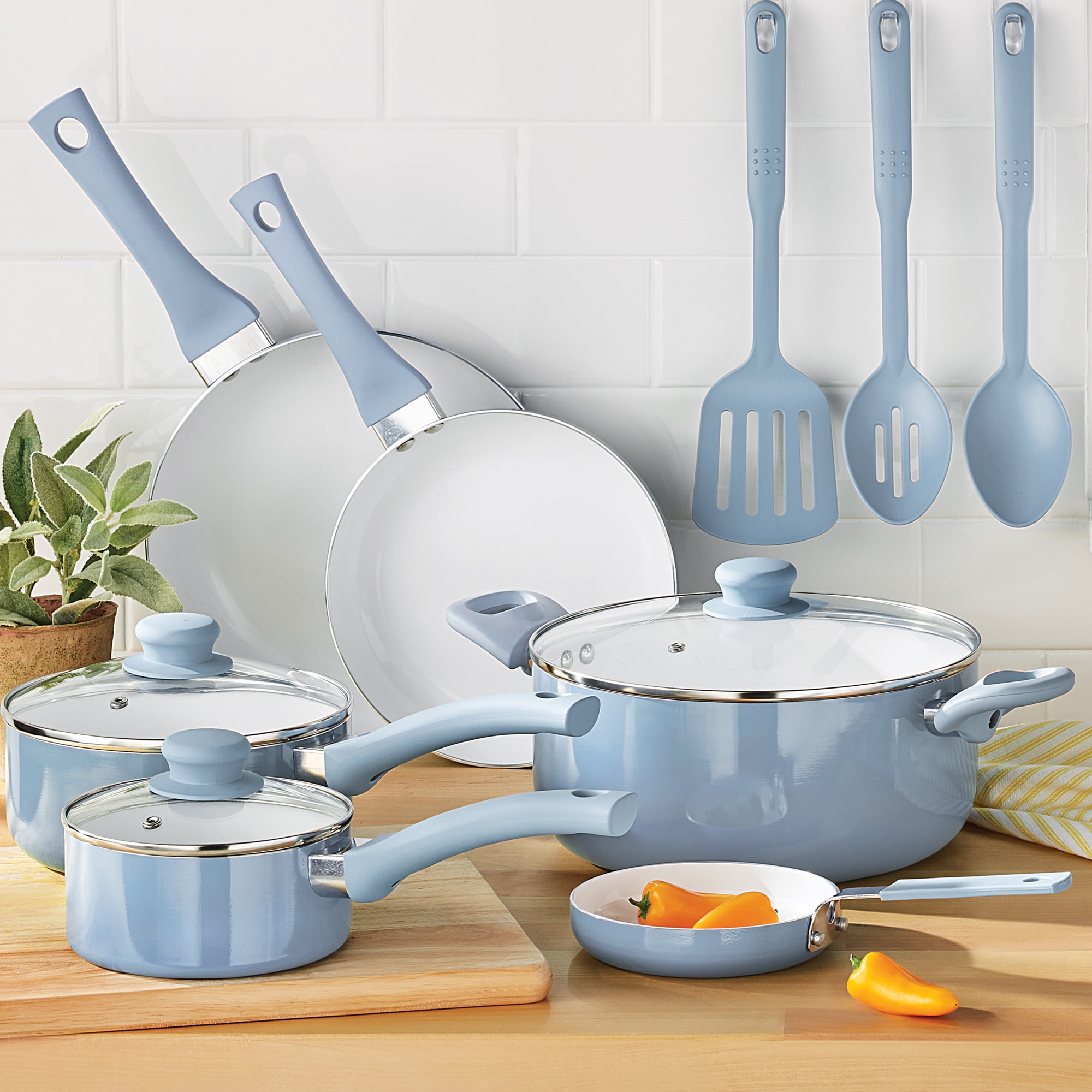
Source: i5.walmartimages.com
Metal body
The aluminum or stainless steel base gives the pan its shape, strength, and heat-transfer properties.
Ceramic-based coating
The thin surface layer helps reduce sticking and provides the pan’s finished appearance.
Nonstick function
The smooth surface helps food release, although performance depends on the coating, cooking method, and condition of the pan.
Is Ceramic-Coated Cookware Made Entirely of Ceramic?
Usually, no. Most ceramic-coated frying pans sold in American stores use a metal body with a ceramic-based coating. Fully ceramic cookware is different because the body itself is made from ceramic material. That distinction affects weight, heating behavior, care, and the way each product should be used.
Always read the product description. A listing that says ceramic nonstick may refer only to the cooking surface, not the pan’s body. This detail matters if you want to avoid a particular base metal or need cookware for a specific type of stove.
Ceramic-coated metal
Usually lighter and quicker to heat than a thick ceramic vessel, depending on its construction.
Fully ceramic cookware
Made from ceramic material throughout the main vessel, with different heat and handling properties.
What Does Ceramic Nonstick Mean?
Ceramic nonstick describes the coating’s intended function. It helps food release without requiring the pan to be heavily greased. A new, well-made pan may release eggs or pancakes easily when used at a suitable temperature.
Nonstick does not mean that food can never stick. Sugary sauces, burnt residue, excessive heat, and a worn surface can all make cooking harder. A small amount of cooking oil can still improve results and help food brown evenly.
How Does Ceramic Cookware Coating Work?
Ceramic-coated cookware works by combining a smooth surface with the heat-transfer properties of its base material. Food has fewer chances to cling to a clean, intact surface than it would on many rough or damaged surfaces. The coating also changes how food contacts the pan during cooking.
Many ceramic nonstick coatings are made with a sol-gel process. In simple terms, manufacturers apply a liquid mixture to the prepared metal surface and cure it to form a thin, solid layer. The final product may contain silica-based components and other ingredients that affect its strength, color, and release properties.
The metal base remains important. Aluminum generally spreads heat well, but a thin pan can still develop hot spots on some burners. A thicker base or a layered construction may improve heat distribution, although the result depends on the design rather than the coating name alone.
The surface can wear as the pan is heated, cooled, cleaned, and used with utensils. Repeated overheating and rough handling may reduce food release. Ceramic nonstick cookware should therefore be treated as a maintained cooking surface, not as a permanent finish.
Source: sixihouseware.com
Surface preparation
The metal base is prepared so the coating can attach to it.
Coating application
A ceramic-based formula is applied in a thin layer.
Curing
The coating is processed to create a solid surface with the intended cooking properties.
Everyday use
Heat, oil, food contact, cleaning, and storage affect how well the surface performs over time.
Why Does Food Release Less Easily as a Pan Ages?
A ceramic-coated pan may release food well when new but become less slick after months of use. Fine surface wear, cooked-on oil, and repeated exposure to high heat can all contribute. Once food starts sticking, scrubbing harder may make the problem worse.
Try washing the pan with warm water, mild dish soap, and a soft sponge. Remove residue without using abrasive pads. If the surface remains sticky or the coating shows visible damage, the pan may have reached the end of its useful life.
What Are the Benefits of Ceramic-Coated Cookware?
The main benefits are easy food release, simple cleanup, and the availability of many products marketed without PTFE. These features can make ceramic-coated pans useful for routine meals. However, the value depends on the coating quality, base construction, price, and care the pan receives.
For a household that often cooks eggs, quesadillas, or delicate fish, a ceramic nonstick skillet can reduce the amount of effort needed to release food. It may also allow cooking with less added fat than a pan that sticks easily, although the amount of oil you need depends on the recipe and the pan’s condition.
Many ceramic-coated pans are light enough for quick tasks and easy handling. Their range of colors and finishes can also suit different kitchens. These design benefits are separate from cooking performance, so a stylish set is not automatically a better-performing one.
Source: m.media-amazon.com
Easy food release
A sound coating can help eggs, pancakes, and similar foods move more easily across the cooking surface.
Simple cleanup
Food often comes away with warm water, dish soap, and a soft sponge.
Options without PTFE
Many ceramic nonstick products are sold as PTFE-free, which can matter to buyers who want to avoid that coating material.
Less added oil may be enough
The surface can reduce sticking, but it does not guarantee oil-free cooking or make every recipe lower in calories.
Broad choice of designs
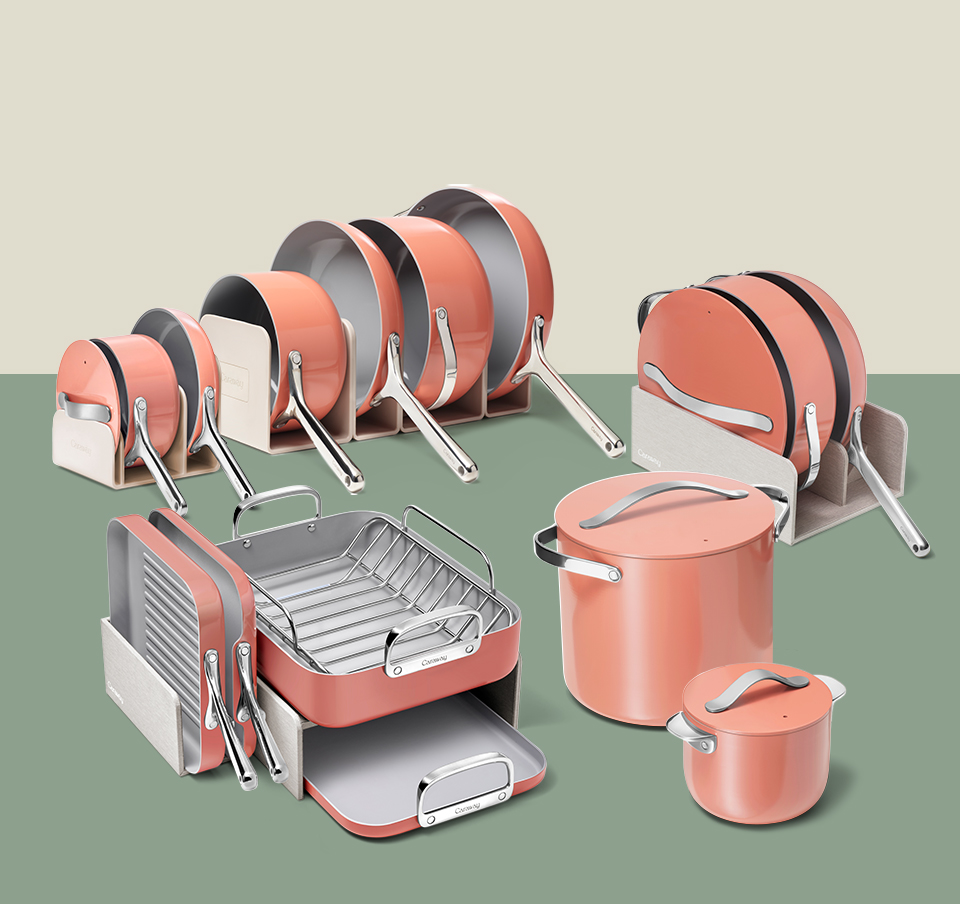
Ceramic-coated cookware comes in different colors, sizes, handle styles, and base materials.
Is Ceramic-Coated Cookware Good for Everyday Cooking?
Yes, it can work well for many everyday tasks, especially cooking eggs, warming tortillas, making pancakes, and sautéing vegetables over moderate heat. A skillet is often the most useful starting point because it handles many quick meals without taking up much space.
It is less suited to cooking methods that rely on sustained high heat. If you often sear steaks at very high temperatures or move a pan from a burner into a very hot oven, stainless steel or cast iron may be a better fit. Check the cookware maker’s heat and oven limits before use.
What Are the Disadvantages of Ceramic-Coated Cookware?
The biggest drawback is that the nonstick effect may fade with use. Ceramic coatings are not immune to wear, and their useful life varies with the formula, pan construction, cooking habits, and care. Some pans lose their easy-release performance sooner than buyers expect.
High heat can speed up wear, while metal utensils and abrasive cleaning can scratch or damage the surface. Even when a pan looks fine, repeated heating and cleaning may change how well food releases. A coating warranty may cover some defects but often does not cover ordinary wear or misuse, so read its terms.
Ceramic-coated cookware also has limits as an all-purpose tool. It may not deliver the same searing behavior or long-term surface life as well-maintained stainless steel or cast iron. If you want a pan that can handle decades of rough use, a coated skillet may not be the best main pan.
A higher price does not automatically mean a longer-lasting coating. Check the manufacturer’s care instructions, warranty, compatible cooktops, and replacement policy before paying more for a large set.
Source: i5.walmartimages.com
Nonstick performance can decline
Food may start sticking after repeated use, even when the pan has no obvious deep scratch.
Heat limits matter
Excessive heat can shorten coating life and may damage handles or other parts.
Care affects durability
Metal tools, harsh scouring, and careless stacking can cause avoidable wear.
Not ideal for every cooking method
Very high-heat searing and other demanding tasks may suit uncoated cookware better.
Replacement adds cost
A pan that loses its useful nonstick function may need replacing even if its metal body remains intact.
How Long Does Ceramic-Coated Cookware Last?
There is no reliable lifespan that applies to every ceramic-coated pan. A lightly used skillet cared for according to its manual may remain useful longer than a pan that is overheated daily or scrubbed with abrasive tools. Product quality and the coating formula also affect durability.
Instead of relying on a promised number of years, watch how the pan performs. If food sticks despite proper preheating and cleaning, or if the coating flakes, peels, or becomes visibly damaged, stop using it and follow the manufacturer’s guidance. Replace the pan when it can no longer be used as intended.
Can You Repair a Ceramic Nonstick Coating?
A worn ceramic nonstick surface generally cannot be restored to its original factory condition with home remedies. Seasoning with oil does not rebuild the coating, and sanding or applying an unapproved finish can make the pan unsuitable for cooking.
Clean off ordinary residue first. If the coating itself is peeling or damaged, contact the manufacturer about warranty coverage or replace the pan. Do not treat a scratched or flaking surface with paint, sealant, or a repair product that was not approved for food-contact cookware.
Is Ceramic-Coated Cookware Safe?
Ceramic-coated cookware can be suitable for normal home cooking when it is made for food contact and used according to its instructions. Safety depends on the actual materials, manufacturing quality, condition of the pan, and cooking temperature. The word ceramic alone is not proof that a product is free of every chemical of concern.
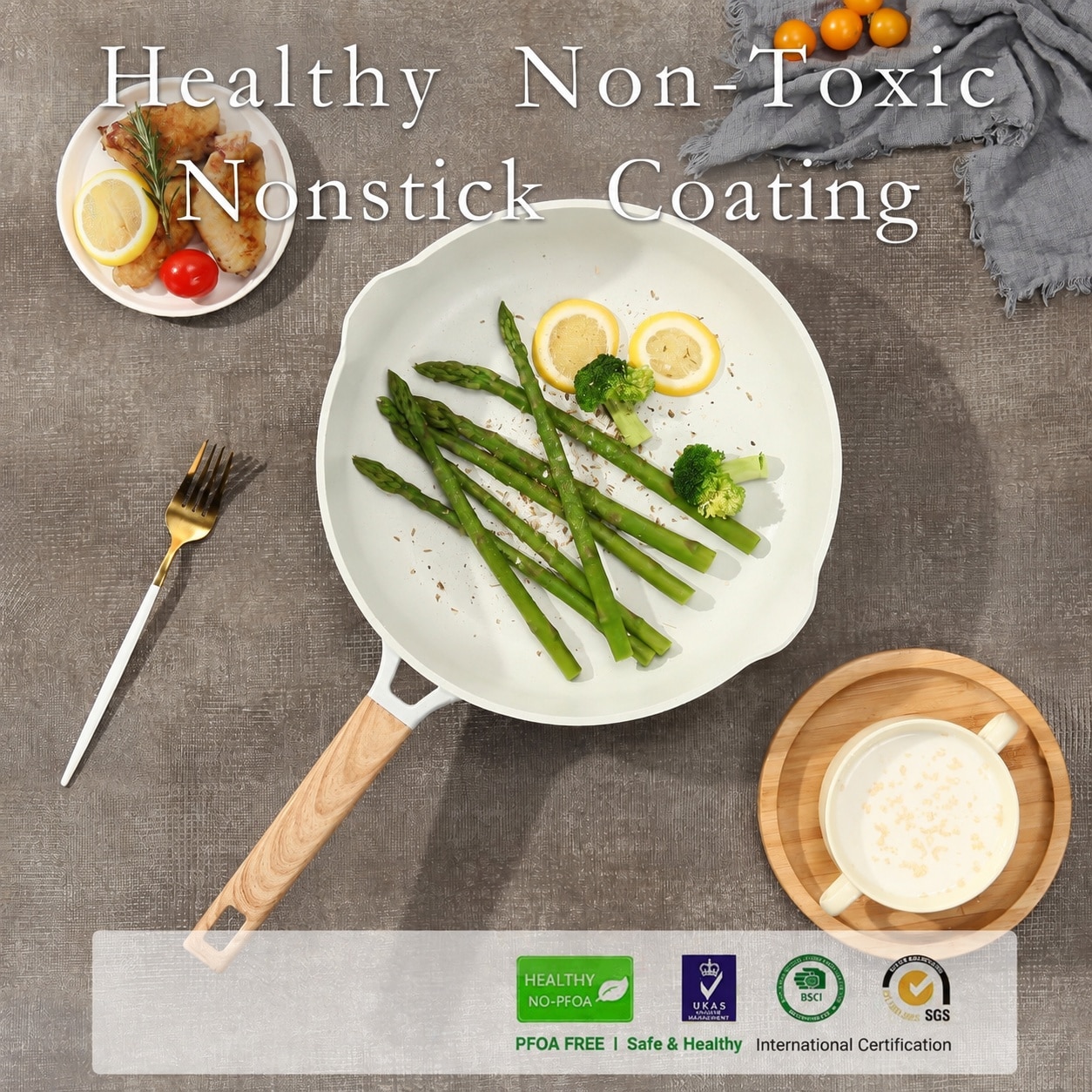
Many ceramic nonstick pans are advertised as free of PTFE and other PFAS. These claims should be checked against the exact model and the manufacturer’s documentation. A PTFE-free claim does not, by itself, establish that a product has no other synthetic ingredients or that every part of the cookware is free from all substances a buyer may wish to avoid.
Use cookware from a traceable manufacturer that provides clear material information and care instructions. Be wary of broad phrases such as non-toxic or chemical-free when they are not backed by a clear explanation of the product’s composition. All physical materials consist of chemicals, so useful claims should name what the product does or does not contain.
Follow the maker’s temperature limits and avoid heating an empty pan for a long time. Excessive heat can damage cookware and its coating. Good ventilation is sensible when cooking, and the right temperature helps protect both the pan and the food.
If the coating is peeling or flaking, stop using the pan until you have checked the manufacturer’s advice. Visible damage can affect performance and may expose the underlying metal. If you are choosing cookware for a specific allergy, medical concern, or strict material restriction, review the full product specifications rather than relying on the front of the box.
Source: images.ctfassets.net
Check the exact coating claim
Look for clear statements about PTFE, PFAS, the coating system, and any relevant food-contact compliance.
Follow temperature limits
Use the heat range stated in the manual and avoid prolonged heating of an empty pan.
Inspect the cooking surface
Do not ignore peeling, flaking, or other clear coating damage.
Avoid unsupported guarantees
Terms such as non-toxic should not replace a specific material description or reliable product documentation.
Does Ceramic-Coated Cookware Contain PFAS or PTFE?
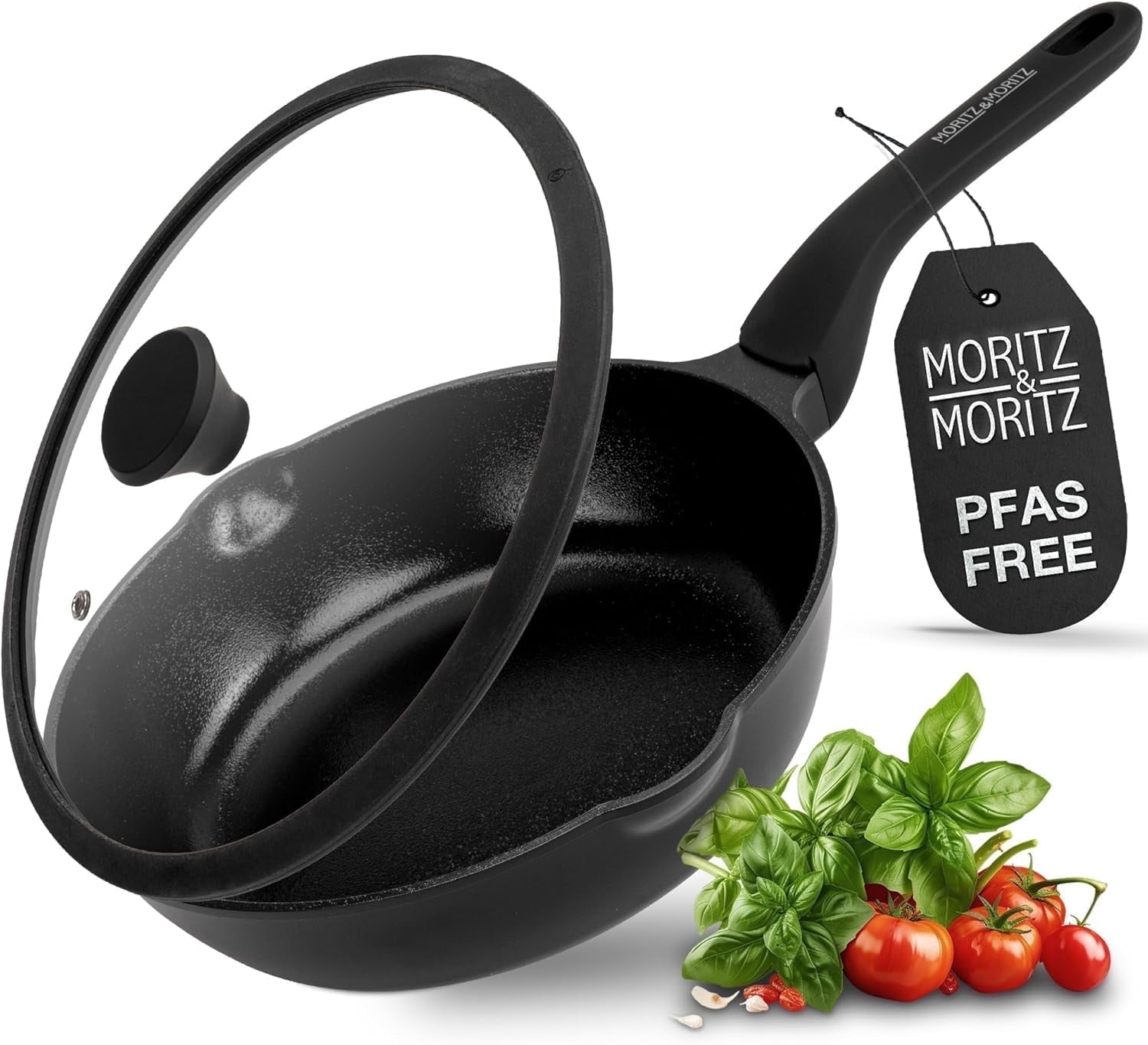
Many ceramic nonstick coatings are made without PTFE, a fluoropolymer used in traditional nonstick cookware. Some manufacturers also describe their products as PFAS-free. However, these are specific material claims, not qualities that can be assumed from every product labeled ceramic.
PFAS is a broad group of substances, while PTFE is one particular fluoropolymer. If avoiding these materials is important to you, check the product’s current documentation and ask the manufacturer to clarify any broad or unclear claim. Do not assume the handle, exterior finish, or every component has the same composition as the cooking surface.
Is Ceramic-Coated Cookware Safer Than Traditional Nonstick Cookware?
There is no single answer for every pan because safety depends on the material, product quality, condition, and use. A ceramic-coated pan may suit someone who wants a nonstick surface without PTFE. A well-made traditional nonstick pan may also be appropriate when used according to its manufacturer’s instructions.
Avoid comparing cookware through vague safety labels alone. Check the coating ingredients, temperature guidance, and care requirements. For a household seeking to avoid coated surfaces altogether, uncoated stainless steel, cast iron, or fully ceramic cookware may be alternatives, each with its own cooking and maintenance needs.
Ceramic-Coated vs. Traditional Nonstick Cookware
Ceramic-coated and traditional nonstick pans both aim to reduce sticking, but their cooking surfaces differ. Many ceramic nonstick pans use a silica-based coating, while many traditional nonstick pans use PTFE. The exact formulation varies by product.
Ceramic-coated cookware may appeal to people who want a PTFE-free cooking surface. Traditional PTFE nonstick cookware is known for its easy-release performance, but it also needs proper temperature control and care. Neither type should be judged by the nonstick label alone.
For daily use, think about the food you cook, how much maintenance you will do, and how often you are willing to replace a pan. A lower purchase price may not mean lower long-term cost if the coating wears quickly. Compare care instructions and warranty terms before buying.
Source: mobileimages.lowes.com
Ceramic-coated surface
Often uses a ceramic-based, commonly silica-based coating and is frequently sold as PTFE-free. Its nonstick performance can decline with wear.
Traditional PTFE nonstick surface
Uses a fluoropolymer coating designed for easy food release. Follow the maker’s heat limits and avoid overheating.
Uncoated cookware
Stainless steel and cast iron do not depend on a nonstick coating, but they require different cooking techniques and cleaning habits.
Which Is Better for Eggs and Pancakes?
Both ceramic-coated and traditional nonstick pans can work well for eggs and pancakes when the surface is in good condition. Use low to medium heat, let the pan warm gently, and add a little butter or oil if the recipe calls for it. High heat is rarely needed for these foods.
The condition of the surface often matters more than the label. A worn ceramic pan may release eggs less easily than a newer PTFE pan, while a well-maintained ceramic skillet may work very well for the same meal.
Which Is Better for High-Heat Cooking?
Neither ceramic-coated nor traditional PTFE nonstick cookware should be chosen without checking its stated heat limits. For hard searing or frequent high-heat cooking, uncoated stainless steel or cast iron may be a more practical choice. These materials can tolerate demanding cooking methods when used and maintained correctly.
A useful kitchen does not need one pan for every job. A ceramic skillet for eggs and a stainless steel pan for searing can cover more tasks than asking a single coated pan to do everything.
Ceramic-Coated Cookware vs. Stainless Steel and Cast Iron
Ceramic-coated cookware is designed for convenient food release, while stainless steel and cast iron offer uncoated cooking surfaces. These materials serve different needs, so the best option depends on your meals, habits, and tolerance for upkeep.
Stainless steel is useful for browning, pan sauces, and cooking acidic foods. Food can stick if the pan is not used well, but there is no nonstick coating to wear away. Cast iron can hold heat well and can build a seasoned surface with care, though it is heavy and may need drying and oiling to reduce rust.
Ceramic-coated pans are often easier for delicate foods at first, but their coating needs gentle treatment. Uncoated cookware can offer a longer service life when cared for properly, although its own surface may need seasoning, polishing, or other maintenance. Choose based on how you cook, not on a claim that one material is best for every kitchen.
Source: mobileimages.lowes.com
Choose ceramic-coated cookware
If easy food release and quick cleanup matter most for routine, moderate-heat cooking.
Choose stainless steel
If you often brown meat, make pan sauces, or want an uncoated surface for a wide range of cooking tasks.
Choose cast iron
If heat retention matters and you are comfortable with the pan’s weight and care needs.
Consider fully ceramic cookware
If you want a ceramic vessel rather than a metal pan with a thin ceramic-based coating, while checking the maker’s stovetop and oven guidance.
How to Use Ceramic-Coated Cookware Properly
The easiest way to extend the useful life of ceramic-coated cookware is to control heat, use suitable utensils, and clean the surface gently. These steps reduce avoidable wear and help the pan maintain its food-release properties.
Start by reading the instructions for your exact model. Stovetop compatibility, oven limits, dishwasher guidance, and first-use steps can vary. Do not assume that a ceramic coating makes a pan safe for every burner or cooking method.
Source: target.scene7.com
1. Wash before first use
Clean the pan with warm water and mild dish soap, then dry it unless the manufacturer gives different instructions.
2. Preheat gently
Use low or medium heat for most everyday tasks. Avoid leaving an empty pan over a hot burner.
3. Add oil when useful
A small amount of cooking oil or butter can help food cook evenly and improve release. Follow the recipe and the manufacturer’s advice.
4. Choose safe utensils
Wood, silicone, or other utensils approved by the manufacturer help reduce scratches and surface damage.
5. Let the pan cool
Avoid plunging a very hot pan into cold water. Sudden temperature changes can stress some cookware materials and components.
6. Clean without harsh scrubbing
Use warm water, mild dish soap, and a soft sponge. Soak stuck food rather than scraping it off with a metal tool.
7. Store with care
If you stack pans, place a soft pan protector or cloth between them to reduce scratches.
What If Food Starts Sticking?
First, check whether the problem comes from residue or surface wear. Wash the pan gently and remove any visible film. Use moderate heat and a little oil when cooking foods that tend to stick.
If food still sticks across several types of meals, the coating may have lost some of its nonstick function. Do not try to restore it by heating oil until it smokes or by scrubbing the surface with an abrasive pad. If the coating is damaged or peeling, follow the manufacturer’s replacement guidance.
Food sticks in one spot
Check for stuck-on residue or a damaged area and clean gently.
Food sticks across the whole pan
Review heat and cooking technique, then consider whether normal coating wear has reduced performance.
Coating peels or flakes
Stop using the pan and contact the manufacturer or replace it according to its guidance.
Can Ceramic-Coated Pans Go in the Dishwasher or Oven?
Only if the manufacturer says the specific pan is dishwasher-safe or oven-safe. Dishwasher detergent and repeated wash cycles may affect some finishes, while oven limits may depend on the handle, lid, and coating as well as the pan body.
An oven-safe label may apply only up to a stated temperature and may exclude the lid or handle. Check each part before moving cookware from the stovetop into an oven. For induction cooktops, confirm that the pan has a compatible magnetic base; the ceramic coating itself does not make a pan induction-ready.
How to Choose Ceramic-Coated Cookware
Choose ceramic-coated cookware by matching its materials, size, and heat limits to your actual cooking routine. A single skillet may be enough for one person or a small household, while a larger family may benefit from a skillet plus a saucepan. Buying a large set makes sense only if you will use most of the pieces.
Look for a clear product description that identifies the base material, coating claims, compatible cooktops, oven limits, cleaning instructions, and warranty. If the manufacturer does not explain what ceramic-coated means for that model, ask before buying. A detailed care guide is a useful sign that the company expects buyers to maintain the pan properly.
Handle comfort and weight also matter. If you lift a pan while draining vegetables or moving food to a plate, a secure handle can make everyday use easier. Check the lid, handle attachment, pan balance, and whether the size suits your burners.
Compare the likely cost over time, not just the checkout price. A low-cost pan that needs frequent replacement may not save much in the long run. At the same time, an expensive set is not automatically more durable, so base the decision on documented construction and warranty details.
Source: m.media-amazon.com
Material transparency
Check the metal body, coating claims, and any specific substances you want to avoid.
Stove compatibility
Confirm that the base works with gas, electric, ceramic-glass, or induction as applicable.
Heat limits
Check the maximum burner and oven temperatures, including limits for lids and handles.
Care instructions
Look for clear directions on washing, utensils, oils, and storage.
Warranty terms
Read what is covered and whether ordinary wear, scratches, or misuse are excluded.
Useful size and shape
Choose a pan that fits your burner and the portions you usually cook.
Should You Buy a Ceramic Cookware Set or One Pan?
For many households, buying one ceramic-coated skillet first is the more practical choice. It lets you see how the coating performs with your stove, cooking habits, and cleaning routine before you spend money on a full set.
A set may offer better value if you need several matching pans and will use them regularly. Check the actual piece sizes and included lids, and avoid paying for duplicate pans that will sit in a cabinet. Remember that a coating can wear on every piece, so replacement needs may differ across the set.
What Should You Check Before Buying Online?
Read the full specifications rather than relying on a product title or a single safety claim. Confirm the coating material, base construction, stove compatibility, temperature limits, warranty, and cleaning instructions. Product photographs may show the color and shape, but they cannot prove coating composition or long-term durability.
Check whether the manufacturer offers replacement parts or clear support for coating problems. Keep the manual and purchase details in case you need warranty help. If an important material claim is vague, treat it as unverified rather than assuming the most favorable interpretation.
Common Myths About Ceramic-Coated Cookware
Ceramic-coated cookware is often described with broad claims that can make it hard to compare products. A closer look helps separate useful features from promises that need proof. The coating may be a good fit for your kitchen, but it is not free from ordinary limits.
Source: images.ctfassets.net
Myth: Ceramic-coated means the whole pan is ceramic
Most ceramic-coated frying pans have a metal body and only a thin ceramic-based cooking surface.
Myth: Every ceramic coating is chemical-free
All materials consist of chemicals. Ask which ingredients are present or absent instead of relying on this broad phrase.
Myth: Ceramic nonstick lasts forever
The coating can wear, and its useful life depends on construction, heat, cleaning, and handling.
Myth: Every ceramic pan is induction-compatible
Induction requires a suitable magnetic base. Check the exact model’s cooktop compatibility.
Myth: A nonstick surface never needs oil
Some foods cook better with a little oil or butter, and cooking fat can help with browning and flavor.
Myth: A higher price proves better durability
Price alone cannot establish coating life. Compare construction details, care requirements, and warranty terms.
Frequently Asked Questions
Q
What is ceramic coating cookware made of?
Most ceramic-coated cookware has a metal body, often aluminum, covered with a thin ceramic-based coating. Many coatings use silica-based materials, but the exact ingredients vary by brand and product. Check the manufacturer’s specifications for the specific pan.
Q
Is ceramic-coated cookware the same as ceramic cookware?
No. Ceramic-coated cookware usually has a metal body with a thin ceramic-based layer on the cooking surface. Fully ceramic cookware has a ceramic body. The two types can differ in heating, weight, care, and stove compatibility.
Q
Is ceramic-coated cookware nonstick?
Yes, it is designed to provide a nonstick or easy-release cooking surface. It often works well for eggs, pancakes, and other delicate foods when new and properly cared for. Its performance can decline with wear, high heat, or surface damage.
Q
Does ceramic-coated cookware contain Teflon?
Many ceramic nonstick products are made without PTFE, the fluoropolymer commonly associated with Teflon-branded nonstick coatings. However, product formulas and claims vary. Check the exact model’s documentation rather than assuming every pan labeled ceramic is PTFE-free.
Q
Can ceramic-coated cookware go on an induction stove?
Some ceramic-coated pans work on induction, but the coating alone does not provide compatibility. The pan needs a suitable magnetic base. Look for an explicit induction-compatible label or verify the manufacturer’s specifications before buying.
Q
Can I use metal utensils on ceramic-coated cookware?
It is usually better to use wood, silicone, or utensils approved by the manufacturer. Metal tools may scratch or damage the coating, which can reduce its useful life. Follow the manual even if the product is advertised as scratch-resistant.
Q
Why does my ceramic-coated pan stick after a few months?
Possible causes include cooked-on residue, repeated overheating, surface wear, or damage from rough cleaning and utensils. Clean the pan gently and review your cooking method. If food still sticks or the coating is peeling, contact the manufacturer or replace the pan as advised.
Q
When should I replace ceramic-coated cookware?
Consider replacing it when the surface no longer releases food well despite proper cleaning and use, or when the coating visibly peels, flakes, or becomes damaged. Do not try to repair the cooking surface with unapproved products. Check the manufacturer’s advice if you are unsure whether the pan is still suitable for use.
✦ Wrapping Up
Conclusion
Ceramic coating cookware is usually a metal pan with a thin ceramic-based layer designed to make food release easier. It can be useful for eggs, pancakes, vegetables, and other everyday meals, especially when quick cleanup matters. Many products are sold without PTFE, but the exact coating formula should always be checked.
The main trade-off is durability. Ceramic nonstick surfaces can lose their easy-release properties through high heat, scratches, and repeated use. Gentle cleaning, suitable utensils, and moderate heat can help, but no coating lasts forever.
For most buyers, the practical choice is to start with a pan that fits the meals they cook most often. Check its base material, coating claims, stove compatibility, temperature limits, and warranty before buying. If you want cookware for high-heat searing or long-term use without a coating, consider stainless steel or cast iron instead.
💡 Key Takeaway
Before buying ceramic-coated cookware, confirm what the coating contains, make sure the pan fits your stove, and read its care instructions. Choose it for convenient everyday cooking, not as a guarantee of permanent nonstick performance.