
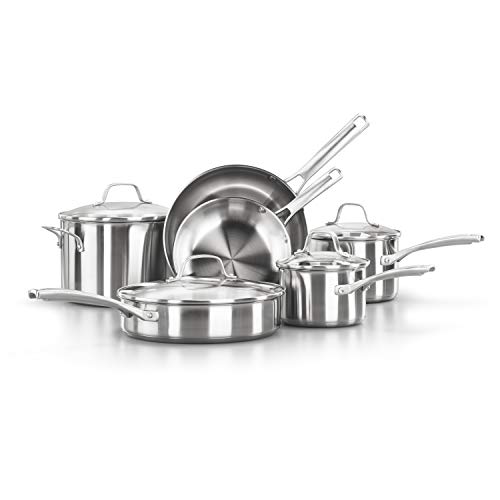

Is Stainless Steel Cookware Good?
Yes. Stainless steel cookware is a great choice if you want one set that can handle many cooking jobs. It is especially good for searing meat, browning vegetables, making pan sauces, and cooking at higher heat. I like it when I want real browning instead of a pale surface. With proper preheating and enough oil, food releases much better than many beginners expect.
My first few stainless steel meals were not perfect. Eggs stuck, and chicken left brown bits behind. Then I learned to preheat the pan, add oil, and avoid moving food too soon. That changed the experience. Those brown bits can also become the base for a quick pan sauce. For me, stainless steel is like a reliable pickup truck. It may need more skill, but it keeps working.
What Makes It Stand Out / Key Features
- Durable SurfaceQuality stainless steel resists scratches, chips, and normal kitchen wear.
- High Heat UseStainless steel can handle high cooking temperatures when the cookware is designed for them.
- Excellent SearingIt supports strong browning on steaks, chicken, vegetables, and other foods.
- Versatile CookingIt works well for searing, sauteing, boiling, simmering, and making pan sauces.
- No Coating To WearThe cooking surface does not depend on a nonstick coating that can wear over time.
- Easy To CombineMany stainless steel pieces work with induction, gas, and electric cooktops when the base supports them.
My Recommendation
Consider stainless steel if you cook often and want durable cookware for many types of food. It is a strong fit for cooks who value browning and long-term use.
| Best For | Why |
|---|---|
| Steak and chicken | It supports strong browning and searing. |
| Frequent home cooks | Its durable surface suits regular use. |
| Long-term cookware | There is no nonstick coating to wear away. |
Is Nonstick Cookware Good?
It depends on your cooking style, but yes, nonstick cookware can be excellent for specific jobs. Eggs, pancakes, fish, grilled cheese, and other delicate foods are much easier to release. I often reach for nonstick when I want breakfast on the table fast. A small amount of oil can be enough, and cleanup usually takes very little time.
The tradeoff is lifespan and care. A nonstick coating needs gentler treatment than bare stainless steel. I avoid metal tools, harsh scrubbing, and unnecessary high heat. When treated well, nonstick can be very convenient. Think of it as the comfortable running shoe of the kitchen. It is easy to use, but it needs more care than a rugged work boot.
What Makes It Stand Out / Key Features
- Easy Food ReleaseThe coated surface helps foods release with less sticking.
- Low Oil CookingMany foods can cook well with less oil than they need in uncoated cookware.
- Fast CleanupMost food residue wipes away easily when the coating is in good condition.
- Great For Delicate FoodsEggs, fish, pancakes, and crepes are easier to turn and remove.
- Beginner FriendlyThe forgiving surface makes everyday cooking easier for new cooks.
- Light HandlingMany nonstick pans are easier to lift and move than heavy stainless steel pieces.
My Recommendation
Consider nonstick if easy food release and fast cleanup matter most. It is especially useful for breakfast foods, delicate proteins, and quick weekday cooking.
| Best For | Why |
|---|---|
| Eggs and pancakes | The surface helps delicate food release with ease. |
| Busy families | Fast cleanup saves time after meals. |
| New cooks | It has a gentle learning curve. |
stainless steel cookware vs nonstick: Side-by-Side Test
The stainless steel cookware vs nonstick choice becomes easier when you compare real kitchen tasks. Neither material does every job equally well.
I see them as two different tools. Stainless steel gives you strength, heat control, and browning. Nonstick gives you simple food release and easy cleanup.
Cooking Functions: Which One Does More?
Both can handle daily meals, but stainless steel covers more cooking styles.
| Feature | Product 1 | Product 2 |
|---|---|---|
| Searing | Excellent | Good, but depends on coating and heat limits |
| Eggs | Good with proper technique | Excellent |
| Pan sauces | Excellent | Limited for some coated pans |
| Pancakes | Good | Excellent |
⭐ Product A – 9/10 | Product B – 8/10
Stainless steel has the edge for overall cooking range.
Food Release: What Sticks Less?
Food release is where nonstick earns its name.
| Feature | Product 1 | Product 2 |
|---|---|---|
| Egg release | Requires technique | Very easy |
| Fish release | Good with correct heat and oil | Very easy |
| Sticking risk | Higher | Lower |
⭐ Product A – 7/10 | Product B – 10/10
Nonstick has the edge when easy release matters most.
Durability: Which Lasts Longer?
Durability matters when you want cookware that stays useful for years.
| Feature | Product 1 | Product 2 |
|---|---|---|
| Scratch resistance | High | Varies by coating |
| Coating wear | No nonstick coating | Coating can wear |
| Long-term use | Excellent | Depends on care and coating life |
⭐ Product A – 10/10 | Product B – 7/10
Stainless steel has the edge for long-term durability.
Cleanup: Which Saves More Time?
After dinner, few people want to spend extra time scrubbing a pan.
| Feature | Product 1 | Product 2 |
|---|---|---|
| Light residue | Usually easy | Very easy |
| Burnt residue | Can need soaking or scrubbing | Usually easier if coating remains intact |
| Daily cleanup | Moderate | Easy |
⭐ Product A – 7/10 | Product B – 10/10
Nonstick has the edge for quick cleanup.
Heat Performance: Which Handles More Heat?
Heat can change both cooking results and cookware life.
| Feature | Product 1 | Product 2 |
|---|---|---|
| High heat cooking | Excellent when cookware is rated for it | Depends on the coating and manufacturer |
| Searing | Excellent | Moderate to good |
| Heat flexibility | High | More limited |
⭐ Product A – 10/10 | Product B – 7/10
Stainless steel has the edge for high-heat cooking.
Care: Which Is Easier To Live With?
Both need care, but the type of care is different.
| Feature | Product 1 | Product 2 |
|---|---|---|
| Metal utensils | Generally suitable | Avoid unless manufacturer allows them |
| Scrubbing | More tolerant | Use gentle methods |
| Heat mistakes | Generally more forgiving | Can be harder on the coating |
⭐ Product A – 9/10 | Product B – 7/10
Stainless steel has the edge for simple long-term care.
Value: Which Gives More Over Time?
Price is only one part of value. Replacement needs matter too.
| Feature | Product 1 | Product 2 |
|---|---|---|
| Initial value | Strong | Strong |
| Expected lifespan | Often long with proper care | Varies by coating and use |
| Replacement risk | Lower for the cooking surface | Higher when coating wears |
⭐ Product A – 9/10 | Product B – 8/10
Stainless steel has the edge for long-term value, while nonstick offers strong everyday convenience.
Final Verdict: Which Should You Buy?
The stainless steel cookware vs nonstick choice is less about one being perfect and more about matching the pan to the job. Stainless steel suits cooks who want durability, high-heat performance, browning, and broad cooking use. Nonstick suits people who value easy release, quick cleanup, and simple cooking.
If I were building a kitchen from scratch, I would use stainless steel as the main workhorse and keep one nonstick pan for eggs and other delicate foods. That gives you the strengths of both without forcing one pan to do every job.