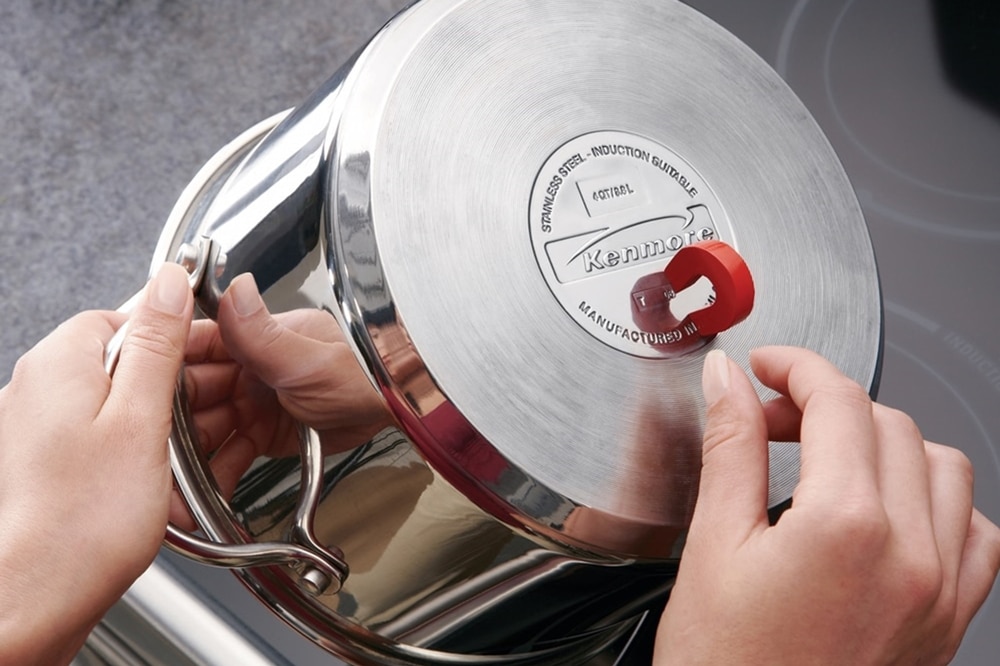
Induction capable cookware is made with a magnetic base that lets an induction stove heat the pan directly.
If you are shopping for a new stove in the United States, you may come across induction cooktops at home improvement stores or in kitchen showrooms. They look much like smooth electric cooktops, but they use a different way to heat food. Instead of heating a burner first, an induction stove uses a magnetic field to create heat inside compatible cookware.
The key is the bottom of your pot or pan. It must contain a magnetic material that works with the cooktop. Cast iron and many magnetic stainless steel pans usually work, while ordinary aluminum, copper, glass, and ceramic cookware often do not work unless they have a suitable induction-ready base.
You do not have to replace every pot in your kitchen without checking first. A simple magnet test can help you identify compatible cookware, although the cooktop manual and the pan manufacturer’s instructions remain the best guides. This article explains how induction-ready cookware works, how to test your existing pans, and what to consider before buying replacements.
Induction capable cookware is cookware designed to work with an induction cooktop. It has a magnetic section in its base that responds to the cooktop’s changing magnetic field. This response creates heat in the cookware, which then heats the food inside.
The phrase induction capable means the pan can work with this cooking method when its size, base, and construction meet the cooktop’s requirements. You may also see terms such as induction compatible, induction ready, or induction suitable on product packaging. These terms generally describe the same basic feature.
A pan does not have to be made entirely from magnetic metal. Some stainless steel cookware combines several layers of metal, and some aluminum pans have a magnetic steel plate bonded to the bottom. What matters most is whether the finished pan has a suitable induction-compatible base.
Think of the pan’s base as the part that allows the stove and cookware to work together. A pan can look sturdy, expensive, and well made yet fail to work on induction if its base does not respond properly to the magnetic field.
Source: cookwareguider.com
Induction ready
The cookware is designed and identified by its manufacturer as suitable for induction cooking.
Magnetic base
The base contains material that can respond to the induction cooktop’s magnetic field.
Cooktop compatibility
The pan must meet the cooktop’s requirements for base size, shape, and cookware detection.
Is Induction Capable the Same as Induction Compatible?
In everyday cookware shopping, induction capable and induction compatible usually mean the pan can be used on an induction cooktop. Neither phrase means that every pan will work equally well on every induction stove.
A small pan may not be detected by a cooktop with a larger minimum pan-size requirement. A warped or uneven base may also cause problems. Always check the cookware label and the instructions for your specific appliance.
Look for the induction symbol
Many products use a coiled symbol to indicate induction compatibility. Check the product specifications if the symbol is unclear.
Check the base
A magnetic base is necessary, but its size and construction also affect how well the pan works.
How Does Induction Cookware Work?
Induction cookware works through electromagnetic induction. Beneath the glass cooking surface, the cooktop has a coil that creates a changing magnetic field when the appliance is switched on. When a compatible pan sits over that coil, the field induces electrical currents in the pan’s magnetic base.
The metal resists those currents, producing heat within the cookware. That heat spreads through the pan and cooks the food. The cooktop surface may become hot from contact with the pan, spilled food, or radiant heat from cooking, but it does not need to act as the main heat source.
This process differs from a gas stove, where a flame heats the pan, and a conventional electric stove, where an element heats the cooking surface. Induction transfers energy to compatible cookware through a magnetic field rather than relying on a flame or a hot electric element.
Because the pan itself generates heat, induction can respond quickly when you change the power setting. This can help when you need to lower the heat under a simmering sauce or bring water to a boil. Actual performance depends on the cooktop, the pan, the food, and the power level.
Induction cooktops also have cookware detection features. If the appliance cannot detect a suitable pan, it may refuse to heat or display an error. This is normal behavior, not necessarily a sign that the stove is broken.
Source: kitchenbap.com
Direct energy transfer
The magnetic field transfers energy to the compatible pan, where heat is generated.
Responsive temperature control
Power adjustments can affect the pan quickly, although the pan’s thickness and contents influence the result.
No open flame
Induction does not use a gas flame, but the cookware and glass surface can still become hot enough to burn you.
Does Induction Heat the Pan or the Stove?
The magnetic field primarily heats the compatible cookware rather than heating the glass surface first. The pan then transfers heat to the food and some heat back to the glass.
That is why an induction cooktop can appear cool near a recently used cooking zone while still posing a burn risk. Residual heat from the pan can make the surface hot, and many appliances display a warning until the area cools.
Use care after cooking
Do not touch the cooking zone simply because there is no glowing element or visible flame.
Keep the surface clear
Follow the appliance manual and avoid placing items on an active cooking zone.
Which Cookware Materials Work on Induction?
The material at the bottom of a pan determines whether it can respond to an induction cooktop. Cast iron and many magnetic stainless steel pans are common choices, while nonmagnetic metals and glass usually need a special induction-compatible base.
Do not rely on color, weight, price, or a brand name alone. Two pans that look almost identical may use different base materials. Check the packaging, the manufacturer’s product page, or the magnet test before assuming a pan will work.
Source: stovepedia.com
Cast iron
Cast iron is magnetic and generally works well on induction. Its weight can make it harder to lift, and rough or uneven bottoms may scratch the glass or heat unevenly.
Magnetic stainless steel
Many stainless steel pans are induction compatible. However, some stainless steel grades are not magnetic enough for a particular cooktop, so test the base or check the manufacturer’s specifications.
Enameled cast iron
Enameled cast iron usually works because the underlying iron is magnetic. Lift rather than slide heavy cookware to help protect the glass surface.
Aluminum
Ordinary aluminum does not work directly on most induction cooktops. Some aluminum pans include a bonded magnetic steel plate that makes them compatible.
Copper
Pure copper cookware generally does not work directly on induction. Some copper cookware has a magnetic base designed for induction use.
Glass and ceramic
Ordinary glass and ceramic cookware usually cannot activate an induction cooking zone. A purpose-built product with a suitable magnetic base may be an exception.
Does All Stainless Steel Cookware Work on Induction?
No. Stainless steel is a broad family of alloys, and not every type responds to a magnetic field in the same way. Some stainless steel pans have a magnetic outer layer, while others have a nonmagnetic base or a layered design that varies by model.
A magnet that sticks to the base is a helpful sign. If it sticks only to the side of the pan, that does not establish that the cooking surface will work correctly. Check the base itself and confirm the product’s induction rating.
Test the bottom
Place a small household magnet against the flat cooking base, not just the sidewall.
Verify the exact model
Use the manufacturer’s specifications when the magnet test gives an uncertain result.
Can Nonstick Pans Be Induction Capable?
Yes. Nonstick cookware can work on induction when the pan includes a compatible magnetic base. The nonstick coating itself does not make the pan induction ready; the metal construction beneath it does.
When buying a nonstick pan, look for explicit induction compatibility. Follow the maker’s instructions for heat limits, utensils, cleaning, and oven use because these can vary by coating and model.
Check the product label
Choose a pan that specifically lists induction as a compatible cooking method.
Avoid excessive heat
Induction can heat a pan quickly, so use the heat settings recommended for the coating and the food.
How to Test Whether Your Existing Cookware Works
You can check most household pots and pans in a few simple steps before buying new cookware. The easiest first check uses a magnet, but a successful test does not replace the cooktop manual or the manufacturer’s instructions.
Start with the cookware you already own. Many households have a mixture of stainless steel, cast iron, aluminum, and nonstick pans, so testing each piece can prevent needless replacement costs.
Source: jimbeamracing.com.au
Step 1: Find a small magnet
Use a household refrigerator magnet or another ordinary magnet. Keep it away from sensitive electronic devices and follow any relevant safety guidance.
Step 2: Test the flat bottom
Place the magnet against the center or flat outer base of the pan. A firm attraction suggests that the base contains magnetic material.
Step 3: Check the cookware label
Look for an induction symbol or a written statement that confirms induction compatibility.
Step 4: Review your cooktop manual
Check the permitted pan diameter, base shape, and any restrictions that apply to your appliance.
Step 5: Perform a cautious cooktop check
If the cookware appears suitable, follow the manufacturer’s instructions to test it with water in the pan. Never run an empty pan at high power just to test compatibility.
What If the Magnet Does Not Stick?
If the magnet does not stick to the base, the pan is unlikely to work on a conventional induction cooktop. However, do not make a final decision if the magnet is weak or the pan has a complicated layered base. Confirm the exact model with the manufacturer.
A magnet sticking to the pan does not guarantee that every induction burner will recognize it. The cooking zone may require a larger base, a specific shape, or a more suitable magnetic layer.
Magnet sticks firmly
The pan is a promising candidate. Confirm the product instructions and cooktop requirements.
Magnet does not stick
Check the product specifications. If the base is not induction compatible, use another cooking method or replace the pan.
Cooktop does not detect the pan
Center the pan on the cooking zone, check its diameter, ensure the base is flat, and review the appliance manual before trying again.
What Makes Good Induction Cookware?
Good induction cookware combines a compatible magnetic base with a shape and construction that suit the way you cook. Compatibility tells you whether the pan can work with the stove; it does not, by itself, tell you whether the pan heats evenly, feels comfortable, or will last.
Before buying a new set, think about your usual meals. A large stockpot for soup has different needs from a skillet for eggs, and a heavy cast iron pan may not be the best option for someone who wants lightweight cookware.
Source: artofit.org
Flat, stable base
A flat base helps the pan sit steadily on the cooking zone and supports good contact with the cooktop surface.
Suitable base diameter
Choose a size that matches the cooking zone and the cooktop’s minimum pan-size requirements.
Even heat distribution
A well-designed base can reduce hot spots. Layered construction may improve heat distribution, depending on the pan’s materials and design.
Comfortable handles
Check handle shape, grip, balance, and temperature limits, especially if you often move full pots.
Care requirements
Review cleaning instructions, dishwasher suitability, oven limits, and any restrictions on metal utensils.
Is Expensive Induction Cookware Always Better?
No. A higher price does not automatically mean better cooking results. Cost can reflect the materials, thickness, construction, finish, included pieces, and brand, but the right choice depends on your needs.
A modestly priced induction-ready skillet may be enough for everyday meals. Someone who cooks often may prefer a heavier pan with a more substantial base, comfortable handles, and construction that suits frequent use.
For everyday cooking
Prioritize a suitable base, comfortable handling, simple cleaning, and the sizes you use most.
For frequent searing
Consider a sturdy pan that retains heat well, while following the manufacturer’s guidance on preheating and maximum heat.
For easy handling
Compare empty weight, handle design, and balance before purchasing a large set.
Induction Cookware Compared With Other Cookware
Induction-ready cookware is not a completely separate class of kitchen material. It is cookware whose base is designed to work with induction technology. Many compatible pans can also be used on gas and conventional electric stoves, provided the manufacturer allows those uses.
The main difference is whether the cookware can transfer energy from an induction field. The following table compares common materials and the conditions that affect their use.
Source: cookwareguider.com
Cookware Compatibility Table
Use this table as a first guide, not a substitute for checking a specific product. Construction varies among brands and models, especially for stainless steel and coated cookware.
Cast iron
Usually compatible. Magnetic, durable, and good at retaining heat, but heavy and potentially rough on glass.
Magnetic stainless steel
Usually compatible when the base meets the cooktop’s requirements. Practical for everyday cooking and available in many constructions.
Nonmagnetic stainless steel
Usually not compatible on its own. A suitable magnetic base may make a particular pan work.
Aluminum
Usually not compatible on its own. Induction-ready models use a magnetic base or bonded plate.
Copper
Usually not compatible on its own. Look for a specifically designed magnetic base.
Glass or ceramic
Usually not compatible unless the product has a purpose-built induction-ready base.
Can You Use Induction Cookware on a Gas Stove?
Many induction-ready pans also work on gas and conventional electric stoves. The magnetic base does not prevent the pan from being heated by a flame or an electric element.
Still, check the product instructions. A pan’s coating, handle materials, construction, and maximum temperature can limit which cooking methods are allowed. On gas, keep flames beneath the base rather than allowing them to rise around the sides.
Check the approved cooking methods
Confirm that the manufacturer lists gas or conventional electric use if you plan to move the pan between appliances.
Avoid overheating coated pans
Follow the coating and handle temperature limits even when the pan is induction compatible.
Common Induction Cookware Problems and How to Fix Them
If a pan does not work on your induction stove, check the simple causes first. Incorrect pan placement, an unsuitable base diameter, or a base that is not magnetic enough can stop the appliance from detecting cookware.
Do not assume that the cooktop is defective just because one pan fails. Test another known-compatible pan and consult the appliance manual before arranging a repair.
Source: cookwareguider.com
The cooktop does not recognize the pan
Center the pan, check its base diameter, and confirm that the bottom is induction compatible. Try another pan known to work.
The pan heats unevenly
Check for a warped base, use a suitable cooking zone, and avoid using a pan that is much smaller than the zone’s permitted range.
The pan makes a humming or buzzing sound
Some noise can occur during induction cooking because of magnetic forces and layered cookware construction. Check the manuals if the noise is unusually loud, sudden, or accompanied by an error.
Food burns after a small power adjustment
Induction can change the heat reaching the pan quickly. Lower the setting, stir as needed, and learn how your particular pan responds.
The glass surface has scratches
Check the pan’s base for rough debris or damage. Lift cookware instead of sliding it, and clean the surface according to the manufacturer’s instructions.
Can You Make Ordinary Cookware Induction Compatible?
You generally cannot turn an ordinary nonmagnetic pan into a reliable induction pan simply by changing how you use it. The pan needs a suitable magnetic base that works with the appliance.
An induction interface disk is a metal plate designed to heat on an induction cooktop and transfer heat to cookware placed on it. Such a disk may allow some otherwise incompatible pans to be used, but performance can be slower and less responsive than direct induction. It also introduces another hot object and may be restricted by the cooktop manufacturer.
Use an interface disk only if both the disk maker and cooktop manufacturer permit it. Follow the instructions for cookware size, power, handling, and cooling. Never improvise with loose metal plates, and do not use an accessory that the appliance manual prohibits.
Best first option
Use cookware already marked as induction compatible.
Possible alternative
Consider a purpose-made interface disk only when the manufacturers confirm it is suitable for your setup.
Avoid improvised adapters
Loose metal objects can create hazards, overheat, or interfere with safe operation.
Safety and Care Tips for Induction-Ready Pots and Pans
Induction cooking removes the need for an open flame, but it does not remove normal kitchen risks. Hot cookware, boiling liquids, steam, oil, and residual heat can still cause burns, and an unsuitable pan can damage the cooking surface.
Follow the cooktop and cookware manuals because temperature limits, cookware restrictions, and cleaning instructions vary. Take extra care when lifting heavy pans or moving cookware filled with hot food.
Source: petitechefs.com
Lift heavy cookware
Avoid dragging cast iron or rough-bottomed pans across the glass. Lift them to reduce the risk of scratches.
Do not heat an empty pan at high power
Some pans heat very quickly on induction. Follow the manufacturer’s preheating directions and avoid leaving cookware unattended.
Keep the base clean
Remove food debris from the pan bottom and cooktop surface as directed by the appliance maker.
Use the correct cookware size
A pan that is too small or poorly matched to the cooking zone may not be detected or may heat less effectively.
Respect coating limits
Nonstick coatings and some handles have specific heat limits. Follow the instructions for the exact product.
Consider medical device guidance
People with pacemakers or other implanted medical devices should follow their device manufacturer’s guidance and the cooktop manual about safe distance and use.
Does Induction Cookware Need Special Cleaning?
Induction-ready cookware does not always require special cleaning simply because it works on induction. Care depends on whether the pan is stainless steel, cast iron, enamel, or coated cookware.
Clean the cooktop with products approved by its manufacturer. Do not use abrasive tools that can damage the glass, and avoid returning a pan with a dirty or rough base to the surface.
Stainless steel
Use the cleaning method recommended by the cookware maker, especially for stubborn food residue.
Cast iron
Follow the care instructions for seasoned or enameled cast iron. Keep the base suitable for the cooktop and avoid sliding it.
Nonstick cookware
Use the recommended utensils and cleaning method to protect the coating.
How to Choose Induction Cookware for Your Kitchen
The best way to choose induction cookware is to start with compatibility, then narrow the options by cooking style, weight, maintenance, and budget. You do not need a large matching set if a few well-chosen pieces cover the meals you cook most often.
For a first purchase, consider a skillet, a saucepan, and a larger pot in sizes that match your household. Confirm each piece is induction ready rather than assuming every item in a set has the same base construction.
Source: stovepedia.com
For daily meals
Look for a versatile skillet and saucepan with a flat magnetic base and handles that feel comfortable.
For soups and pasta
Choose a stockpot with a suitable base diameter, secure handles, and enough capacity for your usual portions.
For searing
Consider a sturdy stainless steel or cast iron pan that suits your preferred heat retention and maintenance needs.
For low-maintenance cooking
Compare the cleaning needs and temperature limits of compatible stainless steel and nonstick options.
For a small kitchen
Measure your storage space and cooking zones before buying bulky cookware or a large set.
Should You Replace All Your Pots and Pans?
Not necessarily. First, test the cookware you own and identify which pieces already work. If most of your everyday pans are compatible, you may only need to replace a few items.
Make a short list of the pans you use most often and check their bases one by one. Replace cookware that is incompatible, damaged, unstable, or unsuitable for your cooking needs rather than buying an entirely new set without a clear reason.
Keep compatible pieces
Continue using pans that pass the compatibility check and meet the manufacturer’s care requirements.
Replace only what you need
Prioritize essential cookware that does not work on induction.
Verify before buying
Read the product specifications and return policy if compatibility is uncertain.
Frequently Asked Questions
Q
What does induction capable cookware mean?
Induction capable cookware is designed with a magnetic base that allows an induction cooktop to heat it through electromagnetic induction. Cast iron and many magnetic stainless steel pans are compatible, while ordinary aluminum, copper, glass, and ceramic cookware usually need a special magnetic base.
Q
How can I tell if my pots and pans are induction ready?
Place a household magnet against the flat bottom of each pan. If it sticks firmly, the pan may be suitable for induction. Then check the manufacturer’s specifications and your cooktop manual, because a magnetic base alone does not guarantee compatibility with every cooking zone.
Q
Can I use regular stainless steel pans on an induction stove?
Some regular stainless steel pans work on induction, but others do not. Stainless steel comes in different alloys and base designs. Look for an induction symbol, review the manufacturer’s specifications, or test the bottom with a magnet.
Q
Can I use nonstick cookware on an induction cooktop?
Yes, if the nonstick pan has a magnetic induction-compatible base. The coating itself does not make the pan compatible. Follow the manufacturer’s instructions for maximum heat, preheating, cleaning, and utensil use.
Q
Will induction-ready cookware work on a gas stove?
Many induction-ready pots and pans also work on gas and conventional electric stoves. Check the manufacturer’s instructions for the specific model, especially if it has a nonstick coating, heat-sensitive handles, or other temperature limits.
Q
Can I use aluminum cookware on an induction stove?
Ordinary aluminum cookware does not usually work directly on induction because aluminum is not ferromagnetic. Some aluminum pans include a bonded magnetic steel base, making them suitable for induction. Check the product label before using one.
Q
Why does my induction stove keep turning off with a pan on it?
The cooktop may not detect the pan because its base is not compatible, the pan is too small, or it is not centered on the cooking zone. Check the pan’s specifications, clean the base, and consult the cooktop manual. If a known-compatible pan also fails, follow the manufacturer’s troubleshooting instructions or contact a qualified service provider.
Q
Is induction cookware different from regular cookware?
The main difference is the base. Induction cookware must contain a suitable magnetic section, while cookware designed only for gas or conventional electric heat does not need one. Some pans work on all three types of stoves, so the cooking method label matters more than the general material name.
✦ Wrapping Up
Conclusion
Induction capable cookware is cookware with a magnetic base that lets an induction stove heat the pan directly. Cast iron and many stainless steel pans are common options, while aluminum, copper, glass, and ceramic cookware generally need a specially designed induction-compatible base.
You can often find out whether your current pans will work by testing the bottom with a magnet. Treat that as an initial check, then verify the cookware specifications and your cooktop’s requirements. A suitable base, the right pan size, and a flat, stable shape all matter.
You do not have to replace every pot in your kitchen just because you switch to induction. Check what you own first, keep compatible pieces in good condition, and replace only the cookware that does not meet your needs.
💡 Key Takeaway
Before buying new cookware, test the flat base of your existing pots and pans with a magnet. Confirm any uncertain results against the product label and your induction cooktop manual, then choose replacement pieces with a clearly stated induction-compatible base.