Stainless steel is the best all-around choice for most households, while cast iron, glass, and well-made ceramic cookware suit different needs.
When you cook dinner in a typical American home, your pan may handle eggs before work, grilled cheese at lunch, or chicken and vegetables after a long day. The material matters because heat, food acids, wear, and cleaning can affect how cookware performs and what may pass into food.
If you are asking what is the safest cookware material, start with stainless steel. It is durable, handles many cooking methods, and does not rely on a synthetic nonstick coating. Cast iron and glass are also useful options, while ceramic-coated pans can offer easy food release when their coatings remain intact.
There is no single material that is safest in every kitchen. The right choice depends on your food, cooking temperature, health needs, and care habits. A sound pan used correctly is usually a better choice than a damaged pan marketed as non-toxic.
Safe cookware should resist harmful levels of chemical or metal transfer under normal use. It should also hold up to the heat, food, and cleaning methods for which it was designed. No material should be judged by its name alone.
Food can interact with a pan in different ways. Acidic foods, such as tomato sauce, lemon juice, and vinegar-based dishes, may increase the release of some metals from certain surfaces. High heat can damage some coatings, while scratches, chips, and corrosion may change how a pan performs.
A useful safety decision considers the cooking surface, the condition of the pan, the food being prepared, and the cooking temperature. A material that works well for simmering soup may not be the best choice for intense searing or baking.
Cookware safety also differs from environmental safety. A product described as PFAS-free may avoid a particular group of chemicals, but that claim alone does not establish that every component is free from other substances of concern. Likewise, a natural material is not automatically safer in every situation.
Source: lickingspoon.com
Material and coating
Identify whether the cooking surface is bare metal, glass, enamel, ceramic coating, or a polymer-based nonstick coating. Different surfaces have different strengths and limits.
Heat tolerance
Check the manufacturer’s temperature limits, including separate limits for the pan, lid, handle, and oven use.
Wear and damage
Replace cookware when its coating is peeling, its surface is badly damaged, or its structure no longer supports safe use.
Food and health needs
Consider acidic recipes, iron intake, nickel sensitivity, and any medical advice that affects your cookware choice.
Does Non-Toxic Mean Chemical-Free?
No. The phrase non-toxic is often used in cookware marketing, but it does not mean that a product contains no chemicals. Every material, including stainless steel, glass, and cast iron, consists of chemical substances.
A more useful question is whether the cookware is suitable for food contact and whether it remains safe when used as directed. Look for clear material details, temperature limits, care instructions, and reliable information about any coating.
Read specific claims
A statement such as PFAS-free addresses a particular group of substances. It does not prove that the whole product has been independently tested for every possible hazard.
Avoid absolute promises
Claims such as completely chemical-free or guaranteed toxin-free should not replace verifiable material information.
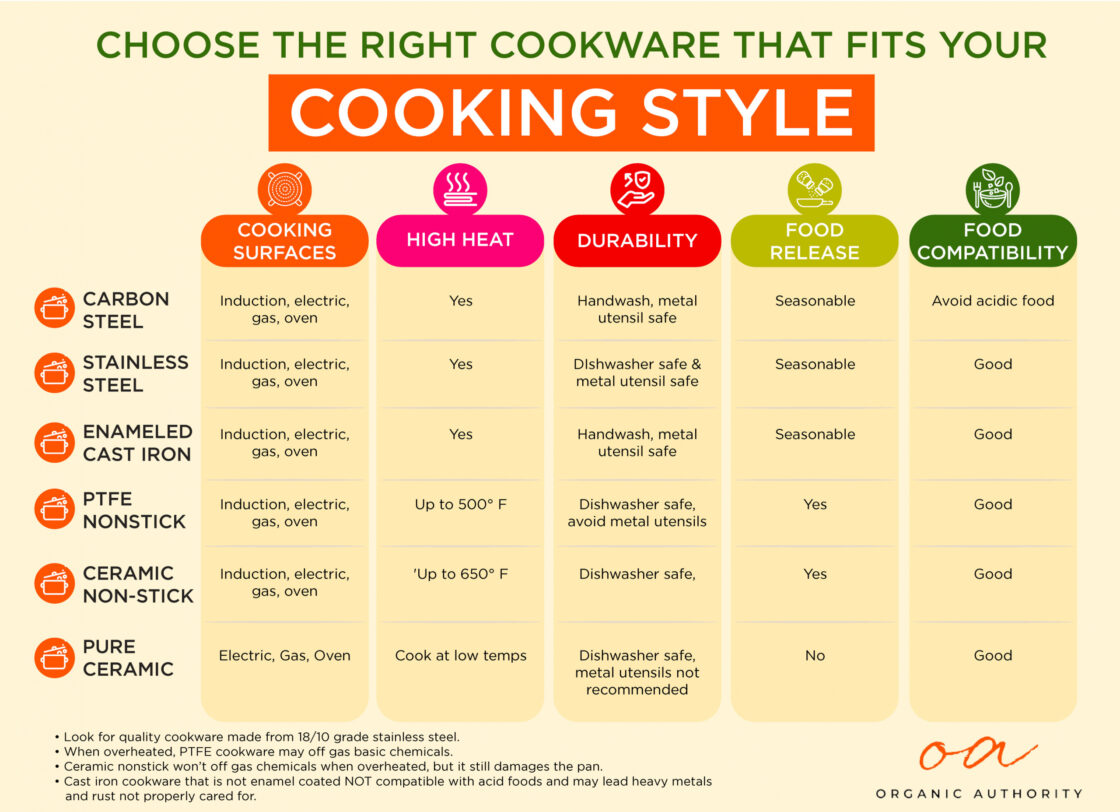
Which Cookware Materials Are Safest? A Quick Comparison
For most home cooks, stainless steel offers the best balance of durability, versatility, and low-maintenance care. Other materials may be better for specific tasks, so compare them by their actual use rather than treating safety as a simple ranking.
The table below summarizes common cookware types and the main points to consider. These are general material-level comparisons, not laboratory test results for every brand or product.
Source: kitchenbap.com
Stainless steel
Best all-around option for frying, boiling, sautéing, and simmering. Some grades contain nickel and chromium, which may matter to people with particular sensitivities.
Cast iron
Excellent for searing and steady heat. It can release iron into food, especially under some cooking conditions, and it needs care to prevent rust.
Carbon steel
A durable option for high heat and stir-frying. Like cast iron, it generally needs seasoning and careful drying.
Glass
Useful for baking and some food-storage tasks. It does not rust, but it can break under impact or thermal shock and is not suitable for every stovetop.
Ceramic-coated cookware
Offers easy food release when the coating is in good condition. The coating can wear, so follow care instructions and replace a badly damaged pan.
Enameled cast iron
Combines an iron body with a glass-like enamel surface. It avoids the need to season the cooking surface, but chips and cracks need attention.
PTFE nonstick
Convenient for eggs and delicate foods. Follow temperature limits, avoid overheating an empty pan, and replace damaged cookware according to the manufacturer’s guidance.
Best Overall: Stainless Steel
Stainless steel is a strong starting point if you want one material for most everyday cooking. It handles a wide range of foods, works well for browning and pan sauces, and usually lasts for years when properly maintained.
Stainless steel is an alloy, often containing iron, chromium, and sometimes nickel. Chromium helps the surface resist corrosion. Nickel may improve corrosion resistance and other properties, but it can be relevant for people who have a nickel allergy or sensitivity.
A stainless steel pan is not automatically identical to every other stainless steel pan. Construction, alloy grade, surface condition, and product quality differ. If you have a diagnosed metal allergy, ask your healthcare professional whether you need to avoid particular cookware alloys rather than assuming all stainless steel is unsuitable.
Why choose it
It is versatile, does not depend on a nonstick coating, and can handle many everyday cooking tasks.
What to watch
Food can stick if the pan is not heated and used properly. Some stainless steel can release small amounts of nickel or chromium, particularly under certain cooking conditions.
Best for Searing: Cast Iron and Carbon Steel
Cast iron and carbon steel are useful when you want a pan that can tolerate high heat and help brown food. Both can develop a seasoned surface made from layers of heated oil, which helps reduce sticking and protects the metal from rust.
Bare iron cookware can add iron to food. The amount depends on several factors, including the food’s acidity, moisture, cooking time, and the pan’s condition. This may be useful for some people, but it is not a reason to treat iron cookware as a medical treatment or iron supplement.
People who have been told to limit iron intake, including some people with iron-overload disorders, should discuss frequent use of bare iron cookware with a qualified clinician. Enameled cast iron has a different cooking surface and generally limits direct contact with the underlying iron when its enamel remains intact.
Care routine
Dry bare iron cookware after washing, apply a thin layer of suitable oil when needed, and follow the maker’s seasoning instructions.
When to reconsider
Choose another pan if its surface is deeply rusted, flaking, or structurally damaged, or if added dietary iron conflicts with medical advice.
Is Ceramic Cookware a Safe Choice?
Ceramic cookware can be a reasonable choice, but the word ceramic describes more than one product type. A pan may have a ceramic-based nonstick coating over metal, or it may be made from ceramic material throughout. These products have different properties and should not be treated as interchangeable.
Ceramic-coated pans are popular because they release food easily when new and can be convenient for eggs, pancakes, and quick meals. Their coatings can lose performance with repeated use, abrasive cleaning, overheating, or metal utensils. A worn coating may not work as intended, even if the pan still looks usable from a distance.
Traditional ceramic bakeware and glazed ceramic pots need their own safety checks. Food-contact glazes should be suitable for the intended use. Poorly made, damaged, or unverified glazed pottery may pose a risk of lead or cadmium exposure, particularly when used with acidic food or for long storage.
For ceramic products, choose a reputable maker that clearly identifies the product’s intended use. Do not assume that handmade, imported, antique, decorative, or flea-market pottery is safe for cooking just because its surface looks smooth.
Source: www.pinterest.com
Check the coating
Follow instructions on utensils, heat settings, cleaning, and when to replace the pan.
Check glazed pottery
Use products intended for food contact and seek reliable safety information when the glaze or origin is uncertain.
Avoid damaged surfaces
Stop using cookware with significant chips, cracks, or peeling where the damage may affect food contact or structural safety.
Ceramic-Coated vs. Solid Ceramic
Ceramic-coated cookware usually has a metal body with a thin coating that provides food release. Solid ceramic cookware is made primarily from ceramic material, sometimes with a glaze. The words ceramic nonstick do not by themselves tell you the full construction or the ingredients used in a coating.
If avoiding PTFE is your goal, check the exact product’s written specifications rather than relying on its color, price, or general marketing. A claim about one coating ingredient does not establish that the entire product has no substances of concern.
For easy cleanup
A sound ceramic-coated pan may suit low- to medium-heat cooking, but its food-release performance can decline over time.
For baking
Use oven-safe ceramic bakeware within its stated temperature range and avoid sudden temperature changes that may cause cracking.
Is PTFE Nonstick Cookware Safe?
PTFE nonstick cookware can be used safely when it is made for food contact and used according to the manufacturer’s directions. PTFE is a synthetic fluoropolymer that gives food a low-friction surface. It is not the same thing as PFOA, a chemical historically used in some manufacturing processes.
The key practical risk is overheating. At very high temperatures, PTFE coatings can break down and release fumes that may cause flu-like symptoms in people and can be highly dangerous to pet birds. A pan left empty over a hot burner can heat rapidly, so avoid preheating an empty nonstick pan for long periods.
For everyday use, keep heat within the product’s stated limits, use ventilation, and do not place a nonstick pan under a broiler unless the manufacturer specifically permits it. Do not assume that every pan with a nonstick label has the same temperature limit or oven rating.
Scratches and normal wear deserve attention, but the presence of a small mark does not automatically prove that a pan has poisoned food. Check the maker’s care and replacement guidance, and stop using a pan when the coating is peeling, badly damaged, or otherwise outside its intended condition.
Source: cookwareguider.com
Prevent overheating
Use low or medium heat for routine nonstick cooking unless the manufacturer gives different safe instructions for the specific product.
Do not heat an empty pan
Add food or an appropriate cooking fat as directed, and stay nearby while the pan heats.
Protect the surface
Use suitable utensils, avoid harsh abrasives, and follow the stated cleaning method.
Consider household pets
Because overheated nonstick coatings can release fumes hazardous to birds, keep birds away from the kitchen and prevent cookware from overheating.
What About PFAS-Free Cookware?
PFAS is the name for a large group of substances, and PTFE belongs to that broad chemical family. Products marketed as PFAS-free may appeal to people who want to avoid these substances, but the precise meaning of a claim can depend on its wording and the manufacturer’s evidence.
If you want to avoid PTFE-based coatings, look for clear information about the actual cooking surface. Bare stainless steel, cast iron, carbon steel, and suitable glass products provide options without a PTFE nonstick cooking layer. Each still has its own use limits and care needs.
Ask what is excluded
A narrow claim about a particular substance is not the same as a verified claim that every PFAS is absent.
Choose based on the task
A coating-free pan may be a good fit if you accept that cooking technique and cleanup may take more effort.
Are Glass and Enameled Cookware Safer?
Glass is a useful option for oven baking because suitable food-grade glass does not rust and does not need a nonstick coating. It works well for casseroles, roasted vegetables, and baked dishes when the product is rated for the task.
Glass cookware has an important physical limit: sudden temperature changes can cause thermal shock. Do not move a cold glass dish directly into a hot oven unless its instructions explicitly allow that use, and do not put a hot dish on a cold or wet surface. Avoid using glass cookware with chips or cracks.
Enameled cast iron has a metal body covered by a glass-like enamel layer. The intact enamel keeps most food from directly contacting the iron and makes the cookware useful for soups, braises, and acidic sauces. The main concerns are chips, cracks, heavy impacts, and the manufacturer’s heat limits.
Neither glass nor enamel is automatically right for every stove. Check whether the product is suitable for gas, electric, induction, or oven use. Some glass dishes are for ovens or microwaves only and must never be placed directly over a burner.
Source: kitchenbap.com
Best uses for glass
Choose oven-safe glass for baking and serving when the maker permits the planned temperature and heating method.
Best uses for enamel
Choose intact enameled cookware for simmering, stews, and tomato-based dishes, following its care directions.
Main warning
Avoid sudden temperature changes, and retire pieces with serious cracks, chips, or other damage that compromises safe use.
Which Cookware Should You Choose for Your Health Needs?
The safest practical choice may change with your health needs. A material that suits one person can be less suitable for another, so avoid blanket claims that a single pan is healthiest for everyone.
For most people without a specific metal sensitivity or medical restriction, a well-made stainless steel pan is a sound everyday option. If you want to avoid coated cooking surfaces, bare stainless steel, cast iron, and carbon steel are useful choices, while suitable glass is helpful for baking.
If you have a diagnosed nickel allergy, iron-overload condition, or another health issue that may affect your cookware choice, ask a qualified healthcare professional for advice tied to your condition. Do not use cookware alone to treat a nutrient deficiency or replace medical care.
Source: healthytasteoflife.com
Nickel sensitivity
Some stainless steel alloys contain nickel. If your clinician has advised you to avoid nickel exposure, discuss suitable alternatives and the importance of the exact alloy.
Iron overload
Bare cast iron and carbon steel can contribute iron to food. Ask your clinician whether regular use is appropriate if you have been told to limit iron.
Reducing coating use
Choose bare metal or suitable glass when you prefer not to use a coated nonstick surface, while following the normal safety rules for each material.
Older or unknown pottery
Avoid cooking or storing food in pottery with uncertain glaze safety, especially if it is decorative, damaged, or intended only for display.
Is Stainless Steel Safe for Acidic Foods?
Stainless steel is generally suitable for common acidic foods when the cookware is made for food contact and used as directed. However, some metal release can occur, and the amount may depend on the alloy, condition, acidity, and length of cooking.
For long simmering sessions with very acidic recipes, use sound cookware from a reputable maker and follow its instructions. If you have a known metal sensitivity or a specific medical restriction, discuss the relevant material with your healthcare professional.
Practical tip
Avoid storing highly acidic foods in cookware for longer than the manufacturer recommends, and do not use severely corroded or damaged pans.
How to Buy and Maintain Safer Cookware
A safe cookware choice starts with a clear product description and ends with proper use. You do not need to replace every pot in your kitchen at once; start with the pan you use most often and replace items that are damaged or unsuitable for their intended task.
Before buying, identify the cooking methods you use most. A stainless steel skillet may cover many daily meals, a cast iron pan may help with searing, and a glass baking dish may handle casseroles. This small mix can be more useful than a large set of pans with coatings you do not want or will struggle to maintain.
Check the product label and manual for its material, coating, oven rating, stovetop compatibility, maximum heat, and cleaning instructions. If the maker does not explain what the cooking surface is made of, do not assume the product is safe merely because its advertising uses terms such as green or clean.
Source: www.pinterest.com
Buy from a reliable source
Look for a clearly identified maker, product instructions, and specific food-contact and temperature guidance.
Use the right heat
Match the heat to the material and recipe. Avoid overheating coated pans and follow the limits for glass and enamel.
Use suitable tools
Use utensils and cleaners that the manufacturer recommends, especially on coated or enameled surfaces.
Inspect your cookware
Check for peeling coatings, serious chips, cracks, deep corrosion, loose handles, or unstable bases.
Replace when needed
Retire cookware when damage affects safe use or the maker’s replacement guidance says it has reached the end of its useful life.
A Simple Three-Step Decision Method
First, decide whether you want a coated or uncoated surface. If avoiding synthetic nonstick coatings is your priority, start with bare stainless steel, cast iron, or carbon steel, and use suitable glass for baking.
Second, match the material to your cooking style. Stainless steel is versatile, iron pans suit searing, and glass works well in an oven when the product is designed for that use. A ceramic-coated pan may be convenient for delicate foods if you accept its care and replacement needs.
Third, check your personal limits and the product instructions. Consider diagnosed sensitivities, medical advice about iron, the type of stove you have, and the temperature you need. If any key detail is unclear, choose a product with better documentation instead of guessing.
Signs of a good choice
You can identify the cooking surface, understand its limits, use it for your recipes, and maintain it without guesswork.
When to stop
Do not continue using a pan with serious structural damage, a badly deteriorated coating, or an uncertain food-contact surface that cannot be verified.
Frequently Asked Questions
Q
What is the safest cookware material for everyday use?
Stainless steel is a strong all-around choice for everyday cooking. It is durable, versatile, and does not need a nonstick coating. However, people with certain metal sensitivities may need to consider the alloy and seek advice about their individual needs.
Q
What cookware is safest if I want to avoid PTFE?
Bare stainless steel, cast iron, carbon steel, and suitable glass cookware can meet this preference without a PTFE nonstick cooking surface. Ceramic-coated products vary, so check the exact product specifications rather than relying on the word ceramic alone.
Q
Is stainless steel safer than nonstick cookware?
Stainless steel is a practical choice if you want to avoid a synthetic nonstick coating. PTFE nonstick cookware can also be used safely when it is suitable for food contact and kept within the maker’s temperature limits. The better choice depends on your priorities, cooking habits, and care routine.
Q
Is cast iron safe for cooking every day?
Cast iron can be suitable for everyday use if it is maintained properly and used for the right recipes. It may add iron to food, with the amount affected by cooking conditions. People with iron-overload disorders or medical advice to limit iron should ask their clinician whether regular use is appropriate.
Q
Is ceramic cookware safer than stainless steel?
Neither material is automatically safer in every situation. Stainless steel is durable and versatile, while ceramic-coated cookware can make food release easier but may wear over time. Choose based on the exact product, coating details, intended use, and care instructions.
Q
When should I throw away a nonstick pan?
Follow the manufacturer’s replacement guidance. A pan with peeling or badly deteriorated coating, significant damage, or a loose or unstable handle should be taken out of service. Do not overheat nonstick cookware, and replace it when it can no longer be used as intended.
✦ Wrapping Up
Conclusion
The safest cookware material for most households is a well-made stainless steel product used according to its instructions. It offers a useful balance of durability, versatility, and low-maintenance care without depending on a nonstick coating.
Cast iron and carbon steel are strong options for searing, suitable glass is useful for baking, and enameled cookware can handle many slow-cooked meals. Ceramic-coated and PTFE nonstick pans can also serve a purpose when their surfaces remain in good condition and their heat limits are respected.
There is no need to chase a perfect label or discard every pan you own. Focus on a known cooking surface, reliable product information, sensible heat, and regular checks for wear. If you have a specific allergy or health condition that affects your choice, get advice that fits your situation.
💡 Key Takeaway
Start with a stainless steel skillet for general cooking, add a second material only for a clear need, and always follow the manufacturer’s food-contact, temperature, cleaning, and replacement instructions.