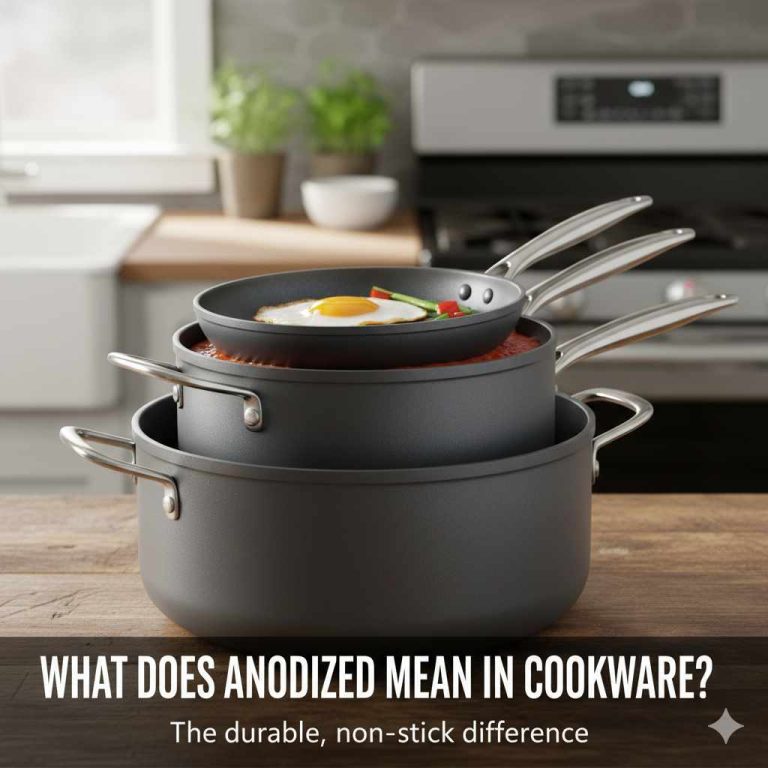
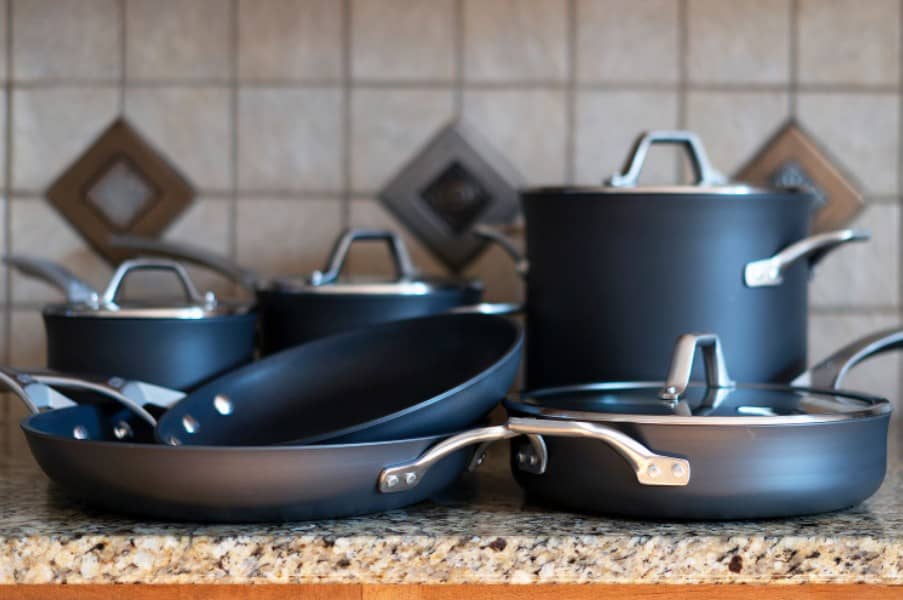
Anodized cookware is made from metal, usually aluminum, with a tough protective oxide layer formed by an electrical process. This layer helps resist wear and corrosion.
When you shop for pots and pans in the United States, you may see labels such as anodized aluminum or hard-anodized cookware. These terms describe how the metal has been treated, not a separate type of metal. The treatment changes the surface and helps the pan stand up to daily cooking.
Anodizing is common in cookware because aluminum heats well and is often light enough to handle with ease. Yet untreated aluminum can react with some foods and may scratch or wear. Anodizing creates a harder surface that helps reduce these issues. The result is a pan that can work well for eggs, vegetables, sauces, and many other home-cooked meals.
Still, anodized does not always mean nonstick, chemical-free, or safe under every cooking condition. Some pans have a plain anodized surface, while others have an added nonstick coating. Knowing the difference helps you choose the right pan, use it well, and avoid damage that could shorten its life.
Anodized means that a metal surface has been changed through an electrochemical process to create a stable oxide layer. In cookware, the metal is usually aluminum. The process makes the surface harder and more resistant to corrosion and everyday wear than untreated aluminum.
Think of the process as changing the outer layer of the metal itself rather than simply painting the pan. A paint layer sits on top of a surface. An anodized layer forms from the metal during treatment, so it becomes part of the surface structure.
This treatment is useful because aluminum transfers heat well, but bare aluminum has limits. It can react with acidic or salty foods, and its surface can scratch more easily than many treated surfaces. Anodizing helps address these problems without giving up aluminum’s useful heat-transfer qualities.
The word anodized does not tell you everything about a pan. It does not identify the exact alloy, confirm that a pan has a nonstick coating, or prove that the pan will last for a set number of years. Those details depend on the product’s design, materials, manufacturing quality, and care.
Source: YouTube, Zim Cooking
Anodized aluminum
Aluminum that has received an electrochemical surface treatment to form a protective oxide layer.
Hard-anodized aluminum
Aluminum treated under conditions that produce a harder, more wear-resistant oxide layer.
Nonstick anodized cookware
Cookware that combines an anodized aluminum body with a separate nonstick coating. The coating, rather than anodizing alone, provides the main food-release effect.
Why Is Aluminum Commonly Anodized?
Aluminum is popular in cookware because it conducts heat well and weighs less than many other metals. It can heat up quickly, which is useful when making breakfast, sauteing vegetables, or heating soup after work.
However, bare aluminum can react with some foods, especially acidic ingredients such as tomatoes, vinegar, and citrus. The reaction may affect the food’s taste or color and can increase the amount of aluminum that moves into food under certain conditions. Anodizing creates a more stable barrier that helps limit direct contact with the underlying metal.
Useful heat transfer
Aluminum spreads heat well, helping pans respond quickly to changes in burner settings.
Improved surface protection
The oxide layer helps protect the aluminum against corrosion and normal surface wear.
Lower weight
Aluminum cookware is often easier to lift than similarly sized cookware made from heavier metals.
How Does the Anodizing Process Work?
Anodizing uses electricity and a chemical bath to change the surface of a metal. For aluminum cookware, the metal part acts as the anode in an electrical circuit. The treatment encourages oxygen to react with the aluminum and form a controlled aluminum oxide layer.
The process differs from applying ordinary paint or a simple surface polish. It changes the metal’s outer surface and creates a layer with a structure that differs from the softer aluminum beneath it. The thickness and properties of that layer depend on the process and the intended use.
Hard anodizing uses controlled conditions that create a thicker, harder oxide layer than many standard anodizing treatments. The exact results vary by manufacturer, so the words hard anodized are helpful but do not guarantee identical performance across all brands.
After treatment, a manufacturer may leave the surface uncoated or add another finish. For example, a pan may receive a nonstick coating over its anodized body. This extra layer changes how food releases and how the pan should be maintained.
Source: kitchenbap.com
Preparation
The aluminum surface is prepared so the treatment can form a more consistent layer.
Electrochemical treatment
An electrical current in a suitable bath helps form the aluminum oxide layer.
Finishing
The treated pan may receive additional finishing steps or a separate coating, depending on its design.
Is the Anodized Layer the Same as a Nonstick Coating?
No. Anodizing and nonstick coating serve different purposes. Anodizing creates a hard oxide layer on the aluminum, while a nonstick coating is added to help food release with less sticking.
An uncoated hard-anodized pan can still hold food against its surface, especially when it is cold, too dry, or used at the wrong temperature. A coated hard-anodized pan may release eggs or pancakes more easily, but its coating can wear over time and may need gentler care.
Check the product label and manual before buying. If a pan is advertised as hard anodized and nonstick, find out whether the cooking surface has a separate coating and which utensils and cleaning methods the maker permits.
Anodized surface
Primarily improves surface hardness and resistance to corrosion and wear.
Nonstick surface
Primarily helps food release and can reduce the amount of oil needed for some cooking tasks.
What Is the Difference Between Anodized and Hard-Anodized Cookware?
Hard-anodized cookware is a type of anodized cookware. The main difference is the surface treatment and the properties it produces. Hard anodizing is designed to form a harder, more durable oxide layer, which can help the pan resist everyday scratches and wear.
Standard anodizing can also improve corrosion resistance and surface durability. However, the term anodized by itself does not specify one universal thickness or hardness. A direct comparison should consider the manufacturer’s specifications rather than relying on the label alone.
For everyday home cooking, hard-anodized aluminum is often appealing because it combines relatively low weight, good heat transfer, and a durable outer surface. Yet it is not indestructible. A hard-anodized pan can still be damaged by harsh cleaning, impact, or misuse, and any added nonstick layer may have different limits from the aluminum body.
Source: abodements.com
Standard anodized cookware
Has an electrochemically formed oxide layer that improves the surface compared with untreated aluminum. The exact durability depends on the process.
Hard-anodized cookware
Uses a treatment designed to produce a harder oxide layer with greater resistance to surface wear.
Hard-anodized nonstick cookware
Combines the hard-anodized aluminum body with a separate food-release coating that needs care suited to that coating.
Which Type Lasts Longer?
Hard anodizing can improve resistance to wear, but no label alone can tell you the exact lifespan of a pan. Construction, metal thickness, handle design, cooking heat, cleaning tools, and the quality of any nonstick coating all affect how long it remains useful.
A plain hard-anodized pan may keep its cooking surface for a long time when treated well. A nonstick version may need replacement sooner if its food-release layer becomes badly worn, even when the underlying aluminum remains structurally sound.
When comparing cookware, look for clear care instructions, a stated warranty, compatibility with your stove, and information about the cooking surface. These details are more useful than assuming every hard-anodized pan will outperform every standard anodized pan.
Look at the full construction
A thick base, secure handle, and well-made body matter alongside the anodized finish.
Check the coating
A separate nonstick layer may determine the practical lifespan of a coated pan.
Is Anodized Cookware Safe for Everyday Cooking?
Properly made anodized aluminum cookware is generally considered suitable for normal food preparation when used and maintained according to its instructions. The anodized oxide layer helps separate food from the underlying aluminum and reduces the reactivity associated with bare aluminum.
That protection is not a reason to ignore damage or care instructions. A deeply scratched, peeling, or badly worn cooking surface should be assessed according to the manufacturer’s guidance. If the pan has a separate nonstick coating that is flaking or peeling, stop using it for cooking and follow the manufacturer’s advice on replacement.
Safety depends on the whole product, not just the word anodized. The cooking surface, handle materials, lid, temperature limits, and condition of the pan all matter. Do not assume that anodized cookware has no added coating or that every product sold under this label has the same chemical composition.
For US households, the practical approach is simple: buy cookware from a source that identifies the materials, read the care instructions, avoid overheating an empty coated pan, and replace cookware when the cooking surface is seriously damaged.
Source: panmastery.com
Food contact
The anodized layer helps limit direct contact between food and the aluminum underneath it.
Damaged surfaces
Deep damage, flaking, or peeling deserves attention, particularly when the pan has a separate nonstick coating.
Heat control
Use the heat settings specified by the manufacturer, especially for coated cookware that can be damaged by excessive heat.
Can Acidic Foods Be Cooked in Anodized Pans?
An intact anodized surface is less reactive than bare aluminum, which makes anodized cookware more suitable for a range of foods. Tomatoes, lemon juice, vinegar, and wine are common ingredients that can react with untreated aluminum under some conditions.
Even so, follow the instructions for your specific pan. Some products have additional coatings or surface treatments, and the manufacturer may set limits on cooking methods or food types. If the surface is badly damaged, do not assume it still provides the same protection as an intact surface.
For tomato sauces
Use a pan whose manufacturer permits acidic foods, and avoid cooking in a badly damaged vessel.
For long simmering
Check the care guide because extended cooking can place different demands on the surface than quick sauteing.
Does Anodized Mean Chemical-Free?
No cookware material should be described as chemical-free. Anodizing is a chemical and electrochemical process, and aluminum oxide is a chemical compound. The more useful question is whether the finished cookware is appropriate for food contact and whether its coating and care instructions meet your needs.
If you want to avoid a particular nonstick material or coating, check the manufacturer’s full material disclosure. The term anodized alone does not confirm whether a pan has PTFE, a ceramic-based coating, or no separate nonstick layer at all.
Read the material details
Look beyond the product name to identify the actual cooking surface and any added coating.
Avoid broad safety claims
Claims such as chemical-free or completely risk-free are not meaningful substitutes for clear material information and proper use.
Anodized vs. Stainless Steel, Ceramic, and Cast Iron
Anodized aluminum is not automatically better than stainless steel, ceramic-coated cookware, or cast iron. Each material has different strengths, and the right choice depends on what you cook and how much care you want to give your pans.
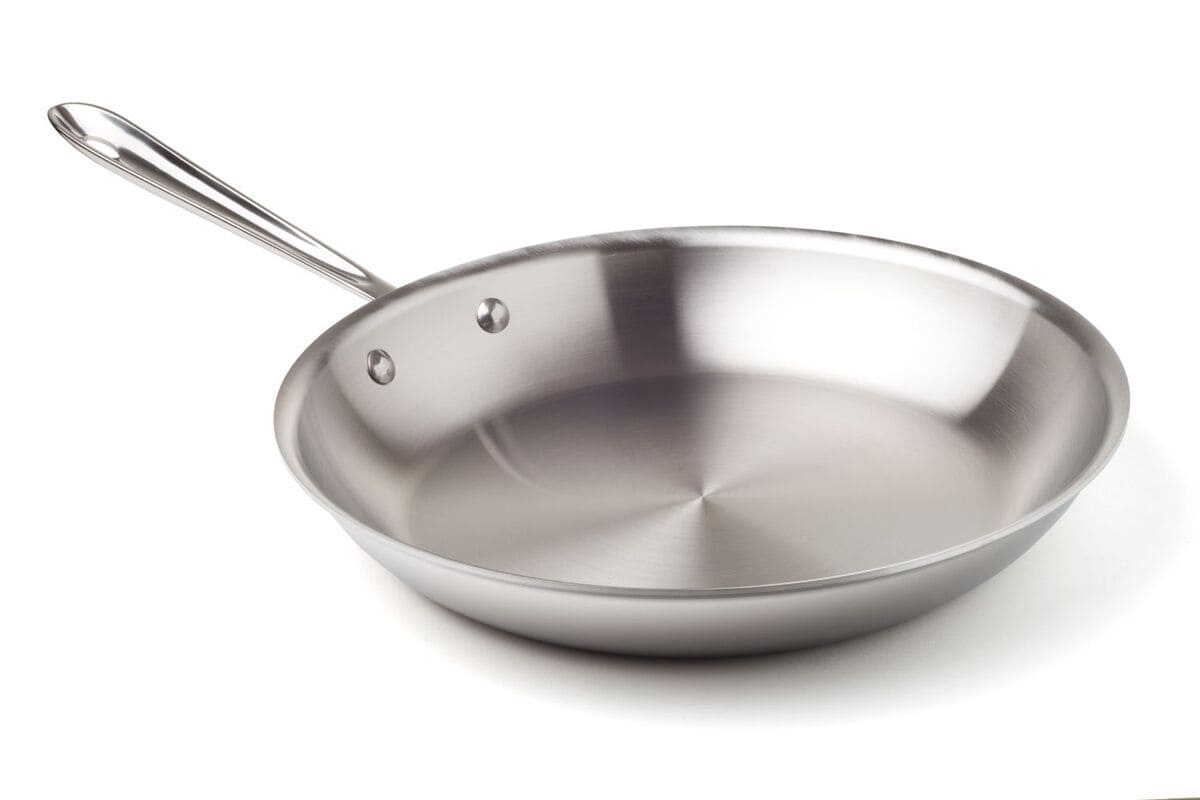
Anodized aluminum is a practical option when you want a relatively light pan with good heat transfer and a treated surface. Stainless steel suits cooks who want a durable metal cooking surface and do not mind learning how to prevent food from sticking. Ceramic-coated cookware offers a nonstick-style surface in some products, while cast iron holds heat well but is much heavier.
The comparison also depends on whether the pan is coated. A hard-anodized pan with a nonstick layer behaves differently from a plain hard-anodized pan. When comparing materials, separate the properties of the metal body from the properties of the cooking surface.
Source: thekitcheneye.com
Anodized aluminum
A good fit for cooks who value low weight, quick heat response, and a treated aluminum surface.
Stainless steel
A durable option with a metal cooking surface, though food may stick if the pan is not heated and used well.
Ceramic-coated cookware
Can provide easy food release when new, but the coating’s durability and heat limits depend on the product.
Cast iron
Offers strong heat retention and can last for decades with suitable care, but it is heavy and needs attention to rust prevention.
Quick Comparison of Common Cookware Materials
Use this table as a starting point rather than a strict ranking. Product construction can change how each material performs, and a pan’s cooking surface may matter as much as its base metal.
Anodized aluminum
Heat response: quick. Weight: usually light. Surface: treated aluminum, sometimes with a separate nonstick coating. Care: follow the surface-specific instructions.
Stainless steel
Heat response: depends on the core and construction. Weight: varies. Surface: metal. Care: preheating and suitable fat can help limit sticking.
Ceramic-coated cookware
Heat response: depends on the base material. Weight: varies. Surface: ceramic-based nonstick coating. Care: avoid harsh tools and excessive heat when prohibited.
Cast iron
Heat response: slower than thin aluminum, with strong heat retention. Weight: heavy. Surface: bare or seasoned iron, or enamel. Care: depends on the finish.
Which Material Is Best for Eggs and Delicate Foods?
A sound nonstick pan is often easier for eggs, crepes, and delicate fish because food can release with less effort. A hard-anodized pan with a separate nonstick coating may work well for these meals when used within its temperature limits.
Plain anodized aluminum can also cook eggs, but technique matters more because the surface is not necessarily nonstick. A properly heated stainless steel pan can work too, though it may require more practice. Choose based on the foods you make most often rather than on the material name alone.
For easy food release
Consider a well-maintained nonstick cooking surface and follow its heat and utensil limits.
For browning and searing
Choose a pan rated for the intended heat level and cooking method.
Benefits of Anodized Cookware
The main benefits of anodized cookware come from the combination of aluminum’s heat transfer and the protective oxide layer. This combination can make a pan useful for frequent home cooking without the weight of many cast-iron or steel alternatives.
Anodized surfaces can resist corrosion and normal wear better than untreated aluminum. The surface also helps reduce the reactivity of the metal with food. These benefits can make anodized cookware a practical choice for a busy kitchen, provided the pan is suitable for the stove and cooking tasks involved.
Source: cookwareguider.com
Good heat transfer
Aluminum responds quickly to heat, which can help when adjusting temperatures during cooking.
Improved surface durability
The oxide layer is harder than the underlying aluminum and helps resist normal wear.
Reduced reactivity
An intact anodized surface helps limit contact between food and the more reactive aluminum beneath it.
Manageable weight
Many aluminum pans are easier to lift and move than heavier cookware of a similar size.
Multiple design options
Anodized cookware comes in different shapes and finishes, including plain and nonstick-coated versions.
Are There Any Drawbacks?
Yes. Anodized cookware is not ideal for every cook or stove. Some products are not induction-compatible unless they have a magnetic base or another suitable construction feature.
The surface may also show marks or discoloration over time, and some dark finishes can make it harder to judge food browning at first. If a pan has an added nonstick coating, that coating may wear even when the metal body remains sound.
Price varies widely, and a hard-anodized label alone does not ensure better performance than a well-made pan of another type. Review the construction, warranty, compatibility, and care rules before making a choice.
Induction limits
Check for induction compatibility; aluminum itself is not normally magnetic.
Coating wear
A separate nonstick layer may have a shorter useful life than the anodized body.
Care requirements
Some manufacturers advise hand-washing and prohibit metal utensils or abrasive cleaners.
How to Clean and Maintain Anodized Cookware
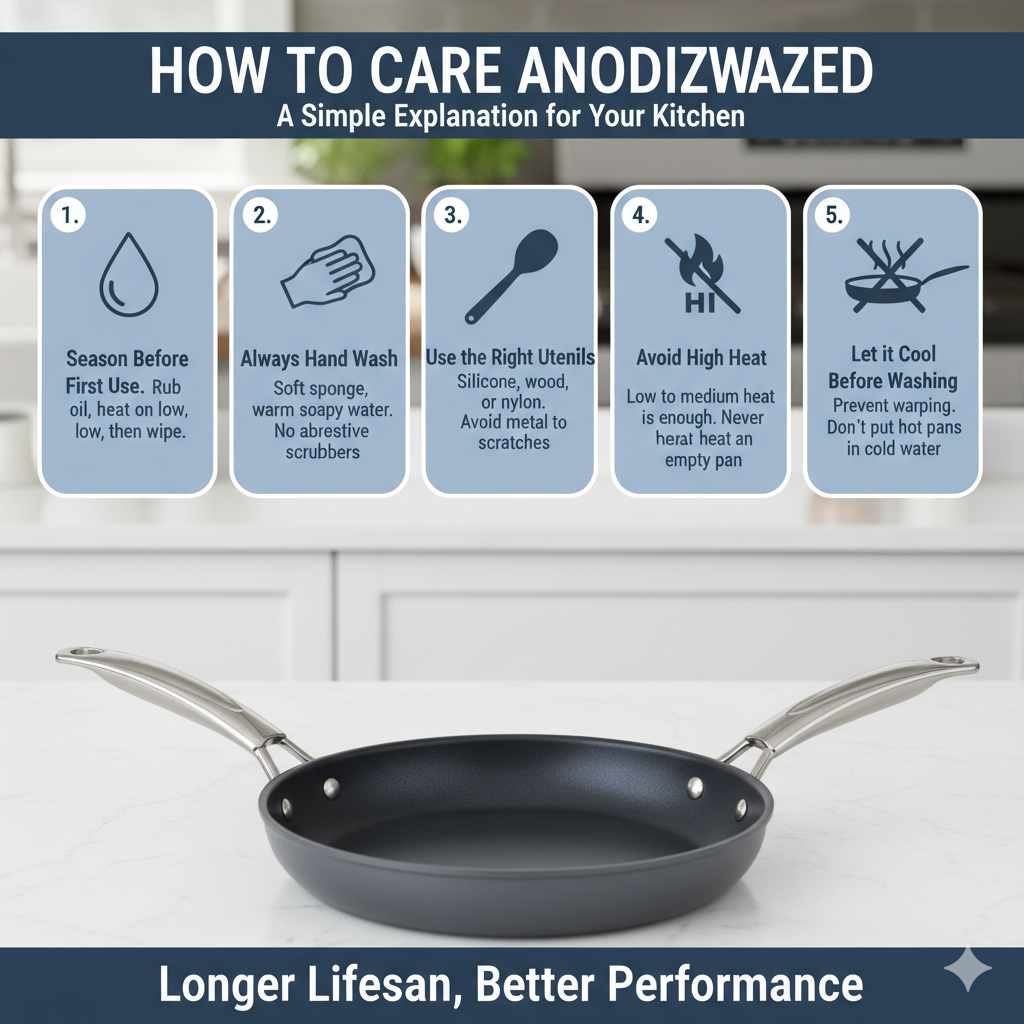
Good care helps anodized cookware keep its surface and cooking performance. In most cases, warm water, mild dish soap, and a soft sponge are a sensible starting point. Always follow the manufacturer’s instructions because an uncoated anodized pan may have different care needs from a coated nonstick model.
Let a hot pan cool before washing it. Plunging a very hot pan into cold water can cause sudden temperature changes that may warp the metal or damage the pan’s construction. Once it cools, remove food residue with warm, soapy water.
Avoid steel wool, harsh scouring pads, and strong cleaners unless the manufacturer specifically permits them. These can damage the finish or separate coating. If food sticks, soak the pan in warm water for a short period instead of scraping it with a sharp tool.
Dry the pan before storing it, and avoid stacking cookware in a way that allows metal edges to scrape the cooking surface. A soft pan protector can help when several pans share a cabinet.
Source: decorguider.com
Wash gently
Use warm water, mild soap, and a nonabrasive sponge unless the care guide says otherwise.
Avoid sudden cooling
Let the pan cool before washing to reduce the risk of thermal shock or warping.
Use suitable utensils
Wood, silicone, or other manufacturer-approved utensils can help protect a coated cooking surface.
Store with care
Separate stacked pans to prevent scratches caused by contact with other cookware.
What Should You Do if Food Sticks?
Food sticking does not always mean the anodized surface has failed. The pan may be too cool, too hot, too dry, or unsuitable for the food being cooked. For a coated pan, a worn nonstick layer may also be the cause.
Start by checking the instructions for preheating, oil use, and heat limits. Let stuck residue soak in warm water and loosen it with a soft sponge. If the cooking surface is peeling, deeply damaged, or no longer behaves as the manufacturer describes, contact the maker or consider replacing the pan.
Check the heat
Use a suitable temperature and avoid leaving a coated pan empty over high heat.
Soak before scrubbing
Warm water can loosen food residue without the need for aggressive scraping.
Inspect the surface
Look for peeling, deep scratches, or other damage that may affect the pan’s use.
How to Choose the Right Anodized Cookware
The best anodized pan is one that matches your cooking habits and stove. Before buying, decide whether you need a durable metal surface or the easier food release of a separate nonstick coating. Then check the pan’s construction, size, handle design, and care instructions.
For a household that cooks eggs and pancakes often, a coated hard-anodized pan may be convenient. For browning meat or making pan sauces, an uncoated surface may be more suitable if the manufacturer rates it for the required heat. For a cook who wants one pan for many tasks, the balance between versatility and maintenance matters more than the label alone.
Check the base if you use an induction range. Standard aluminum does not respond to induction on its own, so the cookware needs a suitable magnetic layer or base. For gas, electric coil, and many radiant glass-top ranges, compatibility still depends on the pan’s design and the stove maker’s instructions.
Source: artofit.org
Identify the cooking surface
Find out whether the pan is plain anodized aluminum or has an added nonstick coating.
Confirm stove compatibility
Check the product label for gas, electric, glass-top, and induction use.
Review heat limits
Check the allowed stovetop temperature and whether oven use is permitted.
Inspect the handles and lid
Confirm that the design suits your grip, storage space, and cooking methods.
Read the warranty
Understand which parts are covered and whether damage from misuse or normal wear is excluded.
A Simple Buying Checklist
Before paying for a pan, make sure the product description answers the main questions. If a listing uses vague phrases such as premium surface or advanced nonstick technology without identifying the materials, look for a more complete specification or ask the manufacturer.
Material
Is the body aluminum, and is the cooking surface anodized?
Coating
Does the pan have a separate nonstick layer, and what material is it made from?
Compatibility
Does it work with your exact stove type and any oven-based cooking you plan to do?
Maintenance
Can you follow the washing, utensil, and storage rules without changing your routine too much?
Common Myths About Anodized Cookware
Several common claims about anodized cookware are too broad. Understanding what the surface treatment does, and what it does not do, makes it easier to assess product labels and avoid unnecessary worry.
Source: kitchenseer.com
Myth: All anodized pans are nonstick
Anodizing hardens and protects the aluminum surface. It does not automatically create the same food-release properties as a separate nonstick coating.
Myth: Hard anodized means impossible to scratch
The surface is designed to resist wear, but it can still be damaged by impact, harsh abrasives, or unsuitable tools.
Myth: Anodized cookware contains no chemicals
Anodizing is a chemical process that forms an aluminum oxide layer. The phrase chemical-free does not accurately describe the material.
Myth: Every anodized pan works on induction
Aluminum is not normally magnetic. Induction cooking requires a suitable magnetic base or compatible construction.
Myth: Anodized cookware never needs replacement
The pan’s body, handles, and any added coating can wear or become damaged. Inspect the cookware and follow the manufacturer’s replacement advice.
How Can You Tell Whether a Pan Is Really Anodized?
Color alone cannot confirm that cookware is anodized. Many anodized pans have a dark gray or black finish, but other finishes are possible, and ordinary coatings can look similar.
Check the manufacturer’s specifications, product label, and care manual. Reliable documentation should identify the body material, surface treatment, and any separate cooking coating. If the seller cannot explain these details, do not rely on appearance alone.
Check official product details
Look for explicit wording about anodizing, hard anodizing, and any added coating.
Do not use home chemical tests
Unverified tests may damage the pan and cannot reliably confirm the full construction.
Research Notes and Reader Questions Worth Addressing
This guide is an evidence-oriented explanation of cookware materials and their practical use, not a laboratory test of a particular pan. It does not claim to have measured coating wear, tested food-release performance, or compared named brands under controlled conditions.
The main editorial focus is the distinction between anodizing and a separate nonstick coating. That distinction helps prevent a common purchasing mistake: assuming that every pan with an anodized label offers the same food release, heat limits, or maintenance needs.
The next-question map below separates needs inferred from the main query from questions that would require additional product-specific research. It does not claim that live search demand or competitor rankings were measured.
Source: decorguider.com
Question: Is anodized cookware safe?
Reader stage: before purchase or during use. Basis: inferred next need from a material and safety query. Coverage in this guide: answered at a general level. Benefit: clarifies the role of the oxide layer and the need to inspect damage. Evidence needed for a specific product: its materials, coating details, and manufacturer instructions. Priority: high.
Question: Is hard anodized the same as nonstick?
Reader stage: product comparison. Basis: inferred next need. Coverage in this guide: answered. Benefit: separates surface hardness from food-release properties. Evidence needed for a named pan: official construction and coating specifications. Priority: high.
Question: Can anodized cookware be used on induction?
Reader stage: before purchase. Basis: inferred next need. Coverage in this guide: answered generally. Benefit: prevents a compatibility mistake. Evidence needed for a named pan: its base construction and stated stove compatibility. Priority: high.
Question: How should anodized cookware be cleaned?
Reader stage: after purchase. Basis: inferred next need. Coverage in this guide: answered generally. Benefit: helps prevent avoidable surface damage. Evidence needed for a named pan: the maker’s care manual. Priority: medium.
Question: Which brands make the most durable anodized cookware?
Reader stage: product selection. Basis: inferred next need, not verified search demand. Coverage in this guide: not evaluated as a brand ranking. Benefit: a separate comparison could assess construction, warranty terms, coating specifications, and independent durability testing. Evidence needed: current model-level documents and comparable test results. Priority: defer until evidence is collected.
Evidence Limits and How to Verify a Specific Pan
General material science explains what anodizing does, but it cannot establish the exact performance of every pan. A manufacturer’s material specification can document construction, while a controlled independent test would be needed to support a direct claim about comparative wear or food release.
For a purchase decision, start with the product’s official manual and technical details. Check the intended heat range, coating type, stove compatibility, cleaning limits, and warranty. If these details are missing or conflict with the label, ask the manufacturer before using the pan in a way that may damage it.
Documented facts
Anodizing forms an oxide layer on aluminum through an electrochemical process, and hard anodizing is designed to produce a harder surface.
Product-dependent facts
Nonstick properties, induction compatibility, oven limits, dishwasher suitability, and warranty coverage depend on the exact cookware model.
Not established here
No named pan has been laboratory-tested for this article, and no current competitor ranking or live search-demand analysis is claimed.
Frequently Asked Questions
Q
What does anodized mean in cookware?
Anodized means the metal, usually aluminum, has undergone an electrochemical treatment that forms a protective oxide layer on its surface. This layer helps improve surface hardness and resistance to corrosion. It does not automatically mean that the pan is nonstick.
Q
Is hard-anodized cookware better than regular aluminum?
Hard-anodized cookware has a harder, more wear-resistant surface than untreated aluminum and many standard anodized finishes. It also retains aluminum’s useful heat-transfer properties. Whether it is better for you depends on the cooking surface, stove compatibility, price, and care requirements.
Q
Is anodized cookware safe for cooking every day?
Properly made anodized cookware is generally suitable for everyday cooking when used according to the manufacturer’s instructions. The oxide layer helps limit contact between food and the aluminum underneath. Avoid using cookware with badly damaged surfaces or peeling coatings, and follow the maker’s guidance on heat and cleaning.
Q
Does anodized cookware contain PTFE?
Anodizing itself does not mean that PTFE is present. Some hard-anodized pans have a separate PTFE-based nonstick coating, while others have a different coating or no added nonstick layer. Check the exact product’s material disclosure to find out which applies.
Q
Can I use metal utensils on hard-anodized cookware?
The answer depends on the cooking surface and the manufacturer’s instructions. A plain hard-anodized surface may tolerate more wear than a soft coating, but that does not mean metal utensils are always recommended. If the pan has a separate nonstick layer, use only the utensils permitted by the manufacturer to help prevent damage.
Q
Can anodized cookware go in the dishwasher?
Some products may be labeled dishwasher-safe, while others require hand-washing. Dishwasher detergents, high temperatures, and contact with other items can affect certain finishes or coatings. Check the care manual for the exact pan rather than assuming all anodized cookware has the same rules.
Q
Can I use anodized aluminum cookware on an induction stove?
Not every anodized aluminum pan works on induction. Aluminum is not normally magnetic, so the pan needs a suitable magnetic base or compatible construction. Look for an explicit induction-compatible label and confirm it in the product specifications.
Q
When should I replace anodized cookware?
Consider replacement when the pan has serious structural damage, a loose or unsafe handle, deep surface damage, or a coating that is peeling or flaking. Minor cosmetic marks do not always mean a pan is unsafe, so assess the type and location of the damage and follow the manufacturer’s advice.
✦ Wrapping Up
Conclusion
Anodized cookware is usually aluminum that has been treated to form a protective oxide layer. This process improves surface hardness and resistance to corrosion while keeping many of aluminum’s useful heat-transfer qualities. Hard-anodized cookware takes this treatment further to create a harder surface.
The most important distinction is that anodized does not automatically mean nonstick. Some pans have an additional food-release coating, while others have a treated but uncoated metal surface. Their cleaning needs, heat limits, and useful life can therefore differ.
For most shoppers, the best next step is to identify the exact cooking surface, confirm that the pan works with the stove, and read the manufacturer’s care instructions. Choose a pan that suits your daily meals and cleaning habits rather than relying on a single label.
💡 Key Takeaway
Before buying or using anodized cookware, check three things: whether it has a separate nonstick coating, whether it suits your stove, and how the manufacturer says to clean and maintain it.