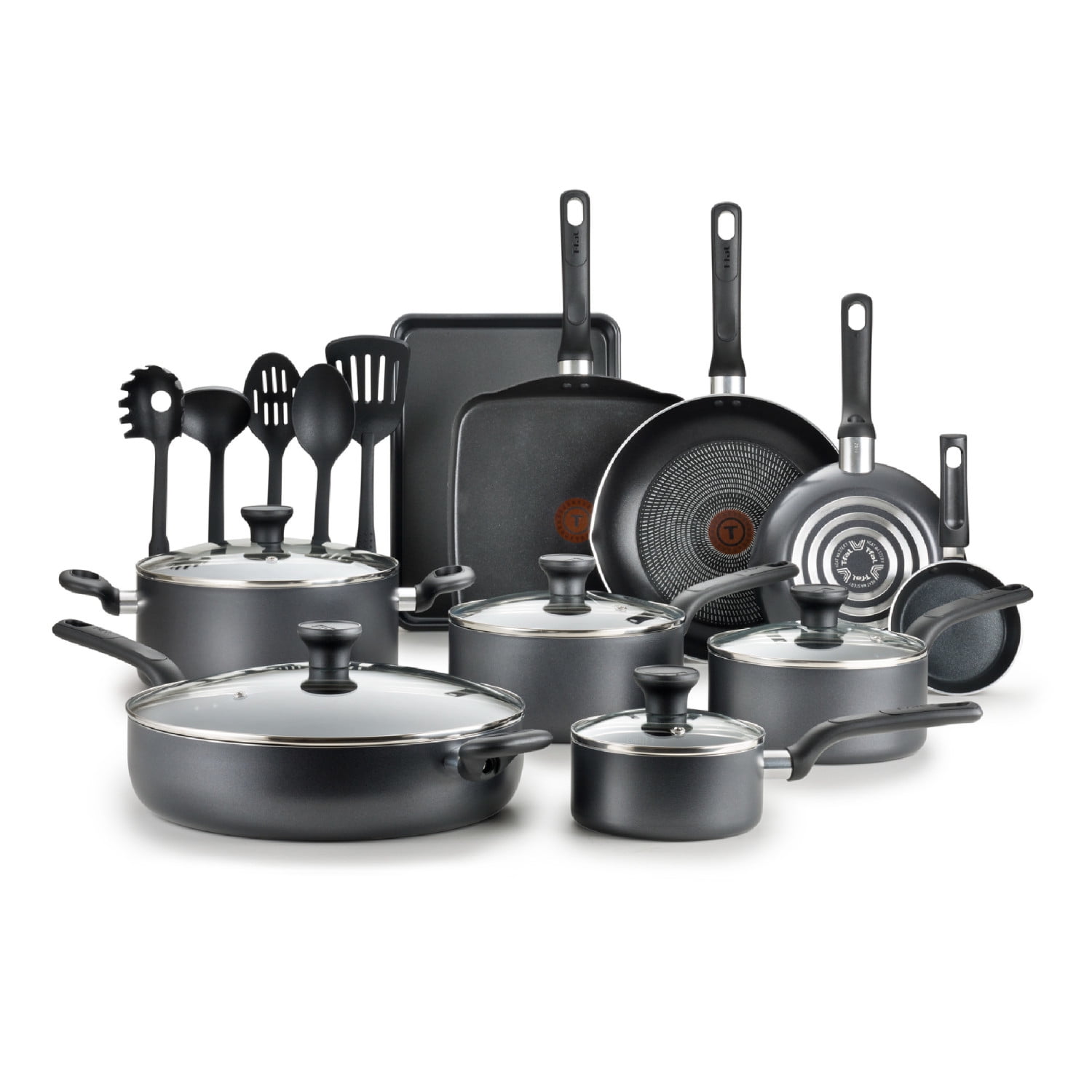
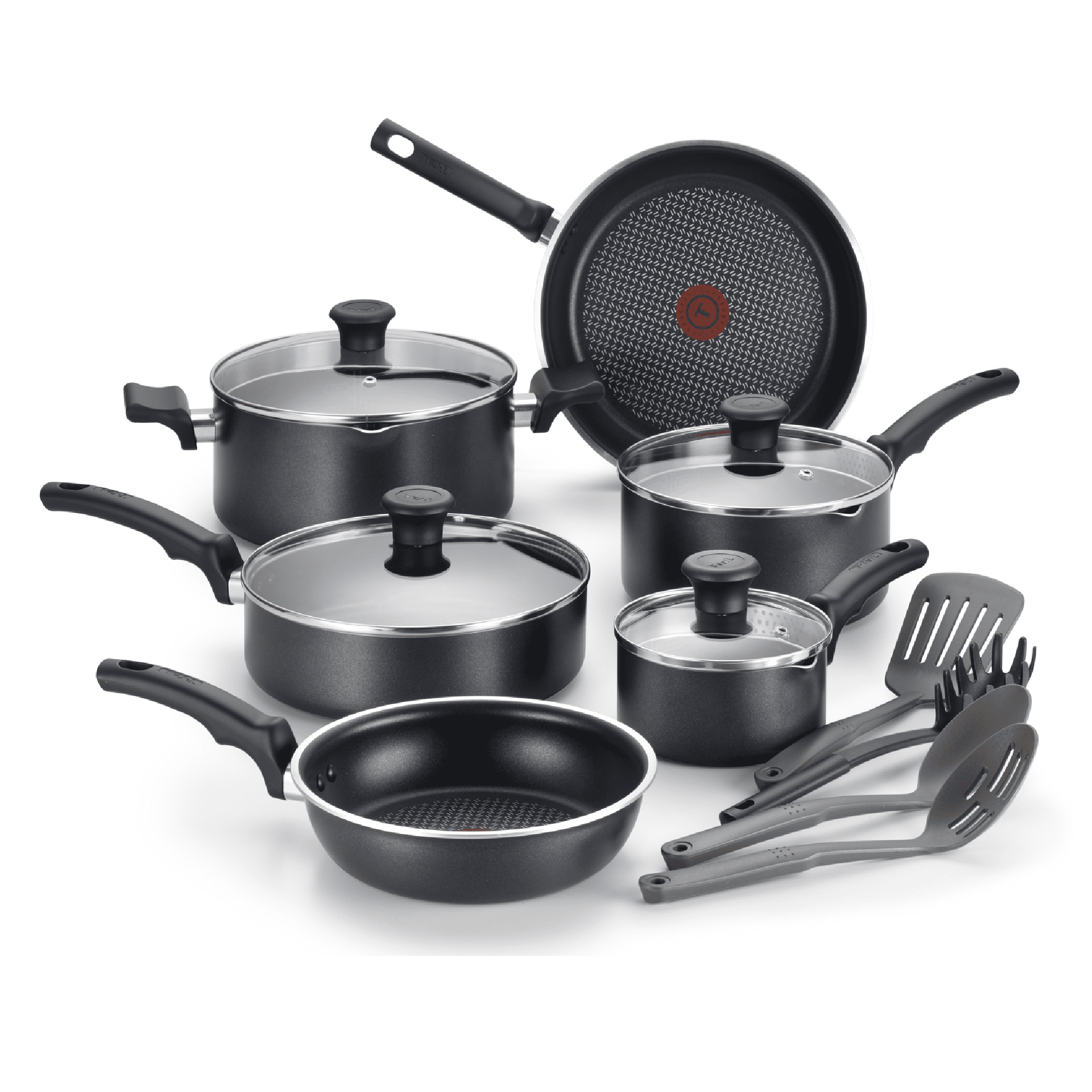
T-fal cookware is commonly made from aluminum or stainless steel, with a cooking surface that may use a PTFE-based nonstick coating or a ceramic coating, depending on the product line.
In American kitchens, cookware needs to handle quick breakfasts, weeknight dinners, and the daily cleanup that follows. T-fal pans are popular with home cooks who want food to release easily without spending a lot of time scrubbing. If you are shopping at a US retailer, though, the brand name alone does not tell you exactly what a pan contains.
The short answer to what is T fal cookware made of is that it depends on the collection. Many familiar T-fal nonstick pans have an aluminum body and a coated cooking surface. Other products use hard-anodized aluminum, stainless steel, or ceramic-style nonstick surfaces. The body, coating, handle, lid, and base may all use different materials, so it helps to check the exact model before buying.
This guide explains the main materials, how they affect cooking, and what to know about nonstick coatings. It also separates common material facts from safety claims that need more careful wording. No single material makes every pan right for every cook, but understanding the parts can help you choose and care for your cookware.
T-fal does not make every pan from the same material. The company sells different collections, and the materials can vary by product, size, market, and model revision. A typical nonstick frying pan may use an aluminum body with a coated interior, while a stainless steel pan may have a different construction and a layered base.
To understand a T-fal pan, separate the material that forms the body from the material that touches the food. The body gives the pan its shape and helps spread heat. The cooking surface affects food release, browning, cleaning, and the care the pan needs.
A pan may also include a separate handle, lid, base plate, or protective outer finish. These parts matter because a metal handle may tolerate different conditions from a plastic handle, and a pan that works on an induction cooktop may need a magnetic base.
Source: cookwareguider.com
Aluminum
Common in nonstick cookware because it heats quickly and is light enough for daily use.
Hard-anodized aluminum
Aluminum with an electrochemically treated surface that improves hardness and resistance to wear.
PTFE-based nonstick coating
A low-friction surface that helps food release with less oil and makes cleaning easier.
Ceramic-style nonstick coating
A different type of coated cooking surface found in selected collections; the exact formulation varies by product.
Stainless steel
A corrosion-resistant metal used in certain T-fal cookware, sometimes combined with other materials in the base.
Why the Exact Collection Matters
Two T-fal pans can look similar but use different cooking surfaces. One may have a traditional nonstick coating, while another may be described as ceramic nonstick or stainless steel. Those differences affect how much oil to use, which utensils are suitable, how to clean the pan, and how much heat it should receive.
Look at the product name and model number on the packaging, product page, or care booklet. Read the listed body material, coating type, cooktop compatibility, and temperature limits rather than relying on a photo or the general T-fal name.
Check the cooking surface
Confirm whether the product uses a traditional nonstick coating, ceramic-style coating, or uncoated stainless steel.
Check the base
If you use an induction cooktop, verify that the exact pan is labeled induction-compatible.
Check the care guide
Use the stated heat, oven, dishwasher, and utensil limits for your particular model.
Is T-fal Cookware Made of Aluminum?
Many T-fal nonstick pans use aluminum as the main body material. Aluminum is popular in cookware because it transfers heat well, responds quickly when the burner setting changes, and weighs less than many other metals. These traits make it useful for everyday frying pans, saucepans, and cooking sets.
Aluminum alone is not the same as a finished nonstick pan. The metal body may be covered with a nonstick layer, a decorative outer finish, or another surface treatment. The cooking surface and the body should therefore be considered separately when you compare products.
Aluminum also has limits. Ordinary aluminum can react with some acidic or salty foods when the metal is exposed, which may affect taste or appearance. A sound coating or suitable surface treatment helps separate food from the underlying metal, but a badly damaged pan should be assessed according to its care instructions and condition.
Source: m.media-amazon.com
Fast heat response
Aluminum warms quickly, making it convenient for eggs, pancakes, vegetables, and other everyday meals.
Low weight
An aluminum pan is often easier to lift and move than a similar-size pan made entirely from heavier metal.
Heat can rise quickly
Because aluminum responds rapidly, a burner setting that is too high can overheat a pan or burn food.
Construction varies
Some pans use a simple aluminum body, while others have hard-anodized surfaces or a separate induction-compatible base.
What Is Hard-Anodized Aluminum?
Hard-anodized aluminum starts as aluminum that receives an electrochemical treatment. This process creates a harder, more durable oxide layer on the surface. It changes the surface properties of the metal; it does not turn the pan into stainless steel.
T-fal offers cookware collections made with hard-anodized aluminum. Depending on the collection, the cooking surface may also have a separate nonstick coating. That distinction matters because the hard-anodized body and the nonstick layer perform different jobs.
Hard-anodized construction can resist wear better than untreated aluminum, but it is not indestructible. Scratches, dents, excessive heat, and improper cleaning can still shorten a pan’s useful life. Follow the instructions for the coating on your specific model.
Harder treated surface
Anodizing improves the surface hardness of the aluminum.
Not the same as a nonstick coating
A pan may have both a hard-anodized body and a separate nonstick cooking layer.
Still needs care
Avoid harsh cleaning methods or metal utensils when the model’s instructions prohibit them.
What Is the Nonstick Coating on T-fal Pans Made Of?
Many familiar T-fal nonstick pans use a coating based on polytetrafluoroethylene, or PTFE. PTFE is a fluoropolymer with a low-friction surface, which helps eggs, fish, and other foods release without sticking as readily as they might on uncoated metal. It can also reduce the effort needed to clean the pan after cooking.
PTFE is part of a broader group of substances called per- and polyfluoroalkyl substances, commonly known as PFAS. That chemical classification is important when you are comparing product claims. A label that says PFOA-free does not, by itself, mean that the product is free of every PFAS, including PTFE.
Not every T-fal cooking surface is identical. Some collections are marketed with ceramic-style nonstick surfaces, and other cookware may have an uncoated stainless steel interior. The precise coating should be verified on the official product details for the model you are considering.
A nonstick coating is usually a thin functional layer over a supporting pan body. It is not the same thing as a pan made entirely from PTFE. The body supplies structure and heat transfer, while the coating helps control food release.
Source: m.media-amazon.com
PTFE
A fluoropolymer used in many traditional nonstick cooking surfaces because of its low friction.
PFOA
A chemical historically used in some manufacturing processes. A PFOA-free claim addresses PFOA specifically, not every substance in the PFAS group.
Ceramic-style coating
A separate nonstick category. Its exact ingredients and construction depend on the product, so the term alone does not establish that every ingredient is natural or chemical-free.
Does T-fal Use PTFE in Every Nonstick Pan?
No. It is not accurate to assume that every T-fal pan uses the same coating. Traditional nonstick, ceramic-style nonstick, and stainless steel products can have different cooking surfaces. Product names and coating claims may also change as collections are updated.
If you want to avoid PTFE, look for a product whose manufacturer clearly identifies its cooking surface as PTFE-free. If you want to avoid all PFAS, check whether the claim covers the broader PFAS group rather than PFOA alone. When the product description does not answer the question, contact the manufacturer with the exact model number.
Read the full claim
PFOA-free, PTFE-free, and PFAS-free do not mean the same thing.
Do not judge by appearance
A black or gray surface cannot reliably tell you which coating chemistry was used.
Request model-specific details
Ask the manufacturer if the listing does not clearly identify the coating.
How Does the Coating Affect Cooking?
A nonstick surface reduces the force that holds food against the pan. This can make it easier to cook eggs, crepes, delicate fish, and other foods that may tear or break when they stick. It also often lets you use less cooking oil, although a small amount can still help with flavor and browning.
The trade-off is that coated cookware needs more care than a pan designed for very high heat or rough metal utensils. The coating can wear with use, and its performance may decline over time. A nonstick pan is best treated as a specialized cooking tool rather than a surface for every cooking method.
Useful for delicate foods
Eggs and fish can release more easily when the coating is in good condition.
Less scrubbing
Food residue often comes off with warm water, dish soap, and a soft sponge.
Limited high-heat use
Follow the manufacturer’s temperature limits and do not preheat an empty coated pan for an extended time.
Does T-fal Make Ceramic and Stainless Steel Cookware?
Yes, the T-fal product range includes cookware with different surface and body materials, including ceramic-style nonstick products and stainless steel collections. These products should not be treated as interchangeable because they respond differently to heat and require different cooking techniques.
Ceramic-style nonstick cookware usually has a coating designed to provide food release without using a traditional PTFE-based nonstick surface. The word ceramic describes a type of coating, not necessarily a pan made entirely from solid ceramic. The underlying body may still be aluminum or another metal.
Stainless steel cookware is different because the cooking surface is generally uncoated steel. Some stainless steel pans use a layered or bonded base to improve heat distribution. The precise construction depends on the model, so check the manufacturer’s material details instead of assuming every stainless steel pan has the same base.
Source: potsandpansplace.com
Ceramic-style nonstick
Useful for cooks who want a different type of coated surface. Its food-release performance and lifespan depend on the product and how it is used.
Stainless steel
A durable option for browning and pan sauces when used with suitable heat and cooking technique. Food may stick more readily than on nonstick cookware.
Mixed-material construction
A stainless steel pan may include an aluminum layer or core in its base to help spread heat.
Ceramic-Style Coating Versus PTFE
The main difference is the coating chemistry. Traditional nonstick surfaces commonly use PTFE, while ceramic-style nonstick surfaces use a different coating system, often based on a silica-containing material. The exact formulation varies, so a general label is not a complete ingredient list.
Ceramic-style surfaces may appeal to shoppers who wish to avoid PTFE, but they are not automatically more durable, completely risk-free, or free of every synthetic ingredient. Their food-release performance can change with wear, overheating, and residue buildup. Use the manufacturer’s care instructions and replace the pan when its condition warrants it.
For PTFE avoidance
Choose a model with a clear, manufacturer-supported PTFE-free claim.
For easy release
Compare care instructions and coating warranties rather than relying only on the word ceramic.
For longer service
Avoid excessive heat and abrasive cleaning, regardless of the coating type.
Is Stainless Steel a Better Choice?
Stainless steel may be a better fit if you want a cooking surface without a nonstick coating and you often sear meat, brown vegetables, or make pan sauces. It can tolerate cooking techniques that are less suitable for many coated pans, subject to the model’s instructions.
However, stainless steel is not always easier for beginners. Food can stick if the pan is too cool, too hot, or inadequately prepared. A coated aluminum pan may be more convenient for quick eggs, while stainless steel may offer more flexibility for browning. Your usual meals should guide the choice.
Choose nonstick for convenience
A coated pan can make everyday eggs and delicate foods easier to handle.
Choose stainless steel for technique
It suits browning and pan sauces when you are comfortable managing heat and food release.
Use both if practical
A mixed set can cover delicate cooking and higher-heat tasks without asking one pan to do everything.
Is T-fal Cookware Safe to Use?
The safety of T-fal cookware depends on the exact product, its condition, and how you use it. A properly used, intact nonstick pan is different from one that has been overheated, badly damaged, or used contrary to its instructions. The material name alone cannot answer every safety question.
For traditional PTFE-based nonstick cookware, the main practical concern is excessive heat. If an empty pan is left over a hot burner, its temperature can rise quickly. Severely overheated PTFE coatings can release fumes that may cause temporary flu-like symptoms in people, and these fumes can be especially dangerous to pet birds.
The US Food and Drug Administration evaluates food-contact substances within its regulatory framework, but a general regulatory statement should not be mistaken for a guarantee about every product or every possible use. For a specific T-fal model, rely on its current instructions and applicable product information. If you have a particular chemical concern, request clarification from the manufacturer.
Avoid turning safety into an all-or-nothing question. A pan can be useful for ordinary cooking while still needing clear heat limits and careful handling. Choosing a different surface may be reasonable if its material profile better matches your preferences.
Source: i5.walmartimages.com
Do not overheat an empty pan
Add food or a suitable cooking fat as directed and use a controlled burner setting.
Ventilate the kitchen
Use an exhaust fan or other suitable ventilation when cooking, especially if a pan becomes overheated.
Protect pet birds
Birds are highly sensitive to some fumes from overheated nonstick cookware. Keep them away from cooking fumes and avoid overheating the pan.
Follow product temperature limits
The safe oven temperature may depend on the handle, lid, coating, and overall construction.
Replace badly damaged cookware
If a pan has severe peeling, flaking, deep damage, or a loose handle, stop using it until you can determine whether it remains suitable for use.
Is T-fal PFOA-Free?
Many modern nonstick cookware products are marketed as PFOA-free, and T-fal product descriptions may make that claim for particular collections. However, the claim should be checked against the exact product rather than applied to every pan the brand has ever sold.
PFOA and PTFE are different substances. PFOA has been associated with certain historical manufacturing processes, while PTFE is a fluoropolymer used in many nonstick cooking surfaces. A PFOA-free statement therefore does not establish that a pan is PTFE-free or PFAS-free.
If you want to avoid all PFAS, do not rely on PFOA-free wording alone. Look for a clear statement covering the broader group, and ask the manufacturer for clarification when the label is incomplete. Uncoated stainless steel is one alternative if you prefer a cooking surface that does not rely on a traditional nonstick coating.
PFOA-free
A claim about PFOA specifically.
PTFE-free
A claim that the product does not use PTFE.
PFAS-free
A broader claim that should be supported by clear product-specific information about its scope.
What If the Nonstick Surface Is Scratched?
A small scratch does not automatically mean that a pan will cause immediate harm, but it can signal that the coating is wearing. The practical response depends on the depth and extent of the damage, whether the surface is peeling, and what the product instructions say.
If the coating is flaking or peeling, or if large areas of the underlying metal are exposed, replacing the pan is a sensible choice. Do not scrape the surface to test it, and do not keep using a badly damaged pan simply because food still releases from some areas.
To reduce damage, use wood, silicone, or other utensils approved for the model. Let the pan cool before washing it, clean it with a soft sponge, and avoid stacking pans directly on one another without protection if that could scratch the surface.
Minor wear
Inspect the surface and follow the manufacturer’s guidance for continued use.
Peeling or flaking
Stop using the pan and arrange a replacement.
Loose or damaged handle
Do not use the pan until the problem has been resolved safely.
How to Choose the Right T-fal Cookware Material
The right T-fal pan depends on what you cook, the type of stove you own, and the surface you prefer. There is no single material that wins every comparison. A pan that makes breakfast easy may not be the best tool for a hard sear or a long simmer.
Start with your cooktop. Some aluminum pans work on gas and conventional electric stoves but are not compatible with induction unless they have a suitable magnetic base. Then consider your most common meals, cleaning habits, and any coating ingredients you prefer to avoid.
A small, well-chosen group of pans can be more useful than a large set full of pieces you rarely use. A nonstick skillet, a saucepan, and a stainless steel pan may cover many household tasks without requiring every piece to use the same construction.
Source: i5.walmartimages.com
For eggs and pancakes
A sound nonstick pan is often convenient because it helps delicate foods release with less effort.
For browning and pan sauces
Consider stainless steel if you want an uncoated cooking surface and are comfortable controlling heat.
For lighter everyday cookware
Aluminum-based pans are often easier to lift and move than heavier alternatives.
For avoiding PTFE
Look for a model with a clear PTFE-free claim, or choose an uncoated cooking surface such as stainless steel.
For induction cooking
Confirm compatibility on the exact product listing or packaging before purchasing.
Material Comparison at a Glance
Use this table to compare common cookware materials by their practical strengths and limits. These are general material characteristics, not performance test results for every T-fal model.
Aluminum with PTFE-based nonstick
Usually light and quick to heat, with convenient food release. It needs careful heat control and protection from coating damage.
Hard-anodized aluminum with nonstick
Combines an aluminum body with a harder treated surface and, in many models, a separate nonstick layer. Exact care and compatibility still depend on the model.
Aluminum with ceramic-style nonstick
Provides a different coating option for shoppers who want to avoid PTFE. Food release and service life vary with formulation and care.
Stainless steel
Offers an uncoated metal cooking surface in many models and suits browning and pan sauces. It usually requires more attention to preheating and food release.
Questions to Ask Before Buying
Before you buy, check the full product specifications rather than relying on a short retailer headline. Product names can omit important details about the base, coating, handle, or oven limits.
If you cannot find a clear answer, use the model number to contact T-fal customer support. That is more reliable than assuming two pans from the same brand use the same materials.
What is the body made of?
Confirm aluminum, hard-anodized aluminum, stainless steel, or another listed material.
What is the food-contact surface?
Check whether it is PTFE-based nonstick, ceramic-style nonstick, or uncoated metal.
Can I use it on my stove?
Verify gas, electric, ceramic-glass, or induction compatibility as applicable.
What care does it need?
Review the approved utensils, cleaning method, oven limit, and dishwasher guidance.
How to Care for T-fal Cookware and Make It Last
Good care helps T-fal cookware keep working as intended. The most useful habits are simple: control heat, choose suitable utensils, clean the pan gently, and follow the care instructions for the exact model. These steps matter most for coated cookware because the cooking surface can wear with rough use.
For everyday cooking, start with a low or medium burner setting unless the recipe and product instructions call for something else. Avoid leaving an empty nonstick pan over a hot burner, and do not use it to heat an oven or grill beyond its stated limits. If food begins smoking or the pan becomes much hotter than intended, turn off the heat and allow it to cool safely.
Let a hot pan cool before washing it. A sudden temperature change can stress cookware, and plunging a very hot pan into cold water may cause warping. Use warm water, dish soap, and a soft sponge to remove food residue without abrading the surface.
Source: m.media-amazon.com
Use suitable utensils
Wood, silicone, or other manufacturer-approved utensils can help reduce scratches on coated surfaces.
Keep heat under control
Medium heat is enough for many everyday tasks, and high heat is rarely needed for a nonstick pan.
Clean gently
Avoid steel wool, harsh abrasives, and cleaning methods prohibited by the product instructions.
Prevent stacking damage
Place a pan protector or soft cloth between pans when storing them in a stack.
Follow dishwasher guidance
Do not assume every T-fal pan is dishwasher-safe. Check the model’s care instructions.
Why Is My T-fal Pan Starting to Stick?
A pan that once released food easily may begin to stick because of residue, coating wear, excessive heat, or a change in cooking technique. Sticking does not always mean that the entire surface has failed, but it is a useful sign to inspect the pan.
First, allow the pan to cool and wash it gently with warm water and dish soap. Remove ordinary grease or food residue with a soft sponge. Do not try to restore the surface by scraping it, sanding it, or using an abrasive cleaner unless the manufacturer explicitly recommends a method for that model.
If the pan still sticks after careful cleaning, inspect it for peeling, exposed metal, deep scratches, or other damage. A worn nonstick coating cannot always be restored through cleaning. Replace the pan if the surface is badly damaged or the manufacturer recommends replacement.
Residue buildup
Clean the cooled pan gently and avoid leaving cooking oil or food residue to accumulate.
Excessive heat
Use a lower burner setting and avoid prolonged empty preheating.
Surface wear
Replace cookware with severe coating damage rather than trying to refinish the cooking surface.
When Should You Replace a T-fal Pan?
There is no single replacement date that fits every pan. The useful life depends on construction, cooking frequency, heat exposure, cleaning, and storage. A pan used gently a few times a week may last longer than one used daily over high heat.
Replace a pan when the coating is extensively peeling or flaking, the body is badly warped, the handle is loose and cannot be safely repaired, or the pan otherwise fails the manufacturer’s safety instructions. Minor cosmetic marks and severe structural or coating damage are not the same thing, so assess the actual condition rather than judging by age alone.
Replace for major coating damage
Extensive peeling or flaking is a strong reason to stop using a coated pan.
Replace for structural damage
Severe warping or an unsafe handle can affect stability and safe use.
Use the warranty if applicable
Check the purchase details and warranty terms for coverage of the specific problem.
Common Mistakes When Reading T-fal Material Claims
Cookware labels can sound similar while describing different materials. A careful reading helps you avoid buying a pan that does not match your needs or assuming that a broad marketing claim answers a specific chemical question.
The most common mistake is treating the pan body and its cooking surface as one material. A product can have an aluminum body and a nonstick coating, or a stainless steel body with a layered base. A separate surface treatment does not change the identity of every part of the pan.
Another mistake is assuming that PFOA-free, PTFE-free, and PFAS-free are interchangeable terms. They are not. If a particular chemical group matters to your purchase, check the exact wording and ask the manufacturer to clarify any uncertainty.
Source: m.media-amazon.com
Mistake: All T-fal pans are aluminum
Correction: Aluminum is common, but the brand also offers other constructions, including stainless steel products.
Mistake: Every nonstick pan uses the same coating
Correction: Traditional PTFE-based and ceramic-style nonstick surfaces are different categories.
Mistake: PFOA-free means PFAS-free
Correction: PFOA is one specific substance, while PFAS refers to a broader group.
Mistake: Hard-anodized means uncoated
Correction: Hard-anodized describes a treatment of the aluminum surface; some pans also have a separate nonstick layer.
Mistake: All T-fal pans work on induction
Correction: Induction compatibility depends on the exact base construction and product specification.
Mistake: Ceramic coating means solid ceramic cookware
Correction: Ceramic-style nonstick generally describes the coating, while the underlying body may be metal.
How to Verify a Product’s Materials
Use the official product page or the printed care booklet as your starting point. Confirm the model name, product number, body material, cooking surface, and compatible cooktops. If a retailer’s listing leaves out a detail, do not fill the gap with assumptions based on another T-fal collection.
For a chemical-related question, ask customer support for a written answer tied to the exact model. State whether you want to know about PTFE, PFOA, all PFAS, or another specific material. Clear wording makes it easier to get an answer that addresses your actual concern.
Start with the model number
Use the identifier printed on the product or packaging to avoid confusing similar collections.
Compare manufacturer details
Check the body, coating, heat limits, and care information together.
Keep product records
Save the care guide and purchase details so you can check compatibility, warranty coverage, and replacement needs later.
Frequently Asked Questions
Q
What is T-fal cookware made of?
T-fal cookware uses several materials, depending on the collection. Many nonstick pans have an aluminum body and a PTFE-based cooking surface. Other products use hard-anodized aluminum, ceramic-style nonstick coatings, or stainless steel. Check the exact model for its full material details.
Q
Does T-fal cookware contain Teflon?
Some T-fal nonstick cookware uses PTFE, the fluoropolymer commonly associated with Teflon-style nonstick surfaces. However, not every product in the T-fal range uses the same coating. Check the exact product specifications if you want to confirm whether a particular pan contains PTFE.
Q
Is T-fal cookware PFOA-free?
Some T-fal products are marketed as PFOA-free, but you should verify the claim for the exact model. PFOA-free does not mean PTFE-free or PFAS-free, because these terms refer to different substances or groups of substances.
Q
Is T-fal cookware safe for everyday cooking?
A suitable, intact T-fal pan can be used for everyday cooking when you follow the manufacturer’s instructions. Avoid overheating empty nonstick pans, stay within the stated temperature limits, and keep the surface in good condition. Replace cookware with severe coating damage or unsafe structural problems.
Q
Is T-fal cookware made of solid ceramic?
Not necessarily. Ceramic-style nonstick cookware generally refers to the coating, not a pan made entirely from solid ceramic. The underlying body may be aluminum or another metal. Check the product description to identify both the body and the cooking surface.
Q
Can I use T-fal cookware on an induction stove?
Some T-fal products are induction-compatible, while others are not. Induction cooktops need a suitable magnetic base. Check the packaging or official specifications for the exact model before using or purchasing it for an induction stove.
Q
Can T-fal cookware go in the oven?
Oven suitability and temperature limits vary by model. The handle, lid, and coating can affect the limit, so do not assume that every pan from the same brand is oven-safe. Follow the instructions supplied with the specific product.
Q
Should I throw away a T-fal pan if it is scratched?
A small scratch does not automatically mean that the pan must be discarded at once, but it is a reason to inspect the surface and follow the manufacturer’s advice. If the coating is extensively peeling or flaking, or the pan has major structural damage, stop using it and replace it.
Q
Is hard-anodized T-fal cookware better than regular aluminum?
Hard-anodized aluminum has a treated surface that is harder and more wear-resistant than untreated aluminum. That can be useful for daily cooking, but it does not make every hard-anodized pan better for every task. Coating type, base construction, heat control, and care also affect how a pan performs.
Q
How can I find out the exact materials in my T-fal pan?
Find the model number on the pan, packaging, or product paperwork. Then check the manufacturer’s product details and care instructions. If the cooking surface or chemical claims remain unclear, contact T-fal customer support and ask for information tied to that specific model.
✦ Wrapping Up
Conclusion
T-fal cookware is made from a range of materials rather than one universal formula. Many popular pans use aluminum bodies with nonstick cooking surfaces, while other collections feature hard-anodized aluminum, ceramic-style coatings, or stainless steel. The material combination determines how the pan heats, releases food, and needs to be cleaned.
For most shoppers, the most useful step is to identify the exact model before drawing conclusions about performance or safety. Check the body material, coating type, cooktop compatibility, and temperature limits. If you want to avoid a specific chemical group, read the claim carefully and seek confirmation from the manufacturer when needed.
A well-chosen pan can make daily cooking easier, but even good cookware needs proper care. Use controlled heat, suitable utensils, gentle cleaning, and sensible replacement practices. These habits help you get the most from the pan without assuming that every product in a large cookware range is built the same way.
💡 Key Takeaway
Before buying or using a T-fal pan, find its exact model number and verify the body material, cooking-surface coating, induction compatibility, and care instructions. If avoiding PTFE or PFAS is your priority, request a clear product-specific statement instead of relying on a PFOA-free label alone.