
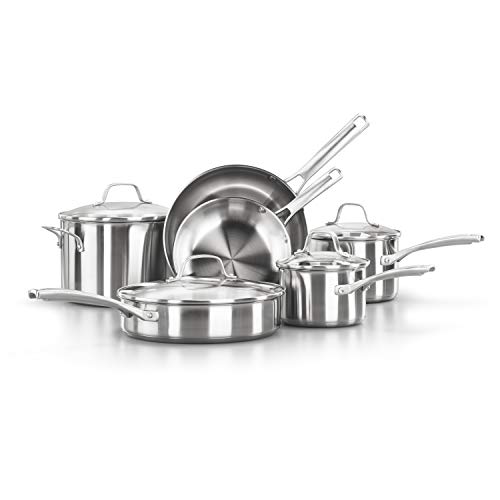

Is Stainless Steel Cookware Good?
Yes. Stainless steel cookware is a strong choice for cooks who want durability and broad cooking use. In my kitchen, stainless steel feels like the dependable workhorse. I can move from browning chicken to making a pan sauce without worrying about a coating. It also handles higher cooking temperatures better than many coated pans. The trade-off is food sticking when the pan is cold or poorly preheated.
I learned this with eggs and chicken. A rushed start often meant more scrubbing. Once I learned to preheat the pan, add enough fat, and let food brown before turning it, the experience changed. For the stainless steel cookware vs nonstick cookware debate, this is the key lesson: stainless steel rewards technique. It may take a little practice, but it can serve you for many years.
What Makes It Stand Out / Key Features
- Durable surfaceQuality stainless steel can resist normal kitchen wear and does not depend on a nonstick coating for food release.
- High heat useStainless steel is well suited to browning and searing when the pan and handle are designed for the heat.
- Strong browningFood can develop a deep brown crust when you use the right heat, fat, and cooking time.
- Pan saucesBrown bits left on the pan can help build flavorful sauces after meat or vegetables are cooked.
- No coating to wear awayThe cooking surface does not rely on a synthetic nonstick layer that can wear with use.
- Wide cooking rangeIt works well for sautéing, searing, boiling, simmering, roasting, and many oven tasks when the specific pan allows it.
My Recommendation
Consider stainless steel if you cook meat, vegetables, sauces, and one-pan meals often. It suits cooks who value durability and do not mind learning basic pan control.
| Best For | Why |
|---|---|
| Home cooks | It can handle many everyday cooking tasks. |
| Searing fans | It supports strong browning and pan sauces. |
| Long-term use | The cooking surface can last for years with normal care. |
Is Nonstick Cookware Good?
It depends on your cooking style, but yes, nonstick cookware can be excellent for the right jobs. I reach for it when I want eggs, pancakes, fish, or other delicate foods to slide out with little effort. On a busy American weekday morning, that convenience matters. Less sticking also means less scrubbing after breakfast.
The trade-off is care. Most nonstick cookware needs gentler treatment than bare stainless steel. I avoid metal utensils, harsh scrubbing, and unnecessary high heat. For the stainless steel cookware vs nonstick cookware choice, nonstick wins on ease. Stainless steel wins when I want maximum heat and a surface built for long-term hard use.
What Makes It Stand Out / Key Features
- Easy food releaseThe coating helps food release with less sticking, which is useful for eggs and other delicate foods.
- Fast cleanupLess food stuck to the surface can make washing quicker and easier.
- Low-fat cookingThe slick surface can reduce the amount of cooking fat needed for some foods.
- Gentle cookingNonstick is especially useful for foods that tear or stick easily.
- Beginner friendlyIt usually requires less pan technique than stainless steel for basic foods.
- Simple daily useIt is a practical option for quick breakfasts and meals where easy cleanup matters most.
My Recommendation
Consider nonstick if easy cooking and cleanup matter most. It is especially useful for breakfast foods, delicate ingredients, and cooks who want a forgiving pan.
| Best For | Why |
|---|---|
| Busy cooks | Easy food release can make meals faster. |
| Egg lovers | Eggs can cook with little sticking. |
| New cooks | It is more forgiving when learning basic pan control. |
stainless steel cookware vs nonstick cookware: Side-by-Side Test
The stainless steel cookware vs nonstick cookware question is not really about one pan replacing every other pan. Each surface has a different job. Stainless steel is the workhorse. Nonstick is the easy button.
I look at heat, food release, cleanup, durability, cooking range, and value when comparing the two. These factors matter more than a simple label on the box.
Cooking Functions: Which Does More?
Both can handle daily meals, but stainless steel gives you more freedom for high-heat work and pan sauces.
| Feature | Stainless Steel | Nonstick |
|---|---|---|
| Searing | Excellent | Fair to good |
| Eggs | Good with proper technique | Excellent |
| Pan sauces | Excellent | Limited for some tasks |
| Delicate foods | Good with care | Excellent |
⭐ Product A – 9/10 | Product B – 8/10
Stainless steel has the edge for overall cooking range.
Food Release: Which Sticks Less?
Food release is where nonstick earns its name. Stainless steel needs heat, fat, and timing to reduce sticking.
| Feature | Stainless Steel | Nonstick |
|---|---|---|
| Eggs | Needs technique | Very easy |
| Pancakes | Good with care | Very easy |
| Fish | Good with proper heat | Very easy |
| Sticky foods | Can stick | Usually releases easily |
⭐ Product A – 7/10 | Product B – 10/10
Nonstick has the clear edge for easy food release.
Durability: Which Lasts Longer?
A quality stainless steel cooking surface can remain useful for many years, while nonstick coatings can wear with use.
| Feature | Stainless Steel | Nonstick |
|---|---|---|
| Scratch resistance | High | More limited |
| Coating wear | Not applicable to bare steel | Possible over time |
| Hard daily use | Very suitable | Needs more care |
| Long-term service | Excellent | Depends on coating and care |
⭐ Product A – 10/10 | Product B – 7/10
Stainless steel has the edge for long-term durability.
Cleanup: Which Is Easier?
Cleanup can change how much you enjoy cooking, and nonstick has a simple advantage here.
| Feature | Stainless Steel | Nonstick |
|---|---|---|
| Light cleanup | Easy | Very easy |
| Burned food | May need soaking | Usually easier if the surface is intact |
| Scrubbing | Sometimes needed | Usually minimal |
| Daily convenience | Good | Excellent |
⭐ Product A – 7/10 | Product B – 10/10
Nonstick has the edge for fast and simple cleanup.
Heat: Which Handles More?
Heat tolerance depends on the exact pan, but stainless steel generally gives cooks more freedom for high-heat techniques.
| Feature | Stainless Steel | Nonstick |
|---|---|---|
| High-heat searing | Excellent | Usually not the main use |
| Browning | Excellent | Good |
| Low heat | Excellent | Excellent |
| Heat flexibility | Very high | More limited by coating guidance |
⭐ Product A – 10/10 | Product B – 7/10
Stainless steel has the edge for high-heat cooking.
Care: Which Needs Less Skill?
Nonstick is easier at first, while stainless steel becomes easier once you learn basic heat control.
| Feature | Stainless Steel | Nonstick |
|---|---|---|
| Preheating skill | Important | Less important |
| Utensil choice | Flexible | Usually needs gentler tools |
| Cleaning skill | Moderate | Easy |
| Beginner ease | Moderate | High |
⭐ Product A – 8/10 | Product B – 9/10
Nonstick has the edge for beginners, while stainless steel rewards practice.
Value: Which Makes More Sense?
Value depends on how long you use the pan and how many cooking jobs you expect it to handle.
| Feature | Stainless Steel | Nonstick |
|---|---|---|
| Initial value | Strong | Strong |
| Expected surface life | Often very long with care | Varies with coating and use |
| Cooking range | Very broad | Broad but more coating dependent |
| Long-term replacement needs | Often lower | May be higher |
⭐ Product A – 9/10 | Product B – 8/10
Stainless steel has the edge when long-term use matters most.
Final Verdict: Which Should You Buy?
In the stainless steel cookware vs nonstick cookware debate, the better fit depends on your kitchen habits. Stainless steel is the durable all-rounder. It shines with searing, browning, sauces, and high-heat cooking. Nonstick is the easy specialist. It shines with eggs, pancakes, fish, and quick meals.
If I were building a kitchen from scratch, I would not treat this as an either-or choice. A stainless steel pan can cover many core tasks, while one nonstick pan can make delicate foods much easier. That combination gives you a sturdy workhorse and a smooth shortcut.