
Wondering what temp to cook pork roast in air fryer for that perfect juicy inside with a crispy outside? Getting it just right can seem tricky, but it’s all about understanding a few key variables. We've dug into the data to help you nail it every time.
The U.S. Department of Agriculture (USDA) sets safe internal temperatures for pork to prevent foodborne illness, recommending pork be cooked to at least 145°F (63°C) for medium-rare, followed by a rest period. Air fryers offer a faster, often crispier alternative to traditional ovens, but selecting the correct temperature and time based on your roast's cut and thickness is crucial for success.
Why Air Fryer Pork Roast Temp Matters
Getting the temperature right in your air fryer is the single biggest factor in transforming a potentially dry or undercooked cut of pork into a tender, flavorful masterpiece. Too low, and you’re essentially steaming the meat, missing out on that desirable browning and crispiness. Too high, and the outside can char before the inside reaches a safe and palatable temperature. For pork roast, we're typically aiming for a tender interior that's safe to eat, coupled with a delightfully browned exterior.
It’s a balance that depends heavily on the specific heat setting and how long you let it cook.
Quick Answer: What Temp for Pork Roast in Air Fryer?
For most pork roasts, a common starting point is to preheat your air fryer to 400°F (200°C). You'll then typically cook the roast for about 15-20 minutes per pound. However, this is a guideline, and the exact temperature and time can vary significantly based on the cut of pork you're using, its thickness, and the specific model of your air fryer. Always use a reliable food thermometer to confirm the internal temperature before serving.
The Decision Factors: Choosing Your Pork Roast Temp
When you're deciding on the best temperature for your air fryer pork roast, don't just grab a number from a recipe and run with it. A few critical factors influence the outcome, and understanding them means you can adapt confidently. It’s less about a single magic number and more about a process of informed adjustment.
What Kind of Pork Roast Are You Cooking?
Different cuts of pork have different fat contents and densities, which means they cook and brown differently. A lean pork tenderloin, for example, will cook much faster and can dry out easily if you use the same temperature and time as a fattier pork shoulder or butt meant for slow, tender braising. Our research indicates that harder, leaner cuts like tenderloins or loin roasts often benefit from slightly higher temperatures for shorter periods to keep them moist, while fattier cuts like shoulder can handle more forgiving, possibly lower, heat for longer.
How Thick Is Your Roast?
Thickness is a massive player in how quickly heat penetrates food. A thicker roast will require more time to reach the desired internal temperature, and you might need to adjust your air fryer’s heat to prevent the outside from overcooking while the inside is still raw. For exceptionally thick roasts, you might even consider a two-stage cooking process: a slightly lower temperature to cook through, followed by a blast of higher heat at the end to get that perfect crust.
What's Your Desired Doneness?
Pork has become much more versatile in recent years regarding safe eating temperatures. While older advice pushed for well-done pork, modern recommendations allow for a more tender, juicy result. The USDA, as of 2026 guidelines, now recommends cooking pork to an internal temperature of 145°F (63°C) for medium-rare, followed by a three-minute rest. This temperature ensures the pork is safe and delicious.
If you prefer it more cooked, aim for 160°F (71°C), which is considered well-done. Your air fryer temperature will help you achieve these targets by controlling the cooking speed.
Setting the Right Air Fryer Temperature
Choosing the right temperature for your pork roast in the air fryer is more art than exact science, but we can give you clear guidelines. Most air fryers operate within a range of 170°F to 400°F (75°C to 200°C). For a pork roast, you generally want a temperature hot enough to crisp the exterior while cooking the interior efficiently.
- For lean cuts (like tenderloin or loin): Aim for a higher temperature, typically 390°F to 400°F (195°C to 200°C). This helps create a nice sear quickly without drying out the meat.
- For fattier cuts (like shoulder or butt): You can often get away with slightly lower temperatures, around 350°F to 375°F (175°C to 190°C). This allows the fat to render slower and more evenly, contributing to tenderness, but it will take longer.
Preheating your air fryer is also a key step; our research indicates it ensures more even cooking from the moment the roast hits the basket. Many models suggest preheating for 3-5 minutes. This step is crucial for that initial sear.
Timing Is Everything: How Long to Cook
The cooking time for pork roast in an air fryer isn't a fixed number; it’s a variable that depends on several factors, primarily the weight and thickness of your roast and the temperature you’ve selected. However, we can establish solid starting points.
Per Pound Estimates
As a general rule of thumb, plan for approximately 15 to 20 minutes of cooking time per pound of pork when using a temperature of 400°F (200°C). This estimate is most accurate for cuts like pork loin or tenderloin. For fattier cuts like pork shoulder, which require rendering, you might need longer, potentially closer to 20-25 minutes per pound, possibly at a slightly lower temperature. However, always remember this is just a starting point.
Adjusting for Your Air Fryer Model
Air fryers can vary significantly in their heating elements, fan speeds, and insulation. This means cooking times can differ between brands and even models within the same brand. If you've used your air fryer before for similar items, you likely have a feel for its quirks. Always rely on an instant-read food thermometer to confirm doneness rather than just the clock.
Many manufacturer specifications indicate that a pork roast needs an initial cooking time, followed by a check and potential extension. For instance, a 2-pound pork loin might take 30-40 minutes at 400°F, but this needs verifying with a thermometer.
Step-by-Step: Air Frying Your Pork Roast
Once you've chosen your temperature and estimated your time, the actual process of air frying your pork roast is quite straightforward. It involves a few crucial steps to ensure it cooks evenly and retains its moisture. Don't skip any of these, no matter how simple they seem; they make a big difference.
Prep and Seasoning
Begin by patting your pork roast completely dry with paper towels. This step is vital for achieving a crispy exterior. Then, generously season the roast on all sides with your desired spices. Common choices include salt, black pepper, garlic powder, onion powder, and perhaps a touch of paprika for color.
For tougher cuts, you might consider a marinade or rub that can penetrate the meat before cooking.
Cooking and Flipping
Place the seasoned pork roast directly into the air fryer basket, ensuring there’s some space around it for air circulation. If you're cooking a larger or thicker roast, you might need to cut it into more manageable pieces that fit your air fryer's capacity. Avoid overcrowding the basket, as this will steam the meat instead of roasting it.
After about half to two-thirds of your estimated cooking time, it's time to flip the roast. This ensures even browning and cooking on all sides. Use tongs to carefully turn it over. If you notice any parts browning too quickly, you can loosely tent those areas with a small piece of foil, but be mindful that this can slightly slow down the cooking on that side.
Resting for Juiciness
This is a step many home cooks overlook, but it's absolutely critical for a moist roast. Once your pork roast reaches its target internal temperature, remove it from the air fryer and place it on a clean cutting board. Tent it loosely with foil and let it rest for at least 5-10 minutes before slicing. This resting period allows the juices to redistribute throughout the meat.
Checking for Perfect Doneness: Using a Thermometer
Relying solely on cooking time can lead to disappointment, whether it's an overcooked, dry roast or one that's suspiciously underdone. The only foolproof way to know when your pork roast is perfectly cooked is by using an instant-read food thermometer. This tool takes the guesswork out of the equation and ensures both safety and deliciousness.
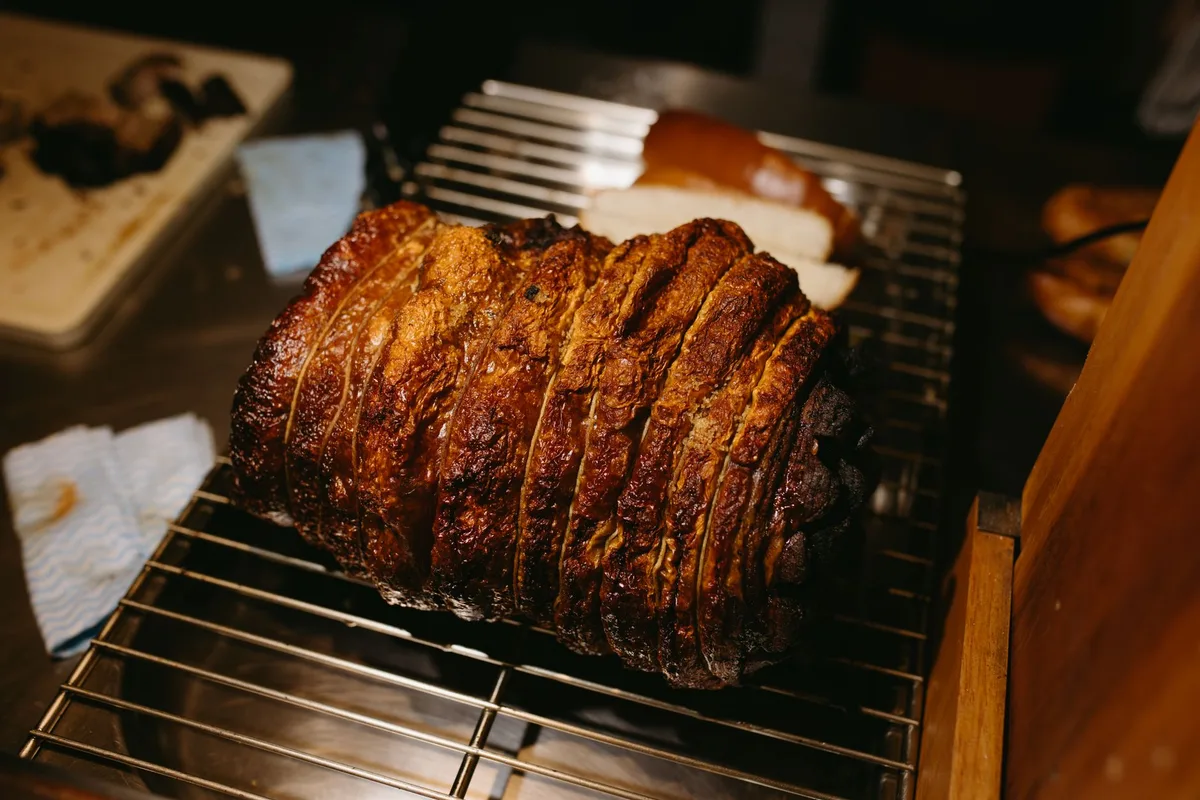
Insert the thermometer into the thickest part of the roast, avoiding any bones or large pockets of fat. You want to get a reading from the center of the meat. For a typical pork roast, you'll be looking for specific temperatures based on your preferred doneness. Make sure the thermometer is calibrated correctly for the most accurate readings.
Safe Internal Temperatures for Pork
Food safety guidelines are paramount when cooking any meat, and pork is no exception. The recommended internal temperature ensures that any harmful bacteria are destroyed. As of 2026, the U.S. Department of Agriculture (USDA) has updated its recommendations for pork, allowing for a more tender and enjoyable eating experience while maintaining safety.
Safe Internal Temperatures for Pork
- Medium-Rare: 145°F (63°C) followed by a 3-minute rest. This is the USDA’s recommended temperature for most whole cuts of pork, offering a tender and juicy result.
- Medium: 150°F (66°C) followed by a 3-minute rest. This will be a bit firmer than medium-rare.
- Well-Done: 160°F (71°C) followed by a 3-minute rest. This is the traditional endpoint, ensuring the meat is thoroughly cooked through, though it can be drier.
It's important to note that the temperature will rise slightly as the roast rests, a phenomenon known as carryover cooking. So, you can often pull the roast from the air fryer when it's a few degrees below your target temperature.
Common Air Fryer Pork Roast Mistakes and How to Fix Them
Even with the best intentions, it's easy to make a slip-up when air frying pork for the first time. Recognizing these potential pitfalls ahead of time can save your roast from becoming a culinary casualty. Fortunately, most mistakes have pretty straightforward fixes.
- Mistake: Overcooking. This is perhaps the most common issue, leading to dry, tough pork.
- Fix: Always use an instant-read thermometer! Remove the roast when it's 5°F below your target temperature and let it rest. This is a critical step our research consistently highlights.
- Mistake: Undercooking. Cooking pork to an unsafe internal temperature is a serious health risk.
- Fix: Re-read the "Safe Internal Temperatures for Pork" section. If it's undercooked, put it back in the air fryer, checking every 5 minutes until it reaches the safe threshold.
- Mistake: Crowding the Basket. Air needs to circulate freely for the "frying" effect to work. Overfilling prevents this.
- Fix: If your roast is too big, cut it into smaller pieces or cook it in batches. The extra time spent cooking in batches is worth it for proper crisping.
- Mistake: Not Resting the Meat. Skipping the rest period means juices run out when you slice, leaving the roast dry.
- Fix: Take the extra 5-10 minutes to let your roast rest under a foil tent. Your patience will be rewarded with a much juicier outcome.
Roasting Alternatives: When Else to Use Your Air Fryer for Pork
While this guide focuses on pork roast, your air fryer is incredibly versatile for all sorts of pork preparations. If you've got leftover pork roast or are planning your next meal, think about other ways this appliance can save you time and deliver great results. It's not just for fries and chicken wings!
- Pork Chops: Air frying pork chops is a fantastic way to get that crispy exterior and tender interior quickly. You can often cook them at 400°F (200°C) for 8-12 minutes, flipping halfway, depending on thickness.
- Pork Tenderloin Slices: Smaller, thinner cuts like sliced pork tenderloin cook exceptionally fast. You might only need 8-10 minutes at 400°F (200°C), so keep a close eye on them.
- Pulled Pork: While traditionally a slow-cooked affair, you can use the air fryer for smaller batches or to crisp up pre-cooked pulled pork. Just toss it with your favorite BBQ sauce and heat at a medium temperature for a few minutes until hot and bubbly. If you're looking for a quicker version of a pulled pork meal, this could be a good option.