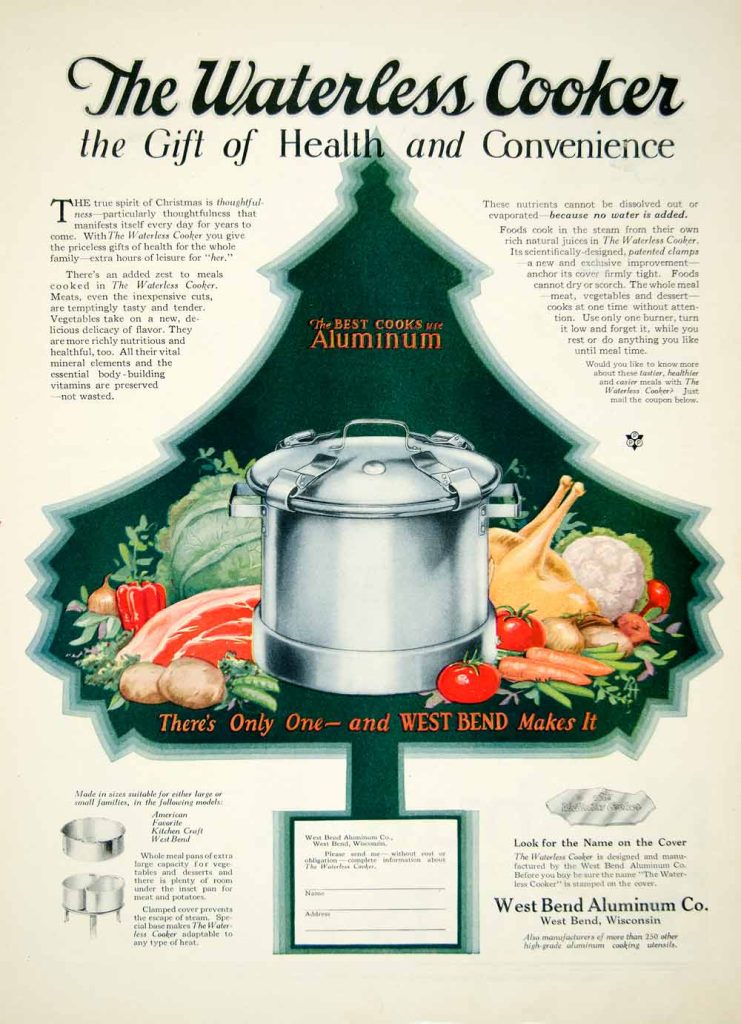
Waterless cookware is cookware designed to cook many foods with little or no added water by using a tight-fitting lid, controlled heat, and the moisture naturally released by food.
In American kitchens, waterless cookware can be useful when preparing weeknight vegetables, potatoes, chicken, and other everyday meals. Instead of filling a pot with water, you place suitable food in the pan, cover it, and use low or moderate heat to let its natural moisture help it cook.
Most waterless cookware sets use stainless steel, often with a thick base or layered metal construction that helps spread heat. Some sets also have fitted lids designed to limit steam loss. The exact results depend on the pan, the food, the amount of moisture, and how well you control the heat.
The name can be misleading. Waterless cookware does not mean every food cooks without liquid, and it does not make every dish healthier by default. Dry beans, rice, pasta, and many grains still need added liquid, while soups and stews require the amount their recipes call for. The main idea is to avoid adding water when the food already provides enough moisture for the cooking method.
Waterless cookware is a type of cookware designed to prepare suitable foods with little or no added water. It usually includes pots and pans with close-fitting lids that help retain steam and moisture during cooking.
The food supplies much of the liquid. As vegetables, meat, or other moist ingredients heat up, they release water. That moisture turns into steam inside the covered pot, then condenses on cooler surfaces and returns to the food. This cycle helps cook the ingredients without the large amount of water used in boiling.
Many waterless cookware sets are made from stainless steel. Some use multiple layers of metal in the base or throughout the body to improve heat distribution. The design, thickness, lid fit, and handle construction vary by brand, so the term does not describe one single technical standard.
Waterless cookware is best understood as a cooking system rather than a special ingredient or a guarantee of superior health. The method combines suitable cookware, moist food, a covered cooking space, and careful heat control.
Source: m.media-amazon.com
Cookware
A pot or pan that can hold heat and retain steam under a close-fitting lid.
Natural food moisture
Water already present in vegetables, meat, and other ingredients helps create the steam needed for cooking.
Controlled heat
Low or moderate heat helps the food release moisture without quickly boiling away the liquid or scorching the bottom.
Is Waterless Cookware the Same as Stainless Steel Cookware?
Not exactly. Stainless steel describes a material, while waterless cookware describes a style of cookware intended for low-liquid cooking. Many waterless cookware sets use stainless steel, but not every stainless steel pot is marketed for waterless cooking.
A regular stainless steel pot with a well-fitting lid can often perform similar tasks. However, the thickness of the base, how evenly the pot heats, the lid design, and the manufacturer’s instructions can affect the outcome.
Stainless steel cookware
A broad category of cookware made primarily from stainless steel.
Waterless cookware
Cookware designed or marketed to support cooking with little or no added liquid for suitable foods.
Does Waterless Mean Absolutely No Water?
No. Some foods release enough moisture to cook under a lid, while others do not. A recipe may call for a small amount of water or broth to prevent sticking, help heat move through the food, or create the right texture.
Follow the cookware instructions and the needs of the recipe. The goal is to use an appropriate amount of liquid, not to avoid water at all costs.
Little or no added water
Often practical for fresh vegetables and some other foods that release enough moisture.
Added liquid required
Usually necessary for boiling pasta, cooking rice by absorption, preparing dried beans, and making soups.
How Does Waterless Cooking Work?
Waterless cooking works by trapping much of the moisture that food releases during heating. When you place moist ingredients in a covered pan, heat causes water within the food to move toward the surface and evaporate. The trapped steam transfers heat and helps soften the ingredients.
As steam touches the lid, some of it cools and condenses into droplets. Those droplets can fall back into the pan, helping maintain a moist cooking environment. The lid does not stop every bit of steam from escaping, but a good fit can reduce moisture loss.
Heat control is essential. High heat can cause the liquid at the bottom to evaporate too quickly, especially when the pan contains little food or the ingredients have low moisture. A thick or layered base may help reduce hot spots, but it cannot prevent burning if the pan becomes too hot.
The cooking process is not identical for every ingredient. Leafy greens may release moisture quickly, while dense vegetables take longer to soften. Meat releases moisture as it cooks, but safe cooking still depends on reaching the proper internal temperature.
Source: yourknifeguy.com
Step 1: Add suitable food
Place washed, prepared ingredients in the pan. Cut dense vegetables into pieces of similar size so they cook at a similar rate.
Step 2: Cover the pan
Use the lid designed for the pot or pan. A close fit helps retain steam and reduces moisture loss.
Step 3: Apply controlled heat
Begin with the heat level specified in the manufacturer’s instructions. Many waterless methods use low or moderate heat after the pan begins to warm.
Step 4: Let moisture build
Allow the food to release moisture and cook under the lid. Avoid repeatedly lifting the lid because doing so releases steam and heat.
Step 5: Check for doneness
Open the lid carefully, check the texture, and add a little liquid if needed. Use a food thermometer for meat and other foods that require a verified safe internal temperature.
Why Is Low Heat So Important?
Low heat gives moisture time to build up while reducing the chance that the food touching the pan will burn. Once enough steam forms, the covered pot can continue cooking without the high heat often used for rapid boiling or searing.
The correct setting depends on the stove, the pot, the amount of food, and the recipe. An electric coil, a smooth-top range, a gas burner, and an induction cooktop can respond differently. Do not assume one heat setting works for every kitchen.
If the food cooks too fast
Lower the heat and check whether the pan is retaining enough moisture.
If the food stays firm
Allow more cooking time, check the heat, and add a small amount of liquid if the recipe and cookware instructions permit it.
What Is the Steam-Seal Effect?
Some waterless cookware systems describe the formation of a steam seal. As food heats and steam fills the covered space, moisture and pressure conditions at the lid can help limit air exchange. Some lids may move or make a light sound as the cooking conditions change.
This is not the same as pressure cooking. Ordinary waterless cookware should never be treated as a sealed pressure vessel unless it is specifically designed and certified for that purpose. Never force a lid shut or block a vent.
A close lid
Helps retain steam but does not automatically make a pot airtight.
A moving or rattling lid
May signal active steam movement or excessive heat. Check the manufacturer’s guidance rather than relying on sound alone.
What Foods Can You Cook in Waterless Cookware?
Foods that contain enough natural moisture are usually the easiest to prepare with little or no added water. Fresh vegetables are a common example because heat softens their structure and releases some of the water stored in their cells.
You can also use a covered stainless steel pan to cook some cuts of meat, fish, poultry, and mixed dishes. These foods require the right cooking time and temperature, and their moisture levels vary. A low-liquid method does not replace basic food safety rules.
Dry foods present a different challenge. Rice, pasta, dried beans, and other grains need a suitable amount of liquid to hydrate and soften. Trying to cook them with no added water can leave the center hard while the food at the bottom scorches.
Source: i0.wp.com
Fresh vegetables
Broccoli, carrots, cabbage, zucchini, spinach, and similar vegetables can work well when covered and cooked with controlled heat.
Potatoes
Potatoes can release some moisture, but the amount depends on the cut, quantity, and cooking method. A little added liquid may be needed.
Fish and poultry
These foods can be cooked in a covered pan, but use a reliable thermometer to verify safe internal temperatures.
Mixed vegetable dishes
Ingredients such as onions, tomatoes, and zucchini may release enough liquid to support cooking other vegetables in the same pan.
Dry grains and legumes
Rice, pasta, and dried beans generally need added liquid. Use a tested recipe and the cookware manufacturer’s directions.
How to Cook Vegetables With Little or No Added Water
Start with fresh vegetables that have been washed and cut into similar-sized pieces. Shake off excess water, but do not assume every vegetable needs to be completely dry before it enters the pan.
Place the vegetables in the pan, cover it, and apply the heat level recommended for your cookware. Start low and allow the ingredients to warm. If the recipe calls for a specific sequence, follow it rather than using the same time for every vegetable.
Check for tenderness near the end of cooking. If the bottom looks dry or the vegetables begin to stick, reduce the heat and add a small amount of water or broth if appropriate. Do not let a dry pan continue heating in the hope that moisture will appear.
Cut evenly
Similar-sized pieces are more likely to cook at a similar rate.
Avoid overfilling
A crowded pan can cook unevenly. Use a larger pan or cook in batches when needed.
Check texture
Stop when the food reaches the texture you want, rather than following an unverified universal cooking time.
Can You Cook Meat Without Adding Water?
Some meat dishes can be cooked with little or no added water because meat releases moisture as it heats. The result depends on the cut, fat content, thickness, amount of food, and the cooking method.
A covered pan may cook meat gently, but it does not guarantee browning. If you want a crisp crust, you may need a separate searing step or a different cooking method. Do not confuse moist cooking with roasting, grilling, or high-heat searing.
For food safety, check the internal temperature with a food thermometer. As a general US guideline, poultry should reach 165 degrees Fahrenheit, ground meats should reach their recommended safe temperatures, and whole cuts of pork and beef have different temperature guidance. Use current USDA recommendations for the specific food rather than relying on appearance alone.
Choose the right method
Use waterless cooking for suitable covered-pan recipes, not as a substitute for every roasting or frying technique.
Measure internal temperature
Check the thickest part of the food and avoid touching bone with the thermometer probe when that could affect the reading.
Benefits of Waterless Cookware
Waterless cookware can make certain meals easier to prepare, especially when you want tender vegetables without a large pot of boiling water. Its main advantages come from moisture retention, the ability to cook covered, and the versatility of suitable stainless steel pots and pans.
These benefits are practical rather than magical. Results depend on the food, the recipe, the cookware design, and the cook’s technique. A specialized set may help with consistency, but it does not automatically outperform every conventional pot or pan.
Source: cdn.kitchensanity.com
Less added water
Suitable foods can cook using their own moisture, reducing the need to fill a pot with water and then drain it.
Potential nutrient retention
Cooking vegetables with little water may reduce the loss of water-soluble nutrients into cooking water that would otherwise be discarded.
Less draining
Vegetables cooked with little added liquid may be ready to serve without the usual draining step.
Versatile cooking
A suitable stainless steel pot can support steaming-like cooking, simmering, braising, and many everyday recipes.
Potential water savings
Using less water in the pan can reduce the amount needed for some meals, although the total household savings will depend on how often you use the method.
Does Waterless Cooking Preserve More Nutrients?
It can help retain some water-soluble nutrients in certain foods, particularly when you avoid boiling vegetables in a large amount of water and throwing that water away. Vitamin C and some B vitamins can move into cooking water or break down with heat, so both the cooking method and the cooking time matter.
The result is not a guarantee that every waterless meal contains more nutrients than every conventionally cooked meal. Heat can still change nutrients, and the amount retained depends on the food, temperature, duration, and method. Steaming, microwaving, and other methods that use little water can offer similar advantages.
For everyday meals, focus on eating a variety of vegetables and cooking them until they reach a texture you enjoy. The difference between cooking methods matters, but it should not distract from the larger value of eating a balanced range of foods.
A reasonable benefit
Less water may mean fewer water-soluble nutrients are lost into liquid that gets discarded.
A claim to question
Claims that waterless cooking preserves every nutrient or makes food universally healthier go beyond what the method alone can establish.
Can Waterless Cookware Save Energy?
A covered pot may need less energy than a method that heats a large volume of water, because the stove does not have to bring as much liquid to a boil. However, actual energy use depends on the pan’s size, the burner, the heat setting, cooking time, and the food.
There is no single energy-saving percentage that applies to every waterless cookware set. A well-fitting lid and appropriate heat control can help, but a long cooking time or an inefficient burner may offset some of the benefit.
Use the right burner
Match the pan’s base to the burner size where possible so excess heat is not wasted around the sides.
Keep the lid in place
Avoid lifting the lid repeatedly when you can check doneness safely at the end of cooking.
Drawbacks and Limitations of Waterless Cookware
Waterless cookware has limits, and the biggest one is that not every food provides enough moisture to cook well without added liquid. A cooking method that works for cabbage may fail with dry rice or leave dense vegetables firm if the heat and timing are wrong.
The method also takes practice. If you are used to turning the burner high and adding water by eye, you may need to change your habits. Too much heat can cause food to stick or scorch before enough moisture builds up.
Specialized waterless cookware sets can cost more than basic pots and pans. Some are sold with claims about nutrition, energy savings, or long service life that may be difficult to compare without clear testing conditions. Consider the construction, warranty, care instructions, and price rather than relying on broad marketing claims.
Source: cdn.belkraftcookware.com
Not suitable for every recipe
Dry grains, pasta, dried beans, and liquid-based dishes need the liquid their recipes require.
Heat control matters
High heat can quickly dry out the pan and burn food, especially when the load is small.
Possible sticking
Stainless steel can stick if the pan is too hot, the food is too dry, or the cooking method is unsuitable.
Cost varies
Premium sets may cost more than a basic stainless steel pot that can perform many of the same tasks.
Marketing may overstate results
A special lid or layered base does not prove that a set will preserve every nutrient, save a fixed amount of energy, or last forever.
Why Does Food Stick or Burn?
Food can stick when the cooking surface becomes too hot, the ingredients lack enough moisture, or proteins bond to the metal surface. A stainless steel pan does not behave exactly like a nonstick pan, so technique matters.
If food starts sticking, lower the heat and check for moisture. If the recipe allows it, add a small amount of water or broth and loosen the food gently with a suitable utensil. If the pan is dry and very hot, turn off the burner before attempting to correct the problem.
Do not keep heating an empty or nearly dry pan to force a steam seal. That approach can damage cookware, burn food, and create a safety hazard.
Possible cause: excessive heat
Reduce the burner setting and let the pan cool slightly if needed.
Possible cause: too little moisture
Add a small amount of liquid when appropriate and follow the recipe’s guidance.
Possible cause: unsuitable food
Switch to a method that supplies the liquid or direct heat the ingredient needs.
Is Waterless Cookware Worth the Price?
It may be worth the price if you regularly cook vegetables and covered one-pot meals, prefer stainless steel, and value cookware designed for low-liquid cooking. It may be less useful if you mainly boil pasta, cook soups, or rely on high-heat searing.
Before buying a complete set, compare it with a quality stainless steel saucepan or Dutch oven that has a well-fitting lid. A single suitable pot may be enough to learn the method without replacing your existing cookware.
Consider a specialized set
If you cook low-liquid meals often and want matching pot sizes, fitted lids, and consistent construction.
Consider standard cookware
If you want to test the method first or already own sturdy stainless steel pots with close-fitting lids.
Waterless Cookware vs. Traditional Cooking Methods
Waterless cooking differs from boiling, steaming, and frying mainly in how much liquid is added and how heat reaches the food. No method wins in every situation. The right choice depends on the ingredient, the desired texture, the time available, and the equipment you own.
Waterless cooking often resembles covered, low-liquid cooking more than a completely separate physical process. It uses steam and retained moisture, while boiling submerges food in liquid and frying relies on hot fat or a hot cooking surface.
Source: cdn.shopify.com
Waterless cooking
Uses the food’s natural moisture and a covered pot for suitable foods. It can reduce the need to drain cooking water.
Boiling
Cooks food in a larger volume of hot water. It suits pasta, many grains, and recipes that need water for even cooking.
Steaming
Uses steam from heated water, usually with food held above the liquid. It is useful for vegetables and other foods that benefit from moist heat.
Sautéing
Cooks food over direct heat with a small amount of fat or other liquid. It is useful for browning and building flavor.
Frying
Uses hot oil or fat to cook and brown food. It creates textures that low-liquid covered cooking generally does not.
Comparison Table: Which Method Fits Which Food?
Use this table as a practical starting point. Actual results depend on the recipe, the cookware, the amount of food, and the desired texture.
Fresh vegetables
Waterless cooking or steaming can work well. Choose boiling when a recipe specifically calls for it.
Pasta
Traditional boiling is usually the simplest choice because pasta needs enough water to hydrate and cook evenly.
Rice
Use an absorption method with a measured amount of water or broth. Do not assume zero-liquid cooking will work.
Crispy potatoes
Roasting, frying, or suitable sautéing methods are usually better when a crisp exterior is the main goal.
Tender covered meat dishes
Covered low-liquid cooking or braising may be suitable, provided the recipe supplies the required moisture and the meat reaches a safe temperature.
How to Choose Waterless Cookware
Choose waterless cookware based on its construction, lid fit, stove compatibility, size, care needs, and price. A large matching set may look appealing, but the most useful cookware is the cookware that suits your normal meals and fits your kitchen.
Stainless steel is a common choice because it is generally durable and does not rely on a conventional nonstick coating for its cooking surface. Still, stainless steel cookware varies in thickness and construction, and the presence of multiple metal layers does not by itself prove that one pan performs better than another.
If a manufacturer advertises a special waterless system, look for clear instructions about heat settings, food types, and cleaning. Claims about health benefits or energy savings should be supported by evidence that explains the test conditions.
Source: kitchenbap.com
Material
Check whether the cookware is stainless steel, how the base is constructed, and whether the manufacturer clearly describes the materials that contact food.
Lid fit
A lid that fits the matching pan well can help retain steam. Confirm that replacement lids are available if needed.
Stove compatibility
For induction cooking, confirm that the pan is induction-compatible. Not every stainless steel item works on every induction cooktop.
Pan size
Select sizes that fit your usual servings and burner layout. A pan that is too large or too small can affect cooking results.
Handles and lid design
Look for secure handles, comfortable lifting, and clear instructions for hot lids and steam release.
Cleaning requirements
Check whether the set is dishwasher-safe and whether the manufacturer recommends avoiding abrasive cleaners or sudden temperature changes.
Warranty and replacement parts
Review the written warranty, exclusions, and availability of lids, handles, and other replaceable parts.
Do You Need an Expensive Waterless Cookware Set?
No. You can often try low-liquid cooking with a regular stainless steel pot that has a close-fitting lid. This lets you learn how different vegetables release moisture and how your stove responds before investing in a full set.
A dedicated set may offer useful matching sizes or a lid design intended for this method. Compare those features with the price and your current equipment. Do not pay more solely because a product claims to preserve all nutrients or eliminate the need for water in every recipe.
Start with one pot
Use an existing covered stainless steel saucepan for a suitable vegetable recipe.
Test your routine
See whether you enjoy the texture, cooking process, and cleanup before buying more cookware.
Can You Use Waterless Cookware on an Induction Stove?
Yes, if the cookware is designed for induction. Induction cooktops heat compatible magnetic cookware, so stainless steel alone is not enough to guarantee compatibility.
Check the product specifications or use a magnet on the base as an initial check. If the magnet attaches firmly, the pan may be induction-compatible, but the manufacturer’s instructions remain the better source for confirmation.
Verify compatibility
Look for an explicit induction-compatible statement or symbol in the cookware specifications.
Adjust the heat
Induction can heat a compatible pan quickly. Begin with a low setting and follow the cookware maker’s guidance.
Safe Use and Care Tips
Safe waterless cooking starts with controlled heat, the right amount of moisture, and careful handling of steam. Even a well-made pot can scorch food if it becomes too hot or stays on the burner after its liquid has evaporated.
Read the instructions supplied with your cookware before using a waterless technique for the first time. Different sets may have different heat recommendations, and some lids or handles may have limits on oven use or dishwasher cleaning.
Never leave an empty pot heating unattended. If food begins to smoke, turn off the heat when safe to do so, keep your face and hands away from the rising steam, and allow the pan to cool before investigating.
Source: i.pinimg.com
Start with low or moderate heat
Follow the manufacturer’s recommended settings instead of assuming high heat will speed up the process safely.
Do not force the lid
A normal waterless pot is not a pressure cooker. Never lock, clamp, or modify its lid to trap pressure.
Open lids away from your face
Steam can cause burns. Lift the lid carefully and direct escaping steam away from your hands and face.
Use safe food temperatures
A covered pan does not guarantee that meat or poultry is fully cooked. Verify internal temperatures with a food thermometer.
Avoid sudden temperature changes
Unless the manufacturer says otherwise, do not place a very hot pan in cold water. Rapid temperature changes can damage cookware or distort some components.
Inspect the cookware
Stop using a pan with a loose handle, a badly warped base, a damaged lid, or any defect that makes safe handling difficult.
How to Clean Waterless Cookware
Let the cookware cool enough for safe handling before washing it. For ordinary food residue, warm water, dish soap, and a soft sponge are often enough. Follow the manufacturer’s instructions if the set has a special finish or cleaning requirement.
If food sticks, soak the pan in warm water and loosen the residue with a nonabrasive tool. Avoid scraping aggressively with sharp metal objects if doing so could damage the surface or finish.
Mineral spots and rainbow-colored marks can appear on stainless steel. They are often cosmetic, but cleaning methods depend on the material and manufacturer guidance. Use only a suitable cleaner and rinse the pan thoroughly before cooking again.
For light residue
Wash with warm, soapy water and a soft sponge.
For stuck food
Soak first and loosen the residue gently instead of scraping a hot pan.
For storage
Dry the cookware before storing it and protect nested pans from scratches when necessary.
Is Stainless Steel Waterless Cookware Safe?
Stainless steel cookware is widely used for home cooking, but its exact composition and condition matter. Some stainless steel can release small amounts of nickel or chromium into food, especially under certain cooking conditions such as prolonged contact with acidic foods. The amount varies by the cookware and the conditions of use.
People with a known metal sensitivity should consider their individual needs and seek qualified advice if they are unsure which cookware is suitable. For general use, follow the product’s care directions, avoid damaged cookware, and do not interpret a waterless label as a separate safety certification.
Safety also depends on the food itself. Use proper refrigeration, prevent cross-contamination, and cook meat, poultry, and other foods according to recognized food safety guidance.
Check the materials
Review the manufacturer’s material information, especially if you have a known sensitivity to a metal.
Do not rely on the label alone
The term waterless describes a cooking method or product category; it does not prove that every set has the same composition or safety performance.
Common Waterless Cooking Problems and Solutions
Most waterless cooking problems come from too much heat, too little moisture, an unsuitable recipe, or a pan that is too crowded. Check these factors in that order before changing cookware or assuming the method does not work.
A useful rule is to correct the problem early. If the pan begins to smell burnt, food stops releasing moisture, or the bottom becomes dry, reduce or turn off the heat before adding liquid or moving the food.
Source: recipemarker.com
Food burns on the bottom
Likely causes include excessive heat, a dry pan, or a recipe that needs added liquid. Turn off the heat if the pan is smoking, let it cool as needed, and adjust the method before trying again.
Vegetables stay hard
The pieces may be too large, the heat may be too low for the specific recipe, or the cooking time may be too short. Continue cooking carefully and add a little liquid if needed.
Too much liquid collects
Some vegetables release more moisture than expected. Remove the lid near the end if the recipe permits and cook gently until the texture and amount of liquid suit the dish.
Food cooks unevenly
The pan may be crowded, the pieces may be different sizes, or the burner may heat unevenly. Use smaller batches and cut ingredients more consistently.
Food tastes bland
Waterless cooking does not replace seasoning. Add suitable herbs, spices, salt, or acidic ingredients according to the recipe and your dietary needs.
The lid rattles or steam escapes
The heat may be too high, the lid may not fit properly, or the cookware may be designed to vent steam. Check the manual and never block a vent.
How Do You Know Waterless Cooking Is Working?
The food should soften at a steady pace without the pan becoming dry or scorching. You may see condensation on the lid or notice moisture collecting around the ingredients, although the exact signs vary by cookware design.
Do not judge success only by a lid sound or the appearance of steam. Check the food itself for the desired texture and, where relevant, use a thermometer to confirm a safe internal temperature.
If a recipe repeatedly fails despite careful heat control, choose a tested recipe intended for your cookware or use a conventional method better suited to that food.
Signs of success
Food softens evenly, the pan retains sufficient moisture, and the bottom does not burn.
Signs to stop and check
A burning smell, smoke, a dry pan, or unexpectedly rapid heating means the process needs immediate attention.
Frequently Asked Questions
Q
What Is Waterless Cookware Made Of?
Many waterless cookware sets are made from stainless steel, sometimes with layered metal construction to improve heat distribution. The lid, base, handles, and other parts may use different materials, depending on the model. Check the manufacturer’s specifications for the exact composition.
Q
Can You Cook Without Water in Any Stainless Steel Pot?
You can use many stainless steel pots for low-liquid cooking if they have a suitable lid and the food releases enough moisture. Results depend on the pot’s construction, lid fit, stove, recipe, and heat control. Start with a moist food such as vegetables and follow the cookware instructions.
Q
Is Waterless Cookware Healthier Than Regular Cookware?
Not automatically. Cooking with little water may reduce the loss of some water-soluble nutrients into discarded cooking water. However, overall nutrition also depends on the ingredients, cooking time, temperature, and the rest of the meal. Waterless cookware does not make every food healthier by itself.
Q
Can You Use Oil in Waterless Cookware?
Yes, when the recipe calls for it and the cookware instructions allow it. Waterless cooking focuses on reducing added water, not banning oil or other ingredients. The amount of oil depends on the dish and the result you want.
Q
Can You Cook Rice or Pasta in Waterless Cookware?
Yes, if you use a recipe that supplies the right amount of water or broth. Rice needs enough liquid to absorb as it cooks, and pasta usually needs enough water to hydrate and soften. The waterless label does not mean these foods can be cooked properly with no liquid.
Q
Does Waterless Cookware Work on an Induction Cooktop?
It can, provided the specific pot or pan is induction-compatible. Check the manufacturer’s product specifications or use a magnet as an initial compatibility check. Since induction can heat cookware quickly, start with a low setting and follow the recommended method.
Q
Is Waterless Cookware the Same as a Pressure Cooker?
No. Standard waterless cookware uses a lid to retain moisture and steam, but it is not designed to operate as a sealed pressure vessel. A pressure cooker is specifically built to cook under controlled pressure and must be used according to its own instructions. Never modify ordinary cookware to trap pressure.
Q
Do You Need a Special Waterless Cookware Set?
No. A suitable stainless steel pot with a close-fitting lid can be enough to try the method. A specialized set may offer particular lid designs, pan sizes, or construction features, but compare those practical benefits with the price before buying.
✦ Wrapping Up
Conclusion
Waterless cookware is designed to cook suitable foods with little or no added water by retaining the moisture that food naturally releases. A close-fitting lid, suitable pan construction, and controlled heat help create a moist cooking environment without the need to boil ingredients in a large volume of water.
The method can be useful for vegetables and many covered one-pot meals. It may also reduce the amount of water discarded after cooking, which can help retain some water-soluble nutrients. However, the benefits depend on the food and cooking method, and there is no guarantee of better nutrition or lower energy use in every kitchen.
You do not need to buy an expensive set to begin. Try a suitable vegetable recipe in a stainless steel pot with a well-fitting lid, keep the heat under control, and check the food as it cooks. Add liquid when needed, use a food thermometer for meat, and follow the cookware maker’s safety instructions.
💡 Key Takeaway
Start with one covered stainless steel pot and a moist vegetable recipe. Use low or moderate heat, check the food before the pan dries out, and add a little liquid whenever the recipe or cooking conditions require it.