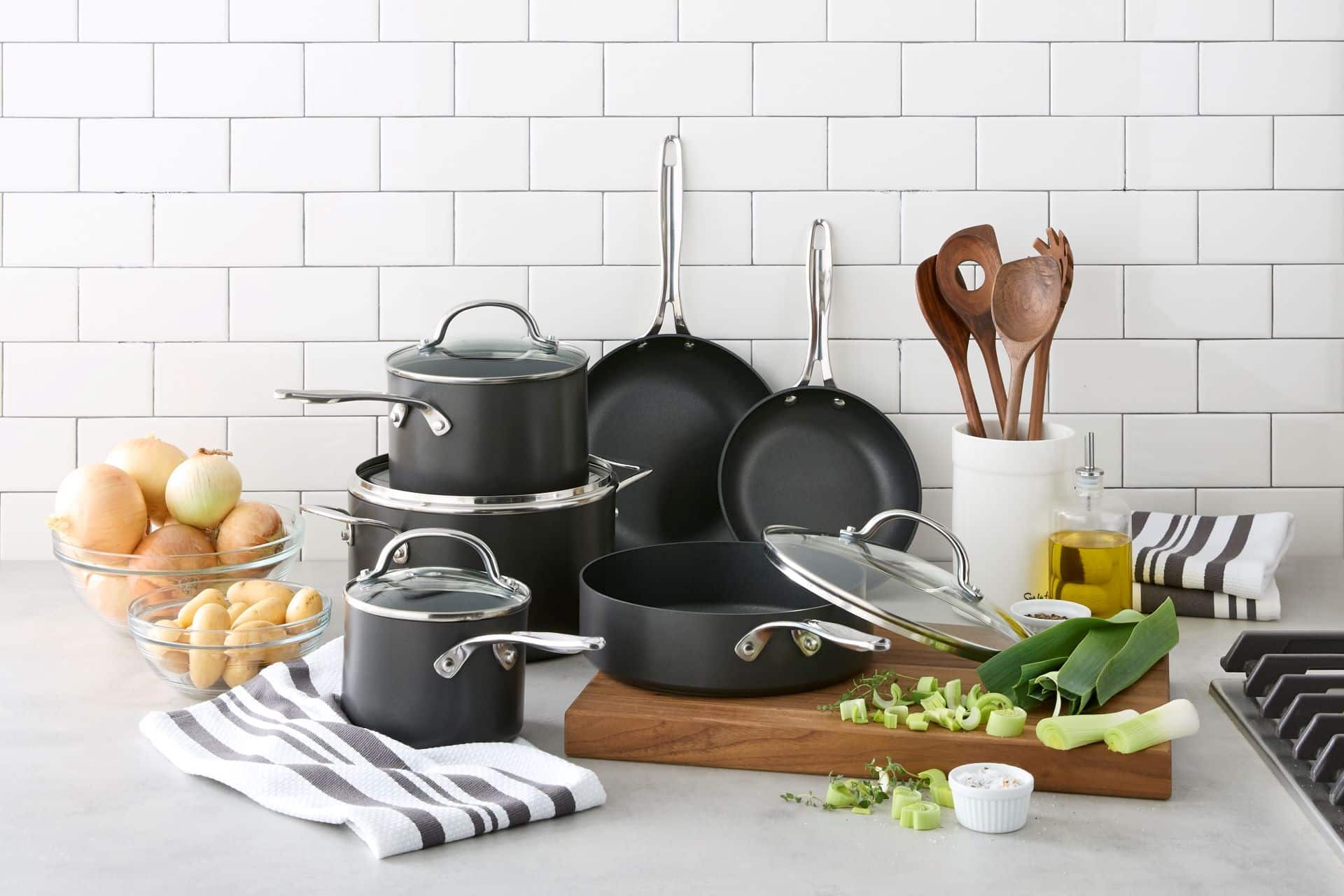
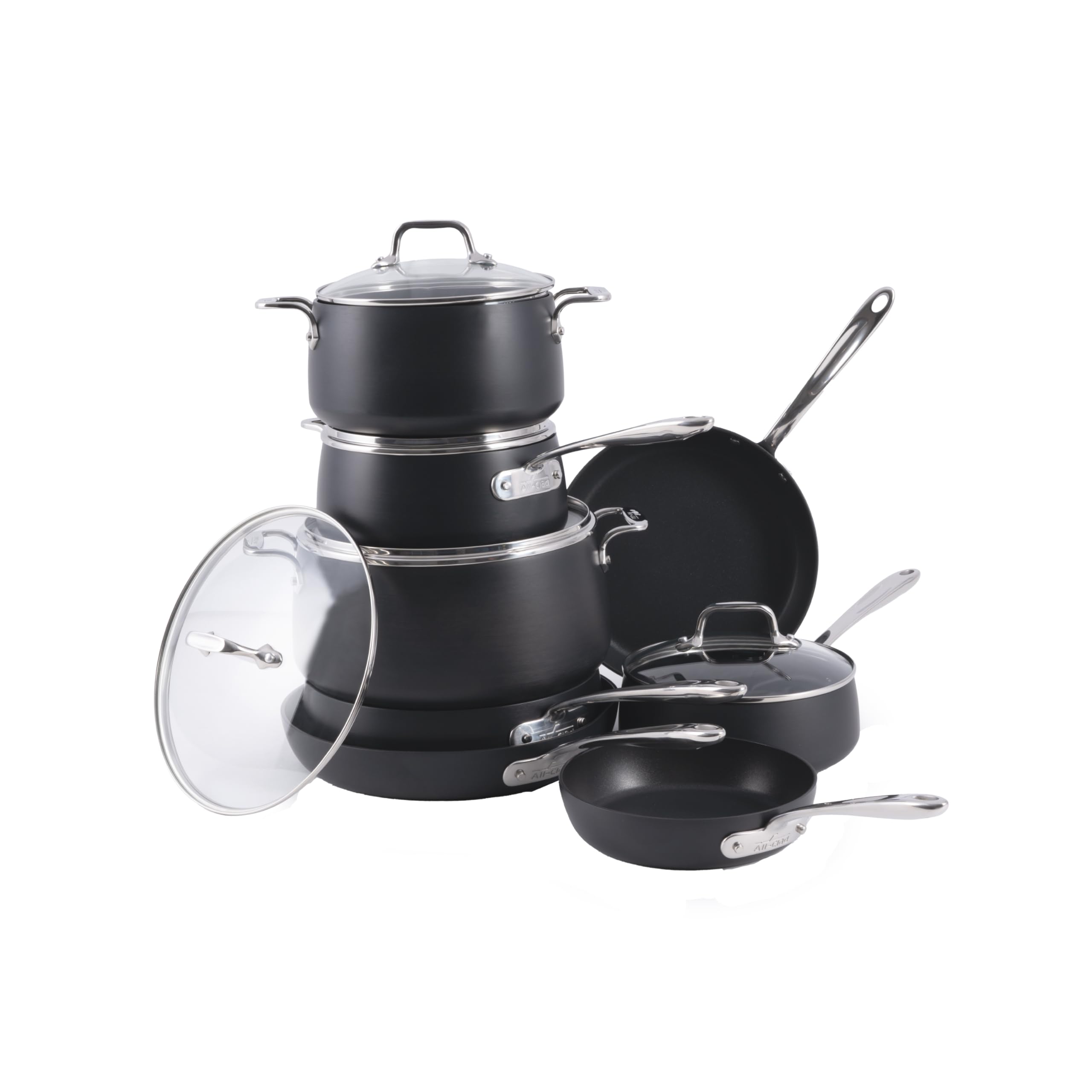
Hard anodized cookware is made from aluminum that has been treated with an electrochemical process to create a hard, durable surface that resists wear and corrosion.
If you cook dinner in an American kitchen, you may reach for a skillet to fry eggs, a saucepan to heat soup, or a stockpot to make pasta. The cookware you choose affects how evenly food cooks, how much oil you need, and how easy cleanup will be. Hard anodized cookware is a popular option because it combines aluminum’s ability to conduct heat with a tough outer surface.
The key detail is that hard anodized describes how the aluminum surface is treated. It does not automatically mean that the pan has a nonstick coating. Many hard anodized pans have an added nonstick layer, while others have an uncoated cooking surface. Knowing the difference helps you choose the right pan and care for it properly.
In this guide, you will learn how hard anodized cookware is made, what it does well, where it falls short, and how it compares with stainless steel, cast iron, and ceramic-coated cookware. You will also learn what to check before using it on a gas, electric, glass-top, or induction stove.
Hard anodized cookware is cookware made from aluminum whose surface has been hardened through an electrochemical treatment. The process changes the outer layer of the metal, making it harder and more resistant to corrosion than untreated aluminum. Manufacturers use this treated aluminum to make frying pans, saucepans, sauté pans, and complete cookware sets.
Aluminum is useful in cookware because it conducts heat well. It can spread heat across a pan more effectively than many other metals of similar thickness. The hard anodized surface adds durability, while the aluminum underneath helps the pan respond to changes in the heat source.
The term can be confusing because many products labeled hard anodized also have a dark, nonstick cooking surface. That nonstick layer is a separate feature. The anodized layer and the nonstick coating serve different purposes, even when they appear together in one pan.
For everyday cooking, this combination can be practical. You can use a suitable skillet for eggs, pancakes, vegetables, and quick chicken dinners, provided you follow the product’s heat limits and care instructions.
Source: housekeepingmaster.com
Base material
Usually aluminum, chosen for its relatively low weight and good heat conduction.
Surface treatment
An electrochemical process creates a hard, oxide-rich layer on the aluminum surface.
Optional cooking coating
Some pans have an added nonstick layer, while others rely on the hard anodized surface without a separate nonstick coating.
What Does Anodized Mean?
Anodizing is an electrochemical process that forms a controlled oxide layer on a metal surface. For aluminum, this layer is mainly aluminum oxide. It becomes part of the metal’s surface rather than acting like an ordinary layer of paint.
Hard anodizing uses controlled processing conditions to create a particularly hard surface. This can improve resistance to wear and corrosion. The exact properties depend on the manufacturing process, so the term alone does not tell you everything about a finished pan.
Hard surface
The treated outer layer is designed to withstand ordinary kitchen use better than untreated aluminum.
Corrosion resistance
The oxide layer helps protect the underlying aluminum from many forms of corrosion.
Is Hard Anodized Cookware the Same as Nonstick Cookware?
No. Hard anodizing describes the treatment of the aluminum itself, while nonstick describes how easily food releases from a cooking surface. A manufacturer can add a separate nonstick coating over a hard anodized body.
Many common hard anodized frying pans use a PTFE-based nonstick coating. Other products use different surface treatments or remain uncoated. Read the product label and instructions rather than assuming that every dark pan has the same construction.
This distinction matters when a coating becomes scratched or worn. The condition of the nonstick layer may determine whether you should replace a pan, even if the underlying hard anodized aluminum still looks sound.
Hard anodized only
The defining feature is the treated aluminum surface. Food may still stick, depending on the finish and cooking method.
Hard anodized with nonstick
The pan combines a treated aluminum body with an added surface designed to release food more easily.
How Is Hard Anodized Cookware Made?
Hard anodized cookware begins with aluminum that is shaped into a pan or formed from aluminum stock. The surface then undergoes an electrochemical treatment that creates a controlled aluminum oxide layer. The process differs from simply painting the outside or applying a nonstick coating.
During anodizing, the aluminum acts as the anode in an electrolytic system. An electrical current helps form the oxide layer under controlled conditions. Temperature, electrolyte, current, and processing time can affect the resulting surface, so not every anodized product has identical properties.
After the surface treatment, a manufacturer may apply a separate nonstick coating to the cooking area. Handles, lids, bases, and other parts are added according to the design. Some models also use a magnetic stainless steel base or another compatible construction to support induction cooking.
For shoppers, the important point is that hard anodizing is one part of a pan’s construction. Thickness, shape, coating quality, handle design, and base material also affect cooking results and long-term use.
Source: learn.surlatable.com
Aluminum shaping
The aluminum is formed into the intended cookware body.
Electrochemical treatment
The surface is converted into a harder oxide layer under controlled manufacturing conditions.
Additional finishing
The manufacturer may add nonstick coatings, handles, lids, or an induction-compatible base.
Why Is Hard Anodized Cookware Often Dark Gray or Black?
The anodizing process changes how the aluminum surface looks. Hard anodized cookware often has a charcoal, dark gray, or black appearance. A separate dark nonstick coating may contribute to the final color as well.
Color alone does not prove that a pan is hard anodized, durable, or safe. Different materials and coatings can look similar. Look for clear product specifications that identify the cookware body, surface treatment, and cooking coating.
Appearance
Dark finishes are common, but the exact shade varies by manufacturer and product design.
Product verification
Use the stated materials and care instructions instead of relying on color or appearance.
Benefits of Hard Anodized Cookware
Hard anodized cookware offers a useful balance of heat conduction, surface durability, and manageable weight. It can suit busy households that prepare breakfast, weeknight dinners, and simple one-pan meals. The benefits are real, but the final performance still depends on the specific pan.
A good pan should heat in a predictable way, feel balanced when lifted, and fit the tasks you perform most often. Hard anodized aluminum can meet those needs without the weight of many cast iron pans. A nonstick version can also make cooking delicate foods and cleaning up after dinner easier.
Source: www.foodandwine.com
Good heat conduction
The aluminum body transfers heat efficiently, helping the pan warm up quickly.
Durable treated surface
The hard anodized layer resists wear and corrosion better than untreated aluminum in many ordinary-use conditions.
Convenient weight
Many aluminum pans are easier to lift and move than heavy cast iron cookware.
Easy food release on coated models
A sound nonstick layer can help with eggs, fish, pancakes, and other foods that tend to stick.
Useful everyday range
Depending on the model, a set may include skillets, saucepans, and sauté pans for many common home cooking tasks.
Does Hard Anodized Cookware Heat Evenly?
Hard anodized cookware can heat well because aluminum conducts heat efficiently. However, heat distribution depends on more than the material. Pan thickness, base shape, burner size, and the type of stove all affect how evenly the cooking surface warms.
A thin pan placed over a powerful burner may still develop hot spots. A thicker, well-designed pan may spread heat more evenly. For the best results, match the burner to the pan’s base and preheat gradually rather than immediately turning the heat to maximum.
Use a suitable burner
Choose a burner that closely matches the pan’s base to reduce excessive heating around the sides.
Allow gradual preheating
Start at low or medium heat, especially when using a nonstick model.
Is Hard Anodized Cookware Good for Daily Cooking?
Yes, many hard anodized pans are well suited to daily cooking. A nonstick skillet can handle eggs and vegetables, while a saucepan can warm oatmeal, simmer sauces, or reheat soup. The relatively light body makes these pans convenient to move between the stove and counter.
For meals that depend on a strong browned crust or a fond of browned bits for pan sauce, an uncoated stainless steel or cast iron pan may be a better fit. A coated hard anodized pan can brown food, but its coating and care limits may make it less suited to intense searing.
Good match
Everyday eggs, pancakes, sautéed vegetables, grilled sandwiches, and quick meals.
Consider another pan
Very high-heat searing, oven-intensive cooking, or recipes that require the specific behavior of an uncoated surface.
Disadvantages and Limitations of Hard Anodized Cookware
Hard anodized cookware is not the right choice for every cook. Its main limitations involve coating wear on nonstick models, compatibility with certain stoves, heat limits, and the care required to preserve the surface. Understanding these limits helps you avoid damage and unnecessary replacement.
The hard anodized layer is durable, but that does not make the entire pan immune to dents, scratches, overheating, or misuse. A nonstick coating can wear out long before the aluminum body reaches the end of its useful life. A pan’s overall durability depends on its construction and how it is used.
Source: kitchensanity.com
Nonstick coatings can wear
Scratches, abrasion, overheating, and ordinary aging can reduce food release over time.
Induction compatibility varies
Aluminum alone is not magnetic enough for a typical induction cooktop. The pan needs a suitable magnetic base or construction.
High heat may cause problems
Excessive heat can damage nonstick coatings, discolor cookware, or create cooking conditions the manufacturer does not permit.
Some pans require handwashing
Dishwasher detergents, heat, and contact with other items can shorten the life of some finishes.
Not all models are oven-safe
Handle materials, lid parts, and coatings determine the permitted oven temperature.
Can Hard Anodized Cookware Scratch?
Yes. The hard anodized surface is more resistant to ordinary wear than untreated aluminum, but it is not scratch-proof. Abrasive pads, metal tools, careless stacking, and dragging cookware across rough surfaces can cause damage.
On a nonstick model, the cooking coating is a separate concern. Avoid metal utensils unless the manufacturer explicitly allows them, and do not assume that a hard anodized body protects the coating from scratches. Use wood, silicone, or suitable nylon utensils instead.
Prevent damage
Use soft utensils, avoid abrasive cleaners, and place a protective layer between stacked pans when recommended.
Check the cooking surface
If a nonstick layer is peeling, flaking, or badly worn, follow the manufacturer’s guidance on replacement.
Can Hard Anodized Cookware Warp?
It can. Rapid temperature changes, very high heat, and a thin or poorly supported base can contribute to warping. For example, placing a very hot pan under cold water can create sudden thermal stress.
Let the pan cool before washing it. Heat it gradually, use a burner that fits its base, and follow the stated temperature limits. If a pan becomes unstable on the stove or no longer sits flat, stop using it until you can assess whether it remains safe and suitable.
Avoid thermal shock
Allow hot cookware to cool before exposing it to cold water.
Inspect the base
A badly warped pan may heat unevenly or become unstable on the cooking surface.
Is Hard Anodized Cookware Safe?
Hard anodized cookware can be suitable for normal food preparation when it is properly manufactured, used as directed, and kept in good condition. The anodized layer is an oxide layer formed from the aluminum surface. It is not the same as an ordinary paint layer that simply covers the metal.
Safety also depends on whether the pan has a separate cooking coating. A hard anodized pan with a PTFE-based nonstick surface has different use limits from an uncoated hard anodized pan. Read the exact product instructions instead of applying one rule to every product in the category.
For coated cookware, avoid overheating an empty pan. PTFE-based nonstick surfaces can release hazardous fumes when severely overheated. Birds are especially sensitive to these fumes, so households with pet birds should take particular care with nonstick cookware and follow veterinary and manufacturer guidance.
Normal cooking at the recommended temperature is different from severe overheating. Use the pan within its stated limits, ventilate the kitchen, and do not leave a nonstick skillet unattended over a hot burner. If the coating is visibly peeling or flaking, stop using the pan and check the manufacturer’s replacement advice.
Source: blog.lifemaker.co.in
Follow temperature limits
The coating, handle, lid, and pan body may have different limits. Follow the lowest applicable limit in the product instructions.
Avoid empty-pan overheating
Add food or an appropriate cooking medium as directed and heat gradually.
Keep the surface in good condition
Inspect coated cookware for peeling, flaking, or substantial damage and replace it when the manufacturer recommends.
Use ventilation
Ventilate the kitchen during cooking, particularly when using nonstick cookware.
Does Hard Anodized Cookware Contain Aluminum?
Yes. Aluminum is the base metal in typical hard anodized cookware. The electrochemical process changes the outer surface into an aluminum oxide layer, while the underlying body remains aluminum.
The presence of aluminum alone does not tell you whether a particular pan is suitable for a particular use. Construction, surface condition, food type, and manufacturer instructions all matter. If you need to avoid a specific material for a medical reason, discuss suitable cookware choices with a qualified health professional.
Base metal
Most hard anodized cookware uses aluminum for its body.
Surface layer
Anodizing creates an aluminum oxide surface rather than removing aluminum from the product entirely.
Can You Cook Acidic Foods in Hard Anodized Pans?
It depends on the pan’s finish. Many hard anodized pans with intact nonstick coatings are suitable for tomato sauce and other acidic foods when used according to the instructions. Uncoated or specially finished products may have different recommendations.
Check the manufacturer’s guidance before simmering acidic foods for a long time. If the cooking surface is damaged, do not assume that it will behave like a new pan. The specific finish matters more than the broad label hard anodized.
Coated models
Follow the stated food and temperature restrictions for the nonstick surface.
Uncoated models
Check the manufacturer’s guidance for long cooking times and acidic ingredients.
Hard Anodized vs. Other Cookware Materials
Hard anodized aluminum is one of several useful cookware choices. Stainless steel, cast iron, carbon steel, and ceramic-coated cookware each have different strengths. The right comparison depends on whether you value easy food release, heat retention, searing, low weight, or simple care.
The table below compares common cookware types at a general level. Specific products can differ because thickness, construction, coatings, and handles affect performance. Treat the table as a starting point, not a guarantee that every pan in one category behaves the same way.
Source: kitchprep.com
Choose for your cooking style
For eggs and easy cleanup, consider a sound nonstick surface. For browning and pan sauces, consider uncoated stainless steel or cast iron.
Check the full construction
The body material alone does not establish induction compatibility, oven safety, or the best care method.
Hard Anodized vs. Stainless Steel
Hard anodized cookware is often lighter and may offer easier food release when it has a nonstick coating. Stainless steel is usually a stronger choice for high-heat browning, fond, and pan sauces, especially when it has a well-designed layered base.
Stainless steel is not automatically nonstick. Food can stick if the pan is too cool, too hot, or poorly managed. A coated hard anodized skillet may be easier for beginners who want to cook eggs with less oil, while stainless steel can reward cooks who want to build browned flavors.
Hard anodized
Often lighter and convenient for everyday nonstick cooking.
Stainless steel
Often better suited to browning, deglazing, and high-heat tasks within the pan’s limits.
Hard Anodized vs. Cast Iron
Cast iron is heavy and retains heat well. It can be useful for searing, oven cooking, and recipes that benefit from steady heat. Many cast iron pans also require seasoning and careful drying to reduce rust.
Hard anodized aluminum is generally lighter and often easier to handle during quick meals. It usually heats and cools more quickly than cast iron, which can be an advantage when cooking foods that need fast temperature changes.
Hard anodized
Convenient for quick meals and lighter handling.
Cast iron
Useful for heat retention and many high-heat cooking tasks, but heavier and often more demanding to maintain.
Hard Anodized vs. Ceramic-Coated Cookware
Ceramic-coated cookware typically uses a nonstick layer made from a ceramic-based sol-gel material. Hard anodized cookware describes the treated aluminum body, and it may use a PTFE-based coating, another coating, or no separate nonstick coating at all.
Ceramic-coated surfaces can offer easy food release when new, but their performance may decline with wear and improper care. Neither label alone guarantees a longer life. Compare the stated coating, care rules, warranty, and replacement options.
Hard anodized
Describes the surface treatment of the aluminum body, not one specific nonstick chemistry.
Ceramic-coated
Describes a type of cooking-surface coating that is commonly marketed for nonstick use.
Comparison Table: Which Cookware Should You Choose?
Use this comparison to narrow your options based on everyday needs. The ratings below are general descriptions of common cookware types, not results from a controlled test of specific products. A well-designed pan can perform differently from a thin or poorly made one in the same category.
Source: housekeepingmaster.com
For low-effort cooking
A hard anodized pan with an intact nonstick coating is a practical option for eggs, pancakes, and other foods that tend to stick.
For browning and sauces
An uncoated stainless steel skillet may suit cooks who want browned bits that can be used to build a pan sauce.
Quick Material Comparison
The main trade-off is between easy food release, heat behavior, weight, and care. No material wins every category, so choose the one that fits your most common recipes.
Hard anodized aluminum
Heat conduction: good. Weight: often light to moderate. Food release: good when coated and in good condition. Care: often gentle handwashing.
Stainless steel
Heat conduction: depends on the base construction. Weight: varies. Food release: depends on cooking technique. Care: generally robust and often dishwasher-safe when the manufacturer permits it.
Cast iron
Heat retention: high. Weight: heavy. Food release: depends on seasoning and cooking technique. Care: dry promptly and follow the seasoning instructions.
Ceramic-coated cookware
Food release: often good when new. Heat behavior: depends on the underlying body. Care: avoid overheating and abrasive cleaning.
Carbon steel
Heat behavior: responsive and useful for searing. Weight: varies. Food release: improves with seasoning and technique. Care: often requires drying and maintenance to prevent rust.
How to Choose Hard Anodized Cookware
Choose hard anodized cookware by checking its cooking surface, stove compatibility, size, handle design, oven limit, and cleaning rules. A large set may look like a good deal, but it is only useful if the pieces match the meals you actually cook. For many households, one skillet and one saucepan used often are more valuable than a cupboard full of rarely used pots.
Start with your stove. Gas and conventional electric stoves can work with many aluminum pans, while induction cooktops require compatible magnetic construction. Glass-top electric stoves also benefit from pans with smooth, flat bases that can sit securely without scratching the surface.
Check the cooking surface
Confirm whether the pan is uncoated or has a separate nonstick layer, and learn its care requirements.
Confirm stove compatibility
Look for explicit compatibility with your cooktop, especially if you use induction.
Read the temperature limits
Check both stovetop and oven limits for the pan, handles, and lid.
Inspect handles and lids
Look for secure handles, a comfortable grip, and lids that fit properly.
Review the warranty
Understand which defects are covered and whether normal coating wear is excluded.
Can You Use Hard Anodized Cookware on an Induction Stove?
Some hard anodized cookware works on induction, but not all of it. Induction cooktops create heat through a magnetic field, so the cookware needs a suitable magnetic base. Aluminum by itself generally does not meet that requirement.
Manufacturers may add a magnetic stainless steel plate or use a compatible layered base. Check the packaging or product manual for explicit induction compatibility. A magnet sticking to the base can be a useful preliminary check, but the manufacturer’s instructions are the better guide.
For induction
Choose a model specifically labeled as induction-compatible.
For gas or standard electric
Many aluminum cookware designs are compatible, but still check the product’s stated restrictions.
What Size and Pieces Do You Need?
A small household may need a skillet, a small saucepan, and a medium pot for pasta or soup. Larger households may benefit from a wider skillet and a bigger stockpot. Think about your normal portions and storage space before choosing a set.
A 10-inch skillet is often a useful general size for everyday cooking, while a larger skillet can provide more room for several servings. These are practical starting points rather than strict rules. Choose cookware that fits your burners and the amount of food you prepare.
Everyday eggs and quick meals
Consider a small or medium nonstick skillet.
Family dinners
Look for a wider skillet or sauté pan that gives food enough room to cook.
Soups and pasta
Choose a saucepan or pot with enough capacity for your usual portions.
How to Use and Care for Hard Anodized Cookware
Good care helps preserve the cooking surface and reduces the chance of warping or early coating wear. Follow the instructions for your exact model because uncoated hard anodized pans and nonstick-coated pans may have different rules. When in doubt, use gentle heat and gentle cleaning until you confirm the manufacturer’s directions.
For a typical nonstick hard anodized skillet, start with a clean, dry pan and preheat it gradually over low to medium heat. Add an appropriate amount of oil or other cooking fat if the recipe and manufacturer call for it, then add the food. Avoid leaving the empty pan on a hot burner.
Use moderate heat
Many nonstick pans perform well at low to medium temperatures. Use high heat only when the product instructions permit it.
Choose soft utensils
Wood, silicone, and suitable nylon tools help reduce scratches on coated cooking surfaces.
Wash gently
Use warm water, mild dish soap, and a soft sponge unless the manufacturer gives different directions.
Avoid sudden cooling
Let the pan cool before washing it to reduce thermal stress.
Store with care
Avoid rough stacking and use pan protectors when appropriate.
How to Clean Hard Anodized Cookware
Allow the pan to cool, then wash it with warm water and mild dish soap. Use a soft sponge or cloth to remove grease and food residue. Rinse thoroughly and dry it before storing.
If food sticks, soak the cooled pan in warm, soapy water rather than scraping it with a knife or harsh scouring pad. Avoid steel wool and abrasive powders on nonstick surfaces. Even when the exterior is tough, the cooking coating may be more delicate.
Some products are labeled dishwasher-safe, but that does not mean every hard anodized pan should go in the dishwasher. Detergents, heat, and contact with other dishes can affect some finishes. Follow the care instructions for your model.
Routine cleaning
Use mild soap and a soft sponge after the pan has cooled.
Stubborn food
Soak the pan before cleaning rather than using sharp tools or aggressive abrasives.
Dishwasher use
Only use the dishwasher when the manufacturer explicitly permits it.
How to Tell When a Nonstick Pan Needs Replacing
Food release often becomes less reliable as a nonstick coating ages. Small cosmetic marks do not always mean a pan must be discarded immediately, but peeling, flaking, or extensive coating damage is a clear reason to stop and consult the manufacturer’s replacement guidance.
Also check for a loose handle, a cracked component, or a badly warped base. These problems can make the pan harder to control and may create a burn or spill risk. Replacing one worn skillet can be more practical than replacing an entire cookware set.
Peeling or flaking
Stop using the pan and follow the manufacturer’s advice for damaged coatings.
Loose or broken handle
Do not keep using cookware that cannot be handled securely.
Severe warping
Replace the pan if it becomes unstable or no longer sits safely on the cooking surface.
Common Mistakes to Avoid
Many problems with hard anodized cookware come from treating every pan as if it has the same construction. A coated pan has different needs from an uncoated one, and a product that works on gas may not work on induction. Read the instructions before cooking rather than relying on assumptions based on color or appearance.
The other common mistake is using too much heat. A pan that heats efficiently does not need to sit over a maximum flame for every meal. Gradual preheating, suitable utensils, and gentle cleaning can help protect the cookware you already own.
Assuming all hard anodized pans are nonstick
Check whether the cooking surface has an added nonstick coating.
Using maximum heat for routine cooking
Start with moderate heat and increase it only when the recipe and cookware allow it.
Using metal utensils on every model
Choose utensils that the manufacturer approves for the specific surface.
Putting every pan in the dishwasher
Verify dishwasher safety instead of assuming that all anodized finishes tolerate the same detergents.
Assuming induction compatibility
Confirm that the product has a magnetic base designed for induction.
Cooling a hot pan under cold water
Allow the cookware to cool first to reduce the risk of warping.
What If Food Starts Sticking?
First, check whether the pan has a nonstick coating and whether that coating is still in good condition. If the surface is intact, residue, excessive heat, insufficient cooking fat, or the type of food may explain the problem. Clean the pan gently and adjust the cooking method before assuming the cookware has failed.
For eggs, use moderate heat and allow the pan to warm gradually. For foods that need browning, avoid moving them too early. If the coating is peeling or the pan remains difficult to use despite proper care, consult the manufacturer about replacement.
Check for residue
Wash away built-up oil and food residue with a soft sponge and mild soap.
Adjust the heat
Try a lower setting and avoid overheating an empty pan.
Inspect the surface
Replace a badly damaged nonstick pan according to the manufacturer’s guidance.
Who Should Choose Hard Anodized Cookware?
Hard anodized cookware can suit people who want a relatively light pan, efficient heat conduction, and a durable treated aluminum body. A nonstick version is especially convenient for quick breakfasts, simple lunches, and weeknight dinners when easy food release matters.
It may be less suitable as your only cookware if you regularly use very high heat, need a pan that is explicitly compatible with induction, or prefer to build sauces from browned bits in an uncoated pan. Those needs may point toward induction-ready stainless steel, cast iron, or another material.
You do not need to replace all your existing cookware to try hard anodized aluminum. A single skillet can fill a useful role alongside a stainless steel saucepan or a cast iron pan. This mixed approach lets you choose the right tool for each meal.
A good fit for
Home cooks who value easy cleanup, quick heating, lighter handling, and everyday versatility.
A less obvious fit for
Cooks who rely on very high heat, require induction compatibility without checking individual models, or want a fully uncoated cooking surface.
A practical first step
Choose one skillet or saucepan that suits your most common meals before buying a complete set.
Is Hard Anodized Cookware Worth Buying?
It can be worth buying if its benefits match your cooking habits. A well-made pan with the right cooking surface can serve everyday needs for a useful period, but no material or coating lasts forever. Price alone does not establish durability or performance.
Compare the product’s construction, coating type, care instructions, stove compatibility, warranty, and available replacement options. These details are more useful than broad claims that a pan is the best or most durable.
Buy for a clear purpose
Choose the pan for the foods and cooking methods you use most often.
Compare the full cost
Consider the price, expected care needs, warranty terms, and whether you can replace individual pieces.
Research Notes and Next-Question Gap Map
This article is an explanatory guide, not a laboratory test or a hands-on review of a specific cookware set. Its comparisons describe common material properties and practical trade-offs. Individual products may differ, so manufacturer specifications remain the appropriate source for exact coating details, oven limits, dishwasher guidance, and stove compatibility.
The most useful next questions concern how the pan is built, how it behaves on a particular stove, and how to maintain or replace it. These questions follow directly from the decisions a reader faces when choosing and using hard anodized cookware. They are identified here as inferred next needs, not as verified search-volume findings.
A live review of competing search pages, current search-result questions, and manufacturer manuals was not performed for this draft. Therefore, the coverage assessments below refer to the questions addressed in this article, not to verified gaps across competing websites. No current search ranking, search demand, or competitor omission is claimed.
Question: Is hard anodized the same as nonstick?
Reader stage: understanding the product. Basis: inferred next need from the similar appearance of anodized and coated pans. Reviewed competitor coverage: not checked. Reader benefit: prevents confusion between the aluminum treatment and a separate cooking coating. Evidence: the distinction between anodizing and coating technologies. Priority: high. Placement: definition section.
Question: Will it work on an induction stove?
Reader stage: choosing cookware. Basis: inferred next need from cooktop compatibility. Reviewed competitor coverage: not checked. Reader benefit: avoids buying an incompatible pan. Evidence: induction requires a suitable magnetic cookware base. Priority: high. Placement: buying guide.
Question: How should a hard anodized pan be cleaned?
Reader stage: using and maintaining cookware. Basis: inferred next need from surface durability and coating care. Reviewed competitor coverage: not checked. Reader benefit: helps reduce unnecessary wear and damage. Evidence: product-specific cleaning instructions and general nonstick care practices. Priority: high. Placement: care section.
Question: When should a nonstick pan be replaced?
Reader stage: ongoing maintenance. Basis: inferred next need from coating wear. Reviewed competitor coverage: not checked. Reader benefit: supports a practical decision when the surface is damaged. Evidence: visible damage, product instructions, and the condition of the pan. Priority: high. Placement: maintenance section.
Question: Is hard anodized cookware suitable for acidic foods?
Reader stage: planning recipes. Basis: inferred next need from surface chemistry and common tomato-based dishes. Reviewed competitor coverage: not checked. Reader benefit: encourages checking the actual finish rather than relying on a broad material label. Evidence: manufacturer guidance for the specific surface and recipe conditions. Priority: medium. Placement: safety section.
Evidence Boundaries
Documented material principle: anodizing forms an oxide layer on aluminum through an electrochemical process. Documented cooking principle: aluminum conducts heat efficiently, while induction requires cookware with a suitable magnetic response.
General analysis: these properties explain why hard anodized aluminum can be light, responsive, and durable at the surface. They do not establish the performance, coating life, or safety certification of a specific product.
Not established in this draft: comparative laboratory measurements, current market rankings, hands-on test results, product-specific coating chemistry, and measured service life. Those claims would require appropriate product documentation or testing before publication.
For product-specific claims
Verify the current manufacturer’s manual and product specifications.
For performance rankings
Use controlled tests with named products, clear methods, and comparable conditions.
Frequently Asked Questions
Q
What is hard anodized cookware made of?
Most hard anodized cookware is made from aluminum that has undergone an electrochemical surface treatment. The process creates a hard aluminum oxide layer on the surface. Some pans also have a separate nonstick coating, while others have an uncoated cooking surface.
Q
Is hard anodized cookware better than stainless steel?
Neither material is better for every task. Hard anodized aluminum is often lighter and may offer easier food release when it has a nonstick coating. Stainless steel is often useful for browning, deglazing, and pan sauces. Choose according to your cooking style and the construction of the specific pan.
Q
Is hard anodized cookware safe for everyday use?
Hard anodized cookware can be suitable for everyday cooking when used according to the manufacturer’s instructions. The exact guidance depends on whether the pan is uncoated or has a separate nonstick surface. Avoid overheating coated pans, inspect them for damage, and replace them when the manufacturer recommends.
Q
Can hard anodized cookware go in the dishwasher?
Some products may be labeled dishwasher-safe, but many manufacturers recommend handwashing to help preserve the finish or nonstick coating. Check the instructions for your exact pan. If you cannot confirm that dishwasher use is allowed, gentle handwashing is the more cautious option.
Q
Can hard anodized cookware be used on a glass-top stove?
Many hard anodized pans can be used on a glass-top electric stove if their bases are flat, smooth, and compatible with the cooktop. Avoid dragging the pan across the glass, and follow the stove and cookware instructions. Induction glass cooktops have an additional requirement: the cookware must have a suitable magnetic base.
Q
Does hard anodized cookware need seasoning?
Most hard anodized cookware does not need the same seasoning process used for traditional cast iron or carbon steel. A nonstick-coated model should be prepared and maintained according to its instructions. Do not apply oil seasoning methods unless the manufacturer specifically recommends them.
Q
Can hard anodized cookware go in the oven?
Some hard anodized pans are oven-safe, but the permitted temperature varies by model. Handles, lids, and nonstick coatings can have lower limits than the pan body. Check the manufacturer’s oven-temperature guidance before placing cookware in the oven.
Q
How long does hard anodized cookware last?
There is no single lifespan for all hard anodized cookware. A pan’s useful life depends on its construction, coating, cooking temperature, cleaning routine, and frequency of use. A nonstick coating may wear out before the underlying aluminum body, so inspect the cooking surface regularly and follow the manufacturer’s replacement guidance.
✦ Wrapping Up
Conclusion
Hard anodized cookware is made from aluminum that has been treated to create a hard, corrosion-resistant surface. It combines the useful heat conduction of aluminum with a surface designed to withstand ordinary wear. Many versions also have a nonstick coating that makes everyday cooking and cleanup easier.
Its main trade-offs are coating wear, product-specific care requirements, and compatibility limits. Not every hard anodized pan is nonstick, dishwasher-safe, oven-safe, or suitable for induction. These features must be checked on the exact model rather than assumed from the name.
For a practical choice, start with the meals you cook most often and the stove you use. Choose a pan with clear material and care specifications, use moderate heat when appropriate, and clean it gently. A well-matched pan can be a useful part of your kitchen without requiring you to replace every other type of cookware.
💡 Key Takeaway
Before buying hard anodized cookware, confirm whether it has a nonstick coating, whether it works with your stove, and what temperature and cleaning limits apply. Choose the size you will use most, then protect the pan with suitable heat, utensils, and care.