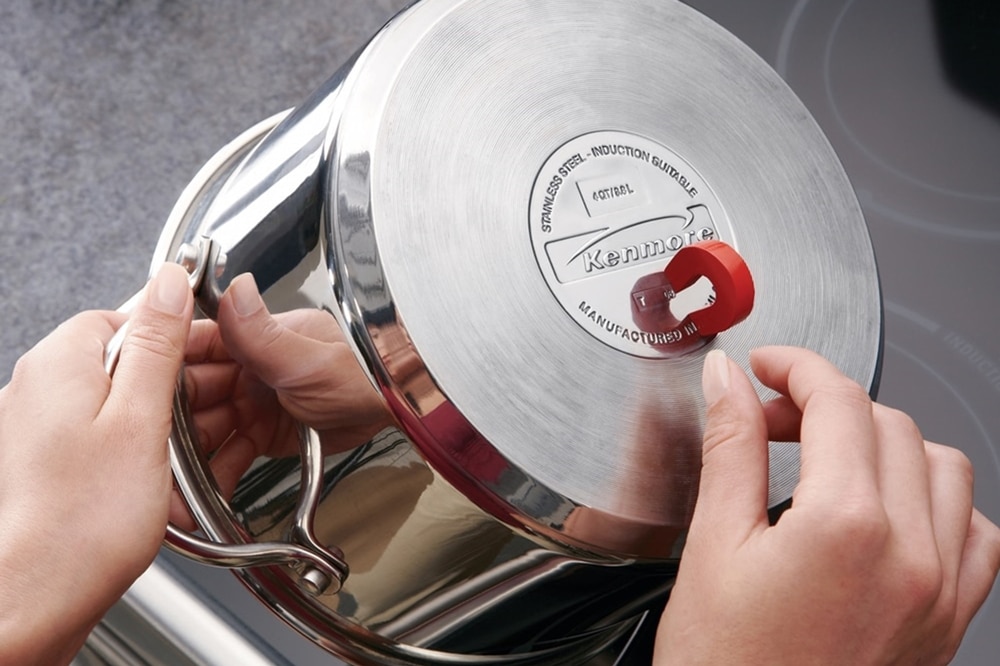
Induction-ready cookware is made with a magnetic base that lets an induction stove heat the pan directly.
If you are shopping for a new stove or replacing old pots and pans in an American kitchen, you may see the words induction ready on cookware labels. This means the pan can work with an induction cooktop, which uses a magnetic field to heat compatible cookware. Unlike a gas range or a traditional electric burner, an induction cooktop transfers energy to the pan without first heating a flame or a separate heating element.
The key is the pan’s magnetic base. Cast iron and many magnetic stainless steel pans work well, while aluminum, copper, glass, and ceramic cookware usually need a special magnetic layer to function on induction. The material name alone does not always tell you whether a pan will work, so checking the label and performing a simple magnet test can save you time and money.
Induction-ready cookware does not have to be expensive or come from a special premium collection. The most useful choice depends on your stove, cooking habits, budget, and the kinds of food you prepare. Before buying a complete set, learn how to check compatibility, understand material differences, and avoid common mistakes that can lead to poor heating or a pan that will not turn on your cooktop.
Induction-ready cookware is a pot, pan, or other cooking vessel designed to work with an induction cooktop. Its base contains a material that responds to the cooktop’s magnetic field, allowing electrical energy to produce heat in the pan itself. This is why an induction stove may not heat a noncompatible pan even when you select a cooking setting.
The phrase induction compatible means much the same thing as induction ready. Manufacturers may use either term on packaging, product pages, or the bottom of a pan. Some cookware also displays a symbol that resembles a coil or a row of loops, but symbols can vary, so read the product details instead of relying on appearance alone.
The important point is that induction readiness is a functional feature, not simply a cookware style. A pan can look like stainless steel, have a thick base, or cost a great deal and still fail to work with an induction cooktop if its base does not have the right magnetic properties.
Source: projectperfecthome.com
Magnetic base
The bottom of the cookware must contain suitable magnetic material so the induction field can transfer energy into it.
Direct pan heating
The cooktop heats the compatible pan through electromagnetic induction instead of relying on a flame or a conventional radiant heating element.
Cooktop compatibility
The pan must also meet the cooktop’s size and placement requirements to heat reliably.
What Does Induction Ready Mean on a Cookware Label?
When a label says induction ready, it indicates that the cookware is designed for use on an induction cooking surface. This does not mean that the pan is suitable for every possible cooking method or temperature. Oven limits, handle materials, lid construction, and care instructions still matter.
A label is a useful first check, but the exact product model and its instructions are more reliable than a general claim about a brand or material. If you have an older pan without packaging, use the magnet test and check the base size against your cooktop manual.
Look for the induction symbol
Check the packaging, product listing, or cookware base for an induction-compatible marking.
Check the full product details
Confirm that the specific pan, rather than only the cookware collection, is rated for induction.
How Does Induction Ready Cookware Work?
An induction cooktop uses electricity to create a changing magnetic field beneath its glass surface. When compatible cookware sits over the active cooking zone, that field induces electrical currents in the pan’s magnetic base. The electrical resistance of the material converts energy into heat, which then spreads through the cookware and into the food.
This process explains why induction cooking differs from gas and traditional electric cooking. A gas burner heats a flame and transfers heat to the pan, while a conventional electric cooktop heats a resistance element or radiant surface first. With induction, the compatible pan is the main source of cooking heat, although the glass surface can become hot from contact with the pan.
The system needs a suitable pan to work. If the cookware does not interact properly with the magnetic field, the cooktop may fail to detect it, display an error, or stop heating. A compatible pan can still perform poorly if its base is too small, badly warped, or unsuitable for the cooking zone.
Source: bakingbakewaresets.com
Step 1: The cooktop creates a magnetic field
Electric current flows through a coil beneath the cooking surface, producing a changing magnetic field.
Step 2: The pan responds to the field
A suitable magnetic base allows electrical currents to form within the cookware.
Step 3: The pan heats the food
Heat moves from the pan into the ingredients, allowing you to boil, simmer, fry, or sauté.
Why Induction Cooktops Need Magnetic Cookware
Magnetic material helps the cooktop transfer energy into the pan. It is not enough for a pot to conduct heat well or contain metal. Aluminum and copper conduct heat effectively, for example, but pure versions of these metals are not normally compatible with a standard induction cooktop because they do not respond to its magnetic field in the required way.
Manufacturers can solve this problem by adding a magnetic stainless steel or other suitable induction layer to the base. This lets some aluminum and copper cookware work on induction even though the main body is made from a different material.
Magnetism matters
A suitable magnetic base is the key requirement for ordinary induction cooking.
Heat distribution still matters
A compatible pan should also have a well-designed base that spreads heat for the cooking tasks you perform.
Which Cookware Materials Work on Induction?
The material and construction of the base determine whether most cookware works on induction. Some materials are naturally magnetic, while others need a special layer added by the manufacturer. Even within one material category, construction can vary from one product to another.
Use the following table as a starting point, not as a guarantee for every pan. When in doubt, check the manufacturer’s compatibility statement or test the bottom with a magnet.
Source: cdnimg.webstaurantstore.com
Cast iron
Usually works well on induction because cast iron is magnetic. Its weight and rough underside can require extra care on a glass cooktop.
Magnetic stainless steel
Often works well, especially when the base is designed for induction. Some stainless steel grades are weakly magnetic or nonmagnetic, so check each pan.
Enamel-coated cast iron
Usually works because the cast iron underneath the enamel is magnetic. Inspect the coating and avoid dragging the heavy pan across the glass.
Aluminum
Plain aluminum generally does not work on a standard induction cooktop. Some aluminum pans have a bonded magnetic base that makes them compatible.
Copper
Pure copper cookware usually needs a magnetic induction plate or bonded magnetic base. Do not assume that a copper-colored pan is induction ready.
Glass and ceramic
Ordinary glass and ceramic cookware do not work directly on induction. A product needs a purpose-built compatible base to be suitable.
Is Stainless Steel Cookware Induction Ready?
Stainless steel cookware can be induction ready, but the term stainless steel alone does not settle the question. Stainless steel comes in different grades and constructions. Some types respond strongly to magnets, while others respond weakly or not at all.
Many stainless steel pans use several layers of metal. A pan may have a stainless steel cooking surface, an aluminum layer for heat distribution, and a magnetic stainless steel outer base. This construction can combine the cooking qualities of different metals with the magnetic properties required for induction.
If you already own stainless steel cookware, place a magnet against the bottom rather than relying on the product’s color or weight. If the magnet sticks firmly, the pan is more likely to be compatible. A manufacturer’s induction rating is still the best way to confirm the design.
Check the bottom
The magnetic layer is often on the underside, so test that area instead of relying only on the side wall.
Check multilayer construction
Look for a product description that clearly states induction compatibility.
Can Nonstick Cookware Be Induction Ready?
Yes. Nonstick cookware can work on induction when it has a suitable magnetic base beneath the nonstick cooking surface. The coating itself does not make a pan induction compatible; the base does.
For example, a nonstick aluminum pan with no magnetic layer will usually fail on induction, while a similar-looking pan with a bonded induction plate may work. Follow the coating manufacturer’s heat limits and care instructions, and avoid overheating an empty nonstick pan.
Choose an induction-rated model
Confirm that the exact nonstick pan is marked as compatible with induction.
Protect the coating
Use suitable utensils and follow the product’s instructions for temperature, cleaning, and storage.
How to Tell If Your Cookware Is Induction Ready
The quickest home check is a magnet test. It takes only a few seconds and can help you decide whether an older pot or pan is worth trying on an induction cooktop. For the best result, test the flat bottom where the pan meets the cooking zone.
A magnet that sticks firmly to the base is a strong clue that the cookware may work. If it does not stick, the pan is unlikely to work on a standard induction cooktop unless it uses a special compatible design. A weak magnetic pull can be less conclusive, so check the manufacturer’s specifications before buying or discarding cookware.
Source: thespruceeats.com
Step 1: Find a small magnet
A common refrigerator magnet is often enough for a basic compatibility check.
Step 2: Test the flat bottom
Hold the magnet against the center and several other spots on the underside of the pan.
Step 3: Check how firmly it sticks
A firm hold suggests the base contains magnetic material. A weak or absent hold calls for a closer check.
Step 4: Verify the manufacturer’s rating
Look for induction compatibility in the product manual, packaging, or official product listing.
Step 5: Check the pan’s size and condition
Confirm that the base meets your cooktop’s size requirements and sits flat without severe warping.
Does the Magnet Test Guarantee Compatibility?
No. The magnet test is a useful screening method, but it does not guarantee that the pan will heat well on every induction cooktop. A magnet can stick to a small magnetic component even when the full base is poorly suited to the cooking zone.
The cooktop may also have a minimum pan diameter or a pan-detection system that rejects cookware that is too small. Some models require the pan to cover a specific portion of the marked cooking area. Read the cooktop manual for its exact limits.
If the pan passes the magnet test and is labeled induction ready, place it carefully on a compatible cooking zone and follow the cooktop’s instructions. If the cooktop does not detect it, turn the zone off and check the pan placement, base size, and compatibility information before trying again.
Strong magnetic pull
Encouraging sign, but still confirm the cookware’s design and fit.
No magnetic pull
The cookware is generally not suitable for standard induction cooking.
Cooktop does not detect the pan
Check the cooking zone, pan size, base flatness, and the manufacturer’s instructions.
What Are the Benefits of Induction Ready Cookware?
The main benefit of induction-ready cookware is that it lets you use the speed and control of an induction cooktop. The pan receives energy directly, which can make many cooking tasks responsive to changes in the heat setting. Actual results depend on the cooktop, pan construction, food quantity, and selected setting.
Induction-ready cookware also gives you flexibility when choosing materials. You can use cast iron, suitable stainless steel, and many nonstick pans without limiting yourself to one specific cookware type. This makes it possible to build a set around your normal cooking routine rather than buying every item from the same collection.
A compatible pan is only one part of a good cooking setup. Base quality, pan size, handle design, weight, and care needs affect everyday use just as much as the induction label does.
Source: m.media-amazon.com
Responsive heat control
The pan can respond quickly when you adjust the power, although the speed of the response varies by pan and cooktop.
No open flame
Induction does not use a gas flame, which can be helpful in kitchens where avoiding open flames is a priority.
Many material choices
You can choose from compatible cast iron, stainless steel, coated cookware, and other purpose-built designs.
Potential energy benefits
Induction transfers energy directly to compatible cookware, but overall household energy use depends on cooking habits, equipment, and local utility rates.
Does Induction Ready Cookware Cook Faster?
Compatible cookware can help an induction cooktop heat food quickly, especially when bringing water to a boil. However, there is no single time that applies to every pan, recipe, or appliance. A wide, well-made base may perform differently from a small, thin, or warped one.
For everyday cooking, use the power setting recommended by your cooktop manual and watch the food as it heats. Induction can respond rapidly, so a setting that seems moderate on another stove may cause food to heat faster than expected.
Match the pan to the cooking zone
Use a base size that fits the zone’s stated limits.
Adjust heat early
Lower the power when oil, sauce, or other food starts heating faster than expected.
How to Choose the Right Induction Ready Cookware
Choose induction-ready cookware based on the food you make, the stove you own, and how much care you want to give your pans. You do not need to replace every pot and pan at once if some of your existing cookware already works on induction.
Start with a few pieces that cover your most common meals. A skillet, saucepan, and stockpot may be enough for a small household, while a larger family may benefit from more sizes. Check the base diameter, handle design, weight, and cleaning instructions before comparing price.
For a new induction cooktop, read the appliance manual before purchasing a set. Some cooktops have minimum pan sizes or other placement requirements. A cookware set can list induction compatibility and still include a small piece that does not work well on a particular cooking zone.
Source: netboardme.s3.amazonaws.com
Match cookware to your meals
Choose skillets for eggs and sautéing, saucepans for grains and sauces, and larger pots for soup, pasta, or batch cooking.
Check the base construction
Look for a magnetic base and a clear induction compatibility statement.
Consider weight
Cast iron can retain heat well but is heavy. Stainless steel may be easier to lift, depending on its construction.
Inspect the handle and lid
Make sure the handle is secure and comfortable, and verify oven-safe limits separately if you plan to use the pan in an oven.
Review cleaning needs
Some cookware is dishwasher safe, while other pieces need hand washing or special care to protect their finish.
Induction Cookware Comparison by Material
This table compares common cookware choices by their typical induction compatibility and practical trade-offs. The notes describe general material behavior, not a guarantee for every product model.
Cast iron
Usually induction compatible and good at retaining heat. It can be heavy, and rough or dirty bases can scratch a glass surface if dragged.
Stainless steel
Compatible when the base is magnetic. It offers a versatile option, but heat distribution and food release depend on the pan’s construction and cooking technique.
Nonstick with a magnetic base
Useful for eggs and foods that tend to stick. Follow the coating’s temperature limits and avoid overheating an empty pan.
Enamel-coated cast iron
Usually induction compatible and suited to simmering and braising. It is heavy and can chip if dropped or handled roughly.
Aluminum or copper with a bonded magnetic base
Can combine heat-spreading properties with induction compatibility. Verify the exact design and care requirements.
Should You Buy a Full Cookware Set or Individual Pans?
A full set can offer a convenient way to equip a kitchen, but it may include pieces you rarely use. Individual pans let you focus on the sizes and styles that suit your meals, which can reduce clutter and avoid paying for duplicate items.
If you are switching from a gas or traditional electric range to induction, test your existing cookware first. Replace only the incompatible pieces you need for regular cooking. This approach can be more practical than discarding a complete set before you know which pans still work.
Choose a set when
You need several basic pans and the set’s sizes, materials, and care requirements all suit your kitchen.
Choose individual pans when
You already own useful cookware or need only a few induction-compatible replacements.
Common Induction Cookware Problems and How to Fix Them
If your induction stove will not heat a pan, do not assume that the cooktop is broken. The cause may be a noncompatible base, a pan that is too small, poor placement, or a setting that does not match the cookware. Check the simplest possibilities first and follow the appliance manual.
Turn the cooking zone off before moving or inspecting a hot pan. If the cooktop shows an error, repeatedly shuts down, or behaves abnormally with cookware confirmed as compatible, stop using that zone and consult the manufacturer’s troubleshooting guidance.
Source: frigidairearabia.com
Problem: The cooktop does not detect the pan
Possible causes include a nonmagnetic base, a base that is too small, poor alignment, or cookware outside the appliance’s compatibility limits.
Problem: Food heats unevenly
The pan may have a thin or uneven base, may not fit the cooking zone, or may need a lower power setting and more frequent stirring.
Problem: The pan rocks on the glass
A warped base can prevent stable contact and lead to uneven cooking. Replace severely warped cookware rather than trying to force it flat.
Problem: The pan makes a humming sound
Some vibration or humming can occur during induction cooking, especially with certain pans and power settings. Check the cooktop manual if the noise is unusual, very loud, or accompanied by an error.
Problem: The glass surface becomes warm
The glass can receive residual heat from the pan. Let the surface cool and follow the cooktop’s hot-surface indicators and cleaning instructions.
Can You Use an Induction Adapter Plate?
An induction adapter plate is a metal disc designed to sit between a compatible induction zone and cookware that would not otherwise work on it. The disc heats through induction and transfers heat to the pan above it. This can offer a workaround for certain noncompatible pots, but it changes how the system transfers heat.
An adapter may make heating slower and less responsive than using induction-ready cookware directly. It can also become very hot, retain heat after the cooktop is switched off, and create risks if handled carelessly. Not every cooktop manufacturer permits adapter plates, so check the appliance manual before using one.
If you need to use several noncompatible pans every day, replacing them with suitable cookware may be simpler. An adapter is best considered a limited workaround rather than a universal substitute for an induction-compatible base.
Check permission first
Use an adapter only if the cooktop manufacturer allows it and the adapter is designed for your appliance.
Handle it as hot cookware
Allow the disc to cool before touching or storing it, and keep hands away from its hot surface.
Safety and Care Tips for Induction Ready Cookware
Induction-ready cookware is generally used much like other pots and pans, but the speed of heating and the glass cooking surface deserve extra care. Follow the instructions for both the pan and the cooktop because their temperature limits, cleaning methods, and handling needs can differ.
Never assume that the glass surface stays cool simply because induction heats the pan directly. Heat can transfer from the cookware to the glass, and residual heat may remain after the cooking zone is switched off. Use the appliance’s hot-surface indicator and allow the area to cool before cleaning.
Heavy cast iron and enamel-coated cookware can damage a glass surface if dropped or dragged. Lift these pans when moving them, keep the base clean, and avoid sliding cookware across the cooktop.
Source: assets.tramontina.com.br
Avoid sudden temperature changes
Do not pour cold water into a very hot pan or place hot cookware in cold water unless the manufacturer specifically permits it. Sudden changes can damage some materials and coatings.
Use suitable cooking utensils
Follow the cookware instructions for metal, wood, silicone, or other utensils, especially with nonstick surfaces.
Keep the base clean
Food particles and grit trapped beneath a pan can scratch the glass when the pan moves.
Use care with hot oil
Induction can heat a pan rapidly. Watch oil closely, adjust the power when needed, and never leave hot oil unattended.
Follow appliance limits
Use only cookware sizes and accessories permitted by the cooktop manufacturer.
How Do You Clean Induction Ready Cookware?
The right cleaning method depends on the pan’s material and coating. Stainless steel may allow more vigorous cleaning than a nonstick pan, while cast iron often needs a method that protects its seasoning. Enamel cookware needs care to avoid chips and cracks.
For most cookware, let the pan cool to a safe temperature before washing. Use the cleaning products and tools recommended by its manufacturer, and dry the base before storing it to help prevent moisture-related damage where applicable.
Clean the induction cooktop according to its own instructions rather than using cookware-cleaning rules on the glass. Removing spills after the surface has cooled can help keep the cooking area clean and ready for the next meal.
Stainless steel
Use a cleaner and sponge suitable for the finish, and avoid abrasive tools if the manufacturer warns against them.
Nonstick
Use gentle cleaning tools and follow the coating’s care instructions.
Cast iron
Follow the manufacturer’s seasoning and drying guidance to help protect the cooking surface.
Common Myths About Induction Ready Cookware
Several misconceptions can make it harder to choose the right pan. The main distinction is that induction compatibility depends on the pan’s base and the cooktop’s requirements, not on price, appearance, or a broad material label alone.
Understanding these differences helps you avoid unnecessary replacements and prevents you from buying cookware that looks suitable but does not perform as expected.
Source: projectperfecthome.com
Myth: All stainless steel cookware works on induction
Reality: Some stainless steel pans are not sufficiently magnetic. Check the specific model and its base.
Myth: All expensive cookware is induction ready
Reality: Price does not guarantee compatibility. A premium pan still needs a suitable magnetic base.
Myth: The whole pan must be magnetic
Reality: The base is the key area for standard induction cooking. The side walls can use other materials.
Myth: An induction-ready pan only works on induction
Reality: Many compatible pans can also be used on gas or conventional electric stoves if the manufacturer permits those methods.
Myth: A magnet test proves every aspect of performance
Reality: A magnet can help screen for compatibility, but it does not prove even heating, correct pan size, coating quality, or full cooktop compatibility.
Do You Need Special Cookware Just for Induction?
You need cookware that meets the induction cooktop’s compatibility requirements, but it does not have to be a complete special-purpose set. Many ordinary cast iron and magnetic stainless steel pans already meet those requirements.
Before buying new cookware, test what you own and review the manufacturer’s details. If your current pans work correctly and fit the cooking zones, there may be no need to replace them.
Keep compatible pans
Continue using cookware that meets the cooktop’s requirements and remains in good condition.
Replace only what you need
Prioritize the pots and pans you use most often if some of your existing cookware is incompatible.
A Simple Checklist Before Buying Induction Cookware
Before you buy a new pan or cookware set, check the product against your needs and your cooktop manual. A few simple checks can help you avoid a return, an incompatible pan, or an item that does not fit your usual cooking routine.
If you are shopping in a U.S. store or online, compare the exact model number and product specifications rather than relying only on a large product heading. Retail listings can group several sizes or versions together, and not every variation necessarily has the same construction.
Source: cdnimg.webstaurantstore.com
Confirm induction compatibility
Look for a clear statement that the exact cookware model works on induction.
Check the base diameter
Make sure the pan meets the cooktop’s minimum size and placement requirements.
Choose the right material
Compare magnetic stainless steel, cast iron, nonstick designs, and other compatible constructions based on your cooking habits.
Review weight and handling
Consider whether you can lift and move the pan safely, especially when it is full.
Check care instructions
Review cleaning, seasoning, oven use, and temperature limits before purchasing.
Keep purchase details
Save the product specifications and receipt in case the pan does not match the listing or work with your cooktop.
What If You Already Own a Complete Cookware Set?
You do not need to start from scratch when switching to induction. Test the base of each pot and pan, then confirm any uncertain pieces with the manufacturer’s information. Make a short list of the items that fail the check and replace the ones you need most.
For example, if your stockpot and stainless steel skillet work but your old aluminum saucepan does not, you may only need a compatible saucepan. This practical approach helps you spend money on actual gaps instead of replacing cookware that still serves you well.
Test before replacing
Use the magnet test and official product details to check the cookware you already own.
Prioritize everyday pieces
Replace incompatible pans based on how often you use them and what meals they help you prepare.
Frequently Asked Questions
Q
What is induction ready cookware in simple terms?
Induction-ready cookware is a pot or pan with a suitable magnetic base that allows an induction stove to heat it. The base interacts with the cooktop’s magnetic field, which creates heat in the cookware. Cast iron and many magnetic stainless steel pans are common examples.
Q
How can I tell if my pans are induction ready?
Hold a refrigerator magnet against the flat bottom of each pan. If it sticks firmly, the pan is more likely to work on induction. Then check the manufacturer’s instructions and your cooktop’s size requirements, because the magnet test alone cannot guarantee proper performance.
Q
Can I use regular pots and pans on an induction stove?
Yes, if the regular pots and pans have a suitable magnetic base and meet the cooktop’s size requirements. You do not always need cookware sold specifically as an induction set. Test your existing cookware and confirm compatibility before replacing it.
Q
Does aluminum cookware work on induction?
Plain aluminum cookware generally does not work directly on a standard induction cooktop because aluminum is not sufficiently magnetic for this purpose. Some aluminum pans have a bonded magnetic base that makes them induction compatible, so check the exact model.
Q
Is induction-ready cookware safe to use?
Induction-ready cookware can be used safely when it is in good condition and you follow the cookware and cooktop instructions. Choose the correct pan size, lift heavy cookware rather than dragging it across the glass, and watch food closely because induction can heat pans rapidly. The glass surface may also become hot from contact with the pan.
Q
Can I use induction-ready cookware on a gas stove?
Many induction-ready pans can also be used on gas and conventional electric stoves. However, the materials, coatings, handles, and construction determine which cooking methods are permitted. Check the manufacturer’s instructions for the exact pan.
Q
Why does my induction cooktop not recognize my pan?
The pan may not have a suitable magnetic base, its bottom may be too small, or it may not be centered over the cooking zone. A warped base or a cooktop-specific size restriction can also cause problems. Turn the zone off, check the manual, and verify compatibility before trying again.
Q
Do induction-ready pans need a special shape?
They do not all need the same shape, but the base must meet the cooktop’s requirements. A flat base is generally useful for stable placement and even contact, and its diameter must fit the cooking zone’s minimum and maximum limits. Follow the appliance instructions for exact dimensions and placement.
✦ Wrapping Up
Conclusion
Induction-ready cookware is cookware with a suitable magnetic base that allows an induction cooktop to heat it directly. This feature is found in many cast iron pans, magnetic stainless steel pots, and some nonstick or aluminum designs with a special induction layer. The material name alone is not enough to confirm compatibility.
If you already own cookware, start with a magnet test and check the manufacturer’s information before buying replacements. If you are shopping for new pans, compare the exact model, base size, weight, cooking needs, and care instructions. These checks help you choose cookware that works with your stove and fits your daily routine.
💡 Key Takeaway
Before buying new cookware, hold a magnet against the bottom of your current pots and pans, confirm uncertain models with their manufacturers, and check your induction cooktop manual for the required pan size.