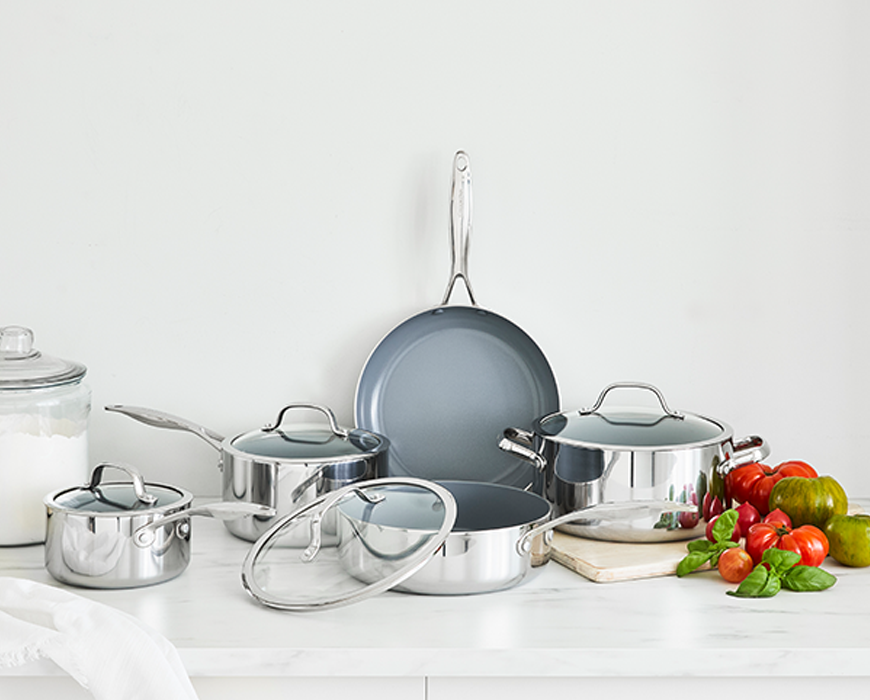
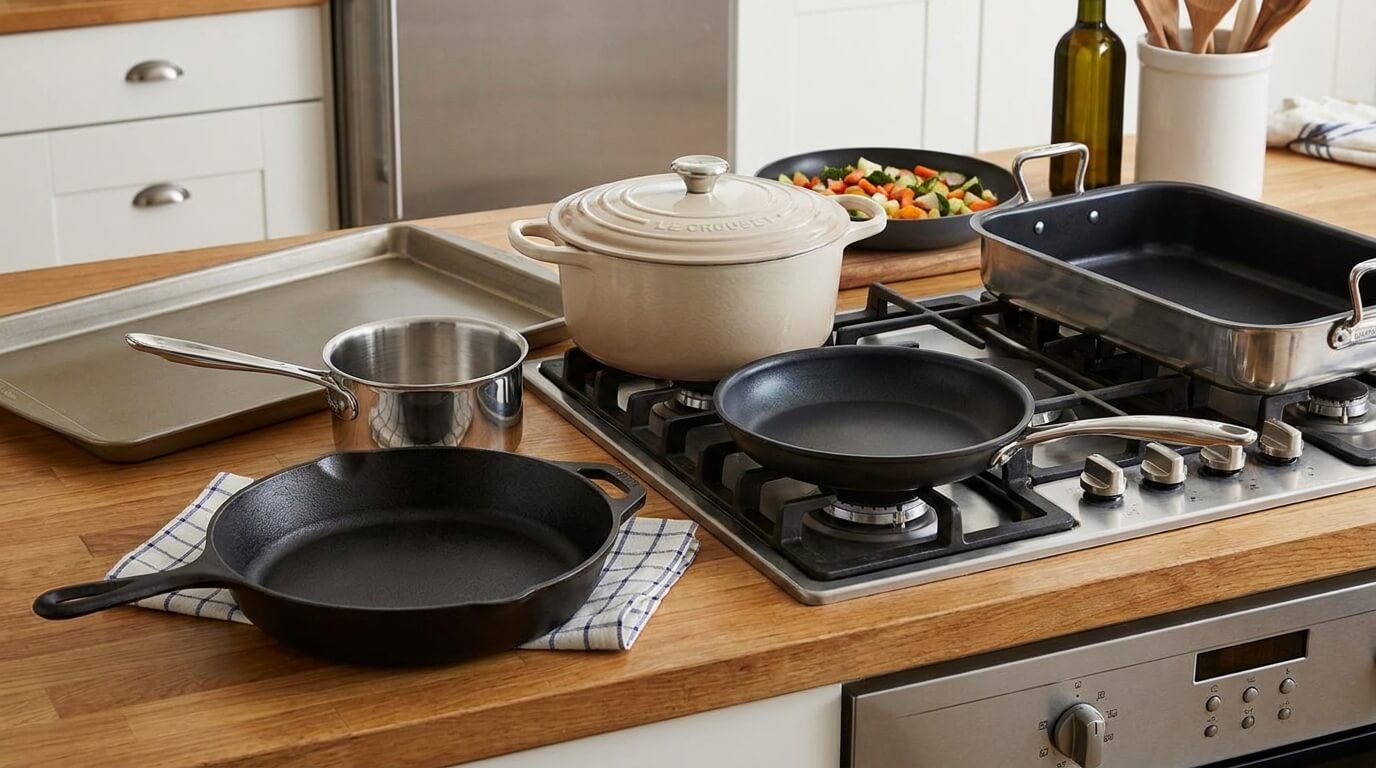
Cookware is the group of pots, pans, and other heat-safe vessels used to prepare food on a stove, in an oven, or over a heat source.
From frying eggs before work to making soup for a family dinner, cookware plays a key role in everyday American kitchens. It includes familiar items such as frying pans, saucepans, stockpots, Dutch ovens, and woks. Each piece has a different shape and purpose, so the right choice can make cooking easier and cleanup less of a chore.
Cookware comes in several materials, including stainless steel, cast iron, aluminum, carbon steel, and coated metal. Each material handles heat in its own way. Some heat quickly, some hold heat for a long time, and others help food release with less sticking. Understanding these differences can help you choose cookware that fits your meals, stove, budget, and cleaning habits.
You do not need a large collection to cook well. A few useful pieces can cover most daily meals, whether you live in a small apartment, cook for a family, or prepare food in batches for the week. The goal is to match each piece to the job rather than buy a cupboard full of pots and pans you rarely use.
Cookware is equipment designed to hold food while it cooks. It transfers heat from a stove, oven, or other suitable source to the ingredients inside. The term usually refers to pots, pans, and covered cooking vessels rather than every item found in a kitchen.
A frying pan helps cook eggs, vegetables, and meat. A saucepan works well for oatmeal, rice, sauces, and small batches of soup. A stockpot holds larger amounts of liquid, while a Dutch oven can handle slow cooking, braising, and many one-pot meals.
Cookware differs from bakeware. Cookware is mainly used for stovetop cooking and other direct-heat tasks, although many pieces can also go in the oven. Bakeware usually includes pans and dishes made for baking foods such as cakes, bread, casseroles, and cookies. Some items can serve both roles when their materials and handles allow it.
Cookware is also different from kitchen tools such as spatulas, whisks, knives, and ladles. These tools help prepare or handle food, but they do not usually contain the food during cooking.
Source: cdn.shopify.com
Cookware
Pots, pans, and other vessels used to cook food with heat.
Bakeware
Pans and dishes made mainly for baking or oven cooking.
Kitchen utensils
Tools used to stir, flip, cut, lift, measure, or serve food.
Why Does Cookware Matter?
Cookware affects how heat reaches food, how evenly ingredients cook, and how easily you can control the process. A thin pan may react quickly when you change the burner setting, while a heavy cast iron pan may take longer to heat but retain warmth for longer.
The right shape also matters. A wide skillet gives moisture room to escape, which can help brown food. A tall pot holds more liquid and reduces splashing. Matching the pan to the task makes cooking more predictable and can reduce waste.
Heat control
The material and thickness affect how quickly cookware heats up and cools down.
Cooking results
Pan size, shape, and surface can affect browning, simmering, and food release.
Everyday convenience
Weight, handles, cleaning needs, and storage space influence how easy cookware is to use.
What Are the Main Types of Cookware?
The main types of cookware are defined by their shape, size, and intended use. You can make many meals with a small collection, but knowing what each piece does helps you avoid buying duplicates.
A useful starter collection often includes a frying pan, a saucepan with a lid, and a larger pot. Add a Dutch oven, wok, or specialty pan only when your cooking habits call for one. A person who often makes stir-fries may benefit from a wok, while someone who cooks soups and stews may get more use from a stockpot.
Source: safekitchn.com
Frying pan or skillet
A broad, relatively shallow pan for frying eggs, sautéing vegetables, browning meat, and making quick meals. Skillets may have sloped or straighter sides.
Saucepan
A deep pan with high sides and usually a long handle. It is useful for sauces, grains, oatmeal, reheating food, and cooking small amounts of liquid.
Sauté pan
A wide pan with a flat bottom and relatively tall, straight sides. It is useful for cooking vegetables, searing meat, and making dishes that need a little liquid.
Stockpot
A large, deep pot suited to stock, soup, pasta, corn, and batch cooking. Its capacity makes it helpful for family meals and meal preparation.
Dutch oven
A heavy pot, often made from cast iron, with a tight-fitting lid. It is commonly used for braising, stews, soups, and slow oven cooking when the model is oven-safe.
Wok
A deep pan with curved or wide sloping sides. It is designed for stir-frying and can also be used for steaming, shallow frying, and other methods.
Grill pan
A pan with raised ridges that create grill marks and lift food above some of the rendered fat. It can be useful indoors, although it does not behave exactly like an outdoor grill.
Roasting pan
A large, usually rectangular pan used in the oven for roasting poultry, meat, and vegetables. Its size and handles help when moving a large meal.
Which Cookware Pieces Do You Need First?
Start with the meals you cook most often. If you make eggs, grilled cheese, and quick vegetable dishes, a good skillet may be the most useful first purchase. If you cook pasta, soup, or grains several times a week, a saucepan and a larger pot may deserve priority.
Think about capacity as well as shape. A small saucepan is handy for one or two servings, but it may be frustrating when cooking for a family. A huge stockpot can be useful for batch cooking yet awkward to store in a small kitchen.
For one or two people
Consider a medium skillet, a small or medium saucepan, and a pot sized for your usual pasta or soup portions.
For family meals
Consider a larger skillet, a medium saucepan, and a stockpot or Dutch oven that fits your common recipes.
For frequent stir-fries
Consider a wok that suits your stove and cooking style, along with a saucepan for grains and sauces.
What Materials Are Used to Make Cookware?
Cookware is made from metals, coated metals, and some heat-resistant nonmetal materials. The material affects heat flow, weight, upkeep, food release, and which cooking methods the piece can handle.
No single material is best for every meal. Stainless steel is valued for its versatility, cast iron holds heat well, and aluminum spreads heat quickly. Coated cookware can make delicate foods easier to release, while carbon steel is popular for high-heat cooking when properly seasoned.
Some cookware combines several materials. A pan may have an aluminum core between layers of stainless steel, for example. This design can combine the heat response of aluminum with the cooking surface and durability of stainless steel.
Source: homeyas.com
Stainless steel
A durable, versatile option that works well for browning, searing, sauces, and many everyday tasks. Stainless steel alone may not spread heat as evenly as a pan with an aluminum or copper core.
Cast iron
A heavy material that retains heat well. It is useful for searing, frying, baking, and slow cooking. Traditional cast iron needs appropriate drying and care to limit rust.
Enameled cast iron
Cast iron covered with a glass-like enamel layer. It does not need the same seasoning routine as bare cast iron, but the enamel can chip if mishandled.
Aluminum
A lightweight metal that conducts heat well. Many aluminum pans are anodized or coated, and some are combined with other metals for improved performance.
Carbon steel
A relatively light, responsive metal that can develop a seasoned surface. It is useful for searing, frying, and wok cooking but needs care to limit rust.
Copper
A highly conductive metal that responds quickly to heat changes. Many copper pans have a stainless steel lining, and they can cost more and require specific care.
Nonstick-coated cookware
Cookware with a coating designed to reduce sticking. It can help with eggs, pancakes, and delicate fish, but the surface needs care and may wear over time.
Ceramic-coated cookware
Metal cookware with a ceramic-based nonstick coating. It can release food easily when new, but its performance and service life depend on the coating, use, and care.
Stainless Steel vs. Nonstick Cookware
Stainless steel and nonstick cookware serve different needs. Stainless steel is a strong general-purpose option for browning and pan sauces, while nonstick cookware can make delicate foods easier to cook and release.
A stainless steel pan often tolerates more vigorous cleaning than a coated nonstick pan, although abrasive tools can still damage its finish. Nonstick cookware generally benefits from moderate heat, nonabrasive cleaning, and utensils approved by the manufacturer.
You do not have to choose just one. A stainless steel saucepan and a nonstick skillet can cover many common meals without requiring a full set in one material.
Choose stainless steel for
Searing, browning, pan sauces, and a versatile cooking surface without a nonstick coating.
Choose nonstick for
Eggs, pancakes, and other foods that are prone to sticking, especially when easy cleanup is a priority.
Consider a mixed collection
Use different surfaces for different jobs instead of expecting one pan to do everything equally well.
What Does Hard-Anodized Cookware Mean?
Hard-anodized cookware is usually made from aluminum that has undergone an electrochemical process to create a harder surface layer. The treatment changes the surface properties of the metal and is different from applying a nonstick coating.
Many hard-anodized pans also have a separate nonstick layer, but not all products use the same design. Check the product description to determine whether the cooking surface is coated, what utensils are allowed, and whether the pan is safe for oven use.
Key distinction
Hard anodizing is a surface treatment, while nonstick describes a food-release property often provided by a separate coating.
How Does Cookware Affect Cooking Results?
Cookware affects how heat moves into food and how much control you have over the cooking process. Material, thickness, pan size, burner size, and food moisture all play a role. The same recipe can behave differently in a thin aluminum skillet and a heavy cast iron pan.
Heat conduction describes how quickly heat moves through a material. Heat retention describes how well a pan holds warmth after it gets hot. These properties are related, but they are not the same. A pan can heat quickly without holding heat as long as a heavier pan.
For example, a thin pan may cool quickly when you add cold vegetables. A heavy pan may keep more heat during the same step, which can help browning if the pan is properly heated and not overcrowded. Neither pan guarantees a good result on its own; cooking technique still matters.
Source: webstaurantstore.com
Heat distribution
A pan that spreads heat well can reduce hot spots and help food cook more evenly. Construction matters as much as the metal name.
Heat retention
Heavy cookware can hold heat well, which may help with searing and steady frying, but it usually takes longer to warm up.
Food release
The cooking surface affects sticking. Nonstick coatings can help, while stainless steel and seasoned cast iron rely more on suitable heat, fat, and technique.
Pan shape
Wide pans provide more exposed surface for browning, while deeper pots hold more liquid and help contain splashes.
Why Does Food Stick to a Pan?
Food can stick when the surface, temperature, moisture, and cooking fat do not suit the task. Protein-rich foods such as eggs and fish can bond with a bare metal surface, especially when the pan is not ready or the food is moved too soon.
For stainless steel, preheating the pan and adding a suitable amount of cooking fat can help. Let meat or fish develop a crust before trying to turn it. For nonstick cookware, use the heat range and care instructions given by the maker rather than relying on high heat to solve the problem.
A stuck-on patch does not always mean the cookware is defective. Check whether the pan was crowded, the heat was too high or too low, or the food needed more time before releasing.
Avoid overcrowding
Too much food can release moisture and make browning harder.
Use suitable heat
Match the burner setting to the material, recipe, and manufacturer’s instructions.
Choose the right surface
A well-maintained nonstick pan may be easier for eggs, while stainless steel can suit foods that benefit from browning.
How to Choose the Right Cookware for Your Kitchen
The right cookware is the cookware that fits your real cooking habits, stove, budget, and storage space. Start with the dishes you make most often instead of buying a large set based only on the number of pieces in the box.
A set may offer good value if you need several matching pieces, but it can also include pans you rarely use. Buying individual pieces lets you select the size and material for each task. Compare the useful pieces, not just the advertised piece count.
Before purchasing, check the full product specifications. Look for the cooking surface, body material, lid material, handle design, oven temperature limit, cleaning instructions, and stove compatibility. These details can matter more than a polished product photo.
Source: cookwareguider.com
Cooking habits
Choose pans based on your usual meals, from quick breakfasts to large soups and slow-cooked dinners.
Heat source
Confirm compatibility with gas, electric coil, smooth-top electric, or induction. Induction requires cookware with a suitable magnetic base.
Weight and handling
Heavy cookware may retain heat well, but it can be harder to lift, pour, and clean.
Cleaning needs
Dishwasher-safe cookware may save time, but handwashing can help preserve some finishes and coatings.
Storage space
Measure shelves and drawers before choosing oversized pots, long handles, or a bulky set.
Budget
Spend on the pieces you will use often. A small, useful collection is usually more practical than a large set of unnecessary items.
Cookware Buying Comparison Table
Use this table to compare common materials by their main strengths and trade-offs. These are general characteristics; exact performance depends on the cookware’s construction, thickness, coating, and care.
Stainless steel
Best for versatile everyday cooking and browning. Trade-off: food may stick without suitable heat and technique.
Cast iron
Best for heat retention, searing, and oven cooking when rated for it. Trade-off: it is heavy and bare cast iron needs maintenance.
Aluminum
Best for responsive heating and lighter weight. Trade-off: bare aluminum may react with some acidic foods, and some designs need a protective finish or lining.
Carbon steel
Best for responsive high-heat cooking and seasoned surfaces. Trade-off: bare carbon steel needs drying and seasoning care.
Copper
Best for quick response to temperature changes. Trade-off: cost, upkeep, and the need for a suitable cooking-surface lining.
Nonstick-coated metal
Best for delicate foods and easy release. Trade-off: the coating needs careful use and may wear over time.
Is Cookware Set or Individual Pieces Better?
A cookware set can be convenient when you are furnishing a kitchen from scratch or replacing several worn pieces at once. Matching pots may stack neatly, and a set may cost less than buying the same pieces separately.
Individual pieces make more sense when you already own useful cookware or want different materials for different jobs. For example, you could pair a stainless steel saucepan with a nonstick skillet and a cast iron Dutch oven. This approach avoids paying for extra lids, duplicate pans, or specialty items you do not need.
Choose a set when
You need several basic pieces, the sizes suit your household, and the set contains few unwanted extras.
Buy individual pieces when
You have specific cooking needs, want to mix materials, or need to replace only one item.
Is Cookware Safe to Use?
Cookware safety depends on its material, surface condition, temperature limits, and intended use. Properly made cookware used as directed can serve many everyday cooking needs, but no single material or coating should be treated as suitable for every situation.
Read the manufacturer’s instructions for temperature limits, oven use, cleaning, and utensils. A pan that is safe on a stovetop may not be safe under a broiler, and a handle that feels solid may still have a lower heat limit than the cooking vessel itself.
Food-contact rules and product claims can vary by market and product type. In the United States, the U.S. Food and Drug Administration oversees relevant food-contact substances under applicable requirements. A broad label such as non-toxic does not, by itself, tell you how a particular pan performs or whether every part of it is suitable for every cooking method.
Source: sellersunionchina.com
Avoid overheating empty nonstick cookware
Some nonstick coatings can break down or release hazardous fumes when overheated. Follow the manufacturer’s heat limits, and do not leave an empty coated pan heating unattended.
Inspect damaged surfaces
Replace cookware when a coating is badly peeling, the base is unstable, a handle is loose, or other damage makes normal use unsafe.
Use oven-safe cookware only
Check the temperature rating for the whole item, including the lid, handles, knobs, and any attached parts.
Keep bare iron dry
Dry bare cast iron and carbon steel after washing to reduce the risk of rust, and follow the care instructions for seasoning.
Use the correct burner size
A burner that is too large for the pan can overheat handles and surfaces, while an unsuitable base may heat unevenly.
Are Nonstick Pans Safe?
Nonstick cookware can be used for normal cooking when it is made for food contact and used within the manufacturer’s limits. Many traditional nonstick coatings use PTFE, a type of fluoropolymer. The presence of a coating alone does not establish that a pan is unsafe, but overheating can create a serious risk.
Avoid preheating an empty nonstick pan for long periods, particularly over high heat. Use ventilation, keep the pan away from intense direct heat beyond its rated use, and follow the care guidance for utensils and cleaning. If the coating is badly deteriorated, replacement is a sensible step.
Ceramic-coated cookware is a different category of coated cookware, although its surface may also lose food-release performance with use. The word ceramic does not guarantee that a pan will last longer or perform better than every PTFE-coated option. Compare the actual product details rather than relying on a broad label.
For routine cooking
Use moderate heat when suitable, follow the product’s temperature limits, and avoid heating an empty coated pan unattended.
For product selection
Check the exact coating description, care requirements, and any manufacturer guidance relevant to your intended use.
Can Cookware Change the Taste of Food?
Cookware can affect food flavor under some conditions. Bare aluminum may react with acidic or salty foods, which can change flavor or appearance. Stainless steel and properly maintained enamel surfaces are often chosen for acidic dishes because they provide a more stable cooking surface.
Bare cast iron can also react with acidic ingredients, particularly during long cooking periods or when the seasoning is weak. A well-maintained seasoned pan may handle some short acidic tasks, but an enameled Dutch oven is often more practical for tomato sauces and long braises.
For tomato sauces
Consider stainless steel or intact enameled cookware rather than leaving acidic food in bare reactive metal for a long time.
For neutral everyday dishes
Many cookware materials work well when used as directed and kept in good condition.
How to Care for Cookware and Make It Last
Good cookware care starts with following the instructions for the exact piece you own. Two pans that look alike may have different coatings, handles, or temperature limits, so a single cleaning method may not suit both.
Let hot cookware cool according to the manufacturer’s guidance before washing it. Rapid temperature changes can warp some metal pans or damage certain surfaces, especially if a very hot pan is placed under cold water. Avoid rough handling and use cleaning tools that suit the cooking surface.
Store cookware so that heavy bases and sharp edges do not scratch delicate coatings. If you stack pans, place a suitable protective layer between them when the manufacturer recommends it. Keep lids, handles, and removable parts in good condition.
Source: cdn.shopify.com
Clean after use
Remove food residue with a method approved for the material. Do not assume every pan is dishwasher-safe.
Use suitable utensils
Wood, silicone, or other approved utensils can help protect coated surfaces. Follow the instructions for each pan.
Avoid extreme temperature changes
Let cookware cool appropriately before washing to reduce thermal stress and the risk of warping or damage.
Dry bare iron and carbon steel
Remove moisture after washing and apply the care routine recommended for the pan’s seasoning.
Check handles and bases
Stop using cookware that has an unstable base, a loose handle, or damage that affects safe handling.
How Do You Know When Cookware Needs Replacing?
Cookware does not have one fixed replacement date. Its condition and safe function matter more than its age alone. A well-maintained stainless steel pot may remain useful for years, while a heavily worn coated pan may need replacing sooner.
Look for a warped base that rocks on the stove, a handle that cannot be secured, deep damage that affects the cooking surface, or a nonstick coating that is badly peeling. Minor discoloration on stainless steel or a change in the appearance of seasoned cast iron does not automatically mean the item is unsafe.
If you are unsure about a damaged piece, check the manufacturer’s care guidance or contact the maker before continuing to use it. Replace items when the damage creates a realistic risk of burns, spills, or unwanted material entering food.
Replace or repair when needed
A loose handle, unstable base, or badly damaged coating can affect safe everyday use.
Do not judge by appearance alone
Some harmless stains or changes in finish can be cleaned or are normal for the material.
Common Cookware Buying Mistakes to Avoid
The most common cookware buying mistake is focusing on the number of pieces rather than how each one will be used. A large set can look like good value, but several small pans may not help if you usually cook large meals. A few well-chosen items are often easier to store and maintain.
Another mistake is assuming every pan works on every stove. Induction cooktops use a magnetic field to heat compatible cookware, so a pan must have a suitable magnetic base. A simple magnet test can offer a clue, but the manufacturer’s compatibility statement is the better guide.
It is also easy to overlook handles, lids, and cleaning needs. Some handles get hot on the stovetop, some lids cannot go in the oven, and some pans are labeled dishwasher-safe but may last longer with handwashing. Check these details before buying rather than after the first meal.
Source: crateandbarrel.com.ph
Buying more than you need
Choose pieces that match your cooking routine and available storage space.
Ignoring stove compatibility
Check the product’s stated compatibility with your cooktop, especially if you use induction.
Assuming all nonstick surfaces are the same
Coatings vary, and their care needs, temperature limits, and expected service life may differ.
Choosing a pan that is too heavy
Consider whether you can safely lift a full pot or pour from it, especially when cooking larger meals.
Overlooking maintenance
Think about whether you are willing to season bare iron or carbon steel and handwash certain coated pans.
Expecting one material to do every job
Different cooking tasks benefit from different surfaces, shapes, and heat-retention properties.
A Simple Cookware Checklist Before You Buy
Before paying for a pan or set, check these details against your daily needs. This short review can prevent common compatibility and storage problems.
Purpose
Identify the meals and techniques you want the cookware to handle.
Material
Compare heat response, weight, food release, and maintenance needs.
Compatibility
Confirm the pan works with your stove and any intended oven use.
Size
Match the pan to your usual portions, burner size, and storage space.
Care
Read the instructions for cleaning, utensils, temperature limits, and storage.
Value
Compare useful pieces and expected upkeep rather than relying only on the advertised set size.
A Practical Cookware Setup for Everyday American Meals
A practical cookware collection should support the meals you make most often. In many American households, that can mean eggs or pancakes for breakfast, pasta or soup for lunch, and meat, fish, or vegetables for dinner. You can prepare these foods without owning every type of pan.
A medium skillet handles many quick meals, a saucepan works for grains and sauces, and a larger pot covers pasta and soup. If you often roast meat, bake bread, or make slow-cooked stews, add an oven-safe roasting pan or Dutch oven that suits those tasks.
A mixed-material collection can be useful. For example, stainless steel can cover general cooking, a nonstick skillet can help with eggs, and an enameled cast iron pot can handle soups and braises. This combination is an example, not a rule; your ideal setup may be smaller or different.
Source: cdn.shopify.com
For quick breakfasts
A suitable skillet can handle eggs, pancakes, and other foods that cook quickly.
For pasta and grains
A saucepan and a larger pot can cover oatmeal, rice, pasta, and other foods cooked in water.
For family dinners
A wide skillet and a larger covered pot can handle many vegetable, meat, and one-pot recipes.
For slow cooking
An oven-safe Dutch oven can be useful for stews, braises, and dishes that cook slowly.
Does Expensive Cookware Always Work Better?
A higher price does not automatically mean better cooking results. Price can reflect the material, construction, finish, brand, design, and manufacturing costs, but it does not guarantee that a pan suits your stove or cooking style.
A moderately priced pan with the right size, base, and surface can serve everyday needs well. More expensive cookware may make sense if you value a particular material, construction, design, or repair option, but compare the specifications and care needs before spending more.
Compare construction
Look at the base, walls, handle attachment, lid fit, and cooking surface.
Match the intended use
A pan designed for delicate eggs may not be the best choice for intense searing.
Consider long-term care
A lower purchase price may not be the only cost if the item needs frequent replacement or special maintenance.
Frequently Asked Questions
Q
What is cookware in simple words?
Cookware means pots, pans, and other vessels used to cook food with heat. Examples include frying pans, saucepans, stockpots, Dutch ovens, and woks.
Q
What is the difference between cookware and bakeware?
Cookware is mainly used for stovetop tasks such as frying, simmering, boiling, and sautéing. Bakeware is mainly designed for oven tasks such as baking cakes, bread, cookies, and casseroles. Some cookware can also go in the oven if the entire piece is rated for that use.
Q
What is the best material for cookware?
There is no single best material for every cook. Stainless steel is versatile, cast iron retains heat well, aluminum heats quickly, carbon steel suits many high-heat tasks, and nonstick cookware can help with delicate foods. The right choice depends on the food you cook, your stove, your budget, and how much maintenance you want to do.
Q
Can all cookware be used on an induction stove?
No. Induction cooktops require cookware with a suitable magnetic base. Some stainless steel, cast iron, and specially designed cookware work on induction, while some aluminum and copper pans do not unless they have a compatible base. Check the manufacturer’s instructions before buying.
Q
Is cookware the same as a cookware set?
Cookware is the general term for pots, pans, and cooking vessels. A cookware set is a collection of several pieces sold together, often with matching lids. You can buy cookware as a set or choose individual pieces to suit your needs.
Q
How many pieces of cookware does a beginner need?
Many beginners can start with three useful pieces: a skillet, a saucepan, and a larger pot. Add other items when your recipes call for them. The best starting collection depends on portion sizes, cooking habits, storage space, and stove type.
Q
How long does cookware last?
Cookware lifespan varies by material, construction, frequency of use, and care. Stainless steel and cast iron can last for many years when maintained well. Nonstick coatings can wear over time, so inspect the surface and replace a pan when damage affects safe use or normal performance.
Q
Can cookware go in the dishwasher?
Some cookware is dishwasher-safe, but others require handwashing. Bare cast iron and carbon steel generally need special care to prevent rust, while some coated cookware may last longer when washed by hand. Always follow the instructions for the exact product.
✦ Wrapping Up
Conclusion
Cookware is the collection of pots, pans, and vessels that helps turn raw ingredients into meals. Its shape determines what it can hold, while its material affects heat response, food release, weight, and care needs. Knowing these differences makes it easier to choose tools that suit your kitchen.
You do not need the biggest cookware set or the most expensive brand to cook well. Start with a few pieces that fit your usual meals, confirm that they work with your stove, and read the care instructions before use. Add more items only when they solve a real cooking need.
💡 Key Takeaway
Before buying cookware, list the three meals you cook most often, choose the pan or pot needed for each, and compare material, size, stove compatibility, temperature limits, and cleaning requirements.