
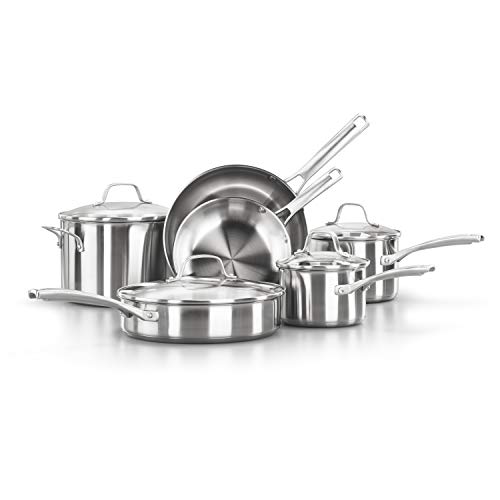

Is Stainless Steel Cookware Good?
Yes, if you want a tough pan that can handle many cooking jobs. Stainless steel is especially useful for browning meat, making pan sauces, cooking vegetables, and handling higher heat. It does not have a built-in nonstick surface, so technique matters. Preheating the pan and using enough fat can make a big difference.
What I like most about stainless steel is its steady, workhorse feel. On a busy weeknight, I can move from sautéing onions to browning chicken without worrying much about the cooking surface. It also feels like cookware I can keep for many years. The trade-off is cleanup. Burned food or stuck protein can take more effort than it would on ceramic.
What Makes It Stand Out / Key Features
- Durable ConstructionQuality stainless steel can resist rust, stains, dents, and everyday wear when cared for properly.
- High Heat UseStainless steel works well for browning and searing, where strong heat helps build flavor.
- Excellent BrowningFood can develop a deep brown crust, and the browned bits can help build rich pan sauces.
- Versatile CookingIt works well for sautéing, searing, boiling, simmering, and many oven cooking tasks.
- No Synthetic Nonstick CoatingThe cooking surface does not depend on a traditional synthetic nonstick coating for food release.
- Long Service LifeA well-made stainless steel pan can remain useful for many years, making it a strong long-term option.
My Recommendation
Choose stainless steel if you want one durable pan for serious cooking, high heat, browning, and long-term use.
| Best For | Why |
|---|---|
| Home cooks | It handles a wide range of everyday meals. |
| Steak and meat lovers | It is well suited to high-heat browning and searing. |
| Long-term buyers | Durable construction can provide years of use. |
Is Ceramic Cookware Good?
It depends on what you cook most. Ceramic cookware is a strong choice when easy food release and fast cleanup matter. It can be especially pleasant for eggs, pancakes, fish, grilled cheese, and other foods that can cling to a pan. For a busy American morning, that easy release can feel like a small luxury.
I like ceramic cookware when I want less fuss. Breakfast can move from pan to plate with little scraping, and cleanup often takes less effort. But ceramic coatings need more care than bare stainless steel. Very high heat, metal utensils, abrasive cleaners, and rough handling can shorten the useful life of the coating. That makes ceramic feel more like a comfortable daily shoe than a heavy work boot.
What Makes It Stand Out / Key Features
- Easy Food ReleaseA ceramic nonstick cooking surface can make delicate foods easier to turn and remove.
- Simple CleanupLess food sticking often means less scrubbing after cooking.
- Low to Medium HeatCeramic coated pans generally perform well with controlled heat instead of extreme temperatures.
- Good for Delicate FoodsEggs, fish, pancakes, and other soft foods can be easier to cook and release.
- Less Cooking FatThe smooth surface can reduce the need for large amounts of oil in many recipes.
- Comfortable Daily UseEasy release and quick cleanup make ceramic appealing for fast weekday meals.
My Recommendation
Consider ceramic if easy food release and simple cleanup matter more to you than maximum durability and high-heat searing.
| Best For | Why |
|---|---|
| Breakfast cooks | Eggs and pancakes are easy to release when the coating is fresh. |
| Busy households | Fast cleanup can save time after meals. |
| Low-fat cooking | The smooth surface can need less oil for many foods. |
stainless steel vs ceramic cookware: Side-by-Side Test
The best way to understand stainless steel vs ceramic cookware is to compare the jobs each pan handles well. One acts like a kitchen workhorse. The other focuses on easy release and easy cleanup.
There is no single winner for every meal. The right choice depends on your heat level, cooking style, cleaning habits, and how long you want the pan to last.
Cooking Functions: Which One Does More?
Stainless steel has a broad cooking range, while ceramic shines in simple low to medium heat meals.
| Feature | Product 1 | Product 2 |
|---|---|---|
| Sautéing | Excellent | Very good |
| Searing | Excellent | Good |
| Eggs | Good with technique | Excellent |
| Pan sauces | Excellent | Limited |
⭐ Stainless Steel – 9/10 | Ceramic – 8/10
Stainless steel has the wider cooking range.
Food Release: Which Sticks Less?
Food release is one of the biggest differences in stainless steel vs ceramic cookware.
| Feature | Product 1 | Product 2 |
|---|---|---|
| Eggs | Needs heat and fat control | Usually very easy |
| Fish | Good with technique | Very good |
| Pancakes | Possible but less forgiving | Very easy |
⭐ Stainless Steel – 7/10 | Ceramic – 9/10
Ceramic has the edge for easy food release.
Searing: Which Builds More Browning?
When I want strong browning, stainless steel gives me more room to turn up the heat and build flavor.
| Feature | Product 1 | Product 2 |
|---|---|---|
| Steak | Excellent | Good |
| Chicken | Excellent | Good |
| Browning vegetables | Excellent | Very good |
⭐ Stainless Steel – 9/10 | Ceramic – 7/10
Stainless steel has the edge for high-heat browning.
Cleanup: Which Saves More Time?
After a long workday, cleanup matters. This is where ceramic can feel like a shortcut.
| Feature | Product 1 | Product 2 |
|---|---|---|
| Egg cleanup | Moderate | Easy |
| Burned food | Can need soaking | Usually easier if residue is light |
| Daily maintenance | Low to moderate | Low with gentle care |
⭐ Stainless Steel – 8/10 | Ceramic – 9/10
Ceramic has the edge for quick cleanup.
Durability: Which Lasts Longer?
Durability is a major part of the stainless steel vs ceramic cookware debate.
| Feature | Product 1 | Product 2 |
|---|---|---|
| Surface wear | Very resistant | Coating can wear |
| Utensil tolerance | Generally high | Depends on coating |
| Long-term use | Excellent | Good with careful use |
⭐ Stainless Steel – 10/10 | Ceramic – 7/10
Stainless steel has the edge for long-term durability.
Heat Control: Which Forgives Mistakes?
Both materials can cook well, but each rewards a different style of heat management.
| Feature | Product 1 | Product 2 |
|---|---|---|
| High heat | Very capable | Usually less suitable |
| Low heat | Very good | Very good |
| Heat mistakes | More forgiving for pan life | Can shorten coating life |
⭐ Stainless Steel – 9/10 | Ceramic – 8/10
Stainless steel offers more freedom with heat.
Care: Which Needs Less Attention?
The easiest pan to own is not always the easiest pan to cook with. Care needs differ in important ways.
| Feature | Product 1 | Product 2 |
|---|---|---|
| Metal utensils | Usually fine | Often best avoided |
| Abrasive cleaning | More tolerant | Can damage coating |
| Special technique | Useful for food release | Usually simple |
⭐ Stainless Steel – 9/10 | Ceramic – 8/10
Stainless steel is more forgiving during long-term care.
Final Verdict: Which Should You Buy?
In the stainless steel vs ceramic cookware debate, stainless steel fits cooks who want durability, high heat, strong browning, and broad cooking use. Ceramic fits cooks who want easy release, simple cleanup, and a smooth experience with foods like eggs and pancakes.
If I were building a flexible kitchen, I would use stainless steel as the main workhorse and ceramic for jobs where easy release matters most. That gives each material a clear role instead of asking one pan to do everything.