
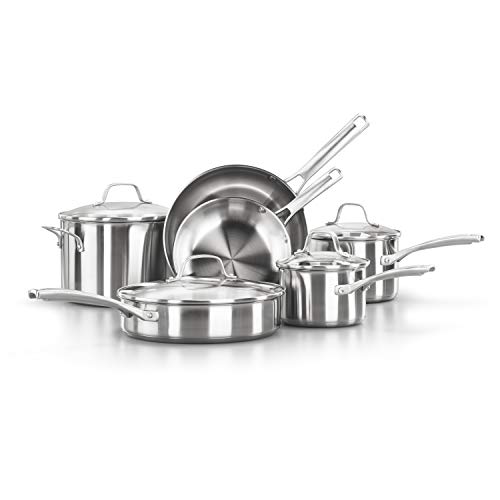

Is Stainless Steel Cookware Good?
Yes. Stainless steel cookware is a strong choice for cooks who want one set that can take a lot of daily use. It works well for searing steak, browning chicken, making sauces, boiling pasta, and cooking vegetables. It also handles high heat better than many coated pans. In the stainless steel cookware vs ceramic cookware test, this was the style I would reach for when I wanted a deep brown crust or a pan that felt ready for hard work.
I also like how stainless steel does not rely on a nonstick coating for its main cooking surface. With the right preheating and enough oil, many foods release well. I found that a short heat-up before cooking made a big difference. The trade-off is cleanup. Burned food can stick hard, so stainless steel rewards a little patience.
What Makes It Stand Out / Key Features
- Durable bodyGood stainless steel cookware can handle years of regular use when cared for properly.
- High heat performanceIt works well for searing, browning, and other cooking tasks that need strong heat.
- Strong cooking surfaceQuality stainless steel resists many forms of daily wear and does not depend on a fragile nonstick layer.
- Versatile cookingIt can handle many foods, from soups and pasta to meat, vegetables, and pan sauces.
- Good browningThe surface can help create the browned bits that add flavor to sauces and gravies.
- Easy oven useMany stainless steel pans and pots are oven safe, but the exact limit depends on the product.
My Recommendation
Consider stainless steel if you cook often, use high heat, enjoy searing, or want cookware built for long service. It suits cooks who do not mind learning simple heat control.
| Best For | Why |
|---|---|
| Searing meat | Strong heat performance and good browning. |
| Frequent cooks | Durable construction can handle regular use. |
| One versatile set | Useful for many cooking methods and recipes. |
Is Ceramic Cookware Good?
It depends. Ceramic cookware is a good fit for people who value easy food release and simple cleanup. In the stainless steel cookware vs ceramic cookware comparison, ceramic felt especially convenient for eggs, pancakes, fish, and other foods that can be annoying in a bare metal pan. It can make weekday cooking feel calmer.
The main point to understand is that ceramic cookware often means cookware with a ceramic nonstick coating, not a pan made entirely from solid ceramic. Coated ceramic surfaces can lose some of their nonstick performance over time, especially with high heat, rough utensils, or harsh cleaning. I would treat ceramic cookware gently and use moderate heat when possible.
What Makes It Stand Out / Key Features
- Easy food releaseA ceramic nonstick surface can make delicate foods easier to flip and serve.
- Simple cleanupMany foods wipe away more easily than they do from a bare stainless steel surface.
- Less added oilThe slick surface can reduce the need for large amounts of cooking fat for some recipes.
- Gentle cookingCeramic-coated cookware works well for eggs, pancakes, vegetables, and other foods cooked at moderate heat.
- Light daily feelMany ceramic-coated sets are designed to be easy to lift and move around the kitchen.
- Modern designsCeramic cookware often comes in simple shapes and finishes that fit many home kitchens.
My Recommendation
Consider ceramic cookware if easy release and easy cleanup matter most. It is especially useful for cooks who make eggs, pancakes, fish, and quick meals at moderate heat.
| Best For | Why |
|---|---|
| Eggs and pancakes | The slick surface can make delicate foods easier to release. |
| Busy families | Simple cleanup can save time after meals. |
| Low-fat cooking | Less oil may be needed for some foods. |
stainless steel cookware vs ceramic cookware: Side-by-Side Test
The stainless steel cookware vs ceramic cookware question gets easier when you break it into real kitchen tasks. A pan does not need to win every category. It needs to fit your cooking style.
I would look at heat, food release, cleanup, durability, versatility, and care before buying. These areas show the biggest differences between the two.
Cooking Functions: Which One Does More?
Both can handle daily meals, but they shine in different ways.
| Feature | Product 1 | Product 2 |
|---|---|---|
| Searing | Excellent | Good, but coating may favor moderate heat |
| Sauces | Excellent | Good |
| Eggs | Good with proper heat and oil | Excellent |
| High heat | Excellent | Use care and follow maker limits |
⭐ Stainless Steel – 9/10 | Ceramic – 8/10
Stainless steel has the edge when you want one pan for many cooking methods.
Food Release: Which Feels Easier?
Food release can make or break the mood during a rushed weekday breakfast.
| Feature | Product 1 | Product 2 |
|---|---|---|
| Egg release | Needs heat control and oil | Usually very easy |
| Pancakes | Good with technique | Very easy |
| Fish | Good with proper preheating | Easy at moderate heat |
⭐ Stainless Steel – 7/10 | Ceramic – 9/10
Ceramic has the edge for easy food release, especially with delicate foods.
Cleanup: Which Saves More Time?
Cleanup matters when dinner ends and the kitchen still looks like a small storm passed through.
| Feature | Product 1 | Product 2 |
|---|---|---|
| Light food residue | Usually easy | Very easy |
| Burned food | Can need soaking and scrubbing | Often easier if residue has not baked on |
| Daily cleanup | Simple with good cooking habits | Usually very simple |
⭐ Stainless Steel – 7/10 | Ceramic – 9/10
Ceramic has the edge for quick cleanup, while stainless steel can still be easy with proper technique.
Durability: Which Lasts Longer?
Durability matters if you want cookware that stays useful for years, not just seasons.
| Feature | Product 1 | Product 2 |
|---|---|---|
| Resistance to wear | Very high for quality cookware | Coating can wear over time |
| High heat tolerance | Strong | Depends on manufacturer limits |
| Long-term surface life | Usually excellent | Usually shorter for coated surfaces |
⭐ Stainless Steel – 10/10 | Ceramic – 7/10
Stainless steel has the edge for long-term durability.
Heat Control: Which Handles Heat Better?
Heat control affects browning, cooking speed, and the life of the pan.
| Feature | Product 1 | Product 2 |
|---|---|---|
| High heat cooking | Very good | Use moderate heat unless the maker says otherwise |
| Browning | Excellent | Good |
| Heat response | Depends on construction and base | Depends on construction and base |
⭐ Stainless Steel – 9/10 | Ceramic – 7/10
Stainless steel has the edge for high-heat cooking and strong browning.
Care: Which Is More Forgiving?
Good cookware lasts longer when the care routine matches the material.
| Feature | Product 1 | Product 2 |
|---|---|---|
| Metal utensil tolerance | Generally strong | Avoid unless the maker approves |
| Scrubbing | Can tolerate more aggressive cleaning | Use gentler care |
| Heat mistakes | Usually more forgiving | Excess heat can reduce coating life |
⭐ Stainless Steel – 9/10 | Ceramic – 7/10
Stainless steel has the edge if you want cookware that is easier to treat roughly.
Value: Which Makes Sense Long Term?
The cheapest pan is not always the cheapest choice if you replace it often.
| Feature | Product 1 | Product 2 |
|---|---|---|
| Initial value | Good across many price levels | Often attractive for convenience |
| Expected service life | Often long | Coating life varies |
| Versatility | Very high | High for everyday meals |
⭐ Stainless Steel – 9/10 | Ceramic – 8/10
Stainless steel has the edge when long-term use and versatility matter most.
Final Verdict: Which Should You Buy?
In the stainless steel cookware vs ceramic cookware comparison, stainless steel is the stronger fit for high heat, searing, durability, and broad cooking use. Ceramic is the easier fit for food release, quick cleanup, and delicate foods. I would choose stainless steel for a long-term workhorse set and ceramic for a convenient pan that makes everyday meals easier.
The best answer depends on your routine. If you love steak, roasted vegetables, sauces, and high-heat cooking, stainless steel makes sense. If you make eggs, pancakes, fish, and quick weekday meals, ceramic can feel more effortless. Many kitchens can also benefit from using both.