

Is Ceramic Nonstick Cookware Good?
Yes, ceramic cookware is a good choice for cooks who want easy food release and fast cleanup. It shines with eggs, pancakes, fish, vegetables, and other foods that can stick to bare metal. In the ceramic cookware vs stainless debate, ceramic feels more forgiving for a busy weekday kitchen. You do not need much oil, and the smooth surface makes cleanup feel less like a second job.
There is a trade-off. Ceramic coatings can lose their easy-release performance with heavy use, high heat, or rough care. I would treat a ceramic pan like a good pair of running shoes. It works very well when you use it for the right job, but it is not built for every kind of abuse. For a typical U.S. home cook who wants simple meals and quick cleanup, ceramic is a very practical option.
What Makes It Stand Out / Key Features
- Easy Food ReleaseThe coated surface helps foods slide free with less oil and less sticking.
- Simple CleanupMost everyday food residue wipes away with little effort when the pan is cared for well.
- Low Oil CookingThe slick surface can help reduce the need for large amounts of cooking oil.
- Gentle CookingCeramic cookware works well for eggs, fish, pancakes, and other delicate foods.
- Modern LookMany ceramic sets use bright colors and clean shapes that look good in a modern kitchen.
- Good Weeknight FitFast cleanup and easy food release make ceramic useful for quick meals after work.
My Recommendation
Choose ceramic if you want simple cooking, easy release, and quick cleanup. It is especially useful for busy families, new cooks, and people who make many low to medium heat meals.
| Best For | Why |
|---|---|
| Eggs and delicate foods | The smooth cooking surface helps reduce sticking. |
| Busy weeknight cooks | Food releases easily and cleanup is usually quick. |
| Low-oil cooking | The nonstick surface can reduce the need for extra oil. |
Is Calphalon Classic Stainless Steel Good?
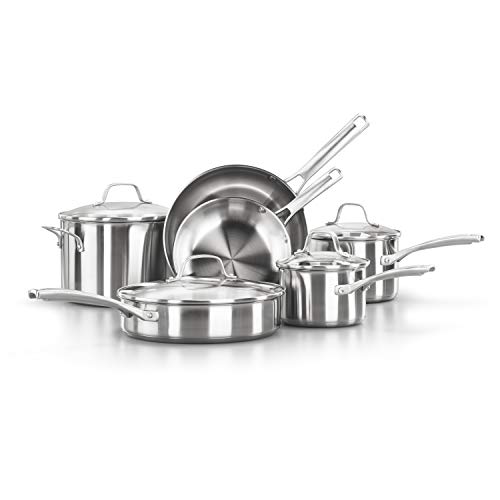
Yes, especially if you want cookware that can stay in your kitchen for many years. The Calphalon Classic Stainless Steel Cookware Set uses an impact-bonded aluminum base for heat distribution. The set is designed for gas, electric, glass, and induction cooktops and is oven safe up to 450°F. It is also dishwasher safe. These traits make it a strong all-around tool for American home cooking.
Stainless steel has a learning curve. Food can stick if the pan is too cold, too hot, or not used with enough fat. But once the heat is right, stainless becomes a powerful tool. It is great for browning meat, making pan sauces, boiling pasta, and cooking foods that need higher heat. In the ceramic cookware vs stainless comparison, stainless feels more like a cast-iron workhorse in spirit: less forgiving at first, but built for hard work.
What Makes It Stand Out / Key Features
- Stainless Steel BuildThe cooking surface is designed for long-term use and resists normal wear better than a nonstick coating.
- Impact-Bonded BaseAn aluminum base helps spread heat across the cooking surface.
- Induction ReadyThe set is designed to work with induction as well as gas, electric, and glass cooktops.
- Oven SafeThe cookware is rated for oven use up to 450°F.
- Dishwasher SafeThe set can go into the dishwasher, which helps simplify cleanup.
- Broad Cooking RangeIt can handle browning, searing, simmering, boiling, and many other everyday tasks.
My Recommendation
Choose stainless steel if you want long-term durability, high-heat cooking, and a pan that can handle many cooking styles. It suits cooks who do not mind learning heat control.
| Best For | Why |
|---|---|
| Searing meat | The surface handles high heat and supports strong browning. |
| Long-term cookware | There is no nonstick coating to wear away. |
| Induction kitchens | The set works with induction and other common cooktops. |
ceramic cookware vs stainless: Side-by-Side Test
The best way to understand ceramic cookware vs stainless is to compare the jobs each material handles well. One is built around easy release. The other is built around durability and heat.
Neither material wins every task. Ceramic is the friendly option for delicate foods and quick cleanup. Stainless steel is the tough option for searing, high heat, and years of regular use.
Food Release: Which Sticks Less?
Food release is where the difference becomes clear right away.
| Feature | Product 1 | Product 2 |
|---|---|---|
| Eggs | Very easy | Needs good heat control |
| Fish | Very easy | Good with proper preheating |
| Pancakes | Easy | Can stick without enough fat |
| Searing | Good at moderate heat | Excellent |
⭐ Product A – 9/10 | Product B – 7/10
Ceramic has the edge for easy food release.
Durability: Which Lasts Longer?
A pan should not feel fragile. This is where stainless steel pulls ahead.
| Feature | Product 1 | Product 2 |
|---|---|---|
| Coating wear | Possible over time | No nonstick coating |
| Scratch resistance | Needs gentle care | More forgiving |
| Heavy use | Moderate | Excellent |
| Long-term value | Good with careful care | Very strong |
⭐ Product A – 7/10 | Product B – 9/10
Stainless steel has the edge for long-term durability.
Heat: Which Handles More?
High heat changes the ceramic cookware vs stainless decision.
| Feature | Product 1 | Product 2 |
|---|---|---|
| Low heat | Excellent | Excellent |
| Medium heat | Excellent | Excellent |
| High heat | Use with care | Excellent |
| Browning | Good | Excellent |
⭐ Product A – 7/10 | Product B – 9/10
Stainless steel has the edge for high-heat cooking.
Cleanup: Which Is Easier?
After a long workday, cleanup matters almost as much as cooking.
| Feature | Product 1 | Product 2 |
|---|---|---|
| Light residue | Very easy | Easy |
| Stuck food | Usually easy | May need soaking |
| Dishwasher use | Depends on product | Yes for this set |
| Daily cleanup | Excellent | Good |
⭐ Product A – 9/10 | Product B – 8/10
Ceramic has the edge for simple daily cleanup.
Cooking Range: Which Does More?
A good cookware set should handle more than one recipe type.
| Feature | Product 1 | Product 2 |
|---|---|---|
| Eggs | Excellent | Good |
| Vegetables | Excellent | Excellent |
| Meat searing | Good | Excellent |
| Sauces | Good | Excellent |
⭐ Product A – 8/10 | Product B – 9/10
Stainless steel has the edge for broad cooking use.
Ease of Use: Which Feels Friendlier?
Not everyone wants to learn a new cooking technique after a busy day.
| Feature | Product 1 | Product 2 |
|---|---|---|
| Beginner friendly | Excellent | Good |
| Heat control learning curve | Low | Moderate |
| Low-oil cooking | Excellent | Good |
| Everyday convenience | Excellent | Very good |
⭐ Product A – 9/10 | Product B – 8/10
Ceramic has the edge for ease of use.
Cooktop Versatility: Where Can You Use It?
Cooktop type can change the best choice, especially in modern U.S. kitchens.
| Feature | Product 1 | Product 2 |
|---|---|---|
| Gas | Usually compatible | Compatible |
| Electric | Usually compatible | Compatible |
| Glass | Usually compatible | Compatible |
| Induction | Depends on construction | Compatible |
⭐ Product A – 8/10 | Product B – 9/10
Stainless steel has the edge for confirmed cooktop versatility.
Value: Which Is Better Over Time?
Price is only part of value. How long the cookware stays useful matters too.
| Feature | Product 1 | Product 2 |
|---|---|---|
| Upfront value | Often strong | Strong |
| Maintenance | Needs gentle care | More forgiving |
| Expected useful life | Good with care | Very long with care |
| Replacement risk | Higher if coating wears | Lower |
⭐ Product A – 8/10 | Product B – 9/10
Stainless steel has the edge for long-term value.
Final Verdict: Which Should You Buy?
In the ceramic cookware vs stainless debate, there is no single pan for every cook. Ceramic is the easier choice for eggs, fish, pancakes, low-oil meals, and fast cleanup. Stainless steel is the stronger choice for searing, high heat, sauces, and long-term use.
If convenience is your main goal, ceramic makes sense. If durability and cooking range matter more, stainless steel is the better fit. For a kitchen that does many types of cooking, I would use stainless steel as the main workhorse and add ceramic for delicate foods. That gives you the best of both worlds.