
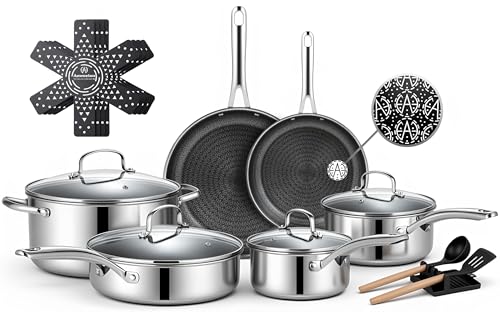

Is Classic Nonstick Cookware Good?
Yes, for many home cooks. Traditional nonstick cookware is a practical choice when you want fast meals and simple cleanup. I find it especially useful for eggs, pancakes, grilled cheese, and delicate fish. Food slides off with little effort, which feels like a small luxury on a busy morning.
In my kitchen, nonstick also helps when I cook for a family on a tight schedule. I can make several items without fighting stuck food. The key is care. I use moderate heat, avoid metal tools, and do not heat an empty coated pan for long. With that care, nonstick can make daily cooking feel almost effortless.
What Makes It Stand Out / Key Features
- Easy Food ReleaseEggs, pancakes, and other delicate foods usually release with little effort.
- Simple CleanupThe slick surface often needs only mild soap, water, and a soft sponge.
- Low Oil CookingThe coating can reduce the need for large amounts of cooking oil.
- Fast Daily UseIt works well for quick breakfasts, lunches, and weeknight dinners.
- Gentle Utensil NeedsSilicone, wood, or other non-abrasive tools help protect the coating.
- Broad Kitchen AppealIt suits beginners, busy parents, students, and cooks who value easy cleanup.
My Recommendation
Consider traditional nonstick if you want easy food release and fast cleanup. It is especially useful for everyday breakfast foods and quick family meals.
| Best For | Why |
|---|---|
| Busy home cooks | Fast cooking and easy cleanup save time. |
| Egg and pancake fans | The slick surface helps delicate foods release cleanly. |
| Beginner cooks | Food release is forgiving and simple to manage. |
Is Ceramic Cookware Good?
It depends on your cooking style, but ceramic-coated cookware can be a very good fit. I like it when I want a smooth cooking surface and a gentle approach to heat. Eggs, vegetables, and light sauté work well when I keep the temperature moderate.
The biggest lesson I learned with ceramic is simple: do not treat it like a high-heat skillet. Ceramic coatings can lose their easy-release performance as they age. I also use soft utensils and hand-wash when the maker recommends it. For someone who likes lower heat and careful cooking, ceramic can feel pleasant and easy.
What Makes It Stand Out / Key Features
- Ceramic-Based CoatingThe cooking surface uses a ceramic-based nonstick coating rather than a traditional synthetic nonstick coating.
- Smooth Food ReleaseFresh ceramic coatings can release many foods with little added oil.
- Moderate Heat CookingCeramic-coated pans generally work well with gentle to moderate heat.
- Easy CleanupA smooth surface can make everyday washing quick and simple.
- Light Oil UseThe nonstick surface can support cooking with less added fat.
- Care MattersSoft tools, moderate heat, and careful cleaning can help preserve the coating.
My Recommendation
Consider ceramic cookware if you prefer moderate heat, light cooking, and a ceramic-based coating. It can be a good match for cooks who are willing to give the pan careful treatment.
| Best For | Why |
|---|---|
| Moderate-heat cooks | The coating works well when treated gently. |
| Low-oil cooking | The smooth surface can help foods release with less added fat. |
| Ceramic coating fans | It provides an alternative to traditional nonstick coatings. |
non stick cookware vs ceramic: Side-by-Side Test
The best way to understand non stick cookware vs ceramic is to look at the daily details. A pan can look great on a shelf and still frustrate you at breakfast.
In this non stick cookware vs ceramic test, I focus on food release, heat, cleaning, durability, care, and daily value. Exact results vary by brand, coating, construction, and cooking habits.
Food Release: Which Is Smoother?
Both can release food well when the coating is new and properly cared for.
| Feature | Product 1 | Product 2 |
|---|---|---|
| Eggs | Excellent | Very good |
| Pancakes | Excellent | Very good |
| Delicate fish | Very good | Very good |
⭐ Product A – 9/10 | Product B – 8/10
Traditional nonstick has a small edge for effortless food release.
Cleanup: Which Saves More Time?
Both surfaces can make cleanup easier, especially after foods that usually stick.
| Feature | Product 1 | Product 2 |
|---|---|---|
| Egg residue | Easy to remove | Easy to remove |
| Light scrubbing | Usually avoidable | Usually avoidable |
| Daily washing | Simple | Simple |
⭐ Product A – 9/10 | Product B – 9/10
It is a tie for routine cleanup when both coatings are in good shape.
Heat Control: What Works Best?
Neither coated surface needs aggressive heat for most daily meals.
| Feature | Product 1 | Product 2 |
|---|---|---|
| Low heat | Excellent | Excellent |
| Medium heat | Excellent | Very good |
| High heat | Use caution | Use extra caution |
⭐ Product A – 9/10 | Product B – 8/10
Traditional nonstick is slightly more forgiving, but gentle heat is best for both.
Durability: How Long Can It Last?
Coated cookware is not forever cookware. Care and coating quality can change the outcome.
| Feature | Product 1 | Product 2 |
|---|---|---|
| Coating wear | Can occur over time | Can occur over time |
| Scratch risk | Avoid metal tools | Avoid abrasive tools |
| Best care | Moderate heat and soft tools | Moderate heat and soft tools |
⭐ Product A – 8/10 | Product B – 7/10
Both need care, while ceramic coatings can be less forgiving as their release performance fades.
Cooking Style: Which Fits More Meals?
Your menu matters. A pan for eggs does not need the same traits as a pan for searing.
| Feature | Product 1 | Product 2 |
|---|---|---|
| Eggs | Excellent | Very good |
| Vegetables | Very good | Very good |
| High-heat searing | Not ideal | Not ideal |
⭐ Product A – 9/10 | Product B – 8/10
Traditional nonstick fits a slightly wider range of everyday coated-pan tasks.
Care: Which Is Easier?
Both are simple when you treat the coating gently.
| Feature | Product 1 | Product 2 |
|---|---|---|
| Utensils | Soft utensils preferred | Soft utensils preferred |
| Cleaning | Soft sponge | Soft sponge |
| Heat | Avoid excessive heat | Avoid excessive heat |
⭐ Product A – 9/10 | Product B – 8/10
Nonstick gets a small edge because its care routine feels more familiar to many home cooks.
Value: Which Makes Sense?
Price alone does not tell the full story. Replacement needs and cooking habits also matter.
| Feature | Product 1 | Product 2 |
|---|---|---|
| Upfront cost | Varies by brand | Varies by brand |
| Daily convenience | High | High |
| Long-term value | Depends on care and lifespan | Depends on care and lifespan |
⭐ Product A – 9/10 | Product B – 8/10
Traditional nonstick offers strong daily value when easy cooking and cleanup are your main goals.
Final Verdict: Which Should You Buy?
In the non stick cookware vs ceramic debate, neither choice fits every kitchen. Traditional nonstick is a strong everyday option for easy food release, quick cleanup, and familiar cooking. Ceramic is worth considering if you prefer a ceramic-based coating and tend to cook with moderate heat.
For my daily routine, I would use traditional nonstick for eggs, pancakes, and fast family meals. I would choose ceramic when I want a gentle cooking style and like its coating approach. Whichever you choose, the same rule matters: use moderate heat, soft tools, and careful cleaning.