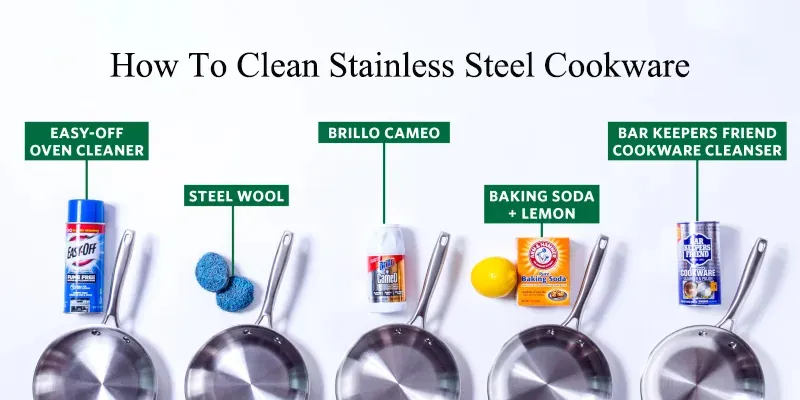
Maintain stainless steel cookware by washing it after every use, avoiding sudden temperature changes, removing stains with gentle cleaners, drying it well, and storing it carefully.
In American kitchens, stainless steel pots and pans handle everything from weekday scrambled eggs to Sunday roasts, pasta dinners, and holiday meals. They are popular because they can handle regular cooking and do not rely on a traditional nonstick coating. Still, daily use can leave behind burnt food, oil stains, rainbow marks, and cloudy spots.
The good news is that stainless steel cookware does not need a complicated care routine. A few simple habits can help protect its surface and keep it ready for years of cooking. The most useful steps are gentle cleaning, proper heat control, quick stain removal, and dry storage.
This guide explains how to maintain stainless steel cookware from the first wash to long-term storage. You will learn how to clean everyday messes, remove stubborn food, deal with discoloration, prevent common damage, and know when a pan needs more than routine care. These methods are general guidance for uncoated stainless steel cookware. Always check the care instructions for your exact product.
Why Does Stainless Steel Cookware Need Regular Maintenance?
Stainless steel cookware is made to handle frequent cooking, but it is not immune to stains or surface damage. Food oils, salt, minerals in tap water, and high cooking temperatures can leave marks over time. Regular care removes these materials before they become harder to clean.
Stainless steel gets much of its corrosion resistance from chromium in the metal. Chromium helps form a thin protective surface layer when the steel is exposed to oxygen. This layer helps protect the metal, but harsh chemicals and poor cleaning habits can still affect the surface.
Maintenance is about more than keeping a pan shiny. It also helps remove old food, grease, and residue that may affect the taste or appearance of your next meal. Think of it as a small reset after every cooking session.
Source: allniceofficial.com
Protect the cooking surface
Regular cleaning removes food films and grease that can build up during repeated cooking.
Reduce discoloration
Removing mineral deposits and heat marks early helps preserve the original appearance.
Support long-term use
Good cleaning, heat control, and storage habits help reduce avoidable damage.
Keep cookware ready to use
Clean, dry pans are easier to inspect, store, and prepare for the next meal.
Does Stainless Steel Cookware Need Special Care?
No special coating or seasoning routine is needed for ordinary uncoated stainless steel cookware. Unlike cast iron, stainless steel does not need a layer of cooking oil baked onto its surface to prevent rust during normal use.
However, stainless steel does benefit from the right cleaning tools and heat habits. A soft sponge, mild dish soap, and careful drying will handle most daily care needs. Special cleaners are useful only when ordinary washing does not remove a stain.
How to Clean Stainless Steel Cookware After Every Use
The best daily maintenance routine is simple: cool the pan, remove food, wash with mild soap, rinse well, and dry it. You do not need a strong chemical cleaner after every meal. A few minutes of care can prevent grease and food residue from building up.
Do not put a very hot pan directly under cold running water. A sudden temperature change can cause thermal shock, which may warp the base or affect how the pan sits on a flat cooking surface.
Source: masterclass-cookware.com
Step 1: Let the cookware cool
Move the pan to a heat-safe surface and allow it to cool until it is safe to handle. Avoid pouring cold water into a very hot pan.
Step 2: Remove loose food
Use a soft spatula or paper towel to remove leftover food and excess grease. Do not scrape the surface with a sharp knife.
Step 3: Add warm water and dish soap
Fill the cookware with warm water and a small amount of mild dishwashing liquid. For light residue, a quick wash may be enough.
Step 4: Clean with a soft sponge
Wipe the inside, outside, bottom, and handle area. Pay attention to the rim, where grease can collect.
Step 5: Rinse thoroughly
Remove all soap and loosened food residue with clean water.
Step 6: Dry with a soft towel
Use a clean microfiber cloth or dish towel to remove water from the surface and prevent mineral spots.
Which Cleaning Tools Work Best?
A soft sponge is the best starting point for everyday stainless steel cookware care. It removes normal food residue without leaving deep scratches. A microfiber cloth is also useful for drying and polishing the outside.
For food that does not come off with a regular sponge, a nylon scrubber may help. Check the cookware maker’s instructions first, especially if the pan has a special finish or decorative surface.
Soft sponge
Best for daily cleaning and light food residue.
Microfiber cloth
Useful for drying, removing fingerprints, and reducing water marks.
Nylon scrubber
Helpful for more difficult food deposits on ordinary stainless steel surfaces.
Wooden or silicone spatula
Useful for lifting loose food without using a sharp metal tool.
How to Remove Burnt Food From Stainless Steel Pans
Burnt food is one of the most common stainless steel cookware problems. It often happens when food cooks for too long, oil gets too hot, or a pan is left unattended. Do not try to force the burnt layer off with a knife or harsh metal scrubber.
Start with warm water and dish soap. If the food remains stuck, use baking soda and water to loosen it. This approach gives the residue time to soften before you scrub the surface.
Source: i.ytimg.com
Step 1: Remove loose burnt pieces
Let the pan cool, then remove any loose food with a wooden or silicone utensil.
Step 2: Add water
Cover the burnt area with enough water to loosen the residue.
Step 3: Add baking soda
Sprinkle baking soda into the water. A small amount is a good starting point for a normal cooking stain.
Step 4: Heat gently if needed
For stubborn residue, gently bring the water to a simmer. Follow the cookware maker’s directions and avoid letting the pan boil dry.
Step 5: Cool and loosen the food
Turn off the heat and let the pan cool enough to handle. Use a wooden spoon or soft spatula to lift the softened residue.
Step 6: Wash and dry
Wash with dish soap and a soft sponge, rinse well, and dry the pan.
How to Clean Very Stubborn Burnt Residue
If the burnt food remains, make a paste with baking soda and a little water. Spread it over the affected area and allow it to sit for a short period. Gently rub the area with a soft sponge and rinse well.
Repeat the process rather than applying more force. Some burnt layers need several gentle cleaning rounds. If a stain still does not come off, use a cleaner approved for stainless steel and follow its label.
Avoid sharp scraping
Knives and sharp metal tools can leave scratches and damage the finish.
Do not mix cleaning chemicals
Never combine bleach with vinegar or other household cleaners. Dangerous gases can form.
Use patience
Soaking and gentle cleaning are safer than aggressive scrubbing.
How to Remove Rainbow Stains and Heat Discoloration
Rainbow stains are colorful blue, purple, or gold marks that may appear inside stainless steel pans. They often develop after high heat or repeated heating. These marks can look like damage, but they are usually surface discoloration rather than a sign that the pan has failed.
White vinegar is a simple way to remove many rainbow marks. Its mild acidity can help dissolve mineral deposits and some surface discoloration. It is usually not necessary to buy a special polish for this problem.
Source: cdn.store-assets.com
Step 1: Cool the pan
Make sure the cookware is cool before cleaning.
Step 2: Apply white vinegar
Dampen a soft cloth or sponge with a small amount of plain white vinegar.
Step 3: Wipe the affected area
Gently rub the rainbow marks until the discoloration begins to fade.
Step 4: Rinse and dry
Rinse away the vinegar and dry the pan with a clean towel.
How to Prevent Rainbow Stains
Avoid using very high heat when it is not needed. Stainless steel cookware often heats efficiently, especially when it has an aluminum or copper core. Medium heat is enough for many cooking tasks.
Do not leave an empty pan over a hot burner for a long time. Also, remove leftover oil and food after cooking instead of allowing residue to bake onto the surface during later use.
Choose moderate heat
Use high heat only when the cooking task requires it.
Clean after cooking
Remove oil and food films before the next use.
Preheat with care
Warm the pan gradually instead of exposing it to sudden extreme heat.
How to Remove White Water Spots and Cloudy Marks
White spots and cloudy marks often appear when water dries on stainless steel cookware. Minerals in tap water can remain on the surface after the water evaporates. These marks are common in homes with hard water.
White vinegar can help remove many mineral deposits. Apply a little vinegar to a soft cloth, wipe the affected area, rinse the pan, and dry it. For more stubborn deposits inside a pot, a mixture of equal parts water and white vinegar may be heated briefly, provided the cookware maker permits this method.
Do not confuse water spots with corrosion or deep surface damage. If a mark does not respond to normal cleaning, inspect it carefully and check the manufacturer’s care instructions.
Source: thegoodlifedesigns.com
Use vinegar carefully
A small amount of plain white vinegar is often enough for ordinary mineral marks.
Rinse after cleaning
Remove vinegar residue with clean water.
Dry immediately
A soft towel helps prevent fresh water spots from forming.
Why Is Drying So Important?
Air-drying may seem easier, but water left on stainless steel can create visible mineral marks. This is especially noticeable when the water supply contains more dissolved minerals.
Drying takes only a few seconds and makes a clear difference to the finish. It also helps prevent moisture from remaining around handles, rims, and lid edges.
How to Prevent Scratches and Surface Damage
Stainless steel is durable, but its finish can develop scratches from rough cleaning tools and careless handling. Small marks do not always affect cooking performance. However, deep scratches and physical damage can make the cookware harder to clean.
The easiest way to protect the surface is to choose suitable utensils and cleaning tools. You should also avoid dragging heavy cookware across a glass or ceramic stovetop.
Source: i.ytimg.com
Avoid ordinary steel wool
Carbon steel wool can leave particles behind that may rust and stain stainless steel.
Skip harsh abrasive powders
Rough powders can scratch or dull polished surfaces.
Use suitable utensils
Wood, silicone, and suitable metal cooking utensils can all be used on ordinary stainless steel, but avoid sharp scraping.
Lift rather than drag
Pick up pots and pans when moving them across a glass cooktop.
Clean the bottom
Remove grease and food residue from the underside before placing cookware on the stove.
Can You Use Metal Utensils With Stainless Steel Cookware?
Yes. Ordinary uncoated stainless steel cookware can generally be used with metal spoons, spatulas, and tongs. It does not have the same delicate coating as traditional nonstick cookware.
However, sharp tools and rough scraping can leave visible marks. If you want to preserve a polished finish, use wooden or silicone utensils for everyday cooking. Check the instructions if your pan has a special interior coating.
How to Maintain Stainless Steel Cookware While Cooking
Good cookware maintenance starts before you wash the pan. Your cooking habits affect how much food sticks, how much oil burns, and how much discoloration appears. A few changes in heat control and food preparation can make cleaning much easier.
Stainless steel does not work exactly like a traditional nonstick pan. Food may stick when the pan is too cold, when the surface is too dry, or when food is moved before it has developed a proper sear.
Source: i.pinimg.com
Preheat gradually
Warm the pan over low or medium heat instead of immediately using maximum burner power.
Dry food before searing
Pat meat and vegetables dry when appropriate to reduce excess moisture and splashing.
Add suitable cooking oil
Use an oil that suits the cooking temperature and avoid allowing it to smoke for long periods.
Avoid overheating empty cookware
Do not leave an empty pan heating unattended. Excessive heat can cause discoloration or damage.
Allow food to release naturally
When searing, give the food time to brown before trying to turn it. This can reduce tearing and stuck food.
Why Does Food Stick to Stainless Steel?
Food sticking is often linked to heat, moisture, and protein contact with the cooking surface. Cold food placed in a poorly heated pan may stick more easily. Moving food too soon can also tear its surface and leave pieces behind.
A simple routine can help: preheat the pan gradually, add oil, and place the food in the pan when the oil is ready. Do not treat every cooking task the same way. Delicate foods may need lower heat and more careful handling than a steak or a vegetable stir-fry.
For eggs
Use moderate heat and enough suitable fat. Stainless steel may require more attention than a nonstick skillet.
For meat
Dry the surface and allow it to brown before turning.
For vegetables
Use an appropriate amount of oil and avoid overcrowding the pan.
Can You Put Stainless Steel Cookware in the Dishwasher?
Some stainless steel cookware is dishwasher safe, but not every pot, pan, lid, or handle has the same care requirements. The material alone does not determine whether the entire item can go in the dishwasher.
Check the manufacturer’s instructions for your exact cookware collection. Some makers allow dishwasher cleaning but still recommend handwashing to protect the finish and reduce cosmetic wear.
Dishwasher detergent, high heat, and contact with other metal items may affect the appearance of some cookware. Handwashing is a simple choice when you want greater control over cleaning.
Source: allniceofficial.com
Check the care label
Look for a clear dishwasher-safe statement in the product manual or on the manufacturer’s website.
If the cookware is dishwasher safe, position it so other utensils cannot strike or scratch the surface.
Dry after the cycle
Remove the cookware and dry any remaining moisture to reduce water spots.
Is Handwashing Better for Stainless Steel Pans?
Handwashing is often the gentler option for preserving the appearance of stainless steel cookware. You can control the cleaning pressure, use a mild detergent, and avoid contact with other dishes.
It is also useful when a pan has burnt food or oil residue that needs direct attention. However, if the manufacturer confirms that a particular item is dishwasher safe, using the dishwasher according to its instructions is generally acceptable.
What Cleaning Products Should You Avoid?
Not every household cleaning product is suitable for stainless steel cookware. Some chemicals can cause corrosion, while rough materials can leave scratches. A product that works on a bathroom surface may not be safe for a cooking pan.
Use mild dish soap for normal cleaning. For tougher stains, choose a cleaner that clearly states it is suitable for stainless steel cookware and follow the label.
Source: cdn.store-assets.com
Chlorine bleach
Avoid bleach and chlorine-based cleaners because chlorides can damage stainless steel and encourage corrosion under certain conditions.
Oven cleaner
Oven cleaners are often too harsh for cookware and may damage finishes or attached components.
Ordinary steel wool
Carbon steel particles can remain on the surface and later develop rusty marks.
Harsh scouring powders
Coarse powders can scratch and dull the polished surface.
Unapproved chemical mixtures
Never mix household cleaning products, especially bleach and acids such as vinegar.
Is Bar Keepers Friend Safe for Stainless Steel Cookware?
A stainless steel cleaner such as Bar Keepers Friend can help remove stubborn discoloration, mineral deposits, and difficult marks. However, the exact formula and product instructions matter. Not every cleaner is approved for every surface or cookware finish.
If the product label permits use on your pan, apply a small amount as directed. Avoid leaving the cleaner on longer than recommended. Rinse thoroughly and dry the cookware after cleaning.
For everyday food residue, a special cleaner is usually unnecessary. Mild soap and water should remain your first choice.
How to Store Stainless Steel Cookware Properly
Proper storage helps prevent scratches, moisture marks, and unnecessary wear. Even clean cookware can become scratched when heavy pans are stacked without protection. A little space between pieces can make a difference.
Always store cookware after it has been cleaned and dried. Trapped moisture can leave spots, especially around rims, handles, and lids.
Source: thegoodlifedesigns.com
Dry every piece
Make sure the inside, outside, bottom, and handles are dry before storage.
Use pan protectors
Place soft felt or fabric protectors between stacked pots and pans.
Avoid heavy stacking
Do not place several heavy pans on a delicate lid or a piece with a vulnerable finish.
Keep lids separate when possible
Store lids in a rack or position them so they do not rub against the cooking surface.
Choose a dry cabinet
Keep cookware away from damp areas and clean storage spaces regularly.
Should You Stack Stainless Steel Pots and Pans?
Yes, stacking is possible if you protect the surfaces. Use soft pan dividers between each piece to reduce rubbing. This is especially useful for polished cookware that shows scratches more easily.
If you have enough cabinet space, hanging pans or using a vertical rack can reduce contact between pieces. Choose a storage method that keeps heavy cookware stable and easy to reach.
Common Stainless Steel Cookware Maintenance Mistakes
Many cookware problems come from small habits that seem harmless. Washing a hot pan, using the wrong cleaner, or storing damp cookware may not cause immediate damage, but repeated mistakes can affect its appearance and condition.
The following table connects common mistakes with better alternatives. Use it as a quick reminder when cleaning and storing your cookware.
Source: i.ytimg.com
Washing a hot pan with cold water
Allow the pan to cool first to reduce thermal shock and the risk of warping.
Leaving burnt food for days
Soak and clean the pan after use rather than allowing residue to harden.
Using too much heat
Choose moderate heat for most cooking tasks and avoid heating an empty pan for too long.
Ignoring the pan’s underside
Clean grease and residue from the bottom to prevent buildup.
Storing cookware while wet
Dry it completely before placing it in a cabinet.
Quick Maintenance Decision Table
Different stains need different cleaning methods. Start with the least aggressive option and move to a stronger method only when needed.
Light grease and food residue
Use warm water, mild dish soap, and a soft sponge.
Dried food
Soak the pan in warm soapy water before cleaning.
Burnt food
Use water and baking soda, with gentle heating if the cookware instructions allow it.
Rainbow discoloration
Wipe with a soft cloth dampened with white vinegar.
White mineral spots
Use diluted white vinegar, rinse, and dry.
Persistent marks
Consider a stainless steel cookware cleaner approved by the manufacturer.
How Often Should You Maintain Stainless Steel Cookware?
Stainless steel cookware needs basic cleaning after every use, but deeper cleaning depends on how often you cook and what you prepare. A pan used daily for frying may need more attention than a stockpot used once a week.
You do not need to polish your cookware every day. Focus on removing food, grease, and water marks. Use a deeper cleaning method only when normal washing does not work.
Source: i.pinimg.com
After every use
Cool, wash, rinse, and dry each pan. Remove leftover food and oil.
When stains appear
Use vinegar for mineral marks and suitable baking soda methods for burnt food.
Before long-term storage
Clean thoroughly, dry completely, and add protective dividers if stacking.
During regular kitchen cleaning
Inspect handles, lids, rims, and the underside for grease buildup or signs of damage.
A Simple Weekly Care Routine
If you cook regularly, set aside a few minutes each week to inspect your cookware. Look for cloudy spots, burnt oil, and food residue around the handles. Remove these marks before they become difficult to clean.
Check that lids fit correctly and handles remain secure. If a handle becomes loose, follow the manufacturer’s repair guidance rather than continuing to use cookware that may be unsafe to lift.
When Should You Replace Stainless Steel Cookware?
A stained or scratched stainless steel pan does not automatically need replacement. Many surface marks are cosmetic and do not affect normal cooking. What matters more is whether the cookware remains structurally sound and functions as intended.
Inspect the base, handles, rims, and cooking surface. If a pan has serious warping, cracks, sharp damage, or a handle that cannot be secured, stop using it until the problem is assessed.
Source: allniceofficial.com
Severe warping
A badly warped base may wobble or sit unevenly on the burner.
Cracks or deep structural damage
Cracks may affect the pan’s strength and can make it unsafe to use.
Loose or damaged handles
A handle that moves or cannot be repaired securely creates a risk of spills and burns.
Persistent corrosion or pitting
Inspect unusual damage and contact the manufacturer if you are unsure whether the pan remains suitable for cooking.
Are Scratches a Sign That Stainless Steel Cookware Is Unsafe?
Not necessarily. Normal surface scratches are common with regular use and do not automatically mean that a stainless steel pan must be discarded. The depth, location, and type of damage matter.
If the surface has deep pits, cracks, loose components, or areas that appear to be breaking apart, stop using the pan until you can get suitable guidance. Do not assume that every dark or colorful mark is corrosion.
Extra Care Tips for Different Stainless Steel Cookware Types
Not every stainless steel pan has the same construction. Some have a single stainless steel body, while others use bonded layers of stainless steel and aluminum or copper. Some products also have nonstick coatings or special exterior finishes.
These differences matter because cleaning and heating limits may vary. The following tips apply to common cookware types, but the product manual should always take priority.
Source: cdn.store-assets.com
Fully clad cookware
Clean the cooking surface and outer layers with suitable products. Avoid sudden temperature changes.
Stainless steel cookware with an aluminum base
Pay attention to the base and its connection to the body. Follow the manufacturer’s cleaning and dishwasher guidance.
Stainless steel cookware with nonstick interiors
Use the instructions for the nonstick coating rather than treating it like bare stainless steel.
Stainless steel lids and handles
Check whether attached materials, glass parts, and handle components have separate heat or cleaning limits.
Does Tri-Ply Stainless Steel Need Different Maintenance?
Tri-ply cookware commonly has three bonded layers, often stainless steel on the cooking surfaces with an aluminum core. The layered design helps distribute heat, but the basic cleaning routine remains similar to ordinary stainless steel cookware.
Use mild soap, warm water, and a soft sponge. Avoid thermal shock, dry the cookware well, and follow the maker’s guidance for dishwasher use and cleaning products.
Frequently Asked Questions
Q
How do you maintain stainless steel cookware?
Wash stainless steel cookware after every use with warm water, mild dish soap, and a soft sponge. Rinse thoroughly and dry with a clean towel. Avoid sudden temperature changes, harsh chlorine cleaners, and rough steel wool.
Q
Should you season stainless steel cookware?
No. Ordinary stainless steel cookware does not need seasoning like cast iron. You can use cooking oil to help food release and reduce sticking, but you do not need to bake an oil layer onto the pan for routine protection.
Q
Can you use baking soda to clean stainless steel pans?
Yes. Baking soda mixed with water can help loosen burnt food and stubborn residue. Apply it gently, use a soft sponge, and rinse thoroughly. Avoid aggressive scrubbing, especially on polished or special-finish surfaces.
Q
How do you make stainless steel cookware shiny again?
Wash the pan with warm soapy water first. For rainbow marks and many mineral spots, wipe the surface with a soft cloth dampened with white vinegar. Rinse and dry immediately. For stubborn stains, use a suitable stainless steel cookware cleaner according to its label.
Q
Can stainless steel cookware rust?
Stainless steel resists rust, but it is not completely immune to corrosion. Chloride exposure, harsh cleaners, contamination from ordinary steel wool, and certain conditions can cause rust-like spots. Clean the cookware with suitable products and avoid leaving aggressive chemicals on the surface.
Q
Is it safe to leave stainless steel cookware soaking overnight?
A short soak in warm water and mild dish soap is usually enough for stuck food. Long soaking is not a good default care habit, especially when the water contains salt or the cookware has other materials attached. Follow the manufacturer’s instructions and clean the pan as soon as practical.
Q
Why does my stainless steel pan turn blue or purple?
Blue, purple, or rainbow marks are often caused by heat-related surface discoloration. They are usually cosmetic rather than structural damage. Wipe the cool pan with white vinegar, rinse it, and dry it. Reduce unnecessary high heat to help prevent the marks from returning.
Q
Can I use vinegar and baking soda together to clean a stainless steel pan?
It is usually better to use them separately for different cleaning tasks. Baking soda can help loosen burnt food, while vinegar can help remove mineral deposits and some discoloration. Combining them causes a reaction that reduces their individual cleaning action. Never mix vinegar with chlorine bleach.
Q
How often should stainless steel cookware be polished?
Most stainless steel cookware does not need regular polishing. Daily washing and drying are enough for normal care. Use a stainless steel polish or cookware cleaner only when the surface has stubborn marks, and confirm that the product is suitable for food-contact cookware.
Q
How can I prevent food from sticking to stainless steel cookware?
Preheat the pan gradually, add suitable cooking oil, and allow food to brown before moving it. Dry food when appropriate and avoid overcrowding the pan. Heat control and proper timing often make a bigger difference than aggressive cleaning.
✦ Wrapping Up
Conclusion
Learning how to maintain stainless steel cookware does not require expensive products or a long cleaning routine. The most useful habits are washing after every use, using gentle cleaning tools, controlling cooking heat, and drying each piece before storage.
For everyday messes, warm water, mild dish soap, and a soft sponge are usually enough. Baking soda can help with burnt food, while white vinegar can remove many rainbow marks and mineral spots. Avoid bleach, oven cleaners, ordinary steel wool, and sudden temperature changes.
Remember that a few scratches or colorful marks do not always mean your cookware is damaged. Focus on its condition, not just its shine. With proper care and attention to the manufacturer’s instructions, stainless steel pots and pans can remain useful parts of your kitchen for many years.
💡 Key Takeaway
After your next meal, let each pan cool, wash it with warm soapy water, rinse it well, and dry it with a soft towel. Use baking soda or white vinegar only when a specific stain needs extra care. Make this simple routine a habit to keep your stainless steel cookware clean and ready for your next meal.