

Is Ceramic-Coated Cookware Good?
Yes, for many home cooks. In my ceramic vs stainless steel cookware health test, ceramic-coated cookware felt easiest for foods that love to stick. Eggs slid around with little effort. Pancakes also released well when I kept the heat moderate. That matters on a busy American morning when I want breakfast done without scraping the pan.
The health picture depends on the exact product. Ceramic-coated cookware is not the same as a solid ceramic pot. Many products sold as ceramic cookware use a coating over a metal body. If the coating is advertised as PFAS-free, it can be a useful choice for people who want to avoid conventional fluoropolymer nonstick coatings. Still, the coating can wear, scratch, or lose its easy-release performance. I treat ceramic coating more like a soft shield than armor. Gentle heat, soft utensils, and careful washing help it last.
What Makes It Stand Out / Key Features
- Low-stick surfaceThe smooth cooking surface can make eggs, fish, pancakes, and other delicate foods easier to release.
- PFAS-free optionsMany ceramic-coated products are marketed without PFAS. Always check the exact product label and manufacturer claim.
- Easy cleanupFood often wipes away with less scrubbing than from bare stainless steel.
- Moderate heat works wellCeramic coatings often perform best with low to medium heat rather than repeated extreme heat.
- Light daily feelMany ceramic-coated pans feel easy to handle, which helps during quick meals and family cooking.
- Coating needs careSoft utensils and careful cleaning can help reduce scratches and early loss of nonstick performance.
My Recommendation
Consider ceramic-coated cookware if easy food release and simple cleanup matter most. It is especially useful for eggs, pancakes, fish, and low to medium heat cooking.
| Best For | Why |
|---|---|
| Eggs and pancakes | The low-stick surface makes delicate foods easier to release. |
| Easy cleanup | Less food usually sticks to the cooking surface. |
| PFAS-free shoppers | Many ceramic-coated products are sold with PFAS-free claims, which should be checked before purchase. |
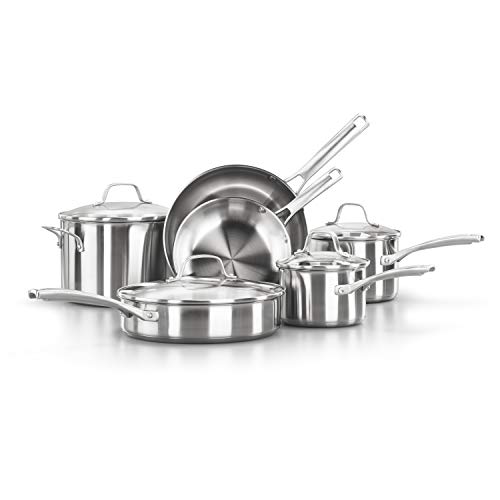
Is Calphalon Classic Stainless Steel Good?
Yes. For long-term use, stainless steel is one of the most practical cookware choices I have used. In my ceramic vs stainless steel cookware health comparison, the Calphalon Classic stainless steel set felt like the dependable workhorse. I could brown chicken, cook pasta sauce, sauté vegetables, and move a pot from the stove to the oven without worrying about a nonstick coating.
The main health advantage is simple: the cooking surface does not rely on a nonstick coating. Stainless steel can release small amounts of metals such as nickel and chromium under some cooking conditions, especially with acidic foods and prolonged cooking. For most people, this is not a major concern when quality cookware is used as intended. People with a nickel allergy or sensitivity may want to choose cookware made without nickel or discuss their options with a health professional.
What Makes It Stand Out / Key Features
- Stainless steel cooking surfaceThe cooking surface has no traditional nonstick coating and is built for repeated daily use.
- Impact-bonded aluminum baseThe aluminum base helps spread heat across the pan for more even cooking.
- Multiple cooking methodsThe set works well for sautéing, browning, simmering, boiling, and many oven-finish recipes.
- Induction compatibleThe set is designed to work with induction as well as gas, electric, and glass stovetops.
- Oven safeThe cookware is rated for oven use up to 450 degrees Fahrenheit according to listed product specifications.
- Dishwasher safeThe set can go into the dishwasher, although hand washing may help preserve its appearance.
- Long service lifeWith proper care, stainless steel cookware can remain useful for many years.
My Recommendation
Choose stainless steel if durability, high-heat cooking, browning, and long-term value matter most. It is especially useful for cooks who want a coating-free cooking surface.
| Best For | Why |
|---|---|
| Long-term cookware | Stainless steel can handle years of regular cooking when cared for properly. |
| Searing and browning | The bare cooking surface handles high heat and browning well. |
| One versatile set | It can cover boiling, sautéing, simmering, searing, and oven finishing. |
ceramic vs stainless steel cookware health: Side-by-Side Test
The best ceramic vs stainless steel cookware health choice depends on what you cook and how you use your pans. Neither material makes every meal automatically healthy. Food, heat, cookware quality, and care all matter.
For me, ceramic feels like a smooth pair of running shoes. Stainless steel feels like a sturdy hiking boot. One is easy and gentle. The other is built for years of work. Here is how they compare.
Health and Food Contact: Which Has the Edge?
The key issue is what touches your food and how that surface behaves during normal cooking.
| Feature | Ceramic-Coated Cookware | Calphalon Stainless Steel |
|---|---|---|
| Cooking surface | Ceramic-style coating over a metal body | Stainless steel |
| Traditional nonstick coating | Usually no PTFE when marketed as ceramic, but check the product | No |
| Metal exposure | Depends on the base and coating condition | Small amounts of nickel and chromium can migrate under some conditions |
| Main concern | Coating wear or damage | Metal sensitivity for some users |
⭐ Ceramic-Coated Cookware – 8.5/10 | Calphalon Stainless Steel – 9/10
For long-term coating-free cooking, stainless steel has the edge; for low-stick cooking, ceramic offers a clear benefit.
Nonstick Cooking: Which Is Easier?
When breakfast gets rushed, easy food release can feel like a small miracle.
| Feature | Ceramic-Coated Cookware | Calphalon Stainless Steel |
|---|---|---|
| Eggs | Usually easy when the coating is fresh | Can stick without proper heat and fat control |
| Pancakes | Easy release | Needs more technique |
| Fish | Good low-stick performance | Can stick if the pan is too cool or too dry |
| Oil use | Often less oil needed | May need more oil for delicate foods |
⭐ Ceramic-Coated Cookware – 9/10 | Calphalon Stainless Steel – 7/10
Ceramic wins when easy food release is the main goal.
High-Heat Cooking: Which Performs Better?
High heat changes the game. This is where stainless steel starts to feel like a kitchen workhorse.
| Feature | Ceramic-Coated Cookware | Calphalon Stainless Steel |
|---|---|---|
| Searing | Better with moderate heat | Excellent |
| Browning | Good for lighter tasks | Very good |
| High heat tolerance | Follow the coating maker’s limit | Strong choice for high-heat stovetop cooking |
| Heat abuse | Can shorten coating life | More forgiving |
⭐ Ceramic-Coated Cookware – 7/10 | Calphalon Stainless Steel – 9.5/10
Stainless steel has the clear edge for searing, browning, and demanding heat.
Durability: Which Lasts Longer?
A pan should not feel disposable. Durability matters for both your budget and your kitchen waste.
| Feature | Ceramic-Coated Cookware | Calphalon Stainless Steel |
|---|---|---|
| Surface wear | Coating can wear over time | No nonstick coating to wear away |
| Scratch resistance | Varies by coating | Generally strong |
| Long-term use | Depends heavily on coating care | Very strong |
| Replacement need | May need replacement when coating loses performance | Often lasts for many years |
⭐ Ceramic-Coated Cookware – 7.5/10 | Calphalon Stainless Steel – 9.5/10
Stainless steel is the stronger long-term choice because there is no nonstick coating to wear away.
Cleaning: Which Saves More Time?
After dinner, nobody wants a second shift at the sink.
| Feature | Ceramic-Coated Cookware | Calphalon Stainless Steel |
|---|---|---|
| Fresh food release | Usually very easy | Depends on technique |
| Burned food | May need gentle soaking | Can require more scrubbing |
| Dishwasher use | Depends on product instructions | Listed set is dishwasher safe |
| Daily cleanup | Usually quick | Moderate effort |
⭐ Ceramic-Coated Cookware – 9/10 | Calphalon Stainless Steel – 8/10
Ceramic is easier for quick cleanup, especially when the coating is still in good condition.
Cooking Range: Which Does More?
A versatile set earns its space when it can handle many meals without changing pans every few minutes.
| Feature | Ceramic-Coated Cookware | Calphalon Stainless Steel |
|---|---|---|
| Eggs | Excellent | Good with proper technique |
| Searing | Good | Excellent |
| Sauces | Very good | Excellent |
| Boiling and simmering | Very good | Excellent |
| Oven finishing | Depends on product limits | Strong option up to listed temperature |
⭐ Ceramic-Coated Cookware – 8/10 | Calphalon Stainless Steel – 9.5/10
Stainless steel offers the wider cooking range.
Maintenance: Which Is More Forgiving?
Good cookware should fit your routine. The less delicate the pan, the less mental space it takes.
| Feature | Ceramic-Coated Cookware | Calphalon Stainless Steel |
|---|---|---|
| Utensil care | Soft utensils are safer for the coating | More tolerant of metal utensils |
| Heat management | Moderate heat helps protect the coating | More flexible |
| Thermal shock | Avoid sudden temperature changes | Still best avoided |
| Learning curve | Low | Moderate |
⭐ Ceramic-Coated Cookware – 8/10 | Calphalon Stainless Steel – 9/10
Stainless steel needs cooking technique, while ceramic needs more surface care.
Final Verdict: Which Should You Buy?
In the ceramic vs stainless steel cookware health debate, there is no single answer for every kitchen. Ceramic-coated cookware makes sense when easy release, simple cleanup, and a low-stick surface are your main needs. Look for clear PFAS-free claims if that matters to you, and replace the pan when the cooking surface becomes badly damaged.
Stainless steel makes more sense for long-term use, high heat, browning, searing, and a coating-free cooking surface. For most people who want one durable cookware set, stainless steel is the more versatile choice. If you want the easiest breakfast pan, ceramic can be the more convenient tool. In practice, owning both can make sense because each solves a different kitchen problem.