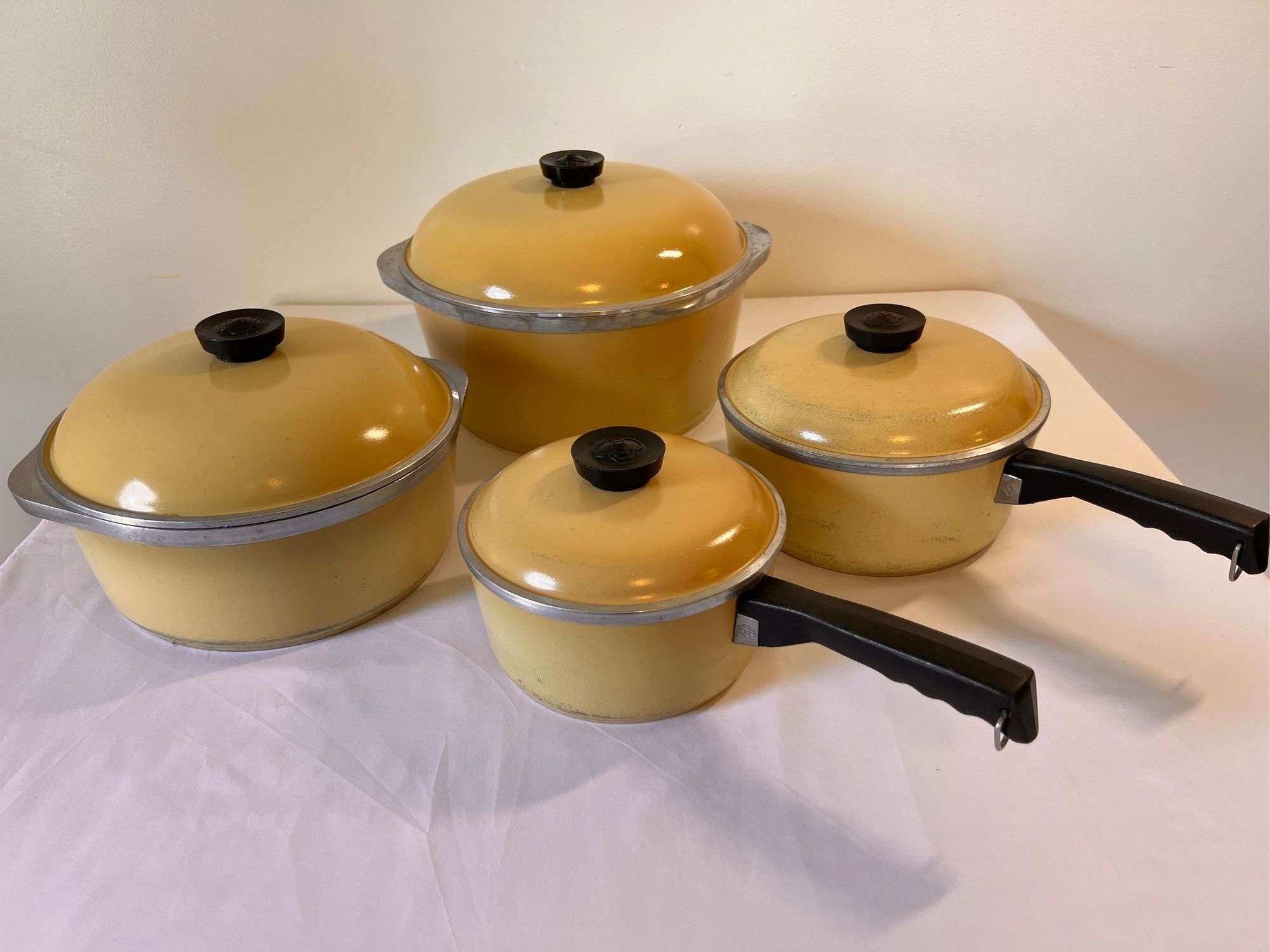
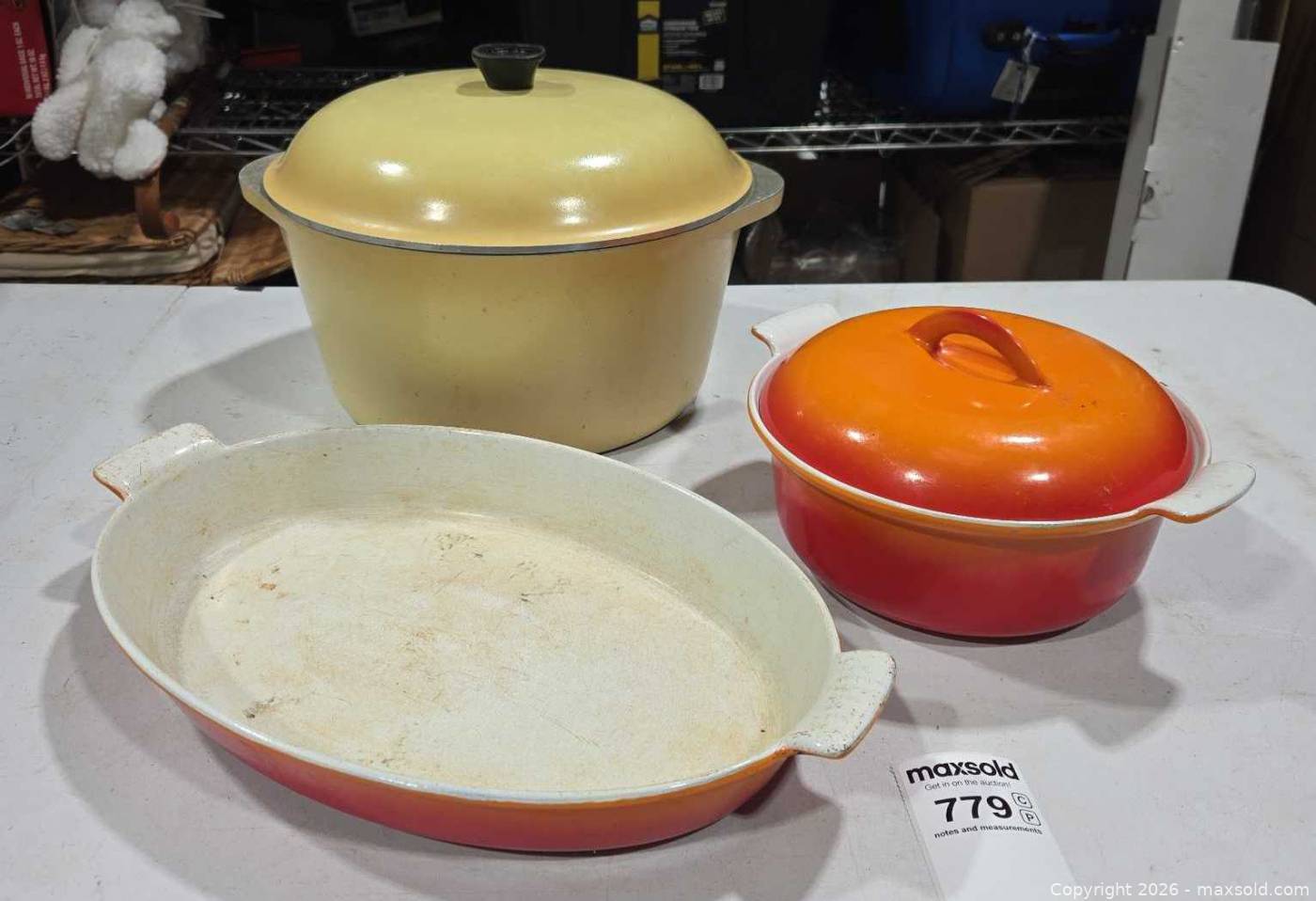
Club Aluminum cookware faded from the American market after decades of popularity, as the original business and brand changed over time. Its traditional pots and pans are no longer commonly sold as new products, but vintage pieces remain available through antique shops, thrift stores, estate sales, and online resale markets. The exact timeline of the company’s final closure and later ownership is not fully clear from the available historical records.
If you grew up in an American home with colorful aluminum pots on the stove, you may remember Club cookware. Its silver metal, bright finishes, and sturdy lids made it a familiar sight in kitchens during the middle of the 20th century. Many families kept these pans for years, and some still turn up at estate sales and thrift stores today.
The short answer to what happened to Club cookware is that the original business faded, and the traditional line disappeared from ordinary retail shelves. Historical trademark records document Club Aluminum as an established cookware name, while Michigan State University Extension reported in 2018 that Club products had become associated with Mirro and remained available through secondhand dealers. That does not establish a precise final production date or prove that the old product line continues today.
The distinction matters because a company, a trademark, and a familiar product line are not the same thing. A brand can change ownership, stop making a particular product, or lose its place in stores while its older products remain in use. Understanding those differences helps explain why Club cookware is easy to find in vintage listings but difficult to find as a verified new, current product.
Club cookware did not remain a major name in modern American kitchenware retail. Its traditional aluminum pots and pans gradually disappeared from the mainstream market, leaving older pieces in family kitchens, antique stores, estate sales, and online listings. The cookware survived as a vintage product even as the original business lost its former visibility.
The available evidence points to a changing business history rather than one clearly documented event that explains everything. Michigan State University Extension identified Club Aluminum products with the Mirro Company in a 2018 response. Trademark records also show that a Club Aluminum registration for metal hollow cookware expired in 1993. An expired registration is a useful historical clue, but it does not, by itself, establish when manufacturing ended or whether every related mark had the same status.
Several forces help explain why a once-familiar cookware line can fade. American consumers gained access to more types of cookware, including stainless steel and nonstick products. Retailers and manufacturers also changed their product ranges over time. These broad market shifts offer context, but they should not be mistaken for a verified company statement explaining the specific end of Club production.
Today, the clearest practical answer is that traditional Club cookware is primarily a secondhand-market find. Buyers should treat claims about a current manufacturer, a specific shutdown year, or an official successor line with care unless the seller can provide reliable documentation.
Source: cdn-d12srav5gxm0re.maxsold.com
The original line faded
Traditional Club Aluminum pots and pans are now most often encountered as older products rather than as a widely available new cookware range.
The name has a documented history
Trademark records show historical commercial use of Club Aluminum, including a cookware registration that expired in 1993.
Vintage pieces remain
Older pots and pans continue to circulate through resale channels, even when the original production line is no longer readily available.
Did Club Cookware Go Out of Business?
The original Club Aluminum business is no longer a familiar operating cookware manufacturer in the American market. However, sources do not agree on a single, well-supported date for the end of the company or production. Some secondary articles describe a decline during the late 20th century, while others give earlier dates for financial trouble or business changes.
It is useful to separate three questions: when the original company changed or ceased operations, when the traditional cookware line stopped being made, and who controlled the name at different points. Those events can happen at different times. Without a complete corporate history or an authoritative production record, a precise final year should not be presented as settled fact.
What is established
Club Aluminum was a real cookware business and a registered commercial name. The traditional line is now chiefly encountered through vintage and secondhand sellers.
What remains uncertain
The exact final manufacturing date and the full sequence of corporate transactions are not conclusively established by the records reviewed.
Was Club Cookware Bought by Mirro?
Michigan State University Extension stated in a 2018 answer that Club Aluminum products were then part of the Mirro Company. This provides evidence of an association between the product name and Mirro, but it is not a complete acquisition history. Other online accounts give different descriptions of the company’s financial troubles, later ownership, and product production.
Mirro itself has a long history in aluminum housewares, and its own corporate history is separate from the history of every brand associated with it. A relationship between product lines does not necessarily mean that a successor company continued manufacturing the same pots, used the same designs, or sold the same products under the old name.
For that reason, it is safer to say that a historical source linked Club products with Mirro than to claim that a current company is definitely making original Club cookware. If a seller advertises a new set as an authentic modern Club product, ask for the manufacturer, model number, and documentation.
Historical connection
Michigan State University Extension linked Club Aluminum products with Mirro in its 2018 response.
Current production is not confirmed
That historical reference does not prove that the traditional Club cookware range is being manufactured today.
Why Was Club Aluminum Cookware So Popular?
Club Aluminum cookware appealed to households that wanted practical pots and pans with a distinctive look. Aluminum transfers heat well, so it can respond quickly when a cook adjusts the burner. This made it useful for everyday tasks such as heating soup, boiling water, cooking vegetables, and preparing family meals.
The cookware also had a recognizable appearance. Depending on the piece and production period, buyers may find plain aluminum finishes, colored exteriors, dark handles, or wooden details. Those visual features give vintage Club pieces a place in both working kitchens and collections of mid-century household goods.
Its appeal was not only about appearance. A pot with a well-fitting lid can help reduce splashes and retain steam, while a useful shape can make pouring and stirring easier. These practical features help explain why older pieces stayed in use, though the design and performance vary by model and condition.
Aluminum cookware also suited an era when many American households wanted durable everyday goods without the weight of cast iron. Club pieces could feel substantial without being as heavy as many cast-iron pots. Still, the precise construction differs across products, so it is not accurate to assume that every Club item was made in the same way.
Source: i.pinimg.com
Good heat transfer
Aluminum conducts heat well and can warm food quickly. The actual cooking result still depends on burner size, pan thickness, food quantity, and heat setting.
Recognizable vintage style
Colored finishes and period-style handles help distinguish many older pieces from plain modern cookware.
Practical everyday forms
Club cookware included common household shapes such as saucepans and frying pans, which suited routine family cooking.
Long service life for some pieces
Well-kept vintage cookware can remain usable for decades, but age alone does not prove that a pan is safe or in good condition.
What Made Club Aluminum Different From Other Vintage Cookware?
Club Aluminum belongs to the broader history of aluminum cookware, which became popular as the metal found more uses in American homes. Compared with cast iron, aluminum is generally lighter and transfers heat more readily. Compared with stainless steel, plain aluminum usually conducts heat better, although stainless cookware may use an aluminum or copper core to improve heat distribution.
Club’s distinctive colors and forms also made it visually different from many plain metal pans. That can be part of its appeal today, especially for people restoring a period kitchen or looking for cookware that matches an older set. However, appearance cannot confirm the alloy, coating, manufacturing year, or cooking performance of a specific piece.
When comparing Club with another vintage brand, look at the actual pan rather than relying on reputation alone. Check its base, interior, handles, lid fit, and any signs of repair. A well-kept basic pan can be more useful than a rare-looking piece with a loose handle or a damaged cooking surface.
Versus cast iron
Aluminum is generally lighter and heats more readily, while cast iron is heavier and can retain heat well.
Versus stainless steel
Plain aluminum generally transfers heat more readily, while stainless steel is often chosen for its durable cooking surface and resistance to many forms of corrosion.
Versus modern nonstick cookware
A modern nonstick pan may offer easier food release, but its coating and care needs depend on the specific product. Do not assume an old Club pan has a modern nonstick finish.
When Did Club Cookware Become a Vintage Brand?
Club cookware became a vintage-market item as its traditional products faded from ordinary retail shelves. The name appears in historical trademark records, and modern articles describe the brand as especially familiar during the middle decades of the 20th century. Those records help establish its historical presence, but they do not provide a complete year-by-year manufacturing timeline.
One historical trademark record lists April 15, 1923, as the first use date for the Club Aluminum mark covered by a registration filed in 1971. That date relates to the specific trademark record, not necessarily to the first day the company existed or the first day every Club cookware design was sold. The same registration shows an expiration date of February 1, 1993.
A separate trademark listing documents Club Aluminum kitchen tools, with a registration that expired in 1985. Different registrations cover different goods and periods. Reading them together shows why a single trademark date cannot establish the final year of all Club products.
For collectors, this uncertainty makes physical clues especially helpful. A logo, handle material, lid design, base shape, and original packaging may help narrow a piece to a period. Yet these clues should be treated as indicators rather than definitive proof unless they can be matched to reliable catalog records or dated advertisements.
Source: meditationbro.com
1923 trademark record
A historical Club Aluminum cookware registration records first use in commerce on April 15, 1923. This is a trademark-record date, not a confirmed company founding date.
1985 and 1993 registration expirations
Separate Club Aluminum trademark records list different expiration dates for different goods. These dates do not prove that all production stopped in either year.
Mid-century popularity
Recent coverage describes Club cookware as common in American kitchens during the middle decades of the 20th century, with older pieces now circulating in resale markets.
How Can You Identify Vintage Club Cookware?
Start by looking for a Club or Club Aluminum mark on the base, handle area, or another visible part of the pan. Then compare the shape, lid, handle construction, and finish with dated product photographs or reliable historical listings. A single visual feature is rarely enough to date a piece with confidence.
Inspect the item for signs of later changes. Replacement handles, missing lids, polished surfaces, or repainting can alter its appearance. A seller’s estimated date can be useful background, but ask what evidence supports the claim if the date affects the price.
Read the mark
Record the exact wording, logo, and any numbers stamped into the cookware.
Compare construction
Check the handle material, lid shape, base design, and finish against dated examples.
Check for alterations
Look for replacement parts, added coatings, repairs, or changes that may affect both value and safe use.
Keep the claim modest
If no dated catalog or reliable record confirms the age, describe the item as vintage or possibly from a certain period rather than assigning an exact year.
Can You Still Buy Club Cookware Today?
Yes, you can still find traditional Club cookware, but most available examples are used or vintage items rather than verified new products from an active original production line. American shoppers can look at thrift stores, antique shops, estate sales, flea markets, online auctions, and secondhand marketplaces. Local availability varies, and a search may turn up individual pans more often than a complete matching set.
The best place to begin depends on what you want. A thrift store may be suitable if you want an inexpensive pan and can inspect it in person. An online listing may offer a wider selection, but photographs can hide damage and shipping can add cost. Estate sales may provide several pieces from the same household, sometimes with lids or related cookware.
Do not assume every listing that uses the words Club cookware is selling an authentic original piece. Sellers may use broad descriptions, and unrelated modern products may have similar names. Read the full description, check the photos, and ask for a clear picture of the base mark before buying.
If you want cookware for daily use, condition matters more than rarity. A pan with a loose handle or badly damaged interior is a poor buy even if the color is unusual. If you want a display piece, cosmetic flaws may matter less, but you should still check that it is stable and free of sharp edges.
Source: i5.walmartimages.com
Thrift stores and antique shops
Useful for inspecting the actual pan, checking its weight, and testing whether the lid fits before paying.
Estate sales and flea markets
Potential sources for several pieces from the same collection, although completeness and condition vary.
Online resale marketplaces
Offer broader selection, but buyers should examine photos, seller descriptions, shipping costs, and return terms.
Collector listings
May include uncommon colors or complete sets, but a high asking price is not proof of actual market value.
What Should You Check Before Buying a Used Piece?
Inspect the inside and outside under good light. Look for deep gouges, severe pitting, cracks, sharp edges, warped bases, and loose or damaged handles. A little surface wear may be expected on an older item, but serious damage can make it unsuitable for cooking.
Check the lid and any moving parts. The lid should sit as intended, and the handle should feel secure without visible cracks or movement. If the pan has a colored or nonstick-style interior, ask whether it is an original finish or a later coating. Do not rely on a seller’s claim that a pan is food-safe without supporting details.
For a complete set, confirm every item included in the sale. A photograph of a full set may not show that a lid or handle is missing. Compare the asking price with similar sold items where available, rather than using the highest active listing as a guide.
Interior
Avoid pieces with deep damage, severe corrosion, flaking coatings, or an unknown finish that appears to be breaking down.
Handles and knobs
Look for cracks, looseness, missing fasteners, and signs of unsafe repair.
Base
Check whether the pan sits flat and whether the bottom has serious damage or warping.
Documentation
Request clear photographs of the maker’s mark and any model numbers, especially when buying online.
Is Vintage Club Cookware Expensive?
There is no single price for Club cookware. A common saucepan with wear may cost far less than a complete set in a sought-after color. Price also depends on local supply, condition, whether the lid is included, seller fees, and shipping costs.
Treat listed prices as asking prices, not confirmed sale values. Before paying a premium, compare similar pieces with the same shape, color, and condition. A complete set may appeal to a collector, while someone who wants a working pan may care more about its size and condition than its rarity.
Common individual pieces
Often offer a lower-cost entry into vintage cookware collecting, especially when they show ordinary wear.
Complete matching sets
May command more because matching lids and pieces are harder to assemble, but value depends on demand and condition.
Unusual colors or designs
Can attract collectors, although a distinctive color alone does not guarantee a high resale price.
Is Old Club Aluminum Cookware Safe to Use?
A vintage aluminum pan is not automatically unsafe, but its condition and surface matter. Aluminum is widely used in cookware, and the main practical questions are whether the piece is intact, what its cooking surface is made of, and how it will be used. Age by itself cannot answer those questions.
Plain aluminum can react with acidic foods such as tomatoes, vinegar, and citrus. This may change the food’s color or taste and can increase the amount of aluminum that transfers into food under some conditions. For long simmering or storage of acidic foods, choose cookware designed for that use, such as suitable stainless steel or intact enamel cookware.
Do not assume that every Club pan has the same coating. Some pieces may be plain aluminum, while others may have different finishes or design features. If a coating is peeling, flaking, or of unknown composition, stop using the item for food until you can establish what the surface is and whether it is suitable for cooking.
Use extra care with old handles and knobs. Heat, age, and past repairs can weaken materials that once felt sturdy. A handle that shifts or has a visible crack can fail when the pan is full, causing burns or spills. Replacing a part is only sensible when the replacement is compatible and can be fitted securely.
For normal cooking, use moderate heat unless the specific cookware instructions say otherwise. Avoid sudden temperature changes that could warp a pan, and do not place an item in an oven unless its handle, lid, and all other parts are rated for that use. Vintage cookware may lack the clear temperature guidance supplied with modern products.
Source: di2ponv0v5otw.cloudfront.net
Inspect before cooking
Check for deep gouges, pitting, cracks, loose handles, flaking coatings, and other damage that may affect safe use.
Limit prolonged acidic cooking in plain aluminum
Use another suitable pot for long tomato sauces, vinegar-heavy dishes, or extended cooking with acidic ingredients.
Avoid unknown damaged coatings
Do not cook with a surface that is peeling or flaking when its material and condition cannot be established.
Use appropriate heat
Start with moderate heat and avoid overheating an empty pan. Follow reliable instructions for the exact model whenever available.
Do not assume oven compatibility
Handle materials, knobs, lids, and replacement parts may have different heat limits. Verify them before using an oven.
How Should You Clean Vintage Club Cookware?
For a piece with an intact plain aluminum surface, start with warm water, mild dish soap, and a soft sponge. Rinse well and dry it after washing. Avoid harsh abrasives that can scratch the surface, and follow the care instructions for any confirmed coating.
Do not use a strong chemical cleaner simply to make an old pan look new. Aggressive products can damage finishes, discolor aluminum, or leave a surface unsuitable for its intended use. If the item has heavy corrosion or a deteriorating interior, cleaning may not restore it to a condition suitable for food preparation.
Before using a newly purchased vintage pan, remove dust and ordinary residue with a suitable wash. If it has a strong chemical odor, an unknown coating, or signs of an unapproved repair, do not assume that washing alone makes it safe. Consider keeping uncertain pieces for display instead.
Use mild soap
Wash the pan by hand with warm water and a soft sponge when the surface and manufacturer guidance allow it.
Dry after washing
Dry the cookware fully to reduce water marks and help you spot new signs of corrosion or damage.
Avoid aggressive polishing
Do not use abrasive pads or harsh cleaners on an unknown or delicate finish.
Retire badly damaged pieces
Use a severely damaged or uncertain pan as a display item rather than trying to restore it for cooking.
Should You Keep, Collect, or Replace Club Cookware?
Whether you should keep a vintage Club pan depends on its condition and what you need from it. A sound pan with a known surface and secure handles may remain useful for suitable cooking tasks. A rare color or an old family connection may also make a piece worth keeping even if you do not plan to cook with it.
If the pan is badly damaged, has an unknown or failing coating, or has unsafe handles, replacement is the sensible choice for daily cooking. A decorative role lets you preserve the vintage look without exposing food to a surface you cannot assess. Do not confuse sentimental or collectible value with suitability for use.
If you want a modern daily-use alternative, choose by the foods you cook, your stove type, and how much care you want to give the pan. Stainless steel, modern coated aluminum, and enameled cookware each have different strengths. Check induction compatibility if you use an induction range, because plain aluminum does not work directly on most induction cooktops unless the cookware has a suitable magnetic base.
Source: i.pinimg.com
Keep it for cooking
Consider this when the surface is sound, the handles are secure, and the cookware is appropriate for the foods and heat you plan to use.
Keep it for display
A decorative use may preserve a colorful or sentimental piece when its cooking safety is uncertain.
Collect it
Compare marks, color, completeness, condition, and evidence of age before paying a collector’s premium.
Replace it
Choose a modern pan if damage, unstable handles, or an unknown failing surface makes safe use uncertain.
Which Modern Cookware Is Closest to Club Aluminum?
Modern aluminum cookware is the closest broad material match because aluminum remains valued for its heat transfer and relatively low weight. However, a modern pan may have a nonstick coating, a different base design, or a stainless steel layer that changes how it cooks and which stove types it supports.
Stainless steel is worth considering if you want a durable cooking surface and plan to brown meat or make pan sauces. Enameled cookware can suit acidic foods when the enamel is intact, while modern nonstick pans may be useful for eggs and other foods that tend to stick. Each option has limits, so choose based on your cooking habits rather than nostalgia alone.
For induction, check the manufacturer’s compatibility statement or test the base with a magnet when the product guidance permits. A magnetic base is needed for most induction cooktops. A vintage Club pan that works well on gas or a traditional electric burner may not work directly on induction.
Modern aluminum
A practical choice for cooks who want responsive heating and lower weight. Check the coating and stove compatibility.
Stainless steel
Useful for browning and general cooking, with care needs that differ from aluminum and coated pans.
Enameled cookware
Can handle many acidic dishes when its cooking surface is intact, but chipped enamel needs careful assessment.
Modern nonstick
Can simplify food release and cleanup, but the coating needs proper care and may have specific heat limits.
Common Myths About Club Cookware
A few common claims about Club cookware need more careful wording. Online articles may give a single closure year, describe a specific acquisition, or suggest that the whole line disappeared because of one material-safety concern. Those claims should not be repeated as established facts without records that support them.
The evidence reviewed here confirms that Club Aluminum was an established cookware name and that at least one historical source associated its products with Mirro. It does not establish one complete timeline for every product, a definitive cause of the brand’s decline, or proof that the original line remains in production.
The most useful approach is to separate a documented fact from an explanation that seems plausible. This keeps the history clear and helps buyers make better decisions about old cookware.
Source: i.pinimg.com
Myth: Every Club pan was made in the same year or era
The brand existed over time, and product styles could change. A specific item’s age should be assessed using its mark, design, and supporting records.
Myth: An expired trademark proves the factory closed that year
Trademark status concerns a legal registration. It does not independently establish the final date of manufacturing or all corporate activity.
Myth: A historical link to Mirro proves that original Club cookware is made today
A past association does not establish current manufacturing. Verify any claim of new production with the seller or manufacturer.
Myth: Every old aluminum pan is dangerous
The material alone does not determine whether a particular pan is suitable for use. Condition, surface, food type, and cooking method matter.
Myth: Every vintage Club set is valuable
Resale value depends on actual buyer demand, condition, completeness, and comparable sales, not just the brand name.
What the Historical Evidence Can and Cannot Tell Us
The historical evidence is useful but incomplete. A university extension response gives a documented association with Mirro, and trademark records establish dates tied to specific registered marks. Contemporary vintage-market reporting also shows that older Club cookware remains of interest to collectors and secondhand shoppers.
These sources do not replace original company records, dated catalogs covering every model, or a full chain of corporate ownership. The careful conclusion is that the traditional Club cookware line faded from mainstream retail, while the products continued to circulate as used goods. The precise final year and the complete corporate sequence remain uncertain.
Documented
Historical Club Aluminum trademark records exist, and Michigan State University Extension linked Club products with Mirro in 2018.
Reported
Recent articles describe Club cookware as a mid-century household product that remains available in vintage markets.
Not established
A definitive final production date, one proven cause of decline, and confirmed current production of the original line.
Frequently Asked Questions
Q
Is Club Aluminum cookware still being made?
Traditional Club Aluminum cookware is now mainly found in the secondhand and vintage markets. A historical Michigan State University Extension response linked Club products with Mirro in 2018, but that does not prove that the original cookware line is being manufactured today. Verify any claim of new production through reliable manufacturer documentation.
Q
What year did Club cookware stop being made?
A definitive final production year is not established by the historical records reviewed here. Some online sources give dates in the late 20th century, but trademark expiration dates and reports about business changes are not enough to prove exactly when every Club cookware product stopped being made.
Q
Who owns Club Aluminum cookware now?
Michigan State University Extension associated Club Aluminum products with the Mirro Company in a 2018 answer. That is evidence of a historical relationship, not a complete statement of current trademark ownership or manufacturing. Anyone needing a definitive current ownership answer should verify the relevant trademark and corporate records.
Q
Is vintage Club Aluminum cookware worth money?
Some pieces have resale or collectible value, but prices vary widely. Condition, color, size, lid availability, completeness, and local demand all affect the amount buyers may pay. Compare completed sales for similar pieces instead of treating an unusually high asking price as proof of market value.
Q
Can I cook with old Club Aluminum pots and pans?
A sound piece may be suitable for some cooking tasks if its material and surface are known and its handles are secure. Avoid using cookware with deep damage, severe corrosion, flaking coatings, or unstable handles. Plain aluminum can react with acidic foods, so use a suitable alternative for long tomato-based or vinegar-heavy cooking.
Q
How can I tell whether my Club cookware is authentic?
Look for the Club or Club Aluminum mark and photograph the base, handles, lid, and overall shape. Compare those details with dated catalogs, historical advertisements, or reliable reference photographs. If no reliable source confirms a date or model, avoid treating a seller’s estimate as definitive.
Q
Does Club Aluminum cookware work on induction stoves?
Plain aluminum cookware generally does not work directly on most induction cooktops because induction requires a suitable magnetic base. Some later or specially designed cookware may have a compatible base, so check the exact model. Do not assume that a vintage Club pan will work on induction just because it works on gas or a conventional electric range.
Q
Should I restore an old Club cookware set?
Basic cleaning may improve the appearance of a sound piece, but aggressive polishing, unknown chemical treatments, or improvised coating repairs can create new problems. Inspect the cooking surface and handles before deciding whether restoration makes sense. If the pan has serious damage or an uncertain finish, preserving it as a display item may be more sensible than returning it to food use.
✦ Wrapping Up
Conclusion
Club cookware was once a familiar name in American kitchens, valued for its practical aluminum construction and distinctive vintage style. Over time, the traditional product line faded from mainstream retail, and its older pieces became part of the secondhand cookware market. Historical evidence links Club products with Mirro, but the exact final production date and complete ownership timeline remain uncertain.
That uncertainty does not make the cookware’s history less interesting. It simply means buyers and collectors should separate verified records from claims repeated across online articles. A trademark date, a historical company relationship, and a seller’s estimate each answer different questions.
If you already own Club cookware, check its condition before deciding whether to use, display, or collect it. If you plan to buy a piece, inspect the surface, handles, lid, and maker’s mark, and compare realistic resale prices. A vintage pan can be a useful reminder of American kitchen history, but its condition should guide your decision.
💡 Key Takeaway
Before buying or using vintage Club cookware, photograph the maker’s mark, inspect the cooking surface and handles, confirm stove compatibility, and compare similar sold listings. Treat claims about exact production dates and current ownership as unconfirmed unless reliable records support them.