Stainless steel, cast iron, and glass are among the best cookware materials for health-conscious home cooks. The healthiest choice depends on your cooking needs, food type, and how you use and care for each pan.
Cooking at home is part of daily life for millions of American families. You might fry eggs before work, simmer soup for dinner, or roast vegetables for a weekend meal. Your cookware touches your food every day, so choosing a suitable material is a sensible step toward safer cooking.
But the healthiest cookware material is not a single winner for every kitchen. Stainless steel offers a durable, uncoated cooking surface. Cast iron can add small amounts of iron to food. Glass works well for baking, while well-made ceramic cookware can offer a useful alternative to traditional nonstick pans. Each material has benefits and limits.
The key is to look beyond labels such as non-toxic, natural, and chemical-free. No cookware material is free of every possible risk under all conditions. The material, coating, food acidity, cooking temperature, and condition of the pan all affect how it performs. This guide explains what matters, which materials suit common American cooking habits, and how to make a practical choice without replacing every pan in your kitchen.
For most households, uncoated stainless steel is one of the best all-around choices for everyday cooking. It is durable, handles many cooking methods, and does not rely on a nonstick coating that can wear away. Cast iron is another useful option, while glass is especially suitable for oven baking.
That does not mean stainless steel is automatically the safest choice for every person or recipe. Some stainless steel cookware releases small amounts of nickel and chromium into food, especially under certain cooking conditions. Cast iron can increase the iron content of food, which may be helpful for some people but unsuitable for others.
A useful way to choose cookware is to match the material to the task. Use stainless steel for sauces, vegetables, and everyday meals. Choose cast iron or carbon steel for high-heat searing. Use oven-safe glass for casseroles and baking. Consider a well-made nonstick pan for foods such as eggs that tend to stick.
Source: static.wixstatic.com
Best all-purpose material
Uncoated stainless steel is a practical starting point for most kitchens because it is versatile, durable, and relatively easy to maintain.
Best for searing
Cast iron and carbon steel retain heat well and can produce a strong sear when properly preheated.
Best for baking
Oven-safe glass provides a nonreactive surface for many baked dishes and allows you to see the food as it cooks.
Best for delicate foods
A sound nonstick or ceramic-coated pan can reduce sticking and make eggs and other delicate foods easier to cook.
What Does Healthy Cookware Actually Mean?
Healthy cookware should be suitable for its intended use, stable under normal cooking conditions, and easy to keep clean. It should not expose food to avoidable contaminants through damaged surfaces, unsuitable materials, or misuse.
The term non-toxic is often used in cookware marketing, but it does not mean a product has zero risk under every condition. A material may be suitable for ordinary cooking yet perform poorly when overheated, scratched, corroded, or used with highly acidic foods.
It is also worth separating the cookware itself from the meal. A safe pan does not automatically make a meal nutritious. A balanced diet, suitable cooking temperature, food hygiene, and a varied selection of foods remain important.
Material safety
Check what the cooking surface is made from and whether it contains a coating, exposed metal, or decorative layer that could contact food.
Intended use
Follow the product’s limits for temperature, oven use, stovetop use, and cleaning.
Long-term condition
Inspect pans for deep corrosion, peeling coatings, cracks, and other damage that could affect safe use.
The Best Cookware Materials for Health and Everyday Use
Each cookware material has a different balance of durability, heat control, maintenance, and possible exposure to substances that move from the pan into food. Comparing these traits is more useful than assuming that every natural material is safe or every manufactured coating is harmful.
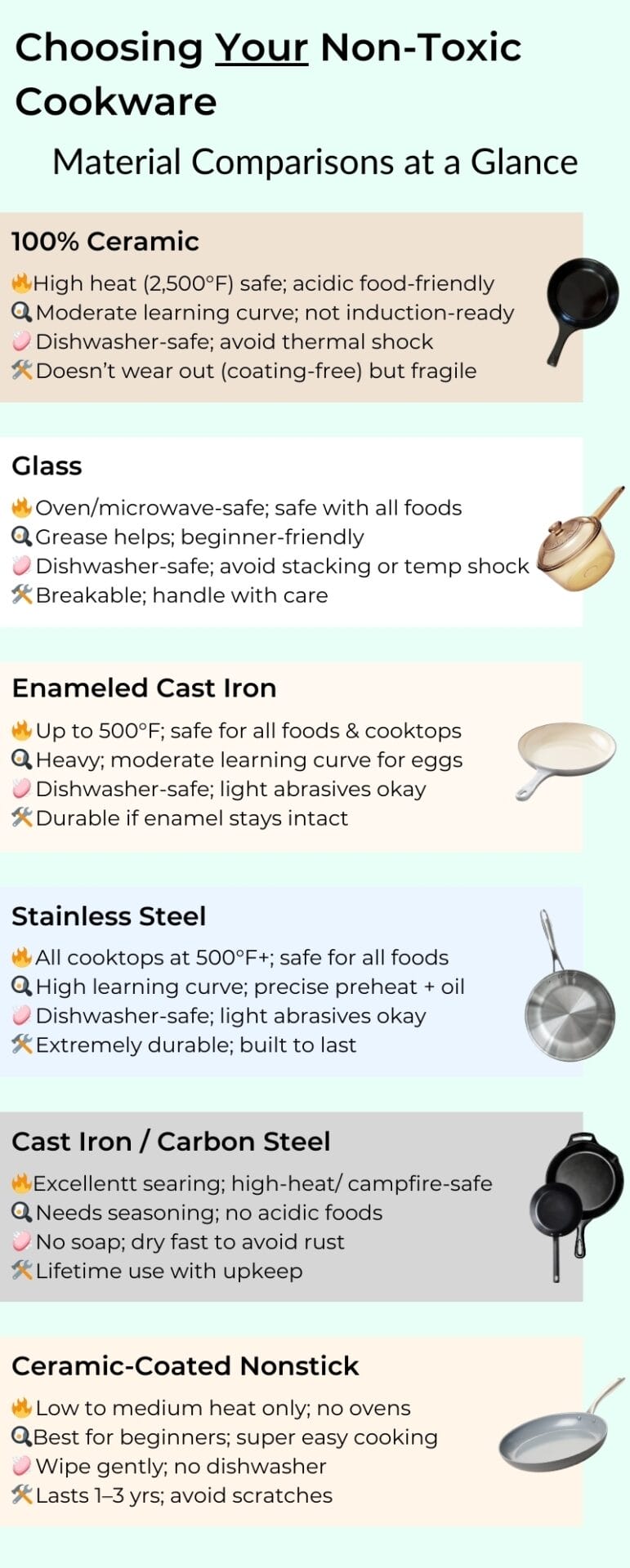
The table below summarizes common options for an American home kitchen. These are general material characteristics, not laboratory test results for every brand or model. Product quality, construction, and manufacturer instructions can change the practical outcome.
Source: kitchenbap.com
Choose by cooking task
A material that works well for slow braising may not be the easiest option for a quick egg breakfast.
Choose by health needs
Consider nickel sensitivity, iron overload, and other individual concerns before selecting cookware that may release relevant metals.
Stainless Steel: Best All-Around Choice
Stainless steel is a strong default choice for people who want versatile cookware without a synthetic nonstick coating. It is commonly used for saucepans, stockpots, skillets, and cookware sets. High-quality pieces can last for many years with normal care.
Stainless steel is an alloy, which means it combines iron with other elements. Many common grades contain chromium, and some also contain nickel. Chromium helps the metal resist rust and corrosion, while nickel can improve corrosion resistance and other properties.
Small amounts of nickel and chromium may enter food during cooking. Research has found that release can depend on the steel grade, cooking time, and food acidity. Newly purchased stainless steel cookware may release more of these metals during some cooking conditions than cookware that has been used repeatedly.
This does not mean stainless steel is unsafe for everyone. For most people, it remains a useful everyday option. However, people with a nickel allergy or sensitivity may want to discuss suitable choices with a qualified clinician and consider cookware with less nickel exposure.
Advantages
It is durable, versatile, usually dishwasher-safe when the manufacturer allows it, and does not require a nonstick coating.
Limitations
Food can stick without proper preheating and fat. Some grades may release nickel and chromium, particularly under certain cooking conditions.
Best uses
Boiling pasta, cooking grains, sautéing vegetables, making sauces, and preparing soups.
Cast Iron: Durable and Useful for Searing
Cast iron is a long-lasting choice for frying, baking, and searing. Its ability to retain heat makes it useful for steaks, cornbread, roasted vegetables, and other foods that benefit from a hot, steady cooking surface.
Traditional cast iron often has a seasoned surface. Seasoning forms when a thin layer of cooking oil bonds to the metal through heating. This layer helps reduce sticking and protects the pan from rust. It is not the same as a factory-applied synthetic nonstick coating.
Cast iron can release iron into food, and the amount varies with the food, cooking time, moisture, and acidity. Acidic foods such as tomato sauce may take up more iron, especially during longer cooking. This can increase the iron content of a meal, but the amount is not predictable enough to use a pan as a treatment for iron deficiency.
For people with hemochromatosis or another condition that causes iron overload, frequent use of cast iron may not be the best fit. A healthcare professional can help determine whether cookware choices matter for their specific situation.
Advantages
It retains heat well, can last for decades, and develops a useful cooking surface with proper seasoning.
Limitations
It is heavy, needs care to prevent rust, and may add iron to food.
Best uses
Searing meat, frying, baking skillet dishes, and cooking foods that benefit from steady heat.
Carbon Steel: A Lighter Alternative to Cast Iron
Carbon steel offers many of the same cooking benefits as cast iron but is often thinner and lighter. It is common in restaurant kitchens and works well for stir-frying, sautéing, frying eggs, and searing when properly seasoned.
Like cast iron, carbon steel can develop a seasoned surface from heated oil. It can also release iron into food. The amount depends on the pan and cooking conditions, so it should not be treated as a precise source of dietary iron.
Carbon steel needs drying and care to prevent rust. It is a good option for cooks who want responsive heat and a durable pan but are comfortable maintaining a seasoned surface.
Advantages
It is durable, often lighter than cast iron, and suitable for high-heat cooking.
Limitations
It needs seasoning, may react with acidic foods, and can rust if stored while wet.
Best uses
Stir-frying, searing, sautéing, and making foods that benefit from a seasoned cooking surface.
Glass: A Good Option for Oven Cooking
Glass cookware is especially useful for casseroles, baked pasta, roasted dishes, and desserts. Food-grade glass is generally nonreactive under its intended conditions, so it is not expected to contribute the same metal ions that may be released by metal cookware.
Glass baking dishes are not all designed for the same heat conditions. A product labeled oven-safe may still be unsuitable for a stovetop burner, broiler, or sudden temperature change. Thermal shock can cause glass to crack or break when it experiences a rapid shift in temperature.
Use glass products according to their instructions. Do not place a cold dish directly into a hot oven unless the manufacturer specifically permits it, and avoid placing hot glass on a wet or very cold surface. Check for chips and cracks before each use.
Advantages
It is nonreactive for many cooking tasks, does not need seasoning, and is useful for baking and food storage.
Limitations
It can break from impact or thermal shock and is not suitable for every stovetop or cooking method.
Best uses
Oven casseroles, baked vegetables, desserts, and storage in products designed for those uses.
Ceramic-Coated Cookware: Convenient but Not Permanent
Ceramic-coated cookware usually has a metal body covered with a smooth coating made from a ceramic-like material. It is often sold as an alternative to traditional nonstick pans. The coating can make it easier to cook eggs, pancakes, and other foods that tend to stick.
The term ceramic can be confusing. Ceramic-coated cookware is not the same as a solid ceramic pot, and it is not necessarily made entirely from clay. Many products use a metal base with a thin, manufactured coating.
The coating may lose its nonstick performance over time. High heat, abrasive tools, and rough cleaning can shorten its useful life. Follow the product’s care instructions and replace cookware if the coating peels, flakes, or becomes badly damaged.
Ceramic-coated pans are not automatically safer than every other nonstick option. Their safety depends on the materials, manufacturing quality, and conditions of use. Look for clear product information rather than relying only on claims such as green, clean, or natural.
Advantages
The surface can reduce sticking and make cooking and cleanup easier.
Limitations
Nonstick performance can decline, and coating composition varies by product.
Best uses
Eggs, pancakes, delicate fish, and other foods that are hard to release from an uncoated pan.
Traditional Nonstick Cookware: Safe Use Depends on Care
Many traditional nonstick pans use a coating made with polytetrafluoroethylene, or PTFE. PTFE belongs to a broad family of substances known as fluoropolymers. A finished PTFE coating is designed to resist sticking and can be useful for low-fat cooking.
PTFE cookware can generally be used safely when it is in good condition and the manufacturer’s temperature limits are followed. The main concern is overheating. At very high temperatures, particularly when an empty pan is left on a burner, the coating can break down and release fumes that may cause flu-like symptoms in people and can be extremely dangerous to pet birds.
Avoid heating an empty nonstick pan for long periods, use low or medium heat unless the manufacturer states otherwise, and turn on ventilation. Do not use pans with badly damaged or peeling coatings. Use utensils and cleaning methods recommended by the manufacturer.
PTFE and PFAS are related terms but do not mean the same thing. PFAS is a broad group of chemicals, and some substances used in the manufacture of certain products have raised environmental and health concerns. A product advertised as PFOA-free does not necessarily mean it is free of every PFAS or every possible chemical concern. Check the exact claim and product information.
Advantages
Food releases easily, less cooking fat may be needed, and cleanup is often simple.
Limitations
The coating can be damaged, and overheating can create hazardous fumes.
Best uses
Low- to medium-heat cooking of eggs, pancakes, and other delicate foods.
Cookware Materials Compared at a Glance
The best material depends on what you cook most often and which trade-offs matter to you. Use this comparison as a starting point, then check the care and temperature instructions for the exact product you plan to use.
Source: healthytasteoflife.com
Most versatile
Stainless steel handles a wide range of everyday cooking tasks.
Best heat retention
Cast iron holds heat well for searing and oven cooking.
Best for baking
Oven-safe glass is suitable for many casseroles and baked dishes.
Best for easy food release
A well-maintained nonstick or ceramic-coated pan can make delicate foods easier to cook.
How to Compare the Main Materials
The following table compares common cookware materials by typical use and care needs. The ratings are general descriptions, not universal safety scores or results from independent laboratory testing.
Stainless steel
Durable, versatile, and uncoated in many designs. Consider nickel sensitivity and avoid harsh use that could damage the surface.
Cast iron
Excellent heat retention and a seasoned surface. Requires drying and seasoning care and can add iron to food.
Carbon steel
Responsive heat and a seasoned surface. Needs maintenance and may react with acidic foods.
Glass
Useful for baking and storage. Must be protected from impact and unsuitable temperature changes.
Ceramic-coated
Convenient food release. The coating can wear, and product construction varies.
PTFE nonstick
Easy food release when used within its temperature limits. Avoid overheating and replace badly damaged pans.
Solid ceramic
Can be nonreactive when properly made for food use. Check product quality, intended use, and any glaze safety information.
What About Copper and Aluminum Cookware?
Copper conducts heat well and can offer precise temperature control. However, unlined copper can release copper into food, especially acidic foods. Excess copper intake can cause harm, so cooking surfaces made from copper are commonly lined with stainless steel or another suitable material.
Aluminum is lightweight and conducts heat efficiently. Small amounts may move into food, with release affected by factors such as acidity and cooking time. Anodized aluminum has a treated surface that is harder and more resistant to corrosion than ordinary aluminum, while coated aluminum products depend on the condition and type of their coating.
Neither copper nor aluminum must be rejected automatically. The key is to choose cookware designed for food contact and follow its use instructions. Avoid cooking or storing highly acidic foods for long periods in bare aluminum or unlined copper unless the manufacturer specifically states that the product is suitable.
Copper
Choose a suitable food-safe lining and stop using the pan if the lining wears through or the manufacturer says it needs repair.
Aluminum
Consider anodized or properly coated options if you want a more resistant surface, and follow the care instructions.
How Cookware Can Affect Food and Health
Cookware can affect food when substances from its surface move into a meal. This process is often called migration or leaching. The amount depends on the material, the food, the temperature, the time in contact, and the condition of the cookware.
The presence of a detectable substance does not automatically mean that the amount is harmful. Risk depends on the substance, dose, exposure route, and individual health factors. The practical goal is to limit avoidable exposure while using cookware for its intended purpose.
Source: i.pinimg.com
Acidic foods
Tomatoes, vinegar, citrus, and other acidic ingredients may increase the release of some metals from reactive cookware.
Cooking time
Long simmering or storage in a reactive pan can create different exposure conditions from brief cooking.
Heat
High heat can increase some forms of material interaction and is especially important for PTFE nonstick cookware.
Can Stainless Steel Release Metals?
Yes. Stainless steel may release small amounts of nickel and chromium into food under some conditions. The amount can be higher when cooking acidic foods for long periods, and research has found differences between new and well-used cookware.
For most people, normal use of sound stainless steel cookware is not generally a reason for alarm. People with a known nickel allergy or a medical condition that affects metal exposure should consider their personal needs rather than relying on a broad claim that all stainless steel is safe for everyone.
Practical step
Avoid prolonged storage of acidic food in metal cookware when the manufacturer does not recommend it. Use a suitable glass container for storage.
Can Cast Iron Increase Iron Intake?
Yes. Iron can move from cast iron into food, and the amount may rise with acidic ingredients and longer cooking. This is one reason cast iron is sometimes discussed in relation to dietary iron.
The effect varies widely and should not replace medical evaluation or treatment for iron deficiency. People who have been told to limit iron intake should ask their healthcare professional whether frequent cast iron use is appropriate.
Practical step
Use cast iron for the cooking tasks it suits, but do not rely on it as a controlled iron supplement.
Are Ceramic and Nonstick Coatings Dangerous?
A coating is not automatically dangerous because it is manufactured, and a natural material is not automatically safe because it comes from the earth. Safety depends on the ingredients, how the product is made, whether the cooking surface remains intact, and how it is used.
Traditional PTFE nonstick coatings require special care to prevent overheating. Ceramic-coated products have different formulations, and their performance can decline as the coating wears. For either type, clear product documentation and correct use are more meaningful than vague claims on a package.
Practical step
Use the lowest heat that suits the recipe, avoid heating an empty nonstick pan, and replace pans with peeling or badly damaged surfaces.
How to Choose the Healthiest Cookware for Your Needs
Start with your regular meals, not a promise printed on a box. If you often cook pasta, soup, vegetables, and sauces, stainless steel may cover most of your needs. If you sear meat or make skillet cornbread, cast iron may be more useful.
You do not need to replace every pot and pan at once. A small collection of well-maintained pieces can cover most cooking tasks and may be more practical than buying a large set with pieces you rarely use.
Source: thegoodlifedesigns.com
For a first kitchen
Start with a stainless steel saucepan, a stainless steel skillet, and an oven-safe baking dish. Add cast iron or nonstick cookware when your cooking habits call for it.
For low-fat cooking
A suitable nonstick or ceramic-coated pan can help food release with less oil. Keep it within the manufacturer’s heat limits.
For long-term value
Choose durable cookware with clear care instructions and replacement options, rather than focusing only on the initial price.
Step 1: Identify Your Main Cooking Methods
List the foods you cook most often and the methods you use. Boiling, simmering, searing, frying, baking, and broiling place different demands on cookware.
Stainless steel handles many stovetop tasks, while cast iron is useful for searing and oven use. Glass works well for many baked meals, and a nonstick pan is handy for foods that release poorly from bare metal.
For soups and sauces
Choose stainless steel or another material approved for the food and cooking method.
For steak and roasted vegetables
Choose cast iron or carbon steel if you want strong heat retention and can maintain a seasoned surface.
For casseroles
Choose an oven-safe glass or ceramic baking dish that matches the recipe’s temperature and handling needs.
Step 2: Check the Cooking Surface
Read the product details to determine whether the pan is uncoated metal, lined copper, anodized aluminum, ceramic-coated metal, PTFE-coated metal, or solid ceramic. These materials are not interchangeable, even when products look similar.
Look for clear information about food contact, temperature limits, oven compatibility, cleaning, and the manufacturer’s recommendations for damaged surfaces. If a product makes a broad claim such as chemical-free, seek more specific details before treating the claim as proof of safety.
Verify the material
Check the product specifications instead of relying on color, weight, or marketing photos.
Verify the limits
Make sure the cookware suits your stove, oven, and cleaning routine.
Step 3: Consider Personal Health Needs
A material that works well for one person may be less suitable for someone with a particular medical concern. Nickel sensitivity can affect cookware selection, while iron overload may make frequent use of cast iron worth discussing with a healthcare professional.
If you have a specific concern about metal exposure, do not assume that an expensive pan or a product labeled non-toxic will solve it. Ask a qualified clinician what exposure matters for your condition and whether a cookware change is likely to help.
Nickel sensitivity
Consider the composition of stainless steel and discuss potential exposure with a clinician if your sensitivity is significant.
Iron overload
Ask your healthcare professional whether the iron released by cast iron cookware is relevant to your care.
Step 4: Set a Maintenance Routine
Even suitable cookware can become difficult or unsafe to use if it is neglected. Clean each item as directed, dry cast iron and carbon steel promptly, and avoid abrasive tools on surfaces that can be damaged.
Inspect cookware regularly. Replace a pan when its coating peels or flakes, discard cracked glass, and address serious corrosion or damaged food-contact linings according to the manufacturer’s advice.
After cooking
Clean the pan with an appropriate detergent and tool, then dry it if the material can rust.
Before use
Check for cracks, loose handles, damaged coatings, and other visible defects.
During storage
Keep cookware dry and use protective separators if stacking could scratch a coated surface.
Common Cookware Safety Mistakes to Avoid
Many cookware problems come from using a pan in a way its design does not support. A simple care routine can reduce avoidable risks and help cookware last longer.
The most useful rule is to follow the instructions for the exact product. A glass dish, a seasoned skillet, and a coated nonstick pan have different limits, so one cleaning or heating method will not suit them all.
Source: thehonoursystem.com
Overheating nonstick pans
Do not leave an empty PTFE pan over high heat. Use suitable heat settings and ventilation.
Using damaged coatings
Replace pans with significant peeling or flaking rather than trying to restore a surface that the manufacturer says is no longer suitable.
Cooking acidic foods in reactive metal
Avoid prolonged contact between acidic food and unsuitable bare aluminum or unlined copper.
Exposing glass to thermal shock
Avoid sudden temperature changes and follow the dish’s instructions for oven and surface use.
Trusting vague marketing
Treat phrases such as green, natural, and non-toxic as claims to investigate, not proof that a product has no risk.
Do Not Confuse Scratches With the Same Risk on Every Material
A scratch means different things on different cookware. A shallow mark on uncoated stainless steel does not carry the same implications as a crack in glass, severe corrosion on iron, or peeling from a coated pan.
Inspect the type and extent of damage rather than applying one rule to every material. If the food-contact surface is flaking, the pan is badly corroded, a lining has worn through, or the product’s instructions say to discontinue use, replace it.
Uncoated stainless steel
Minor cosmetic marks are common. Check for serious pitting, corrosion, or structural damage.
Seasoned cast iron
A damaged seasoning layer can often be restored if the underlying pan remains sound and the manufacturer’s care guidance permits it.
Coated cookware
Peeling, flaking, or extensive coating damage is a reason to stop using the pan and follow the manufacturer’s replacement guidance.
Glass cookware
Do not use cracked or chipped dishes that could fail during heating or handling.
Avoid Unsafe Ceramic Glazes and Unclear Product Claims
Solid ceramic cookware and glazed pottery can vary in quality. Some poorly made or unsuitable glazed products may release lead or cadmium into food, especially under conditions that increase migration. This is a separate issue from the nonstick performance of ceramic-coated metal pans.
Buy cookware intended for food preparation from a reputable source. Be especially cautious with decorative pottery, antique pieces, imported products with unclear food-use information, and handmade glazed ware that has not been shown to meet applicable food-contact requirements.
A product description alone cannot establish that a glaze is free of lead or cadmium. When the intended food use or compliance status is unclear, choose a product with reliable documentation rather than taking a chance.
Check intended use
A decorative bowl or pottery piece is not automatically suitable for cooking or serving food.
Check reliable documentation
Look for clear food-contact information and applicable compliance details rather than relying on appearance.
How to Build a Practical, Health-Conscious Cookware Set
You can cover most everyday meals with a few well-chosen pieces. Instead of buying a large matching set, choose cookware based on how you cook and how much room you have to store it.
A practical collection may include a stainless steel saucepan, a stainless steel skillet, a larger pot for pasta or soup, an oven-safe glass baking dish, and one specialty pan if you need it. Cast iron can fill the role of a searing pan, while a nonstick pan can help with delicate foods.
Source: drjockers.com
Everyday core
Use stainless steel for versatile stovetop cooking and a pot sized for your household’s regular meals.
Specialty pan
Add cast iron for searing or a suitable nonstick pan for eggs and other foods that tend to stick.
Oven cooking
Keep a glass or suitable ceramic baking dish for casseroles, baked vegetables, and other oven meals.
A Simple Starter Set for Most Households
For a household that cooks a mix of American staples, a medium saucepan, a large pot, and a skillet provide a useful foundation. Add a baking dish for casseroles and oven meals, then choose any specialty pan based on the foods you prepare most often.
If you cook for one or two people, smaller pans may be easier to handle and clean. If you prepare meals for a large family, a larger pot and skillet may matter more than owning several small specialty pieces.
Saucepan
For oatmeal, rice, sauces, and reheating soups.
Large pot
For pasta, beans, soups, stews, and batch cooking.
Skillet
For sautéing vegetables, cooking proteins, and making quick meals.
Baking dish
For casseroles, baked pasta, roasted dishes, and desserts.
When Should You Replace Old Cookware?
Cookware does not have one universal replacement date. Sound stainless steel, cast iron, and carbon steel may last for many years when maintained well. Coated cookware may need replacement sooner because the cooking surface can wear.
Replace or stop using items with cracks, unsafe structural damage, severe corrosion, a failed food-contact lining, or peeling coatings. For damage that is less clear, check the manufacturer’s care guidance rather than assuming that age alone makes a pan unsafe.
Replace damaged glass
Cracked or chipped glass can fail during use, so do not continue heating it.
Check coated pans
Replace a coated pan when its surface peels or flakes or when its instructions call for replacement.
Maintain bare metal
Clean and dry iron-based cookware, and address corrosion or structural damage before further use.
Frequently Asked Questions
Q
What Is the Safest Cookware Material for Everyday Use?
Uncoated stainless steel is a strong all-purpose option for most households because it is durable, versatile, and does not require a nonstick coating. However, people with nickel sensitivity may need to consider the steel’s composition. Cast iron and glass can also be suitable choices for the right cooking tasks.
Q
Is Stainless Steel Healthier Than Nonstick Cookware?
Neither material is automatically healthier in every situation. Stainless steel avoids a synthetic nonstick coating but can release small amounts of nickel and chromium under some cooking conditions. PTFE nonstick cookware can be used safely when kept within its temperature limits and maintained according to the manufacturer’s instructions.
Q
Is Ceramic Cookware Safer Than Teflon?
The answer depends on the exact products and how they are used. Ceramic-coated pans use a different coating system from traditional PTFE pans, but their coatings can wear and their formulations vary. PTFE pans require care to prevent overheating. Compare clear product information, care instructions, and intended use rather than assuming one category is always safer.
Q
Is Cast Iron Safe for Cooking Tomatoes?
Tomatoes are acidic and can increase the amount of iron that moves from cast iron into food, especially during long cooking. A well-seasoned pan may be suitable for brief cooking, but prolonged simmering of acidic sauces is often better done in suitable stainless steel or another nonreactive vessel. People who need to limit iron intake should seek medical advice about frequent cast iron use.
Q
Is Glass Cookware Healthier Than Metal?
Glass is generally nonreactive under its intended conditions and is useful for baking and storing food. It is not necessarily better for every task because it can break from impact or thermal shock and is unsuitable for many stovetops. Metal cookware is often more versatile for direct-heat cooking.
Q
What Cookware Should I Avoid for Health Reasons?
Avoid cookware that is cracked, severely corroded, has a failed food-contact lining, or has a peeling coating that the manufacturer says is no longer suitable for use. Be cautious with decorative pottery or glazed cookware without reliable food-use information. Do not overheat nonstick pans, and avoid using bare reactive metals with foods they are not designed to handle.
Q
Does Non-Toxic Cookware Mean Chemical-Free?
No. Non-toxic is a broad marketing term, not proof that a product contains no chemicals or poses no risk under every condition. All materials are made of chemicals, including stainless steel, glass, and ceramic. More useful questions include what the cooking surface contains, whether it is intended for food contact, and how it performs under normal use.
Q
Can Cookware Add Nutrients to Food?
Cast iron can add some iron to food, and the amount varies with cooking conditions. That does not make it a reliable treatment for iron deficiency. Cookware should be selected for safe and suitable cooking, while nutritional needs should be addressed through a balanced diet and professional medical advice when necessary.
✦ Wrapping Up
Conclusion
The healthiest cookware material is the one that suits your meals, health needs, and cooking habits while remaining safe under normal use. For many American households, uncoated stainless steel is a sensible starting point because it handles a wide range of recipes and can last for years. Cast iron is useful for searing, glass works well for baking, and suitable nonstick cookware can make delicate foods easier to prepare.
No material is perfect. Stainless steel may release small amounts of nickel and chromium, cast iron can add iron, glass can break, and coated pans need proper care. The goal is not to fear every material or spend money replacing everything. It is to understand the trade-offs and use each pan as intended.
💡 Key Takeaway
Start by checking the cookware you already own. Keep sound, suitable pans; replace items with serious damage; use stainless steel for versatile everyday cooking; and add cast iron, glass, or nonstick cookware only where it serves a clear purpose. Follow the manufacturer’s instructions and seek medical guidance if a specific health condition affects your cookware choices.