

Is Nonstick Cookware Good?
Yes, especially for cooks who want simple meals with little fuss. In my kitchen, nonstick cookware is the pan I reach for when breakfast needs to happen fast. Eggs slide out with ease. Pancakes turn without a fight. Fish is also much easier to move without tearing the crust. That simple release can make a tired weekday morning feel less like work.
The main tradeoff is durability. A nonstick coating can wear over time, especially with high heat, metal tools, rough scrubbers, or poor care. Modern nonstick cookware can be useful and convenient, but I treat the coating as the part that needs the most care. In the nonstick vs stainless steel cookware debate, nonstick wins on ease, but stainless steel has the edge when long-term toughness matters most.
What Makes It Stand Out / Key Features
- Low stickingThe slick surface helps food release with less oil and less scraping.
- Easy cleanupMost food wipes away with little effort when the pan is used and cleaned correctly.
- Gentle cookingIt works well for eggs, pancakes, fish, and other foods that can tear or stick.
- Less oilThe smooth surface can reduce the need for added cooking fat.
- Fast daily useIt suits quick meals when you want a simple cooking process and fast cleanup.
- Care needsThe coating needs sensible heat and tool choices to help it last.
My Recommendation
Choose nonstick if you cook many eggs, pancakes, fish, or quick meals and value easy cleanup. It is also a good fit for cooks who prefer a forgiving pan.
| Best For | Why |
|---|---|
| Eggs and breakfast | Food releases easily and needs little cleanup. |
| Busy households | Fast cooking and easy cleanup save time. |
| New cooks | The low-stick surface makes common meals easier to manage. |
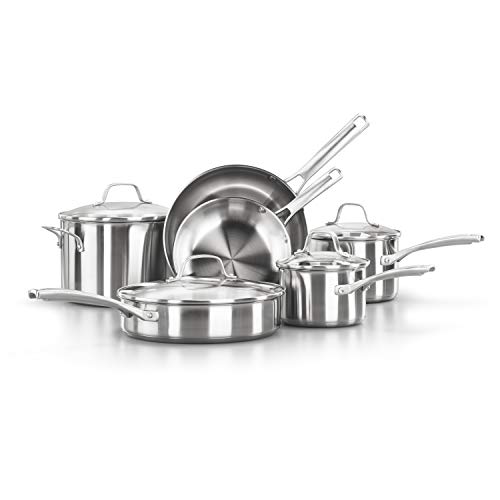
Is Stainless Steel Cookware Good?
Yes, if you want a durable pan that can take serious kitchen work. I like stainless steel when I want a strong sear on chicken, steak, or vegetables. It takes more practice than nonstick. Food can stick if the pan is cold, the heat is wrong, or the food is moved too soon. But once I learned the basics, that sticking became less of a problem.
Stainless steel also gives me more freedom with high heat and pan sauces. I can brown food, build fond, and then add liquid to turn those browned bits into sauce. That is where stainless steel shines. In the nonstick vs stainless steel cookware debate, stainless steel trades some ease for toughness, heat control, and cooking range.
What Makes It Stand Out / Key Features
- High heat useStainless steel can handle high cooking temperatures when the cookware is rated and used correctly.
- Strong searingIt is well suited to browning meat and vegetables.
- Fond for saucesBrowned bits left in the pan can add flavor to pan sauces.
- Durable surfaceBare stainless steel does not rely on a nonstick coating for its cooking surface.
- Versatile cookingIt works well for searing, sautéing, boiling, simmering, and many oven tasks when the specific cookware allows it.
- Long service lifeGood stainless steel cookware can remain useful for many years with normal care.
My Recommendation
Choose stainless steel if you care about searing, high heat, pan sauces, and long service life. It is a strong choice for cooks willing to learn basic heat control.
| Best For | Why |
|---|---|
| Searing meat | It supports strong browning and high heat cooking. |
| Pan sauces | Browned food bits can add flavor to sauces. |
| Long-term use | A quality stainless steel pan can provide years of service. |
nonstick vs stainless steel cookware: Side-by-Side Test
The easiest way to understand nonstick vs stainless steel cookware is to look at the jobs each pan handles best. One feels like a smooth road. The other gives you more control but asks you to learn the road.
Neither type replaces every other pan. Many US kitchens benefit from having both. A nonstick pan can handle delicate foods, while stainless steel can take on high heat and browning.
Ease of Cooking: Which Feels Simpler?
Nonstick has a gentle learning curve. Stainless steel rewards good heat control.
| Feature | Product 1 | Product 2 |
|---|---|---|
| Food release | Very easy | Needs technique |
| Learning curve | Low | Moderate |
| Eggs | Excellent | Good with proper heat |
| Pancakes | Excellent | Good with proper heat |
⭐ Product A – 9/10 | Product B – 7/10
Nonstick has the edge when simple cooking matters most.
Searing: Which Browns Better?
Searing needs strong heat and good contact, which makes stainless steel a natural fit.
| Feature | Product 1 | Product 2 |
|---|---|---|
| Steak searing | Limited compared with stainless steel | Excellent |
| Chicken browning | Good | Excellent |
| Vegetable browning | Good | Excellent |
| Fond for sauces | Limited | Excellent |
⭐ Product A – 7/10 | Product B – 9/10
Stainless steel has the edge for browning and pan sauces.
Cleanup: Which Takes Less Work?
After a long workday, cleanup matters. This is where nonstick feels like a shortcut.
| Feature | Product 1 | Product 2 |
|---|---|---|
| Light cleanup | Very easy | Easy |
| Sticky food | Usually easy | May need soaking |
| Scrubbing | Usually minimal | Can be needed |
| Weeknight convenience | Excellent | Good |
⭐ Product A – 9/10 | Product B – 7/10
Nonstick has the edge for fast and easy cleanup.
Durability: Which Lasts Longer?
A pan is an investment. Stainless steel usually has fewer surface-care limits because it does not rely on a nonstick coating.
| Feature | Product 1 | Product 2 |
|---|---|---|
| Coating wear | Possible over time | Not applicable to bare stainless surface |
| High heat tolerance | Depends on coating and manufacturer | Generally strong |
| Scratch concerns | Higher | Lower for normal metal-tool use |
| Long service life | Good with careful use | Excellent with normal care |
⭐ Product A – 7/10 | Product B – 9/10
Stainless steel has the edge for long-term durability.
High Heat: Which Handles It Better?
High heat can help create a deep crust, but cookware limits vary, so always follow the maker’s instructions.
| Feature | Product 1 | Product 2 |
|---|---|---|
| High heat searing | Usually less suitable | Very suitable |
| Heat control | Forgiving | Needs more attention |
| Browning | Good | Excellent |
| Heat-related care | More coating awareness needed | Generally simpler |
⭐ Product A – 7/10 | Product B – 9/10
Stainless steel has the edge for high-heat cooking.
Delicate Foods: Which Wins?
Delicate food can tear or stick. A smooth nonstick surface makes this job much easier.
| Feature | Product 1 | Product 2 |
|---|---|---|
| Eggs | Excellent | Good with technique |
| Fish | Excellent | Good with technique |
| Pancakes | Excellent | Good |
| Food release | Very easy | Technique matters |
⭐ Product A – 9/10 | Product B – 7/10
Nonstick has the edge for delicate foods.
Versatility: Which Does More?
Both can handle many meals, but they shine in different parts of the cooking process.
| Feature | Product 1 | Product 2 |
|---|---|---|
| Eggs | Excellent | Good |
| Searing | Good | Excellent |
| Sauces | Good | Excellent |
| Everyday cooking | Excellent | Excellent |
⭐ Product A – 8/10 | Product B – 9/10
Stainless steel has the edge for broad cooking range, while nonstick remains easier for daily basics.
Care: Which Is Easier to Live With?
Good care helps both types last, but the care rules are different.
| Feature | Product 1 | Product 2 |
|---|---|---|
| Utensil care | Use tools approved for the coating | More tool freedom |
| Scrubbing | Avoid harsh abrasion | More tolerant |
| Heat awareness | Important | Still important |
| Maintenance | Simple but coating-sensitive | Simple and durable |
⭐ Product A – 8/10 | Product B – 9/10
Stainless steel has the edge for forgiving long-term care.
Final Verdict: Which Should You Buy?
The nonstick vs stainless steel cookware choice comes down to how you cook. Nonstick is the easygoing helper. It makes eggs, pancakes, fish, and quick meals simple. Stainless steel is the kitchen workhorse. It handles searing, browning, sauces, and high heat with confidence.
If I were setting up a practical US kitchen, I would not treat this as an either-or decision. A nonstick pan and a stainless steel pan can cover very different jobs. Choose nonstick for ease and delicate foods. Choose stainless steel for durability, high heat, and deep browning.