PTFE is a synthetic coating that makes many nonstick pans smooth, easy to clean, and resistant to food sticking. It is generally considered safe when used as directed, but overheating the pan can release harmful fumes.
If you cook eggs for breakfast, make grilled cheese for lunch, or prepare a quick dinner after work, you may use a nonstick pan without thinking about its coating. In American kitchens, PTFE is a common material behind that easy-release surface. You may know it by the familiar brand name Teflon, although not every PTFE coating uses that brand.
PTFE stands for polytetrafluoroethylene. It is a type of fluoropolymer, which is a plastic made from repeating chemical units that contain carbon and fluorine. Its low-friction surface helps food release with little sticking, and its chemical resistance makes it useful for cookware.
The main safety concern is not ordinary cooking with a properly used PTFE pan. The bigger concern is extreme heat, especially when an empty pan sits on a hot burner. At high temperatures, PTFE can break down and release fumes that may harm people and are especially dangerous to pet birds.
PTFE and PFOA are not the same thing. PFOA was used in the past in the manufacture of some nonstick coatings, but it is a different chemical from the PTFE polymer in the finished pan. Understanding that difference helps you read cookware labels and make a choice that fits your cooking habits.
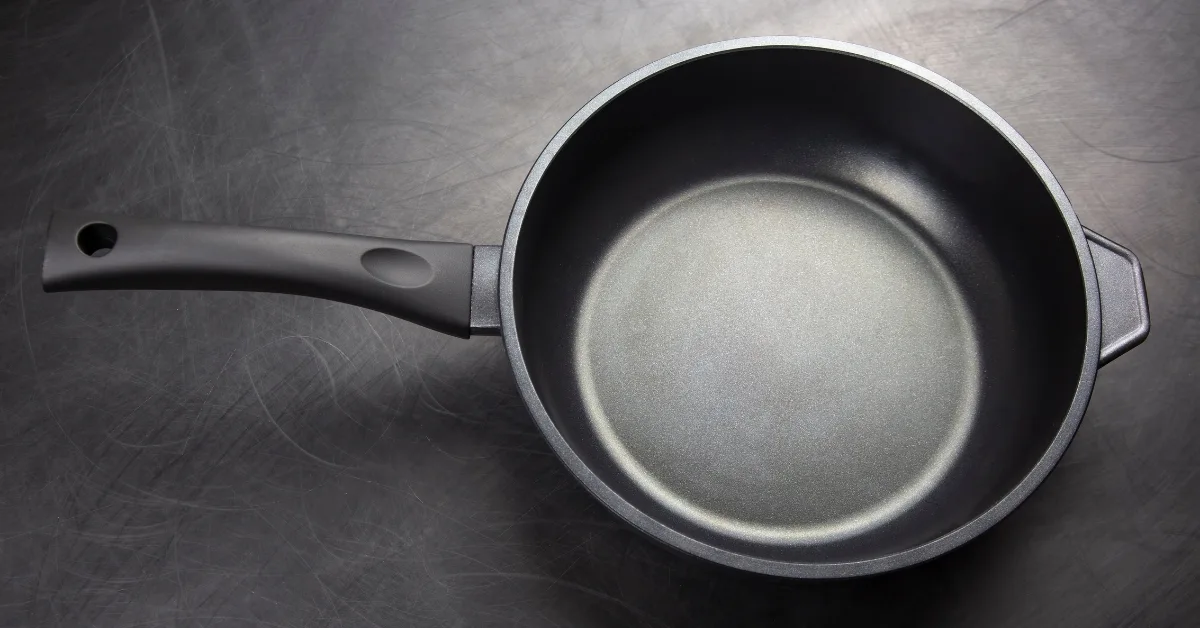
PTFE is short for polytetrafluoroethylene, a man-made polymer used to create a smooth, nonstick surface on cookware. A polymer is a large molecule built from many repeating units. In PTFE, strong bonds between carbon and fluorine atoms help give the material its useful properties.
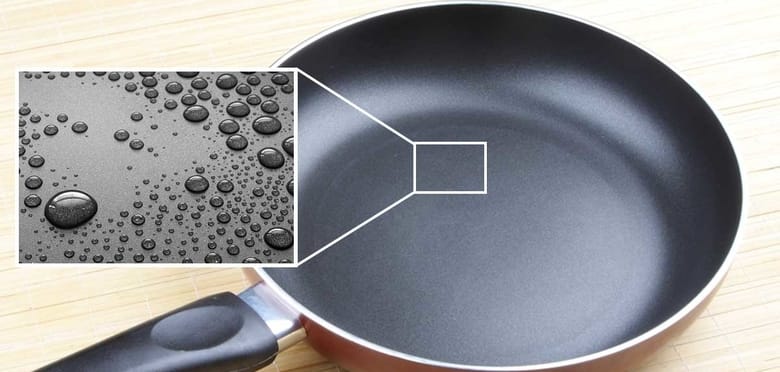
When a pan has a PTFE coating, eggs, pancakes, cheese, and other foods are less likely to stick to its surface. This makes cooking easier and often reduces the need for oil or butter. Food residue also tends to wash away with less effort.
PTFE is not usually the main body of the pan. Many PTFE-coated pans have an aluminum or stainless steel base, with the coating applied to the cooking surface. The metal spreads heat, while the coating helps food release.
The coating may contain more than one layer. A manufacturer can use a primer and additional coating layers to help the finish bond to the pan and resist everyday wear. The exact design depends on the product, so the term PTFE alone does not tell you how thick, durable, or long-lasting a particular coating will be.
Source: kitchenbap.com
PTFE
The name of the polymer used in many nonstick surfaces.
Nonstick coating
The layer applied to the cooking surface to reduce sticking and make cleanup easier.
Pan body
The metal base that gives the cookware its shape and helps transfer heat.
Why Is PTFE Used for Nonstick Pans?
PTFE has a low-friction surface, so many foods can move across it without much force. That is why a cooked egg may slide out of a new nonstick pan more easily than it does from an uncoated stainless steel skillet.
The material also resists many chemicals and does not readily react with food under normal cooking conditions. These traits make it useful for a surface that comes into contact with oil, salt, water, and a wide range of ingredients.
However, a nonstick coating is not indestructible. Abrasive cleaning, metal tools, rough storage, and overheating can shorten its useful life. PTFE helps food release, but it does not remove the need for proper care.
Easy food release
Helps delicate foods such as eggs and fish lift from the cooking surface.
Simple cleanup
Often allows food residue to come off with warm water, dish soap, and a soft sponge.
Less added fat
Can reduce the amount of oil or butter needed for some recipes, although the amount depends on the food and cooking method.
Is PTFE the Same as Teflon?
No. PTFE is the chemical name of the material, while Teflon is a brand name associated with PTFE and related fluoropolymer products. People often use the two names as if they mean the same thing because Teflon became widely known for nonstick cookware.
A pan may use a PTFE-based coating without carrying the Teflon brand. For that reason, check the product’s material information rather than relying on a familiar name alone.
PTFE
A material name used to describe the polymer.
Teflon
A commercial brand name associated with PTFE-based products.
How Does PTFE Nonstick Cookware Work?
PTFE cookware works by giving food a surface that has very low friction. Food proteins and starches can still cook and form residue, but they often bond less strongly to PTFE than to many bare metal surfaces. This makes it easier to move or remove food without scraping.
The coating does not make food cook by itself. Heat still travels from the burner through the pan’s metal body and into the food. The type and thickness of that metal, the burner setting, the amount of food, and the cooking method all affect the final result.
For example, a PTFE skillet can be useful when making scrambled eggs or pancakes on a weekday morning. A stainless steel skillet or cast iron pan may be better when you want a strong sear on a steak, especially if your recipe calls for very high heat.
Source: stonefryingpans.com
Low friction
Helps cooked food slide or lift away from the surface.
Heat transfer
Comes mainly from the pan’s metal body, not from the PTFE coating.
Cooking control
Low to medium heat helps protect the coating and works well for many everyday recipes.
Does PTFE Mean the Entire Pan Is Made of Plastic?
No. Most conventional PTFE-coated frying pans have a metal body and a relatively thin polymer coating on the cooking surface. The coating gives the pan its nonstick property, while the metal body provides structure and conducts heat.
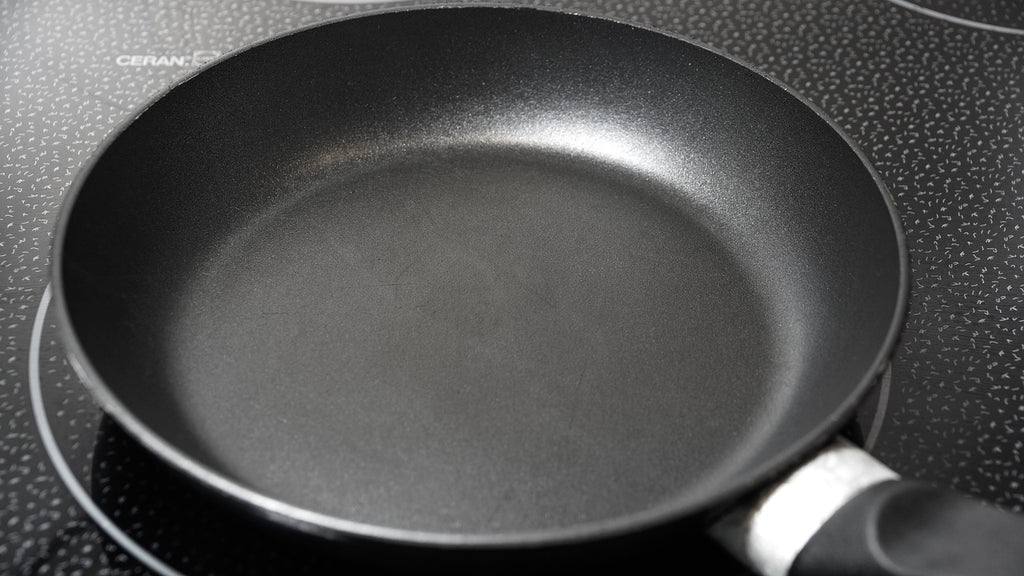
The metal may be aluminum, stainless steel, or another material specified by the manufacturer. This matters when choosing cookware for a gas, electric, glass-top, or induction stove. A PTFE coating alone does not tell you whether the pan works with your cooktop.
Check the base
Look for the manufacturer’s stated pan-body material and cooktop compatibility.
Check induction use
Induction requires a suitable magnetic base, even when the pan has a PTFE coating.
Is PTFE Cookware Safe to Use?
PTFE-coated cookware is generally considered safe when used as intended and kept below temperatures that cause the coating to break down. The U.S. Food and Drug Administration explains that PFAS used in authorized nonstick cookware coatings are polymerized and tightly bound to the pan surface. The agency’s assessment indicates that only a negligible amount of PFAS capable of migrating to food is present in these coatings.
That finding applies to the intended use of the coating. It does not mean that every product sold as nonstick has the same construction, that any pan can withstand unlimited heat, or that cookware should be used after its coating has seriously deteriorated.
The most important everyday precaution is to prevent overheating. An empty pan can become much hotter than a pan containing water-rich food. If PTFE is exposed to extreme heat, it can break down and release fumes that may cause illness.
Poison Control describes a condition called polymer fume fever, sometimes known as Teflon flu. Symptoms can include fever, chills, headache, fatigue, body aches, and chest or airway irritation. Symptoms may begin several hours after exposure, so an overheated pan should never be treated as harmless just because no immediate reaction occurs.
Source: m.media-amazon.com
Normal use
Use the pan according to its instructions, avoid overheating, and provide suitable kitchen ventilation.
Extreme heat
Overheated PTFE can break down and release hazardous fumes, even when those fumes are not visible.
Symptoms after exposure
Move away from the fumes and seek medical advice if symptoms develop. Contact emergency services for severe breathing trouble.
What Temperature Is Too Hot for PTFE?
There is no single temperature that serves as a universal cooking limit for every PTFE pan. Product instructions take priority, and heat resistance can depend on the coating system and the cookware design. Poison Control warns that PTFE coatings can begin to break down above about 500 degrees Fahrenheit, while the German Federal Institute for Risk Assessment identifies a risk from strong overheating at around 680 degrees Fahrenheit and above.
These figures describe different points in the heating and breakdown process. They should not be treated as a recommended cooking range or as proof that every temperature below one figure is safe under every condition.
For everyday cooking, the practical rule is simple: do not heat a PTFE pan empty, do not use high heat unless the manufacturer expressly permits it, and do not use the pan under a broiler or over an open flame unless its instructions specifically allow that use. PTFE cookware is usually best suited to low and medium heat.
Before cooking
Add food or an appropriate cooking liquid before heating the pan, following the recipe and product instructions.
While cooking
Keep the burner at a controlled setting and do not leave the pan unattended.
If the pan overheats
Turn off the heat if you can do so safely, avoid breathing fumes, and ventilate the area without exposing yourself further.
Are PTFE Pans Safe for Birds?
Pet birds need special care around overheated PTFE. Birds have highly sensitive respiratory systems, and fumes from overheated PTFE products can cause severe poisoning or sudden death. Veterinary guidance from VCA Animal Hospitals and Texas A&M’s veterinary diagnostic laboratory describes this risk.
If you keep a parrot, budgie, cockatiel, or another pet bird, consider avoiding PTFE-coated cookware and other PTFE products that may be heated in the home. This is the most cautious option because overheating can happen by accident and fumes may spread beyond the kitchen.
If a bird may have been exposed, move it to fresh air if this can be done safely and contact an avian veterinarian or emergency veterinary service immediately. Do not wait for signs of illness to appear.
Bird owners
Consider PTFE-free cookware and review other heated products in the home that may contain PTFE.
Possible exposure
Seek urgent veterinary advice, even if the bird does not yet show obvious symptoms.
PTFE vs. PFOA vs. PFAS: What Is the Difference?
PTFE, PFOA, and PFAS are related terms, but they do not mean the same thing. Confusing them can lead to poor cookware choices, especially when a label says PFOA-free or PFAS-free.
PFAS is the broad name for a large family of human-made chemicals that contain carbon-fluorine bonds. PTFE is a fluoropolymer within this broad family. PFOA is a separate chemical that was used in the past as a processing aid in the production of some fluoropolymer products.
The distinction matters because removing PFOA from a manufacturing process does not automatically remove PTFE from the finished pan. A product can be PFOA-free and still have a PTFE nonstick coating.
Source: cdn.shopify.com
PTFE
The polymer that provides the low-friction nonstick surface on many pans.
PFOA
A separate chemical formerly used in making some fluoropolymer products and associated with environmental and health concerns.
PFAS
A broad family of chemicals with varied structures, uses, and properties. It is not the name of one specific substance.
Does PFOA-Free Mean PTFE-Free?
No. PFOA-free means that the product is claimed to be made without PFOA, or that PFOA is absent under the standard and conditions used for the claim. It does not establish that the cooking surface contains no PTFE.
If your goal is to avoid PTFE, look for a clear statement that the cookware is PTFE-free. If your goal is to avoid all PFAS, ask the manufacturer to clarify the scope of its claim, including the coating and any other treated components. A vague label may not answer the question you actually have.
The phrase PFOA-free became common as manufacturers moved away from using that processing aid. It remains useful information, but it should not be treated as a complete description of a pan’s materials.
PFOA-free
Does not by itself mean the product is free of PTFE or every other PFAS.
PTFE-free
Addresses the presence of PTFE, but does not automatically establish that every component is free of PFAS.
PFAS-free
Check how the manufacturer defines the claim and whether it covers the entire product.
Has PFOA Been Phased Out of Nonstick Cookware?
PFOA was used in the past in the manufacture of some nonstick coatings. Companies participating in the U.S. EPA’s PFOA Stewardship Program phased out its production and import for covered uses, and modern cookware is widely marketed as PFOA-free.
However, a phaseout of PFOA does not mean that all PFAS have disappeared from cookware manufacturing. PTFE remains a common material for nonstick surfaces, and manufacturers may use different production methods and coating systems.
If you are considering an older, used, or unbranded pan, do not assume its chemical composition from its age or appearance. Check available product documentation or choose a new product with clear material disclosures.
Check the exact claim
Distinguish a PFOA-free statement from a broader PTFE-free or PFAS-free claim.
Review product details
Use the maker’s published material and care information rather than relying on a generic nonstick label.
How to Use PTFE Cookware Safely
Safe use begins before the pan reaches the stove. Read the manufacturer’s instructions for heat limits, utensils, cleaning, oven use, and the type of cooktop. These details can differ between products, even when both use PTFE.
For most everyday meals, low to medium heat is a sensible starting point. PTFE cookware does not need extreme heat to release eggs, pancakes, or similar foods. A higher setting may also burn food or oil before the center cooks.
Ventilation is another useful safeguard. Turn on the range hood or open a window when practical, especially if you cook often. Ventilation does not make overheating acceptable, but it can help remove cooking fumes from the room.
Source: leafscore.com
Use controlled heat
Choose low or medium heat for routine cooking unless the manufacturer’s instructions specify otherwise.
Avoid empty preheating
Do not leave a PTFE pan heating on its own. Add food or liquid first.
Choose suitable utensils
Use wood, silicone, or other utensils approved for the pan’s coating.
Clean gently
Use warm water, dish soap, and a soft sponge rather than steel wool or harsh abrasive pads.
A Simple Step-by-Step Cooking Routine
First, inspect the cooking surface and handle. If the coating is badly damaged, peeling, or flaking, set the pan aside for replacement. Check that the pan is stable on the burner and that its base suits your cooktop.
Next, add your ingredients or a suitable amount of cooking fat before heating. Use a controlled burner setting and remain nearby while the pan warms. Avoid using a PTFE pan for tasks that require very high heat or direct flame.
During cooking, use an approved utensil and lower the heat if food begins to burn or oil starts smoking. Once you finish, turn off the burner and allow the pan to cool before cleaning it according to the maker’s directions.
Before heating
Inspect the surface, confirm cooktop compatibility, and add food or liquid.
During heating
Use moderate heat and never leave the pan unattended.
After cooking
Let the pan cool and wash it gently without scraping the coating.
What Should You Do If a PTFE Pan Overheats?
If a pan starts smoking or you suspect the coating has overheated, turn off the burner if you can do so safely. Avoid leaning over the pan or breathing its fumes. Move people and pets away from the affected area and ventilate the room when doing so does not expose you to more fumes.
Do not add water to a dangerously hot pan if doing so could cause a violent splatter or other hazard. Let the pan cool in a safe place and follow the manufacturer’s advice about whether it can be used again.
If you develop fever, chills, coughing, chest tightness, or trouble breathing after exposure, move to fresh air and contact a medical professional or Poison Control. Severe breathing symptoms require emergency medical care. If a pet bird may have been exposed, seek urgent veterinary help.
Stop the heat
Switch off the burner if safe, and avoid handling the hot pan unnecessarily.
Avoid the fumes
Move away from the source and keep other people and pets out of the affected area.
Get help when needed
Seek medical or veterinary advice promptly if exposure or symptoms are suspected.
When Should You Replace a PTFE Pan?
Replace a PTFE pan when the coating shows substantial peeling, flaking, or other serious deterioration, or when the maker’s instructions say the pan has reached the end of its service life. A damaged coating may not release food as well and can make cooking and cleaning harder.
A small scratch does not automatically mean that a pan will poison you. The German Federal Institute for Risk Assessment says that accidentally swallowing tiny particles from a scratched PTFE coating is not expected to harm health because PTFE is largely inert and the particles are expected to pass through the digestive tract. That does not mean every damaged pan should remain in use.
The sensible approach is to judge the condition of the whole cooking surface. A pan with widespread peeling, loose flakes, deep gouges, or a badly worn finish should be replaced. Do not scrape off the remaining coating and continue using the pan as if it were an uncoated skillet.
Source: letshomebody.com
Replace the pan
The surface is peeling, flaking, or deteriorating across a substantial area.
Check the handle and base
Loose handles, a badly warped base, or other structural damage can also make cookware unsafe to use.
Avoid harsh repairs
Do not sand, scrape, or attempt to recoat the cooking surface at home.
Can You Recycle PTFE Cookware?
Recycling a PTFE-coated pan depends on the pan’s materials and the local recycling program. A metal body does not guarantee that a curbside program will accept the whole item, because the coating, handle, and mixed materials can complicate processing.
Check your local waste authority or a cookware take-back program before placing an old pan in a recycling bin. If the program accepts metal cookware, follow its instructions about removing handles or separating materials. Do not burn a coated pan or try to remove PTFE by heating it.
Check local rules
Confirm that the program accepts pans and can handle coated cookware.
Do not burn the coating
Heating PTFE to remove it can create hazardous fumes.
PTFE vs. Ceramic, Stainless Steel, and Cast Iron
PTFE is not the only way to cook with less sticking. Ceramic-coated pans, stainless steel, and cast iron each have different strengths. The best choice depends on your cooking style, desired maintenance, and whether you want to avoid fluoropolymer coatings.
Ceramic-coated cookware usually has a nonstick surface made from a different coating system. It is often marketed as PTFE-free, but the exact materials should still be checked. Its release performance can decline with wear, so a ceramic label does not guarantee that the pan will stay nonstick forever.
Stainless steel has no PTFE coating on its bare cooking surface and can handle many high-heat tasks. It may require more attention to preheating, oil, and food timing to prevent sticking. Cast iron also offers a PTFE-free cooking surface and retains heat well, but it is heavier and may need seasoning and careful drying.
Source: m.media-amazon.com
PTFE-coated cookware
Useful for low- to medium-heat cooking, delicate foods, and easy cleanup, provided you prevent overheating.
Ceramic-coated cookware
An option for shoppers who want a nonstick surface without PTFE, subject to clear product material information.
Stainless steel
Good for browning, searing, and many higher-heat tasks, but it takes practice to limit sticking.
Cast iron
A durable, heat-retaining option that can develop a useful release surface with proper seasoning and care.
Which Cookware Should You Choose?
Choose PTFE if you want easy food release for eggs, pancakes, or other foods that tend to stick, and you are comfortable following low- and medium-heat precautions. It is especially convenient for cooks who value quick cleanup.
Choose ceramic-coated cookware if avoiding PTFE is a priority and you still want a coated nonstick surface. Read the product details and care instructions, and remember that ceramic coatings can also wear out.
Choose stainless steel or cast iron if you prefer an uncoated cooking surface and often cook at higher heat. Stainless steel suits many browning tasks, while cast iron is useful for steady heat and recipes that benefit from a well-seasoned pan.
For eggs and pancakes
PTFE or a suitable ceramic-coated pan can make food release easier.
For high-heat searing
A suitable stainless steel or cast iron pan is often a better fit than PTFE cookware.
For avoiding PTFE
Look for clearly documented ceramic-coated, stainless steel, or cast iron cookware.
How to Read PTFE Cookware Labels
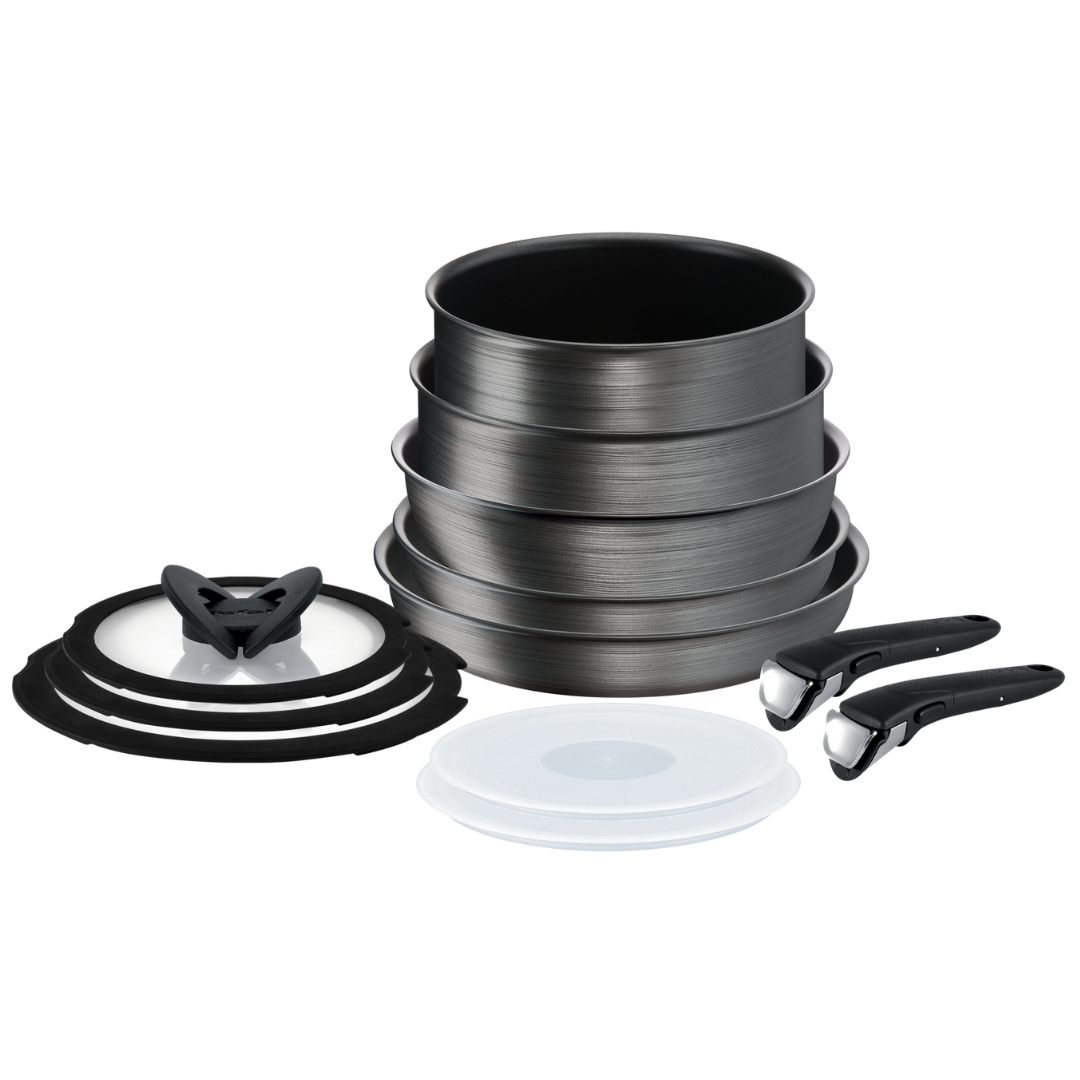
Cookware labels can sound similar while describing different things. A pan marked nonstick may use PTFE, ceramic, or another coating. A PFOA-free statement addresses a different question from a PTFE-free statement, so the wording matters.
Before buying, read the product page and care manual. Look for the coating material, pan-body material, compatible cooktops, recommended heat range, oven-use limits, and cleaning instructions. If you need to avoid a particular chemical family, contact the manufacturer for a clear answer about the entire product.
Be cautious about broad claims such as safe, nontoxic, green, or chemical-free when they lack a clear definition. All physical materials consist of chemicals, and a broad marketing term does not identify the coating or explain how it should be used.
Source: tefal.com.au
Nonstick
Describes a cooking property, not a specific chemical composition.
PFOA-free
Does not establish that the product is free of PTFE.
PTFE-free
Indicates that PTFE is not used according to the stated product claim; check the manufacturer’s scope and documentation.
PFAS-free
Ask how the claim is defined and whether it covers the coating, other components, and relevant manufacturing aids.
A Practical Buying Checklist
Start with your cooking habits rather than a marketing slogan. If you mostly cook eggs, pancakes, and quick meals, a PTFE pan may meet your needs as long as you can use it within the stated heat limits. If you regularly use very high heat or broil food, an uncoated pan may be more suitable.
Next, consider how you will maintain the cookware. A coating can last longer when you use suitable utensils, avoid abrasive cleaning, and store pans without scraping one against another. The maker’s warranty and care instructions can help you understand what wear is covered and what use is excluded.
Finally, make sure the claims match your priorities. If avoiding PTFE is essential, a simple PFOA-free statement is not enough. If you are comfortable with PTFE and want easy cleanup, focus on correct use, clear instructions, and the condition of the coating over time.
Material
Confirm whether the cooking surface uses PTFE, ceramic, or an uncoated metal.
Heat limits
Check the recommended burner settings and any oven or broiler restrictions.
Care
Review utensil, cleaning, storage, and replacement advice.
Claims
Make sure PFOA-free, PTFE-free, and PFAS-free claims are not being treated as interchangeable.
Frequently Asked Questions
Q
Is PTFE in cookware toxic?
PTFE-coated cookware is generally considered safe when used as directed. The main concern is overheating, which can cause the coating to break down and release harmful fumes. Use low to medium heat, do not heat an empty pan, and follow the manufacturer’s instructions.
Q
Is PTFE the same as PFOA?
No. PTFE is a polymer used in many nonstick coatings. PFOA is a separate chemical that was used in the past to help manufacture some fluoropolymer products. A PFOA-free pan can still contain PTFE.
Q
Is Teflon cookware safe for everyday cooking?
PTFE-based Teflon cookware is generally considered safe for everyday cooking when it is used as intended and not overheated. Keep the burner at a controlled setting, avoid empty preheating, use suitable utensils, and replace cookware with seriously deteriorated coatings.
Q
Can PTFE cookware release chemicals into food?
The U.S. FDA states that PFAS used in authorized nonstick cookware coatings are polymerized and tightly bound to the surface, with a negligible amount capable of migrating to food. This finding applies to intended use. It does not remove the need to avoid overheating or to follow the product’s instructions.
Q
Should I throw away a PTFE pan with scratches?
A minor scratch does not automatically mean the pan is dangerous, but deep scratches, widespread peeling, or flaking are good reasons to replace it. Do not scrape or sand away the coating. Follow the manufacturer’s guidance and replace the pan if the cooking surface has seriously deteriorated.
Q
Does PTFE-free mean PFAS-free?
Not necessarily. PTFE-free describes the absence of PTFE, while PFAS is a broad family of chemicals. A PTFE-free product may use a different material, and the label alone does not prove that every component is free of all PFAS. Ask the manufacturer to define the claim if this distinction matters to you.
Q
Can I use a PTFE pan on high heat?
Avoid high heat unless the manufacturer specifically permits it. PTFE-coated pans are generally best for low- and medium-heat cooking. An empty pan can heat rapidly and may reach temperatures that damage the coating, so add food or liquid before heating and never leave the pan unattended.
Q
Is ceramic cookware better than PTFE cookware?
Neither option is best for every cook. Ceramic-coated cookware can be a good choice if you want a PTFE-free nonstick surface, while PTFE pans often offer easy food release for routine cooking. Both types need proper care, and their performance depends on the product, coating condition, and cooking method.
✦ Wrapping Up
Conclusion
PTFE is a synthetic polymer that gives many nonstick pans their smooth, easy-release surface. It can make everyday cooking and cleanup simpler, especially when you prepare eggs, pancakes, fish, or other foods that tend to stick. The key is to understand what the coating is and how to use it correctly.
The most important safety step is to prevent overheating. Never leave an empty PTFE pan on a hot burner, use controlled heat, provide kitchen ventilation, and follow the manufacturer’s care instructions. Take extra precautions if you keep pet birds, because fumes from overheated PTFE can be extremely dangerous to them.
Remember that PTFE, PFOA, and PFAS are different terms. PFOA-free does not mean PTFE-free, and PTFE-free does not automatically mean free of every PFAS. Read the product details carefully and choose cookware that matches your cooking habits and material preferences.
💡 Key Takeaway
Before your next meal, check the coating and care instructions on your pan. If it contains PTFE, add food before heating, use low to medium heat, avoid abrasive utensils, and replace the pan if its coating becomes badly damaged. If you prefer to avoid PTFE, choose clearly labeled PTFE-free cookware such as suitable ceramic-coated, stainless steel, or cast iron options.