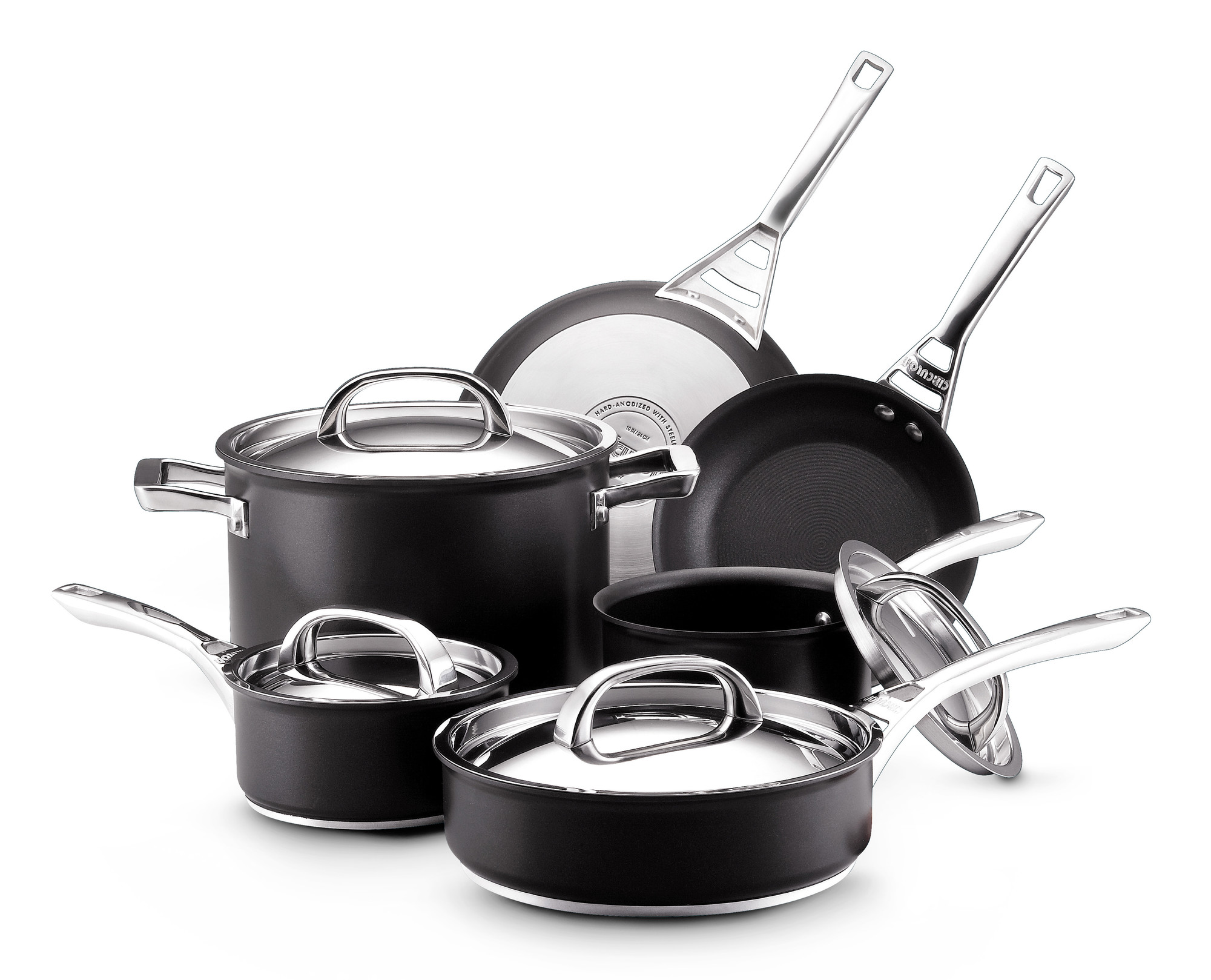
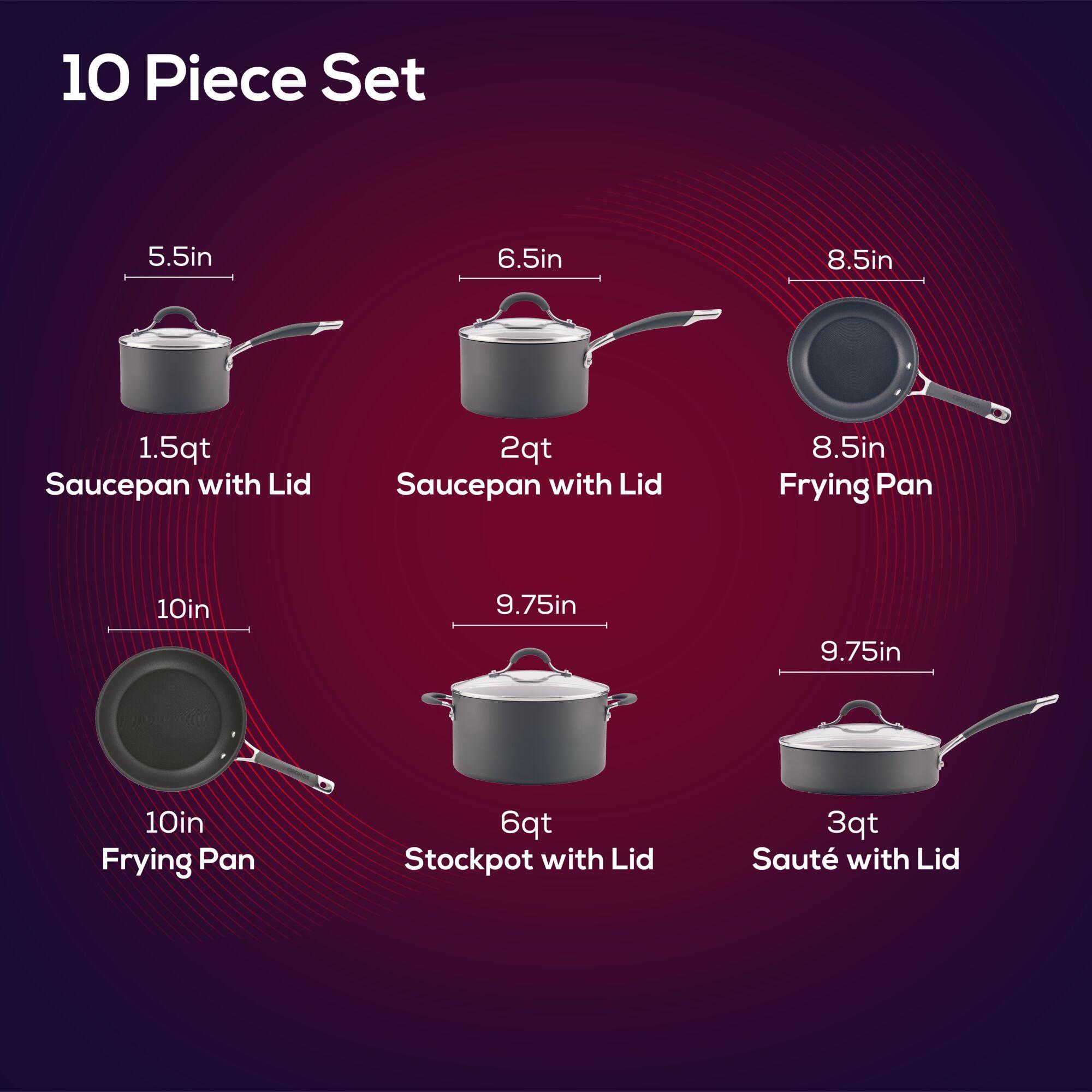
Circulon cookware is made from materials such as aluminum or stainless steel, with many models using a nonstick cooking surface. The exact materials depend on the product line.
When you cook breakfast in a busy American kitchen, the pan you choose can affect how evenly eggs cook, how much oil you need, and how easily you clean up. Circulon makes several types of cookware, so there is no single material recipe for every pot and pan. Many of its traditional nonstick models use an aluminum body and a coated cooking surface, while other collections may use hard-anodized aluminum or stainless steel construction.
The key is to separate the pan’s body from its cooking surface. The body spreads heat and gives the pan its shape. The inner coating helps food release and makes cleanup easier. Handles, lids, and exterior finishes may use different materials, too. Before buying or using a Circulon pan, check its exact model and care instructions rather than assuming every product has the same design.
Circulon cookware can be made from aluminum, hard-anodized aluminum, stainless steel, nonstick coatings, and other parts chosen for each collection. The most useful answer depends on the specific pan rather than the brand name alone.
Think of a pan as a small building. Its metal body is the frame, its cooking surface is the finish, and its handle is the part you use to move it. Each part has a different job, so the word aluminum or nonstick alone does not describe the whole product.
For many nonstick models, aluminum helps transfer heat from the stove to the food. A coating over the cooking area helps reduce sticking. Some designs also have a textured cooking surface, while other collections use different metal constructions or finishes.
Source: potsandpansplace.com
Pan body
Often aluminum or hard-anodized aluminum in nonstick ranges; other collections may use stainless steel or layered metal construction.
Cooking surface
A nonstick coating on many models. The specific coating type and formulation should be confirmed in the model’s official product details.
Handles and lids
May use metal, glass, or heat-resistant synthetic materials, depending on the product.
Exterior finish
May be painted, coated, polished, or treated. The outside finish is not necessarily the same material as the cooking surface.
Why the Exact Circulon Model Matters
A saucepan, frying pan, and stainless steel stockpot from the same brand may not share the same construction. A product name can also cover different sizes or revisions. For that reason, use the model number, product label, or official specification page when checking materials.
If the product page says hard-anodized aluminum, that describes the treated aluminum body. It does not automatically mean the cooking surface is bare aluminum. If it says stainless steel, check whether the entire body is stainless steel or whether the pan uses a layered base or another metal core.
Look at the model name
Record the full collection name and model number before comparing material claims.
Read the construction details
Check the body, interior coating, lid, handle, and stove compatibility as separate features.
Is Circulon Cookware Made of Aluminum?
Many Circulon nonstick pans use aluminum as the main body material. Aluminum conducts heat well, which helps the pan warm up and spread heat across its cooking area. It is also lighter than many steel cookware designs, making a large skillet easier to lift and move.
Aluminum is not perfect. A thin pan can develop hot spots, and the metal can react with some foods if it is left exposed. In coated cookware, the interior nonstick layer separates food from the underlying metal during normal use while that layer remains intact.
The amount of aluminum, the thickness of the pan, and the way the base is built all affect cooking performance. A label that says aluminum does not tell you by itself how evenly a pan heats or how well it will last.
Source: circulon.com
Good heat transfer
Aluminum moves heat efficiently, which can help a pan respond to changes in burner output.
Lower weight
Aluminum cookware is often easier to handle than a comparable heavy steel pan.
Coating matters
A coated aluminum pan depends on the condition of its cooking surface as well as the quality of its metal body.
Does Aluminum Mean the Pan Is Unsafe?
No. Aluminum is widely used in cookware. The practical questions are how the pan is constructed, whether the food-contact surface is intact, and whether the pan is used as directed.
For a nonstick pan, avoid scraping through the coating or using the pan after the surface begins to peel. If the coating is damaged, the exposed body may be easier to stain or react with food, depending on the metal and the food involved. Follow the manufacturer’s advice about continued use or replacement.
Use the pan as intended
Do not treat a coated pan as an uncoated metal skillet or use it for tasks the instructions prohibit.
Inspect the cooking surface
Look for peeling, deep scratches, bubbling, or other damage that changes the surface.
What Is Hard-Anodized Aluminum?
Hard-anodized aluminum is aluminum whose surface has been changed through an electrochemical process. This process creates a harder oxide layer on the aluminum. It is a surface treatment, not a separate metal that replaces the aluminum body.
Some Circulon collections use hard-anodized aluminum as part of their construction. The treatment can make the surface harder and more resistant to wear than untreated aluminum, but it does not make every part of a pan indestructible. The interior may still have a separate nonstick coating that needs careful handling.
The distinction matters because hard-anodized cookware and coated cookware are not mutually exclusive categories. A pan can have a hard-anodized aluminum body and a nonstick cooking surface at the same time.
Source: cdn.shopify.com
Hard-anodized body
The aluminum surface has been electrochemically treated to create a hard oxide layer.
Nonstick interior
A separate cooking-surface layer may help food release. Check the model’s specifications for its type.
Care still matters
The body treatment does not mean the pan can withstand metal tools, excessive heat, or harsh cleaning without risk of damage.
Hard-Anodized Aluminum Versus Plain Aluminum
Plain aluminum is light and transfers heat well. Hard-anodized aluminum has a treated surface that is harder and often darker in color. Both can be used in cookware, and either may be paired with a nonstick coating.
Do not assume that a dark gray pan is hard-anodized just because of its color. Exterior paint and other finishes can look similar. Confirm the material in the product specification instead of relying on appearance.
Choose by construction
Look for an explicit hard-anodized aluminum description rather than guessing from color or texture.
Check the whole product
The treated body, nonstick interior, handles, and lid may have different care limits.
What Is the Nonstick Coating on Circulon Cookware?
Many Circulon pans have a nonstick cooking surface, but the brand name alone does not establish the exact chemical composition of every coating. The coating type should be confirmed using the official information for the specific collection and model.
Traditional nonstick cookware often uses a fluoropolymer coating such as polytetrafluoroethylene, commonly called PTFE. PTFE has a low-friction surface that helps food release. However, it would be inaccurate to state that every Circulon product uses the same coating without model-specific documentation.
A nonstick surface can reduce the amount of oil needed for some foods and make cleanup easier. It is also a surface that can wear down. Overheating, abrasive cleaning, rough utensils, and poor storage can shorten its useful life.
Source: m.media-amazon.com
Food release
A low-stick surface can help eggs, pancakes, and other delicate foods release with less effort.
Less scrubbing
Food may lift off more easily than it does from an uncoated pan.
Finite service life
Nonstick coatings can wear with use, so the pan needs sensible heat control and gentle cleaning.
Is Circulon Cookware PTFE or Ceramic?
The answer depends on the exact product. PTFE is a fluoropolymer used in many traditional nonstick pans. Ceramic nonstick coatings are a different category, often based on a silica-derived coating system. These terms should not be used interchangeably.
If a listing says ceramic, PTFE-free, or uses another specific coating claim, verify that wording against the product’s official specifications. Do not infer the coating chemistry from a pan’s color, the word nonstick, or a broad brand description.
Find the stated coating type
Use the manufacturer’s product details or customer support if the listing does not clearly identify it.
Separate marketing terms from chemistry
Words such as durable, reinforced, or scratch-resistant do not identify the coating’s chemical family.
Does a Nonstick Coating Contain PFOA?
PFOA and PTFE are not the same substance. PFOA has been used historically in the manufacture of some fluoropolymer products, while PTFE is a polymer that can form a nonstick surface. A claim about one does not automatically establish a claim about the other.
If a particular Circulon pan is advertised as PFOA-free, treat that as a product-specific claim and check the relevant documentation. Do not assume that all products have identical formulations or that a PFOA-free label means a pan is free of every fluorinated substance.
Check the exact claim
Look for wording tied to the specific collection and model rather than a general claim about the entire brand.
Avoid broad conclusions
PFOA-free, PTFE-free, and ceramic-coated describe different things and should not be treated as synonyms.
What Is Circulon’s Raised Circle Pattern Made For?
Some Circulon cookware has a distinctive pattern of raised circles on its cooking surface. The pattern is part of the brand’s approach to nonstick cookware design. Its intended role is to help protect the cooking surface from direct contact with utensils while supporting food release.
The pattern does not mean the pan is made from a special type of metal. It is a design feature of the cooking surface. The material underneath, the coating itself, and the pattern should be understood as separate parts of the product.
The circles do not make a pan immune to scratches or wear. Use utensils approved for the model and avoid cutting food inside the pan. A textured surface still needs careful cleaning, especially where residue can collect.
Source: circulon.com
Surface design
The raised pattern is a feature of certain Circulon cooking surfaces, not a universal feature of every collection.
Not a metal type
The pattern does not tell you whether the pan body is aluminum, hard-anodized aluminum, or stainless steel.
Gentle use
Avoid sharp tools and harsh abrasives even if the product is marketed as resistant to scratching.
Does the Circle Pattern Make Cookware Last Longer?
The design is intended to help protect the nonstick surface, but actual service life depends on several factors. Heat, cleaning habits, utensil choice, storage, and the condition of the coating all affect how a pan holds up.
A marketing description is not a guarantee that a pan will last a set number of years. Treat the pattern as one design feature, not a reason to ignore care instructions or signs of damage.
Use suitable utensils
Choose wood, silicone, or other utensils permitted by the product instructions.
Store pans carefully
Place a suitable pan protector between stacked pans if stacking cannot be avoided.
Does Circulon Make Stainless Steel Cookware?
Yes, Circulon offers cookware collections with stainless steel construction. Stainless steel is an iron-based alloy that contains chromium and may contain nickel and other elements, depending on its grade. The precise grade and the use of any aluminum core or layered base depend on the particular product.
Stainless steel cookware is not automatically nonstick. A stainless steel pan with an uncoated cooking surface behaves differently from a nonstick aluminum pan. Food release depends more on cooking technique, surface condition, preheating, and the type of food.
Some stainless steel designs use layers of metal to improve heat distribution. If a product is described as clad or as having a layered base, read its construction details to see which metals are used and where they are located.
Source: circulon.com.au
Stainless steel body
Offers a different cooking surface and care profile from a traditional coated nonstick pan.
Possible layered construction
Some pans use more than one metal to balance heat transfer, strength, and durability.
Different cooking technique
Uncoated stainless steel usually needs more attention to preheating and food release than a nonstick pan.
Is Stainless Steel Better Than Nonstick?
Neither material is best for every task. A nonstick pan is handy for eggs, delicate fish, and quick cleanup. An uncoated stainless steel pan can suit browning, pan sauces, and tasks that benefit from developing browned bits on the cooking surface.
The better choice depends on what you cook and how you maintain your cookware. A household that makes eggs most mornings may value easy release, while someone who often sears meat may prefer an uncoated steel pan for that job.
Choose nonstick for convenience
It can help with delicate foods and lower-effort cleanup when used within its heat limits.
Choose uncoated stainless steel for browning
It can support browning and pan sauces, though it takes practice to prevent sticking.
Is Circulon Cookware Safe to Use?
Cookware safety depends on its materials, condition, temperature, and intended use. A well-maintained pan used according to its instructions is different from a pan with a badly damaged coating or one that has been left empty over high heat.
For traditional PTFE nonstick cookware, excessive heat can cause the coating to break down and release hazardous fumes. Avoid heating an empty nonstick pan for a long time, use the heat range stated by the manufacturer, and keep birds away from cooking fumes because birds are especially sensitive to certain airborne hazards.
A safe-use decision should also account for the product’s handles, lid, and oven rating. A pan may tolerate oven heat while its lid or handle has a lower limit. Never assume a product is oven-safe merely because its body is metal.
Source: circulon.com
Control heat
Use low to medium heat for routine nonstick cooking unless the manufacturer’s instructions specify otherwise.
Avoid prolonged empty heating
Add food or suitable cooking fat as directed instead of leaving an empty coated pan on a hot burner.
Check oven limits
Confirm the temperature rating for the pan, lid, and handles separately.
Replace badly damaged cookware
If the coating is peeling, flaking, or deeply damaged, stop using the pan and consult the manufacturer’s replacement guidance.
Can You Use Metal Utensils on Circulon?
Do not assume that all Circulon pans allow metal utensils. Some products are designed with added surface protection, but the permitted utensils depend on the exact model and its care instructions.
Wood and silicone tools are sensible choices for many coated pans because they reduce the risk of scraping the surface. Metal tools can still damage a coating, particularly if you press hard, scrape sharply, or use a knife to cut food in the pan.
Follow the model’s instructions
Use metal tools only if the manufacturer clearly permits them for that exact product.
Avoid cutting in the pan
Use a cutting board to protect the cooking surface.
Can Circulon Cookware Go in the Dishwasher?
Dishwasher compatibility varies by product. Even when a pan is labeled dishwasher-safe, handwashing with mild dish soap and a soft sponge may help preserve its finish and nonstick performance.
Let the pan cool before washing it. A sudden temperature change can stress some cookware, and plunging a very hot pan into cold water is a poor habit. Avoid abrasive pads and strong cleaners unless the manufacturer specifically allows them.
Check the care label
Do not assume that dishwasher guidance for one Circulon set applies to another.
Clean gently
Use a soft sponge and remove residue without scraping the cooking surface.
How to Identify the Materials in Your Circulon Pan
The most reliable way to identify your Circulon cookware materials is to check the model-specific product details. Appearance can offer clues, but it cannot confirm the metal grade, coating chemistry, or exact construction.
Start with the packaging, user guide, product label, or official product page. If the pan came from a retailer and the listing is unclear, look for the full collection name and model number. If you still cannot verify the coating or care limits, contact the manufacturer rather than guessing.
Source: circulon.uk.com
Step 1: Find the model
Write down the full product name, size, and model number from the packaging or product label.
Step 2: Confirm the body material
Look for wording such as aluminum, hard-anodized aluminum, stainless steel, or layered construction.
Step 3: Confirm the cooking surface
Check whether the product has a nonstick coating and whether its type is specifically identified.
Look for peeling, deep scratches, loose handles, warped bases, or other damage that may affect safe use.
Can You Identify the Material by Looking at the Pan?
A silver finish may suggest stainless steel, while a dark body may suggest hard-anodized aluminum. These are only clues. Paint, surface treatments, and layered construction can make different materials look alike.
A magnet test can sometimes help distinguish magnetic steel from many aluminum bodies, but it is not a complete material test. Some stainless steel grades are weakly magnetic or nonmagnetic, and a layered base can affect the result. Use the official specification for a dependable identification.
Treat visual clues cautiously
Color and shine do not prove the metal type or identify a nonstick coating.
Do not scrape to test a coating
Scraping can damage the cooking surface and will not reliably identify its chemistry.
How Circulon Materials Compare With Other Cookware
The easiest way to judge Circulon is to compare the construction of a specific pan with the cookware you already use. Aluminum, hard-anodized aluminum, stainless steel, and ceramic-coated cookware each have different strengths and limits.
The table below compares common material categories, not every Circulon product. A particular pan’s thickness, base design, coating, and care instructions can change how it performs.
Source: circulon.com
For easy release
A nonstick cooking surface can help with eggs and delicate foods.
For browning
Uncoated stainless steel can be useful for searing and making pan sauces.
For lower weight
Aluminum cookware is often easier to lift than heavier steel cookware.
Cookware Material Comparison
Use this comparison as a starting point when shopping. Confirm the exact model’s construction before treating any row as a description of a specific Circulon pan.
Aluminum with nonstick coating
Often light, heats readily, and offers easy food release. The coating needs care and may wear over time.
Hard-anodized aluminum with nonstick coating
Combines an aluminum body with a harder treated surface and, in some designs, a separate nonstick interior. The coating still needs protection.
Uncoated stainless steel
Can handle browning and many cooking tasks, but food may stick if heat and cooking technique are not well managed.
Ceramic-coated cookware
Uses a different nonstick coating category. Its performance and life depend on the formulation and care, so it should not be assumed to match PTFE cookware.
Cast iron
Retains heat well and can last for many years with proper care, but it is heavy and often needs seasoning if uncoated.
Frequently Asked Questions
Q
Is Circulon cookware made of Teflon?
Teflon is a brand name associated with PTFE-based nonstick coatings. Many traditional nonstick pans use PTFE or related coating systems, but the name Circulon alone does not confirm the exact coating on every product. Check the specifications for your model before identifying its cooking surface as Teflon or PTFE.
Q
Is Circulon cookware made of hard-anodized aluminum?
Some Circulon collections use hard-anodized aluminum, while other products may use different construction. Hard-anodized aluminum is aluminum with an electrochemically treated surface. Check the exact product description to confirm whether your pan uses it.
Q
Is Circulon cookware PFOA-free?
The answer should be based on the specific product’s documentation. PFOA-free is not the same as PTFE-free, and neither term automatically means that a pan contains no fluorinated substances. Review the manufacturer’s current claim for the model you own or plan to buy.
Q
Can I use Circulon cookware on an induction stove?
Only use a pan on induction if its product details identify it as induction-compatible. Induction stoves need a suitable magnetic base, and an aluminum body alone does not establish compatibility. Check the packaging or official specifications for the exact model.
Q
When should I replace a Circulon nonstick pan?
Consider replacing it if the coating is peeling or flaking, the cooking surface is badly damaged, or the pan has a warped base or a loose handle. Small cosmetic marks do not always mean a pan has failed, but do not ignore damage that changes the surface or makes the pan unsafe to handle. Follow the manufacturer’s guidance when deciding whether it can remain in use.
✦ Wrapping Up
Conclusion
Circulon cookware is made from several material types, depending on the collection. Many nonstick models use aluminum or hard-anodized aluminum bodies with a separate nonstick cooking surface, while some collections use stainless steel construction. Handles, lids, and exterior finishes may use additional materials.
The most useful way to answer what is Circulon cookware made of is to identify the exact model and check its body material, cooking-surface coating, and care instructions. Do not assume that every Circulon pan has the same coating or that a dark finish proves it is hard-anodized.
For everyday use, protect the cooking surface, avoid excessive heat, clean the pan gently, and check the oven and stovetop limits before cooking. Those simple steps help you get more useful life from the pan while staying within the manufacturer’s instructions.
💡 Key Takeaway
Before buying or using a Circulon pan, find its exact model number and verify the body material, nonstick coating, heat limits, and cleaning instructions on the official product information.