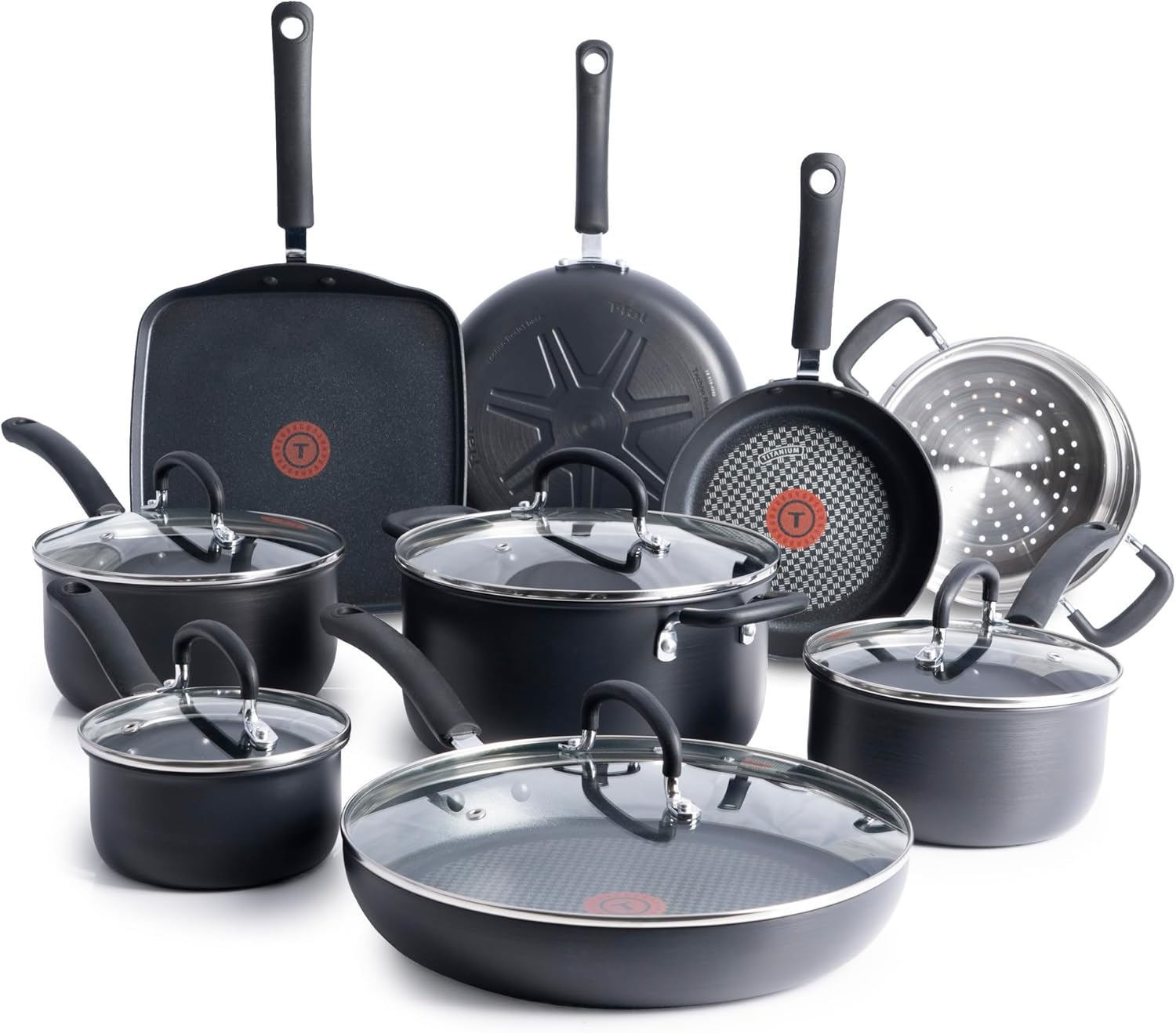
Yes, T-fal is good cookware for everyday home cooking, especially if you want affordable, lightweight pans with easy food release and simple cleanup. However, its nonstick coating needs proper care, and it is not the best choice for heavy searing or long-term professional use.
If you shop for cookware at Walmart, Target, or Amazon in the United States, you have probably seen T-fal. The brand offers affordable pots, pans, and complete cookware sets for everyday kitchens. Its nonstick surfaces can make common tasks like cooking eggs, flipping pancakes, and preparing quick dinners much easier.
But a low price does not tell you everything about a pan. You also need to consider its base material, coating, heat performance, handle design, and expected service life. T-fal sells several cookware lines, so the quality and features can vary from one collection to another.
This guide examines T-fal’s materials, cooking performance, durability, safety, and care needs. It also explains which home cooks may benefit from the brand and when stainless steel, cast iron, or another type of cookware may be a better investment. This is a research-based guide, not a claim of hands-on testing.
Yes, T-fal is a good option for everyday home cooking if your main goals are convenience, easy food release, and a reasonable price. Its nonstick pans are useful for breakfast foods, delicate fish, vegetables, and meals that tend to stick to ordinary metal pans.
The brand also offers several types of cookware. You can find basic nonstick pans, hard-anodized aluminum collections, ceramic-coated products, stainless steel cookware, and detachable-handle designs. This range makes it possible to choose products for different cooking needs.
However, T-fal is not automatically the best choice in every category. A lightweight nonstick frying pan may heat quickly, but it usually cannot retain heat as well as a thick stainless steel or cast iron pan. The difference matters when you want a deep brown crust on meat.
The best way to judge the brand is to look at the specific collection rather than treating every T-fal product as the same. A hard-anodized nonstick pan and a stainless steel tri-ply pan have different strengths and limitations.
Source: m.media-amazon.com
Best for
Everyday meals, eggs, pancakes, grilled cheese, vegetables, and easy cleanup.
Less suitable for
Frequent high-heat searing, rough commercial use, and people who want a permanent cooking surface.
Main advantage
A useful mix of affordable pricing, convenient cooking, and accessible cookware designs.
Main limitation
Nonstick coatings have a limited service life and need careful handling.
Who Should Consider T-fal?
T-fal can suit students, first-time homeowners, renters, and families who need practical cookware without spending a large amount. It can also help beginners who are still learning basic cooking skills.
For example, someone who makes eggs every morning may appreciate a nonstick frying pan more than an expensive stainless steel skillet. Less food sticks, and cleanup takes less effort.
On the other hand, people who cook steaks at high temperatures or use the same pan heavily every day may prefer stainless steel or cast iron.
Budget-conscious buyers
A useful option when replacing old cookware or setting up a first kitchen.
Busy households
Nonstick surfaces can reduce scrubbing after common meals.
Beginner cooks
Food release can make delicate cooking tasks easier to manage.
What Is T-fal Cookware Made Of?
T-fal cookware is made from several materials, depending on the collection. Aluminum is common in its nonstick cookware because it is lightweight and transfers heat quickly. Other products use stainless steel, ceramic-based coatings, or hard-anodized aluminum.
The material beneath the cooking surface matters as much as the coating. It affects how quickly a pan heats, how evenly it cooks, how much it weighs, and whether it works with an induction stove.
Before buying a T-fal set, read the product description carefully. Two sets with similar designs may have different construction, coating types, and stove compatibility.
Source: kitchenbap.com
Aluminum
A lightweight metal that heats quickly and is widely used in affordable nonstick cookware.
Hard-anodized aluminum
Aluminum treated through an electrochemical process to create a harder, more durable exterior surface.
Stainless steel
A durable metal that can offer good resistance to corrosion and does not depend on a nonstick coating.
Nonstick coating
A surface treatment that helps food release more easily and reduces the effort needed for cleaning.
Ceramic coating
A different type of nonstick surface found in selected T-fal collections.
Is T-fal Hard-Anodized Cookware Good?
T-fal hard-anodized cookware can be a good choice for people who want a sturdier aluminum body. Hard anodizing changes the outer surface of aluminum, making it harder than ordinary untreated aluminum.
Many hard-anodized T-fal collections also include a nonstick interior. This combination gives you a rigid cookware body with an easy-release cooking surface.
However, hard anodizing does not make the nonstick coating permanent. The interior can still wear from overheating, scratches, and abrasive cleaning. You should also check whether the exterior and interior have the same material because they serve different purposes.
Good feature
A harder exterior surface than ordinary untreated aluminum.
Important limitation
A nonstick interior still needs gentle care and can eventually lose its performance.
Does T-fal Make Stainless Steel Cookware?
Yes. T-fal sells stainless steel collections, including products designed with layered metal construction. Some lines use aluminum layers between stainless steel surfaces to improve heat distribution.
Stainless steel T-fal cookware is worth considering if you want a cooking surface that does not rely on a conventional PTFE nonstick coating. It can also be more suitable for browning meat and making pan sauces.
The exact construction differs between models. Check the product specifications to see whether the pan has a fully clad body or only a layered base.
Fully clad construction
Metal layers extend through the base and sides of the cookware.
Disc-bottom construction
A layered heat-conducting base is attached to the bottom of the pan.
How Well Does T-fal Cookware Perform?
T-fal performs best in everyday cooking tasks that benefit from quick heating and a nonstick surface. Aluminum construction helps many of its pans warm up quickly, while the coating makes it easier to move delicate food without tearing it apart.
The cooking experience depends on the pan’s thickness, base design, stove type, and coating condition. A thin pan may respond quickly to a change in burner temperature but can also lose heat quickly when cold food enters the pan.
This makes T-fal useful for quick meals, but it does not mean every collection offers the same heat control. Higher-quality stainless steel and thicker cookware may provide a better experience for recipes that require steady heat.
Source: m.media-amazon.com
Eggs and omelets
A nonstick T-fal frying pan can help eggs slide from the cooking surface with less effort.
Pancakes
The nonstick surface helps reduce sticking when flipping pancakes.
Vegetables
The pans work well for quick vegetable cooking at moderate temperatures.
Fish
Nonstick surfaces can help delicate fish release without breaking apart.
Steaks
Many lightweight nonstick models are less suitable for intense searing and strong crust development.
Does the T-fal Thermo-Spot Work?
Selected T-fal frying pans feature Thermo-Spot, a heat indicator in the cooking surface. Its appearance changes as the pan heats and signals when it reaches the manufacturer’s suggested starting temperature.
This feature can help beginners avoid adding food to a pan that is still too cool. It also offers a simple visual guide when preparing common foods such as eggs and pancakes.
However, Thermo-Spot is not a precise digital thermometer. It does not tell you the exact temperature of every part of the cooking surface, and it does not replace proper heat control.
The indicator is also not a reason to leave an empty pan on a high burner. Follow the instructions for the exact model and avoid excessive preheating.
Useful for
Getting a visual indication that the pan has reached its suggested starting temperature.
Not designed for
Measuring exact cooking temperatures or controlling overheating.
Does T-fal Heat Evenly?
Many aluminum T-fal pans heat quickly because aluminum conducts heat well. This can make them convenient for routine cooking on a properly sized burner.
However, quick heating and even heating are not the same thing. A pan’s thickness and base design affect how well heat spreads across its surface.
Use a burner that matches the pan’s base. A burner that is much smaller or larger can create uneven results and may expose the sides or handles to unnecessary heat.
For better results
Use moderate heat, avoid oversized flames, and give the pan time to warm gradually.
Is T-fal Nonstick Cookware Safe?
T-fal states that its conventional nonstick cookware uses PTFE, or polytetrafluoroethylene, for its food-release properties. The brand also states that its nonstick cookware is made without PFOA.
PTFE and PFOA are different chemicals. PFOA was used in the manufacture of some older nonstick products, while PTFE is the polymer used to create the smooth cooking surface in many modern nonstick pans.
The distinction matters because the phrase PFOA-free does not mean PFAS-free. T-fal’s own chemical disclosures identify PTFE as a PFAS chemical used in its nonstick products. Consumers who want to avoid intentionally added PFAS should look at a different material, such as uncoated stainless steel or cast iron.
The U.S. Food and Drug Administration’s Food Code recognizes approved nonstick food-contact coatings. However, safe use still depends on following the manufacturer’s instructions and avoiding excessive heat.
Source: m.media-amazon.com
PFOA-free
T-fal states that its current nonstick cookware does not use PFOA.
PTFE-based
Many conventional T-fal nonstick products use PTFE to provide easy food release.
Not the same as PFAS-free
PTFE belongs to the broader PFAS chemical family, so a PFOA-free claim should not be treated as a PFAS-free claim.
Heat control matters
Avoid overheating and never leave an empty nonstick pan on an active burner.
Can T-fal Nonstick Coating Release Harmful Fumes?
Yes, overheating PTFE-coated cookware can cause the coating to break down and release fumes. This is why nonstick pans should not be left empty on a hot stove or heated at very high temperatures.
The German Federal Institute for Risk Assessment explains that PTFE-coated cookware can release hazardous gases when strongly overheated. Its guidance warns against heating these pans while empty, especially on gas and induction stoves that can heat cookware quickly.
For normal cooking, use low to medium heat and add food or cooking oil as directed. Keep the kitchen ventilated, and use stainless steel or cast iron for cooking tasks that require very high heat.
Bird owners should take extra care. Some birds are highly sensitive to fumes from overheated PTFE cookware, so a PTFE-free cooking option may be the more suitable choice in a home with pet birds.
Never preheat an empty pan for a long time
Add food or the recommended cooking fat before the pan becomes excessively hot.
Avoid high heat
Use moderate temperatures for nonstick cooking.
Replace damaged cookware
Consider replacing pans with peeling, badly damaged, or deteriorating coatings.
Keep pets safe
Avoid using PTFE-coated cookware in situations where birds could be exposed to overheating fumes.
Is a Scratched T-fal Pan Dangerous?
A small surface mark does not automatically mean a pan is dangerous. However, deep scratches, peeling, flaking, and damaged coating are signs that the pan may have reached the end of its useful life.
T-fal advises replacing nonstick cookware when the coating is chipped, peeled, burnt, or has lost its nonstick properties. A damaged surface is also harder to clean and may make food stick.
Do not try to repair or recoat the pan at home. The nonstick coating is applied during manufacturing and cannot be properly restored with ordinary household products.
Minor marks
Check the manufacturer’s guidance and monitor the cooking surface.
Peeling or flaking
Stop using the pan for food preparation and replace it.
Deep gouges
Replacement is the sensible option when the coating is visibly damaged.
How Durable Is T-fal Cookware?
T-fal cookware can handle regular household cooking, but the expected lifespan depends on the collection and how you use it. The metal body may remain in good condition even after the nonstick surface begins to lose its food-release performance.
This is one of the biggest differences between coated and uncoated cookware. A stainless steel pan can remain useful for many years because it does not depend on a nonstick layer. A PTFE-coated pan has a working surface that can gradually wear down.
T-fal does not provide one universal lifespan for all nonstick coatings. Its care guidance explains that service life depends on cooking frequency and maintenance. Therefore, claims that every T-fal pan will last a specific number of years should be treated with caution.
Source: m.media-amazon.com
Construction
The body of a pan may remain structurally sound while the cooking surface wears.
Coating
Overheating, scratches, and abrasive cleaning can shorten useful nonstick performance.
Handles
Repeated heating and use can loosen some attached handles or affect removable-handle mechanisms.
Storage
Stacking pans without protection can cause scratches and surface damage.
How Long Does T-fal Nonstick Cookware Last?
There is no reliable universal number for the lifespan of every T-fal nonstick pan. A lightly used pan that receives gentle care may remain useful longer than one used every day at high heat.
The first sign of aging is often reduced food release. Eggs may begin to stick, cleaning may become harder, or the cooking surface may show visible wear.
Instead of relying only on the purchase date, check the condition of the cooking surface. Replace the pan when the coating peels, flakes, becomes badly damaged, or no longer performs as intended.
Good sign
Food releases easily and the coating remains smooth and intact.
Warning sign
Food sticks more often despite proper cooking and cleaning.
Replacement sign
The coating visibly peels, flakes, or becomes severely damaged.
Pros and Cons of T-fal Cookware
The biggest advantage of T-fal is convenience at an accessible price. Its nonstick products can simplify routine cooking, and the wide range of collections gives buyers several construction choices.
The main trade-off is that affordable nonstick cookware is not designed to handle every cooking method. Its coating requires care, and many lightweight models do not provide the heat retention needed for demanding searing tasks.
Looking at both sides helps you decide whether the brand matches your cooking habits rather than buying a set based only on its price or number of pieces.
Source: m.media-amazon.com
Affordable options
T-fal offers products for buyers who do not want to spend heavily on a complete cookware collection.
Easy food release
Nonstick surfaces help with eggs, pancakes, fish, and other delicate foods.
Quick heating
Aluminum construction helps many models warm up quickly.
Easy cleanup
Food residue is often easier to remove from a smooth nonstick surface.
Several material choices
The product range includes nonstick, hard-anodized, ceramic, and stainless steel cookware.
Main Disadvantages of T-fal
T-fal also has limitations that matter when choosing cookware for long-term use. Its nonstick products need careful handling, and the coating cannot be restored once it has worn out.
Some collections have lightweight construction that may not suit cooks who prefer heavy pans. Oven limits, induction compatibility, and dishwasher instructions also vary by model.
A large cookware set may look like a better deal, but it is not always the best purchase. You may receive several small pieces that rarely get used, while the frying pan or saucepan you need most may not be included.
Limited coating life
The nonstick surface can gradually lose its performance.
Heat limitations
Many coated models are better suited to low and medium heat than intense searing.
Model differences
Not every pan has the same oven rating, handle design, or induction compatibility.
Care requirements
Metal utensils and abrasive cleaning can damage the cooking surface.
T-fal vs Other Popular Cookware Brands
T-fal competes with several cookware brands in the American kitchen market. Some focus on affordable nonstick cookware, while others offer heavier stainless steel or premium construction.
The right comparison depends on the material and product line. Comparing a T-fal nonstick aluminum pan with a premium stainless steel pan is not an equal comparison because the two products serve different purposes.
The following table compares broad cookware characteristics. It is a practical buying guide, not a claim that every product from one brand performs better than every product from another.
Source: m.media-amazon.com
T-fal
A practical choice for affordable everyday nonstick cookware and selected stainless steel collections.
Calphalon
Offers several cookware types, including nonstick and stainless steel products, with differences between price tiers.
Cuisinart
Offers a broad range of cookware, including stainless steel sets and nonstick options.
All-Clad
Known for premium stainless steel cookware and layered metal construction.
Tramontina
Offers both affordable cookware and selected tri-ply stainless steel collections.
T-fal vs Calphalon
T-fal and Calphalon both sell nonstick and other cookware types. The best choice depends on the exact collection, construction, and price rather than the brand name alone.
T-fal is worth considering when you want an affordable everyday set. Calphalon may be worth comparing when a particular collection offers the construction, handle design, or cooking features you prefer.
Choose T-fal when
You want practical nonstick cookware at a budget-friendly price.
Compare Calphalon when
You want to evaluate alternative nonstick and stainless steel collections.
T-fal vs Cuisinart
T-fal and Cuisinart both provide options for everyday home kitchens. Cuisinart has a strong selection of stainless steel cookware, while T-fal is widely associated with affordable nonstick products.
If you prefer easy food release, compare their nonstick models. If you want a pan for browning and making sauces, compare stainless steel construction instead.
For nonstick convenience
Compare the coating, handle design, and care instructions of each model.
For long-term use
Consider stainless steel versions from both brands.
T-fal vs All-Clad
These brands often target different budgets and cooking needs. T-fal offers affordable everyday cookware, while All-Clad is associated with higher-priced stainless steel products and layered metal construction.
All-Clad may be a better fit for cooks who want long-term stainless steel performance. T-fal may make more sense for someone who values easy cleanup and a lower starting cost.
Budget and convenience
T-fal is a reasonable place to start.
Premium stainless steel
Compare All-Clad models if construction and long-term durability matter more than initial cost.
Which T-fal Cookware Collection Should You Choose?
The best T-fal collection depends on your stove, cooking habits, and preferred material. Do not assume that the largest set is the best value or that every product with the T-fal name has the same features.
Start with the tasks you perform most often. If you mainly cook eggs and quick meals, a nonstick frying pan may be enough. If you prepare soups, sauces, and larger family meals, a set with useful saucepan sizes may offer better value.
Always check the product’s current specifications before buying. Product names and features can vary by retailer, country, and model revision.
Source: m.media-amazon.com
Ultimate Hard Anodized
Worth comparing if you want an aluminum body with a nonstick cooking surface.
Professional VX3
A collection to examine if you are interested in selected hard-wearing nonstick designs.
Ingenio
Uses a detachable-handle design on compatible products, which can help with storage.
Stainless Steel
A better category to consider if you want to avoid a conventional nonstick cooking surface.
Ceramic Nonstick
An alternative coating category for buyers who prefer ceramic-based nonstick products.
Is T-fal Good for Induction Stoves?
Some T-fal cookware works on induction stoves, but not every collection is induction-compatible. Induction cooking requires a magnetic base that can interact with the cooktop.
The easiest first check is to place a magnet against the bottom of the pan. If the magnet sticks firmly, the pan may be suitable for induction, but you should still confirm the exact model’s specifications.
Look for an induction-compatible label on the packaging or manufacturer’s product page. This is especially important when buying a large set online.
Check the product listing
Look for an explicit induction compatibility statement.
Try the magnet test
A magnet that sticks to the base is a useful preliminary sign.
Check the base
A flat, suitable magnetic base helps the pan work correctly on an induction surface.
Can T-fal Cookware Go in the Oven?
Oven safety depends on the exact T-fal model. Some pans have plastic or other heat-sensitive handles, while selected products are designed for oven use.
Check the maximum oven temperature in the product manual before placing any pan in an oven. Remember that lids, knobs, and removable handles may have lower temperature limits than the pan body.
Do not assume that a pan is oven-safe just because it has a metal body. Handle materials and coatings can change the temperature limit.
Check handle material
Plastic and removable components may have specific temperature limits.
Check lid instructions
Glass lids and their knobs may not share the pan’s oven rating.
Follow the manual
Use the exact model’s instructions instead of a general brand-wide temperature claim.
How to Make T-fal Cookware Last Longer
Good care can help T-fal nonstick cookware maintain its performance for longer. The most useful habits are simple: control the heat, use gentle utensils, wash the pan carefully, and protect the cooking surface during storage.
The goal is to avoid damage before it happens. Nonstick coatings are not designed to withstand the same rough treatment as uncoated stainless steel or cast iron.
T-fal’s own care guidance recommends hand washing to help extend product life, even when certain cookware pieces are labeled dishwasher-safe.
Source: m.media-amazon.com
1. Use Low to Medium Heat
Keep nonstick T-fal pans at low or medium heat for most cooking tasks. High heat can damage the coating and may cause the pan to overheat.
Avoid heating an empty pan for a long time. Add the recommended cooking oil or food before the pan becomes excessively hot.
Recommended habit
Use moderate heat and adjust it as the food cooks.
2. Choose Gentle Cooking Utensils
Wooden, silicone, and suitable heat-resistant plastic utensils are better choices for preserving nonstick surfaces. Sharp metal tools can scratch or damage the coating.
Do not cut food directly inside the pan. Use a cutting board instead, and avoid stabbing or scraping the cooking surface.
Good options
Wood, silicone, and manufacturer-approved plastic utensils.
Avoid
Sharp knives, forks, and rough-edged metal tools.
3. Wash the Pan Gently
Allow the cookware to cool before washing it. Sudden temperature changes can stress the pan and may contribute to warping.
Use warm water, mild dish soap, and a soft sponge. Avoid steel wool, harsh scouring powders, and abrasive cleaning pads.
Best cleaning method
Hand wash with mild soap and a non-abrasive sponge.
Avoid
Pouring cold water into a very hot pan or scrubbing with abrasive tools.
4. Store Cookware Carefully
Stacking pans without protection can cause scratches. Place a soft pan protector, cloth, or suitable divider between cookware pieces.
Avoid storing sharp utensils inside a nonstick pan. A little care during storage can prevent damage that might otherwise shorten the pan’s useful life.
Use pan protectors
Create a soft barrier between stacked cookware.
Keep sharp tools separate
Do not store knives or metal utensils against the nonstick surface.
5. Follow Dishwasher Instructions
Some T-fal products are labeled dishwasher-safe, but the brand recommends hand washing to help preserve cookware. Strong detergents and repeated dishwasher cycles may affect the finish or other components.
Check the instructions for the pan, lid, and handle separately. A removable handle or storage lid may have different cleaning requirements from the cookware body.
Safer long-term choice
Hand wash nonstick cookware unless the specific manual gives different instructions.
What Should You Check Before Buying T-fal Cookware?
A little research before buying can help you avoid the wrong cookware set. Focus on the material, cooking surface, stove compatibility, oven limits, and included pieces rather than relying only on the advertised number of items.
A 17-piece set may sound more valuable than a smaller set, but the extra pieces might include lids, utensils, or storage accessories. Compare the actual pots and pans you will use.
Also check the warranty terms in your country. T-fal publishes warranty information, but coverage can depend on the product type, purchase location, and applicable regional terms.
Source: m.media-amazon.com
Cooking surface
Decide whether you want PTFE nonstick, ceramic nonstick, or stainless steel.
Stove compatibility
Confirm compatibility with gas, electric, glass-top, or induction cooking.
Oven temperature
Check the pan, handle, knob, and lid temperature limits.
Pan sizes
Choose useful frying pan and saucepan sizes for your household.
Cleaning requirements
Check whether each piece is dishwasher-safe and whether hand washing is recommended.
Warranty
Read the current regional warranty terms and keep your proof of purchase.
Should You Buy a Complete T-fal Cookware Set or Individual Pans?
A complete set makes sense if you need several pots and pans at once. It can also help create a matching kitchen collection without shopping for each item separately.
Buying individual pieces is often better if you already own useful cookware. You can choose a nonstick frying pan for eggs and a stainless steel saucepan for sauces without paying for duplicate items.
For many home kitchens, a small combination of cookware types is more useful than a large set made entirely from one material.
Choose a set
When you are furnishing a new kitchen and need several matching pieces.
Choose individual pans
When you want to replace one worn-out item or add a specific cooking tool.
Frequently Asked Questions
Q
Is T-fal a good brand of cookware?
Yes, T-fal is a good cookware brand for affordable everyday cooking. It offers convenient nonstick pans, hard-anodized products, ceramic cookware, and stainless steel options. Its main limitations are coating wear, heat restrictions on nonstick models, and differences in construction between collections.
Q
Is T-fal better than Calphalon?
Neither brand is automatically better in every category. T-fal is worth considering if you want affordable nonstick cookware, while Calphalon offers several alternative nonstick and stainless steel collections. Compare the exact models, materials, warranties, and prices before choosing.
Q
Does T-fal cookware contain Teflon?
Many conventional T-fal nonstick products use PTFE, the same type of fluoropolymer commonly associated with the Teflon name. T-fal states that its nonstick cookware is PFOA-free, but PTFE itself belongs to the broader PFAS family. Check the specific product disclosure if you want to avoid PFAS.
Q
Is T-fal cookware safe for daily use?
T-fal nonstick cookware can be used for normal household cooking when you follow the product instructions. Avoid heating an empty pan, use low to medium heat, and replace cookware with peeling or badly damaged coating. Use proper ventilation and take extra care around pet birds.
Q
Can you use metal utensils on T-fal cookware?
Some T-fal collections may allow certain metal utensils, but the brand generally recommends wood or plastic utensils to extend the life of nonstick cookware. Silicone is also a practical choice. Avoid sharp tools, knives, and utensils that can scratch or gouge the surface.
Q
Is T-fal cookware dishwasher-safe?
Some T-fal cookware is labeled dishwasher-safe, but hand washing is recommended to help extend its useful life. Dishwasher detergents may dull finishes or affect certain components. Always check the instructions for the pan, lid, and handle because their cleaning requirements may differ.
Q
Does T-fal cookware work on induction cooktops?
Some T-fal models are induction-compatible, while others are not. Check the product specifications or look for an induction label. You can also use a magnet as a preliminary test: if it sticks firmly to the pan’s base, the cookware may be suitable for induction.
Q
Can T-fal cookware go in the oven?
Some T-fal cookware is oven-safe, but the temperature limit varies by collection. Plastic handles, removable handles, glass lids, and knobs may have different limits. Read the exact model’s manual before placing any cookware in the oven.
Q
Is T-fal hard-anodized cookware worth buying?
T-fal hard-anodized cookware can be worth buying if you want a sturdy aluminum body with the convenience of a nonstick cooking surface. However, hard anodizing does not make the interior coating permanent. You still need to avoid excessive heat, sharp utensils, and abrasive cleaning.
Q
When should I replace my T-fal frying pan?
Replace your T-fal nonstick frying pan when the coating begins to peel, flake, or become badly damaged. You should also consider replacement when food consistently sticks despite proper cooking and care. Do not attempt to recoat the pan at home.
✦ Wrapping Up
Conclusion
So, is T-fal good cookware? Yes, it is a practical choice for many American households, especially people who want affordable pans for daily cooking. Its nonstick products can make breakfast, quick lunches, and simple dinners easier to prepare and clean.
However, T-fal is not the right answer for every kitchen. Its nonstick coating needs careful use, and lightweight models may not deliver the heat retention required for frequent high-temperature searing. Buyers who want to avoid PTFE should also look at the brand’s stainless steel options or cookware made from other materials.
My overall recommendation is to choose T-fal based on the specific collection and the meals you prepare most often. A well-chosen frying pan or small cookware set can provide good everyday value without requiring you to buy more pieces than you need.
💡 Key Takeaway
Before purchasing, compare the exact T-fal model’s construction, coating, stove compatibility, oven temperature limit, and warranty. For everyday nonstick cooking, T-fal is worth considering. For high-heat cooking, a PTFE-free kitchen, or long-term durability, compare stainless steel and cast iron alternatives.