
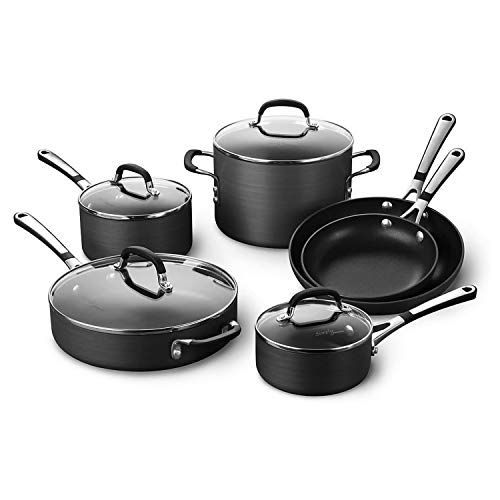

Is Hard Anodized Cookware Good?
Yes. Hard anodized cookware is a strong choice for cooks who want a pan that can handle regular use. Its main strength is the hard anodized aluminum body. The treatment makes the aluminum surface harder than standard aluminum. Many hard anodized pans also have a separate nonstick coating, so the exact cooking feel depends on the model.
When I think about a busy U.S. kitchen, this is the option I would reach for when durability matters. It feels more like a workhorse than a delicate tool. I like it for chicken, vegetables, pancakes, and one-pan dinners. It also tends to give me more confidence when I move from low heat to medium or medium-high heat. The key is still simple care. Even a tough pan can lose its finish if it gets abused.
In the hard anodized vs ceramic cookware debate, hard anodized gets the edge when long-term toughness and steady performance matter more than having the slickest surface on day one.
What Makes It Stand Out / Key Features
- Hard Aluminum BodyThe anodizing process makes the aluminum surface harder and more resistant to wear than untreated aluminum.
- Strong Heat ResponseAluminum conducts heat well, which helps the pan respond quickly when you change the burner setting.
- Good Heat SpreadThe aluminum construction can spread heat well across the cooking surface when the pan has a suitable base and design.
- Nonstick OptionsMany hard anodized pans also use a nonstick coating, but the coating type and durability vary by product.
- Everyday VersatilityA good hard anodized pan can handle common tasks such as sautéing, searing, frying, and making breakfast foods.
- Solid FeelHard anodized cookware often feels sturdy without the extreme weight of cast iron.
My Recommendation
Consider hard anodized cookware if you cook often and want a durable daily workhorse. It is especially useful for busy households that want good heat control and a pan built for repeated use.
| Best For | Why |
|---|---|
| Frequent home cooks | The tough construction suits regular cooking. |
| Weeknight meal makers | It handles many common cooking jobs with steady heat. |
| Long-term cookware buyers | The hard anodized body offers better wear resistance than untreated aluminum. |
Is Ceramic Cookware Good?
It depends. Ceramic cookware can be excellent when easy food release and simple cleanup are your top goals. Most ceramic nonstick cookware does not mean the entire pan is made from ceramic. Instead, it commonly means a ceramic-based nonstick coating sits on a metal body.
In everyday cooking, I find the appeal easy to understand. Eggs, pancakes, fish, and other foods that can cling to a pan often slide around easily when the coating is new and well cared for. Cleanup can feel almost effortless. It is the kind of pan that makes a rushed Tuesday dinner less stressful.
The catch is lifespan. Ceramic nonstick performance can decline with repeated use, especially with high heat, rough utensils, and harsh cleaning. So, in the hard anodized vs ceramic cookware comparison, ceramic gets a strong advantage for easy release but needs more care if you want that smooth feel to last.
What Makes It Stand Out / Key Features
- Ceramic-Based CoatingThe cooking surface uses a ceramic-based nonstick coating rather than traditional PTFE-based nonstick technology.
- Easy Food ReleaseA fresh ceramic nonstick surface can release eggs, pancakes, and other delicate foods with little added fat.
- Quick CleanupThe smooth surface often makes wiping away cooking residue simple.
- Low-Fat CookingGood food release can reduce the need for large amounts of oil or butter.
- Light FeelMany ceramic nonstick pans use aluminum bodies, which can keep them easier to lift than heavier cookware.
- Modern Cooking SurfaceCeramic nonstick is popular with cooks who want a smooth surface without traditional PTFE-based coatings.
My Recommendation
Consider ceramic cookware if easy food release and fast cleanup matter most. It suits cooks who mainly make delicate foods and are willing to use gentle heat and careful cleaning.
| Best For | Why |
|---|---|
| Egg lovers | The smooth surface can make eggs easy to release. |
| Low-fat cooks | Good food release can reduce the need for added oil. |
| Quick cleanup | The smooth coating is easy to wipe clean after many meals. |
hard anodized vs ceramic cookware: Side-by-Side Test
The hard anodized vs ceramic cookware choice is less about one material being perfect and more about matching the pan to your cooking habits.
Think of hard anodized cookware as a reliable work truck. Ceramic cookware is more like a smooth commuter car. One focuses on toughness and broad use. The other focuses on easy handling and a slick cooking surface.
Durability: Which Lasts Longer?
Durability matters if you cook several times a week and want fewer replacements.
| Feature | Hard Anodized | Ceramic |
|---|---|---|
| Body durability | Strong | Usually good, depending on the metal body |
| Coating wear | Depends on the specific nonstick coating | Can lose nonstick performance over time |
| Scratch resistance | Hard anodized body is tough, but coating may still scratch | Coating needs gentle handling |
| Long-term use | Strong choice for frequent cooking | Best with careful heat and utensil use |
⭐ Product A – 9/10 | Product B – 7/10
Hard anodized has the edge when long-term toughness is the main goal.
Nonstick Performance: Which Releases Food Better?
For eggs, pancakes, and fish, food release can make the difference between a calm meal and a stuck-on mess.
| Feature | Hard Anodized | Ceramic |
|---|---|---|
| Fresh nonstick feel | Very good on coated models | Often excellent |
| Eggs | Very good with a quality coating | Excellent when the coating is fresh |
| Pancakes | Very good | Excellent |
| Performance over time | Depends on coating and care | Can decline as ceramic coating wears |
⭐ Product A – 8/10 | Product B – 9/10
Ceramic has the edge for effortless food release, especially when new.
Heat Control: Which Cooks More Evenly?
Good heat control helps prevent burned edges and undercooked centers.
| Feature | Hard Anodized | Ceramic |
|---|---|---|
| Heat response | Fast | Often fast when built on aluminum |
| Heat spread | Generally strong | Depends on the underlying metal |
| High-heat tolerance | Depends on the coating and manufacturer | High heat can shorten coating life |
| Daily heat control | Very good | Good with moderate heat |
⭐ Product A – 9/10 | Product B – 8/10
Hard anodized gets the edge for a tough, responsive everyday cooking platform.
Cleaning: Which Takes Less Work?
After dinner, nobody wants to spend another 20 minutes scrubbing a pan.
| Feature | Hard Anodized | Ceramic |
|---|---|---|
| Daily cleanup | Usually easy on coated models | Usually very easy |
| Stuck food | May need soaking | Often wipes away when the coating is in good shape |
| Dishwasher use | Check manufacturer instructions | Check manufacturer instructions |
| Best care | Gentle tools and careful cleaning | Gentle tools and moderate heat |
⭐ Product A – 8/10 | Product B – 9/10
Ceramic has the edge when quick cleanup is your top priority.
Cooking Functions: Which Does More?
A useful pan should fit your real menu, from breakfast eggs to dinner vegetables and meat.
| Feature | Hard Anodized | Ceramic |
|---|---|---|
| Eggs and pancakes | Excellent with a good coating | Excellent |
| Sautéing | Excellent | Very good |
| Searing | Good, model dependent | Moderate; avoid excessive heat |
| General meal prep | Excellent | Very good |
⭐ Product A – 9/10 | Product B – 8/10
Hard anodized has the edge for cooks who want one pan to handle more tasks.
Care: Which Is Easier to Protect?
The best cookware is the cookware you can care for without changing your whole routine.
| Feature | Hard Anodized | Ceramic |
|---|---|---|
| Metal utensils | Avoid on nonstick-coated models | Avoid |
| High heat | Follow the product instructions | Use moderate heat to protect the coating |
| Abrasive cleaners | Best avoided | Best avoided |
| Care difficulty | Moderate | Moderate |
⭐ Product A – 8/10 | Product B – 7/10
Hard anodized is slightly more forgiving, but both need gentle care when coated.
Value: Which Makes More Sense?
Price matters, but replacement cost matters too. A cheap pan is not a bargain if it quickly loses its useful traits.
| Feature | Hard Anodized | Ceramic |
|---|---|---|
| Upfront value | Often strong | Often strong |
| Expected coating life | Varies by coating and care | Often shorter than the life of the metal body |
| Long-term body durability | Strong | Depends on construction |
| Best value use | Frequent cooking | Easy-release cooking |
⭐ Product A – 9/10 | Product B – 8/10
Hard anodized has the edge for buyers focused on long-term everyday use.
Final Verdict: Which Should You Buy?
The hard anodized vs ceramic cookware debate has no single answer for every kitchen. Hard anodized cookware is the better fit if you want durability, strong heat response, and a versatile daily workhorse. Ceramic cookware makes more sense if easy food release, low-fat cooking, and quick cleanup are your main goals.
If I were building a practical U.S. kitchen around frequent cooking, I would lean toward hard anodized cookware. If my top priority were delicate foods and easy cleanup, I would choose ceramic. The best choice is the one that matches how you actually cook, not the one with the flashiest label.