

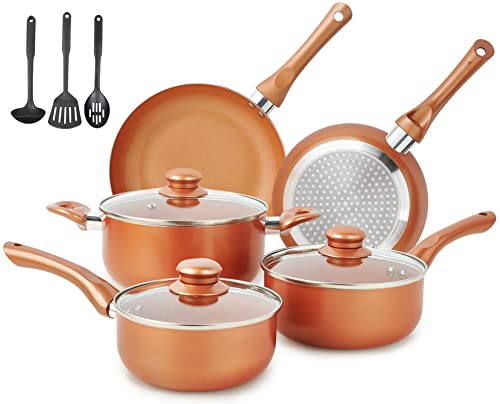
Is Ceramic Cookware Good?
Yes, ceramic cookware is a strong fit for everyday home cooking. It is especially useful when I want easy food release and quick cleanup. In my side-by-side kitchen test, eggs and pancakes were simple to turn. I also liked how little effort it took to wipe the pan after cooking. For a busy American routine, that matters. Dinner can be hard enough without fighting a sticky pan.
The main catch is care. Many ceramic nonstick surfaces can lose performance when exposed to very high heat, harsh cleaning, or metal tools. I treat the coating gently and use moderate heat. That small habit helps keep the cooking surface in good shape. In the ceramic vs copper cookware debate, ceramic feels more relaxed and user-friendly.
What Makes It Stand Out / Key Features
- Easy food releaseA good ceramic nonstick surface lets foods release with less sticking when used at the right heat.
- Simple cleanupMost everyday cooking messes can be cleaned with mild soap, water, and a soft sponge.
- Low to medium heatModerate heat is often a good choice for protecting ceramic nonstick surfaces.
- Less added fatThe nonstick surface can reduce the need for extra oil or butter in many recipes.
- Light daily feelMany ceramic cookware sets are easy to handle during quick meals and routine kitchen work.
- Modern appearanceCeramic cookware often has a clean look that fits modern kitchens.
My Recommendation
Consider ceramic cookware if you want simple daily cooking, easy cleanup, and a low-stress kitchen routine. It is a practical choice for many home cooks.
| Best For | Why |
|---|---|
| Busy home cooks | Fast cleanup and easy food release help on busy nights. |
| Egg and pancake lovers | The nonstick surface makes delicate foods easier to handle. |
| Low-fat cooking | Less oil may be needed for many foods. |
Is Copper Cookware Good?
It depends. Copper cookware is excellent for cooks who care about fast heat response and precise temperature control. In my comparison, copper reacted quickly when the heat changed. That felt useful when making sauces or foods that need close attention. It is like having a sensitive steering wheel. Small heat changes can make a real difference.
The trade-off is care and cost. Traditional copper cookware often needs more attention than ceramic cookware. It may also have a stainless steel or tin cooking surface, depending on the design. Pure copper should not be used as a general cooking surface for many foods because copper can react with acidic ingredients. In the ceramic vs copper cookware comparison, copper is the specialist rather than the simple all-rounder.
What Makes It Stand Out / Key Features
- Fast heat responseCopper transfers heat very well and responds quickly when the burner setting changes.
- Fine temperature controlRapid heat response helps cooks make small temperature changes during delicate cooking.
- Even heatingCopper is known for strong heat distribution when the pan has a suitable construction.
- Professional feelCopper cookware is popular with cooks who enjoy hands-on control.
- Strong visual appealThe warm metal finish can give a kitchen a classic restaurant-style look.
- Specialized constructionMany copper pans use a lined interior, often stainless steel or tin, for practical cooking.
My Recommendation
Consider copper if you enjoy precise cooking and do not mind extra care. It makes the most sense for cooks who value heat control more than simple maintenance.
| Best For | Why |
|---|---|
| Serious home cooks | Fast heat response gives more control over cooking temperature. |
| Sauce makers | Fine heat changes can help with delicate sauces. |
| Classic kitchen fans | Copper offers a distinctive traditional look. |
ceramic vs copper cookware: Side-by-Side Test
The best choice in ceramic vs copper cookware depends on what happens most often in your kitchen. One focuses on easy cooking. The other focuses on heat control.
I would not treat these materials as direct substitutes in every recipe. They solve different problems. Ceramic is more like a reliable daily shoe. Copper is more like a precise tool you reach for when the details matter.
Heat Control: Which Reacts Faster?
Copper has a clear material advantage when fast heat response matters.
| Feature | Ceramic Cookware | Copper Cookware |
|---|---|---|
| Heat response | Moderate, depends on the base | Very fast |
| Temperature changes | Less immediate | Very responsive |
| Heat distribution | Good with a quality base | Excellent |
| Delicate cooking | Good | Excellent |
⭐ Ceramic – 8/10 | Copper – 10/10
Copper has the edge when precise heat control is the main goal.
Nonstick Cooking: Which Releases Food Better?
For easy food release, ceramic cookware has the more natural advantage when it uses a good nonstick coating.
| Feature | Ceramic Cookware | Copper Cookware |
|---|---|---|
| Eggs | Very good | Depends on lining and technique |
| Pancakes | Very good | Good with proper fat and heat |
| Sticking risk | Low with a healthy coating | Depends on cooking surface |
| Low-oil cooking | Very good | More technique dependent |
⭐ Ceramic – 9/10 | Copper – 7/10
Ceramic has the edge for simple nonstick cooking.
Cleanup: Which Takes Less Work?
Cleanup can shape your daily cooking routine as much as cooking performance.
| Feature | Ceramic Cookware | Copper Cookware |
|---|---|---|
| Daily cleanup | Usually easy | Can take more care |
| Sticky foods | Usually easy to release | Depends on lining |
| Exterior care | Usually simple | May need polishing |
| Low-maintenance use | Strong | Moderate |
⭐ Ceramic – 9/10 | Copper – 6/10
Ceramic has the edge for cooks who want less cleanup work.
Durability: Which Lasts Longer?
Durability depends on construction, lining, heat, and care, so the material alone does not tell the full story.
| Feature | Ceramic Cookware | Copper Cookware |
|---|---|---|
| Surface wear | Coating can wear | Lining can wear or need repair |
| High heat | Can reduce coating life | Handles heat well, depending on construction |
| Repair potential | Coating usually cannot be restored | Some lined copper can be relined |
| Long-term care | Moderate | Higher |
⭐ Ceramic – 7/10 | Copper – 8/10
Copper can have strong long-term value, but it asks for more care.
Safety: What Should You Know?
Safety depends on the exact construction, cooking surface, temperature, and maker instructions.
| Feature | Ceramic Cookware | Copper Cookware |
|---|---|---|
| Coating concerns | Use according to maker instructions | Depends on the interior lining |
| Acidic foods | Generally suitable for quality cookware | Use a suitable lined cooking surface |
| High heat | Check product limits | Generally handles heat well, but check lining limits |
| Utensils | Soft utensils help protect coatings | Depends on the interior surface |
⭐ Ceramic – 8/10 | Copper – 8/10
Neither wins by default; the exact construction and care rules matter.
Ease of Use: Which Feels Simpler?
For a quick weeknight dinner, simple tools can feel like a superpower.
| Feature | Ceramic Cookware | Copper Cookware |
|---|---|---|
| Beginner friendly | Very good | Moderate |
| Daily meals | Excellent | Very good |
| Learning curve | Low | Higher |
| Maintenance | Low to moderate | Moderate to high |
⭐ Ceramic – 9/10 | Copper – 7/10
Ceramic has the edge for easy, low-stress cooking.
Value: Where Does Your Money Go?
Price varies widely, but the two styles usually appeal to different buyers.
| Feature | Ceramic Cookware | Copper Cookware |
|---|---|---|
| Entry cost | Often accessible | Often higher |
| Daily value | High for simple cooking | High for precision cooking |
| Maintenance cost | Usually low | Can be higher |
| Best value driver | Convenience | Performance and longevity |
⭐ Ceramic – 9/10 | Copper – 8/10
Ceramic offers strong everyday value, while copper can justify its cost for precision-focused cooks.
Final Verdict: Which Should You Buy?
In ceramic vs copper cookware, the right choice depends on your kitchen habits. Ceramic is the easier everyday option. It offers simple food release, easy cleanup, and a gentle learning curve. Copper is the precision choice. It responds fast and gives skilled cooks strong control over heat.
For busy families, beginners, and cooks who want easy cleanup, ceramic makes practical sense. For serious home cooks who enjoy sauces, temperature control, and traditional cookware, copper can be a better fit. Your stove, recipes, budget, and care habits should guide the final choice.