

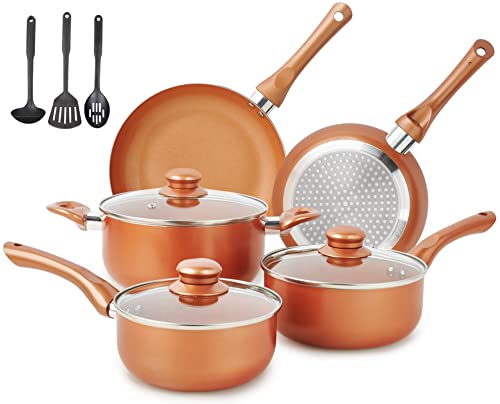
Is Ceramic Cookware Good?
Yes, ceramic cookware is a strong fit for many home cooks. In my kitchen, it feels like the easygoing friend who never makes dinner harder than it needs to be. Eggs, grilled cheese, vegetables, and pancakes are simple to handle. Food can release well when the surface is in good shape, and cleanup is often quick. For a busy U.S. household, that matters.
I also like ceramic cookware when I want to use less oil. One morning, I cooked eggs before work and had almost no mess to deal with. On another night, I used a ceramic pan for vegetables and a light sauce. The pan was easy to wash afterward. Still, ceramic coatings can wear over time. High heat, rough tools, and poor care can shorten their useful life. In the ceramic cookware vs copper debate, ceramic feels more practical for daily use.
What Makes It Stand Out / Key Features
- Easy food releaseA good ceramic coating can help food slide free with little added oil.
- Simple cleanupMost messes can be removed with gentle hand washing and a soft sponge.
- Low oil cookingThe smooth surface can work well for eggs, fish, vegetables, and other foods that tend to stick.
- Light daily feelMany ceramic pans are easier to lift and move than heavy traditional copper cookware.
- Modern designCeramic cookware often comes in clean colors and shapes that fit a modern kitchen.
- Good everyday rangeIt works well for common meals such as eggs, pancakes, vegetables, and simple sautés.
My Recommendation
Choose ceramic cookware if you want simple daily cooking, easy cleanup, and good food release. It suits busy home cooks more than cooks who need extreme heat control.
| Best For | Why |
|---|---|
| Busy home cooks | It is easy to use and clean after everyday meals. |
| Egg and pancake fans | The smooth surface can make delicate foods easier to handle. |
| Low-oil cooking | Good food release can reduce the need for extra oil. |
Is Copper Cookware Good?
Yes, but copper cookware is more of a specialist tool. It shines when heat control matters. Copper conducts heat very well, so a quality copper pan can react quickly when I raise or lower the burner. I noticed this most when making sauces. Small heat changes can matter, and copper gives the cook a close connection to the burner.
I remember using copper for a sauce that needed close attention. The pan responded quickly when I reduced the heat. That felt very different from a basic everyday pan. Copper also has a warm, classic look. But it needs more care. Many copper pans use a stainless steel lining because bare copper can react with certain foods. The surface can also tarnish. In the ceramic cookware vs copper comparison, copper is less about convenience and more about control.
What Makes It Stand Out / Key Features
- Fast heat responseCopper transfers heat very well and reacts quickly when burner settings change.
- Precise controlIt can help cooks make small heat changes during sauces and other delicate tasks.
- Even heatingQuality copper cookware can spread heat well across the cooking surface.
- Classic appearancePolished copper has a distinctive look that many cooks enjoy displaying.
- Professional feelCopper gives experienced cooks direct feedback from the burner.
- Lined cooking surfaceMany modern copper pans use stainless steel lining to make them more practical for food cooking.
My Recommendation
Choose copper if you enjoy cooking with precise heat control and do not mind extra care. It suits serious home cooks more than people seeking the simplest daily pan.
| Best For | Why |
|---|---|
| Sauce makers | Fast heat response helps with delicate temperature changes. |
| Serious home cooks | Copper offers strong control and even heat in quality cookware. |
| Classic kitchen fans | The finish adds a traditional look to a kitchen. |
ceramic cookware vs copper: Side-by-Side Test
The ceramic cookware vs copper question becomes easier when you compare the jobs each material does well. Ceramic focuses on convenience. Copper focuses on heat control.
I would not treat them as exact substitutes. They are more like two tools in the same kitchen drawer. One is built for easy daily work. The other is built for fine control.
Heat Control: Which Reacts Faster?
Heat response is one of the biggest differences between ceramic cookware vs copper.
| Feature | Product 1 | Product 2 |
|---|---|---|
| Heat response | Good, but depends on the pan base | Very fast |
| Heat spread | Varies by construction | Excellent in quality pieces |
| Fine temperature changes | Good | Excellent |
⭐ Ceramic – 8/10 | Copper – 10/10
Copper has the edge when fast and precise heat response matters.
Daily Cooking: Which Feels Easier?
For weekday meals, convenience can matter more than raw heat performance.
| Feature | Product 1 | Product 2 |
|---|---|---|
| Eggs | Very easy | Good with a lined surface |
| Pancakes | Very easy | Good |
| Quick cleanup | Usually easy | More care may be needed |
⭐ Ceramic – 9/10 | Copper – 7/10
Ceramic has the edge for quick weekday cooking.
Food Release: Which Is Better?
A smooth cooking surface can make delicate foods much less stressful.
| Feature | Product 1 | Product 2 |
|---|---|---|
| Fresh surface | Very good food release | Depends on lining and technique |
| Low-oil cooking | Very good | Good |
| Delicate foods | Easy to manage | Needs more technique |
⭐ Ceramic – 9/10 | Copper – 7/10
Ceramic has the edge when easy food release is the goal.
Durability: Which Lasts Longer?
Durability depends on construction, care, and how often you cook.
| Feature | Product 1 | Product 2 |
|---|---|---|
| Surface wear | Coating can wear over time | Lining can last for years with care |
| Scratch resistance | Varies by coating | Varies by lining |
| Long-term value | Depends on coating life | Can be strong with careful use |
⭐ Ceramic – 7/10 | Copper – 9/10
Quality copper has the edge for long-term use when properly maintained.
Care: Which Needs Less Work?
Care is where the ceramic cookware vs copper choice can feel very different.
| Feature | Product 1 | Product 2 |
|---|---|---|
| Routine washing | Usually simple | May need more attention |
| Finish care | Usually low effort | Tarnish care may be needed |
| Special handling | Gentle tools are best | Lining and finish need care |
⭐ Ceramic – 9/10 | Copper – 6/10
Ceramic has the edge for low-maintenance cooking.
Versatility: Which Fits More Recipes?
Both can cook many foods, but their strengths differ.
| Feature | Product 1 | Product 2 |
|---|---|---|
| Breakfast foods | Excellent | Very good |
| Sauces | Good | Excellent |
| Searing | Good, depending on design | Very good with suitable construction |
| Everyday meals | Excellent | Very good |
⭐ Ceramic – 8/10 | Copper – 9/10
Copper has a small edge for cooks who use many technique-heavy recipes.
Cost: Which Gives More Convenience?
Price can shape the ceramic cookware vs copper decision as much as cooking performance.
| Feature | Product 1 | Product 2 |
|---|---|---|
| Entry cost | Often lower | Often higher |
| Maintenance cost | Usually low | Can be higher |
| Value for casual cooks | Strong | Depends on use |
⭐ Ceramic – 9/10 | Copper – 7/10
Ceramic has the edge for cooks who want practical value.
Final Verdict: Which Should You Buy?
The ceramic cookware vs copper choice comes down to your cooking style. Ceramic is the easier daily tool. It works well for eggs, pancakes, vegetables, and quick meals. It also keeps cleanup simple. Copper is the precision tool. It shines when heat control, even heating, and sauce work matter most.
For most busy home cooks, ceramic makes daily life easier. For experienced cooks who enjoy careful heat control and do not mind extra care, copper can be a valuable addition. I would choose based on how you cook, not just how the pan looks.