
Hard anodized wins for toughness, while ceramic wins for PFAS-free nonstick cooking and easy food release.
After a long workday, few things feel worse than eggs stuck to a pan or a dinner that leaves a hard mess behind. That is why the anodized vs ceramic cookware choice matters. Hard anodized cookware gives you a tough aluminum body and steady heat. Ceramic cookware gives you a slick, easy-release surface without traditional PTFE nonstick. I compared both with everyday American cooking in mind, from eggs and pancakes to chicken, vegetables, sauces, and cleanup.
The choice is not as simple as saying one material is always better. Think of hard anodized cookware as a work boot. It is built for daily use. Ceramic cookware is more like a smooth running shoe. It feels great and makes light work of delicate foods, but it needs more care. In this anodized vs ceramic cookware guide, I focus on the traits that matter most in a real home kitchen.
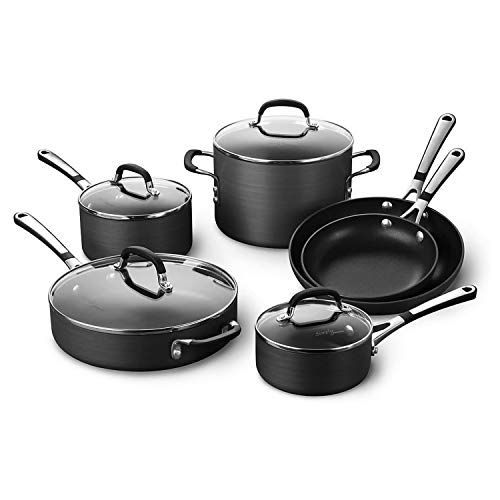

Is Calphalon Hard Anodized Cookware Good?
Yes, for many everyday cooks. The Calphalon 10-piece set uses hard anodized aluminum with a two-layer nonstick interior. It includes 8-inch and 10-inch fry pans, two saucepans, a saute pan, and a 6-quart stockpot. The hard anodized body helps spread heat well and resists corrosion and warping. The set is oven safe to 400°F, while its glass lids have their own temperature limits.
For a typical U.S. kitchen, that mix is useful. I would reach for the fry pans for eggs, grilled cheese, vegetables, and quick chicken meals. The larger pot also makes sense for pasta and soup. The main catch is care. This set is hand-wash only and is not induction compatible. Its nonstick surface also needs gentler care than bare metal. In the anodized vs ceramic cookware debate, this is the choice I would make when long-term body strength matters most.
What Makes It Stand Out / Key Features
- Hard Anodized AluminumThe aluminum body is treated to create a harder surface and offers strong heat distribution.
- Two-Layer Nonstick InteriorThe interior helps food release easily and makes routine cleanup faster.
- 10-Piece SetThe set covers common cooking jobs with fry pans, saucepans, a saute pan, and a stockpot.
- Even HeatingAluminum spreads heat well, which helps reduce uneven cooking across the pan.
- 400°F Oven SafeThe cookware can move from stovetop to oven for many common baking and finishing tasks.
- Stay-Cool HandlesThe long handles are designed for a more comfortable grip during stovetop cooking.
My Recommendation
Consider it if you want a sturdy everyday set and use gas or electric cooking. It suits families, meal preppers, and cooks who value a durable aluminum body over ceramic-style coating.
| Best For | Why |
|---|---|
| Daily family cooking | The range of pan sizes handles breakfast, dinner, sauces, soups, and larger meals. |
| Gas or electric stoves | The set works well on common non-induction cooktops. |
| Durability-focused cooks | Hard anodized aluminum provides a tough body with good heat control. |
Is CAROTE Ceramic Cookware Good?
It depends on what you want from a pan. The CAROTE ceramic set linked here uses a reinforced aluminum body with a ceramic nonstick cooking surface. The large set offers several fry pans, covered pots, and other pieces. Ceramic nonstick is attractive because it can provide easy food release without PTFE. Many modern ceramic sets also use an induction-ready base.
In the anodized vs ceramic cookware comparison, ceramic feels especially appealing for eggs, pancakes, fish, and other foods that can cling to a pan. I would still treat the coating as the delicate part of the setup. Low to medium heat, soft utensils, and gentle hand washing can help preserve it. Ceramic coatings can lose their easy-release performance over time, so the word ‘ceramic’ should not be treated as a promise of permanent nonstick performance.
What Makes It Stand Out / Key Features
- Ceramic Nonstick SurfaceThe smooth cooking surface is designed for easy food release with less oil.
- Reinforced Aluminum BodyThe aluminum core helps the pans heat quickly and spread heat across the cooking surface.
- PFAS-Free DesignThe listed ceramic coating is marketed without PFAS, PFOA, PFOS, and PTFE.
- Induction SupportThe compatible base makes the set suitable for kitchens that use induction cooking.
- Large SetThe set includes several pan and pot sizes for different household cooking needs.
- Easy Food ReleaseThe ceramic surface is useful for eggs, pancakes, vegetables, and other delicate foods.
My Recommendation
Consider ceramic cookware if easy food release and a PFAS-free nonstick surface matter most. It is a good match for cooks who often make eggs, pancakes, fish, and low-oil meals.
| Best For | Why |
|---|---|
| Low-oil cooking | The smooth ceramic surface can release many foods with little added fat. |
| Induction kitchens | A compatible magnetic base makes the set useful on induction ranges. |
| Health-conscious cooks | The listed ceramic coating avoids PTFE and PFAS. |
anodized vs ceramic cookware: Side-by-Side Test
The best choice in anodized vs ceramic cookware depends on how you cook. Hard anodized cookware focuses on a tough body and steady heat. Ceramic cookware focuses on a slick surface and easy release.
Neither material wins every task. A pan is a kitchen tool, not a magic shield. Heat level, utensils, cleaning, and the exact coating all affect results. Here is how the two styles compare.
Durability: Which Lasts Longer?
The body and the cooking surface have different jobs. Hard anodized aluminum has the edge for body toughness.
| Feature | Hard Anodized | Ceramic |
|---|---|---|
| Body strength | Very good | Good |
| Scratch resistance | Strong outer body | Coating needs care |
| Coating life | Varies by nonstick layer | Can decline with heavy use |
| Best care | Hand wash and gentle tools | Low heat and gentle tools |
⭐ Product A – 9/10 | Product B – 7/10
Hard anodized has the edge for overall body durability.
Nonstick Cooking: Which Releases Food Better?
Both can release food well when new, but their strengths feel different during daily cooking.
| Feature | Hard Anodized | Ceramic |
|---|---|---|
| Eggs | Very good with proper heat | Excellent when coating is fresh |
| Pancakes | Very good | Excellent |
| Low-oil cooking | Very good | Excellent |
| Long-term release | Depends on coating care | Can decline faster |
⭐ Product A – 8/10 | Product B – 9/10
Ceramic has the edge for fresh, easy-release cooking.
Heat Control: Which Cooks More Evenly?
Aluminum is a strong heat conductor, so both styles can perform well when the pan has a solid aluminum core.
| Feature | Hard Anodized | Ceramic |
|---|---|---|
| Heat spread | Excellent | Very good |
| Heat response | Fast | Fast |
| Hot spot control | Very good | Very good |
| High heat use | Better suited | Use moderate heat |
⭐ Product A – 9/10 | Product B – 8/10
Hard anodized has a small edge for heat control and tougher daily use.
Cleaning: Which Is Easier?
Both can make cleanup simple, but neither rewards rough scrubbing.
| Feature | Hard Anodized | Ceramic |
|---|---|---|
| Food release | Very good | Excellent when new |
| Hand washing | Required for this set | Preferred for coating life |
| Abrasive cleaners | Avoid | Avoid |
| Cleanup time | Short | Very short |
⭐ Product A – 8/10 | Product B – 9/10
Ceramic has the edge for quick cleanup when the coating remains in good shape.
Oven Use: Which Is More Flexible?
Oven limits vary by model, so always check the exact manual before moving cookware from the stove to the oven.
| Feature | Hard Anodized | Ceramic |
|---|---|---|
| Calphalon set oven rating | Up to 400°F | Varies by ceramic set |
| High-heat finishing | Moderate | Model dependent |
| Stovetop to oven | Yes within limits | Often yes within limits |
⭐ Product A – 8/10 | Product B – 8/10
This category is too model-dependent for a broad material winner.
Induction: Which Works Better?
Induction changes the rules because aluminum alone does not work on an induction burner.
| Feature | Hard Anodized | Ceramic |
|---|---|---|
| Aluminum body | Not enough for induction | Needs a magnetic base |
| Calphalon set | Not induction compatible | Compatible base on linked set |
| Gas stove | Yes | Yes |
| Electric stove | Yes | Yes |
⭐ Product A – 6/10 | Product B – 9/10
For induction users, the ceramic option has the clear practical edge.
Health and Coating Choice: What Matters?
This is where anodized vs ceramic cookware often gets confusing. Hard anodized describes the aluminum body, not necessarily the nonstick coating.
| Feature | Hard Anodized | Ceramic |
|---|---|---|
| Main body | Hard anodized aluminum | Often aluminum with ceramic coating |
| Nonstick layer | Can use PTFE-based coating | Usually silica-based ceramic coating |
| PFAS-free | Depends on the coating | Often marketed as PFAS-free |
| Best buying habit | Check the exact coating | Check manufacturer claims and testing |
⭐ Product A – 7/10 | Product B – 9/10
Ceramic is the simpler choice for shoppers who specifically want a PFAS-free nonstick surface.
Final Verdict: Which Should You Buy?
In the anodized vs ceramic cookware debate, hard anodized is the stronger all-around choice for cooks who want a tough body, steady heat, and reliable everyday performance. Ceramic is the better fit for people who want easy food release, low-oil cooking, and a PFAS-free nonstick surface.
Choose hard anodized if durability and heat control lead your list. Choose ceramic if coating type, easy release, and induction support matter more. In either case, use moderate heat, avoid harsh scrubbing, and follow the maker’s care instructions. Good cookware should make dinner feel easier, not add another chore.