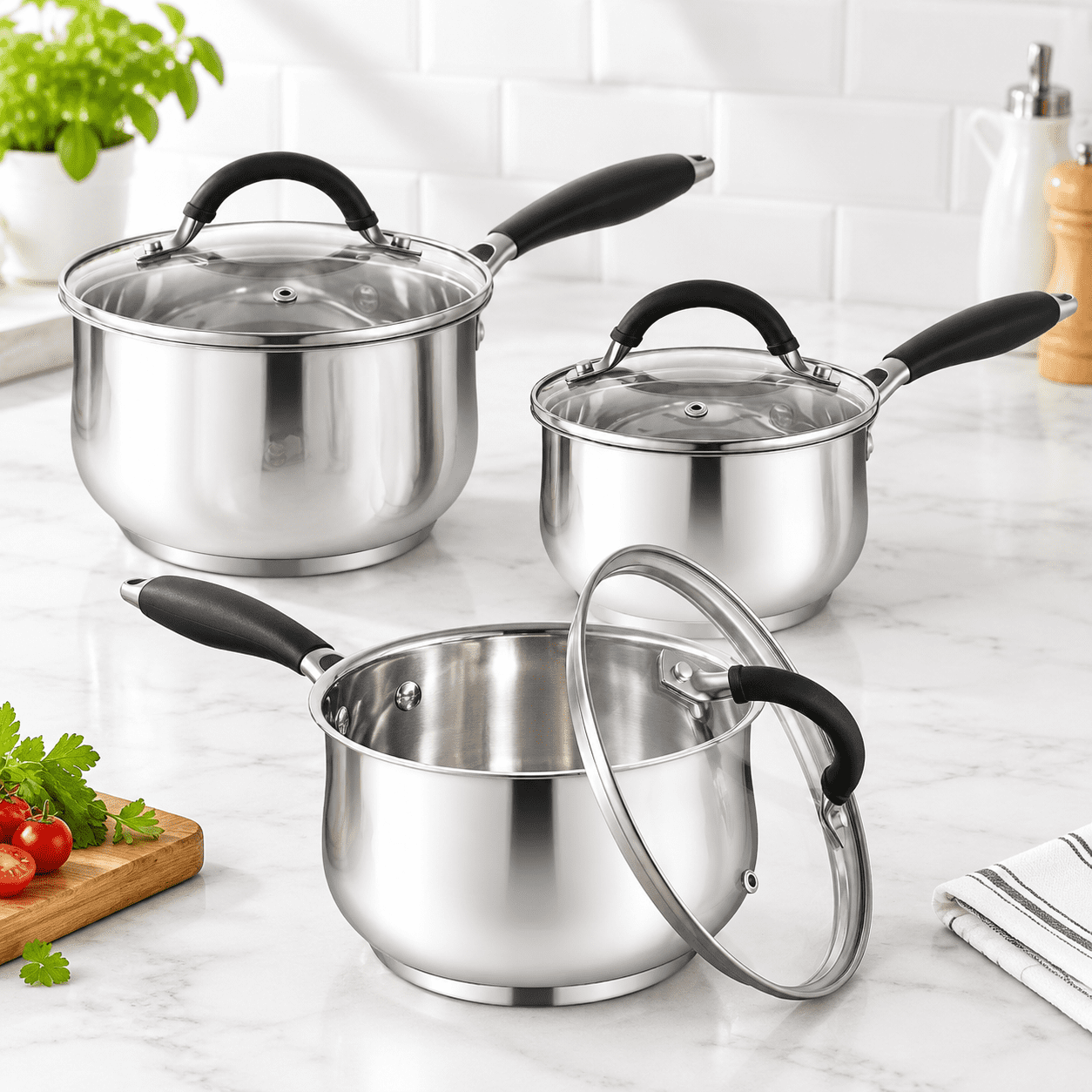
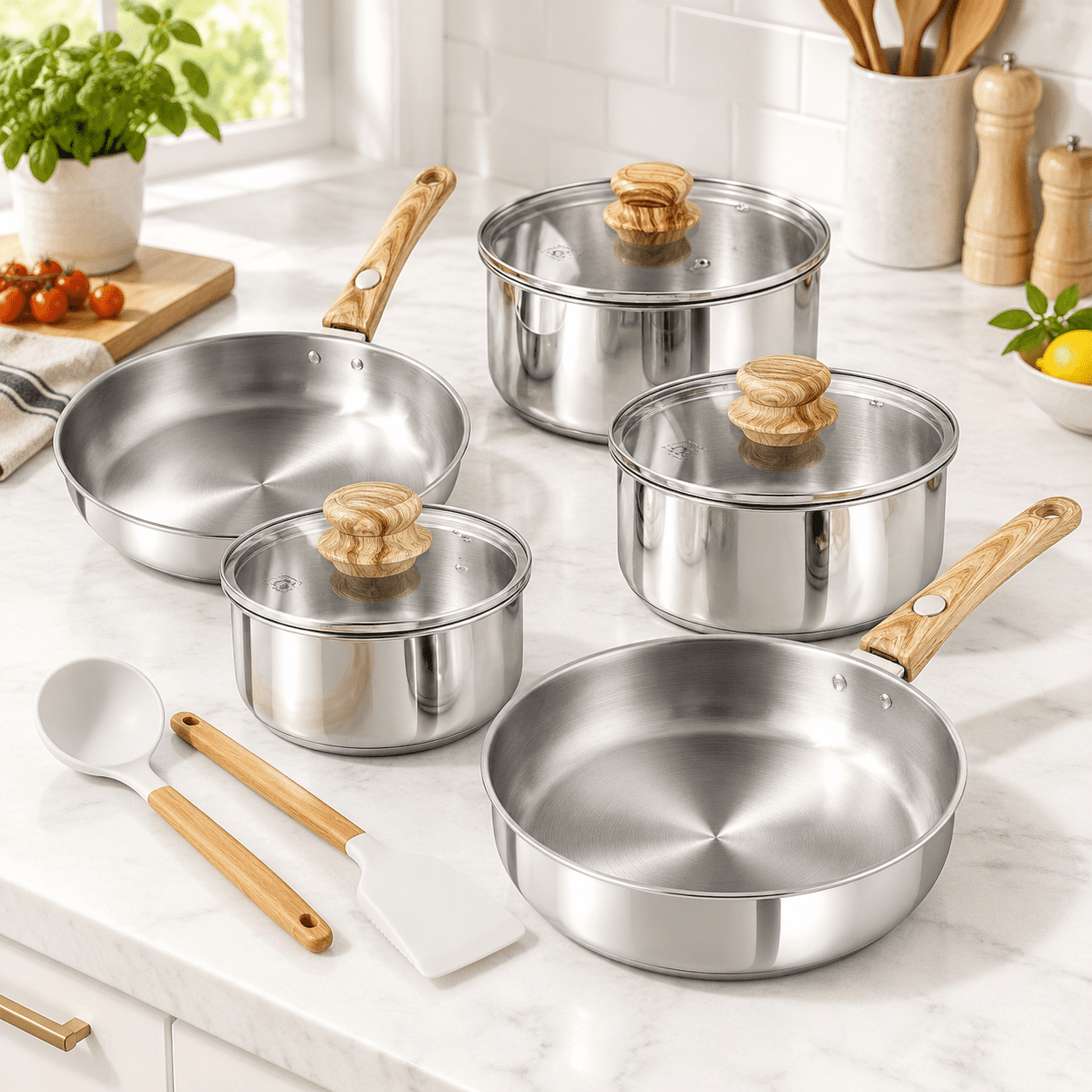
Induction cookware is made with magnetic materials that allow induction cooktops to heat pots and pans directly using electromagnetic energy.
If you are updating your kitchen in the United States, you may be considering an induction range or cooktop. These appliances are becoming an option for home cooks who want quick heat, precise temperature control, and a smooth cooking surface. However, not every pot or pan in your kitchen will work with this technology.
Induction cookware is designed to work with the magnetic field created by an induction cooktop. It usually contains iron or magnetic steel in its base or body. Common examples include cast iron, magnetic stainless steel, and certain enamel-coated pans. Some aluminum and copper pans also work when they have a special magnetic layer built into the bottom.
The easiest way to identify compatible cookware is to place a refrigerator magnet against the bottom of a pan. If the magnet sticks firmly, the pan is likely suitable for induction cooking. You should also check the manufacturer’s compatibility label and the size requirements in your cooktop manual.
Understanding this cookware can save you money and prevent frustration when switching to induction. You may already own several compatible pans, so buying a completely new cookware set is not always necessary.
Induction cookware refers to pots, pans, skillets, and other cooking vessels that can work with an induction cooktop. These pans contain a magnetic material, usually iron or magnetic stainless steel, that responds to the electromagnetic field produced by the appliance.
Unlike traditional gas and electric cooking, induction does not rely on a flame or a heated burner to transfer heat to the pan. Instead, the magnetic field creates electrical currents inside the compatible cookware. These currents produce heat directly in the pan.
This means the cookware itself becomes the main source of heat for cooking food. The glass surface underneath the pan receives some heat through contact, but it is not the primary heating element.
Induction cookware does not have to look different from ordinary cookware. A stainless steel saucepan, a cast iron skillet, or an enamel-coated Dutch oven may all be suitable if their magnetic properties and base design meet the cooktop’s requirements.
Source: larrealasvegas.com
Magnetic construction
The cookware must contain a suitable magnetic material so the induction cooktop can transfer energy into it.
Direct heating
The pan heats through electromagnetic induction rather than relying on a flame or a hot electric burner.
Compatible design
The pan should have a suitable flat base and enough magnetic surface to be recognized by the appliance.
Different material choices
Induction cookware is available in cast iron, stainless steel, enamel-coated steel, and certain multi-layer metal designs.
Is Induction Cookware Different From Regular Cookware?
The main difference is the material used in the cookware’s base. Regular cookware may be made from aluminum, copper, glass, or nonmagnetic stainless steel. These materials do not respond properly to an induction cooktop unless a compatible magnetic layer is added.
Induction cookware has a magnetic base or body that allows the appliance to generate heat inside the pan. Its outside appearance may be almost identical to that of a regular pot or skillet.
For example, two stainless steel frying pans can look the same but behave differently on an induction cooktop. One may contain magnetic steel and work properly, while the other may contain nonmagnetic stainless steel and fail to heat.
Regular cookware
May work on gas or standard electric stoves without having the magnetic properties needed for induction.
Induction cookware
Contains magnetic material that allows it to respond to the electromagnetic field.
Does Induction Cookware Need a Special Shape?
Induction cookware does not need a special exterior shape. However, a flat and stable bottom is generally preferred because it provides good contact with the cooking zone and helps support consistent performance.
A round-bottom wok or a heavily warped skillet may not work as well as a flat-bottom pan. Some induction cooktops also have specific minimum and maximum pan sizes, so the cookware base should match the appliance’s instructions.
Flat bottom
Helps the pan sit securely and provides a suitable cooking surface.
Suitable diameter
The magnetic base should meet the cooktop’s minimum size requirements.
How Does Induction Cookware Work?
Induction cookware works through electromagnetic induction. An induction cooktop has a copper coil beneath its glass surface. When electricity flows through this coil, it produces a changing magnetic field.
When you place a suitable magnetic pan over the cooking zone, the changing field induces electrical currents in the metal. These currents encounter electrical resistance within the cookware and produce heat.
The heat then spreads through the pan and cooks the food inside it. The cooktop does not need to heat a traditional burner first, which helps explain why induction cooking can respond quickly when you change the heat setting.
The process depends on the cookware. If you place a glass pot or an ordinary nonmagnetic aluminum pan on the cooking zone, the appliance cannot transfer energy into it in the normal way. Many induction cooktops will display a warning or refuse to activate.
Source: i5.walmartimages.com
Step 1: Electricity flows
The appliance sends an electric current through a coil beneath the glass cooking surface.
Step 2: A magnetic field forms
The coil creates a changing magnetic field above the cooking zone.
Step 3: The pan responds
A compatible magnetic pan allows electrical currents to form within its metal base.
Step 4: Heat develops
Electrical resistance in the cookware produces heat that spreads through the pan.
Step 5: Food cooks
The heated cookware transfers energy to the food through normal cooking processes.
Why Does the Pan Heat Faster Than the Cooktop?
An induction cooktop transfers energy directly into compatible cookware. A traditional electric coil or radiant electric burner must first become hot and then transfer heat to the pan.
With induction, less time is spent heating a separate burner element. This can make water heating and temperature changes faster, although actual performance depends on the appliance’s power, pan size, food quantity, and cooking conditions.
The glass surface can still become hot because it receives heat from the pan. Therefore, a cooking zone should never be treated as completely cool immediately after use.
Faster response
The pan can respond quickly when you raise or lower the cooktop setting.
Less wasted heat
Energy is directed into the compatible cookware instead of first heating a separate burner.
Residual surface heat
The glass can remain hot from contact with the cookware even after the heating field stops.
What Materials Are Used in Induction Cookware?
The most important feature of induction cookware is its magnetic base, not simply the material named on the product label. Some metals work naturally with induction, while others need a specially designed magnetic layer.
When shopping, look beyond terms such as stainless steel, nonstick, ceramic, or hard-anodized aluminum. These descriptions do not automatically confirm induction compatibility.
The following material comparison explains which common cookware types work and what limitations to consider.
Source: i5.walmartimages.com
Cast iron
Naturally magnetic and generally compatible with induction. It retains heat well but can be heavy and may scratch glass if dragged.
Magnetic stainless steel
A popular choice because it combines magnetic compatibility with durability and easy maintenance.
Enameled steel
Can work when the metal underneath the enamel is magnetic. Check the manufacturer’s instructions.
Aluminum with a magnetic base
Can work when a suitable induction-compatible magnetic layer is built into the bottom.
Copper with a magnetic base
Some specially constructed copper pans work when they include a compatible magnetic layer.
Stainless Steel Induction Cookware
Stainless steel is one of the most common materials used in induction-compatible cookware. However, not every stainless steel alloy is magnetic enough to work with an induction cooktop.
Some stainless steel pans use a magnetic exterior or base while other layers provide corrosion resistance and cooking performance. This construction allows manufacturers to combine different metals in one pan.
Multi-ply cookware, such as tri-ply designs, may use a magnetic stainless steel exterior with an aluminum core. The aluminum helps spread heat, while the magnetic exterior allows induction compatibility.
Before buying a stainless steel set, look for an induction-compatible label or test the base with a magnet. Do not assume that every product described as stainless steel will work.
Main advantage
Durable construction, resistance to rust and staining, and compatibility with many cooking methods.
Main limitation
Some stainless steel grades are not magnetic, so material identification alone is not enough.
Cast Iron and Enameled Cast Iron
Cast iron is naturally magnetic, which makes most traditional cast iron skillets and Dutch ovens suitable for induction cooking. Its thick construction also stores heat well.
Enameled cast iron can work because the enamel coating does not prevent the magnetic iron underneath from responding to the cooktop. However, the cookware should still have a suitable base and be approved for induction use.
The main drawback is weight. Cast iron can be difficult to lift, and rough or damaged surfaces may scratch a glass cooktop if you slide the pan across it.
Lift cast iron cookware when moving it. Avoid dropping it onto the cooking surface, as the heavy metal can damage the glass.
Best for
Slow cooking, searing, frying, baking, and recipes that benefit from strong heat retention.
Watch out for
Heavy weight, slower temperature changes within the pan, and the risk of scratching or damaging the glass surface.
Aluminum and Copper Induction Cookware
Ordinary aluminum and copper cookware generally cannot work directly with induction because these metals are not ferromagnetic. They can still be used when the manufacturer adds a suitable magnetic plate or layer to the base.
This design allows the cooktop to recognize the pan while the aluminum or copper body helps distribute heat. It is one reason why some modern nonstick and premium cookware sets advertise induction compatibility even though their main body is made from aluminum.
The magnetic base must be properly designed and attached. A thin or poorly matched layer may affect how evenly the pan heats or whether the cooktop recognizes it.
Regular aluminum
Generally unsuitable for induction without a magnetic base.
Induction-ready aluminum
Uses a compatible magnetic plate or bonded base to work with induction.
Regular copper
Does not normally activate an induction cooking zone.
Copper with magnetic construction
May work if the magnetic layer meets the cooktop’s compatibility requirements.
Which Cookware Does Not Work on Induction Cooktops?
Cookware without a suitable magnetic base will not work properly on a standard induction cooktop. This includes most ordinary aluminum, copper, glass, ceramic, and porcelain cooking vessels.
A common misunderstanding is that every stainless steel pan works with induction. In reality, some stainless steel alloys are nonmagnetic, so a pan can be made entirely of stainless steel and still fail the compatibility test.
The same rule applies to nonstick cookware. A nonstick coating does not determine whether a pan works with induction. The magnetic construction underneath the coating is what matters.
If you already own cookware made from these materials, do not automatically throw it away. You may still use it on a compatible gas or conventional electric cooktop.
Glass cookware
Ordinary glass pots and pans lack the magnetic base needed for induction.
Ceramic cookware
Solid ceramic cooking vessels are not induction-compatible unless they have a suitable magnetic construction.
Nonmagnetic stainless steel
Some stainless steel alloys do not respond sufficiently to the magnetic field.
Regular aluminum
Aluminum pans without a magnetic base cannot normally activate an induction cooktop.
Traditional copper
Copper cookware without a magnetic layer will not work directly on induction.
Does Nonstick Cookware Work on Induction?
Yes, nonstick cookware can work on induction if it has a compatible magnetic base. The nonstick coating itself does not create induction compatibility.
Many nonstick pans use an aluminum body because aluminum spreads heat well and keeps the cookware relatively light. Manufacturers can add a magnetic stainless steel plate to the bottom to make these pans suitable for induction.
Check the product description for an induction-compatible label. Also follow the care instructions for the nonstick coating, including recommended heat settings and utensil types.
Compatible nonstick pans
Have a magnetic base that works with the induction appliance.
Incompatible nonstick pans
Use a nonmagnetic base without a suitable induction layer.
Can You Use a Regular Pan With an Induction Adapter Plate?
An induction adapter plate is a flat metal disc designed to sit between an induction cooktop and cookware that is not directly compatible. The plate heats through induction and then transfers heat to the pot or pan placed on top.
This can allow certain nonmagnetic cookware to be used, but it changes the heating process. The adapter itself must be compatible with the appliance, and cooking may be slower or less responsive than using a suitable induction pan.
Adapter plates can also become very hot. Use only a product approved for your cooktop, follow the manufacturer’s instructions, and avoid leaving the plate unattended. Directly compatible cookware is generally the simpler option.
Possible benefit
May let you use selected existing cookware that would not otherwise work on induction.
Main drawback
Adds another heated surface and can reduce the speed and responsiveness of induction cooking.
How to Tell If Your Cookware Is Induction Compatible
You can check induction compatibility at home without buying special equipment. A simple refrigerator magnet is often enough to identify whether a pan contains magnetic material.
However, a magnet test should be treated as a useful screening method rather than a complete performance guarantee. The pan’s magnetic base size, thickness, flatness, and construction also affect how it works.
Use the following checks before buying new cookware or placing an old pan on an induction cooktop.
Step 1: Find a refrigerator magnet
Use an ordinary magnet that can attach to metal surfaces.
Step 2: Turn the pan upside down
Place the magnet against the flat bottom rather than the handle or side.
Step 3: Check the magnetic pull
A firm attraction suggests that the base contains suitable magnetic material.
Step 4: Inspect the product label
Look for the induction-compatible symbol or written confirmation from the cookware manufacturer.
Step 5: Check the base
Make sure the bottom is flat, stable, and large enough for the cooking zone.
Step 6: Check the cooktop manual
Confirm that the pan size and construction meet the appliance’s requirements.
What Does the Induction Cookware Symbol Look Like?
The induction cookware symbol usually looks like a series of horizontal loops or a stylized coil. It may appear on the bottom of the pan, on the product packaging, or in the manufacturer’s online specifications.
This symbol tells buyers that the cookware is designed for induction use. It is especially useful when shopping for stainless steel, aluminum-based nonstick, or multi-layer cookware.
Symbols can vary in appearance between manufacturers. When the marking is unclear, check the written product specifications instead of relying on appearance alone.
Look underneath
Many manufacturers print the induction symbol directly on the cookware base.
Check the packaging
Cookware boxes often list the stove types that the set supports.
Verify the specifications
Use the manufacturer’s product page or customer support if compatibility is uncertain.
How Reliable Is the Magnet Test?
A magnet that sticks firmly to the pan’s bottom is a good sign that the cookware contains magnetic material. If it does not stick at all, the pan is unlikely to work directly with induction.
Some pans have a magnetic plate that covers only part of the bottom. A magnet may stick in one area but not another. The cooktop may still struggle if the magnetic surface is too small or does not match the appliance’s sensing requirements.
A weak magnetic attraction does not guarantee useful cooking performance. If the result is uncertain, follow the manufacturer’s compatibility information and test the pan with a small amount of water according to the cooktop manual.
Strong magnetic pull
Usually indicates that the pan has a magnetic base, but does not guarantee optimal heating.
Weak magnetic pull
May indicate limited magnetic material or a base that is not ideal for induction.
No magnetic pull
Usually means the cookware is not directly induction-compatible.
Benefits of Using Induction Cookware
Induction-compatible cookware gives you access to the speed and control of an induction cooktop. The biggest practical benefit is that the pan receives energy directly, which can make everyday cooking more responsive.
For a busy household, this can be useful when boiling water, heating soup, preparing breakfast, or changing temperatures during a recipe. You can also use compatible cookware across different stove types, which gives you more flexibility if you move or change appliances.
However, the benefits depend on the quality of the cookware and the cooktop. A poorly designed magnetic base may not heat as evenly as a well-constructed multi-layer pan.
Quick heating
Compatible pans can heat quickly because the cooktop transfers energy directly into the cookware.
Responsive temperature control
The pan can react quickly when you adjust the cooktop’s power setting.
Energy efficiency
Direct energy transfer can reduce heat lost to the surrounding air compared with conventional cooking methods.
Flexible use
Many induction-ready pans also work on gas and conventional electric ranges, subject to manufacturer instructions.
Wide material selection
You can choose from cast iron, stainless steel, enameled cookware, and magnetic-base nonstick designs.
Is Induction Cookware More Energy Efficient?
Induction cooking can be more energy-efficient than conventional gas or electric cooking because it transfers energy directly into compatible cookware. Less energy is spent heating the surrounding air or a separate burner first.
The exact energy savings depend on the appliance, cooking task, pan design, and household use. It would be misleading to claim that every induction pan uses less energy under every condition.
A flat, appropriately sized pan helps the cooking zone transfer energy effectively. Using a very small pan on a large zone or an unsuitable base may reduce performance.
Better energy transfer
The magnetic field heats the cookware rather than relying on a separate burner to become hot first.
Less surrounding heat
The cooktop generally releases less unwanted heat into the kitchen during operation.
Results vary
Actual efficiency depends on the appliance, cookware, cooking method, and power supply.
Does Induction Cookware Improve Cooking Results?
Induction cookware can support good cooking results, but the pan’s construction still matters. A thick, well-designed base can help spread heat and reduce hot spots.
Cast iron retains heat well, while multi-layer stainless steel cookware can combine a magnetic exterior with a heat-spreading aluminum core. These designs serve different cooking needs.
Induction technology does not automatically make food taste better. Cooking results still depend on temperature, technique, ingredients, and the cookware’s ability to distribute and retain heat.
Potential Drawbacks and Limitations of Induction Cookware
Induction cookware offers useful benefits, but it also has limitations. The most obvious issue is that ordinary nonmagnetic cookware will not work directly with the appliance.
You may need to replace some existing pans when switching from gas or traditional electric cooking. Some specialized induction-compatible designs can also cost more than basic cookware, although price alone does not determine quality.
Weight, noise, cleaning needs, and surface care are other factors to consider. These issues vary by cookware material and construction rather than being problems with every induction-compatible pan.
Limited compatibility
Not every pot or pan in your existing kitchen will work with induction.
Possible replacement cost
You may need new cookware if your current collection lacks suitable magnetic bases.
Cookware weight
Cast iron and some thick multi-layer pans can be heavy to lift and move.
Possible operating noise
Some pans may produce buzzing, humming, clicking, or vibration during induction cooking.
Glass surface care
Rough or heavy pans can scratch or damage the cooktop if dragged or dropped.
Why Does Induction Cookware Sometimes Make Noise?
Some induction pans make a humming, buzzing, clicking, or rattling sound while cooking. This can happen because the magnetic field interacts with the pan’s metal layers and causes small vibrations.
Multi-layer cookware may be more noticeable because different metals can expand and respond differently as they heat. The selected power setting, pan construction, and contact with the cooking surface can also affect noise.
Mild operating noise does not automatically mean the cookware is defective. However, sudden loud noises, unusual vibration, or a pan that moves during use should be checked. Follow the appliance and cookware instructions if the sound seems abnormal.
Can Induction Cookware Scratch a Glass Cooktop?
Yes, cookware can scratch an induction cooktop’s glass surface, especially when it has a rough, dirty, or damaged bottom. Cast iron deserves extra care because it is heavy and can have a textured base.
Before placing a pan on the cooktop, clean its bottom and inspect it for rough edges. Lift cookware instead of sliding it across the glass, and avoid dropping heavy pots.
If food or debris gets trapped under a pan, it can also cause marks or scratches as the cookware moves. Keeping both surfaces clean is a simple way to protect the appliance.
Induction Cookware vs. Regular Cookware
The main difference between induction cookware and regular cookware is magnetic compatibility. Induction pans have a base or body that responds to an electromagnetic field, while ordinary cookware may not.
Both types can be made from stainless steel, aluminum, or other materials. What matters is the exact construction and whether the base contains suitable magnetic material.
The comparison below can help you understand which type of cookware is appropriate for your kitchen.
Heating method
Induction cookware receives energy through an electromagnetic field, while regular cookware is heated by a flame or a conventional electric heating element.
Material requirements
Induction cookware needs a suitable magnetic base; regular cookware does not have this requirement.
Stove compatibility
Induction-ready cookware often works on other stove types, but ordinary cookware may not work on induction.
Appearance
The two types can look almost identical, making labels and magnet tests important.
Can Induction Cookware Be Used on Gas Stoves?
Yes, most induction-compatible cookware can also be used on gas stoves if the manufacturer allows it. Magnetic stainless steel, cast iron, and many aluminum pans with induction bases can work with gas heat.
However, you should check the cookware’s temperature limits and handle materials before using it. Some nonstick coatings and detachable handles have specific restrictions.
On gas, make sure the flame does not extend far beyond the bottom of the pan. Excessive flame can damage handles, coatings, and exterior finishes.
Can Induction Cookware Be Used on Electric Stoves?
Most induction-compatible pans can also be used on conventional electric cooktops, including suitable radiant glass-top ranges. Their magnetic properties do not prevent them from receiving heat from an electric element.
Check the base design and appliance instructions before use. A flat bottom is especially helpful on glass and ceramic electric surfaces because it improves contact and reduces the chance of scratching.
How to Choose the Right Induction Cookware
The right induction cookware should match your cooktop, cooking habits, and preferred maintenance routine. You do not need to purchase the most expensive cookware set to get good results.
Start by checking magnetic compatibility, base construction, and pan size. Then consider whether you need a skillet, saucepan, stockpot, or complete cookware set.
For many US households, a small collection of well-made pans is more practical than buying a large set with pieces that rarely get used.
Check compatibility first
Look for an induction label and confirm that the base passes a magnet test.
Choose a flat bottom
A flat and stable base helps maintain good contact with the cooking zone.
Match pan size to the burner
Check the actual bottom diameter rather than relying only on the measurement across the pan’s top.
Consider construction
Look for a suitable base that supports stable heating and the type of cooking you do.
Review care instructions
Check whether the pan is dishwasher-safe, oven-safe, and suitable for your preferred utensils.
What Is the Best Material for Induction Cookware?
There is no single best material for every cook. Magnetic stainless steel is a practical choice for everyday cooking because it is durable and available in many shapes and sizes.
Cast iron is useful when heat retention matters, such as searing meat or cooking foods slowly. Enameled cast iron can provide similar induction compatibility with a coated cooking surface.
Induction-compatible nonstick cookware may be convenient for eggs, pancakes, and delicate foods. However, the magnetic base and coating quality should both be considered.
A mixed cookware collection often makes sense. You can use stainless steel for sauces, cast iron for searing, and a suitable nonstick pan for foods that are easier to cook on a coated surface.
For everyday cooking
Consider magnetic stainless steel with a well-designed base.
For searing and heat retention
Consider compatible cast iron or enameled cast iron.
For eggs and delicate foods
Consider induction-ready nonstick cookware with clear care instructions.
For versatile heat distribution
Consider multi-layer stainless steel cookware with an aluminum core and magnetic exterior.
Should You Buy an Induction Cookware Set or Individual Pans?
A cookware set can be convenient if you are starting from scratch or replacing most of your kitchen equipment. It may provide matching saucepans, frying pans, and larger pots in one purchase.
However, sets sometimes include pieces that you rarely use. If your current cookware collection already contains compatible pans, replacing everything may be unnecessary.
Buying individual pieces allows you to select the best material for each cooking task. It can also help you spread out the cost instead of purchasing a full set at once.
Choose a set
When you need several compatible pots and pans and want a coordinated collection.
Choose individual pans
When you already own compatible cookware or want specific pieces for different recipes.
What Size Induction Cookware Should You Buy?
Choose pan sizes based on the cooking zones available on your induction cooktop. A small saucepan is useful for sauces and single servings, while a larger skillet or stockpot may be better for family meals.
Pay attention to the base diameter rather than only the top opening. Some cookware has sloped sides, so the top measurement can be much wider than the magnetic surface underneath.
Consult your cooktop manual for minimum and maximum cookware dimensions. Some appliances can recognize different pan sizes automatically, but others have specific limits.
How to Use and Care for Induction Cookware
Proper use and maintenance can help induction cookware last longer and protect the cooktop surface. Start with a clean, dry pan and place it carefully in the center of the correct cooking zone.
Induction can heat a compatible pan quickly, so avoid starting with the highest power setting unless the recipe and cookware instructions call for it. Gradual heating is especially useful for nonstick cookware and foods that can burn easily.
After cooking, allow the cookware to cool according to its care instructions. Clean the base before using it again so dirt and food particles do not scratch the glass.
Use the correct cooking zone
Choose a zone that matches the pan’s magnetic base size.
Center the cookware
Position the pan according to the cooktop manufacturer’s instructions.
Start with moderate heat
Avoid unnecessarily high settings, particularly when using nonstick pans.
Use suitable utensils
Follow the cookware maker’s guidance to avoid damaging coatings or finishes.
Lift heavy pans
Do not drag rough or heavy cookware across the glass surface.
Clean the bottom
Remove grease, food particles, and debris before placing the pan on the cooktop.
How to Clean Induction Cookware
The best cleaning method depends on the cookware material. Stainless steel, cast iron, enameled cookware, and nonstick pans have different care requirements.
For stainless steel, use warm water and dish soap. A suitable nonabrasive cleaner can help remove stubborn marks when allowed by the manufacturer.
For cast iron, follow the seasoning and cleaning instructions for your particular pan. Dry it thoroughly after washing and apply a thin layer of cooking oil when needed to maintain its seasoning.
For nonstick cookware, use soft sponges and gentle dish soap. Avoid harsh abrasives and metal utensils if the manufacturer advises against them.
How to Protect an Induction Cooktop While Using Heavy Pans
A glass induction cooktop can be damaged by impacts and rough cookware. This is why careful handling matters, especially when using cast iron or heavy stainless steel stockpots.
Lift pans instead of sliding them. Keep the glass and pan bottoms clean, and avoid storing heavy cookware where it can fall onto the cooking surface.
Do not place cookware on the cooktop if the bottom is badly warped or has sharp, damaged edges. Replace or repair unsuitable cookware according to the manufacturer’s guidance.
Common Induction Cookware Problems and Solutions
If an induction cooktop does not recognize a pan, the cookware may lack the right magnetic material or may not meet the appliance’s size requirements. Positioning, surface cleanliness, and the cooktop’s settings can also affect operation.
Before assuming that the appliance is defective, check the cookware first. The following troubleshooting steps address common problems without requiring you to take apart the cooktop.
Problem: The cooktop does not recognize the pan
Possible causes include a nonmagnetic base, a magnetic surface that is too small, or an unsuitable pan position. Try a compatible pan and consult the manual.
Problem: Food heats unevenly
Possible causes include a thin or poorly constructed base, an unsuitable pan size, or incorrect positioning. Try a heavier, flat-bottom pan that matches the cooking zone.
Problem: The pan makes unusual noise
Some vibration and humming can be normal. Check that the pan sits flat and that its base is suitable for induction.
Problem: The pan moves on the surface
Check the bottom for grease, moisture, or debris. Use cookware with a stable, flat base.
Problem: The cooktop displays an error
Check the cookware and follow the appliance manual. If the error continues with compatible cookware, contact the manufacturer’s service team.
Why Is My Induction Pan Not Heating?
The most common reason is that the pan does not contain enough suitable magnetic material. A nonmagnetic stainless steel pan or an ordinary aluminum skillet may look suitable but fail to activate the cooking zone.
Another possibility is that the magnetic base is smaller than the minimum size supported by the cooktop. Some pans also have a magnetic plate that does not cover enough of the bottom for reliable detection.
Test another pan that is clearly marked for induction. If that pan works, the original cookware is likely the issue. If several compatible pans fail, check the appliance settings and manual before arranging professional service.
Why Does My Induction Cookware Heat Unevenly?
Uneven heating can result from a thin base, poor heat distribution, a warped bottom, or a mismatch between the pan and cooking zone. The magnetic layer alone does not guarantee even heat throughout the cookware.
Multi-layer stainless steel pans can help distribute heat through their construction, while thick cast iron provides strong heat retention. The best choice depends on the type of cooking you do.
Avoid using cookware that is badly warped or visibly damaged. If uneven heating occurs with several suitable pans, consult the cooktop manufacturer.
Induction Cookware Safety Considerations
Induction cookware must be used according to the instructions for both the pan and the cooktop. Although the heating method differs from gas and conventional electric cooking, normal kitchen safety rules still apply.
The pan can become very hot, and the glass surface may retain heat after cooking. Never assume that an induction cooking zone is safe to touch just because it does not use an open flame.
Avoid heating empty cookware unless the manufacturer specifically permits it. Induction can raise pan temperatures quickly, and overheating can damage cookware, coatings, or the cooktop.
People who use a pacemaker or another implanted medical device should review the appliance manufacturer’s electromagnetic-field guidance and consult their healthcare professional or device manufacturer about any precautions.
Avoid overheating
Use suitable heat settings and follow the cookware manufacturer’s temperature limits.
Watch for residual heat
The glass surface can remain hot after the pan is removed.
Keep cookware stable
Use flat-bottom pans and lift heavy cookware instead of dragging it.
Follow coating instructions
Avoid excessive heat that could damage nonstick or other coated surfaces.
Review medical-device guidance
People with implanted medical devices should follow the specific advice of their device manufacturer and healthcare professional.
Is Induction Cookware Safe for Everyday Cooking?
Induction-compatible cookware can be used for everyday cooking when it is made for food contact, maintained properly, and used within the manufacturer’s temperature limits.
The phrase induction-safe describes compatibility with the cooking technology. It does not automatically mean that a pan is free from every chemical coating, metal, or material that could matter to a buyer.
If you are concerned about cookware coatings, examine the actual material and product specifications. Stainless steel, cast iron, and coated nonstick cookware have different properties, so evaluate each type separately.
For a cookware safety decision, consider the pan’s full construction, condition, intended use, and manufacturer instructions rather than relying on the induction label alone.
Can You Leave an Empty Induction Pan on High Heat?
You should not leave an empty pan heating on high unless its manufacturer specifically allows that use. Induction can transfer energy into cookware quickly, which may cause a pan to overheat before you notice.
This is especially important with nonstick cookware, which may have strict temperature limits. Add food or liquid as directed by your recipe and use an appropriate heat setting.
Research Notes and Reader Question Gap Map
This guide uses product-support information and appliance documentation reviewed on November 1, 2026. The main research focus was induction compatibility, magnetic cookware construction, base size, common operating problems, and safe cookware handling.
The reviewed reference pages included Bosch USA’s What Is Induction Cookware guide at https://www.bosch-home.com/us/owner-support/get-support/what-is-induction-cookware, Electrolux’s cookware compatibility guidance at https://supporthub.electrolux.com.au/support-articles/article/what-cookware-is-suitable-for-cooking-zones-with-induction-heating/, Wolf’s induction cookware suggestions at https://www.subzero-wolf.com/assistance/answers/wolf/common/induction-cooktop-cookware-suggestions, Whirlpool’s induction compatibility guidance at https://producthelp.whirlpool.com/Cooking/Cooktops/Product_Info/Cooktop_Product_Assistance/Induction_Compatible_Cookware, and Samsung’s US cookware guidance at https://www.samsung.com/us/support/answer/ANS10006866/.
These manufacturer resources consistently explain the need for magnetic cookware. They also show why material names alone are not enough to establish compatibility. Appliance-specific details, including minimum pan diameter and magnetic base design, can differ.
The following gap map separates questions directly supported by the reviewed manufacturer guidance from practical next needs inferred from the main reader task. These are editorial research findings, not verified search-volume or ranking data.
Observed question: How can I test a pan?
Reader stage: Before purchase or first use. Manufacturer coverage: Answered. Reader benefit: A simple magnet test helps avoid buying incompatible cookware. Placement: Compatibility section.
Observed question: Which materials work?
Reader stage: Product selection. Manufacturer coverage: Answered. Reader benefit: Clarifies the difference between magnetic and nonmagnetic metal. Placement: Material comparison.
Observed question: Why does the cooktop reject my pan?
Reader stage: Troubleshooting. Manufacturer coverage: Answered, with different appliance-specific details. Reader benefit: Explains magnetic base size and construction. Placement: Troubleshooting section.
Inferred next need: Can I keep my old cookware?
Reader stage: Before switching appliances. Manufacturer coverage: Shallow across general compatibility guidance. Reader benefit: Helps readers avoid unnecessary replacement purchases. Placement: Compatibility and adapter plate sections.
Inferred next need: Can heavy cookware damage the glass?
Reader stage: Daily use. Manufacturer coverage: Answered in appliance care guidance. Reader benefit: Reduces scratching and impact damage. Placement: Care and safety sections.
Inferred next need: Does an induction label mean a pan is non-toxic?
Reader stage: Health and material evaluation. Manufacturer coverage: Not established by compatibility guidance. Reader benefit: Separates magnetic performance from material and coating safety. Placement: Safety section.
Frequently Asked Questions
Q
What is induction cookware made of?
Induction cookware is made from materials that contain suitable magnetic properties. Common examples include cast iron, magnetic stainless steel, and enameled steel. Some aluminum and copper pans also work when they have a magnetic layer built into the base.
Q
How do I know if my pots and pans are induction compatible?
Place a refrigerator magnet against the bottom of each pan. If it sticks firmly, the cookware is likely compatible. Also check the manufacturer’s induction symbol or product specifications and confirm that the pan meets your cooktop’s size requirements.
Q
Can I use regular stainless steel cookware on an induction cooktop?
Sometimes. Certain stainless steel types are magnetic and work well with induction, while others are not. Test the base with a magnet and check the manufacturer’s compatibility information before using the pan.
Q
Do induction cooktops require special pots and pans?
Yes. They require cookware with a suitable magnetic base or body. Cast iron, magnetic stainless steel, and compatible enameled steel are common options. Ordinary glass, aluminum, and copper cookware will not work unless they have a suitable magnetic layer.
Q
Can I use nonstick pans on induction cooktops?
Yes. Nonstick pans can work on induction when they have a magnetic base. The nonstick coating itself does not provide induction compatibility, so check the product label and specifications.
Q
Does induction cookware work on a gas stove?
Most induction-compatible cookware can also work on gas stoves if the manufacturer permits it. Check temperature limits and handle instructions, and avoid allowing gas flames to extend far beyond the pan’s base.
Q
Can I use cast iron cookware on induction?
Yes. Traditional cast iron is naturally magnetic and generally works on induction cooktops. Lift it rather than sliding it because its weight and rough bottom can scratch or damage the glass surface.
Q
Does aluminum cookware work on induction?
Regular aluminum cookware does not normally work because aluminum is not ferromagnetic. However, some aluminum pans have a magnetic stainless steel plate or another suitable magnetic layer in the base, making them induction-compatible.
Q
Is induction cookware more expensive than regular cookware?
Not always. Prices depend on the material, construction, brand, and number of pieces. Some induction-ready pans cost more because they use a specialized magnetic base, but affordable compatible options are also available.
Q
Is induction cookware the same as induction-ready cookware?
The terms generally describe the same basic idea. Both refer to pots and pans designed to work with induction cooking. Still, verify the manufacturer’s compatibility information because product construction and appliance requirements can differ.
✦ Wrapping Up
Conclusion
Induction cookware is designed to work with the electromagnetic heating system found in induction cooktops. Its main feature is a magnetic base or body that allows the appliance to generate heat directly in the pan.
Cast iron, magnetic stainless steel, and compatible enameled cookware are common choices. Some aluminum and copper pans can also work when they include a suitable magnetic layer. Regular nonmagnetic cookware, including many glass, ceramic, and aluminum pans, will not work directly.
The best way to choose induction cookware is to check the magnetic base, inspect the product label, and compare the pan dimensions with your cooktop manual. A refrigerator magnet is a useful first test, but the manufacturer’s specifications provide important additional information.
You do not necessarily need to replace every pot and pan when switching to induction. Test the cookware you already own first, then replace only the pieces that are incompatible or unsuitable for your cooking needs.
💡 Key Takeaway
Before buying new cookware, test the bottom of your existing pots and pans with a refrigerator magnet. If the magnet sticks firmly, check the manufacturer’s induction guidance and your cooktop’s size requirements. This simple process can help you find compatible cookware without spending money on an unnecessary complete set.