Induction cooktops work with magnetic cookware, including cast iron, many stainless steel pans, and cookware labeled induction compatible.
If you are upgrading your kitchen to an induction range in the United States, you may wonder whether your existing pots and pans will still work. Many American homes use stainless steel, aluminum, copper, and nonstick cookware. However, not every pan can heat on an induction surface.
The main rule is simple: induction cooking needs cookware with a magnetic base. Cast iron and magnetic stainless steel usually work well. Some aluminum, copper, glass, and ceramic cookware can also be used when they have a specially designed magnetic base. The material alone does not always tell you whether a pan is compatible.
You can check most cookware at home with a simple refrigerator magnet. Hold the magnet against the bottom of the pan. If it sticks firmly, the pan is likely suitable for induction. You should still check the manufacturer’s instructions because base design, size, and construction can affect performance.
This guide explains which cookware materials work, how to check your current pots, what to avoid, and how to choose pans that heat properly. It also covers common compatibility problems, so you can avoid buying an entire new cookware set when only a few pieces need replacing.
An induction cooktop heats a pan through an electromagnetic field. Unlike a gas burner or traditional electric element, it does not need to heat the cooking surface first and then transfer that heat to the pan. Instead, the magnetic field helps create heat directly in compatible cookware.
A coil beneath the glass surface creates a changing magnetic field when you turn on a cooking zone. When a suitable pan sits over that zone, the field produces electrical currents in its magnetic base. The pan’s resistance to those currents creates heat, which cooks the food inside.
This explains why cookware material matters so much. A regular aluminum pot may conduct heat well, but it does not respond to the magnetic field in the same way as a magnetic stainless steel or cast iron pan. It needs a compatible magnetic layer to work.
Source: stovepedia.com
Magnetic response
The cookware base must contain a suitable magnetic material that can respond to the cooktop’s electromagnetic field.
Pan contact
A flat base helps the pan sit evenly over the cooking zone and supports reliable heating.
Compatible size
The pan must meet the cooktop manufacturer’s minimum cookware size and zone requirements.
Why the Cooktop Surface Does Not Need to Get Hot First
The cooking pan is the main source of heat during induction cooking. The glass surface can still become hot from contact with the heated pan, but it does not generate heat in the same way as a conventional electric burner.
This direct heating method makes cookware compatibility essential. If the pan does not have a suitable magnetic base, the cooktop may fail to detect it or may refuse to start the cooking zone.
Pan detection
Many induction cooktops detect compatible cookware before allowing a cooking zone to operate.
Residual heat
The glass can remain hot after cooking because the pan transfers heat back to the surface.
What Cookware Can Be Used on Induction Cooktop?
The most reliable cookware choices include cast iron, magnetic stainless steel, and pans with a purpose-built induction-compatible base. These materials can respond to the magnetic field needed for induction heating.
You do not need to buy cookware made entirely from iron. Many modern pans combine several metals to balance heat distribution, durability, and cooking performance. The important feature is the magnetic layer at the bottom of the pan.
The following materials can work, but their compatibility depends on their exact construction. Always look for an induction symbol, product specification, or clear confirmation from the manufacturer.
Source: frigidairearabia.com
Cast iron
Traditional cast iron cookware is generally magnetic and works well on induction. It retains heat for searing, frying, and slow cooking.
Enameled cast iron
Enameled cast iron usually works because its underlying iron body is magnetic. Handle it carefully to avoid scratching the glass cooktop.
Magnetic stainless steel
Many stainless steel pots and pans are induction compatible. Check the base because some stainless steel grades are not strongly magnetic.
Induction-ready aluminum
Aluminum cookware can work when the manufacturer adds a magnetic stainless steel or other suitable induction layer.
Induction-ready copper
Traditional copper pans are not normally compatible. Special versions with a magnetic base can work.
Compatible nonstick cookware
Nonstick pans can work when they have an induction-ready magnetic base beneath the coating.
Cast Iron Cookware
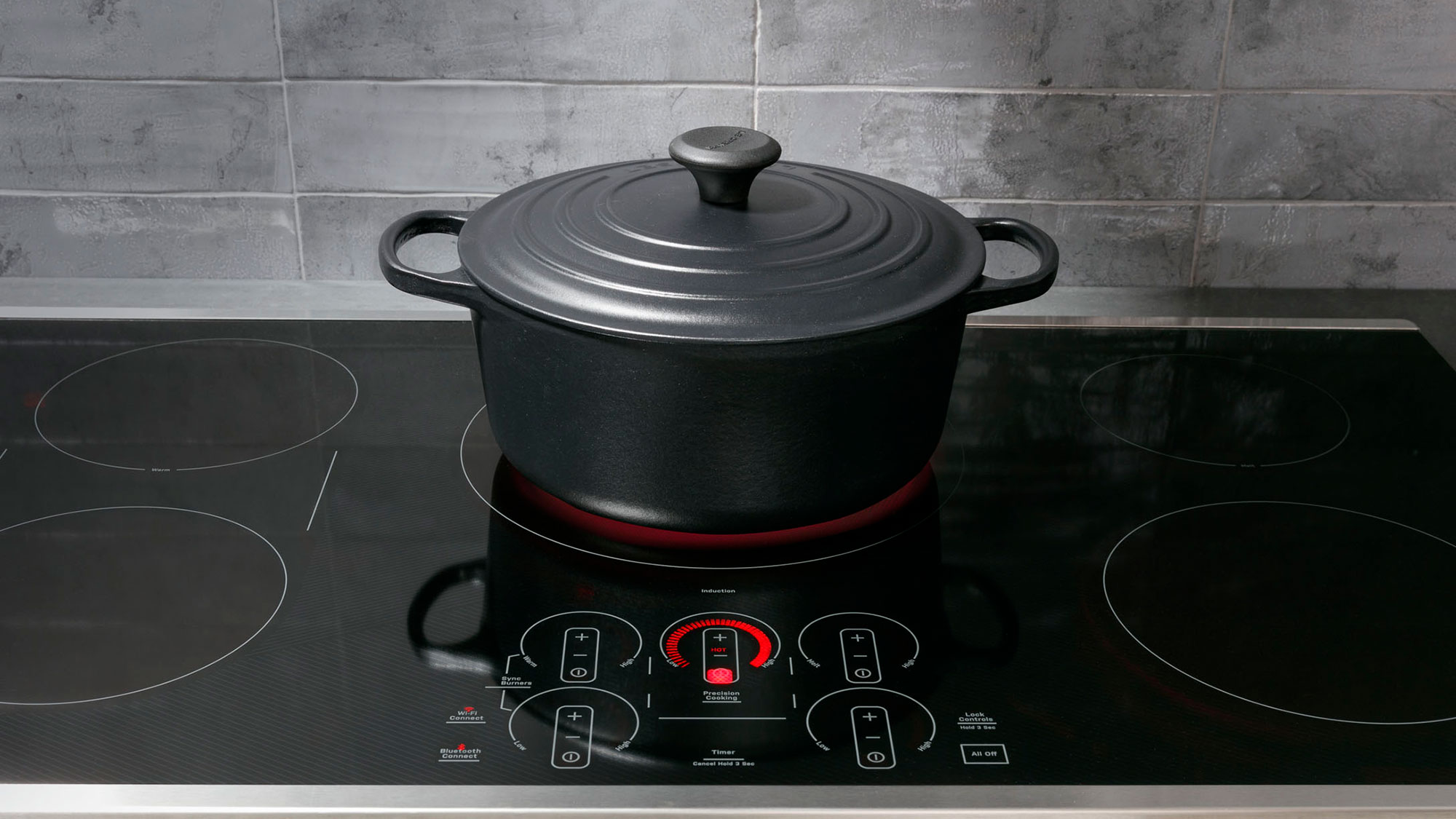
Cast iron is one of the easiest materials to use on an induction cooktop. Its iron content responds well to magnetic fields, so traditional cast iron skillets, Dutch ovens, and griddles are generally compatible.
It also holds heat well. This makes it useful for browning meat, cooking burgers, frying eggs, and preparing dishes that benefit from steady heat. However, cast iron is heavy, and its rough or uneven bottom can scratch a glass surface.
Lift cast iron rather than sliding it across the cooktop. Check that the bottom is reasonably flat, especially if the pan is old or has been used over open flames.
Best uses
Searing, frying, browning, and slow cooking.
Main drawback
Heavy weight and possible surface scratching if the pan is dragged.
Stainless Steel Cookware
Stainless steel is a popular choice for induction cooking, but not every stainless steel pan is compatible. Different stainless steel grades have different magnetic properties. Some pans attract a magnet strongly, while others have little or no magnetic response.
Many stainless steel cookware sets use a layered construction. A magnetic stainless steel outer base may surround an aluminum or copper core. The outer layer responds to the induction field, while the inner metals help spread heat.
Look for cookware labeled induction compatible. If you already own stainless steel pans, test the bottom with a magnet before replacing them.
Best uses
Boiling, sautéing, browning, making sauces, and everyday cooking.
Main advantage
Durable construction and compatibility with many types of cooking.
Aluminum and Copper Cookware With Magnetic Bases
Aluminum and copper are widely used in cookware because they transfer heat efficiently. However, these metals are not suitable for ordinary induction heating on their own.
Manufacturers solve this problem by attaching a magnetic stainless steel plate or integrating an induction-compatible layer into the pan. This design lets the cooktop detect and heat the cookware while the other metals help distribute heat.
If you like the light weight of aluminum or the heat response of copper, you do not have to avoid these materials completely. Choose a model that clearly states it is suitable for induction.
Check the product description
Look for an explicit induction compatibility statement rather than relying on the words aluminum or copper.
Inspect the bottom
A magnetic plate or suitable layered base may be visible on the underside of the pan.
Induction-Compatible Nonstick Pans
Nonstick cookware is not a separate metal category. Its compatibility depends on the material beneath the nonstick coating. Many induction-ready nonstick pans use aluminum bodies with a magnetic stainless steel base.
These pans can be useful for eggs, pancakes, fish, and other foods that may stick to uncoated metal. Follow the manufacturer’s heat limits and use suitable utensils to protect the cooking surface.
Do not assume that every nonstick pan works on induction. A traditional aluminum nonstick skillet may not be detected if it lacks a magnetic base.
Good for
Low-to-medium heat cooking and foods that benefit from an easy-release surface.
Check before buying
Confirm that the exact pan or cookware set is marked induction ready.
What Cookware Cannot Be Used on Induction?
Cookware made only from nonmagnetic materials generally will not work on a standard induction cooktop. These include ordinary aluminum, copper, glass, and ceramic pots without a magnetic base.
The key difference is the construction. A glass pot with a magnetic metal plate may be compatible, while a solid glass pot is not. The same rule applies to ceramic and copper cookware.
A pan that does not work on induction may still be safe and useful on a gas or conventional electric stove. Compatibility with induction is a specific technical requirement, not a general measure of cookware quality.
Source: cookwareninja.com
Pure aluminum
Ordinary aluminum pans do not have the magnetic base required by most induction cooktops.
Pure copper
Traditional copper cookware without a magnetic layer cannot normally activate an induction cooking zone.
Glass cookware
Glass does not respond to the magnetic field unless the cookware includes a compatible magnetic base.
Ceramic cookware
Solid ceramic cookware is generally not induction compatible without a suitable magnetic metal component.
Nonmagnetic stainless steel
Some stainless steel pans have insufficient magnetic response and may not work on an induction surface.
Can You Use Regular Aluminum Pots?
Regular aluminum pots usually cannot be used directly on an induction cooktop. Aluminum conducts heat well, but it does not provide the magnetic response needed to activate a standard induction cooking zone.
Some manufacturers make induction adapters that sit between the cooktop and a non-compatible pan. These adapters can transfer heat to cookware that would not otherwise work, but they change the way the system heats and may reduce efficiency or responsiveness.
Use an adapter only if the cooktop manufacturer permits it. Follow the adapter instructions and never use an improvised metal plate.
Without an adapter
A regular aluminum pan will generally not heat on a standard induction zone.
With an approved adapter
Some non-compatible cookware may be usable, but heating performance and safety depend on the cooktop and adapter instructions.
Can Glass and Ceramic Pots Work?
Ordinary glass and ceramic pots cannot directly respond to an induction field. A special magnetic base can make certain cookware designs compatible, but the manufacturer must specifically approve the product for induction use.
Do not place an ordinary glass baking dish or ceramic casserole directly on an induction zone. It may not heat, and cookware not designed for direct stovetop use can crack or break when exposed to uneven heat.
Glass cookware
Use only products explicitly designed for the relevant stovetop and marked induction compatible.
Ceramic cookware
Check both the stovetop-use instructions and the induction compatibility statement.
How to Tell If Your Existing Cookware Is Induction Compatible
You can test most existing pots and pans at home without buying special equipment. A small refrigerator magnet is a useful first check, although it cannot confirm every detail of cookware performance.
The test is simple. Place the magnet against the outside bottom of the pan, where it touches the cooking zone. If it sticks firmly, the cookware likely contains a magnetic material and may work on induction.
If the magnet does not stick, the pan is unlikely to work directly on a standard induction cooktop. If it sticks only weakly, check the manufacturer’s specifications or test the pan according to the cooktop manual.
Source: cookeryspace.com
Step 1: Find a magnet
Use a small refrigerator magnet or another ordinary magnet.
Step 2: Test the base
Hold the magnet against the flat bottom of the pot or pan.
Step 3: Check the grip
A firm attraction suggests that the base contains magnetic material.
Step 4: Check the label
Look for an induction symbol or written compatibility statement from the cookware manufacturer.
Step 5: Confirm with the cooktop
If the pan passes the initial checks, follow the cooktop manual to confirm its size and operating requirements.
What Does the Induction Symbol Look Like?
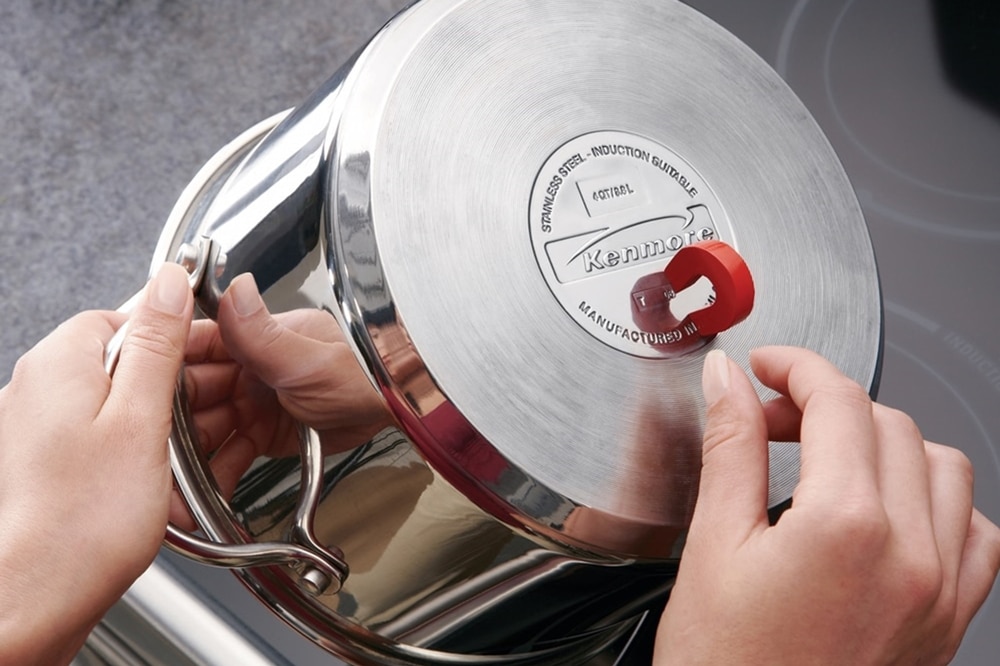
Many cookware manufacturers use a symbol that resembles a small coil or series of loops to identify induction-compatible products. The design can vary, so read the label rather than relying only on the appearance of a logo.
You may find this symbol on the bottom of the pan, its packaging, a product specification page, or an instruction booklet. Some manufacturers simply write induction suitable or induction compatible.
When buying a replacement pan in the United States, check the exact model number and product details. A brand may sell both induction-compatible and non-compatible versions of cookware that look very similar.
Look underneath
Check the base for a stamped or printed induction marking.
Read the packaging
Look for explicit compatibility information before removing or discarding the packaging.
What If the Magnet Sticks but the Pan Does Not Work?
A magnetic base is a useful sign, but it is not a complete performance guarantee. A pan may have a small magnetic area, an unsuitable base shape, or a size that falls outside the cooktop’s detection range.
First, center the pan on the correct cooking zone. Check that the bottom is clean, dry, and flat. Then compare the pan diameter with the minimum and maximum size stated in the cooktop manual.
If the cooktop still does not detect it, try a different known-compatible pan. This helps determine whether the problem comes from the cookware or the appliance.
Possible cookware issue
The magnetic area may be too small, the pan may be warped, or its base may not meet the cooktop’s requirements.
Possible appliance issue
The cooking zone may have a fault or may not detect the pan correctly. Contact the manufacturer if known-compatible cookware also fails.
Best Cookware Materials for Different Cooking Needs
The right induction cookware depends on how you cook. Cast iron offers strong heat retention, stainless steel is useful for daily meals, and induction-ready nonstick pans make delicate foods easier to handle.
There is no single material that is best for every dish. A heavy pan may hold heat well but respond more slowly when you change the temperature. A lighter pan may heat and cool more quickly but may not retain heat as well.
Think about the food you prepare most often, the weight you can handle comfortably, and how much care the cookware needs. Compatibility should come first, followed by the features that matter in your kitchen.
Source: thespruceeats.com
For everyday meals
Magnetic stainless steel offers a versatile option for boiling, sautéing, and making sauces.
For high-heat searing
Cast iron can hold substantial heat and is useful for browning meat.
For eggs and pancakes
An induction-ready nonstick pan can make release and cleanup easier.
For soups and stews
A compatible stainless steel or enameled cast iron pot can handle larger cooking tasks.
Cookware Comparison Table
This table summarizes the usual induction compatibility of common cookware materials. Actual compatibility depends on the base, so treat each entry as a starting point rather than a guarantee.
Cast iron
Usually compatible. Strong heat retention, but heavy and potentially rough.
Enameled cast iron
Usually compatible. Good for slow cooking, soups, and braising.
Magnetic stainless steel
Usually compatible. Versatile for everyday cooking and often easy to maintain.
Aluminum
Not compatible by itself. Requires a suitable magnetic base.
Copper
Not compatible by itself. Requires an induction-ready magnetic layer.
Glass
Generally not compatible. A specially designed magnetic base is required.
Ceramic
Generally not compatible without a magnetic base.
Nonstick
Depends on the base material. Many induction-ready models use magnetic stainless steel.
Choosing a Practical Cookware Set
If you are replacing cookware after installing an induction range, start with the pieces you use most. A compatible skillet, saucepan, and stockpot may cover most daily cooking needs.
A full set can offer convenience, but it may include pans you rarely use. Buying individual pieces also gives you more control over weight, diameter, handle design, and cooking surface.
Check whether the base is flat and sturdy. A thick, well-constructed base can help distribute heat more evenly, although construction quality and design matter more than thickness alone.
Start with essential sizes
Choose a skillet, medium saucepan, and larger pot that match your regular recipes and cooking zones.
Check the handles
Choose secure handles that remain comfortable to grip and follow the manufacturer’s oven-use limits.
Read care instructions
Confirm whether the cookware is dishwasher safe, oven safe, and suitable for your preferred utensils.
How Cookware Size and Shape Affect Induction Cooking
Even compatible cookware may not work properly if its size or shape does not match the cooking zone. Induction cooktops have specific detection limits, and those limits vary by brand and model.
A very small saucepan may not activate a large cooking zone. A pan with a warped base may also make poor contact with the surface and heat unevenly. Always check the appliance manual for the recommended pan diameter.
Flat-bottom cookware is generally the most practical choice. It sits more steadily, supports even contact, and reduces the chance of the pan rocking while you stir or move food.
Source: allhomeguides.com
Pan diameter
Choose a pan that meets the cooking zone’s stated minimum size and fits within its recommended area.
Flat base
Avoid cookware with a badly curved or warped bottom.
Centered placement
Position the pan in the middle of the cooking zone for reliable detection.
Stable construction
Avoid damaged cookware that rocks or has loose base components.
Can You Use a Small Pan on a Large Induction Burner?
Sometimes, but the answer depends on the cooktop’s detection system. Some models can detect smaller pans within a larger cooking zone, while others require a minimum base diameter.
Do not assume that the printed ring represents every pan size the appliance can detect. Check the user manual for the actual cookware diameter limits.
If detection fails
Move the pan to a smaller compatible cooking zone if one is available.
Before replacing the pan
Check the cooktop specifications and confirm that the base diameter meets the minimum requirement.
Common Induction Cookware Problems and How to Fix Them
Most cookware problems on induction cooktops come from an unsuitable base, incorrect placement, or a mismatch between the pan and cooking zone. Checking these factors in order can save time and prevent unnecessary purchases.
Start with simple checks before assuming that the appliance is damaged. Turn the cooking zone off before adjusting cookware, and let hot pans cool when necessary.
Source: cdn.mos.cms.futurecdn.net
The cooktop does not detect the pan
Check magnetic compatibility, pan size, and placement. Consult the manual for cookware detection requirements.
Food heats unevenly
Inspect the base for warping and use a pan with a suitable flat, well-constructed bottom.
The pan makes noise
Some humming, buzzing, or clicking can occur during induction cooking. Noise can vary with cookware construction and power settings.
The pan scratches the glass
Lift cookware rather than dragging it, and keep the pan base and cooktop clean.
Why Does Induction Cookware Make a Buzzing Sound?
A low buzzing or humming sound can be normal during induction cooking. The electromagnetic field and vibration between layers of cookware can produce noise, especially at higher power settings.
Some layered stainless steel pans may sound different from solid cast iron cookware. If the sound is unusually loud, suddenly changes, or comes with an error message, stop using the zone and consult the appliance manual or manufacturer.
Normal sound
A mild hum or buzz can occur during regular operation.
Possible problem
Unusual noise, visible damage, or repeated error messages require further checks.
Why Does a Pan Heat Slowly?
Slow heating can result from cookware design, the selected power level, the size of the cooking zone, or the amount of food and liquid inside the pan.
Try a known-compatible pan with a flat base. Use the cooking zone recommended for its size and avoid placing a small pot on a zone that does not support its diameter.
Check the power setting
Make sure the cooking zone is not set too low.
Check the pan
Use suitable cookware with a flat and compatible magnetic base.
How to Care for Induction-Compatible Cookware
Good cookware care helps preserve the pan base and protect the smooth glass surface of an induction cooktop. The most useful habits are simple: clean the bottom, avoid dragging heavy pans, and follow the cookware manufacturer’s care instructions.
Cookware does not need special treatment simply because it works with induction. However, heavy cast iron and pans with rough bases need extra care when used on a glass cooking surface.
Clean the pan bottom
Remove grease, food residue, and particles that could scratch the glass surface.
Lift heavy cookware
Avoid sliding cast iron or other heavy pans across the cooktop.
Use suitable heat
Follow the manufacturer’s recommended temperature and power limits, especially with nonstick cookware.
Avoid sudden temperature changes
Do not expose hot cookware to cold water if the manufacturer warns against thermal shock.
Protecting the Glass Cooktop
A glass induction surface can withstand normal cooking, but it can still scratch or crack. Dirt trapped under a heavy pan can act like grit between two surfaces.
Wipe the cookware base before placing it on the cooktop. When moving a pot, lift it instead of sliding it, and avoid dropping utensils or cookware onto the glass.
Before cooking
Check that both the pan bottom and the cooking surface are clean and dry.
After cooking
Allow the surface to cool as directed, then use a cleaner approved for the cooktop.
Safety Tips When Using Cookware on Induction Cooktops
Induction cooking has several useful safety features, but it still requires care. The pan can become very hot, the glass may retain heat, and metal objects can respond unexpectedly to an active cooking zone.
Use cookware according to both the appliance and pan instructions. Do not rely on general material rules when a manufacturer provides a specific restriction for its product.
Keep metal objects away
Do not leave loose metal utensils, foil, or other objects on an active cooking zone unless the appliance instructions specifically allow them.
Watch children and pets
Keep them away from hot cookware and the cooking area.
Use stable cookware
Choose flat pans that sit securely on the cooking surface.
Follow appliance limits
Respect the stated cookware size, weight, and operating requirements.
Check for damage
Do not use cookware with a loose base, severe warping, or damaged handles.
Are Induction Cooktops Safe for All Cookware?
No. A pan must be designed for the heat and cooking method involved. Ordinary glass and ceramic containers may not be suitable for direct stovetop use, even if they can withstand oven temperatures.
Use only cookware that the manufacturer approves for induction cooking. If you are unsure about a specific pot, check its product documentation before using it.
Do not assume oven-safe means induction-safe
Oven compatibility does not prove that a container can work on an induction cooking zone.
Follow the correct instructions
Check the cookware manual and the induction appliance manual for any special restrictions.
How to Buy the Right Induction Cookware
Before buying new cookware, confirm that each piece is compatible with your exact induction cooktop. A product listing may describe a pan as stainless steel or nonstick without making its induction status clear.
Look for an explicit compatibility statement, a suitable magnetic base, and dimensions that fit your cooking zones. Then consider weight, handle design, cleaning needs, and the types of meals you prepare.
A practical approach is to replace only the pieces that fail the magnet and manufacturer checks. This can be more economical than purchasing a complete set when several existing pans already work.
Check induction labeling
The product should clearly state that it is suitable for induction cooktops.
Compare base diameter
Make sure the pan meets the detection requirements of your cooking zones.
Inspect construction
Look for a flat, stable base with a suitable magnetic layer.
Consider weight
Choose cookware you can lift and handle safely, especially when full.
Review care requirements
Check cleaning, oven-use, and utensil restrictions before purchasing.
Do You Need a Complete Induction Cookware Set?
No. You can use a mix of compatible cookware from different brands. The important requirement is that each individual pot or pan has a suitable magnetic base and meets the cooktop’s size limits.
If your existing cast iron skillet and stainless steel saucepan pass the compatibility checks, there is no need to replace them simply because you bought an induction range.
A complete set may make sense if most of your current cookware is incompatible or damaged. Otherwise, replacing a few essential pieces can be a sensible starting point.
Keep compatible pieces
Retain cookware that passes the magnet check and meets the manufacturer’s requirements.
Replace unsuitable pieces
Focus on pans that lack a magnetic base or do not fit the cooking zones.
Frequently Asked Questions
Q
Can I use stainless steel cookware on an induction cooktop?
Yes, many stainless steel pots and pans work on induction cooktops. However, some stainless steel grades are not sufficiently magnetic. Test the bottom with a magnet and check the manufacturer’s induction compatibility information before use.
Q
Can I use cast iron on an induction cooktop?
Yes. Traditional cast iron is generally induction compatible because it contains magnetic iron. Enameled cast iron also usually works. Lift heavy pans instead of sliding them to protect the glass surface.
Q
Can I use nonstick pans on induction cooktops?
Yes, provided the nonstick pan has an induction-compatible magnetic base. Many modern models use an aluminum body with a magnetic stainless steel layer. Ordinary nonstick aluminum pans without that layer generally will not work.
Q
How do I know if my pan is induction ready?
Hold a refrigerator magnet against the bottom of the pan. A firm magnetic attraction suggests that the cookware may work. Then check for an induction symbol or manufacturer confirmation and make sure the pan meets your cooktop’s minimum size requirement.
Q
Can I use aluminum cookware on an induction cooktop?
Ordinary aluminum cookware does not normally work directly on induction. However, aluminum pans with a specially designed magnetic stainless steel base can be compatible. Check the exact product specifications before buying or using one.
Q
Can I use copper cookware on induction?
Pure copper cookware generally does not work on standard induction cooktops because copper is not sufficiently magnetic. Some copper cookware has a magnetic base, which makes it suitable for induction when the manufacturer confirms compatibility.
Q
Will any pan work if I put a metal plate underneath it?
No. An ordinary metal plate is not a reliable or universally safe solution. Some manufacturers approve specific induction adapter plates for certain cookware, but you should use one only when the appliance and adapter instructions permit it.
Q
Does induction cookware have to be completely flat?
A reasonably flat base is strongly recommended. A badly warped pan may sit unevenly, heat poorly, or fail to make reliable contact with the cooking zone. Replace damaged cookware or follow the manufacturer’s guidance.
✦ Wrapping Up
Conclusion
The best cookware for an induction cooktop is cookware with a suitable magnetic base. Cast iron, enameled cast iron, and many stainless steel pans are common compatible choices. Aluminum, copper, glass, ceramic, and nonstick cookware may also work when they include a purpose-built magnetic layer.
You do not need to replace every pot and pan when switching to induction. Test your existing cookware with a magnet, check the product instructions, and confirm that the pan meets the size requirements of your cooking zones.
Pay attention to flat bottoms, stable construction, and proper care. These details help your cookware work reliably and protect the glass surface of your cooktop.
💡 Key Takeaway
Before buying new cookware, test each existing pan with a refrigerator magnet and confirm its induction compatibility with the manufacturer. Replace only the pieces that do not meet your cooktop’s requirements.