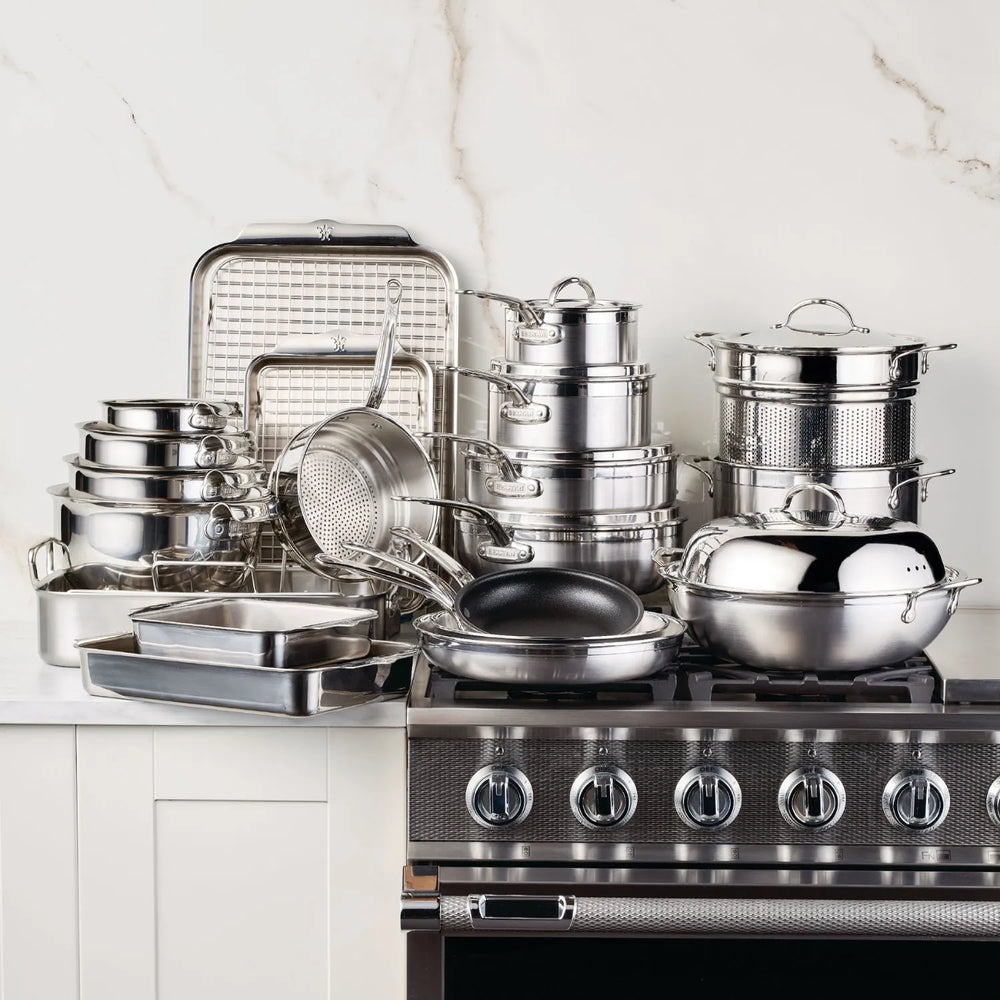
When buying stainless steel cookware, check the steel grade, base construction, heat spread, handle comfort, weight, lid fit, stove compatibility, and warranty. Choose pieces that suit your cooking habits rather than paying for the largest set.
Shopping for cookware in the United States can feel like a choice between dozens of shiny pots and pans. Big department stores, home goods shops, and online retailers offer sets with many pieces, but a higher piece count does not always mean better value. The best choice depends on how you cook, what stove you use, and how much care you want to give your pans.
Stainless steel is a strong option for home cooks who want durable pans for searing meat, browning vegetables, making sauces, and boiling pasta. It can last for years with sensible care, but not every stainless steel pan heats the same way. The metal grade, inner layers, base design, and handle shape all affect daily use.
This guide explains what to check before you buy, how to compare cookware claims, and which features deserve your money. It also covers induction stoves, food sticking, nickel sensitivity, cleaning, and the choice between buying a set and choosing individual pieces. The goal is to help you make a sound purchase without paying for features you will rarely use.
The steel grade tells you something about the metal used in a pan, but it does not tell the whole story. Look for clear material details, such as 18/10 or 18/8 stainless steel, and check whether the manufacturer identifies the grade of the cooking surface, exterior, and any other layers.
Stainless steel contains iron, chromium, and other elements. Chromium helps form a thin protective surface that resists rust and corrosion. Some grades also contain nickel, which can improve corrosion resistance and help the steel keep its shape and appearance.
A higher nickel number does not automatically make a pan cook better. Construction, thickness, heat distribution, and the quality of the finished product matter just as much. A well-built pan with clear specifications can be a better buy than a costly pan whose materials are poorly explained.
Source: www.foodandwine.com
18/10 stainless steel
This label generally refers to steel containing about 18% chromium and 10% nickel. It is commonly used for cookware and offers good resistance to corrosion.
18/8 stainless steel
This commonly refers to steel with about 18% chromium and 8% nickel. It is also used in cookware and can provide good corrosion resistance.
18/0 stainless steel
This commonly describes steel with about 18% chromium and little or no intentional nickel. It may suit buyers seeking to limit nickel in the cooking surface, but performance still depends on the full design and alloy.
Clearly stated material specifications
Prefer a manufacturer that identifies the cooking surface and other construction materials. A label such as premium stainless steel, without further details, gives you less useful information.
Does 18/10 Stainless Steel Mean Better Cookware?
Not by itself. The label describes a typical alloy composition, not the thickness of the pan, the quality of its bond, or how evenly it heats. Two pans made with similar stainless steel can perform differently because their construction differs.
If you want a reliable everyday pan, compare the grade with the core material, weight, handle attachment, and warranty. Do not pay extra for 18/10 simply because the number sounds higher than other grades.
Best approach
Treat the grade as one useful specification, then compare the pan’s complete design.
2. Check Whether the Pan Is Fully Clad or Has a Disc Base
The pan’s construction is one of the most useful things to check when buying stainless steel cookware. Stainless steel is durable, but it does not spread heat as well as some other metals. Many quality pans use aluminum or copper to improve heat distribution.
Fully clad cookware bonds layers of metal together across the base and sides. A common design uses stainless steel on the cooking surface, an aluminum core, and stainless steel on the outside. Other designs use five or more layers, but a higher layer count alone does not prove better performance.
Disc-bottom cookware has a separate heat-spreading layer attached to the bottom. This can work well for many everyday tasks and may cost less than fully clad cookware. However, the sides may heat differently from the base, which can matter when reducing sauces or cooking food that touches the pan walls.
Source: theskillfulcook.com
Fully clad construction
Metal layers extend through the base and sides. This design is useful for browning, simmering, and cooking dishes that benefit from more consistent heat across the pan.
Disc-bottom construction
A conductive metal disc sits beneath the stainless steel cooking surface. It can offer good value for boiling, reheating, and many routine stovetop tasks.
Single-layer stainless steel
A thin, uncoated stainless steel body without a substantial conductive core may heat less evenly. Check the actual construction before buying.
Is Tri-Ply Cookware Worth the Cost?
Tri-ply cookware commonly has three bonded layers, often stainless steel, aluminum, and stainless steel. The aluminum layer helps spread heat, while the stainless steel surfaces provide a durable cooking surface and exterior.
For many home cooks, tri-ply cookware offers a practical balance of heat control, durability, and price. Five-ply cookware may offer a different combination of materials and thickness, but the number of layers alone cannot tell you whether it will perform better.
If you often sear steaks, brown chicken, cook eggs, or make pan sauces, fully clad cookware can be a useful investment. If you mostly boil water and cook simple meals, a well-made disc-bottom pot may meet your needs at a lower price.
Check the whole design
Look at the core material, the layer coverage, the pan’s weight, and the manufacturer’s specifications instead of choosing by ply count alone.
How Thick Should Stainless Steel Cookware Be?
There is no single thickness that makes every stainless steel pan ideal. A heavier base can help reduce sudden temperature changes, while a thoughtfully designed pan may balance heat control with a manageable weight.
Manufacturers do not always publish comparable thickness measurements. If they do, check whether the figure refers to the stainless steel layer, the conductive core, the base, or the full body. These measurements describe different things.
Avoid choosing by weight alone
A pan should feel stable and substantial without being difficult to lift, pour from, or wash.
3. Make Sure the Cookware Matches Your Stove
Stove compatibility matters because not every stainless steel pan works on every cooktop. Before buying, confirm that the cookware supports your current stove and any stove you may use in the future.
Gas and standard electric cooktops can work with many types of cookware, although a flat, stable base helps with contact and heat transfer. Induction cooktops need cookware with a magnetic base or another suitable magnetic layer. Stainless steel by itself does not guarantee induction compatibility because some stainless steel alloys are not magnetic.
If you use induction, check the manufacturer’s compatibility statement. You can also place a magnet against the bottom of the pan as a quick screening test. A magnet that sticks is a useful sign, but the cookware maker’s instructions remain the better source for confirming suitability and performance.
Source: imarku.net
Gas ranges
Look for stable construction, comfortable handles, and clear guidance about high heat. Keep flames under control so they do not climb the sides and heat the handles unnecessarily.
Electric coil and smooth-top ranges
A flat base helps the pan sit securely and transfer heat. Avoid dragging heavy cookware across glass surfaces, which can cause scratches.
Induction cooktops
Confirm induction compatibility and check the recommended cooking zone sizes. A magnetic base is essential, but base shape and contact can also affect results.
Should You Buy Induction-Ready Cookware Even If You Do Not Have Induction?
It may be a sensible choice if you expect to move or replace your stove in the next few years. Induction-ready cookware can also work on compatible gas and electric ranges, so long as the manufacturer approves those uses.
Do not assume that induction-ready means universally better. Compare heat distribution, pan shape, comfort, and price first. If you are happy with your current stove and have no reason to plan for induction, other features may deserve more attention.
Practical check
Read the product specifications for every cooktop type you use instead of relying on a general stainless steel label.
4. Choose the Right Pots and Pans for Your Cooking Habits
The most useful cookware collection is the one that matches the meals you make. A large set may look like a bargain, but several small pans and specialty pieces can take up cabinet space without adding much value.
Think about a typical week in your kitchen. If you often make pasta, soups, rice, and large batches of chili, stockpots and saucepans may matter most. If you cook eggs, vegetables, burgers, and chicken on the stovetop, a skillet or sauté pan may see more use.
For many households, starting with a few versatile pieces is a practical approach. You can add specialty cookware later when a real need appears instead of paying upfront for every pan a set includes.
Source: herkitchen.net
Skillet or frying pan
Useful for browning meat, sautéing vegetables, frying, and making pan sauces. Choose a diameter that gives food enough room without crowding.
Saucepan
Good for oatmeal, rice, sauces, small servings of soup, and reheating. A tight-fitting lid adds flexibility.
Sauté pan
Its wider cooking surface and taller sides help with chicken, vegetables, one-pan meals, and dishes that need a lid.
Stockpot
Useful for pasta, broth, soups, corn, and batch cooking. Choose a size that fits your storage space and the amount of food you prepare.
Small saucepan or saucier
Helpful for melting butter, preparing dressings, warming small portions, and making sauces. The rounded interior of a saucier can make whisking easier.
Should You Buy a Cookware Set or Individual Pieces?
A cookware set can offer better value when you need several pieces and will use most of them. It may also provide matching lids and handles, which can make storage simpler.
Buying individual pans makes more sense if you already own a good stockpot, rarely use small saucepans, or want to spend more on the pieces you use most. It also lets you choose different brands or designs when one pan’s shape suits your needs better than another.
Compare the cost of the pieces you actually need with the full set price. Count useful pots and pans, not every lid, utensil, or accessory listed in the advertised piece total.
Best value test
Add the prices of the individual pieces you would buy. Compare that total with the set price and consider storage, replacement needs, and warranty terms.
5. Test Handle Comfort, Lid Fit, and Overall Design
A pan can have good materials and still be frustrating to use. Handle shape, balance, lid fit, pouring edges, and storage needs affect how well cookware works in a real kitchen.
When shopping in person, hold an empty pan as if you were moving it from the stove to the counter. Check whether the handle feels secure and whether the pan tilts or strains your wrist. If you shop online, study the handle design, listed weight, dimensions, and customer service information.
A long handle can provide leverage, but it may be awkward in a crowded kitchen. Helper handles on larger pots make lifting easier, while a rounded pouring rim can reduce spills when transferring soup or sauce.
Source: hestanculinary.com
Secure handle attachment
Check that handles are firmly attached and that the manufacturer explains how to inspect and maintain them. Riveted handles are common, but sound design and workmanship matter more than attachment style alone.
Comfortable grip
Choose a shape that feels secure when lifting and pouring. Remember that metal handles can become hot during cooking.
Tight-fitting lid
A lid that sits well can help control steam and reduce splashes. Glass lids let you view food, while stainless steel lids are generally less fragile.
Useful rim and pouring design
A rolled or flared rim can help with pouring liquids. Check whether the shape suits your usual cooking tasks.
Practical weight and balance
Consider the combined weight of the pan and a typical meal. Large pots may be heavy even before food is added.
Are Riveted or Welded Handles Better?
Both designs can work well when properly made. Rivets are visible fasteners that attach the handle to the pan, while welded handles are joined to the cookware body without visible interior rivets in many designs.
Rivets can create small spots inside the pan where food and grease collect. Welded designs may offer a smoother cooking surface, but quality depends on the actual construction. Choose a pan with a secure handle, a comfortable grip, and clear cleaning instructions.
What to inspect
Look for movement, rough edges, poor alignment, or signs of weak attachment. Do not buy cookware with a loose or damaged handle.
Can Stainless Steel Handles Go in the Oven?
Some can, but oven safety depends on the full pan design. Metal handles may tolerate higher heat than plastic or silicone parts, while glass lids, knobs, and handle covers may have lower temperature limits.
Check the stated oven-safe temperature for the complete cookware item, including its lid. Do not assume that an all-metal handle makes every part of the pan safe at any oven temperature.
Before oven use
Follow the manufacturer’s temperature limits and instructions for the pan, lid, and any removable parts.
6. Understand Heat Control and Cooking Performance
Good stainless steel cookware should suit the level of heat control your cooking requires. A conductive core helps move heat through the pan, but burner size, pan diameter, food quantity, and cooking technique also affect results.
For example, a thin pan can develop very hot spots over a strong burner. A pan with a suitable aluminum core may spread heat more evenly, although it will not eliminate every temperature difference. Even a high-quality pan needs the right burner setting and enough time to warm up.
Look for a flat, stable base and construction details that explain how heat moves through the pan. If the manufacturer publishes clear material and design specifications, you can make a more informed comparison than you can from marketing terms such as professional or premium.
Source: herkitchen.net
For searing
Choose a sturdy skillet with a heat-spreading core and enough surface area to avoid crowding food. Preheat it properly and dry meat before cooking.
For sauces
Look for responsive heat control and a pan size suited to the quantity you make. A conductive core can help distribute heat, but low or moderate heat may still be needed to prevent scorching.
For boiling
A suitable pot with a stable base and comfortable handles may matter more than expensive multi-layer sidewalls. Choose enough capacity for the food and water you typically use.
For daily mixed cooking
A versatile clad skillet and a well-built saucepan can cover many tasks without requiring a large collection.
Why Food Sticks to Stainless Steel
Stainless steel does not have the built-in slick coating found on conventional nonstick cookware. Food can stick when the pan is too cool, too hot, too dry, or used before the surface has warmed enough for the food being cooked.
For many foods, preheat the pan over moderate heat, add a suitable cooking fat, and then add the food. Dry meat and vegetables when appropriate, and allow browned food time to release before trying to turn it. Eggs and delicate fish may require more care than steak or sturdy vegetables.
A simple water-drop test is sometimes used to judge whether a stainless steel pan is hot enough, but it is not necessary for every recipe. Follow the needs of the food and avoid overheating an empty pan. Very high heat can cause oil to smoke and may damage cookware or create a kitchen hazard.
Common cause
Adding delicate food to a poorly heated pan or trying to move it before it has formed a browned surface can increase sticking.
Practical fix
Use suitable heat, enough cooking fat, and patience. Stainless steel can brown food well, but it will not behave exactly like a coated nonstick pan.
7. Consider Food Contact, Nickel Sensitivity, and Care
For most buyers, the key food-contact questions are which material touches the food, whether the cookware is intended for cooking, and how it should be maintained. Stainless steel is widely used for food preparation because it resists corrosion and does not rely on a conventional nonstick coating.
However, stainless steel is not completely inert under every condition. Small amounts of metals, including nickel and chromium, can migrate into food in some circumstances. Research has found that migration can vary with the alloy, cooking conditions, food acidity, and the condition and age of the cookware.
People with a known nickel allergy or medical advice to limit nickel exposure should check the actual cooking-surface material and seek suitable professional guidance when needed. A label describing only the outside of a pan may not tell you what contacts the food.
Source: kitchenbap.com
Identify the food-contact surface
Ask the manufacturer which alloy forms the cooking surface and whether the product is designed for direct food contact.
Consider nickel content when relevant
Some stainless steel grades contain nickel, while others contain little or none by design. Verify the exact grade instead of relying on general marketing claims.
Follow the care instructions
Avoid harsh cleaning methods or chemicals that the manufacturer does not approve. Clean cookware after use and dry it when needed to reduce water spots.
Is Stainless Steel Cookware Non-Toxic?
Stainless steel cookware from a reputable manufacturer is a common choice for everyday cooking, but the phrase non-toxic is too broad to guarantee every product or every use. Material grade, manufacturing quality, intended use, and cooking conditions all matter.
A durable stainless steel surface can be appealing if you want to avoid conventional nonstick coatings. Still, do not treat an unsupported non-toxic label as proof of a particular composition or certification. Look for clear specifications and follow the product’s instructions.
Make an evidence-based choice
Prioritize known food-contact materials, credible product documentation, sound construction, and proper use over broad safety slogans.
Can Stainless Steel Cookware Rust or Discolor?
Stainless steel resists rust, but it is not immune to corrosion or staining. Salt left in a pan, mineral deposits from hard water, overheating, or contact with unsuitable cleaning products can leave marks.
Rainbow-colored heat tint is often a surface effect rather than a sign that the pan has failed. White mineral spots can often be reduced with a suitable mild acid cleaner, such as diluted vinegar, if the manufacturer permits it. For stuck-on food, soaking and gentle cleaning are usually better than aggressive scraping.
Prevent damage
Dissolve salt in cooking liquid rather than leaving large amounts sitting on the base, avoid prolonged contact with salty residue, and use cleaners approved for the cookware.
8. Compare Cleaning Needs and Long-Term Maintenance
Stainless steel cookware is generally easy to maintain, but its care needs differ from those of coated nonstick pans. You can usually scrub a stainless steel cooking surface more firmly than a delicate coating, provided you follow the manufacturer’s guidance and avoid tools that could damage the finish.
Food residue can become stubborn when it dries onto a hot pan. Let the cookware cool enough to handle safely, add warm water, and soak it if needed. For stuck-on food, gently simmering water in the pan can help loosen residue before washing.
Dishwasher safety depends on the specific pan, handle materials, lids, and manufacturer’s instructions. A product may be dishwasher-safe yet still develop water spots or cosmetic changes. Handwashing can help preserve the finish and keep the cookware looking better over time.
Source: hestanculinary.com
Check dishwasher guidance
Confirm whether the entire item, including handles and lids, is dishwasher-safe. Do not assume that every stainless steel pan has the same limits.
Look for practical cleaning advice
A useful manual should explain how to remove stuck food, heat discoloration, and mineral spots without damaging the cookware.
Inspect the construction
Check handle joints, rims, and any bonded base for visible defects. Stop using cookware if a component becomes loose or a bonded layer shows signs of separation.
Is Stainless Steel Better Than Nonstick for Daily Use?
The better choice depends on the food you cook and the maintenance you prefer. Stainless steel is useful for browning, searing, deglazing, and cooking dishes where a browned layer on the pan helps build flavor.
Coated nonstick cookware is often easier for eggs, pancakes, and other delicate foods that tend to cling. Its coating can wear over time, so its useful life and care requirements differ from those of stainless steel.
Many home kitchens benefit from both. Stainless steel can handle most general cooking, while a separate nonstick skillet can make delicate foods easier to prepare.
Choose by task
Use stainless steel when browning and durability are priorities. Consider nonstick when easy release matters most, especially for delicate foods.
9. Set a Budget and Compare the Warranty
A sensible cookware budget should reflect how often you cook, which pieces you need, and how long you expect to use them. A higher price may reflect thicker construction, a more complex bonded design, better finishing, or a longer warranty, but price alone cannot prove quality.
Compare similar pans by size, construction, materials, weight, handle design, and compatibility. Make sure the listed price covers the pieces you want and account for the cost of any missing lids or replacement items.
Read the warranty before buying. Some warranties cover defects in materials or workmanship but exclude normal wear, misuse, overheating, cosmetic changes, or damage caused by unsuitable cleaning. A limited lifetime warranty does not necessarily mean every problem will be repaired or replaced free of charge.
Source: www.foodandwine.com
Warranty coverage
Check the length of coverage, exclusions, proof-of-purchase rules, and the process for making a claim.
Return policy
For online purchases, verify the return window, shipping costs, and rules for used cookware before opening or cooking with the product.
Replacement parts
Check whether lids, handles, or other replaceable components can be obtained if you need them later.
Total cost
Compare the actual cost of the useful cookware you will own, rather than relying on the discount percentage or advertised piece count.
How to Compare Two Stainless Steel Pans
Imagine two pans with the same diameter. One has a clear three-layer construction, an induction-ready base, a comfortable handle, and a detailed warranty. The other costs less but gives no useful information about its core or temperature limits.
The first pan provides more information for judging whether it fits your needs, but that does not prove it will outperform the second in every cooking task. Compare documented features, inspect the product when possible, and use the return policy if the pan does not meet reasonable expectations.
A simple comparison rule
Prefer clear specifications and suitable construction over vague claims such as chef quality, premium steel, or professional performance.
10. Use This Stainless Steel Cookware Buying Checklist
Before you pay, compare the cookware against a short checklist. This makes it easier to separate useful features from marketing language and helps you avoid buying pieces that do not fit your stove, storage space, or cooking habits.
If you are shopping online, review the product page, manufacturer instructions, dimensions, and warranty. If you are in a store, check the balance, handle, lid, and base in person when possible.
Source: wxhwstainless.com
Materials
The manufacturer identifies the stainless steel grade or provides meaningful details about the food-contact surface.
Construction
The pan has fully clad sides or a suitable disc base, with the conductive core and design described clearly.
Stove compatibility
The cookware supports your current stove, including induction if needed.
Size and shape
The pan fits your usual portions, cooking tasks, burners, and storage space.
Comfort and safety
The handles feel secure, the pan is manageable to lift, and the lid and handle materials meet your needs.
Care requirements
You understand whether the pan is dishwasher-safe and how to remove residue and discoloration.
Warranty and returns
You know the coverage limits, return terms, and options for replacement parts.
Value
The price makes sense for the features and pieces you will actually use.
A Practical Starter Collection
For a household that cooks a range of everyday meals, a medium or large skillet, a two- to three-quart saucepan, and a larger pot can cover many common needs. Exact sizes depend on household size, recipe portions, and storage space.
You can add a sauté pan or a larger stockpot later if you regularly cook one-pan meals, make large batches of soup, or prepare pasta for several people. This gradual approach lets you spend more on the pieces you use most.
Start small
Choose a few versatile pieces with sound construction, then expand your collection as your cooking habits become clear.
11. Common Mistakes to Avoid When Buying Stainless Steel Cookware
Several common shopping mistakes can lead to wasted money or cookware that feels wrong in daily use. Most are easy to avoid when you compare the full design instead of focusing on one headline feature.
A careful buyer checks what the product is made of, how it heats, how it fits the stove, and how it will be maintained. These details provide a stronger basis for a decision than a polished product photo or a long list of pieces.
Source: imarku.net
Choosing by shine
A polished finish can look attractive, but it does not prove the pan has a good heat-spreading core or sound construction.
Assuming all stainless steel is induction-ready
Check the actual product specifications or use a magnet as a preliminary test. The stainless steel label alone is not enough.
Paying for unused pieces
A large set may include pans that rarely leave the cabinet. Compare the set with the cost of individual pieces you will use.
Ignoring the weight
Heavy cookware may be stable, but it can be difficult to lift when filled. Consider your comfort and storage needs.
Expecting a nonstick surface
Stainless steel can release food well when used properly, but it does not have the same built-in coating as nonstick cookware.
Overlooking warranty exclusions
A long warranty may exclude cosmetic marks, damage from misuse, or ordinary wear. Read the full terms before purchasing.
Ignoring the cooking surface
If nickel content matters to you, verify the actual food-contact alloy rather than assuming the exterior grade describes the entire pan.
What to Do If the Cookware Does Not Meet Expectations
If a new pan heats unevenly, first check whether the burner is appropriately sized and whether the pan sits flat. Use the manufacturer’s recommended heat settings and allow the pan to warm gradually before deciding that its construction is defective.
If a handle feels loose, a base separates, or the cookware shows a structural defect, stop using it and contact the seller or manufacturer. Keep the receipt, product details, and photos of the issue if you need to make a warranty or return claim.
Separate technique from defects
Food sticking may be a heat or cooking-fat issue, while a loose handle or separating bonded base is a structural concern that needs attention.
12. How to Make Your Final Choice
The right stainless steel cookware should match your stove, cooking style, budget, and comfort needs. Start with the pieces you use most, then compare material details, construction, handle design, and maintenance requirements.
For a versatile everyday collection, fully clad cookware with a stainless steel cooking surface and a conductive core is worth considering. A well-made disc-bottom pot can also be a sensible option for boiling, soups, and other tasks where its construction meets your needs.
Do not treat a specific steel grade, ply count, or price as a guarantee of performance. When the product details are clear and the design suits your routine, you have a better basis for buying cookware that will earn its place on your stove.
Source: foodandwine.com
If you cook many types of meals
Consider a versatile clad skillet, saucepan, and larger pot.
If you mainly boil or simmer
A well-built pot with a suitable base and comfortable handles may be enough.
If you use induction
Make verified induction compatibility a firm requirement.
If nickel exposure concerns you
Check the food-contact alloy and seek individualized guidance if you have a known allergy or medical concern.
The Most Important Features to Prioritize
If you need to narrow the decision to a few factors, start with construction, stove compatibility, and the pieces you will use most. Then compare comfort, care instructions, warranty, and price.
This order helps keep the purchase practical. You can choose an attractive finish or a matching set after you have confirmed that the cookware performs the tasks you need it to perform.
First
Confirm suitable materials and a sound base or clad construction.
Next
Verify stove compatibility, pan size, handle comfort, and oven limits.
Finally
Compare care requirements, warranty coverage, return terms, and total cost.
Frequently Asked Questions
Q
What is the best grade of stainless steel for cookware?
There is no single best grade for every buyer. Stainless steel marked 18/10 or 18/8 is common in cookware and generally offers good corrosion resistance. However, the grade alone does not determine cooking performance, which also depends on the core material, construction, and thickness.
Check the exact food-contact material and the manufacturer’s specifications. If you need to limit nickel exposure, pay special attention to the alloy used on the cooking surface.
Q
Is tri-ply stainless steel cookware better than five-ply?
Not automatically. Tri-ply cookware often combines stainless steel with an aluminum core, while five-ply designs use more layers or a different arrangement of materials. The actual heat distribution and handling depend on the complete design, not simply the number of layers.
Compare the core material, layer coverage, weight, stove compatibility, and warranty before deciding whether the extra cost is worthwhile.
Q
Can I use stainless steel cookware on an induction stove?
Yes, if the cookware has a suitable magnetic base. Some stainless steel alloys are magnetic, while others are not, so the material name alone does not confirm compatibility.
Check the manufacturer’s induction rating and recommended burner sizes. A magnet sticking to the base can help you screen a pan, but product specifications provide better confirmation.
Q
Should I buy a stainless steel cookware set or separate pans?
A set may offer better value if you need several pieces and will use most of them. Individual pans may be a better choice if you already own some cookware or want to focus your budget on a few versatile items.
Compare the price of the pieces you need with the set price. Also consider storage space, lid sizes, replacement parts, and warranty terms.
Q
Is stainless steel cookware safe for everyday cooking?
Stainless steel cookware is widely used for everyday food preparation and can be a durable option when properly made and maintained. However, some metal migration into food can occur under certain conditions, and the amount depends on factors such as the alloy, food acidity, and cooking conditions.
Buy cookware intended for food contact and follow its care instructions. If you have a known nickel allergy or a medical reason to limit nickel exposure, verify the cooking-surface alloy and seek suitable professional guidance.
Q
Why does food stick to my stainless steel pan?
Food can stick when the pan is not heated appropriately, when there is too little cooking fat, or when you try to move food before it releases naturally. Stainless steel does not have the built-in nonstick coating found on coated pans.
Preheat over moderate heat, add a suitable amount of oil or other cooking fat, and allow browned food time to release. Delicate foods may need more careful heat control than foods such as steak or sturdy vegetables.
Q
How much should I spend on stainless steel cookware?
The right budget depends on how often you cook and which pieces you need. You can begin with a few versatile pans rather than buying a large collection all at once.
Compare materials, construction, comfort, warranty coverage, and the total cost of the pieces you will use. A higher price or a larger set does not automatically mean better value.
✦ Wrapping Up
Conclusion
Knowing what to look for when buying stainless steel cookware makes the shopping process much simpler. Focus on the steel grade, bonded layers or base design, stove compatibility, heat control, handle comfort, and care instructions before comparing appearance or price.
For many home cooks, a small collection of well-built pans is more useful than a large set filled with pieces that rarely get used. Choose cookware that fits your daily meals, feels manageable to lift, and comes with clear specifications and fair warranty terms.
The best purchase is not necessarily the most expensive pan or the one with the most layers. It is the cookware that meets your practical needs, works with your stove, and can be maintained properly for years of everyday cooking.
💡 Key Takeaway
Before buying, compare at least two cookware options using the same checklist: food-contact steel grade, construction, induction compatibility if needed, pan size, handle comfort, oven limits, care instructions, warranty, and total cost. Buy the pieces you will use most often first.