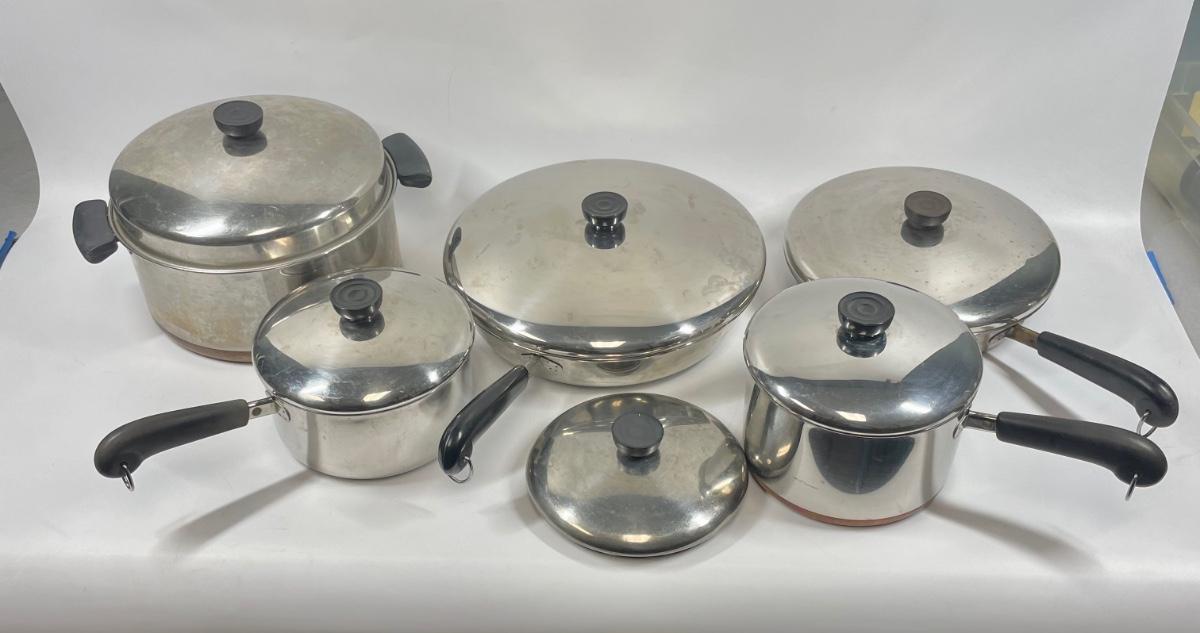
stainless steel cookware with copper or aluminum heat-spreading layers is the closest modern alternative to classic Revere Ware.
In American kitchens, Revere Ware earned a place on the stove through its simple stainless steel pots, familiar copper bottoms, and practical designs. Many families used these pans for boiling pasta, making soup, heating vegetables, and preparing everyday meals. If you grew up with this cookware, replacing a favorite saucepan can feel like replacing a trusted kitchen tool.
If you are asking what cookware is comparable to Revere Ware, start with stainless steel pots and pans that have a sturdy base, comfortable handles, and a useful range of sizes. Traditional copper-bottom cookware offers the closest visual match, while modern tri-ply stainless steel provides a different approach to spreading heat. The right choice depends on whether you value the classic look, cooking performance, price, or long-term durability most.
The closest alternative to Revere Ware is not simply any shiny stainless steel pot. Classic Revere Ware combined a stainless steel cooking surface with a copper-clad bottom on many familiar models. This design aimed to bring the easy care of stainless steel together with the heat response of copper.
A useful replacement should match the parts of the original design that matter to you. For some cooks, that means a small saucepan that feels familiar in the hand. Others want a dependable stockpot or skillet that heats evenly and can handle frequent use.
There is no single modern pan that matches every Revere Ware model. Older pieces vary by age, size, construction, and design. Compare the actual pan you own with the specifications of the new one rather than relying on a brand name alone.
Source: reverewarecookware.org
Stainless steel cooking surface
Look for a durable stainless steel interior that resists ordinary wear and works well for soups, sauces, vegetables, and many other foods.
Heat-spreading base
A copper or aluminum layer helps spread heat across the bottom. A thicker, well-designed base can reduce hot spots compared with a thin, plain stainless steel base.
Useful shapes and sizes
Saucepans, covered pots, skillets, and stockpots make it easier to replace the pieces you actually use instead of buying a large set.
Comfortable, secure handles
Check the handle attachment, grip, lid fit, and overall balance. These details matter during everyday cooking and when moving a full pot.
Copper-Bottom and Tri-Ply Stainless Steel Are Not the Same
Copper-bottom cookware usually has a copper layer concentrated at the base. The exact design varies by product, so a copper-colored disk does not automatically mean the pan has the same construction as a traditional Revere Ware pot.
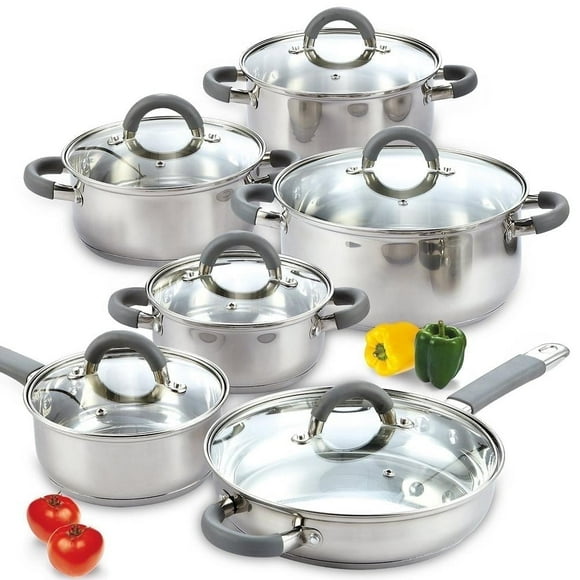
Tri-ply cookware uses three bonded layers, commonly stainless steel around an aluminum core. In fully clad versions, these layers extend through the base and up the sides. This can help spread heat beyond the center of the pan, although results also depend on thickness, burner size, and cooking technique.
Choose copper-bottom cookware
This is a sensible starting point if you want a traditional appearance and mostly cook food in the base of the pot.
Choose fully clad tri-ply cookware
Consider it if you regularly make sauces, cook thicker foods, or want heat-spreading layers through the sides as well as the base.
The Best Types of Revere Ware Alternatives
Several kinds of stainless steel cookware can fill the role of Revere Ware. The best fit depends on your budget and the way you cook. A basic saucepan does not need the same construction as a pan used for frequent searing or delicate sauces.
The following options are categories to compare, not a claim that one brand or line outperforms every other option. Product construction can vary within the same brand, so check the exact model before purchasing.
Source: reverewarecookware.org
Copper-bottom stainless steel
The closest traditional alternative for cooks who like the classic look of Revere Ware. Inspect the base material, thickness, handle construction, and care instructions.
Tri-ply stainless steel
A modern option with bonded metal layers. It often costs more than basic cookware but can provide more consistent heat distribution across the pan.
Stainless steel with an aluminum-clad base
A practical middle ground for everyday meals. It keeps the cooking surface stainless steel while adding a heat-spreading layer under the food.
Multi-ply stainless steel
Some premium pans use more than three layers or different combinations of metals. Compare the construction details rather than assuming that more layers always mean better results.
Enameled cast iron
This is not a close construction match, but it can replace a Dutch oven or covered pot when heat retention matters more than low weight.
Why Stainless Steel Is Usually the Best Starting Point
Stainless steel offers a familiar, versatile cooking surface for people replacing Revere Ware. It does not rely on a nonstick coating, and it can handle a broad range of everyday tasks when used according to the manufacturer’s instructions.
Stainless steel alone is not a strong heat conductor. That is why a bonded aluminum or copper layer can make a meaningful difference. For most home cooks, a sound stainless steel pan with a well-made base is more useful than a decorative copper finish with little attention to the underlying construction.
For boiling and simmering
A basic stainless steel saucepan with a sturdy base is often enough for pasta, oatmeal, vegetables, and soups.
For sauces and reductions
A pan with good heat control and a heavy bonded base can help reduce abrupt temperature changes.
For browning
A stainless steel skillet can brown food well when preheated correctly and used with an appropriate amount of cooking fat.
Cookware Brands Worth Comparing
If you want a replacement from a recognizable cookware maker, start by comparing product lines from Cuisinart, Tramontina, All-Clad, and Farberware. These names cover different price ranges and types of stainless steel cookware. Their products are not identical, and the brand alone cannot tell you how a particular pan will perform.
Check the manufacturer’s current specifications for the model you are considering. Look for the number and placement of metal layers, the base diameter, handle material, oven limits, dishwasher guidance, and whether the pan works on induction. Do not assume that every item from a brand shares the same features.
Source: EstateSales.org via d3au0sjxgpdyfv.cloudfront.net
Cuisinart
Compare its stainless steel cookware lines if you want a range of set sizes and individual pieces. Confirm whether the specific line uses a bonded base or fully clad construction.
Tramontina
Its stainless steel offerings can be useful to compare when balancing cost and construction. Check the exact line, included pieces, and stated compatibility.
All-Clad
Consider its clad stainless steel ranges if you want bonded layers extending through the sides. Pricing and features vary across collections.
Farberware
Compare individual stainless steel products and sets if affordability and familiar everyday shapes are your main priorities. Verify construction rather than assuming all models use the same base.
How to Compare Models Fairly
Compare one saucepan with another saucepan of a similar capacity, not a complete premium set with a single budget pot. A fair comparison considers pan size, usable cooking area, metal construction, lid quality, handle comfort, and warranty terms.
A set may look cheaper per piece, but it can include lids, small pans, or utensils you rarely use. Buying two or three well-chosen pieces may offer better value than filling a cabinet with cookware that does not fit your routine.
Check capacity and dimensions
A two-quart saucepan is not interchangeable with a three-quart model just because both have similar shapes.
Read the care instructions
Dishwasher-safe claims, oven limits, and cleaning rules can differ by line and by handle material.
Verify the return policy
A pan may feel heavier or have a different handle angle than expected. A clear return policy gives you a way to assess fit without guessing.
Copper-Bottom Cookware vs. Tri-Ply Stainless Steel
The main decision is whether you want a traditional copper-bottom pan or a modern clad pan. Both can be useful, but their construction affects how heat moves through the cookware and how the pan feels in daily use.
Copper conducts heat very well, while aluminum is also an effective heat spreader and is often used in modern bonded cookware. The practical result depends on the amount of metal, the way the layers are joined, the pan’s shape, and the heat source. A material name alone does not prove that a pan will heat more evenly.
Source: reverewarecookware.org
How to Choose the Right Replacement for Your Kitchen
The simplest way to choose a Revere Ware alternative is to begin with the jobs your old pan performs. Write down its capacity, the foods you cook in it, and the features you would miss if you replaced it with a different design.
You do not need to replace an entire cookware set at once. If your old saucepan still works well, replace the damaged skillet or missing stockpot first. This spreads the cost and lets you learn whether a new construction style suits your cooking.
Source: i.pinimg.com
Step 1: Identify the Cooking Tasks
List the meals you prepare most often. A pan used mainly for boiling water has different needs from one used for reducing sauces or browning meat. Choose construction based on those tasks rather than on appearance alone.
Small meals
A one- or two-quart saucepan may cover reheating, oatmeal, and small portions of vegetables.
Family cooking
A medium saucepan, a larger covered pot, and a stockpot can cover many common weeknight meals.
Searing and frying
A stainless steel skillet with a sturdy base may suit cooks who want browning without a coated cooking surface.
Step 2: Match Your Stove
If you use an induction cooktop, verify that the pan is induction-compatible. Induction needs a suitable magnetic base, and a stainless steel label by itself does not guarantee compatibility. Gas and conventional electric stoves have different requirements, but a flat, stable base is useful on all of them.
Also consider the burner size. A pan much wider than the active heat area may develop uneven temperatures, while a very small pan on a large burner may heat faster than expected.
Induction
Check for an explicit induction-compatible statement or symbol in the manufacturer’s specifications.
Glass-top electric
Choose a flat-bottomed pan and lift it rather than dragging it across the cooktop to reduce the risk of scratches.
Gas
Use a burner size that suits the base and keep flames from climbing around the sides of the pan.
Step 3: Decide How Much Maintenance You Accept
Stainless steel is generally straightforward to maintain, but it can show heat tint, water spots, and stuck-on food. Copper surfaces may need more attention if you want them to retain a bright appearance. Some modern cookware uses an exterior that is designed to reduce this upkeep, so read the care instructions before buying.
If you prefer a pan that can go in the dishwasher, verify the specific model’s guidance. Even when a manufacturer permits dishwasher cleaning, hand washing may help preserve the finish of some cookware.
Low-maintenance priority
Look for stainless steel construction with clear cleaning guidance and no exposed decorative copper that requires frequent polishing.
Traditional appearance
Copper-bottom cookware can provide a familiar look, but check whether the exterior copper is meant to be polished or left as it is.
Step 4: Set a Practical Budget
A basic stainless steel pot can be enough for simple tasks, while fully clad cookware may cost more because of its construction. The higher price is not automatically worthwhile if you mostly boil water or warm soup.
Think about cost per useful piece rather than the number of items in a box. A durable saucepan and a skillet you use every week may be a better purchase than a large set with several rarely used pans.
Tight budget
Start with one stainless steel saucepan that has a sturdy base and a secure handle.
Midrange budget
Compare stainless steel lines with bonded bases, useful lids, and a good selection of individual pieces.
Higher budget
Consider fully clad cookware if its heat distribution and construction match the cooking you do often.
Comparison Table: Which Alternative Fits Best?
Use this table to narrow your choices by construction, likely use, and main trade-off. These are general category comparisons, not laboratory rankings or guarantees about every product in a category.
Source: reverewareparts.com
Copper-bottom stainless steel
Best for a familiar traditional look and common pot-and-pan tasks. Construction and heat response vary by model.
Stainless steel with an aluminum base
Best for practical everyday cooking at a range of price points. The base design and thickness matter.
Fully clad tri-ply stainless steel
Best for cooks who want bonded heat-spreading layers through the base and sides. It can cost more and may feel heavier.
Multi-ply stainless steel
Best for shoppers comparing more elaborate metal construction. More layers do not guarantee better results in every kitchen.
Enameled cast iron
Best for covered braises and heat retention when weight is acceptable. It is less similar to the light feel of many classic Revere Ware pieces.
A Quick Decision Guide
If appearance is your priority, begin with copper-bottom stainless steel. If cooking performance across the base and sides matters more, compare fully clad options. If price matters most, focus on a well-made stainless steel pan with a bonded base instead of paying for a full premium set.
Closest visual match
Copper-bottom stainless steel.
Broad everyday versatility
Stainless steel with a sound heat-spreading base.
Clad construction
Tri-ply or other fully clad stainless steel.
Slow braising
Enameled cast iron, if its weight and care needs suit you.
Can You Keep Using Old Revere Ware?
You may not need to replace an old Revere Ware pan simply because it is vintage. If the cooking surface is intact, the base is stable, the handle is secure, and the pan sits flat, it may still be suitable for ordinary cooking. Inspect it carefully before deciding.
Age alone does not establish whether a pan is safe or unsafe. Condition, past damage, repairs, and the exact construction matter. If you do not know the history of a badly damaged or altered piece, replacing it is often the simpler option.
Source: m.media-amazon.com
Signs That Need Attention
Check the inside and outside before using a vintage pan. Look for deep pitting, sharp edges, loose rivets, cracked handles, a badly warped base, or signs that metal layers are separating. Stop using cookware that has a loose handle or a sharp damaged edge until it has been properly assessed.
Loose handle
Do not carry a pot filled with hot food if its handle moves or its attachment appears damaged.
Warped base
A pan that rocks or sits unevenly can be harder to control, especially on a smooth glass cooktop.
Separating layers
Do not continue using a pan if its base is bulging or bonded layers appear to be coming apart.
Severe pitting or sharp damage
Consider replacing the pan if the cooking surface is deeply damaged or cannot be cleaned properly.
Cleaning and Restoring the Exterior
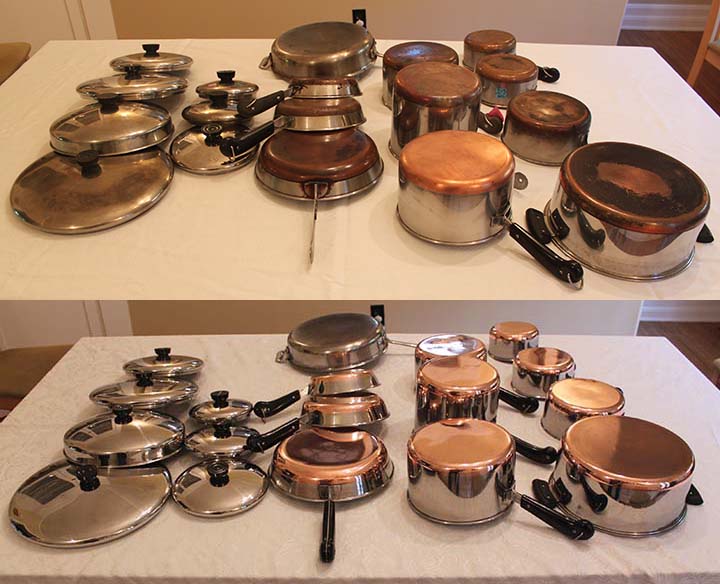
Copper can darken or develop discoloration with use. That change alone does not mean the pan has failed. If the manufacturer or a reliable care source permits it, use a suitable copper cleaner on the exterior and avoid harsh methods that could damage other parts of the pan.
Do not assume that polishing will fix structural damage. Cleaning can improve appearance, but it cannot repair a loose handle, a warped base, or separated metal layers.
Start gently
Wash with warm water, dish soap, and a soft sponge before trying stronger cleaning methods.
Avoid aggressive scraping
Metal tools and abrasive pads may scratch or damage a finish, especially on a pan with mixed materials.
Inspect after cleaning
Check the handle, base, and cooking surface again before returning the pan to regular use.
Common Buying Mistakes to Avoid
The most common mistake is choosing cookware by its shiny finish or brand name alone. Two pans can look alike but use very different metal layers, handle attachments, and base thicknesses. Those differences affect cooking, care, and how the pan fits your stove.
Another mistake is assuming that the most expensive option will always be best. A premium clad saucepan may be useful for frequent sauce making, but a simpler pan may serve just as well for boiling pasta or warming leftovers.
Source: i5.walmartimages.com
Confusing copper color with copper construction
A copper-colored exterior may be decorative. Read the material description to learn whether the base actually contains copper.
Assuming every stainless steel pan works on induction
Check the exact product specifications before buying for an induction cooktop.
Buying a full set without checking the pieces
Count the usable pots, pans, and lids. A set’s headline piece count may include accessories or lids.
Ignoring handle and oven limits
Handle materials, lid knobs, and cookware bodies may have different temperature limits. Follow the lowest applicable limit.
Expecting stainless steel to behave like nonstick cookware
Stainless steel often needs proper preheating and suitable cooking fat to reduce sticking. It will not release every food in the same way as a coated pan.
How to Reduce Sticking in a Stainless Steel Pan
Use moderate heat while learning how the pan responds. Preheat the pan, add cooking oil, and allow the oil to warm before adding food when appropriate for the recipe. Dry ingredients such as meat or vegetables can also help with browning.
If food sticks badly, the pan may be too hot, too cool, overcrowded, or used before the food has formed a browned surface. Adjust one factor at a time instead of turning the burner to maximum.
Use suitable heat
Medium heat is a useful starting point for many stainless steel tasks, but the right setting depends on the pan, burner, and recipe.
Avoid overcrowding
Too much food can release moisture and make browning harder.
Clean after cooking
Soak stuck-on food in warm water and loosen it with a suitable sponge or utensil rather than scraping aggressively.
Frequently Asked Questions
Q
What cookware brand is closest to Revere Ware?
No single current brand is an exact replacement for every Revere Ware model. For the closest style, compare copper-bottom stainless steel pots. For modern construction, compare stainless steel cookware with an aluminum or copper heat-spreading base, including fully clad tri-ply models from makers such as Cuisinart, Tramontina, and All-Clad.
Q
Is tri-ply stainless steel better than copper-bottom cookware?
Neither type is automatically better for every cook. Fully clad tri-ply cookware has bonded metal layers through the base and sides, while copper-bottom pans concentrate their heat-spreading layer near the base. Your choice should depend on the exact construction, cooking habits, stove, budget, and preferred weight.
Q
Is Revere Ware still made?
The availability of current cookware under the Revere Ware name should be verified through reliable, current retail or manufacturer information before you buy. Vintage pieces and secondhand sets may still appear for sale, but that does not establish that the original product line is being manufactured today. Check the seller, product details, and condition before purchasing.
Q
Can I use Revere Ware alternatives on an induction stove?
Yes, if the specific pan has an induction-compatible magnetic base. Not every stainless steel or copper-bottom pan works on induction. Check the manufacturer’s specifications, or test the base with a magnet as an initial clue; a magnet that sticks does not replace the manufacturer’s compatibility guidance.
Q
Is vintage Revere Ware safe to cook with?
A vintage pan may remain suitable for cooking if its interior is intact, its handle is secure, its base is stable, and it has no serious structural damage. Age alone does not answer every safety question. If the pan has deep pitting, separating layers, unknown repairs, or a loose handle, stop using it until the issue is assessed or replace it.
Q
Should I buy a cookware set or individual replacement pans?
Buy individual pans if only a few pieces need replacement or you already have cookware that works well. A set may be better value if you need several matching sizes and will use most of the included pieces. Compare the actual capacity, construction, lids, and care instructions rather than judging value by piece count alone.
Q
Does a copper bottom make stainless steel cookware nonstick?
No. Copper or aluminum in the base helps spread heat; it does not create a nonstick cooking surface. Stainless steel can release food well when used with suitable heat, cooking fat, and technique, but it behaves differently from cookware with a dedicated nonstick coating.
✦ Wrapping Up
Conclusion
The best answer to what cookware is comparable to Revere Ware is stainless steel cookware with a well-designed heat-spreading base. Copper-bottom pans offer a familiar appearance, while fully clad tri-ply cookware provides bonded metal layers through the base and sides. Both can serve well in a home kitchen when the exact model suits your cooking needs.
Start with the pan you use most often. Compare its capacity, base construction, handle, stove compatibility, and cleaning needs with a few replacement options. A carefully chosen saucepan or skillet can be a more useful investment than a large set filled with pieces you rarely need.
💡 Key Takeaway
Before buying, write down the size of your old Revere Ware pan and the meals you use it for most. Then compare a copper-bottom stainless steel option with a bonded-base or fully clad stainless steel model, checking the manufacturer’s current specifications and care instructions.