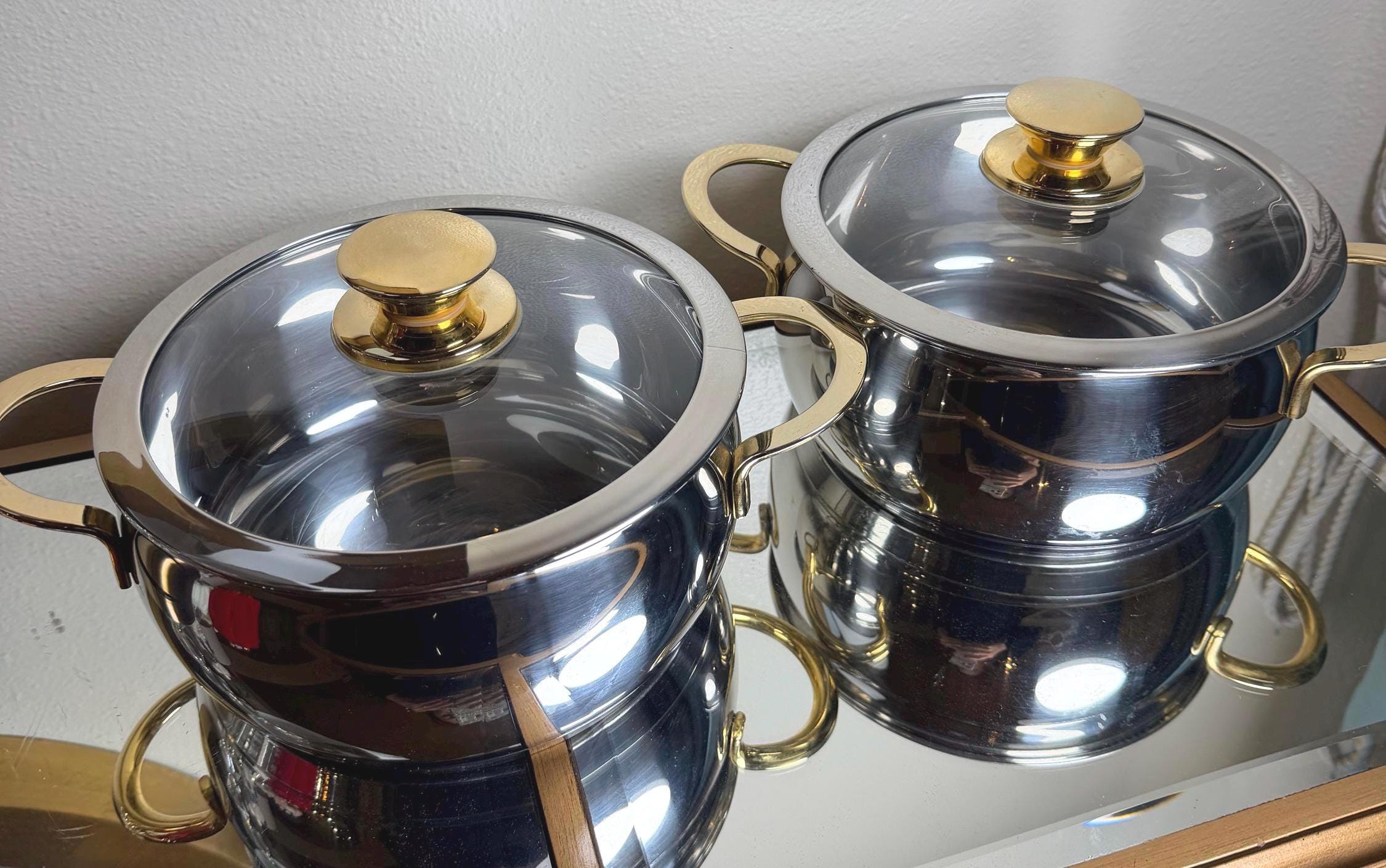
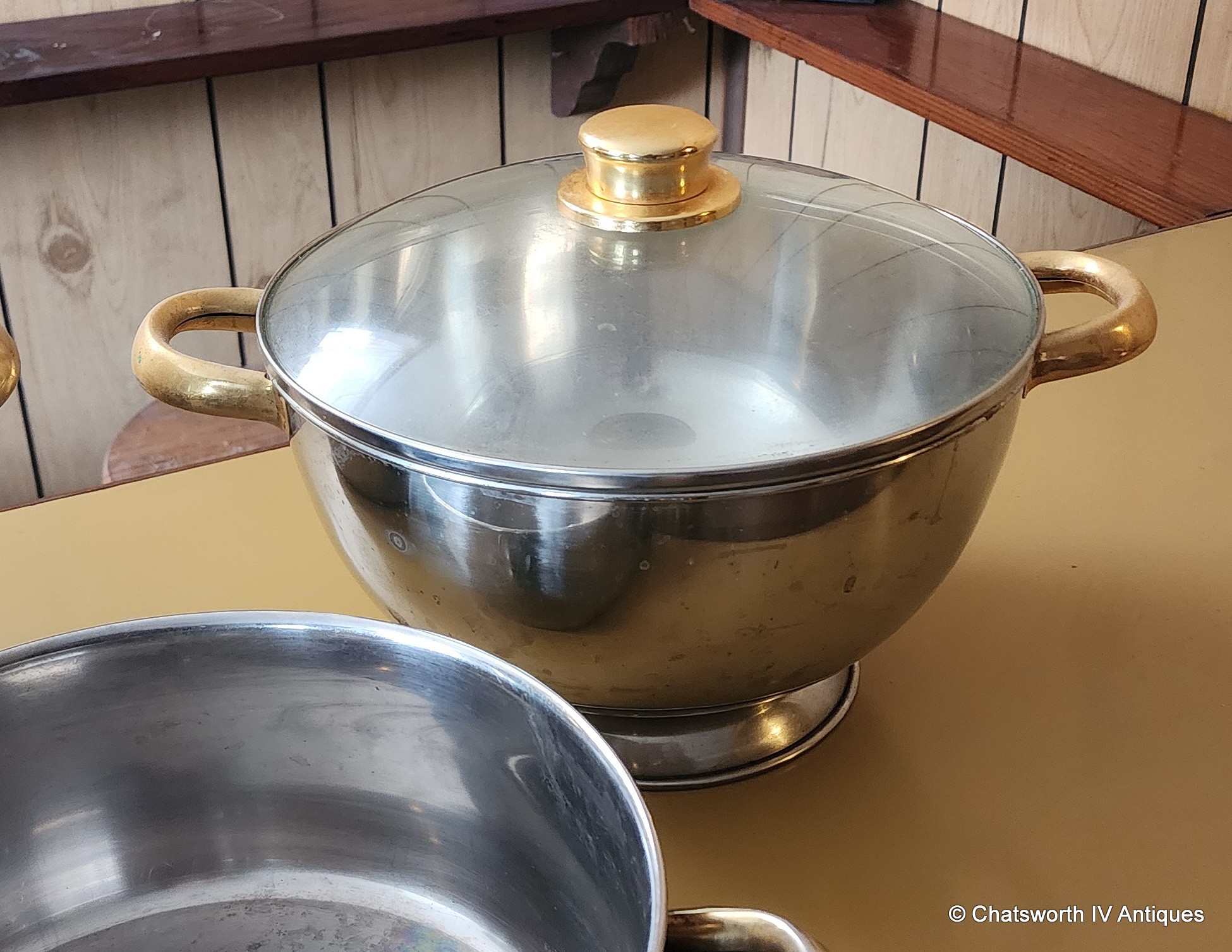
Command performance Cookware disappeared from mainstream retail after its original business faded, and its products are now mainly found through secondhand sellers.
If you remember American home shopping channels in the 1990s and 2000s, you may recall Command Performance cookware. Its shiny pots, gold-colored finishes, and matching kitchen accessories helped it stand out from ordinary pans. Many US households bought these items for daily cooking, holiday meals, and buffet service.
So, what happened to Command Performance Cookware? The brand is no longer a regular presence in the US cookware market. Available trademark records link the name to Cuisine-Cookware, Inc. and Cuisine Cookware International Inc. Some online histories report that the business stopped operating during the 2000s, but a clear, authoritative public record establishing the exact closure date and full reasons is difficult to verify. That distinction matters: the brand’s disappearance is apparent, while the complete story of its business failure remains uncertain.
Today, you may find original pieces at estate sales, thrift shops, auctions, and online resale marketplaces. Before buying or continuing to use an older set, check the cooking surface, handles, lids, and any electrical parts. A familiar brand name can bring back good memories, but the condition of the actual item matters more than nostalgia.
Command Performance was a kitchenware brand associated with pots, pans, serving pieces, and other household cooking products. It became familiar to some US shoppers through home shopping and television-based retail. The brand name appeared on more than one kind of kitchen product, so it should not be treated as a single cookware model.
The name is also linked to Cuisine-Cookware, Inc. and Cuisine Cookware International Inc. in US trademark records. Those records identify cookware and household products connected with the companies. They help establish the brand’s business history, but they do not provide a complete account of its sales, finances, or final operating days.
For shoppers, the appeal was practical as well as visual. Matching pots and accessories offered a coordinated look, while gold-colored details gave some sets a distinctive appearance. The brand also had customers who valued its everyday usefulness and continued to use their pieces long after buying them.
Source: d3j17a2r8lnfte.cloudfront.net
A recognizable appearance
Some sets featured stainless steel with gold-colored accents. This finish helped them stand out in kitchens and on buffet tables.
A broader kitchenware range
Trademark records associated the name with cookware, serving utensils, bakeware, and other household products. Individual product features varied.
A home-shopping connection
Archived shopping listings and customer discussions connect Command Performance products with home shopping channels, including HSN.
Was Command Performance a premium cookware brand?
The brand occupied a place in the market where appearance, convenience, and a coordinated set could influence a purchase. However, it would be misleading to label every item premium based only on its gold-colored finish or promotional claims. Construction, weight, cooking surface, and model-specific instructions are more useful measures of quality.
Older customer comments include praise for long-lasting cookware and serving equipment. These accounts show that some owners were satisfied with their purchases, but individual experiences do not establish the performance of every set or prove that all pieces will last for decades.
What the evidence supports
The brand had a customer base, a documented product history, and items that remain in circulation.
What remains uncertain
A complete set of verified production specifications, independent durability tests, and an authoritative company history is not readily established by the available sources.
What Happened to Command Performance Cookware?
Command Performance gradually disappeared from the mainstream cookware market. The most cautious explanation is that the original business and product line are no longer operating as a widely available retail brand. The available evidence does not support a detailed, definitive account of every event that led to its decline.
Several online articles place the company’s closure or the end of production in the 2000s. However, they do not agree on the precise date, and a clear primary source confirming the full timeline is difficult to identify. It is therefore safer to describe the brand as discontinued or no longer widely sold than to state an exact shutdown date as settled fact.
Trademark records provide another useful clue. Records for COMMAND PERFORMANCE connect the name with Cuisine-Cookware, Inc. and Cuisine Cookware International Inc. Some registrations later became cancelled or dead. A dead trademark record does not, by itself, prove when a company closed, whether every product stopped selling on the same day, or whether another business held related rights.
For former customers, the result is easier to see than the cause. New products are difficult to find through ordinary retail channels, replacement parts may be scarce, and secondhand listings have become a more practical route for finding original pieces.
Source: pictureserver1.auctionninja.com
The brand lost its mainstream retail presence
Command Performance is no longer a common current cookware line in ordinary US retail stores.
The exact closure date is uncertain
Secondary articles report different dates. Without stronger primary documentation, a single year should not be presented as definitively confirmed.
Trademark status offers limited evidence
Historical registrations help trace the business name, but a cancelled registration is not a complete record of a company’s operations.
Did Cuisine Cookware International go out of business?
The brand’s reduced availability and the historical trademark records point to a business that no longer supports Command Performance as a normal, widely sold cookware line. Secondary accounts describe the company as having ceased operations during the 2000s, but a definitive public record of the closure and its full circumstances has not been established here.
That distinction is important for anyone researching the brand. The absence of current products does not prove bankruptcy, a specific ownership transfer, or a particular financial problem. Those claims need separate documentary evidence, such as court filings, corporate records, or reliable contemporary reporting.
Confirmed historical connection
US trademark records associate Command Performance with the Cuisine-Cookware businesses.
Not firmly established
The precise shutdown date, a full financial explanation, and the details of any final ownership changes.
Why did the cookware disappear from stores?
A cookware line can disappear when a business stops production, loses retail distribution, changes its product range, or no longer supports its original products. Competition, production costs, and changes in shopping habits can also affect a brand. These are possible business pressures, not verified findings about the specific cause of Command Performance’s decline.
Without reliable company statements or financial records, it would be wrong to select one of these explanations and present it as the answer. The evidence supports a narrower conclusion: the brand faded from regular retail, and its original products are now chiefly of interest to people looking for older kitchenware.
A useful distinction
The fact that a product line vanished is not proof that a particular competitor, manufacturing problem, or customer complaint caused its disappearance.
What Made Command Performance Cookware Stand Out?
The main attraction was its coordinated look and range of kitchen products. Some surviving sets combine stainless steel with gold-colored trim, while other items were designed for serving food or preparing meals away from a conventional stovetop. The exact material and construction depend on the item.
Stainless steel can be useful for daily cooking because it resists rust under normal care and does not rely on a fragile nonstick film to release food. However, stainless steel by itself is not a guarantee of even heating. The base and any layered metal construction affect how heat spreads through a pan.
A gold-colored finish also needs careful interpretation. Its appearance does not tell you whether the piece is solid gold, gold-plated, coated, or simply finished in a gold tone. Do not infer a metal composition without a product label, manufacturer documentation, or a suitable material assessment.
The brand’s range is another reason to check the model before drawing conclusions. A stainless steel pot, a nonstick skillet, a buffet warmer, and an electric burner have different uses and safety requirements. A feature that applies to one cannot automatically be applied to all Command Performance products.
Source: image.invaluable.com
Coordinated styling
Matching finishes and accessories made some sets attractive for kitchens where cookware also served as part of the table presentation.
Different product types
The historical brand range extended beyond ordinary pots and pans, so each item needs its own assessment.
Construction matters more than appearance
The metal layers, cooking surface, base design, and handle attachment are better clues to practical performance than a shiny finish.
Were the original pots and pans durable?
Some owners have reported using their Command Performance items for many years. Archived discussions on home shopping sites include positive comments about cookware and serving equipment that remained useful long after purchase. Such reports are worth considering, but they are personal accounts rather than controlled tests.
Durability depends on the exact product, how often it was used, how it was cleaned, and whether it was exposed to high heat or rough handling. A well-kept stainless steel pot may remain serviceable for a long time, while a worn nonstick pan or a pot with a loose handle may no longer be suitable for cooking.
If you inherit a set, assess each piece separately. The best-looking item may not be the safest one to use, and a scratched or dented piece does not always have the same risks as one with a damaged coating or a failing handle.
Check the actual condition
Look for cracks, loose fittings, deep dents, corrosion, peeling surfaces, and signs of overheating.
Do not rely on age alone
A decades-old pan may still be usable, but age, appearance, and brand reputation cannot replace an inspection.
Where Can You Find Command Performance Cookware Today?
If you want an original Command Performance pot, pan, or serving piece, secondhand markets are the most practical place to start. Estate sales, local auctions, thrift shops, antique stores, and online resale platforms may have individual items or complete sets. Availability changes from week to week, so finding a particular size or matching lid can take time.
Search by both the brand name and the type of item. A seller may list a piece as Cuisine Cookware, Command Performance Gold, vintage stainless steel cookware, or a buffet serving set. Using several accurate terms can help you find items that a narrow search misses.
Before paying, ask for clear photographs of the base, interior, handles, lid, and any model or maker markings. Request measurements and details about damage. If a listing claims the cookware works on induction or is safe for a particular oven temperature, ask for documentation rather than relying on the seller’s guess.
Used prices depend on condition, completeness, local demand, and whether the item is useful or collectible. A full set is not automatically a better buy than one good pot. Missing lids, damaged surfaces, and costly shipping can make an apparently low price less attractive.
Source: qvc.scene7.com
Online resale marketplaces
Search established secondhand marketplaces for individual pans, complete sets, and matching accessories. Check seller history, return terms, and shipping costs.
Estate sales and auctions
These can be useful for finding older kitchenware in person. Inspect the items before bidding when the sale allows it.
Thrift and antique shops
Local stores may carry isolated pieces. Visiting regularly can help if you are trying to replace a missing pot or lid.
How to judge a secondhand listing
Treat the listing as a description to verify, not a guarantee. Look for original markings and photos of the actual item. Generic product photos may show a different version or a piece in better condition than the one being sold.
Compare the cost of the item with its condition and intended use. A rare-looking finish may have sentimental value, but it does not make a damaged pan safe. If the seller cannot confirm the material, cooking-surface condition, or model, buy only if the uncertainty is acceptable to you.
Ask about the lid
Confirm that it fits securely and has no cracks, chips, or damaged knobs.
Inspect the interior
Check for peeling coatings, deep scratches, pitting, and corrosion.
Confirm the intended use
Do not assume every item is suitable for induction, oven use, or modern electric appliances.
Is Old Command Performance Cookware Safe to Use?
An older Command Performance item may still be usable, but safety depends on its materials, condition, and intended purpose. There is no sound basis for declaring every piece safe or unsafe simply because the brand is no longer active. Inspect the item and identify its construction before using it for food.
Start with the cooking surface. If a nonstick coating is peeling, flaking, blistered, or badly worn, stop using the pan for food and replace it. A scratched stainless steel surface presents a different issue from a damaged nonstick coating, so the remedy should match the material and damage.
Next, inspect handles, rivets, seams, lids, and bases. A loose handle can cause a hot pan to fall. Cracked glass can break further when heated, and a badly warped base may sit unevenly on a burner. Do not try to repair a food-contact surface with glue, paint, or a material that is not specifically approved for that use.
For electric appliances, inspect the cord, plug, controls, and housing. Do not use a unit with frayed wiring, a cracked plug, scorch marks, or signs of liquid damage. Since old appliance models may lack accessible manuals or replacement parts, a qualified repair professional may be needed to assess a fault. If safe operation cannot be confirmed, replacement is the better choice.
Source: stockpotstainless.org
Nonstick coatings
Retire cookware with peeling or flaking coatings. Avoid overheating nonstick pans and follow any verified care instructions for the exact model.
Stainless steel
Check for corrosion, severe pitting, structural damage, and loose handles. Ordinary discoloration is not the same as structural failure.
Glass lids
Do not use cracked or chipped lids under heat. Use a replacement only if its fit and temperature rating are suitable.
Electrical products
Do not power a damaged appliance. A missing manual or uncertain rating is a reason to seek reliable model-specific guidance.
Can vintage cookware be used on an induction stove?
Only cookware with a suitable magnetic base will work directly on most induction cooktops. Stainless steel does not always mean induction compatible, because some stainless steel alloys are not sufficiently magnetic and some older pans have unsuitable base designs.
A simple magnet check can help identify whether the base is magnetic, but it does not guarantee that a pan will heat well or be accepted by every induction cooktop. Check the cooktop manual and any reliable information for the exact pan. If compatibility remains uncertain, use cookware known to be induction compatible rather than risking poor heating or unstable operation.
Use a magnet as an initial check
A magnet that sticks firmly to the base suggests that the pan may be suitable, but it is not a complete compatibility test.
Check the base shape
A flat base of suitable size is important for stable contact and reliable operation.
What about oven safety and high heat?
Do not assume a vintage pot is oven safe because it is made of metal. Handles, knobs, coatings, seals, and lids can have different heat limits, and those limits may not be visible on the cookware itself.
Use a verified manual or model-specific marking whenever possible. If you cannot establish a safe temperature rating, do not place the item in a hot oven. The same caution applies to open flames, broilers, and sudden temperature changes involving glass lids.
Do not guess the temperature limit
Unknown handles, coatings, and lid materials may not tolerate oven or broiler heat.
What Are the Best Alternatives to Command Performance Cookware?
The right replacement depends on what you liked about the original set. If you want a similar polished appearance, look at current stainless steel cookware. If you valued easy food release, compare modern nonstick pans. If you mainly used the old pieces for buffet service, focus on serving equipment rather than buying a full cooking set.
Stainless steel is a useful choice for browning meat, making pan sauces, and cooking many everyday meals. It generally needs proper preheating and an appropriate amount of fat to reduce sticking. A nonstick skillet is often more convenient for eggs and delicate foods, but its coating requires care and will eventually wear.
Clad cookware uses layers of metal, often stainless steel around an aluminum core, to combine a durable cooking surface with better heat spread. The term alone does not guarantee a particular level of performance. Compare the construction, weight, handle design, maintenance needs, and compatibility with your stove.
For anyone who liked the gold look, finish should be a secondary filter. First decide which pans you need, how often you cook, and whether the set must work on induction. Then compare the exact model’s care instructions, warranty, and available replacement lids. This approach is more reliable than buying a set based on appearance alone.
Source: i5.walmartimages.com
Stainless steel cookware
Best for cooks who want a durable cooking surface for browning, simmering, and making sauces. It may require more attention to preheating and food release.
Modern nonstick cookware
Useful for eggs, pancakes, and other foods that tend to stick. Check the coating care rules and plan for eventual replacement.
Clad stainless steel
A practical option for people who want stainless steel with a layered construction designed to spread heat more evenly.
Individual replacement pieces
Buying only the skillet, saucepan, or stockpot you need can cost less and avoid storing unused cookware.
Should you buy a modern set or vintage pieces?
Choose vintage Command Performance cookware when the design matters to you, the item is in good condition, and you can verify its intended use. It may also make sense when you want to complete an existing set and can find a matching piece at a reasonable price.
Choose modern cookware when you need clear safety instructions, known stove compatibility, current warranty support, or readily available replacement parts. A new set is not automatically better in every respect, but documented specifications make it easier to match a product to your needs.
A useful middle ground is to keep a sound vintage pot for suitable tasks while buying a new pan for a job that requires a reliable nonstick surface or induction compatibility. You do not need to replace every old item simply because the brand disappeared.
Pick vintage for style and continuity
Buy only after checking the actual item and accepting the limits of its age and documentation.
Pick new for support and certainty
A current product may offer clearer instructions, replacement parts, and warranty options.
How to Care for a Surviving Command Performance Set
Good care can help preserve a usable vintage cookware set. Start by identifying the material and any coating. If a piece has no readable label and its construction is uncertain, use gentle cleaning methods and avoid aggressive polishing or high heat until you know more.
For confirmed stainless steel cookware, wash with warm water and mild dish soap, then dry it to reduce water spots. Follow the product’s verified instructions if they are available. Avoid harsh abrasives on decorative finishes, and test any cleaner on a small, inconspicuous area first.
For nonstick cookware, use soft cleaning tools and avoid metal utensils unless the manufacturer specifically permits them. Never heat an empty coated pan for long periods or leave it unattended over high heat. If the coating begins to peel or flake, retire the pan rather than trying to restore the surface.
Store lids and pans so they do not knock against each other. A soft separator can protect polished finishes and reduce scratches. Keep electrical appliances dry, and store their cords without tight bends or strain on the plug.
Source: stockpotstainless.org
Clean according to the material
Use mild soap and suitable tools. Do not assume every piece can go in a dishwasher.
Protect decorative finishes
Avoid aggressive scouring and unverified metal polish on gold-colored trim.
Store carefully
Separate stacked pans and protect glass lids from impacts.
Retire damaged pieces
Do not keep using cookware with a failing handle, unsafe coating, cracked lid, or other serious defect.
What the Available Evidence Does and Does Not Tell Us
The history of Command Performance is a useful example of why a product’s disappearance and the reason for it are two different questions. Historical trademark records and archived retail material help establish the brand’s identity and product range. They do not, on their own, explain the company’s final business decisions.
Several online articles describe the brand as having ceased operations during the 2000s, but the precise year and full sequence of events are not consistently supported by primary documentation. Claims about a specific cause, such as a particular customer service problem, manufacturing defect, competitor, or ownership dispute, should therefore be treated with caution unless supported by reliable records.
Archived customer reviews and community posts provide another kind of evidence. They show that some buyers valued their products and wanted the line to return. They cannot establish how representative those buyers were, how the entire product range performed, or why the company stopped selling it.
For readers, the most useful conclusion is practical. Command Performance is a historical cookware name rather than a widely available current line, and surviving products should be assessed on their individual merits. That is a stronger basis for deciding what to buy or use than an unverified story about the brand’s final days.
Source: thekitcheneye.com
Documented
Historical US trademark records associate the brand with Cuisine-Cookware businesses and describe categories of goods.
Reported by others
Some former customers recall long-lasting products and describe their experiences in archived shopping discussions.
Not firmly established
The exact closure date, complete financial history, and definitive reason the business stopped supporting the line.
Practical conclusion
Check each surviving item’s construction, condition, compatibility, and care requirements before use.
Frequently Asked Questions
Q
Is Command Performance Cookware still being made?
Command Performance is no longer widely available as a current cookware line in the US retail market. Original pieces may still appear through resale sellers, estate sales, auctions, and thrift shops. A new listing that uses the old name should be checked carefully to determine whether it is an original item or simply uses similar wording.
Q
When did Command Performance Cookware go out of business?
Some secondary articles place the company’s closure or the end of production in the 2000s, but a precise date is not firmly established by the public evidence reviewed for this article. Historical trademark records show changes in trademark status, but those dates do not necessarily match the date a company closed or stopped making every product.
Q
Who made Command Performance Cookware?
US trademark records associate the Command Performance name with Cuisine-Cookware, Inc. and Cuisine Cookware International Inc. These records help identify the businesses connected with the brand, although they do not provide a complete manufacturing history for every model. Check markings on the base of an individual piece for more specific information.
Q
Can I still buy replacement lids and handles?
Replacement parts may be difficult to find because the original line is no longer widely supported. Search for the exact model, dimensions, and part type on secondhand marketplaces and at estate sales. Do not assume a lid or handle will fit just because it looks similar. Check the fit and temperature rating before using a replacement.
Q
Is vintage Command Performance cookware worth buying?
It may be worth buying if you value the design, want to complete a set, or find a sound item at a fair price. Inspect the cooking surface, base, handles, lid, and markings before paying. Compare the full cost, including shipping and any missing parts, with a current alternative that has clear specifications and support.
Q
Is Command Performance cookware safe for modern stoves?
Compatibility depends on the exact item. Induction cooktops require a suitable magnetic base, and oven use requires verified temperature limits for the body, handles, coatings, and lid. Do not assume that an older pan is induction compatible or oven safe based only on its brand name or appearance.
Q
Did Command Performance Cookware have a lifetime warranty?
A universal lifetime warranty for all Command Performance products has not been established by the evidence reviewed here. Warranty terms can vary by product and sales period, and a historical warranty may no longer be supported. Look for the original paperwork or archived model-specific terms rather than relying on a general claim.
✦ Wrapping Up
Conclusion
Command Performance Cookware faded from mainstream retail, leaving former customers with a familiar name and a secondhand market for surviving products. Historical trademark records link the brand to Cuisine-Cookware businesses, while some online histories report that the business stopped operating during the 2000s. The exact closure date and full reasons for the disappearance remain uncertain.
That uncertainty does not mean the brand has no value today. Some original pieces may still serve their owners well, and collectors may enjoy their distinctive appearance. The key is to judge each item by its construction and condition rather than assuming every vintage piece is durable, compatible with modern appliances, or safe for continued use.
If you are looking for a set, begin with the item you actually need. Check the markings, inspect the cooking surface and fittings, confirm the stove and temperature limits, and compare the final cost with a current product. A careful purchase is more useful than a complete set that looks good but cannot meet your needs.
💡 Key Takeaway
Before buying or using Command Performance Cookware, identify the exact item, inspect it for damage, verify its intended use, and treat any unconfirmed claim about the brand’s history or product specifications with caution.