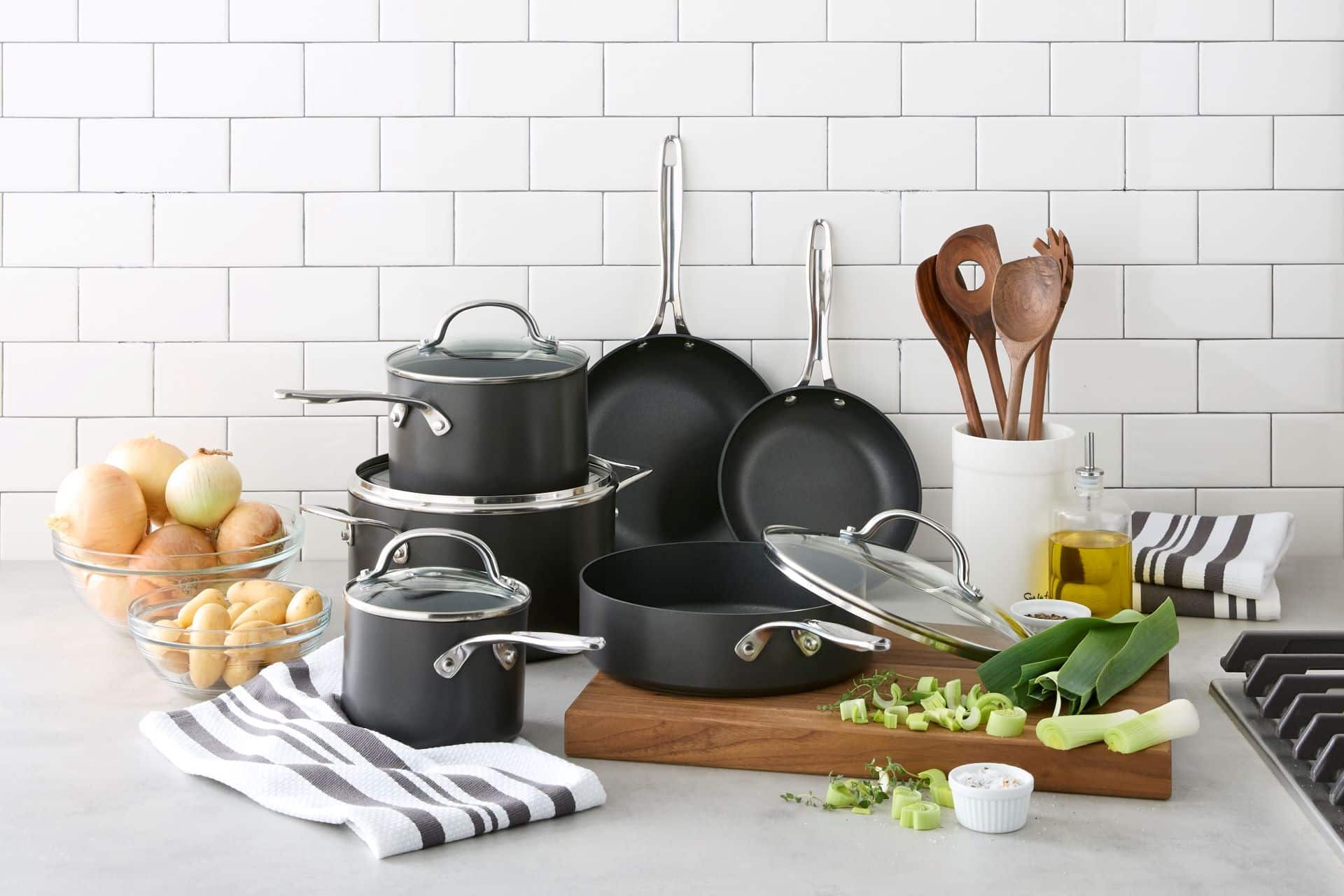
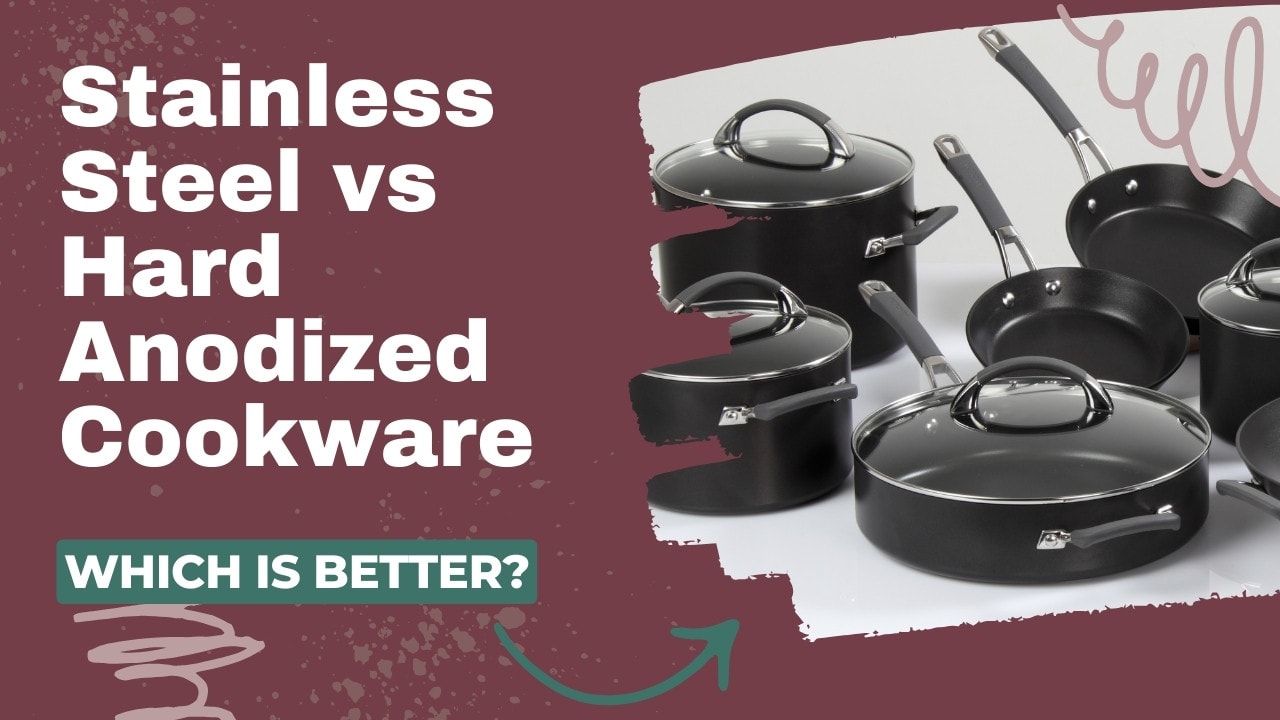
Anodised cookware is made from aluminum that has been treated with electricity to create a hard, protective oxide layer on its surface.
In American kitchens, a good pan may handle morning eggs, grilled cheese at lunch, and a quick pasta dinner after work. Anodised cookware is popular because it combines the light weight of aluminum with a tough outer surface. You can find it in many home cookware sets, from single skillets to large collections with saucepans and stockpots.
The word anodised is the British spelling of anodized, which is more common in the United States. Both terms describe the same basic process. An electric current changes the surface of aluminum, creating a layer of aluminum oxide that helps protect the metal beneath it. Hard anodizing creates a thicker, harder layer than standard anodizing.
The key detail is that anodized cookware is not always nonstick. Some pans have a bare anodized cooking surface, while others have an added nonstick coating. That difference affects how food cooks, which utensils you can use, and how you should care for the pan. Knowing what lies beneath the label helps you choose cookware that suits your meals and cooking habits.
Anodised cookware is cookware made from aluminum whose surface has been changed through an electrochemical process. This process forms a layer of aluminum oxide, a hard compound that protects the metal below. The resulting surface is more durable than untreated aluminum and has a different appearance and feel.
Aluminum is a useful cookware material because it conducts heat well and weighs less than many other metals. However, untreated aluminum can react with some acidic or salty foods, and its surface can scratch or wear. Anodizing helps address some of these drawbacks by changing the outer layer rather than simply painting or plating the pan.
The term describes the surface treatment, not a complete recipe for the entire pan. A manufacturer may use an aluminum body, an anodized exterior, and a separate nonstick coating inside. Another pan may have an anodized cooking surface without a conventional nonstick layer. Always check the product description to see which type you are buying.
Source: storage.googleapis.com
Base material
Most anodized cookware begins with aluminum, which transfers heat efficiently and keeps the pan relatively light.
Protective surface
The anodizing process forms aluminum oxide on the surface, making it harder and more resistant to everyday wear.
Possible nonstick layer
Some cookware adds a separate nonstick coating over the anodized surface. This coating has its own care instructions and service life.
What Does Anodised Mean?
Anodised means that a metal has undergone anodizing, an electrochemical treatment that changes its surface. For aluminum, the process builds an oxide layer that is part of the metal surface rather than a simple layer of paint.
The term does not mean that a pan contains no aluminum. It also does not tell you whether the pan is free of nonstick chemicals. Those details depend on the construction and materials of the specific product.
Anodised
The British spelling of the word used for aluminum cookware treated through anodizing.
Anodized
The usual American spelling for the same surface treatment.
What Is Aluminum Oxide?
Aluminum oxide is a compound made from aluminum and oxygen. A thin natural oxide layer forms when aluminum meets air, but anodizing creates a thicker, more controlled layer under specific manufacturing conditions.
This oxide layer is hard and helps protect the underlying aluminum from wear and corrosion. It is also different from the separate polymer coatings used to give many pans a nonstick cooking surface.
Hard surface
The oxide layer improves resistance to ordinary scratches and wear, although it does not make a pan impossible to damage.
Surface protection
The layer helps reduce direct contact with the aluminum beneath it while the finish remains intact.
How Is Anodized Cookware Made?
Manufacturers create anodized cookware by treating aluminum in an electrolytic bath while passing an electric current through the system. The aluminum part acts as the anode, which is the source of the name anodizing. The process causes a controlled layer of aluminum oxide to form on its surface.
The oxide layer is integrated with the aluminum surface rather than applied like ordinary paint. Manufacturers can control process conditions to affect the layer’s thickness and properties. Hard anodizing uses conditions designed to produce a thicker, harder coating than conventional anodizing.
After the treatment, a manufacturer may finish the pan with a separate nonstick coating, add handles, attach a base designed for a particular cooktop, and carry out other production steps. The exact construction varies by brand and model, so the word anodized alone does not reveal every material in the finished product.
Source: housekeepingmaster.com
Step 1: Form the aluminum body
The manufacturer shapes the aluminum into a pan, pot, or other cookware part.
Step 2: Prepare the surface
The aluminum is cleaned and prepared so the electrochemical treatment can form a consistent oxide layer.
Step 3: Apply the electrochemical treatment
An electric current in an electrolyte forms the controlled oxide layer on the aluminum.
Step 4: Finish the cookware
The manufacturer may seal the surface, add a separate nonstick layer, attach handles, or add a base suited to the intended cooktop.
Is Anodizing the Same as Painting Aluminum?
No. Paint sits on top of a material as a separate film. Anodizing changes the aluminum surface through an electrochemical reaction, creating an oxide layer that is integrated with the metal.
This difference helps explain why anodized aluminum can resist wear better than untreated aluminum. However, the quality of the finished cookware still depends on the manufacturing process, design, and any additional coatings.
Anodized surface
A controlled oxide layer formed from the aluminum surface itself.
Painted surface
A separate coating applied over the underlying material.
Anodized vs. Hard Anodized Cookware
Hard anodized cookware is a type of anodized cookware made with a process that produces a thicker, harder oxide layer. The added surface durability can make it useful for frequent home cooking, especially when pans are handled and washed often.
Standard anodizing also creates a protective oxide layer, but its thickness and properties depend on the process. Hard anodizing generally targets greater hardness and wear resistance. That does not mean every hard anodized pan will last longer than every standard anodized pan, because pan design, coating quality, and care also matter.
The term hard anodized does not automatically mean that the cooking surface is nonstick. Many products combine a hard anodized aluminum body with a separate nonstick coating, but others use a different interior finish. Read the care label before choosing utensils or cleaning methods.
Source: food4kitchen1.blogspot.com
Standard anodized
Uses an electrochemically formed oxide layer. The exact hardness, thickness, and wear resistance depend on the treatment and product.
Hard anodized
Uses a process designed to produce a thicker, harder oxide layer that offers increased surface durability.
Hard anodized with nonstick
Combines the treated aluminum body with a separate nonstick cooking surface, which needs care suited to that coating.
Which Type Should You Choose?
For a busy home kitchen, hard anodized cookware may be worth considering if you want a durable aluminum pan that is easy to handle. A standard anodized pan may also serve well, depending on its build and price.
Do not choose by the label alone. Compare the cooking surface, heat limits, handle design, cooktop compatibility, warranty, and cleaning instructions. These details can matter more in daily use than the distinction between the two anodizing methods.
For frequent cooking
Consider hard anodized cookware when surface durability is a priority.
For a nonstick cooking surface
Check whether the pan has a separate nonstick coating and how the maker says to maintain it.
For value
Compare the full construction and warranty instead of assuming that a harder surface guarantees a better pan.
Benefits of Anodized Cookware
Anodized cookware offers several practical benefits, especially when you want the heat response of aluminum with a more durable surface. It can work well for everyday meals, from scrambled eggs to sautéed vegetables and simmered sauces. The exact performance depends on the pan’s thickness, shape, cooking surface, and heat source.
The material is also relatively light compared with cast iron and many thick stainless steel pans. That makes it easier to lift, pour, and move food from the stove to the counter. For people who cook often, less weight can make routine tasks more comfortable.
Still, anodized cookware is not automatically the best option for every cooking style. Some pans have nonstick coatings that limit high-heat use, while others may not offer the same browning behavior or oven compatibility as particular stainless steel or cast iron models.
Source: larrealasvegas.com
Good heat transfer
Aluminum conducts heat well, helping a properly designed pan warm quickly and distribute heat across its cooking area.
Lower weight
Aluminum is lighter than cast iron, which can make cookware easier to lift and handle.
A tougher surface
The anodized oxide layer is harder than untreated aluminum and helps resist ordinary wear.
Corrosion resistance
The protective oxide layer helps reduce corrosion when the cookware is made and maintained correctly.
Many shapes and sizes
Anodized cookware is available as frying pans, saucepans, sauté pans, stockpots, and complete cookware sets.
Does Anodized Cookware Heat Evenly?
Aluminum transfers heat well, so anodized aluminum cookware can heat quickly. Even heating, however, depends on more than the surface treatment. The pan’s thickness, base design, burner size, and contact with the heat source all affect cooking results.
A thin pan may still develop hot spots over a powerful burner. For better results, match the burner to the pan’s base, preheat gradually, and use moderate heat until you understand how the cookware responds.
Match the burner
Choose a burner close to the size of the pan’s base to help reduce uneven heating.
Avoid sudden heat changes
Gradual heating and cooling can help reduce thermal stress and lower the risk of warping.
Is Anodized Cookware Scratch Resistant?
Anodized aluminum is more resistant to surface wear than untreated aluminum, but scratch resistant does not mean scratch proof. Abrasive pads, sharp tools, impacts, and harsh cleaning methods can still damage a pan’s finish or any added nonstick coating.
Use the utensil type specified by the manufacturer. If a pan has a separate nonstick interior, treat that surface according to its instructions even if the aluminum body is hard anodized.
Use suitable utensils
Wood, silicone, or other approved utensils can reduce the risk of damage to coated cooking surfaces.
Clean gently
Avoid steel wool and abrasive scouring products unless the manufacturer expressly permits them for that exact surface.
Is Anodized Cookware Safe to Use?
Anodized aluminum cookware from a reputable manufacturer can be a reasonable choice for normal cooking when used according to its instructions. The anodized oxide layer helps separate food from the underlying aluminum. The condition of the cooking surface and the presence of any additional coating are important parts of the safety picture.
Anodizing does not remove aluminum from the pan. Instead, it changes the surface so the metal is less likely to react with food than untreated aluminum. If the surface is badly damaged, or if the cookware has an added nonstick layer that is peeling, follow the manufacturer’s advice and replace the pan when its condition warrants it.
A pan described as anodized is not automatically free of all chemicals or suitable for every cooking method. If you are concerned about a particular substance, check the manufacturer’s material disclosures and the exact model’s documentation. Avoid relying on broad labels such as healthy, chemical free, or toxin free without clear supporting details.
Source: recipeprepared.com
Check the cooking surface
Look for peeling, flaking, deep gouges, or other damage that could affect the surface or an added coating.
Follow temperature limits
Use the heat and oven limits stated by the manufacturer, especially for pans with nonstick interiors or plastic handles.
Understand the materials
Distinguish the anodized aluminum body from any separate nonstick coating or other materials used in the pan.
Replace badly damaged cookware
If the cooking surface is deteriorating, stop using the pan until you have checked the manufacturer’s guidance.
Can Aluminum Get Into Food?
Small amounts of aluminum can transfer from some cookware into food, and the amount depends on the cookware surface, the food, and cooking conditions. Acidic foods, salty foods, and long cooking times can increase the transfer from untreated aluminum.
An intact anodized surface is less reactive than untreated aluminum and helps limit this contact. This is one reason anodizing is useful in cookware, but it should not be treated as a guarantee that no aluminum can ever transfer.
If you often cook tomato sauce, citrus-based dishes, or other acidic foods for long periods, choose cookware whose manufacturer explicitly supports that use. Stainless steel is another practical option if you want to avoid using aluminum cookware for those recipes.
Intact anodized surface
Provides a protective barrier that reduces the direct interaction between food and the aluminum beneath it.
Damaged finish
May change how the pan’s surface behaves. Check the manufacturer’s guidance rather than assuming the original protection remains unchanged.
Is Hard Anodized Cookware Free of PFAS?
Not necessarily. Hard anodizing is a treatment for the aluminum surface, while PFAS refers to a broad group of per- and polyfluoroalkyl substances. A pan’s anodized body does not establish whether its separate nonstick coating contains any particular substance.
Some nonstick cookware uses PTFE, a fluoropolymer associated with the broader PFAS terminology. Other products use different coatings. To determine what a specific pan contains, review its product specifications and manufacturer disclosures rather than relying on the phrase hard anodized.
If avoiding intentionally added PFAS is a priority, look for an explicit, model-specific statement from the manufacturer about the cooking surface and its materials. A ceramic-style nonstick label or a general claim about the aluminum body is not enough on its own to establish every material used in a product.
Hard anodized aluminum
Describes the treated aluminum surface and does not, by itself, identify the materials in a separate nonstick layer.
PTFE nonstick coating
A distinct type of coating that may be used on some anodized cookware models.
Explicit material disclosure
Provides a stronger basis for checking whether a particular product meets your material preferences.
Anodized Cookware vs. Stainless Steel
Anodized aluminum and stainless steel serve different cooking needs. Anodized aluminum often heats quickly and weighs less, while stainless steel can be a strong choice for searing, browning, and long service life when properly maintained. Neither material is automatically better for every kitchen.
Many stainless steel pans use a layered base or a multi-ply body with aluminum or copper inside to improve heat transfer. As a result, performance varies by construction. A well-built stainless steel pan can distribute heat very well, while a thin pan of either material may be less consistent.
The biggest practical distinction is often the cooking surface. Bare anodized aluminum, coated anodized cookware, and stainless steel each behave differently when food sticks, browns, or releases. Consider what you cook most often before choosing a set.
Source: thehomereviews.com
Choose anodized aluminum for
A relatively light pan, quick heat response, and a durable treated surface. If the pan has nonstick coating, follow its specific heat and utensil limits.
Choose stainless steel for
A versatile surface suited to browning meat, building pan sauces, and handling many cooking techniques without relying on a conventional nonstick coating.
Compare construction
Check the pan’s thickness, base design, handle comfort, oven rating, and cooktop compatibility instead of judging only by the metal name.
Comparison Table: Which Material Fits Your Kitchen?
This table compares common characteristics of anodized aluminum and stainless steel. These are general material tendencies, not guarantees for every pan, because construction and coatings can change the result.
Weight
Anodized aluminum is generally lighter than many comparable stainless steel pans, although thickness and design matter.
Heat response
Aluminum conducts heat well. Stainless steel pans with aluminum or copper layers can also offer strong heat distribution.
Food release
A coated anodized pan may release food easily. Bare anodized cookware is not necessarily nonstick, and stainless steel usually needs suitable preheating and cooking technique.
Browning
Stainless steel is often useful for searing and developing browned bits for sauces. The best result still depends on the pan and cooking method.
Maintenance
Anodized cookware may require gentle care, especially when coated. Stainless steel can tolerate more vigorous cleaning in many cases, subject to the manufacturer’s instructions.
Long-term use
Both can last for years with suitable care. A worn nonstick coating may make a coated pan less useful even if its aluminum body remains intact.
Can You Use Both Types of Cookware?
Yes. A mixed cookware collection can be more practical than buying a full set made from one material. An anodized nonstick skillet can help with delicate foods, while a stainless steel skillet can handle searing and pan sauces.
This approach also lets you replace one worn pan without replacing every pot and skillet. Start with the pieces you use most, then add cookware based on your actual cooking habits.
Eggs and delicate fish
A suitable nonstick skillet may make food release easier with less added fat.
Steaks and pan sauces
A stainless steel skillet can support browning and help form flavorful browned bits.
Soups and pasta
A saucepan or stockpot made from either material can work well when its capacity and construction fit the recipe.
How to Clean and Care for Anodized Cookware
The best way to care for anodized cookware is to clean it gently, avoid sudden temperature changes, and follow the instructions for its specific cooking surface. A bare anodized pan and a hard anodized pan with a nonstick interior may have different cleaning limits.
For routine cleaning, let the pan cool before washing it. Use warm water, mild dish soap, and a soft sponge. If food sticks, soak the pan in warm, soapy water before cleaning rather than scraping it with a sharp tool.
Avoid placing a hot pan under cold running water. Rapid temperature changes can stress cookware and may contribute to warping. Do not assume every anodized pan is dishwasher safe, oven safe, or suitable for metal utensils just because its outer surface is hard.
Source: housekeepingmaster.com
Wash by hand when recommended
Mild soap and a soft sponge are suitable for many anodized cookware products and help preserve their finish.
Remove stuck food gently
Soak the cooled pan in warm, soapy water and loosen residue with a soft cleaning tool.
Avoid harsh abrasives
Steel wool, aggressive scouring powders, and unsuitable cleaners may damage the finish or an added coating.
Dry before storing
Drying the pan helps prevent water marks and keeps moisture from lingering around handles or joints.
A Simple Cleaning Routine
Start by checking the manufacturer’s care instructions, especially if the pan has a nonstick coating. The following routine is a useful starting point for many products, but the manufacturer’s directions take priority.
Step 1
Let the cookware cool naturally before washing it.
Step 2
Wash with warm water, mild dish soap, and a soft sponge.
Step 3
Soak stubborn residue instead of using a knife, metal scraper, or abrasive pad.
Step 4
Rinse well, dry with a soft towel, and store the pan where its surface will not rub against sharp utensils.
How to Prevent Food From Sticking
Food release depends on whether the pan has a nonstick coating, how hot the pan is, the food’s moisture, and the amount of oil used. A bare anodized surface will not behave exactly like a conventional nonstick skillet.
For a bare anodized pan, preheat gradually and use a suitable amount of cooking oil. Dry ingredients when the recipe calls for it, and allow meat or fish to release naturally after browning instead of forcing it off the surface.
For a coated nonstick pan, follow the recommended heat range and avoid leaving the empty pan over a hot burner. Excessive heat can shorten the life of some nonstick coatings.
Use moderate heat first
Learn how quickly the pan heats before using high heat for a recipe.
Add oil when appropriate
A thin layer of suitable cooking oil can help reduce sticking on surfaces that are not designed to be nonstick.
Avoid overheating
Follow the product’s temperature limits, particularly when cooking with a separate nonstick coating.
Common Mistakes to Avoid
Many problems with anodized cookware come from assuming that every product with the same label has the same surface and care needs. A pan with bare anodized aluminum may tolerate different tools and temperatures than a pan with an added nonstick coating.
The safest approach is to read the exact model’s instructions before the first use. Pay particular attention to oven limits, dishwasher guidance, compatible cooktops, and the manufacturer’s rules for cleaning and utensils.
Source: learn.surlatable.com
Assuming every anodized pan is nonstick
Anodizing creates a protective oxide layer, not necessarily a food-release coating. Check the product’s interior finish.
Using excessive heat
High heat can damage some added coatings, overheat handles, and increase the chance of scorching food.
Using metal utensils without checking
A hard anodized body does not mean a separate nonstick interior is safe from metal utensils.
Assuming dishwasher safety
Cleaning rules vary by product. Follow the instructions for the specific pan rather than relying on the anodized label.
Ignoring a damaged coating
If an added coating peels, flakes, or deteriorates, stop using the pan until you have checked the manufacturer’s guidance.
Expecting induction compatibility
Aluminum alone is not normally magnetic, so many anodized aluminum pans do not work on induction cooktops unless they have a compatible magnetic base.
What If an Anodized Pan Looks Worn?
A change in color or a superficial mark does not always mean a pan has become unsafe. Anodized aluminum can develop cosmetic changes through use, and the meaning of a mark depends on its depth, location, and the type of surface.
Look for more serious signs, such as peeling of a separate nonstick coating, deep damage to the cooking surface, a loose handle, or a badly warped base. Check the manufacturer’s advice for the exact type of damage, and replace the cookware if its condition affects safe use or the maker recommends replacement.
Minor discoloration
Check the care instructions before using strong cleaners. Cosmetic changes alone do not establish that the cookware is unsafe.
Peeling nonstick coating
Stop using the pan while you check the manufacturer’s guidance on whether it should be replaced.
Loose handles or severe warping
Do not keep using cookware that cannot be handled securely or sits unsafely on the cooking surface.
How to Choose Anodized Cookware for Your Kitchen
Choose anodized cookware by matching its construction to your meals, cooktop, cleaning habits, and budget. A large set may look like good value, but it can include pieces you rarely use. A few well-chosen pans may serve a small household better.
Start with the cooking surface. If easy food release matters most, look for a model with a clearly described nonstick interior and follow its care limits. If you prefer to avoid a separate nonstick coating, consider a bare anodized model and confirm that its cooking surface matches your needs.
Next, check the base and the handles. The pan should feel balanced when empty and remain comfortable when filled. Confirm that the product works with your stove, especially if you use induction, and check the oven temperature limit if you plan to finish dishes in the oven.
Source: cookwareguider.com
Cooking surface
Determine whether the inside is bare anodized aluminum, nonstick coated, or made from another material.
Cooktop compatibility
Check whether the pan works with gas, electric, glass-ceramic, or induction cooking as applicable.
Pan thickness and design
Look for a stable base and construction suited to the cooking tasks you perform most often.
Oven and dishwasher limits
Confirm the exact temperature rating and cleaning rules for the pan, lid, and handles.
Warranty and replacement
Review the warranty terms and whether replacement lids, handles, or other parts are available.
Which Pieces Should You Buy First?
For a small kitchen, start with a skillet, a medium saucepan, and a larger pot if you often cook pasta or soup. These pieces cover many common tasks without filling every cabinet with cookware.
A skillet is useful for eggs, vegetables, and quick meals. A saucepan handles oatmeal, rice, and sauces, while a stockpot suits larger batches. Add a sauté pan or specialty piece only when your regular recipes call for it.
Skillet
Useful for eggs, pancakes, vegetables, and everyday stovetop meals.
Saucepan
Useful for heating soup, cooking grains, and making sauces.
Stockpot
Useful for pasta, broth, soup, and batch cooking for family meals.
Is an Expensive Set Always Better?
No. Price can reflect materials, manufacturing, included pieces, brand, warranty, and finish, but it does not guarantee that the cookware suits your kitchen. A costly set can be poor value if it lacks induction compatibility or includes pieces you do not need.
Compare like with like. Check the actual cooking surface, thickness, handle design, oven limits, and warranty before weighing the price. A smaller set with the right pieces can offer better practical value than a large collection.
Compare total usefulness
Count the pieces you will use regularly instead of judging value by the number of items in the box.
Check the limits
A lower price may be acceptable if the product’s cooking surface and temperature limits match your needs.
Frequently Asked Questions
Q
Is anodised cookware the same as anodized cookware?
Yes. Anodised is the British spelling, while anodized is the standard American spelling. Both terms refer to aluminum that has received an electrochemical surface treatment to create a protective oxide layer.
Q
Is anodized cookware better than regular aluminum cookware?
Anodized cookware has a harder, more protective surface than untreated aluminum. It can offer better resistance to everyday wear and reduced reactivity with food. However, overall performance depends on pan construction, surface condition, and any additional coating.
Q
Does anodized cookware contain Teflon?
Not always. Anodizing is a treatment for the aluminum surface, while Teflon is a brand name associated with certain nonstick coatings. Some anodized pans have a separate nonstick layer, while others do not. Check the specific product’s materials and manufacturer disclosures.
Q
Can you cook tomato sauce in anodized cookware?
The answer depends on the pan’s cooking surface and manufacturer instructions. An intact anodized surface is less reactive than untreated aluminum, but not every product has the same construction or food-use guidance. If you regularly cook acidic sauces for long periods, confirm that the maker permits this use or choose stainless steel.
Q
Can anodized cookware go in the dishwasher?
Some products may allow dishwasher cleaning, but many manufacturers recommend hand washing to preserve the finish and any added nonstick coating. Check the exact model’s care instructions. When the guidance is unclear, gentle hand washing is a practical choice.
Q
Does anodized cookware work on induction stoves?
Not all anodized aluminum cookware works on induction. Induction cooktops need a compatible magnetic cooking base, and aluminum alone is not normally magnetic. Check the product specifications or induction symbol before buying.
Q
Is hard anodized cookware nonstick?
Not automatically. Hard anodizing creates a hard oxide layer, but it does not necessarily provide the food-release performance of a separate nonstick coating. Read the product description to determine whether the cooking surface is bare anodized aluminum or coated.
Q
How long does anodized cookware last?
There is no single lifespan for all anodized cookware. Durability depends on construction, cooking frequency, heat exposure, cleaning methods, and whether the pan has a separate nonstick layer. The aluminum body may remain usable even after an added nonstick surface has worn, but the manufacturer’s replacement guidance should take priority.
✦ Wrapping Up
Conclusion
Anodised cookware is aluminum cookware treated through an electrochemical process that forms a hard, protective aluminum oxide layer. This treatment improves surface durability and helps reduce the metal’s reactivity with food. The result can be a useful option for everyday cooking, especially when you want a lighter pan with good heat transfer.
Hard anodized cookware uses a process designed to create a thicker, harder oxide layer. Some models also have a separate nonstick coating, so the cooking surface, temperature limits, and care needs can vary. The anodized label alone does not prove that a pan is nonstick, PFAS-free, induction-compatible, or safe for every cooking method.
For the right choice, focus on the complete pan rather than its name. Check the materials, cooking surface, stove compatibility, care instructions, and warranty. A well-matched pan that you can maintain correctly is more useful than a large set with features you do not need.
💡 Key Takeaway
Before buying anodized cookware, confirm whether its cooking surface is bare or nonstick coated, verify compatibility with your stove, and read the manufacturer’s cleaning and temperature instructions.