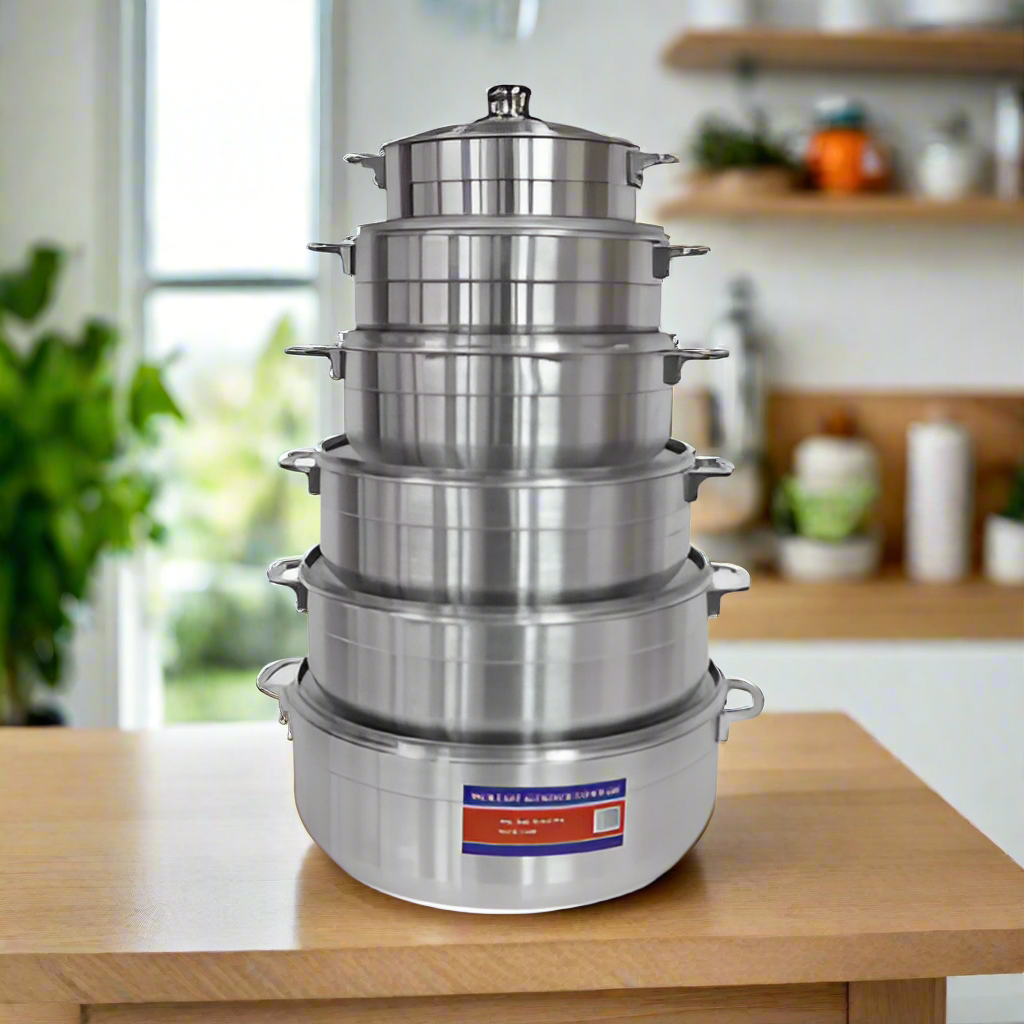
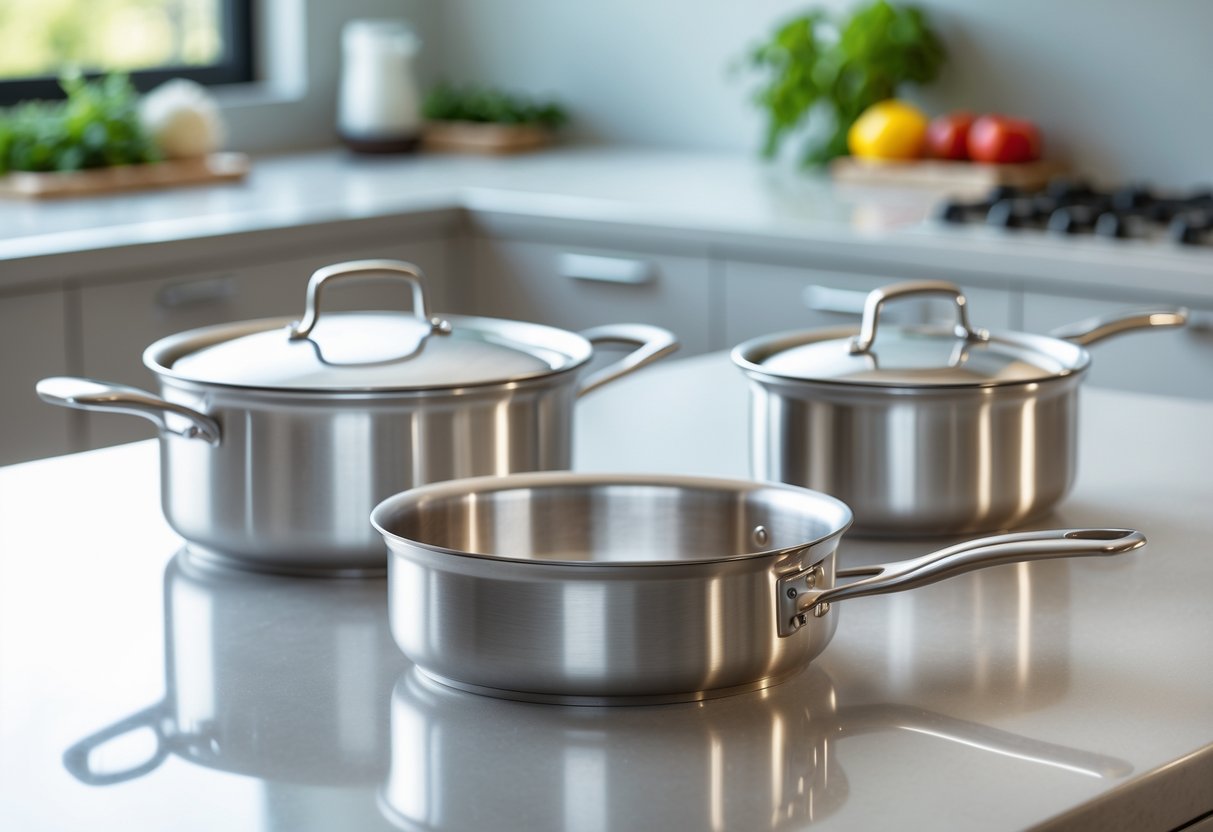
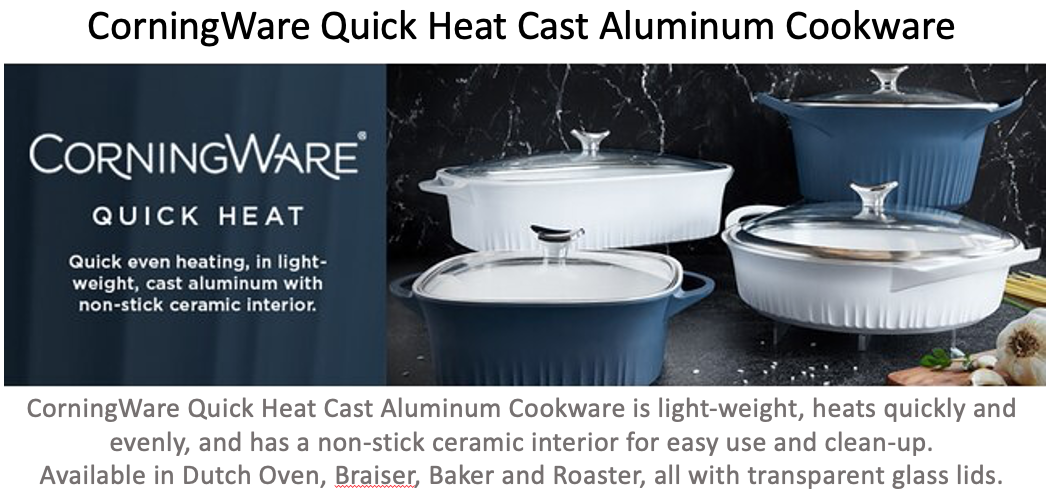
Cast aluminum cookware is made by pouring molten aluminum into a mold to form pots, pans, and other cooking vessels. It heats quickly, weighs less than cast iron, and often comes with a nonstick coating.
In American kitchens, cookware needs to handle everything from weekday eggs and pancakes to Sunday sauces and holiday meals. Cast aluminum cookware offers a useful mix of low weight, quick heating, and easy handling. You may see it in frying pans, Dutch oven-style pots, griddles, saucepans, and complete cookware sets.
The key is to understand what the material does and what the finished pan adds to it. Cast aluminum describes how the metal takes shape, not whether the cooking surface is nonstick, ceramic-coated, or bare. Those details affect cooking results, cleaning, care, and the way you should use the pan.
Cast aluminum can be a practical option for home cooks who want responsive heat without the weight of cast iron. Still, it is not automatically the best choice for every stove or cooking task. The quality of the casting, surface finish, handle design, and stated care limits all matter.
Cast aluminum cookware is cookware made from aluminum that has been melted and poured into a mold. Once the metal cools and hardens, the manufacturer removes the shaped piece, finishes its surfaces, and adds parts such as handles, lids, or a cooking-surface coating.
This process differs from making cookware by stamping a flat sheet of metal into shape. Casting allows manufacturers to form deeper bodies, rounded edges, textured surfaces, and other shapes that may be harder to achieve with simple sheet forming.
The finished product can be a skillet, saucepan, stockpot, grill pan, or casserole-style dish. Its exact weight, strength, heat response, and durability depend on the design, alloy, casting quality, thickness, and surface treatment.
The word cast does not mean that a pan is made from cast iron. Cast aluminum uses aluminum as its main body metal, while cast iron cookware uses an iron-based material with very different weight and heat behavior.
Source: i5.walmartimages.com
Cast
The metal is shaped in a mold while molten, then allowed to cool and solidify.
Aluminum
The main body metal is aluminum or an aluminum-based alloy chosen for manufacturing and performance needs.
Cookware
The completed vessel is designed for preparing food on a compatible heat source.
How Is Cast Aluminum Cookware Made?
Manufacturers first melt the selected aluminum alloy. They then pour or inject the molten metal into a prepared mold, depending on the casting method. The metal takes the shape of the mold as it cools and solidifies.
After removal, the casting may need trimming, machining, polishing, inspection, and other finishing work. Manufacturers can then apply a protective or nonstick surface and attach handles or other components.
The method and quality controls influence the final pan. A well-made casting with an even base and smooth cooking surface can perform very differently from a poorly finished piece with rough edges or an uneven bottom.
Mold design
Determines the shape, dimensions, and many of the pan’s physical features.
Metal thickness
Affects weight, stiffness, heat distribution, and how the pan responds to temperature changes.
Surface finishing
Determines whether the cooking surface is bare, anodized, coated, or treated in another way.
Is Cast Aluminum the Same as Die-Cast Aluminum?
Die casting is one type of casting process. It commonly forces molten metal into a metal mold under pressure, allowing manufacturers to produce detailed shapes at scale. Other casting methods use different mold designs and ways to introduce the molten metal.
A cookware listing may use the terms cast aluminum and die-cast aluminum to describe related manufacturing approaches. The label alone does not establish how durable or safe the finished pan is. Look for clear material information, coating details, construction quality, and care instructions.
Cast aluminum
A broad description of aluminum cookware shaped through a casting process.
Die-cast aluminum
Aluminum formed in a die, commonly under pressure, to create a defined shape.
What Makes Cast Aluminum Cookware Different?
Cast aluminum cookware combines a relatively light metal body with a shape created in a mold. Aluminum conducts heat well, so the pan can warm up quickly and respond to changes in the heat setting. That can be useful when frying eggs, cooking vegetables, or making a quick pan sauce.
The cooking experience also depends on the pan’s thickness and base design. A thin or poorly designed pan may develop hot spots, while a more substantial body can provide steadier results. The word cast alone does not tell you which design you are buying.
Many products also use a nonstick finish. This can make delicate foods easier to release and simplify cleanup, but the coating may wear over time. A cast aluminum pan with a bare or anodized surface has different care needs from one with a traditional nonstick coating.
Source: bigbazaar.co.nz
Quick heating
Aluminum transfers heat readily, which helps the pan warm up without a long wait.
Manageable weight
Cast aluminum is usually easier to lift than a similar-sized cast iron pan.
Flexible shapes
Casting can create a range of pan bodies, contours, and integrated design features.
Different surface options
The finished cooking surface may be bare, anodized, or covered with a nonstick layer.
Does Cast Aluminum Heat Evenly?
Aluminum is a good heat conductor, but even heating is not guaranteed by the material name. The pan’s thickness, base shape, burner size, and contact with the cooking surface all affect how heat spreads.
A broad, flat base that matches the burner can help reduce uneven cooking. On a gas stove, flames should stay beneath the pan rather than climbing around its sides. On an electric cooktop, the base should sit flat and make suitable contact with the heating element.
For foods that scorch easily, start at a moderate setting and give the pan time to warm. If one area browns much faster than another, lower the heat and move the food as needed.
Check the base
Look for a flat, stable bottom without visible warping.
Match the burner
Use a burner suited to the pan’s base diameter.
Adjust the heat
Use moderate heat first, then increase it only when the recipe and cookware instructions allow.
Does Cast Aluminum Hold Heat Well?
Cast aluminum can retain useful heat, especially when the pan has a substantial body, but it generally does not store heat like heavy cast iron. Its ability to heat up quickly is helpful when you need responsive temperature control, though food may cool the pan more noticeably when you add a large amount at once.
For a good sear, preheat the pan as directed and avoid crowding it with cold food. If you want a pan that stores a great deal of heat for thick steaks or long oven cooking, compare the full construction and intended use rather than assuming every cast aluminum pan will behave like cast iron.
For everyday meals
Fast heating and easy handling can make cast aluminum convenient.
For strong searing
A thick base, good preheating, and adequate cooking space matter.
What Are the Benefits of Cast Aluminum Cookware?
The main benefits of cast aluminum cookware are its low weight compared with cast iron, quick heat response, flexible design, and the availability of easy-release cooking surfaces. These features can make it practical for daily meals in busy American households.
A lighter pan can be easier to move from the stove to the counter, especially when it contains soup, vegetables, or sauce. The reduced weight can also help people who find heavy cookware hard to handle, although the size and filled weight still matter.
Cast aluminum cookware comes in many shapes and price ranges. A single skillet may suit a small kitchen, while a set can provide several pan sizes for eggs, side dishes, pasta sauce, and family meals. Value depends on whether the pieces meet your needs and whether replacement lids or parts are available.
Source: diecastingschina.com
Easy to handle
The lower body weight can make lifting, pouring, and storage simpler than with many cast iron pans.
Responsive temperature control
The pan usually reacts readily when you raise or lower the burner setting.
Many cooking shapes
Manufacturers can offer skillets, griddles, saucepans, and covered pots in cast designs.
Convenient cleanup
A suitable nonstick finish may help food release with less scrubbing.
Useful for daily cooking
The combination of moderate weight and fast heating can suit routine stovetop meals.
Who May Benefit Most?
Cast aluminum may suit renters, students, small households, and home cooks who want pans that are easy to move and store. It can also work well for families that cook several quick meals each day and prefer a nonstick surface for eggs or pancakes.
The best fit depends on cooking habits. Someone who often uses very high heat, transfers pans from a burner into a hot oven, or wants a surface that can tolerate metal utensils may need a different construction or a model with clearly stated limits.
Everyday cooks
Useful for eggs, vegetables, reheating, and other common stovetop tasks.
People avoiding heavy pans
A lighter body may be easier to manage, though a full pot can still be heavy.
Small kitchens
Compact sets and lighter pieces can simplify storage and handling.
What Are the Disadvantages of Cast Aluminum Cookware?
Cast aluminum cookware has limits. Bare aluminum can react with acidic or salty foods, some pans have coatings that can wear, and not every design suits induction cooktops or high-temperature oven use.
The pan’s strength and lifespan also depend on the alloy, casting quality, thickness, and handle construction. A low-quality casting may be prone to damage or uneven heating, so a low price does not always represent good value.
The coating is often the part that needs the most careful treatment. Scratching, overheating, harsh cleaning, or repeated abrasion can shorten its useful life. If the cooking surface becomes badly damaged, follow the manufacturer’s guidance on whether to stop using or replace the pan.
Source: kitchenbap.com
Possible food reactions
Bare aluminum may react with tomato sauce, vinegar, citrus, or salty dishes and can affect taste or appearance.
Coating wear
A coated surface may lose its easy-release performance if scratched, overheated, or worn.
Induction limits
Aluminum is not magnetic by itself, so a plain aluminum base usually will not work directly on an induction cooktop.
Variable construction
Not all cast pans have the same thickness, finish, durability, or heat distribution.
Temperature limits
Handles, lids, and coatings may restrict oven use even when the metal body can withstand the heat.
Can Cast Aluminum Warp or Crack?
Cookware can be damaged by poor construction, impact, or severe temperature changes. The exact risk depends on the alloy and the pan’s design, so it is not accurate to say that all cast aluminum cookware is fragile or that every pan is indestructible.
Avoid placing a very hot pan under cold water unless the manufacturer specifically permits that practice. Sudden temperature changes can stress cookware, damage some finishes, or affect the shape of the base. Let the pan cool gradually before washing it.
Check the base from time to time. If the pan rocks on a flat surface, has a loose handle, or shows a crack, stop using it until the manufacturer advises whether it can be repaired or should be replaced.
Prevent thermal shock
Allow the cookware to cool before washing or exposing it to a sudden temperature change.
Inspect the handles
Tighten or service them only as directed by the manufacturer.
Replace damaged cookware
Do not use a cracked pan or one with an unstable base.
Is Cast Aluminum Cookware Safe to Use?
Cast aluminum cookware can be suitable for food preparation when it is made for that purpose, is in good condition, and is used according to its instructions. Safety depends on the material, surface treatment, quality of manufacture, and cooking conditions rather than the word cast alone.
Aluminum is present in food and the environment, and small amounts can transfer from some cookware into food. Transfer is generally a greater concern with bare aluminum exposed to acidic or salty foods, especially during long cooking or storage. A sound coating or suitable surface treatment can reduce direct contact between food and the underlying metal.
For normal household use, choose cookware from a reputable seller that clearly identifies its intended use and provides care instructions. Do not assume that a pan is safe because it is labeled premium, natural, nonstick, or cast. Those words do not replace information about its materials and finish.
Source: koala.sh
Use cookware made for food
Avoid metal containers or cast parts that were not designed or finished for cooking.
Follow the heat limits
Overheating can damage a coating and may create hazards depending on the surface material.
Avoid long storage in bare aluminum
Move acidic or salty leftovers to a suitable food-storage container.
Check surface condition
Follow the maker’s advice if the cooking surface is peeling, deeply scratched, or otherwise damaged.
Does Aluminum Leach Into Food?
Some aluminum can move from bare cookware into food. The amount varies with factors such as acidity, salt content, cooking time, temperature, and the condition of the surface. This does not mean that every use of aluminum cookware creates a dangerous exposure.
Tomato-based dishes, vinegar sauces, lemon-heavy recipes, and salty foods deserve extra care when cooked in bare aluminum. If you often prepare these foods, consider a well-maintained coated pan, anodized aluminum cookware, stainless steel, or another material suited to the recipe.
Do not store acidic leftovers in bare aluminum cookware for long periods. Transfer the food to a container intended for food storage once it has cooled enough to handle safely.
Short cooking tasks
Ordinary use with suitable foods and proper cookware care is different from prolonged contact with acidic mixtures.
Acidic recipes
Use a surface specifically suited to acidic foods when possible.
Leftover storage
Use glass, suitable plastic, or another food-safe storage container instead of bare aluminum.
Is Nonstick-Coated Cast Aluminum Safe?
A nonstick coating changes the surface that touches food, but the words nonstick and cast aluminum do not identify the coating’s chemistry. Check the product information to determine whether the finish is a fluoropolymer coating, a ceramic-style coating, or another material.
Use coated cookware within the maker’s temperature limits. Avoid heating an empty coated pan for an extended period, and do not use it for high-heat cooking unless the instructions expressly allow that use. Some nonstick coatings can release hazardous fumes if severely overheated, so keep the kitchen ventilated and use an appropriate heat setting.
If a coating is peeling, flaking, or badly damaged, consult the manufacturer’s care and replacement guidance. Do not assume that every coating has identical risks or that a ceramic-style label means the entire pan is ceramic.
Identify the finish
Read the product description or care guide for the exact coating type.
Control the temperature
Use low to medium heat for most routine nonstick tasks unless the instructions specify otherwise.
Use suitable utensils
Wood, silicone, or other approved utensils can reduce surface damage.
Is Anodized Aluminum Different?
Anodizing is an electrochemical process that changes the aluminum surface into a thicker oxide layer. Hard-anodized cookware is designed to provide a harder, more wear-resistant surface than untreated aluminum, although the exact properties depend on the product.
Hard-anodized aluminum is not the same as cast aluminum. A pan may be cast and then anodized, or it may be made through another shaping method. Likewise, a hard-anodized pan may also have a separate nonstick coating.
If surface durability is important, read the full material description rather than choosing from a single label. Check whether the cooking surface itself is anodized, whether it has an added coating, and what cleaning methods the manufacturer permits.
Anodized surface
A treated aluminum surface with a modified oxide layer.
Nonstick layer
An additional surface that helps food release and has its own care requirements.
Cast body
A description of the method used to shape the cookware, not a coating type.
Cast Aluminum vs. Cast Iron, Stainless Steel, and Other Cookware
Cast aluminum is not automatically better or worse than other cookware materials. The best choice depends on how much weight you can handle, how you cook, which surface you prefer, and whether your stove requires magnetic cookware.
Cast iron is heavy and can retain substantial heat, which helps with some searing and oven recipes. Stainless steel is valued for its durability and lack of a nonstick coating, while traditional nonstick cookware can make delicate foods easier to release. Each material has trade-offs.
The table below compares common cookware options in practical terms. These are general material tendencies, not guarantees for every product, because thickness, design, coatings, and manufacturing quality can change performance.
Source: diecastingschina.com
Choose cast aluminum
When low weight, quick heat response, and an available easy-release surface match your routine.
Choose cast iron
When substantial heat retention and tolerance for a heavy pan are priorities.
Choose stainless steel
When you want an uncoated surface and a durable pan that can suit browning and pan sauces.
Choose another nonstick pan
When easy food release matters most and you can follow its temperature and care limits.
Cast Aluminum vs. Cast Iron
The most obvious difference is weight. Cast aluminum cookware is usually much lighter than cast iron of a similar size, which can make it easier to move and clean. Cast iron tends to retain heat well because of its mass, but it takes time to warm and can be slow to respond to a change in burner setting.
Cast iron may suit high-heat searing, baking, and recipes that benefit from stored heat. Cast aluminum may suit quick meals, frequent temperature changes, and cooks who prefer a lighter pan. The surface finish matters too: seasoned cast iron and nonstick-coated cast aluminum need different care.
Weight
Cast aluminum is generally lighter; cast iron is generally much heavier.
Heat response
Aluminum usually responds faster to burner changes; cast iron usually stores heat longer.
Care
Bare or coated aluminum and seasoned cast iron have different cleaning and seasoning needs.
Cast Aluminum vs. Stainless Steel
Stainless steel is a durable option for cooks who want an uncoated cooking surface. Food may stick if the pan is not preheated or used properly, but a suitable technique can help with browning and pan sauces. Some stainless steel cookware has an aluminum or copper layer inside its base or walls to improve heat distribution.
Cast aluminum can heat quickly and may be easier to handle, especially when a nonstick coating is present. Stainless steel often tolerates metal utensils better when the cooking surface is uncoated, though the exact design and care instructions still apply.
If you want one pan for eggs and another for browning meat, there is no need to force both tasks into a single material. Many kitchens benefit from using different pans for different jobs.
Cast aluminum
Often lighter and responsive, with performance shaped by its body and finish.
Stainless steel
Often suited to browning and uncoated cooking, with technique affecting food release.
Cast Aluminum vs. Forged or Stamped Aluminum
Cast, forged, and stamped describe different ways of forming cookware. Cast cookware is shaped from molten metal in a mold. Forged cookware is shaped by pressing or hammering metal, while stamped cookware is formed from a sheet.
None of these labels alone proves that a pan will last longer or cook more evenly. A thick stamped pan may perform better than a poorly made cast pan, while a well-designed casting may provide useful rigidity and a shape that suits the intended task.
Compare the base, sidewall thickness, handle attachment, surface finish, weight, and warranty. These concrete features tell you more about the product than the manufacturing term by itself.
Casting
Useful for making shaped bodies and detailed contours.
Forging
Uses force to shape metal and can create dense, sturdy cookware designs.
Stamping
Forms cookware from sheet metal and can produce lightweight, simple shapes.
Can You Use Cast Aluminum Cookware on Induction?
Plain aluminum cookware usually does not work directly on an induction cooktop because aluminum is not magnetic. Induction cooking needs a suitable magnetic material in the cookware base so the cooktop can heat the pan.
Some cast aluminum pans have a bonded or embedded magnetic stainless steel base. These models may work on induction if the manufacturer confirms compatibility and the pan meets the cooktop’s size and contact requirements.
Before buying, look for the induction symbol or explicit induction compatibility in the product specifications. You can also place a magnet against the outside of the base as a basic screening check, but the manufacturer’s instructions remain the better source for compatibility.
Source: shutterstock.com
Gas stove
Cast aluminum generally works if the cookware is designed for stovetop use and the base is stable.
Electric coil or radiant glass cooktop
Check that the base is flat and the product is approved for that cooktop type.
Induction cooktop
Choose a model with a compatible magnetic base and clear induction approval.
Oven
Check the limits for the body, handles, lid, knobs, and coating before placing the pan in an oven.
What About Glass-Top Stoves?
Many cast aluminum pans can be used on a glass-top electric stove if the manufacturer permits it and the base is smooth and flat. Avoid dragging cookware across the surface, as rough edges or trapped debris can scratch the glass.
Lift the pan when moving it. Do not use a warped or unstable pan, and avoid striking the glass with a heavy lid or utensil. These steps help protect the cooktop as well as the cookware.
Inspect the bottom
Look for rough casting marks, attached debris, and uneven areas.
Lift rather than slide
Move the pan carefully to reduce the risk of scratching the cooktop.
How to Clean and Care for Cast Aluminum Cookware
Good care helps cast aluminum cookware keep working well. The exact routine depends on whether the pan has a bare, anodized, or nonstick surface, so check the instructions before using a dishwasher, abrasive cleaner, or metal utensil.
For most coated pans, handwashing with warm water, mild dish soap, and a soft sponge is a practical starting point. Let the pan cool before washing it, since a sudden temperature change can stress some cookware and finishes.
Do not assume that a dishwasher-safe label applies to every cast aluminum pan. Detergents, high temperatures, and contact with other items may damage certain finishes or exposed metal. Use the cleaning method the manufacturer recommends.
Source: images.squarespace-cdn.com
Wash gently
Use warm water, mild soap, and a soft sponge when permitted by the product instructions.
Avoid harsh scrubbing
Steel wool and abrasive powders may damage a nonstick or anodized surface.
Dry fully
Dry the cookware after washing to prevent water spots and moisture buildup.
Store with care
Use pan protectors between stacked pieces to reduce scratches and coating wear.
How to Remove Stuck-On Food
If food sticks, let the pan cool and soak it in warm, soapy water if the manufacturer permits soaking. Use a soft sponge or an approved nylon utensil to loosen residue instead of scraping the surface with a knife.
For a coated pan, do not use oven cleaner or a harsh abrasive unless the product instructions specifically approve it. These cleaners can damage the surface even when they remove the food.
If residue remains, repeat the gentle cleaning process. If the coating itself is lifting or flaking, cleaning will not repair it; consult the maker’s replacement guidance.
Cool the pan
Avoid sudden temperature changes and protect your hands from hot cookware.
Soften the residue
Use warm water and mild soap where suitable for the pan’s finish.
Use a soft tool
Avoid metal scraping tools on surfaces that can scratch.
How to Protect a Nonstick Surface
Use wood, silicone, or other utensils approved for the coating. Metal utensils may scratch some surfaces, although utensil compatibility varies by product.
Avoid using high heat to burn away food residue. For many nonstick tasks, low to medium heat is enough, and extended empty-pan heating can damage some coatings.
Stack pans carefully and use a soft protector between them. Even when the coating is designed to resist routine use, repeated abrasion can shorten its life.
Choose approved utensils
Check the cookware instructions for suitable materials.
Use controlled heat
Follow the stated temperature limit and avoid prolonged empty heating.
Prevent contact damage
Separate stacked pans with a clean, soft protector.
How to Choose Cast Aluminum Cookware
Choose cast aluminum cookware by matching its construction and care requirements to your actual cooking routine. A large set may look like a bargain, but a few well-chosen pans can be more useful if they cover the meals you cook most often.
Start with the cooktop. If you use induction, confirm that the exact model has a compatible magnetic base. Next, check the cooking surface, oven limits, handle design, lid materials, and cleaning instructions.
Consider the total cost over time. A pan with a clear warranty, available replacement lid, and detailed care guide may offer more practical value than a cheaper set with unclear specifications. Do not treat a high price or a long product description as proof of quality.
Source: cdn.shopify.com
Confirm stove compatibility
Check the exact cooktop types listed by the manufacturer.
Read the coating details
Identify the surface material and its temperature, utensil, and cleaning limits.
Inspect the handles
Look for a secure fit, a comfortable grip, and clear oven-use instructions.
Check size and weight
Choose dimensions that match your burners, storage space, and typical portions.
Review support
Look for clear warranty terms, care information, and access to replacement parts where needed.
Which Pieces Do You Actually Need?
A skillet is useful for eggs, vegetables, and quick sautés. A saucepan suits grains, sauces, and smaller portions, while a deeper covered pot can handle soup, pasta, or braised dishes if its capacity and construction suit those tasks.
For a small household, two or three useful pieces may be easier to store than a large set. For a family, a mix of sizes can help when several dishes cook at once. Choose pieces based on the meals you make, not simply the number included in a box.
Skillet
Useful for eggs, pancakes, vegetables, and many quick stovetop meals.
Saucepan
Useful for sauces, oatmeal, rice, and small portions of soup.
Large pot
Useful for pasta, soups, and larger batches when the design allows.
Lid
Helps retain moisture and heat; check its material and temperature limits.
What Claims Should You Check Carefully?
Words such as premium, healthy, toxin-free, and professional are not enough to assess cookware. Look for the actual body material, coating description, intended cooking methods, and care limits.
If a seller claims that a pan is safe for every stove, every utensil, and every oven temperature, seek the specific instructions that support those claims. Compatibility and heat limits often differ across parts of the same product, especially when the lid and handle use different materials.
If a claim is unclear, ask the manufacturer for the exact product specifications before buying. Clear information is more useful than broad marketing language.
Material
Confirm whether the body is cast aluminum and whether other metals form part of the base.
Surface
Find out whether it is bare, anodized, ceramic-style coated, or another nonstick finish.
Temperature
Check the limits for stovetop, oven, broiler, and dishwasher use separately.
Common Mistakes to Avoid
Many cookware problems come from using a pan outside its intended limits. The same mistake can affect different materials in different ways, so the product’s care instructions should guide your routine.
Do not assume that cast aluminum means the pan can tolerate every utensil, every temperature, or every cleaning method. Also, do not assume that an attractive coating or a heavy body guarantees good performance.
A simple habit of checking the surface, using suitable heat, and washing the pan gently can prevent avoidable wear. If you notice structural damage or a loose handle, stop using the pan until you have clear guidance.
Source: bigbazaar.co.nz
Heating an empty coated pan for too long
Some coatings can be damaged by excessive heat. Add food or cooking fat as directed and avoid prolonged empty heating.
Using metal utensils without checking
Metal can scratch some nonstick surfaces. Use utensils approved for the exact coating.
Cooking acidic food in bare aluminum for long periods
Use a suitable alternative surface for long tomato, vinegar, citrus, or salty recipes.
Putting every pan in the dishwasher
Dishwasher detergent and heat may damage some surfaces or exposed metal.
Assuming all cast aluminum works on induction
Check for a compatible magnetic base before using the pan on an induction stove.
Ignoring damage
Stop using cookware with cracks, unstable bases, loose handles, or a badly damaged cooking surface.
A Quick Check Before Cooking
Before each use, make sure the pan sits securely on the burner and that the handle is firmly attached. Check the cooking surface for peeling or damage, especially if the pan has a nonstick coating.
Choose a heat setting suitable for the food and the cookware. If you are unsure about oven use, induction compatibility, or a cleaning method, consult the model’s instructions rather than guessing.
Stable base
The pan should sit securely without rocking.
Sound handle
The handle should be secure and safe to grip.
Intact surface
The cooking surface should not have serious peeling, cracks, or other damage.
A Practical Decision Guide for Everyday Cooks
The simplest way to decide whether cast aluminum cookware fits your kitchen is to begin with your main cooking task. Think about the foods you prepare, your stove type, how much weight you can comfortably lift, and how much maintenance you are willing to do.
For eggs, pancakes, and quick vegetables, a well-made cast aluminum pan with a suitable nonstick surface can be convenient. For acidic sauces, choose a surface designed for that use. For induction cooking, verify compatibility before you buy.
No material is best at everything. A useful kitchen can combine cast aluminum for quick meals, stainless steel for browning, and cast iron for tasks that benefit from stored heat. This approach lets each pan do the job it handles well.
Source: diecastingschina.com
You want a light pan for daily meals
Cast aluminum may fit, provided its size, handle, and surface suit your needs.
You cook many acidic dishes
Prefer a cooking surface intended for acidic foods instead of relying on bare aluminum.
You own an induction stove
Buy only a model with confirmed induction compatibility.
You need high-heat or oven cooking
Check the exact temperature limits and the materials used in the handles and lid.
You want the least coating maintenance
Consider uncoated stainless steel or another suitable material, while accounting for its different cooking technique.
Example: Choosing a Pan for a Weeknight Dinner
Imagine you often cook chicken and vegetables after work, then use the same pan to warm a sauce. A cast aluminum skillet may be a practical choice because it is relatively light and heats quickly. A suitable coated surface may also make cleanup easier.
If the meal includes a long tomato sauce, check whether the pan’s surface is appropriate for acidic ingredients. If you plan to finish the chicken in the oven, confirm that the body, handle, and any lid can tolerate the required temperature.
This example shows why the label alone is not enough. The right pan is the one whose surface, shape, heat limits, and care requirements fit the meal.
For quick cooking
Choose a pan with a stable base and a suitable surface.
For acidic sauces
Confirm that the cooking surface is intended for those ingredients.
For oven finishing
Verify the temperature rating of every part that enters the oven.
Reader Question Gap Map
Several follow-up questions naturally arise after a reader learns what cast aluminum cookware is. These questions focus on material safety, stove compatibility, care, and the trade-offs between common cookware types.
This guide was prepared as a practical explanation, not as a documented live search-results audit. The questions below are inferred next needs based on the decisions readers must make; they are not verified search-volume findings, and no claim is made that competing pages omit them.
Source: kitchenbap.com
Is cast aluminum safe for food?
Reader stage: before buying or while cooking. Basis: inferred next need. Competitor coverage: not checked. Benefit: explains the role of surface condition, acidic food, and correct use. Evidence basis: general material behavior and product care principles. Priority: high. Placement: safety section.
Will cast aluminum work on induction?
Reader stage: choosing cookware for a stove. Basis: inferred next need. Competitor coverage: not checked. Benefit: prevents buying an incompatible pan. Evidence basis: induction requires a suitable magnetic cookware base. Priority: high. Placement: cooktop compatibility section.
How is cast aluminum different from cast iron?
Reader stage: comparing materials. Basis: inferred next need. Competitor coverage: not checked. Benefit: clarifies the differences in weight and heat response. Evidence basis: material properties and construction. Priority: high. Placement: comparison section.
How should a nonstick cast aluminum pan be cleaned?
Reader stage: after cooking. Basis: inferred next need. Competitor coverage: not checked. Benefit: helps reduce avoidable coating wear. Evidence basis: general care principles, subject to manufacturer instructions. Priority: medium. Placement: care section.
When should damaged cookware be replaced?
Reader stage: ongoing use. Basis: inferred next need. Competitor coverage: not checked. Benefit: helps readers recognize damage that requires attention. Evidence basis: visible structural and surface defects plus manufacturer guidance. Priority: medium. Placement: safety and troubleshooting sections.
Frequently Asked Questions
Q
What is cast aluminum cookware made of?
Cast aluminum cookware is made mainly from aluminum or an aluminum-based alloy shaped in a mold. Manufacturers may add a surface treatment, a nonstick coating, a separate magnetic base, or other components. Check the product specifications for the exact materials used in a particular pan.
Q
Is cast aluminum cookware better than stainless steel?
Neither material is best for every cook. Cast aluminum is often lighter and responds quickly to heat, while stainless steel provides a durable uncoated surface that can work well for browning and pan sauces. The right choice depends on your recipes, cooking technique, surface preference, and stove.
Q
Can I cook tomato sauce in cast aluminum cookware?
A pan with a suitable, intact coating or surface treatment may be appropriate, depending on its instructions. Bare aluminum can react with acidic foods such as tomato sauce, which may change the food’s taste or appearance and increase metal transfer. For long tomato-based cooking, choose cookware specifically suited to acidic foods.
Q
Does cast aluminum cookware rust?
Aluminum does not form the familiar red iron rust associated with ordinary steel. It naturally develops a thin oxide layer, but the cookware can still corrode or suffer surface damage under certain conditions. Follow the care instructions and avoid leaving unsuitable foods or harsh cleaners in contact with the pan for long periods.
Q
Can cast aluminum cookware go in the oven?
Some cast aluminum cookware is oven-safe, but not all models are. The body may tolerate heat that exceeds the limit of a plastic handle, lid knob, glass lid, or nonstick coating. Check the manufacturer’s stated temperature limit for the complete pan before placing it in the oven.
Q
Is cast aluminum cookware dishwasher-safe?
It depends on the model and its surface finish. Dishwasher detergent, high temperatures, and contact with other items may damage some coatings or exposed aluminum. Unless the manufacturer clearly confirms dishwasher safety, handwashing with mild soap and a soft sponge is a sensible choice.
Q
How long does cast aluminum cookware last?
There is no single lifespan for all cast aluminum cookware. Build quality, frequency of use, heat levels, cleaning habits, and surface type all affect how long a pan remains useful. A pan with an intact body and handle may last longer than its nonstick coating, so inspect both the structure and the cooking surface.
Q
Is cast aluminum cookware suitable for beginners?
Yes, it can be a practical option for beginners who want relatively light cookware that heats quickly. A nonstick model can also make eggs and other delicate foods easier to manage. Beginners should still learn the pan’s heat limits, use suitable utensils, and check whether it works with their stove.
✦ Wrapping Up
Conclusion
Cast aluminum cookware is made by shaping molten aluminum in a mold to create pots, pans, and other cooking vessels. Its main advantages are relatively low weight, quick heat response, and the range of shapes and cooking surfaces available. These traits can make it useful for daily meals, especially when easy handling matters.
The best choice still depends on the details. Check the cooking surface, base construction, stove compatibility, oven limits, handle design, and cleaning instructions before buying. Bare aluminum, anodized aluminum, and nonstick-coated cookware do not have identical properties or care needs.
Cast aluminum is worth considering if you want a responsive, easy-to-handle pan and can follow its care requirements. If your priorities are long heat retention, an uncoated cooking surface, or induction compatibility, compare other materials and specific product designs before making a decision.
💡 Key Takeaway
Before buying cast aluminum cookware, confirm the exact surface material, compatibility with your stove, maximum oven temperature, and cleaning instructions. Choose the pan that fits your cooking habits rather than relying on the material label alone.