
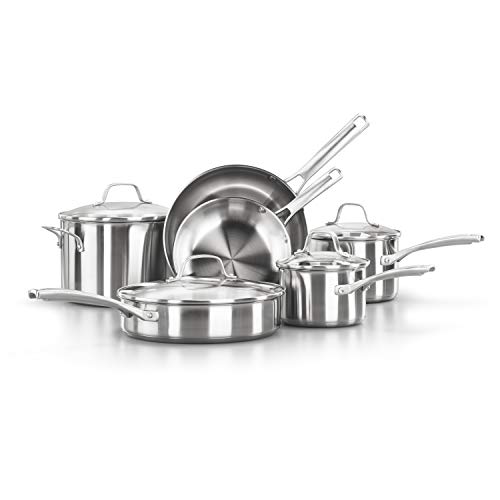
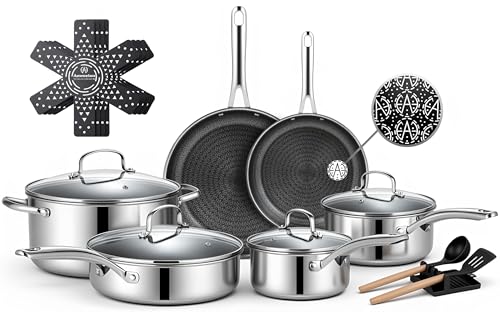
Is Stainless Steel Cookware Good?
Yes, stainless steel cookware is a strong choice for cooks who want one pan that can handle years of regular use. In my kitchen, stainless steel has been the pan I reach for when I want a deep brown crust on chicken or steak. It also works well for vegetables, pasta sauces, and pan sauces. It takes a little practice, though. If the pan is too cold or the food is too wet, sticking can turn dinner into a scraping job.
I also like how stainless steel feels during busy family meals. I can use metal utensils with care, raise the heat when needed, and move from stovetop cooking to many oven tasks without worrying about a delicate coating. The stainless steel vs nonstick cookware debate changes when durability matters most. Stainless steel does not have a coating that can wear away, so proper care can give it a very long working life.
What Makes It Stand Out / Key Features
- Durable surfaceStainless steel has no nonstick coating to wear away, so it can serve for many years with normal care.
- High heat useStainless steel is well suited to browning and searing when the cookware is used within the maker’s temperature limits.
- Strong browningIts surface helps create the browned bits that add flavor to meats and vegetables.
- Metal utensil friendlyUnlike coated nonstick surfaces, bare stainless steel generally tolerates metal utensils without scratching a coating.
- Oven versatilityMany stainless steel pans can move from stovetop to oven, but handle and lid temperature limits should be checked first.
- Easy to sanitizeThe smooth cooking surface is easy to wash and does not depend on a coating for food release.
My Recommendation
Consider stainless steel if you want a durable everyday workhorse and enjoy searing, browning, sauces, and higher-heat cooking. It is also a good fit for cooks who want cookware that can stay useful for many years.
| Best For | Why |
|---|---|
| Home cooks | It handles many everyday cooking jobs and can last for years. |
| Steak and chicken lovers | It is well suited to browning and building flavorful pan fond. |
| Long-term cookware buyers | There is no nonstick coating to gradually wear away. |
Is Nonstick Cookware Good?
Yes, nonstick cookware is excellent when easy food release and fast cleanup matter most. I use a nonstick pan for eggs, omelets, pancakes, and other foods that can cling to bare metal. It makes breakfast feel almost unfairly easy. A small amount of oil can be enough, and the pan usually wipes clean with little effort.
The trade-off becomes clear over time. Nonstick coatings need more careful handling than bare stainless steel. High heat can damage some coated cookware, and scratches can shorten its useful life. The stainless steel vs nonstick cookware choice is therefore not just about whether food sticks. It is also about how you cook, how you clean, and how long you expect the pan to last. Always follow the manufacturer’s care and temperature instructions.
What Makes It Stand Out / Key Features
- Easy food releaseA quality nonstick coating helps foods release with less oil and less scraping.
- Fast cleanupSmooth coated surfaces usually need less effort to wash after everyday cooking.
- Low oil cookingThe slippery surface can reduce the amount of cooking oil needed for many foods.
- Great for delicate foodsEggs, pancakes, fish, and similar foods are often easier to manage on a nonstick surface.
- Beginner friendlyFood release is more forgiving when the cook is still learning heat control.
- Coating needs careMany nonstick pans need lower or moderate heat and soft utensils to protect the coating.
My Recommendation
Consider nonstick if you cook many delicate foods or want quick cleanup after busy meals. It is especially useful for breakfast foods and for cooks who prefer a forgiving pan.
| Best For | Why |
|---|---|
| Egg lovers | Eggs and omelets can release with little effort. |
| Busy households | The smooth coating can make cleanup much faster. |
| New cooks | It gives more help with food release and reduces sticking. |
stainless steel vs nonstick cookware: Side-by-Side Test
The stainless steel vs nonstick cookware choice gets easier when you compare the tasks you do most. One behaves like a kitchen workhorse. The other behaves like a helpful shortcut.
I would not expect one pan to do every job perfectly. In a real U.S. kitchen, having both types can make sense. The key is knowing what each pan does well.
Cooking Functions: Which One Does More?
Stainless steel handles a broad range of cooking tasks, while nonstick shines at gentle cooking.
| Feature | Product 1 | Product 2 |
|---|---|---|
| Searing | Excellent | Good, but depends on coating and heat limits |
| Eggs | Good with technique | Excellent |
| Pan sauces | Excellent | Less ideal for browning and fond |
| Delicate foods | Good with skill | Excellent |
⭐ Stainless Steel – 9/10 | Nonstick – 8/10
Stainless steel has the broader cooking range, while nonstick has a clear edge for delicate foods.
Food Release: Which Sticks Less?
This is where nonstick earns its name and where stainless steel asks for more technique.
| Feature | Product 1 | Product 2 |
|---|---|---|
| Egg release | Needs heat and oil control | Usually very easy |
| Pancakes | Possible with technique | Very easy |
| Meat release | Excellent after proper browning | Good |
| Learning curve | Moderate | Low |
⭐ Stainless Steel – 7/10 | Nonstick – 10/10
Nonstick has the clear edge when easy food release is the main goal.
Durability: Which Lasts Longer?
Durability matters because cookware takes heat, washing, utensils, and daily wear.
| Feature | Product 1 | Product 2 |
|---|---|---|
| Coating wear | No nonstick coating | Coating can wear |
| Scratch resistance | Generally high | Depends on coating and care |
| Long-term use | Strong potential | Varies by coating and care |
| Utensil tolerance | Usually very good | Follow maker instructions |
⭐ Stainless Steel – 10/10 | Nonstick – 7/10
Stainless steel has the stronger long-term durability profile because it does not rely on a cooking coating.
Cleanup: Which Is Easier?
After dinner, nobody wants a second job at the sink. This is where nonstick feels like a small luxury.
| Feature | Product 1 | Product 2 |
|---|---|---|
| Everyday washing | Easy to moderate | Usually very easy |
| Burnt food | May need soaking | Often easier to wipe, if coating is intact |
| Scrubbing | Can tolerate more cleaning methods | Avoid harsh methods that damage coating |
| Daily convenience | Good | Excellent |
⭐ Stainless Steel – 8/10 | Nonstick – 10/10
Nonstick makes routine cleanup easier, especially after quick weekday meals.
High Heat: Which Handles It Better?
Heat can transform food, but cookware has limits. Always follow the manufacturer’s instructions.
| Feature | Product 1 | Product 2 |
|---|---|---|
| Searing | Very well suited | Use only within maker limits |
| Browning | Excellent | Good at moderate heat |
| Temperature flexibility | Generally broad | Depends on coating |
| Overheating risk | Still needs safe use | Can damage some coatings |
⭐ Stainless Steel – 10/10 | Nonstick – 7/10
Stainless steel is better suited to high-heat cooking, subject to the cookware maker’s limits.
Eggs and Delicate Foods: Which Wins?
If breakfast is your daily battlefield, a slick surface can save time and frustration.
| Feature | Product 1 | Product 2 |
|---|---|---|
| Fried eggs | Needs technique | Excellent |
| Omelets | Possible with practice | Excellent |
| Pancakes | Good with proper heat | Excellent |
| Fish | Good with technique | Very good |
⭐ Stainless Steel – 7/10 | Nonstick – 10/10
Nonstick is the easier tool for delicate foods that tend to tear or stick.
Care and Safety: What Needs More Attention?
Both types need sensible care, but the rules are different.
| Feature | Product 1 | Product 2 |
|---|---|---|
| Utensils | Usually flexible | Use utensils approved by maker |
| Heat care | Use normal cookware safety | Avoid heat beyond maker limits |
| Cleaning | Generally forgiving | Use coating-safe methods |
| Replacement | Often infrequent | May be needed when coating degrades |
⭐ Stainless Steel – 9/10 | Nonstick – 8/10
Stainless steel is generally more forgiving, while nonstick rewards careful use.
Value: Which Gives More Over Time?
Price is only part of value. I also look at how often a pan needs replacing and how many jobs it can handle.
| Feature | Product 1 | Product 2 |
|---|---|---|
| Upfront value | Varies by construction and brand | Often available at many price points |
| Useful lifespan | Potentially very long | Varies by coating and care |
| Versatility | High | High for low to moderate heat tasks |
| Replacement need | Usually lower | May be higher over time |
⭐ Stainless Steel – 9/10 | Nonstick – 8/10
Stainless steel can offer strong long-term value, while nonstick offers strong day-to-day convenience.
Final Verdict: Which Should You Buy?
The stainless steel vs nonstick cookware decision depends on your cooking style. Choose stainless steel if you want durability, strong searing, browning, sauces, and broad cooking use. Choose nonstick if you care most about easy food release, eggs, pancakes, delicate foods, and fast cleanup.
For many U.S. kitchens, owning both can be practical. I would use stainless steel as the main workhorse and keep a nonstick pan for breakfast and delicate foods. That pairing covers a lot of ground without forcing one pan to do every job.