
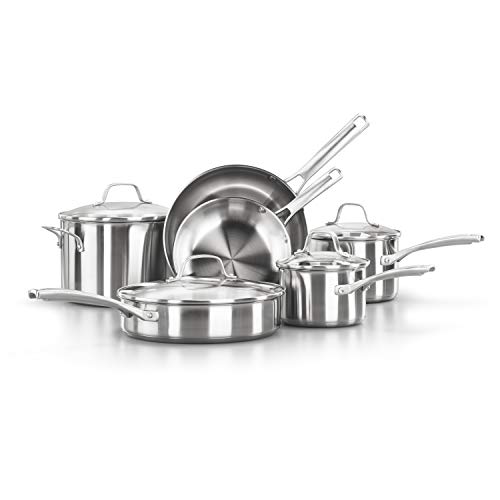

Is Calphalon Classic Stainless Steel Good?
Yes. The Calphalon Classic Stainless Steel 10-Piece Cookware Set is a strong choice for cooks who want a set that can stay in the kitchen for years. It uses stainless steel with an impact-bonded aluminum base. That base helps spread heat across the cooking surface. The set also works on induction, gas, electric, and glass cooktops. It is oven safe to 450°F and dishwasher safe.
In my stainless vs ceramic cookware tests, stainless steel felt more dependable when I wanted a hard sear or a deep brown crust. I also liked how I could use the same pan for browning meat and then build a sauce in it. The trade-off is simple: food can stick if the pan is too cold, too hot, or used without enough fat. Eggs need more care than they do in ceramic cookware.
What Makes It Stand Out / Key Features
- Stainless Steel BodyThe stainless steel cooking surface is tough and suited to daily cooking.
- Aluminum BaseThe impact-bonded aluminum base helps spread heat across the pan.
- Induction CompatibleThe set works with induction, gas, electric, and glass cooktops.
- Oven SafeThe cookware is rated for oven use up to 450°F.
- Dishwasher SafeThe set can go in the dishwasher, which makes cleanup easier.
- Useful Cooking ToolsThe set includes measuring marks, pour spouts, and straining covers on selected pieces.
- 10-Piece SetThe set includes two frying pans, saucepans, a sauté-style pan, and a stock pot with covers.
My Recommendation
Consider it if you cook often, sear meat, make pan sauces, or want cookware that can handle years of regular use.
| Best For | Why |
|---|---|
| Home cooks | Strong daily performance and a useful mix of pan sizes. |
| Searing fans | The stainless surface is well suited to browning meat and vegetables. |
| Induction users | The set supports induction and other common cooktops. |
Is CAROTE Ceramic Cookware Good?
Yes, with one important note: ceramic cookware is best when you value easy food release and simple cleanup more than maximum long-term toughness. The CAROTE 21-piece Ceramic Cookware Set is designed for everyday cooking. It offers a ceramic cooking surface, even heating, compatibility with common stovetops, and a large mix of pots, pans, lids, and accessories.
In my stainless vs ceramic cookware comparison, ceramic felt easier when I cooked eggs, pancakes, and other foods that can be stubborn in stainless steel. Cleanup also felt less like a chore. The catch is that ceramic nonstick surfaces need gentle care. High heat, rough tools, and poor storage can shorten the useful life of the coating. I would treat it as a convenient tool, not an indestructible one.
What Makes It Stand Out / Key Features
- Ceramic Cooking SurfaceThe ceramic surface is designed to give food an easier release than bare stainless steel.
- 21-Piece SetThe set offers a broad range of cookware and accessories for a busy home kitchen.
- Even HeatingThe cookware is designed to spread heat for more even everyday cooking.
- Stovetop CompatibilityThe set is designed to work across common stovetop types, including induction.
- Easy CleanupThe slick surface can make routine cleanup faster after eggs, vegetables, and other sticky foods.
- PFAS FreeThe product is marketed with a PFAS-free ceramic cooking surface.
- Silicone LidsThe set includes silicone lids that add storage and serving flexibility.
My Recommendation
Consider it if easy food release matters most, especially for eggs, pancakes, vegetables, and quick family meals.
| Best For | Why |
|---|---|
| Easy breakfasts | The ceramic surface helps with foods that often stick. |
| Busy families | Easy cleanup and many pieces can simplify daily cooking. |
| Low-oil cooking | The slick cooking surface can reduce the need for added fat. |
stainless vs ceramic cookware: Side-by-Side Test
The best stainless vs ceramic cookware choice depends on the job. Stainless steel acts like a work truck. It is built for heat, browning, and years of use. Ceramic is more like a clean commuter car. It makes many simple trips easy and pleasant.
I would not treat one material as a universal winner. Each has a clear role. The tables below show where the differences matter most in a normal US kitchen.
Durability: Which Lasts Longer?
Stainless steel has the edge when long-term toughness is the goal.
| Feature | Product 1 | Product 2 |
|---|---|---|
| Surface toughness | High | Moderate |
| Scratch resistance | Strong | Needs gentle care |
| Long-term use | Excellent | Depends on coating care |
| Metal utensil tolerance | Generally strong | Avoid harsh tools |
⭐ Product A – 9/10 | Product B – 7/10
Stainless steel has the edge for durability.
Food Release: Which Sticks Less?
Ceramic wins when you want eggs and other delicate foods to slide free with less effort.
| Feature | Product 1 | Product 2 |
|---|---|---|
| Eggs | Needs technique | Very easy |
| Pancakes | Good with proper heat | Easy |
| Sticky foods | Can stick | Usually releases more easily |
⭐ Product A – 7/10 | Product B – 9/10
Ceramic has the edge for easy food release.
Searing: Which Builds Better Crust?
For steak, chicken, and browned vegetables, stainless steel is the more natural fit.
| Feature | Product 1 | Product 2 |
|---|---|---|
| High-heat cooking | Excellent | Better at moderate heat |
| Browning | Excellent | Good |
| Pan sauces | Excellent | Good |
| Steak | Excellent | Good |
⭐ Product A – 9/10 | Product B – 7/10
Stainless steel has the edge for serious searing.
Cleanup: Which Saves Time?
Ceramic can make the end of dinner feel shorter because many foods lift away with less effort.
| Feature | Product 1 | Product 2 |
|---|---|---|
| Egg cleanup | May need soaking | Usually easy |
| Stuck food | Needs more scrubbing | Usually easier to remove |
| Dishwasher use | Yes | Follow product care guidance |
⭐ Product A – 8/10 | Product B – 9/10
Ceramic has a small edge for easy cleanup.
Heat Control: Which Feels More Versatile?
Both can handle daily cooking, but stainless steel gives me more confidence when I move from gentle heat to strong browning.
| Feature | Product 1 | Product 2 |
|---|---|---|
| Heat response | Strong control with aluminum base | Even everyday heating |
| High-heat searing | Excellent | Good |
| Low-heat foods | Good with technique | Very easy |
⭐ Product A – 9/10 | Product B – 8/10
Stainless steel has the edge for broader heat control.
Daily Convenience: Which Is Easier?
Ceramic feels easier for quick meals, while stainless steel rewards cooks who enjoy more control.
| Feature | Product 1 | Product 2 |
|---|---|---|
| Beginner friendly | Moderate | High |
| Quick meals | Very good | Excellent |
| Cooking technique needed | More | Less |
| Care demands | Low | Moderate |
⭐ Product A – 8/10 | Product B – 9/10
Ceramic has the edge for simple daily cooking.
Value: Which Is Better Long Term?
The value question is about how often you cook and how well you care for the surface.
| Feature | Product 1 | Product 2 |
|---|---|---|
| Expected longevity | Very high | Moderate to high with care |
| Versatility | Excellent | Very good |
| Ease of use | Good | Excellent |
| Long-term durability | Excellent | More dependent on coating life |
⭐ Product A – 9/10 | Product B – 8/10
Stainless steel has the edge for long-term value.
Final Verdict: Which Should You Buy?
After comparing stainless vs ceramic cookware, I would choose stainless steel for most serious home cooks. It handles high heat, searing, pan sauces, and years of daily use very well. The Calphalon Classic set also adds useful features such as induction support, an aluminum base, oven use, and dishwasher cleaning.
Ceramic still has a strong place in the kitchen. The CAROTE set makes sense for cooks who want easy food release, simple cleanup, and a large set for family meals. If eggs and quick breakfasts fill your mornings, ceramic can feel like a breath of fresh air. If steak, sauces, and long-term durability matter more, stainless steel is the better fit.