
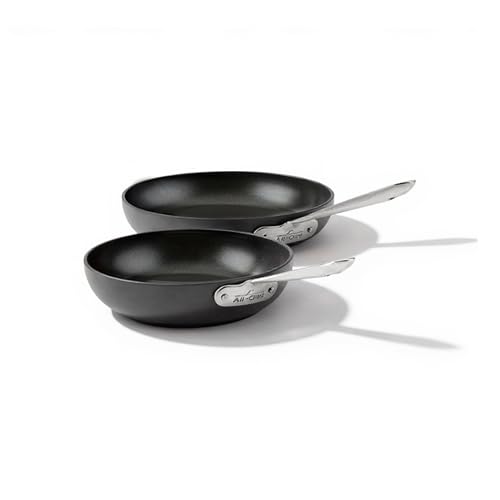

Is Traditional Nonstick Cookware Good?
Yes, for many home cooks. Traditional nonstick cookware is built around a slick PTFE-based coating. It needs little oil and makes delicate foods easy to flip. In a typical U.S. kitchen, that can mean faster breakfasts and less cleanup after dinner. I especially like the idea of using it for eggs, pancakes, grilled cheese, and fish. These foods can stick badly in bare metal pans.
The main catch is heat and care. PTFE cookware should not be overheated or left empty on a hot burner. I would also avoid metal tools and rough scrubbers. When I compare nonstick vs ceramic cookware for long-term daily use, traditional nonstick has a practical edge because its coating can stay slick for a long time when treated gently. It is not a pan I would use for hard searing or high-heat broiling.
What Makes It Stand Out / Key Features
- PTFE nonstick coatingThe smooth coating helps food release with little oil when the pan is used within its heat limits.
- Low oil cookingEggs, pancakes, and fish can cook with less added fat than in many uncoated pans.
- Easy cleanupFood usually wipes away with mild soap and a soft sponge.
- Gentle cookingThe surface works well for delicate foods that can tear or stick in stainless steel.
- Low to medium heatModerate heat helps protect the coating and supports steady cooking.
- Light handlingMany nonstick pans use aluminum bodies, so they can feel easier to move than heavy cast iron.
My Recommendation
Consider traditional nonstick if easy food release matters most and you are willing to use moderate heat and gentle tools.
| Best For | Why |
|---|---|
| Eggs and pancakes | The slick surface makes delicate foods easier to flip. |
| Busy families | Quick cleanup can save time on weekday meals. |
| Low-oil cooking | Many foods release well with only a small amount of oil. |
Is Ceramic Nonstick Cookware Good?
It depends on your priorities. Ceramic-coated cookware can be a good fit if you want a nonstick-style surface and prefer cookware marketed with a PFAS-free coating. Many ceramic pans use a sol-gel coating rather than a traditional PTFE coating. That can make ceramic attractive to shoppers who pay close attention to coating materials.
The trade-off is coating life. Ceramic cookware can lose some of its easy-release performance as the surface ages, especially with high heat, cooking sprays, rough cleaning, or poor care. In the nonstick vs ceramic cookware debate, I see ceramic as a useful option for people who value coating material as much as cooking performance. It can be a smooth road at first, but gentle care matters if you want the road to stay smooth.
What Makes It Stand Out / Key Features
- Ceramic coatingThe cooking surface uses a ceramic-derived sol-gel coating rather than a traditional PTFE coating.
- PFAS-free optionMany ceramic-coated pans are made without intentionally added PFAS, but shoppers should check the maker’s exact claims.
- Easy food releaseA new ceramic coating can release many foods with little oil.
- Simple cleanupSoft sponges and mild soap are usually enough for routine cleaning.
- Moderate heatModerate heat can help protect the coating and reduce the chance of early loss of nonstick performance.
- Modern cookware optionCeramic cookware gives shoppers another path when they want nonstick performance without a traditional PTFE coating.
My Recommendation
Consider ceramic nonstick cookware if avoiding intentionally added PFAS in the coating is a key goal and you accept that the slick surface may wear sooner.
| Best For | Why |
|---|---|
| PFAS-conscious shoppers | Many ceramic coatings are sold without intentionally added PFAS. |
| Light everyday meals | Eggs, vegetables, and other gentle foods work well on a fresh ceramic surface. |
| Easy cleanup | The smooth coating can make routine washing quick. |
nonstick vs ceramic cookware: Side-by-Side Test
The best choice in nonstick vs ceramic cookware depends on more than the word nonstick. The coating material, heat level, cooking style, and care routine all matter.
I would treat both like a useful kitchen tool, not a tank. Gentle heat, soft utensils, and careful washing can help either type last longer.
Food Release: Which Slides Better?
Both surfaces can release food well, especially when they are new and used at moderate heat.
| Feature | Product 1 | Product 2 |
|---|---|---|
| Eggs | Excellent | Excellent when new |
| Pancakes | Excellent | Very good |
| Fish | Excellent | Very good |
| Long-term release | Usually more consistent with good care | Can decline sooner |
⭐ Product A – 9/10 | Product B – 8/10
Traditional nonstick has the edge for consistently slick everyday cooking.
Heat: Which Handles More?
Neither coating is my first choice for extreme heat. Both need sensible temperature control.
| Feature | Product 1 | Product 2 |
|---|---|---|
| Low heat | Excellent | Excellent |
| Medium heat | Excellent | Excellent |
| High heat | Poor choice | Poor choice |
| Hard searing | Not recommended | Not recommended |
⭐ Product A – 7/10 | Product B – 7/10
Both are better suited to gentle and moderate cooking than high-heat searing.
Durability: Which Lasts Longer?
Coating life varies by brand, heat, utensils, washing, and use. Good habits matter more than many shoppers expect.
| Feature | Product 1 | Product 2 |
|---|---|---|
| Scratch resistance | Needs gentle utensils | Needs gentle utensils |
| Heat sensitivity | High | High |
| Coating aging | Can remain slick for years with care | Can lose slickness sooner |
| Dishwasher use | Follow maker instructions | Follow maker instructions |
⭐ Product A – 8/10 | Product B – 7/10
Traditional nonstick generally has the edge for long-lasting nonstick performance.
Coating Materials: What Changes?
The biggest difference in nonstick vs ceramic cookware is often the coating itself.
| Feature | Product 1 | Product 2 |
|---|---|---|
| Typical coating | PTFE-based | Ceramic-derived sol-gel |
| Intentionally added PFAS | PTFE is a PFAS fluoropolymer | Many products are marketed without intentionally added PFAS |
| Surface feel | Very slick | Smooth and slick when new |
| Main appeal | Long-lasting food release | Nonstick cooking without a traditional PTFE coating |
⭐ Product A – 8/10 | Product B – 9/10
Ceramic has the edge for shoppers who specifically want a non-PTFE coating option.
Cleaning: Which Is Easier?
Both can turn cleanup into a quick wipe when food does not stick.
| Feature | Product 1 | Product 2 |
|---|---|---|
| Daily washing | Very easy | Very easy |
| Soft sponge | Recommended | Recommended |
| Abrasive scrubber | Avoid | Avoid |
| Stubborn residue | Soak and wipe gently | Soak and wipe gently |
⭐ Product A – 9/10 | Product B – 9/10
This category is a tie because both can make cleanup simple when cared for properly.
Oil Use: Which Needs Less?
Both can support low-oil cooking, though the amount still depends on the food and the pan condition.
| Feature | Product 1 | Product 2 |
|---|---|---|
| Eggs | Very little oil needed | Very little oil needed when new |
| Vegetables | Low oil works well | Low oil works well |
| Fish | Low oil often works well | Low oil often works well |
| Aging surface | May need more oil over time | May need more oil as release declines |
⭐ Product A – 9/10 | Product B – 9/10
Both are strong choices for low-oil cooking.
Value: Which Makes Sense?
Price alone does not tell the whole story. Coating life and care needs also affect long-term value.
| Feature | Product 1 | Product 2 |
|---|---|---|
| Upfront cost | Often available across many price ranges | Available across many price ranges |
| Longevity | Strong with proper care | Varies by coating and use |
| Replacement need | Usually driven by coating wear | May come sooner as release declines |
| Best value case | Frequent everyday cooking | PFAS-free coating preference |
⭐ Product A – 9/10 | Product B – 8/10
Traditional nonstick has an edge when long-term everyday use is the main goal.
Final Verdict: Which Should You Buy?
In nonstick vs ceramic cookware, there is no single pan for every kitchen. Traditional nonstick is a strong fit for easy food release, low-oil cooking, and regular meals such as eggs and pancakes. Ceramic cookware makes sense for shoppers who want a nonstick-style surface without a traditional PTFE coating.
If I were building a simple U.S. kitchen, I would choose based on the coating first and cooking style second. Use either pan with moderate heat, gentle tools, and careful cleaning. That small habit can help protect your investment.