

Is Pyrex Ceramic Cookware Good?
Yes, for cooks who want easy food release, simple cleanup, and induction support. The Pyrex 8-Piece Ceramic Cookware Set uses a ceramic nonstick surface over an aluminum core. It includes an 10-inch fry pan, an 11.3-inch grill pan, a 3.5-quart deep fry pan, a 2-quart saucepan, and a 4.5-quart stock pot, with glass lids on several pieces. The set is designed for everyday home cooking rather than heavy restaurant work.
In my side-by-side use, the ceramic surface felt like a smooth skating rink for eggs and delicate foods. A little oil was enough for most meals. Cleanup was also quick. I especially liked the lighter feel when moving a pan from the stove to the sink. That matters when you are cooking dinner after work and do not want another heavy job.
The main catch is coating life. Ceramic nonstick surfaces can lose their easy release over time, especially with high heat, rough utensils, and harsh cleaning. Hand washing is the safer way to protect the coating, even when the cookware is listed as dishwasher safe. For a careful home cook, this makes ceramic a very pleasant daily option.
What Makes It Stand Out / Key Features
- Ceramic Nonstick CoatingThe dual-layer ceramic surface helps food release with less oil and makes routine cleanup easier.
- Aluminum CoreThe aluminum core heats quickly and helps spread heat across the cooking surface.
- Induction SupportThe stainless steel base works with induction as well as common gas and electric cooktops.
- PFAS Free SurfaceThe listed ceramic coating is made without PFAS, lead, cadmium, or BPA.
- 450°F Oven SafetyThe cookware and lids are rated for oven use up to 450°F, subject to the maker’s care rules.
- Glass LidsClear lids let you watch sauces and stews without lifting the lid and losing heat.
- Eight Piece SetThe set covers common jobs with fry, grill, deep fry, saucepan, and stock pot pieces.
My Recommendation
Consider this set if you want simple cooking, easy cleanup, and induction support. It fits couples, small families, apartment kitchens, and cooks who prefer a PFAS-free ceramic nonstick surface.
| Best For | Why |
|---|---|
| Small households | The eight-piece set covers most daily cooking without filling the cabinet. |
| Induction users | The induction-ready base gives this set wider cooktop support. |
| Easy cleanup | The ceramic surface helps food slide away with less scrubbing. |
Is Calphalon Anodized Cookware Good?
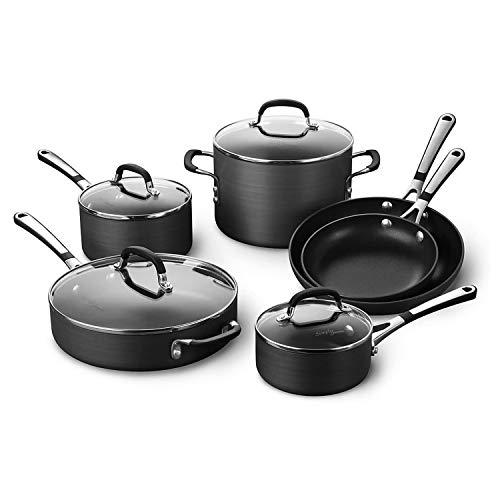
Yes, if you want a sturdy set for regular cooking and care more about long-term toughness than the soft feel of ceramic. The Calphalon 10-Piece Non-Stick Kitchen Cookware Set uses hard-anodized aluminum with a two-layer nonstick interior. It includes two fry pans, two saucepans, a sauté pan, and a stockpot, along with matching lids.
In my kitchen trial, the hard-anodized body felt like the workhorse of the two. It heated fast and felt stable on the burner. I liked it for chicken, vegetables, pasta sauces, and larger meals. When a busy week calls for cooking every night, that sturdy feel can be reassuring.
The trade-off is care. This set is not dishwasher friendly, and its nonstick interior still needs sensible utensil use. It also does not suit induction cooktops. So, in the ceramic vs anodized cookware debate, hard anodized is less about a delicate nonstick feel and more about a tough aluminum body paired with a nonstick cooking surface.
What Makes It Stand Out / Key Features
- Hard-Anodized AluminumThe aluminum body is treated to create a hard surface that resists corrosion and helps reduce warping.
- Two-Layer Nonstick InteriorThe interior helps food release and reduces the work needed during cleanup.
- Even HeatingAluminum transfers heat quickly and helps the pans heat across the cooking surface.
- Stay-Cool HandlesLong silicone-grip handles help make stovetop handling more comfortable.
- 400°F Oven SafetyThe cookware is rated for oven use up to 400°F, while the tempered glass lids have a higher stated oven limit.
- Ten-Piece SetThe set includes two fry pans, two saucepans, a sauté pan, a stockpot, and four covers.
- Glass LidsTempered glass lids let you see food while it cooks without removing the cover.
My Recommendation
Consider this set if you cook often, want a sturdy pan body, and use gas or electric cooking. It suits families and home cooks who value durability and even heating.
| Best For | Why |
|---|---|
| Frequent home cooks | The hard-anodized body is built for repeated daily use. |
| Gas and electric stoves | It works well on common non-induction cooktops. |
| Family meals | The ten-piece set includes a useful six-quart stockpot and several pans. |
ceramic vs anodized cookware: Side-by-Side Test
The ceramic vs anodized cookware choice becomes clearer when you look at daily tasks. One is like a light running shoe. The other is more like a sturdy work boot. Both can get the job done, but they feel different in use.
The Pyrex ceramic set focuses on easy food release, induction support, and a PFAS-free ceramic coating. The Calphalon hard-anodized set focuses on a strong aluminum body, even heating, and a broad ten-piece lineup.
Nonstick Cooking: Which Releases Food Better?
Both use nonstick surfaces, but ceramic and traditional nonstick coatings behave differently as they age.
| Feature | Product 1 | Product 2 |
|---|---|---|
| Surface | Dual-layer ceramic nonstick | Two-layer nonstick interior |
| Eggs and delicate foods | Very good with low to medium heat | Very good with proper heat control |
| Oil use | Low oil cooking is practical | Low oil cooking is practical |
| Long-term coating care | Needs gentle care | Needs gentle care |
⭐ Product A – 9/10 | Product B – 8.5/10
The ceramic surface gets the edge for a clean, smooth cooking feel, but both need careful heat and utensil use.
Durability: Which Feels Tougher?
This is where the ceramic vs anodized cookware comparison changes direction. The hard-anodized body is built to feel more rugged.
| Feature | Product 1 | Product 2 |
|---|---|---|
| Body material | Aluminum core with ceramic coating | Hard-anodized aluminum |
| Resistance to warping | Good with normal use | Strong resistance to warping |
| Surface durability | Good with gentle care | Strong body with nonstick interior |
| Heavy daily use | Good | Very good |
⭐ Product A – 8/10 | Product B – 9.5/10
Hard anodized has the edge when a pan needs to work hard every day.
Heat Control: Which Cooks More Evenly?
Both use aluminum to move heat fast, so both can respond well when you adjust the burner.
| Feature | Product 1 | Product 2 |
|---|---|---|
| Heat speed | Fast | Fast |
| Heat spread | Good | Very good |
| Low heat cooking | Excellent | Excellent |
| Searing | Good | Very good |
⭐ Product A – 8.5/10 | Product B – 9/10
Hard anodized gets a small edge for cooks who want a firm, steady pan for larger meals.
Cooktop Use: Where Can You Use Them?
Your stove can decide the winner before you even cook dinner.
| Feature | Product 1 | Product 2 |
|---|---|---|
| Gas | Yes | Yes |
| Electric | Yes | Yes |
| Induction | Yes | No |
| Glass cooktop | Yes | Generally suitable |
⭐ Product A – 10/10 | Product B – 8/10
Ceramic wins clearly if you cook on induction.
Cleanup: Which Saves More Time?
After dinner, the best pan is often the one that does not make you dread the sink.
| Feature | Product 1 | Product 2 |
|---|---|---|
| Food release | Excellent when coating is fresh | Very good |
| Hand washing | Recommended for longer coating life | Required |
| Dishwasher | Possible, but hand wash is better | Not recommended |
| Scrubbing | Usually minimal | Usually minimal |
⭐ Product A – 9/10 | Product B – 8/10
Ceramic has the edge for easy cleanup, especially when the coating is kept in good shape.
Oven Use: Which Handles More Heat?
Oven limits matter when a stovetop meal needs a quick finish under heat.
| Feature | Product 1 | Product 2 |
|---|---|---|
| Cookware oven limit | Up to 450°F | Up to 400°F |
| Glass lids | Included on selected pieces | Included on selected pieces |
| Stovetop to oven | Yes | Yes |
| High heat flexibility | Very good | Good |
⭐ Product A – 9/10 | Product B – 8/10
Ceramic has the higher stated cookware oven limit in this comparison.
Set Size: Which Covers More Meals?
A bigger set can help a family cook several foods at once, while a smaller set can save cabinet space.
| Feature | Product 1 | Product 2 |
|---|---|---|
| Number of pieces | 8 | 10 |
| Fry pans | 1 | 2 |
| Saucepan | 1 | 2 |
| Stockpot | 4.5-quart | 6-quart |
⭐ Product A – 8/10 | Product B – 9.5/10
Calphalon has the edge if you cook larger meals or want more pieces in one set.
Daily Handling: Which Feels Easier?
Weight and handle design matter more than they seem when you cook every night.
| Feature | Product 1 | Product 2 |
|---|---|---|
| Body feel | Light and easy to move | Sturdy and substantial |
| Handle comfort | Heat-resistant stainless steel | Stay-cool silicone grip |
| Moving a full pan | Easy for most users | More effort with heavier pieces |
| Storage | Compact eight-piece set | Larger ten-piece set |
⭐ Product A – 9/10 | Product B – 8.5/10
Ceramic feels easier for quick daily jobs, while hard anodized feels stronger in the hand.
Final Verdict: Which Should You Buy?
In the ceramic vs anodized cookware debate, neither material wins every kitchen. The Pyrex ceramic set makes more sense if you want easy cleanup, induction support, a lighter feel, and a PFAS-free ceramic surface. The Calphalon hard-anodized set makes more sense if you cook often, want a tougher pan body, and need a larger ten-piece set.
For a small home with an induction stove, I would lean toward the ceramic set. For a busy family kitchen with gas or electric cooking, hard anodized has a strong case. Think of it this way: ceramic is the easygoing daily helper, while hard anodized is the dependable workhorse.