
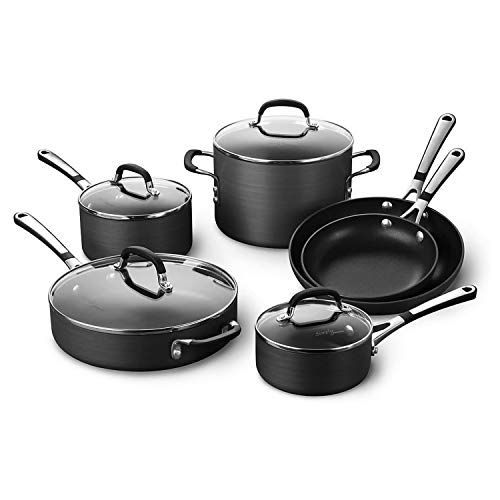

Is Hard Anodized Cookware Good?
Yes, hard anodized cookware is a strong fit for cooks who want a sturdy pan for regular use. The hard anodizing process strengthens the aluminum surface and helps the pan resist wear. It also keeps the main body light compared with many thick stainless steel pans. In the hard anodized cookware vs ceramic debate, this is the option I would look at when durability and steady heat matter most.
For everyday American meals, the workhorse feel is useful. Think pancakes on Saturday, chicken on Tuesday, and a quick pasta sauce after work. A good hard anodized pan heats fast and spreads heat well because aluminum conducts heat efficiently. The main tradeoff is that many hard anodized pans use a separate nonstick coating. That coating still needs gentle care, even when the pan body itself is tough.
What Makes It Stand Out / Key Features
- Hard Aluminum BodyThe aluminum body is treated through an electrochemical process that creates a harder surface than regular untreated aluminum.
- Fast Heat ResponseAluminum conducts heat well, so the pan can heat up quickly and respond well when you change the burner setting.
- Strong ConstructionThe hard anodized body can handle regular kitchen use well when you follow the maker’s care instructions.
- Good Heat SpreadThe aluminum base helps spread heat across the cooking surface, which can reduce cold spots during everyday cooking.
- Nonstick OptionsMany hard anodized sets add a nonstick coating, which makes eggs, pancakes, and other delicate foods easier to release.
- Low Maintenance BodyThe anodized aluminum itself does not need seasoning like traditional cast iron.
My Recommendation
Consider hard anodized cookware if you cook often and want a durable, heat-responsive pan. It fits busy kitchens where the cookware needs to work hard without feeling too heavy.
| Best For | Why |
|---|---|
| Frequent home cooks | The strong aluminum body suits regular use. |
| Sautéing and browning | Fast heat response helps with everyday stovetop cooking. |
| Busy families | It offers a practical mix of durability, weight, and cooking speed. |
Is Ceramic Cookware Good?
It depends on what you value most. Ceramic cookware is appealing when easy food release and quick cleanup sit at the top of your list. In the hard anodized cookware vs ceramic comparison, ceramic often feels smoother during the first months of use. Eggs slide easily, vegetables need less oil, and washing the pan can feel almost effortless. That can be a small luxury on a busy weekday.
The catch is lifespan. Many products sold as ceramic cookware use a ceramic-based nonstick coating over an aluminum body. That coating can lose its slick feel with time, especially if you use high heat, harsh cleaners, or metal utensils. So, while ceramic cookware can be a joy to use, I would treat the surface gently. It rewards careful habits more than rough daily handling.
What Makes It Stand Out / Key Features
- Smooth Cooking SurfaceCeramic-based nonstick surfaces can offer easy food release when the pan is new and well cared for.
- Low-Fat CookingThe slick surface can reduce the need for oil when cooking foods such as eggs and vegetables.
- Easy CleanupFood tends to release easily, so a soft sponge and mild dish soap are often enough for routine cleaning.
- Quick HeatingMany ceramic pans use aluminum underneath the coating, which gives them good heat conductivity.
- Modern DesignCeramic cookware often comes in clean colors and simple shapes that look good in a modern kitchen.
- Coating Care MattersThe nonstick surface can wear faster when exposed to very high heat or abrasive tools.
My Recommendation
Consider ceramic cookware if easy food release and quick cleanup matter more than maximum long-term durability. It works well for gentle, low to medium heat cooking.
| Best For | Why |
|---|---|
| Egg lovers | The smooth surface can make delicate foods easier to release. |
| Low-fat cooking | The nonstick surface can reduce the need for added oil. |
| Easy cleanup | Food often wipes away with little effort when the coating is in good shape. |
hard anodized cookware vs ceramic: Side-by-Side Test
The hard anodized cookware vs ceramic debate becomes easier when you look at one feature at a time. Neither material wins every task. Each has a different personality in the kitchen.
Hard anodized cookware leans toward strength, heat control, and long-term daily use. Ceramic leans toward easy release, low-oil cooking, and simple cleanup. The right choice can depend on your stove, cooking style, and care habits.
Durability: Which Lasts Longer?
The body and the cooking surface are not the same thing, so both need a close look.
| Feature | Product 1 | Product 2 |
|---|---|---|
| Body strength | Strong hard anodized aluminum | Often aluminum under a ceramic coating |
| Surface wear | Depends on the coating used | Ceramic coating can lose nonstick performance |
| Rough daily use | Generally more forgiving | Needs gentler care |
⭐ Hard Anodized – 9/10 | Ceramic – 7/10
For the pan body, hard anodized cookware has a clear durability advantage.
Nonstick Cooking: Which Releases Food Better?
Both can be nonstick, but the coating type and condition matter more than the name alone.
| Feature | Product 1 | Product 2 |
|---|---|---|
| New-pan food release | Very good with a quality coating | Excellent with a good ceramic coating |
| Eggs | Very good | Excellent when the coating is fresh |
| Low-oil cooking | Good | Very good |
⭐ Hard Anodized – 8/10 | Ceramic – 9/10
Ceramic has the edge for slick, easy-release cooking when the coating is in good condition.
Heat Performance: Which Cooks Faster?
Both styles often use aluminum, so heat response can be quite good.
| Feature | Product 1 | Product 2 |
|---|---|---|
| Heat response | Fast | Fast on many aluminum-core models |
| Heat spread | Very good | Good to very good |
| High-heat use | Follow coating limits | Use care because high heat can harm the coating |
⭐ Hard Anodized – 9/10 | Ceramic – 8/10
Hard anodized cookware gets the edge for demanding stovetop work, while both can heat well.
Cleaning: Which Is Easier?
After dinner, nobody wants a second job at the sink. This is where surface design matters.
| Feature | Product 1 | Product 2 |
|---|---|---|
| Food release | Good with nonstick coating | Excellent when coating is fresh |
| Routine washing | Easy with gentle cleaning | Very easy with gentle cleaning |
| Abrasive cleaning | Not recommended for coated models | Not recommended |
⭐ Hard Anodized – 8/10 | Ceramic – 9/10
Ceramic usually feels easier to clean, especially during the early life of the coating.
Care: Which Is More Forgiving?
Cookware lasts longer when you treat the coating as a delicate shield rather than armor.
| Feature | Product 1 | Product 2 |
|---|---|---|
| Utensils | Use manufacturer-approved utensils | Prefer wood, silicone, or other approved utensils |
| Heat control | Avoid overheating coated surfaces | Avoid overheating |
| Dishwasher use | Depends on the model | Depends on the model |
⭐ Hard Anodized – 8/10 | Ceramic – 7/10
Both need care, but hard anodized cookware is generally more forgiving in the body itself.
Food Safety: What Should You Know?
The word ceramic can sound automatically safer, but cookware safety depends on the actual materials and coating.
| Feature | Product 1 | Product 2 |
|---|---|---|
| Main concern | Condition and type of nonstick coating | Condition and type of ceramic coating |
| Coating care | Follow maker instructions | Follow maker instructions |
| Buying tip | Check the exact construction and coating | Check the exact coating and manufacturer claims |
⭐ Hard Anodized – 8/10 | Ceramic – 8/10
In this area, the exact product matters more than the broad cookware label.
Value: Which Gives More Over Time?
Price alone does not tell the full story. Think about how often you cook and how long the surface stays useful.
| Feature | Product 1 | Product 2 |
|---|---|---|
| Initial value | Strong for frequent cooks | Strong for easy everyday cooking |
| Long-term body durability | Very good | Good |
| Coating lifespan | Varies by coating and care | Varies and may decline with use |
⭐ Hard Anodized – 9/10 | Ceramic – 8/10
For frequent cooks, hard anodized cookware offers a strong long-term value story.
Final Verdict: Which Should You Buy?
The hard anodized cookware vs ceramic choice comes down to your cooking habits. Hard anodized cookware suits people who cook often and want a tough, heat-responsive pan. Ceramic suits people who value easy release, low-oil cooking, and simple cleanup.
If I were building a busy everyday kitchen, I would look closely at hard anodized cookware for its durable body and strong heat performance. For eggs, delicate foods, and easy cleanup, ceramic remains very appealing. Check the exact coating, stove compatibility, oven rating, and care rules before buying.