
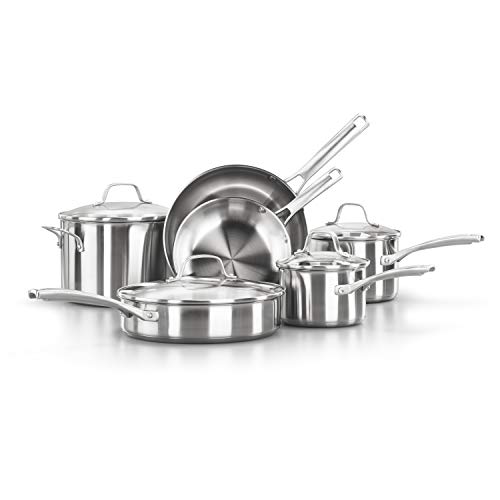

Is Stainless Steel Cookware Good?
Yes, especially if you want one cookware type that can take a lot of daily use. Stainless steel is a strong choice for home cooks who sear meat, cook vegetables, make sauces, and move pans from stovetop to oven when the specific pan allows it. In my comparison, it feels like the dependable cast member of a kitchen. It may not be the easiest surface for delicate foods, but it rewards good heat control.
I like stainless steel most when I want a deep brown crust on chicken or steak. I also find the browned bits left in the pan useful for making a quick pan sauce. With enough preheating and a little oil, many sticking problems become much easier to manage. For a busy American kitchen, that durability can matter more than perfect nonstick performance.
What Makes It Stand Out / Key Features
- Strong ConstructionQuality stainless steel cookware can handle years of regular cooking when used and maintained properly.
- High Heat PerformanceStainless steel works well for searing, browning, and other cooking tasks that need strong heat.
- Excellent BrowningIts surface can help build browned bits that add flavor to sauces and gravies.
- No Synthetic Nonstick CoatingBare stainless steel does not rely on a conventional nonstick coating for food release.
- Easy To MaintainIt can usually handle normal scrubbing and repeated daily use without the care needed by many coated pans.
- Versatile CookingDepending on the design, stainless steel pans can work well for stovetop cooking, oven use, and many cooking methods.
My Recommendation
Consider stainless steel if you want durable cookware for serious daily cooking. It fits cooks who value searing, high heat, versatility, and long service life more than effortless nonstick release.
| Best For | Why |
|---|---|
| Frequent home cooks | Strong durability and broad cooking use make it practical for everyday meals. |
| Searing fans | The surface works well for browning meat and building pan sauces. |
| Long-term value | Good stainless steel can stay useful for many years with normal care. |
Is Ceramic Cookware Good?
It depends on your cooking style, but ceramic cookware can be a very convenient choice. Ceramic-coated pans usually offer easy food release when the coating is new and in good condition. That makes them handy for eggs, pancakes, fish, and quick weekday meals. In my comparison, the biggest appeal is not raw durability. It is the feeling of less effort.
On a busy morning, a ceramic-coated pan can make eggs feel almost effortless. Cleanup can also be quick because food often releases with little work. The tradeoff is that the coating needs more care. High heat, rough utensils, abrasive cleaners, and normal wear can shorten its useful life. That makes ceramic more like a comfortable pair of everyday shoes than a heavy work boot.
What Makes It Stand Out / Key Features
- Easy Food ReleaseA ceramic-coated cooking surface can release many foods easily when the coating is in good condition.
- Simple CleanupLess sticking can mean less scrubbing after cooking.
- Low-Fat CookingGood food release can reduce the need for large amounts of cooking oil for many foods.
- Smooth SurfaceThe cooking surface feels smooth and works especially well for delicate foods.
- Beginner FriendlyThe forgiving food release can make everyday cooking easier for new home cooks.
- Good For Quick MealsCeramic-coated pans work well for simple breakfasts, vegetables, fish, and other fast meals.
My Recommendation
Consider ceramic cookware if easy food release and fast cleanup matter most. It suits cooks who make delicate foods often and prefer a simple, low-effort cooking experience.
| Best For | Why |
|---|---|
| Egg lovers | The smooth coated surface can make eggs easier to release. |
| Busy households | Easy cleanup can save time after quick meals. |
| Low-oil cooking | Good food release can reduce the need for extra cooking oil. |
cookware stainless steel vs ceramic: Side-by-Side Test
When comparing cookware stainless steel vs ceramic, the biggest difference is the cooking surface. Stainless steel favors heat, browning, and durability. Ceramic favors easy release and simple cleanup.
Neither material solves every cooking problem. Think of stainless steel as a kitchen workhorse and ceramic as a smooth, easygoing helper. The better fit depends on how you cook.
Durability: Which Lasts Longer?
Durability matters when you cook often. Stainless steel usually has the advantage because it does not depend on a coating for its basic cooking surface.
| Feature | Product 1 | Product 2 |
|---|---|---|
| Surface durability | Excellent | Good when coating is cared for |
| Scratch resistance | Generally strong | More sensitive to scratches |
| Long-term use | Very strong | Coating may wear over time |
| Care needs | Moderate | Higher |
⭐ Product A – 9/10 | Product B – 7/10
Stainless steel has the edge for long-term durability.
Food Release: Which Sticks Less?
For eggs, fish, and pancakes, food release can make or break the cooking experience.
| Feature | Product 1 | Product 2 |
|---|---|---|
| Eggs | Needs good heat and oil control | Usually easy when coating is fresh |
| Delicate fish | Can stick without proper technique | Generally easier to release |
| Pancakes | Requires more care | Usually very easy |
| Natural nonstick feel | Low | High when coating is new |
⭐ Product A – 7/10 | Product B – 9/10
Ceramic has the edge for easy food release.
High Heat: Which Handles More?
High heat helps with searing and browning. This is one area where cookware stainless steel vs ceramic shows a clear difference.
| Feature | Product 1 | Product 2 |
|---|---|---|
| Searing | Excellent | Good with suitable heat limits |
| Browning | Excellent | Good |
| Heat tolerance | Generally high | Depends on coating and manufacturer |
| High-heat versatility | Excellent | Moderate |
⭐ Product A – 10/10 | Product B – 7/10
Stainless steel has the edge for high-heat cooking.
Cleaning: Which Is Easier?
Nobody wants dinner to end with a long battle at the sink. Ceramic often makes cleanup simpler.
| Feature | Product 1 | Product 2 |
|---|---|---|
| Routine cleanup | Easy to moderate | Usually easy |
| Stuck food | May need soaking or scrubbing | Often easier to release |
| Abrasive cleaning | More tolerant | Should usually be avoided |
| Cleanup speed | Good | Excellent |
⭐ Product A – 8/10 | Product B – 9/10
Ceramic has the edge for quick cleanup.
Cooking Skill: Which Is Easier?
Stainless steel rewards technique. Ceramic gives beginners more help with food release.
| Feature | Product 1 | Product 2 |
|---|---|---|
| Beginner friendly | Moderate | High |
| Heat control needed | Higher | Moderate |
| Food release | Technique dependent | Usually easier |
| Learning curve | Moderate | Low |
⭐ Product A – 7/10 | Product B – 9/10
Ceramic has the edge for simple everyday cooking.
Searing: Which Builds More Flavor?
If you love browned steak, chicken, mushrooms, or vegetables, the pan surface matters.
| Feature | Product 1 | Product 2 |
|---|---|---|
| Steak searing | Excellent | Good |
| Browning vegetables | Excellent | Good |
| Pan sauce base | Excellent | Moderate |
| High-heat control | Excellent | Moderate |
⭐ Product A – 10/10 | Product B – 7/10
Stainless steel has the edge for deep browning and pan sauces.
Maintenance: Which Needs Less Care?
Both types can last longer with proper care, but their care routines differ.
| Feature | Product 1 | Product 2 |
|---|---|---|
| Utensil flexibility | Generally high | Use utensils approved for the coating |
| Heat restrictions | Usually fewer | Follow manufacturer limits |
| Surface wear | Low concern | More important |
| Daily care | Simple | Simple but more careful |
⭐ Product A – 9/10 | Product B – 7/10
Stainless steel has the edge for low-maintenance durability.
Value: Which Makes Sense Long Term?
Price is only part of value. Useful life and cooking range also matter.
| Feature | Product 1 | Product 2 |
|---|---|---|
| Initial value | Good | Good |
| Expected service life | Often long | Depends on coating life |
| Versatility | Excellent | Good |
| Replacement risk | Lower for quality cookware | Higher as coating wears |
⭐ Product A – 9/10 | Product B – 8/10
Stainless steel has the edge for long-term value.
Final Verdict: Which Should You Buy?
In cookware stainless steel vs ceramic, stainless steel fits cooks who want durability, high-heat performance, strong browning, and broad use. Ceramic fits cooks who care more about easy food release, simple cleanup, and quick everyday meals.
If I were building a kitchen around one main cookware type, I would lean toward stainless steel for its range and long-term durability. But that does not make ceramic a poor choice. For eggs, pancakes, fish, and fast weekday cooking, ceramic can be wonderfully convenient. Your cooking habits matter more than the label on the pan.