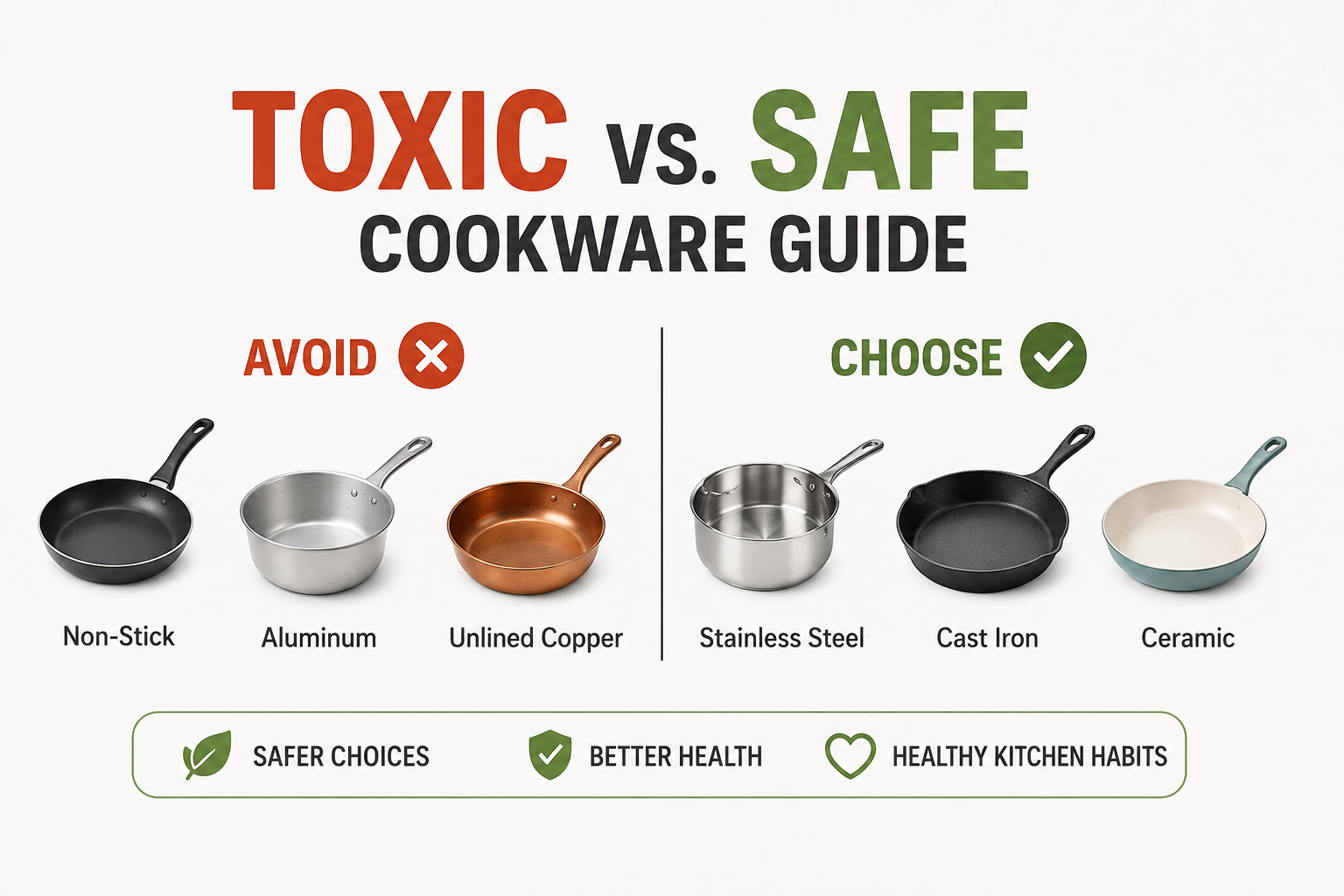
Uncoated stainless steel, cast iron, carbon steel, and verified lead-free glass are among the least toxic cookware choices for everyday cooking. They avoid traditional synthetic nonstick coatings and can last for many years when properly maintained.
Choosing cookware in the United States can feel confusing. One pan promises a nonstick surface, another claims to be free of harmful chemicals, and a third advertises natural materials. Yet the safest choice is not always the one with the biggest health claim on its label. What matters most is the material, its surface coating, its quality, and how you use it.
For most American households, uncoated stainless steel is one of the most practical low-concern choices. Cast iron and carbon steel are also strong options, while verified lead-free glass works well for baking and some oven dishes. These materials have different strengths, so there is no single pan that suits every meal.
The goal is to reduce avoidable exposure without creating unnecessary fear around ordinary cooking. A well-made pan used as directed is generally a better choice than a poorly made product marketed as completely toxin-free. This guide compares common materials, explains the risks worth watching, and shows how to choose cookware that fits your kitchen.
The least toxic cookware is generally made from stable materials that do not need a synthetic nonstick coating and are unlikely to release concerning substances into food when used as intended. Uncoated stainless steel, cast iron, and carbon steel fit this description. Properly manufactured, lead-free glass is another low-concern option.
Cookware safety is not based on material alone. Food acidity, cooking time, heat, surface damage, and product quality can change how much material transfers into a meal. For example, a sound stainless steel pot may be suitable for tomato sauce, while uncoated cast iron is less suitable for storing acidic food for long periods.
The term non-toxic is not a formal guarantee that a product has zero chemical exposure. It is more useful to ask whether a pan contains a coating, whether its materials are suitable for food contact, and whether normal use can cause unwanted substances to enter food or indoor air.
Source: eadn-wc05-6775084.nxedge.io
Best all-purpose option
Uncoated stainless steel offers a practical mix of durability, versatility, and low maintenance.
Best traditional metal option
Cast iron provides strong heat retention and a seasoned cooking surface without a factory-applied synthetic nonstick layer.
Best for high-heat cooking
Carbon steel works well for searing, stir-frying, and browning when properly seasoned.
Best for oven use
Verified lead-free glass and suitable ceramic bakeware offer useful options for baking and roasting.
What Makes Cookware a Low-Toxicity Choice?
A low-concern pan should have a stable cooking surface, clear material information, and no damaged or peeling layers. Its maker should also provide instructions for temperature limits, cleaning, and food contact. These details help you judge the actual product instead of relying on vague advertising.
A bare metal pan and a coated metal pan are not the same thing. Stainless steel may contain iron, chromium, and nickel, while a nonstick pan may have an aluminum body with a separate surface coating. The coating can have different properties from the metal beneath it.
Material transparency
The manufacturer should identify the cooking surface and the materials used in the product.
Food-contact suitability
Choose cookware clearly intended for preparing food, not decorative metal or pottery.
Surface condition
Avoid cookware with peeling, flaking, deep corrosion, or damaged protective layers.
The Safest Cookware Materials Compared
Different cookware materials suit different cooking needs. Stainless steel is a dependable everyday option, cast iron is useful for searing, and glass is convenient for oven cooking. Understanding their limits will help you build a safer kitchen without buying an entire new set.
The following comparison focuses on material properties, common exposure concerns, and practical uses. These are general material-level assessments, not laboratory test results for every brand or individual pan.
A durable, corrosion-resistant metal that works for boiling, sautéing, simmering, and many acidic foods. Some nickel and chromium may transfer under certain cooking conditions.
Cast iron
A durable iron-based material that retains heat well. It can increase the iron content of food, particularly with acidic or prolonged cooking.
Carbon steel
A strong iron-based material that heats quickly and develops a seasoned surface. It requires drying and maintenance to prevent rust.
Glass
A useful option for oven dishes and food storage. Choose products designed for cooking and avoid lead-containing decorative glass.
Enameled cast iron
Combines an iron body with a glass-like enamel surface. Check product quality and avoid cookware with chipped or damaged enamel.
Ceramic-coated nonstick
Usually consists of a metal body with a thin sol-gel coating. It can provide easy food release but the coating may wear over time.
Which Material Has the Fewest Coating Concerns?
Uncoated stainless steel, cast iron, and carbon steel have an advantage because they do not depend on a factory-applied nonstick layer. Their cooking surfaces are part of the metal itself or develop through seasoning.
Glass also avoids a traditional nonstick coating. However, its suitability depends on its composition, quality, and intended use. Not all decorative glassware or imported glass products are suitable for cooking.
Enameled cookware has a glass-like surface rather than bare iron. This can reduce direct contact between food and the iron body, but the enamel must remain intact.
For everyday cooking
Choose uncoated stainless steel for a versatile surface that does not require seasoning.
For natural seasoning
Choose cast iron or carbon steel if you are comfortable maintaining the cooking surface.
For oven dishes
Choose food-grade glass or suitable enamel cookware with clear manufacturer instructions.
Is Stainless Steel the Least Toxic Cookware?
Uncoated stainless steel is one of the strongest choices for a low-concern everyday kitchen. It has no traditional nonstick coating, resists rust, and can handle many cooking methods. It is also relatively easy to clean and does not need seasoning.
Stainless steel is usually made from iron, chromium, and sometimes nickel. Chromium helps form a thin protective surface that limits corrosion. Nickel can improve durability and corrosion resistance, but it may be a concern for people with a nickel allergy or sensitivity.
Some stainless steel cookware also has an aluminum or copper core between layers of steel. This design helps distribute heat more evenly. The presence of a sealed internal core does not mean that the cooking surface is aluminum or copper.
Source: euvitalab.com
Main benefits
Durable, versatile, suitable for many cooking temperatures, and free from a traditional synthetic nonstick coating.
Possible limitation
Small amounts of nickel or chromium can migrate into food under certain conditions, especially with prolonged cooking of acidic foods in new cookware.
Best everyday uses
Boiling pasta, cooking vegetables, making soups, sautéing, preparing sauces, and searing food.
Does Stainless Steel Leach Metals Into Food?
Stainless steel can release small amounts of metals into food. The amount depends on the steel grade, cookware age, food acidity, cooking time, and other conditions. This does not mean that all stainless steel cookware is unsafe.
Research on metal migration has found that food-contact materials can release different substances under different test conditions. The practical lesson is to choose quality cookware and use it as directed rather than assume that every metal product has identical properties.
People with known nickel sensitivity may prefer a different cooking material or should discuss suitable cookware choices with a healthcare professional. Nickel-free or low-nickel product claims should be checked against actual material specifications.
Choose quality steel
Look for clearly identified food-contact stainless steel from a reputable manufacturer.
Avoid prolonged acidic storage
Use suitable food containers instead of leaving highly acidic meals in cookware for extended periods.
Maintain the surface
Clean according to the manufacturer’s instructions and avoid cookware with severe corrosion or damage.
Is 18/10 Stainless Steel a Good Choice?
18/10 stainless steel generally refers to an alloy containing about 18 percent chromium and 10 percent nickel. The chromium helps resist corrosion, while nickel supports the metal’s strength and durability.
It is a common choice for quality cookware, but the number alone does not prove that a pan is completely free from metal migration. The construction, manufacturing quality, and cooking conditions still matter.
Look for clear specifications
A reliable product description should identify the steel grade and explain the pan’s construction.
Is Cast Iron a Safe and Healthy Cookware Choice?
Cast iron is a good low-coating alternative for people who want durable cookware without a synthetic nonstick surface. It is made mainly from iron and carbon, holds heat well, and can last for many years with proper care.
A seasoned cast iron pan develops a dark surface as thin layers of cooking oil bond to the metal through heat. This surface helps reduce sticking and protects the pan from rust. Seasoning is not the same as a factory-applied fluoropolymer coating.
One special feature of cast iron is that it can add iron to food. This may be useful for some people, but the amount is variable and should not be treated as a reliable way to manage iron levels.
Source: organicauthority.com
Best uses
Searing meat, frying, roasting, baking cornbread, and cooking meals that benefit from steady heat.
Main benefit
A durable metal surface that can be restored through cleaning and reseasoning.
Main limitation
Uncoated cast iron can transfer more iron into acidic foods and needs care to prevent rust.
Can Cast Iron Cause Too Much Iron in Food?
Cast iron can increase the iron content of food, but the amount varies with the recipe and cooking conditions. Acidic foods, moisture, and longer cooking times can increase iron transfer.
For most people, ordinary use of cast iron as part of a varied diet is not automatically a reason for concern. However, people with hemochromatosis or another condition involving excess iron should ask their healthcare professional whether frequent cast iron cooking is appropriate.
Cast iron should not replace medical treatment or prescribed iron supplements. Its effect on food is not precise enough to serve as a treatment method.
Use for suitable meals
Cast iron works well for eggs, vegetables, meat, cornbread, and many everyday recipes.
Limit long acidic cooking
Use stainless steel or suitable enameled cookware for long-simmered tomato sauces and other highly acidic meals.
Keep it dry
Wash, dry thoroughly, and apply a thin layer of suitable cooking oil when needed.
Is Enameled Cast Iron Safer Than Bare Cast Iron?
Enameled cast iron has a glass-like coating over an iron body. This surface helps separate food from the underlying metal and makes the cookware easier to clean. It also removes the need for traditional seasoning.
The main concern is enamel quality. Choose cookware specifically made for food preparation, with reliable information about its glaze and food-contact safety. Avoid using pieces with chipped or badly damaged enamel.
Good for acidic meals
An intact enamel surface is suitable for many tomato-based sauces, soups, and stews.
Check for damage
Follow the manufacturer’s guidance if the cooking surface chips, cracks, or exposes the underlying metal.
Are Ceramic and Glass Cookware Non-Toxic?
Glass and properly manufactured ceramic cookware can be good choices, but the word ceramic covers several different products. Traditional ceramic cookware, glazed pottery, porcelain, and ceramic-coated nonstick pans do not all have the same composition or safety profile.
Food-grade glass is generally a low-reactivity option for baking and oven cooking. It does not need a traditional nonstick coating, and it is useful for dishes such as casseroles, baked vegetables, and desserts.
Traditional glazed ceramic cookware can raise concerns if its glaze or pigments contain lead or cadmium. This is especially relevant for some decorative, antique, handmade, or imported items that have not been properly tested for food use.
Source: cookwareguider.com
Glass cookware
A useful option for baking and roasting when the product is designed for food use and the manufacturer’s temperature limits are followed.
Traditional ceramic cookware
Choose reputable food-contact products with appropriate lead and cadmium compliance information.
Enameled cookware
A practical alternative when the enamel is intact and the product is made for cooking.
Ceramic-coated nonstick
A coated metal pan with a ceramic-like surface, not a solid ceramic pan.
Can Ceramic Cookware Contain Lead?
Yes. Some ceramic products can contain lead or cadmium in their glaze, pigments, or decorative materials. If these metals migrate into food, they can create a health concern. The risk depends on the product’s composition, manufacturing quality, and intended use.
The U.S. Food and Drug Administration regulates lead in food-contact ceramicware. However, an old or imported item should not be assumed safe just because it looks attractive or feels heavy.
Be particularly cautious with pottery sold as decorative art, antique dishes, handmade souvenirs, and products with unclear food-use instructions. A home lead test kit may identify some problems, but a negative result does not prove that cookware is safe under repeated cooking conditions.
Check the intended use
Only use ceramic products that are specifically made for preparing or serving food.
Check safety information
Look for credible manufacturer documentation about lead and cadmium testing.
Avoid damaged surfaces
Do not use cookware with cracked, deteriorating, or badly worn glaze.
Is Ceramic Nonstick Safer Than Teflon?
Ceramic nonstick cookware usually has a metal body covered with a thin sol-gel coating. It is often marketed as a PFAS-free alternative to traditional PTFE nonstick pans. However, the coating is not the same as a solid ceramic cooking vessel.
A ceramic-coated pan can offer easy food release when new, but its performance may decline with repeated use. High heat, rough cleaning, and metal utensils can damage the surface.
A PFAS-free label can help buyers who want to avoid fluorinated nonstick coatings, but it does not prove that every part of the pan is free from all substances of concern. Check the full product specifications rather than relying on a single marketing term.
Potential advantage
Many ceramic-coated pans are made without traditional PTFE nonstick coatings.
Potential drawback
The cooking surface can lose its nonstick properties over time.
Care advice
Use low or medium heat, soft utensils, and gentle cleaning methods.
What Cookware Should You Avoid or Use With Caution?
Some cookware deserves more caution because of its composition, surface damage, or poor manufacturing quality. The greatest practical concern is not always the material name. A poorly made product can be a greater problem than a well-made product from a material that has some known limitations.
The FDA issued a cookware warning on December 12, 2024, concerning certain imported aluminum, brass, and aluminum-alloy cookware that could release lead into food. The warning specifically identified some products made from materials known as Hindalium or Indalium.
This is a useful reminder that appearance and traditional use do not prove safety. Consumers should pay attention to the source, material details, and food-contact suitability of the actual item.
Unverified imported metal cookware
Avoid products with unknown metal composition, especially certain imported aluminum and brass alloys associated with lead-leaching concerns.
Unlined copper
Copper can react with acidic foods and transfer excessive amounts of metal into meals.
Damaged nonstick pans
Replace cookware with peeling, flaking, or badly damaged coatings.
Decorative pottery
Do not cook or store food in pottery that is not intended for food use.
Worn aluminum
Avoid heavily pitted or damaged aluminum cookware, especially when preparing acidic or salty foods.
Is Aluminum Cookware Toxic?
Aluminum cookware is not automatically toxic. Aluminum is widely used because it is light, affordable, and conducts heat well. The main concern is that certain types of aluminum cookware can transfer more metal into food under specific conditions.
Worn or pitted aluminum surfaces may increase transfer. Highly acidic or salty foods, including tomato sauce, citrus-based dishes, and sauerkraut, can also increase the amount that enters food.
Anodized aluminum has a hardened surface that helps reduce aluminum transfer. However, scratched or badly worn anodized cookware should be replaced according to the manufacturer’s guidance.
Avoid damaged surfaces
Do not continue using aluminum pans with deep pits, heavy corrosion, or substantial surface damage.
Use suitable cookware for acidic food
Choose stainless steel or intact enamel cookware for long-cooked tomato and citrus dishes.
Understand anodizing
Anodizing creates a harder surface that reduces direct contact between food and the underlying aluminum.
Why Should You Be Careful With Copper Cookware?
Copper transfers heat quickly, which makes it useful for precise temperature control. However, bare copper can react with acidic ingredients and release too much copper into food.
Many modern copper pans have a stainless steel or other protective inner layer. This barrier is important because it keeps food from directly contacting the copper. If the lining becomes damaged, the pan may need professional repair or replacement.
Older copper cookware may have tin or nickel linings. Nickel-lined cookware is unsuitable for people with nickel allergies, and a worn or damaged lining should not be treated as a safe cooking surface.
Choose lined copper
Make sure the inner surface is suitable for food contact and remains intact.
Inspect regularly
Stop using cookware with a worn-through, peeling, or damaged protective lining.
Is Teflon or PTFE Nonstick Cookware Toxic?
PTFE, commonly associated with the Teflon brand, is a synthetic fluoropolymer used in many traditional nonstick pans. It allows food to release easily and reduces the need for large amounts of cooking oil.
PTFE cookware is not automatically dangerous during normal cooking. The main concern is overheating. When an empty nonstick pan becomes extremely hot, its coating can break down and release fumes that may cause polymer fume fever.
Poison Control explains that overheating PTFE-coated cookware can cause symptoms such as chills, fever, headache, fatigue, and body aches. Birds are especially sensitive to these fumes, so households with pet birds should take extra care.
Never heat an empty pan
Add food or an appropriate cooking liquid before heating a PTFE-coated pan.
Avoid high heat
Use low or medium heat and follow the manufacturer’s temperature limits.
Ventilate the kitchen
Use an exhaust fan or open a window during cooking.
Replace damaged cookware
Stop using pans with substantial scratches, peeling, or flaking.
Protect pet birds
Keep birds away from cooking fumes and avoid overheating fluoropolymer-coated products.
Is PFOA-Free the Same as PFAS-Free?
No. PFOA is one chemical within the much larger PFAS family. A product labeled PFOA-free does not necessarily mean that it contains no other PFAS or fluorinated coating materials.
PTFE is itself a fluoropolymer. Therefore, shoppers who want to avoid all PFAS-related cookware coatings should look for clear documentation that the complete nonstick coating is PFAS-free, rather than relying only on a PFOA-free statement.
PFOA was formerly used in the manufacture of some nonstick coatings, but its phaseout does not mean that every modern nonstick pan is free from all fluorinated substances.
PFOA-free
Means the product makes a claim about one particular chemical, not necessarily the entire PFAS family.
PFAS-free
A broader claim that should be supported by information about the complete coating and product.
PTFE-free
A useful additional specification for people who want to avoid PTFE-coated cookware.
What Should You Do if a Nonstick Pan Overheats?
If a nonstick pan starts smoking or you suspect it has overheated, turn off the burner. Do not add water to a dangerously hot pan or continue cooking with it. Open windows, turn on ventilation, and move people and pets away from the fumes.
If anyone develops breathing problems, chest discomfort, fever, or other concerning symptoms, seek medical advice. Contact a poison center for exposure guidance. In the United States, Poison Control can be reached at 1-800-222-1222.
Pet birds need special attention because polymer fumes can be fatal to them. If a bird may have been exposed, contact an avian veterinarian promptly.
First action
Stop heating the cookware and leave the immediate area if fumes are present.
Improve ventilation
Open windows and use an exhaust fan when it is safe to do so.
Get help
Contact Poison Control or a healthcare professional when exposure or symptoms are a concern.
How to Choose the Least Toxic Cookware for Your Kitchen
The best way to choose low-concern cookware is to start with your cooking habits rather than buying a large set based on a health claim. Think about how often you cook acidic foods, whether you use high heat, and whether you need pans for baking or stovetop cooking.
A small collection of well-made pieces is often more useful than a large set with materials you do not understand. You can use stainless steel for everyday meals, cast iron for searing, and glass for oven dishes.
Before purchasing, read the material specifications and care instructions. A trustworthy manufacturer should explain the cooking surface, temperature limits, and any special maintenance needs.
Identify the actual cooking surface
Determine whether the pan is bare stainless steel, seasoned iron, glazed ceramic, PTFE-coated metal, or ceramic-coated metal.
Check food-contact suitability
Avoid products that are decorative, poorly labeled, or sold without clear material information.
Review the temperature limits
Make sure the cookware is suitable for your stove, oven, and usual cooking methods.
Check the maintenance needs
Consider whether you are comfortable seasoning iron, protecting coatings, or handling fragile glass.
Consider personal sensitivities
People with nickel allergies or iron-related medical conditions may need to choose cookware differently.
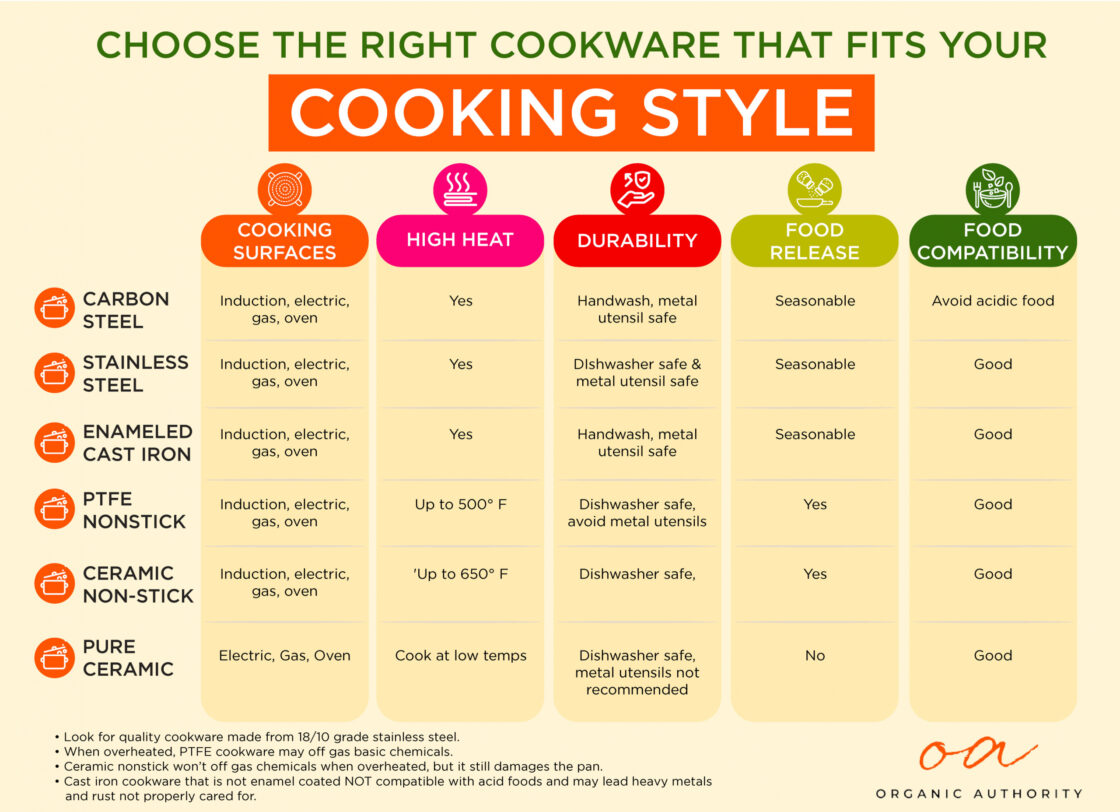
A Practical Cookware Buying Comparison
This table can help narrow your choices based on common kitchen tasks. It compares general material properties rather than ranking individual brands or claiming that every product in a category has identical safety performance.
Everyday cooking
Uncoated stainless steel is a versatile choice for vegetables, pasta, sauces, and everyday meals.
Searing and frying
Cast iron or carbon steel works well when you need strong heat retention or high-temperature cooking.
Baking
Food-grade glass and suitable ceramic bakeware are useful for casseroles, vegetables, and oven dishes.
Easy food release
A properly maintained seasoned iron pan can provide natural food release without a factory nonstick coating.
Cooking with less maintenance
Stainless steel is a practical choice if you do not want to season cookware or maintain a delicate coating.
What Should a Beginner Buy First?
A beginner does not need an expensive complete cookware set. Start with a medium stainless steel skillet, a stainless steel saucepan, and a larger pot for pasta, soup, or boiling water.
If you often fry eggs or cook foods that stick, add a well-seasoned cast iron pan or another suitable low-concern option. A glass baking dish is useful if you regularly prepare meals in the oven.
This approach gives you a flexible kitchen without filling your cabinets with products that have different care needs.
First purchase
A good-quality stainless steel skillet for general stovetop cooking.
Second purchase
A stainless steel saucepan for sauces, oatmeal, vegetables, and smaller meals.
Third purchase
A stockpot for soups, pasta, and larger family meals.
Useful addition
A cast iron skillet or food-grade glass baking dish based on your cooking habits.
How to Maintain Cookware and Reduce Unwanted Exposure
Proper care is part of cookware safety. Even a good-quality pan can become less suitable for cooking if its protective surface is badly damaged or if it is used outside the manufacturer’s instructions.
Cleaning and storage habits also affect how long cookware lasts. Use gentle cleaning tools when needed, avoid unnecessary overheating, and inspect surfaces from time to time.
You do not need special chemical treatments or expensive cookware cleaners for most everyday maintenance. Basic washing, drying, and sensible storage are often enough.
Use suitable utensils
Wood and silicone utensils help protect coated cookware, while stainless steel utensils can be suitable for uncoated metal pans.
Avoid unnecessary high heat
Match the burner setting to the material and recipe instead of using maximum heat for every meal.
Inspect cooking surfaces
Check for cracks, rust, peeling, flaking, deep scratches, and damaged enamel.
Store cookware carefully
Use pan protectors or separate pieces to prevent scratches and surface damage.
Follow product instructions
Check the manufacturer’s guidance for cleaning, oven use, dishwasher use, and temperature limits.
When Should You Replace a Pan?
Replace nonstick cookware when the coating is peeling, flaking, or badly damaged. A pan that has lost its surface integrity is not worth keeping simply because it still heats food.
Replace or stop using glass cookware with cracks, chips, or other structural damage. Damaged glass can break during heating or handling.
For cast iron and carbon steel, rust does not always mean the pan is ruined. Surface rust can often be removed, followed by proper drying and reseasoning. Deep corrosion or structural damage may require replacement.
Peeling nonstick coating
Stop using the pan and replace it.
Cracked glass
Do not continue heating or cooking in damaged glass bakeware.
Chipped enamel
Follow the manufacturer’s instructions and discontinue food use if the cooking surface is no longer intact.
Minor cast iron rust
Clean and reseason if the damage is limited to surface rust and the pan remains structurally sound.
Does Dishwasher Cleaning Affect Cookware Safety?
Dishwasher safety depends on the material and manufacturer instructions. Many stainless steel pans can tolerate dishwasher cleaning, but repeated exposure to harsh detergents may affect their appearance or finish.
Cast iron and carbon steel generally should not go through routine dishwasher cleaning because prolonged moisture and detergent can damage seasoning and promote rust. Hand washing and thorough drying are better options.
Nonstick pans often last longer when washed by hand with mild soap and a soft sponge. Glass cookware may be dishwasher-safe, but temperature changes and product instructions still matter.
Stainless steel
Check the product instructions; hand washing can help preserve its appearance.
Cast iron
Hand wash, dry thoroughly, and maintain the seasoning.
Carbon steel
Avoid routine dishwasher cleaning and dry immediately after washing.
Coated cookware
Use gentle hand washing unless the manufacturer specifically confirms dishwasher suitability.
Common Myths About Non-Toxic Cookware
Cookware marketing can make simple material choices seem more complicated than they need to be. Some labels describe real differences, while others use broad health terms that do not explain the product’s actual construction.
Understanding a few common myths can prevent unnecessary spending and help you focus on the risks that have stronger evidence.
Myth: All nonstick cookware is poisonous
Reality: PTFE cookware can be used safely when handled as directed. Overheating an empty pan is the main practical concern.
Myth: All ceramic cookware is completely toxin-free
Reality: Ceramic products can have lead or cadmium concerns, and ceramic-coated nonstick pans contain additional materials beneath their surface.
Myth: Stainless steel never releases metals
Reality: Small amounts of nickel and chromium can transfer under certain conditions.
Reality: Current evidence does not establish ordinary aluminum cookware use as a cause of Alzheimer’s disease.
Myth: Natural cookware is always safer
Reality: Natural materials can still have risks. Unlined copper, contaminated pottery, and poorly made metal cookware can create exposure concerns.
Myth: The most expensive cookware is always the safest
Reality: Material quality, manufacturing standards, surface condition, and intended use matter more than price alone.
Research Findings and Important Evidence Gaps
A useful cookware guide should separate documented material risks from broad marketing claims. Government guidance and medical resources identify specific concerns involving lead, cadmium, copper, aluminum, and overheated nonstick coatings. They do not support the claim that every modern coated pan or every metal pan is inherently dangerous.
The U.S. FDA’s December 2024 cookware letter is particularly relevant to buyers. It identified certain imported aluminum, brass, and aluminum-alloy products that could release lead into food. The warning shows why material identification and product sourcing matter.
Health Canada’s cookware guidance also explains that food acidity, material type, and conditions of use can affect how much material transfers into food. Its advice supports a practical approach: select suitable cookware, avoid damaged surfaces, and follow product instructions.
MedlinePlus, a service of the U.S. National Library of Medicine, identifies stainless steel as a durable option and warns about lead in certain ceramic products and fumes from overheated nonstick cookware. Poison Control provides additional information about polymer fume fever and prevention.
Consumer Reports’ cookware guidance also discusses uncoated glass, stainless steel, carbon steel, and cast iron as useful alternatives. Its consumer-focused advice adds practical details about cookware care, coatings, and replacement.
Documented finding: Lead exposure
The FDA has warned about certain imported cookware products that may leach lead. This warning applies to the identified product types and does not establish that all aluminum or brass cookware is unsafe.
Documented finding: PTFE overheating
Poison Control describes the risk of fumes from overheated PTFE products and recommends avoiding empty-pan preheating.
Documented finding: Metal transfer
Health Canada explains that food type, material, and conditions of use can affect the transfer of substances into food.
Not established: Zero-risk cookware
Available guidance does not establish that any common cookware material has absolutely zero potential for chemical or metal exposure under every condition.
Important limitation
General material guidance cannot certify the safety of a specific brand, model, batch, or imported product without relevant testing.
What Reviewed Cookware Guides Often Leave Unclear
A review of consumer cookware guidance, safer-cookware resources, government material guidance, and medical safety information reveals an important distinction. Many guides list preferred materials, but readers also need to understand the conditions that can change the safety picture.
For example, saying that stainless steel is a safer choice is useful, but it does not explain nickel sensitivity or metal transfer. Calling ceramic cookware non-toxic also overlooks the difference between solid glazed pottery and a ceramic-coated metal pan.
This guide addresses those distinctions by separating the main cookware materials, explaining their specific limitations, and identifying situations where product quality or personal health needs can change the recommendation.
Question: Can stainless steel release nickel?
Reader stage: Before purchase. Evidence: Health Canada and MedlinePlus describe stainless steel composition and its potential limitations. Priority: High.
Question: Can imported cookware contain lead?
Reader stage: Before purchase. Evidence: FDA’s December 2024 cookware warning. Priority: High.
Question: Is ceramic nonstick the same as solid ceramic?
Reader stage: Product comparison. Evidence: Differences in cookware construction and coating materials. Priority: High.
Question: How should overheated nonstick cookware be handled?
Reader stage: During use. Evidence: Poison Control safety guidance. Priority: High.
Question: When should cookware be replaced?
Reader stage: After purchase. Evidence: General surface-condition and manufacturer-care guidance. Priority: Medium.
Frequently Asked Questions
Q
What is the absolute safest cookware to use?
There is no single cookware material that is safest for every person and every cooking method. Uncoated stainless steel is one of the strongest all-purpose options because it is durable, corrosion-resistant, and does not need a synthetic nonstick coating.
Cast iron, carbon steel, and verified lead-free glass are also useful choices. Your personal needs, cooking habits, and material sensitivities should guide the final decision.
Q
Is stainless steel safer than ceramic cookware?
Uncoated stainless steel is often the more straightforward everyday choice because it has no separate nonstick coating. Quality ceramic cookware can also be suitable for food use, but buyers should check its glaze and lead and cadmium safety information.
Ceramic-coated metal pans are different from solid ceramic cookware. Their coating can wear over time, so the distinction matters when comparing products.
Q
Is cast iron healthier than stainless steel?
Neither material is automatically healthier for everyone. Cast iron can add iron to food, while stainless steel may release small amounts of nickel or chromium under certain cooking conditions.
Cast iron may not be the best choice for someone who needs to limit iron intake. Stainless steel may not suit someone with a significant nickel sensitivity. Both can be practical choices when used appropriately.
Q
Is PFAS-free cookware completely chemical-free?
No. PFAS-free describes the absence of a particular group of fluorinated substances according to the scope of the manufacturer’s claim. It does not mean that every component is free from all chemicals, metals, or other substances.
Check the actual materials used in the pan, including its body, cooking surface, and any added coating.
Q
Should I throw away all my Teflon pans?
Not necessarily. PTFE nonstick cookware can be used with care. Do not heat it empty, avoid excessive temperatures, ventilate your kitchen, and follow the manufacturer’s instructions.
Replace a pan if its coating is peeling, flaking, or badly damaged. If you prefer to avoid PTFE and other fluorinated coatings, choose uncoated stainless steel, cast iron, carbon steel, or a properly documented alternative.
Q
Is glass cookware safer than metal cookware?
Glass is generally a low-reactivity material and does not have the same metal-transfer concerns as some metal cookware. However, the product must be designed for food use and made without problematic lead-containing materials.
Glass is also more fragile than metal and can break when damaged or exposed to unsuitable temperature changes. Follow the manufacturer’s heating and handling instructions.
Q
What cookware is best for people with nickel allergies?
People with nickel allergies may prefer to limit contact with nickel-containing stainless steel and nickel-lined copper cookware. Cast iron, suitable glass, and properly manufactured enamel cookware may be alternatives.
Not all stainless steel products have the same composition. If you have a diagnosed allergy, discuss suitable materials with your healthcare professional and check the manufacturer’s specifications.
Q
Can cheap cookware be toxic?
Low price alone does not prove that cookware is unsafe. However, poorly labeled products, unknown metal alloys, weak manufacturing controls, and unverified imported items deserve extra caution.
Choose cookware from a reputable source with clear food-contact information. Be especially careful with products made from unidentified aluminum or brass alloys because certain imported products have been associated with lead leaching.
Q
What cookware should I use for cooking tomato sauce?
Uncoated stainless steel and intact enameled cast iron are practical choices for tomato sauce. Both are suitable for many acidic recipes when used according to the manufacturer’s instructions.
Avoid prolonged cooking or storage of acidic sauces in bare cast iron, worn aluminum, or unlined copper because acidic foods can increase material transfer.
Q
Does non-toxic cookware improve your health?
Choosing suitable cookware can help reduce certain avoidable exposures, such as lead from contaminated pottery or fumes from overheated nonstick coatings. However, cookware alone does not guarantee better health.
Food quality, balanced nutrition, safe food handling, ventilation, and correct cooking methods also matter. Think of cookware as one part of a healthy kitchen rather than a cure or medical treatment.
✦ Wrapping Up
Conclusion
The least toxic cookware is generally cookware with a stable, well-made cooking surface and no unnecessary coating. Uncoated stainless steel is one of the most practical choices for everyday meals, while cast iron and carbon steel are useful for high-heat cooking and glass is convenient for baking.
Ceramic and enamel cookware can also be suitable, provided the products are made for food use and have appropriate lead and cadmium safety information. PTFE nonstick pans are not automatically unsafe, but overheating and damaged coatings should be avoided.
The most useful lesson is to look beyond labels such as natural, green, non-toxic, and chemical-free. Check the actual material, the quality of the product, its intended use, and the care instructions. These details offer a much clearer picture of cookware safety than advertising claims.
You do not need to replace every pot and pan at once. Start by replacing damaged cookware, avoiding unverified products, and choosing a durable material when you next need a new pan. A few carefully selected pieces can support years of everyday cooking.
💡 Key Takeaway
For a simple low-concern cookware setup, start with an uncoated stainless steel skillet, a stainless steel saucepan, and a stockpot. Add a cast iron skillet for searing and a verified lead-free glass baking dish for oven meals. Avoid damaged coatings, unverified imported metal cookware, and decorative ceramics that are not intended for food use.